WebRTC Leak Shield is a vital security measure designed to avert WebRTC exposures, which risk revealing your genuine IP address even when a proxy is active. WebRTC, short for Web Real-Time Communication, is a web browser capability enabling direct connection for real-time activities like video chats and data exchange. Nevertheless, this same functionality can be exploited to show your actual IP, bypassing the safeguards offered by proxies. WebRTC Leak Shield functions by intercepting any WebRTC signals that might result in an IP disclosure, thus preserving your online obscurity and safety. In today's digital environment, where privacy worries are growing and online anonymity is increasingly vital, utilities like WebRTC Leak Shield have become indispensable for both individuals and organizations.
How Does a WebRTC Leak Happen?
WebRTC leaks happen when your browser’s WebRTC feature unintentionally broadcasts your true IP address while you are connected via a proxy. Even with privacy-focused instruments in use, WebRTC can circumvent them and directly disclose your IP to the sites you visit.
This can be problematic, particularly for those prioritizing their privacy, such as users handling several accounts, partaking in confidential discussions, or requiring secure web navigation.
For instance, if you're using a tool to appear from a different region and a WebRTC leak exposes your real IP, the website may instantly detect the discrepancy and limit your access based on your true location.
For users managing multiple accounts, a sudden IP exposure can trigger platform security checks, lead to account flags, or even cause temporary suspensions. In privacy‑sensitive workflows—such as handling multiple accounts or navigating platforms that enforce strict IP consistency—this type of leak can disrupt operations and compromise your anonymity.
Adding WebRTC Leak Shield to Mozilla Firefox
Mozilla Firefox users can easily defend against WebRTC disclosures through browser add-ons like WebRTC Leak Shield. Here is a straightforward path to incorporating this necessary tool into your browser:
Start Mozilla Firefox: Begin by launching your Firefox application.
Navigate to Firefox Add-ons: Select the menu icon at the upper right of Firefox (three parallel lines) and go to “Add-ons.”
Search for WebRTC Leak Shield: Input WebRTC Leak Shield into the search field and hit enter.
Install the Extension: Once the desired add-on is located, click the “Add to Firefox” option. This action will install the extension.
Activate the Extension: Following installation, confirm the extension is turned on to shield you from WebRTC events.
After setup, WebRTC Leak Shield will automatically block all WebRTC transmissions that could show your real IP address. This allows you to browse securely without concern for IP revelations, even when managing multiple accounts or utilizing a proxy for privacy.
Deploying WebRTC Leak Shield in Chrome
Unlike Firefox, Google Chrome lacks a native setting to switch off WebRTC, necessitating the installation of a third-party utility like WebRTC Leak Shield to prevent leaks.
Here is how you can set up and operate WebRTC Leak Shield or comparable solutions in Chrome:
Open Google Chrome: Initiate your browser.
Access the Chrome Web Store: In the address bar, type chrome://extensions or navigate to the Chrome Web Store.
Look for WebRTC Leak Shield: Within the Chrome Web Store search bar, enter WebRTC Leak Shield or related extensions.
Install the Plugin: When you find the utility, click Add to Chrome to proceed with the installation.
Ensure the Plugin is Active: After adding, verify that the plugin is enabled within Chrome’s extension management area.
With this plugin running, WebRTC Leak Shield will halt WebRTC signals that risk exposing your IP address, safeguarding your privacy during web browsing.
The Importance of WebRTC Leak Prevention
Whether you are administering several social media accounts, running an internet venture, or simply maintaining discretion while browsing, preventing WebRTC leaks is crucial. WebRTC leaks divulge your actual IP address, potentially jeopardizing your anonymity.
This becomes even more vital if you depend on proxies to handle accounts across different platforms, particularly when services like Twitter, Facebook, or Google closely watch for activity suggesting multiple accounts.
For example, if you manage several Twitter profiles for marketing or promotional efforts, WebRTC breaches could expose your real IP, raising flags about account orchestration.
Tools such as DICloak can aid in creating distinct browser profiles, helping to avoid detection by social platforms, but WebRTC Leak Shield adds a further layer of defense by stopping IP disclosures entirely.
Advantages of Utilizing WebRTC Leak Shield
Improved Privacy: WebRTC Leak Shield conceals your IP address, maintaining your privacy while using proxies.
Greater Security: The utility stops sensitive data releases, which is vital when managing multiple accounts or engaging in private communications.
User-Friendliness: Setting up and using WebRTC Leak Shield is simple, with easy procedures for both Firefox and Chrome.
Is the Mozilla WebRTC Leak Shield Add-on Beneficial or Detrimental?
The WebRTC Leak Shield add-on for Mozilla Firefox is generally considered beneficial for anyone valuing their online privacy. Here is a breakdown:
Pros
Simple Configuration: Effortless to install and set up.
Effective Defense: Competently blocks any WebRTC signals that might expose your IP address.
Cons
Impacts WebRTC-Dependent Features: Disabling WebRTC might interfere with certain capabilities like video conferencing and direct peer-to-peer transfers.
Despite this minor drawback, the positive aspects typically outweigh the negatives for those prioritizing privacy.
WebRTC Leak Shield for Enterprise Applications
Businesses overseeing multiple accounts frequently encounter hurdles related to privacy and safety. WebRTC disclosures can reveal sensitive identifiers, such as true IP addresses, potentially resulting in account bans or loss of data governance.
Employing utilities like DICloak to generate distinct browser profiles, alongside WebRTC Leak Shield, can safeguard your enterprise by ensuring your browsing remains discreet.
Whether handling marketing initiatives with multiple social media presences or gathering data for market insights, these tools offer a protected method to expand operations without risking account interruptions or data breaches.
Why choose DICloak Antidetect Browsers for your business?
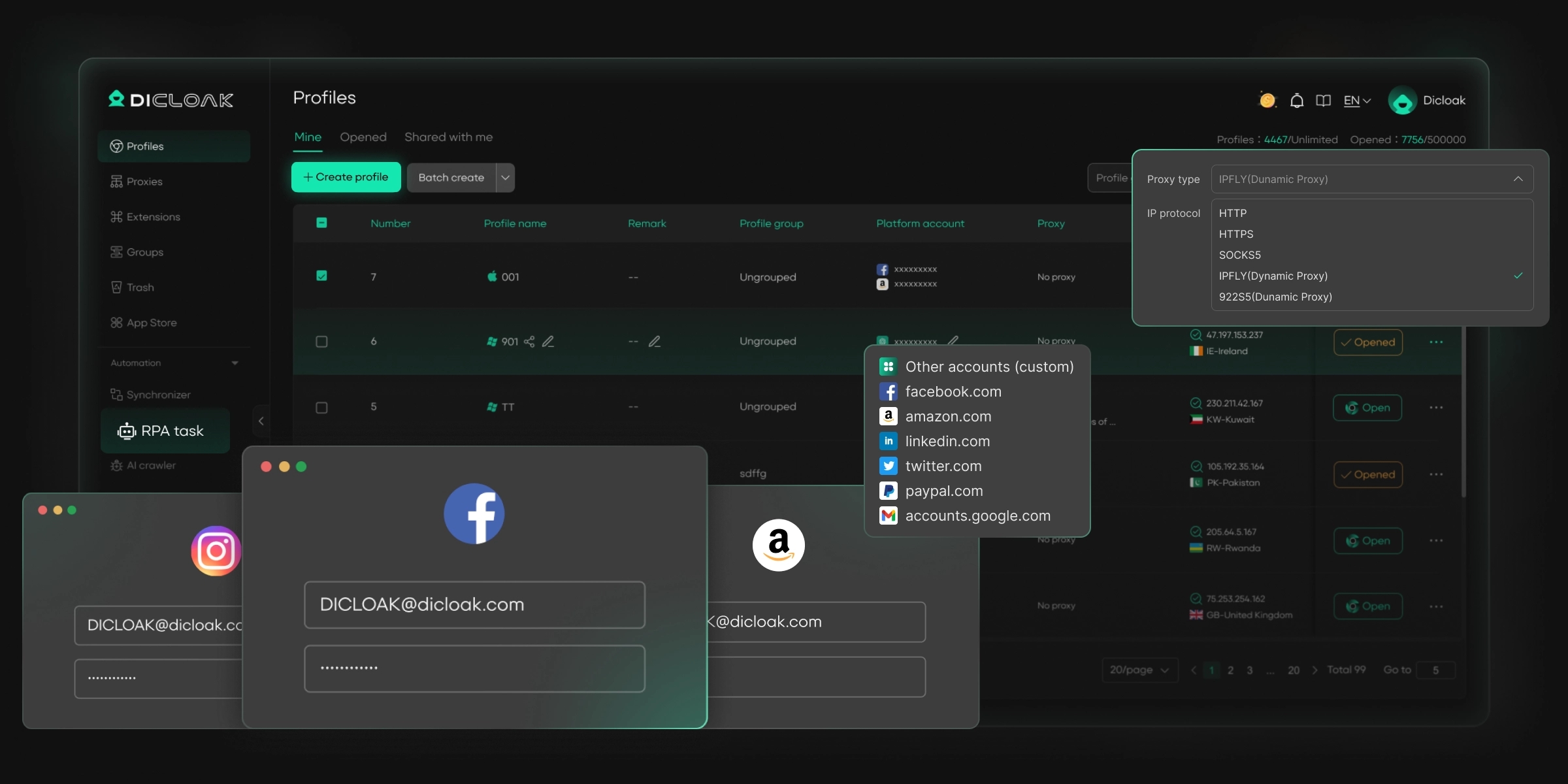
⚡The DICloak Antidetect Browser has become a global favorite for its unparalleled ability to efficiently and securely manage multiple accounts. Designed for professionals in social media management, affiliate marketing, traffic arbitrage, e-commerce, account farming, airdrops, and more, DICloak offers powerful features like RPA automation, bulk operations, and a window synchronizer. Additionally, it allows you to customize fingerprints and integrate proxies for each profile, ensuring top-level security and operational efficiency. It’s the ultimate tool for seamless, secure, and scalable operations.
What Makes DICloak Stand Out?
✅ Manage 1,000+ Accounts on One Device: Stop wasting money on extra hardware! DICloak allows you to manage multiple accounts on a single device, cutting costs and boosting efficiency.
✅ Guaranteed Account Safety, No Ban Risks: Every account gets its own isolated browser profile with custom fingerprints and IPs, drastically reducing the risk of bans. Your accounts, your control!
✅ Flexible Proxy Configuration for Maximum Performance: Seamlessly integrate with all major proxy protocols (HTTP/HTTPS, SOCKS5) and manage your proxy pool with bulk operations. No more struggling with IP management—DICloak has you covered.
✅ Streamlined Team Collaboration for Better Results: Easily manage your team with advanced tools like profile sharing, permission settings, data isolation, and operation logs. Your team works smarter, not harder.
✅ Automate the Grind with RPA: DICloak's built-in RPA saves you hours of manual work. Automate repetitive tasks, streamline workflows, and focus on what really matters—growing your business.
✅ Powerful Bulk Tools to Scale Your Operations: Create, import, and launch multiple browser profiles in one click. DICloak makes scaling your business as easy as it gets.
✅ Compatible with All Major Operating Systems: Based on the Chrome core, DICloak supports simulating Windows, Mac, iOS, Android, and Linux operating systems. No matter what platform you need, DICloak has you covered.
🔗 Ready to Get Started?
Visit the DICloak website to explore more details and choose the plan that’s right for you. Start for free today and experience the power of secure, efficient, and scalable multi-account management!
Frequently Asked Questions Regarding What is a WebRTC Leak Shield
What Constitutes a WebRTC Leak?
A WebRTC leak occurs when a web browser lets slip your actual IP address to websites, even when you are connected via a proxy.
How Can I Prevent WebRTC Leaks?
You can halt WebRTC leaks by using browser add-ons like WebRTC Leak Shield on Firefox and Chrome, or by manually disabling WebRTC in certain browsers.
Does WebRTC Leak ShieldAffect Video Calls?
Yes, stopping WebRTC might impede video calls and direct peer-to-peer interactions. Utilize the guard primarily if privacy holds greater importance than those functionalities.
Can I Deactivate WebRTC Manually?
In some browsers like Firefox, you can manually switch off WebRTC via settings such as about, but Chrome requires an extension.
Concluding Remarks
Averting WebRTC leaks is essential for safeguarding your privacy, particularly if you rely on proxies to manage multiple accounts or browse the web securely.
Utilities such as WebRTC Leak Shield for Firefox and Chrome provide a straightforward, potent remedy to block WebRTC communications that could compromise your privacy.
Combining this with DICloak's capability to manage diverse browser profiles yields a comprehensive privacy solution that keeps your IP concealed as you scale your activities.
 Web Proxy Tools
 Free Tools
 Cookie Plugin
 UA Generator
 MAC Address Generator
 IP Generator
 IP Address List
 2FA Code Generator
 World Clock
 Anonymous Check
 WebRTC Leak Test
 UUID Generator
 Free Web Proxy Site
 Proxy Checker
 FB Ad Checker
 AI Web Scraping
 Free SMM Tools
 Twitter Shadowban Checker
 Instagram Name Checker
 UTM Generator
 Username Generator
 AI Hashtag Generator
 LinkedIn Headline Generator
 Social Media Image Resizer