Encountering a challenge-response roadblock during a high-stakes digital interaction, such as a time-sensitive financial transaction or a limited-run asset acquisition, remains a primary friction point in the modern web. This automated hurdle is a CAPTCHA (Completely Automated Public Turing test to tell Computers and Humans Apart). Its primary architectural function is to serve as a gatekeeper, utilizing cryptographic and behavioral challenges to differentiate between authentic human users and automated software or malicious botnets.
Why do websites keep showing me CAPTCHAs?
From a cybersecurity perspective, CAPTCHAs are rarely triggered at random. They are the result of heuristic engines flagging specific environmental or behavioral signals that deviate from known human patterns.
Is your IP address acting suspiciously?
Security systems perform real-time monitoring of IP reputations and traffic flow. Challenges are often triggered by volumetric anomalies, sudden spikes in request rates, or correlated request patterns originating from specific CIDR blocks known to host proxy exit nodes or data center infrastructure. When an IP exhibits a high request-to-session ratio, the system deploys a CAPTCHA to verify the legitimacy of the traffic.
Are you failing too many sign-in attempts?
Brute-force protection is a core use case for CAPTCHAs. Security protocols generally remain passive during initial interactions but shift to an active defense posture after repeated failed authentication attempts. By introducing a challenge-response test during rapid sign-in or registration flows, developers can neutralize credential stuffing attacks and automated account creation scripts.
Do you have an "empty" browsing history?
Modern verification engines analyze the entropy of a user’s digital footprint. A browser session that lacks persistent cookies, cached assets, or a logical navigation history raises immediate red flags. When a "cold" browser profile attempts to access a protected resource without the natural telemetry of prior site engagement, the system interprets the lack of historical data as evidence of a freshly spun-up automation instance.
Are you loading resources too quickly?
Bots are frequently optimized for speed, often suppressing the loading of "unnecessary" resources like CSS files, images, or tracking scripts to conserve bandwidth and decrease execution time. Security engines detect these incomplete request headers and irregular loading sequences. A failure to request standard page dependencies is viewed as a high-probability signal of headless browser automation, triggering an immediate verification challenge.

How does a CAPTCHA actually tell if I’m a human?
The verification process has evolved from simple text recognition to complex algorithmic assessments of non-linear human behavior.
The challenge-response framework
The foundational mechanism involves a two-part protocol: a distinct challenge (visual, auditory, or logical) and a corresponding input field. In the 2026 landscape, these challenges are designed to be high-entropy, ensuring that the puzzle cannot be predicted by a static database of previously solved instances.
How algorithms validate your response
Validation is no longer a binary check of the correct answer. Backend engines utilize Neural Networks, Random Forests, and Support Vector Machines (SVM) to analyze the "noise" in the response. These algorithms assess micro-interactions—such as the variance in response latency, the precision of mouse hovering, and the non-linear "jitter" characteristic of human input—to distinguish genuine users from the mathematically perfect (and therefore detectable) movements of a script.
Adaptive difficulty and session security
To counter the increasing sophistication of solver services, systems employ adaptive difficulty. If a session is associated with high-risk signals, the engine increases the complexity of the puzzle or introduces randomization of challenge elements to break bot training sets. Furthermore, session-based challenges and time-out constraints ensure that a "solved" state cannot be indefinitely cached or reused by an automated agent.
What are the different types of CAPTCHAs used in 2026?
The arms race between automation and security has resulted in a diverse taxonomy of challenges, each designed to target different weaknesses in machine learning models.
Visual and Textual Puzzles
- Text-Based: These involve characters distorted through noise injection, multi-axis rotation, and overlapping gradients. They specifically target the limitations of traditional Optical Character Recognition (OCR).
- Image-Based: These require users to perform semantic labeling, such as identifying specific objects within a fragmented grid. This forces bots to utilize computer vision models, which are more computationally expensive to run at scale.
Audio and Accessibility Options
For users with visual impairments, audio CAPTCHAs provide phonetic sequences obscured by background noise. These challenges are designed to resist speech-to-text (STT) synthesis by utilizing acoustic frequencies that are easily filtered by the human ear but confusing for simple auditory processing algorithms.
Invisible and Behavioral Analysis
- Checkbox CAPTCHAs: The "I am not a robot" interaction is a front for background telemetry collection, analyzing the user's browser profile before the click even occurs.
- Behavioral Biometrics: These systems monitor keystroke dynamics, click patterns, and mouse acceleration. Because human movement is inherently stochastic, these "invisible" tests verify identity without disrupting the user flow.
Logical and Puzzle-based Tasks
As LLMs have become more adept at image recognition, sites have shifted toward logical puzzles. This includes solving basic math, completing visual sequences, or identifying the "odd one out" in a group of abstract shapes—tasks that require a level of reasoning that simple pattern-matching bots often lack.
Why are websites still using these annoying tests?
From a practitioner’s perspective, the implementation of CAPTCHA is a necessary trade-off to maintain infrastructure stability and data veracity.
Preventing automated brute-force attacks
CAPTCHAs serve as a critical defense against account takeovers (ATO). By rate-limiting authentication attempts through human verification, site owners can prevent mass-purchasing bots from exhausting inventory—a vital protection in industries like ticket scalping and high-demand retail.
Maintaining data integrity and quality
Automated spam and fake registrations can rapidly degrade a platform's database. Verification steps ensure that user-generated content, such as reviews and forum posts, originates from genuine participants, thereby preserving the quality of the data used for business intelligence.
Meeting compliance and fair access standards
Security frameworks often mandate CAPTCHAs to satisfy regulatory requirements for data protection. Furthermore, they facilitate fair access by preventing "resource exhaustion" attacks, where botnets overwhelm a server to deny service to legitimate human users.
What are the biggest risks and downsides for site owners?
Despite their utility, CAPTCHAs introduce significant "drag" on the user experience, which can lead to measurable business losses.
Friction in the user experience
Excessive challenge frequency leads to "CAPTCHA fatigue." If the difficulty is tuned too high, frustrated users will abandon the workflow entirely, leading to a direct degradation in perceived service quality.
The impact on conversion rates
In the sales funnel, every additional step is a potential point of abandonment. Disrupted user journeys—particularly during the checkout or sign-up phase—often result in lost revenue, as users prioritize convenience over completing a complex verification task.
Accessibility and inclusivity barriers
Challenges that rely on high-fidelity visual or auditory perception can inadvertently exclude users with disabilities. Failing to provide robust, accessible alternatives can lead to non-compliance with international accessibility standards (such as WCAG) and alienate significant user segments.
Can modern bots and AI really bypass CAPTCHAs?
The effectiveness of static CAPTCHAs has diminished as Generative AI and advanced Machine Learning (ML) have progressed.
The rise of OCR and Machine Learning bots
Sophisticated automation frameworks now integrate high-speed OCR and custom-trained ML models capable of interpreting distorted text and classifying images with near-human accuracy. This has rendered many traditional "v1" CAPTCHAs virtually obsolete.
Why static CAPTCHAs are no longer enough
Static puzzles are vulnerable to "replay attacks" and solver farms. In 2026, the focus has shifted toward behavioral biometrics and "Proof of Work" (PoW) mechanisms. These require the client's machine to solve a complex computational problem, making large-scale botting economically unviable while remaining transparent to the human user.
How can I reduce CAPTCHA interruptions in my workflow?
CAPTCHA interruptions usually increase when a platform sees a browsing setup that changes too often or looks inconsistent. Through DICloak, users can keep different accounts in separate browser profiles, so cookies, login sessions, and local browsing data do not get mixed together. This is especially useful for people who manage multiple accounts, because a cleaner setup often feels more stable and easier to maintain over time.
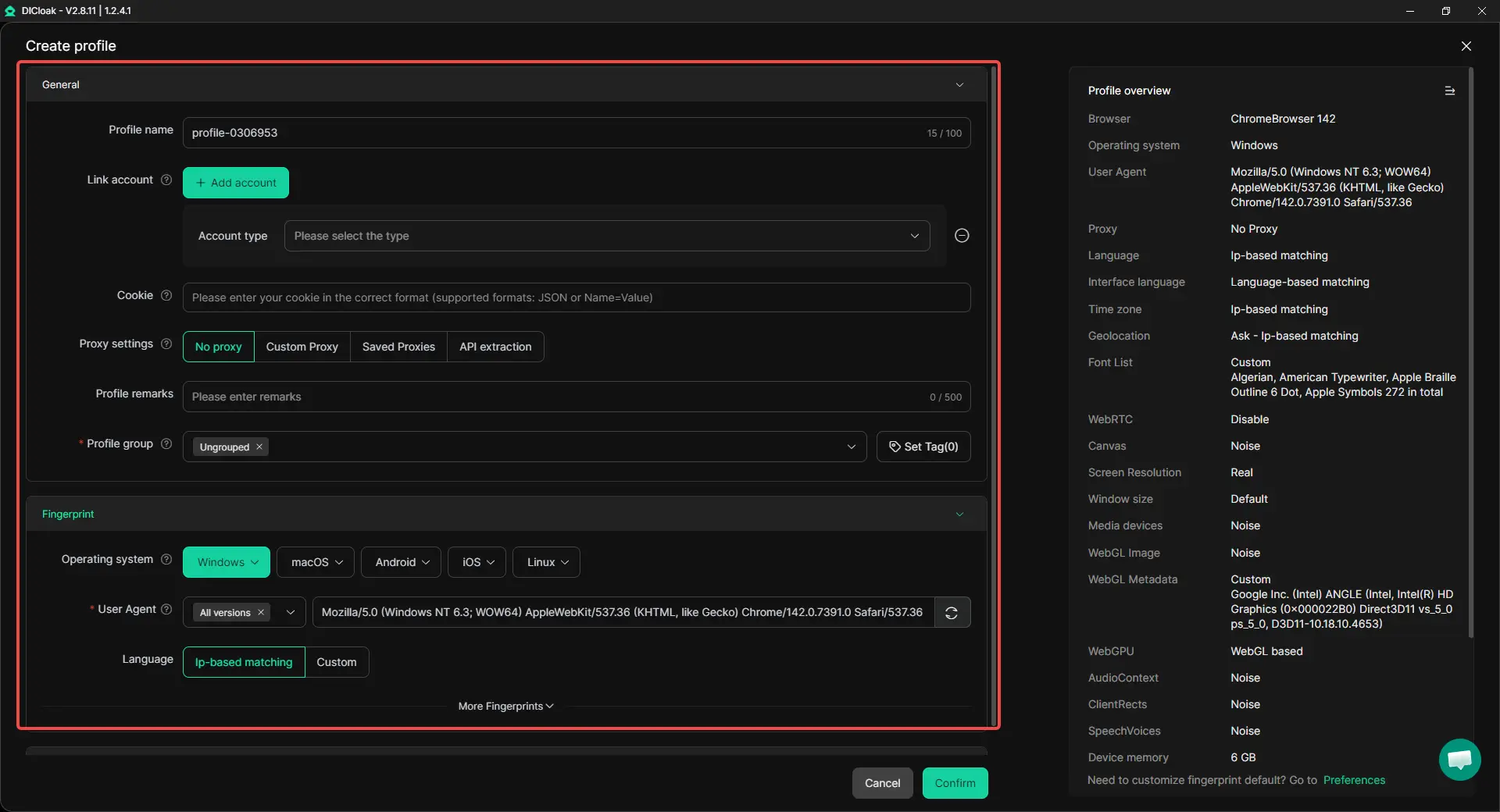
With DICloak, users can also configure browser fingerprints and assign proxies at the profile level, which helps each profile keep a more consistent identity during daily use. When the same account is always opened in the same profile, with the same basic setup, it may help reduce repeated verification triggers caused by sudden environment changes.
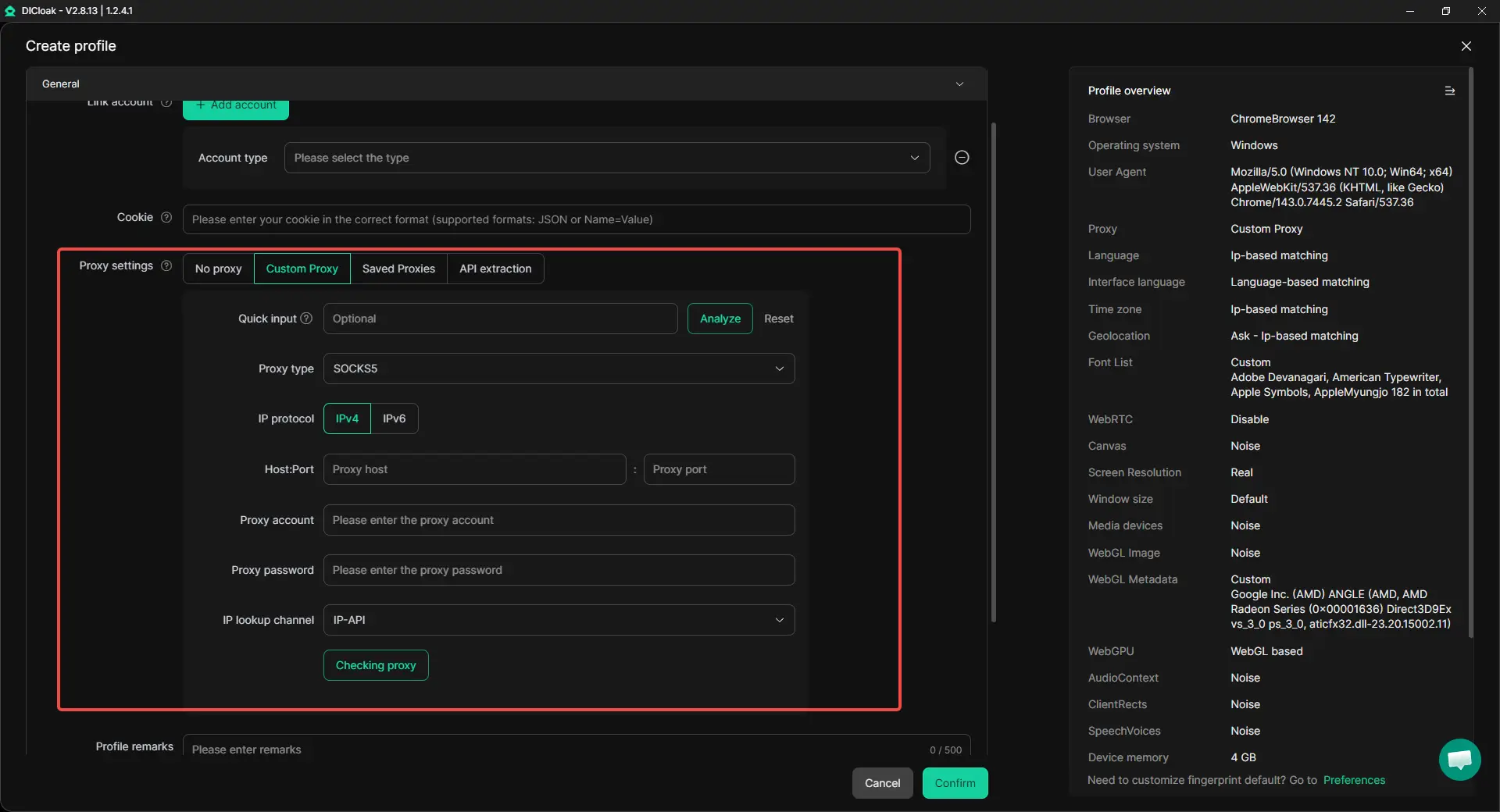
Through DICloak, users can keep work inside dedicated browser profiles instead of reopening accounts in a fresh browser state every time. This helps preserve cookies, login sessions, and local browsing data within the same profile, so the account activity looks more continuous over time. For platforms that are sensitive to abrupt session resets or unusually “clean” browsing states, a more persistent profile setup may help reduce extra verification steps such as CAPTCHA checks.

In many cases, the real problem is not just the CAPTCHA itself, but too many switches in browser state, login context, or network setup. A more organized workflow makes a difference. Keeping accounts separated, using stable profile settings, and avoiding unnecessary changes between sessions can help make browsing feel smoother and reduce interruptions during routine work.
When is a CAPTCHA absolutely necessary for a site?
A strategic deployment of CAPTCHA focuses on high-risk entry points rather than the entire site architecture.
Analyzing site-specific vulnerabilities
Security teams must audit "Contact Us" forms, registration gateways, and search queries for susceptibility to automated scraping or spam. These high-vulnerability points are the most appropriate locations for active verification.
Balancing security with user experience
While CAPTCHA is effective, it is often used as a last resort. For low-risk interactions, specialists may prefer behavioral biometrics or two-factor authentication (2FA), which provide high security with less cognitive load for the user.
Frequently Asked Questions
Why do I get a CAPTCHA even when I'm not a bot?
This is typically due to a "dirty" IP reputation or a lack of browser entropy. If your IP is part of a range recently used for volumetric attacks, or if your browser profile is too "clean" (lacking cookies and history), the heuristic engine will demand a manual verification.
Can AI solve CAPTCHAs better than humans?
In specific domains, such as text deciphering and object labeling, specialized ML models can achieve higher accuracy and faster solve times than humans. This has forced the industry to move toward behavioral and hardware-attestation-based security.
Are there CAPTCHAs for the visually impaired?
Yes. Audio challenges and haptic-based puzzles are standard accessibility features. In 2026, many sites also use "invisible" behavioral analysis which requires no visual interaction at all.
Do CAPTCHAs track my mouse movements?
Yes. Behavioral-based challenges analyze the velocity, acceleration, and trajectory of your cursor. Machines move in straight lines or perfect arcs; humans move with a specific "jitter" that is difficult for basic scripts to replicate.
How do "I am not a robot" checkboxes work?
These rely on a snapshot of your session data, including your IP, cookies, and hardware fingerprint. If the risk score is low, the box clears instantly. If the score is borderline, it triggers a secondary visual challenge.
What happens if I keep failing CAPTCHAs?
Repeated failure triggers rate-limiting or a temporary "cooldown" period. The system may also increase the adaptive difficulty, presenting more complex puzzles to ensure that a bot isn't simply brute-forcing the challenge through random guessing.
Conclusion
CAPTCHAs remain a necessary, though evolving, component of the global cybersecurity stack. As automation becomes more sophisticated, the focus is shifting away from solving puzzles and toward verifying the inherent "noise" of human behavior. Understanding these triggers—from IP patterns to resource loading heuristics—is essential for any specialist navigating the complex intersection of web automation and security.
 Web Proxy Tools
 Free Tools
 Cookie Plugin
 UA Generator
 MAC Address Generator
 IP Generator
 IP Address List
 2FA Code Generator
 World Clock
 Anonymous Check
 WebRTC Leak Test
 UUID Generator
 Free Web Proxy Site
 Proxy Checker
 FB Ad Checker
 AI Web Scraping
 Free SMM Tools
 Twitter Shadowban Checker
 Instagram Name Checker
 UTM Generator
 Username Generator
 AI Hashtag Generator
 LinkedIn Headline Generator
 Social Media Image Resizer