Social media managers in 2026 face one of the most challenging digital environments ever. Platforms like Meta, TikTok, Instagram, LinkedIn, Pinterest, and regional platforms have become smarter, their risk engines sharper, and their account verification systems now use sophisticated fingerprinting technology to evaluate hundreds of small signals. For professionals managing dozens of client accounts, even a minor inconsistency can lead to verification loops, trust-score drops, or outright suspension.
In this high-stakes environment, antidetect browsers for social media marketing have become an essential solution. These browsers provide the tools needed to manage multiple accounts safely by creating isolated digital identities and masking critical data like device fingerprints, IP addresses, and more. This article will review the top 10 antidetect browsers for social media marketing, with a special focus on the leading choice for professionals, DICloak.
Why You Need Antidetect Browsers for Social Media Marketing Today
The core problem for social media marketing (SMM) professionals is that platforms have no tolerance for unusual device patterns. They actively flag inconsistencies like mismatched screen resolutions, odd WebGL signatures, or suspicious IP behavior, which often leads to account issues. Manually switching between accounts on the same device is a major red flag for these systems.
Antidetect browsers solve this problem by providing each client account with its own sealed digital identity. Each browser profile has its own unique cookies, device parameters, and proxy settings, making it appear as if each account is being managed from a separate, legitimate device.
The Modern SMM Challenge
This fundamental need for sealed identities becomes even more critical when you consider the expanded scope of modern social media management. SMM has evolved far beyond simply scheduling posts. Today, it involves running complex ad campaigns, moderating communities, and distributing regional content. This scale of operation requires a level of digital stability that manual account switching cannot provide. Trying to manage multiple clients from one computer risks triggering cross-account suspicion, which can jeopardize an entire portfolio of accounts.
How Do Antidetect Browsers for Social Media Marketing Actually Work?
Antidetect browsers create a unique digital "fingerprint" for each profile you manage. They do this by modifying a wide range of technical parameters, including the User-Agent, operating system, screen resolution, GPU metadata, canvas output, and even audio signatures. This process makes it appear as if every login is coming from a completely different person using a different device.
As a result, social media platforms cannot link the accounts you manage based on shared device data. Moreover, most antidetect browsers include features like proxy integration to assign a unique IP address to each profile and team collaboration tools to allow multiple specialists to work on the same accounts securely.
The Key to Success: What Defines the Best Antidetect Browsers for Social Media Marketing
Superior antidetect technology is crucial because modern fingerprinting systems are designed to find anomalies. Platforms now analyze GPU metadata, audio signatures, and even behavioral patterns like input timing to detect fake or multiple accounts. The best antidetect browsers for social media marketing excel in three critical areas:
- Authenticity: The fake identity must appear and behave like a real device used by a person in a specific region
- Consistency: The browser fingerprint must not "drift" or change during long sessions, as this can trigger alerts like “We noticed unusual activity”
- Scalability: The browser must handle hundreds of accounts without performance issues or compromising the separation between profiles
Antidetect Browser vs. Proxy: A Crucial Distinction for Social Media Marketing
While both tools enhance online privacy, antidetect browsers and proxies serve very different functions. A proxy primarily masks your IP address, helping to bypass geo-restrictions and avoid IP-based bans. However, it does not alter your browser fingerprint, which social media platforms can still use to link your accounts.
An antidetect browser, on the other hand, is specifically designed to modify your browser fingerprint, making each account appear to come from a unique device. This allows you to mask not only your IP address but also details like your device information, browser settings, and other fingerprinting traits.
For maximum security, the ideal approach is to combine an antidetect browser with high-quality residential or mobile proxies. This ensures that both your IP address and browser fingerprint are unique for each account.
Understanding this distinction is critical, as it emphasizes why a comprehensive solution—one that addresses both fingerprint masking and IP management—is essential for social media marketers. This leads us to our top recommendation for 2026.
Our Top Recommendation for Social Media Marketing: DICloak Antidetect Browser
DICloak holds the top position in our 2026 ranking for antidetect browsers for social media marketing (SMM) due to its high fingerprint accuracy, stable Chromium engine, and collaborative design, making it perfectly suited for SMM workflows. Agencies in the US, UK, France, Germany, and Vietnam report smoother campaigns and significantly fewer verification events after switching to DICloak. This directly reflects its mastery of the three critical factors for SMM success: authenticity, consistency during long sessions, and performance at scale.
DICloak's fingerprints mirror real device conditions so closely that platforms treat them as organic traffic. This leads to better account survival rates, which is especially important when creating new ad accounts or scheduling region-sensitive content.
What Makes DICloak Stand Out?
One of DICloak's biggest advantages is its workspace system. This feature allows managers to share profiles securely with colleagues without revealing passwords or transferring sensitive fingerprint data. Each profile can also be assigned a unique proxy, so every account has its own IP address for enhanced anonymity and regional testing. This ensures everything remains isolated and auditable.
DICloak’s Cost-Effectiveness for SMM Teams
DICloak offers a highly cost-effective solution for social media marketing (SMM) teams. With flexible pricing, it starts with a free plan for small-scale use, making it accessible for testing. Paid plans begin at $8/month, providing more profiles, automation, and team collaboration tools. Its scalable pricing allows teams to expand easily as their needs grow, while the custom plans ensure flexibility for larger operations. DICloak combines affordability with powerful features, making it an excellent choice for teams managing multiple accounts.
The Best Antidetect Browsers for Social Media Marketing in 2026
We will now dissect the top 10 antidetect browsers for social media marketing in the 2026 market. Each browser is evaluated based on its fingerprint authenticity, automation capabilities, and suitability for collaborative agency workflows, providing a clear verdict on its best-use case for SMM professionals. Many of these tools support bulk operations, allowing users to manage multiple profiles and accounts efficiently.
1. DICloak
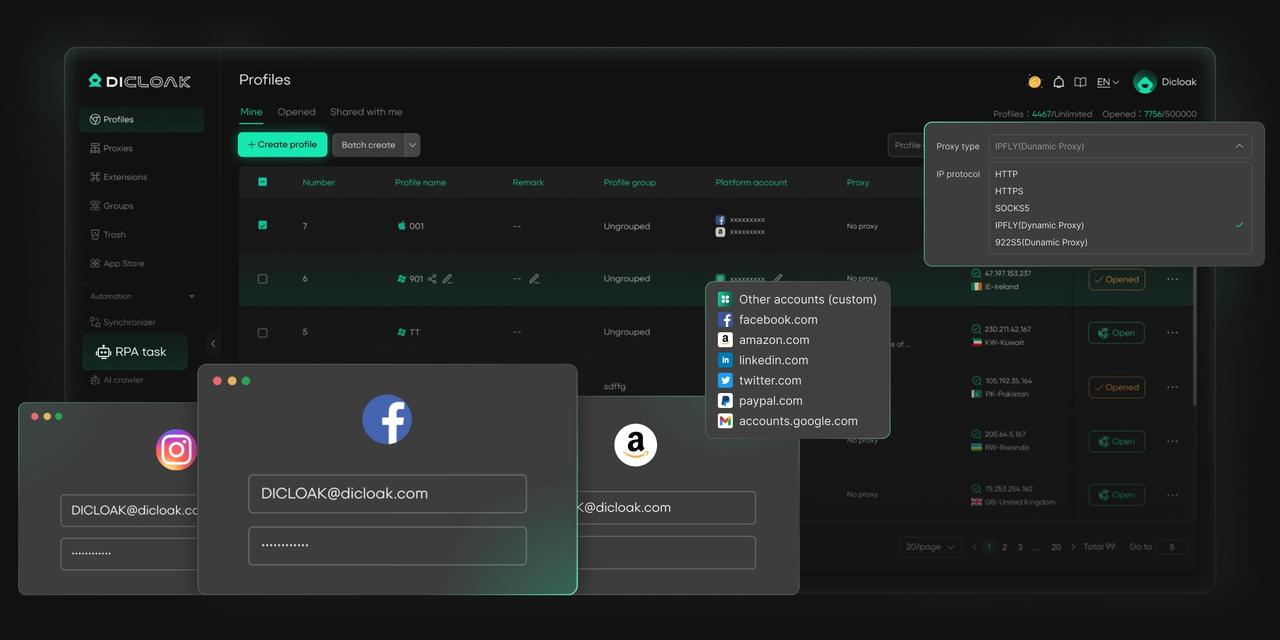
DICloak has become a go-to antidetect browser for social media marketers and SMM teams due to its emphasis on profile isolation, automation, and team collaboration.
- Key Features: Cloud-based profiles, RPA , proxy group management
- Pros: Ideal for multi-account management, seamless team collaboration, strong fingerprint isolation for undetectable social media activity
- Cons: Limited to desktop devices, with no support for mobile apps or emulation, exclusively uses the Chromium-based Orbita browser
DICloak excels in providing scalable solutions for social media marketers needing reliable account isolation and smooth automation, ensuring long-term operational efficiency without raising flags.
2. Dolphin Anty
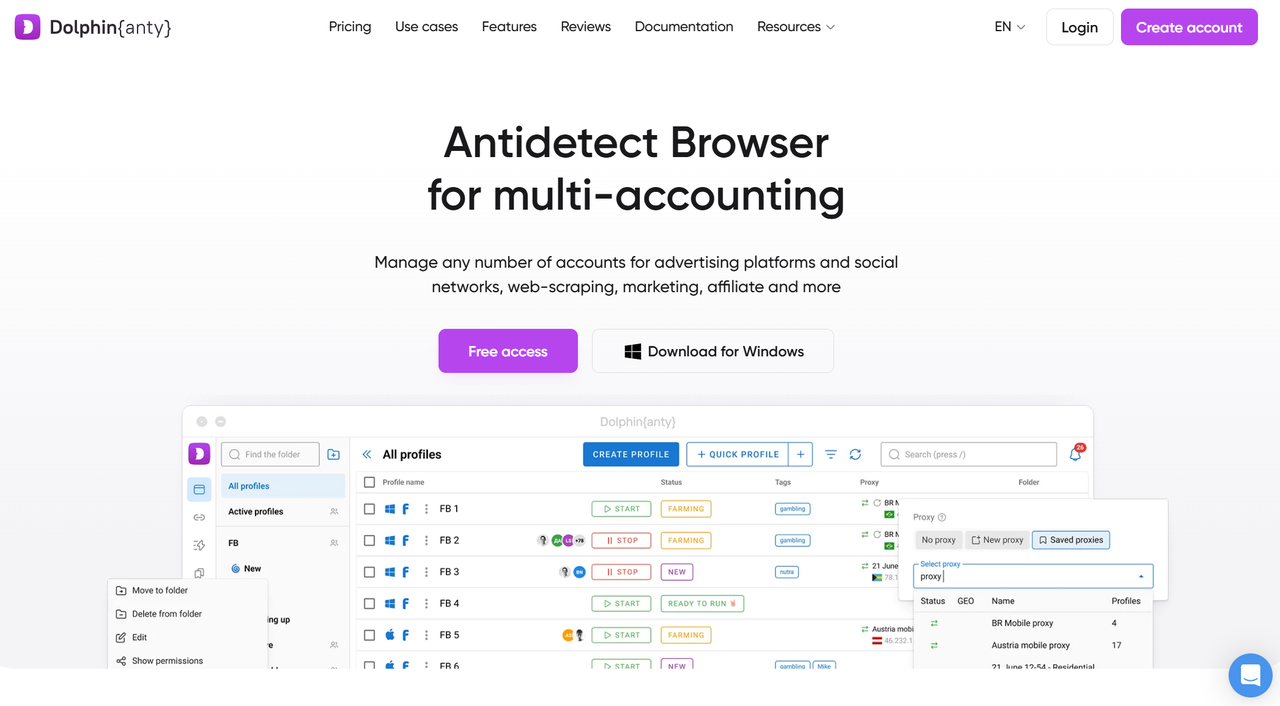
Dolphin Anty has carved out a niche with ad buyers and affiliate marketers because its workflow is built around campaign structures.
- Key Features: Task automation, team roles, smart proxy integration
- Pros: Excellent for structured ad operations and routine engagement tasks
- Cons: Low reliability, fingerprint updates sometimes lag behind leading competitors
3. AdsPower
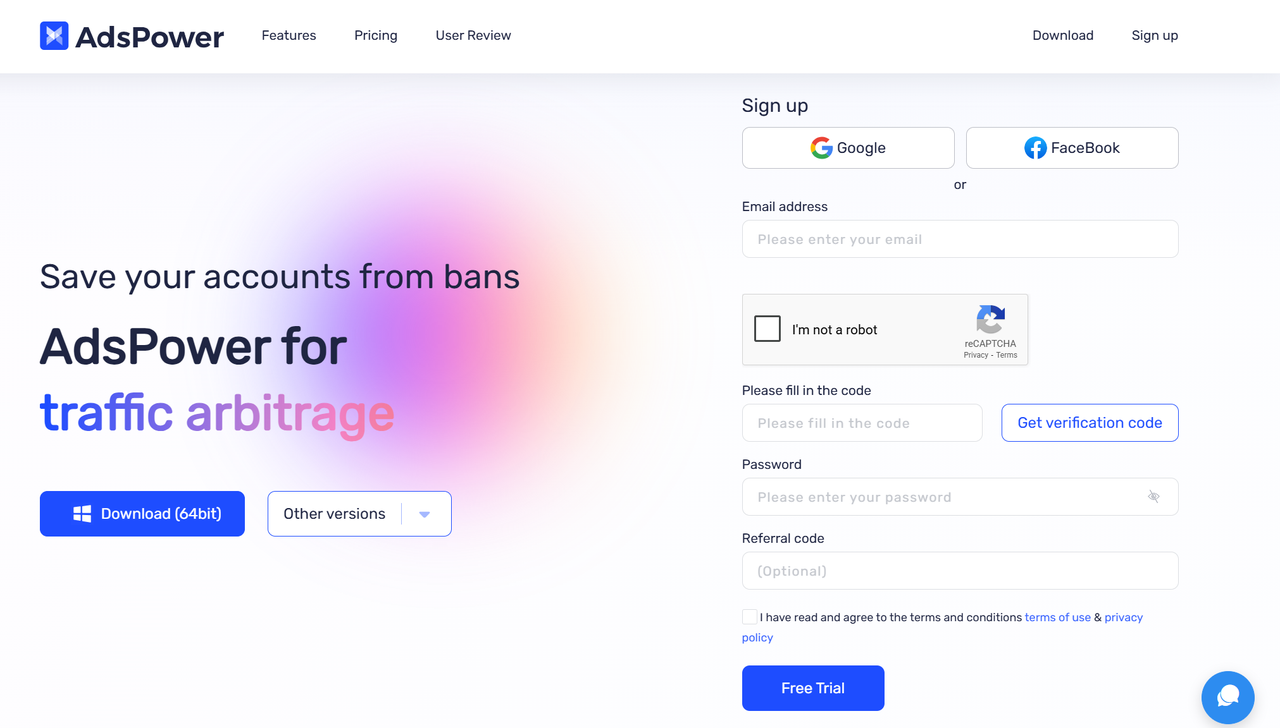
AdsPower offers strong bulk profile capabilities and is widely used by SMM teams working with high account volumes, especially in ecommerce.
- Key Features: Mass profile creation, automation templates, integrated proxy marketplace
- Pros: Cost-effective and ideal for large teams with high account throughput
- Cons: The interface can feel crowded, fingerprint realism varies by update cycle, unknown user data storage providers and locations
4. Incogniton
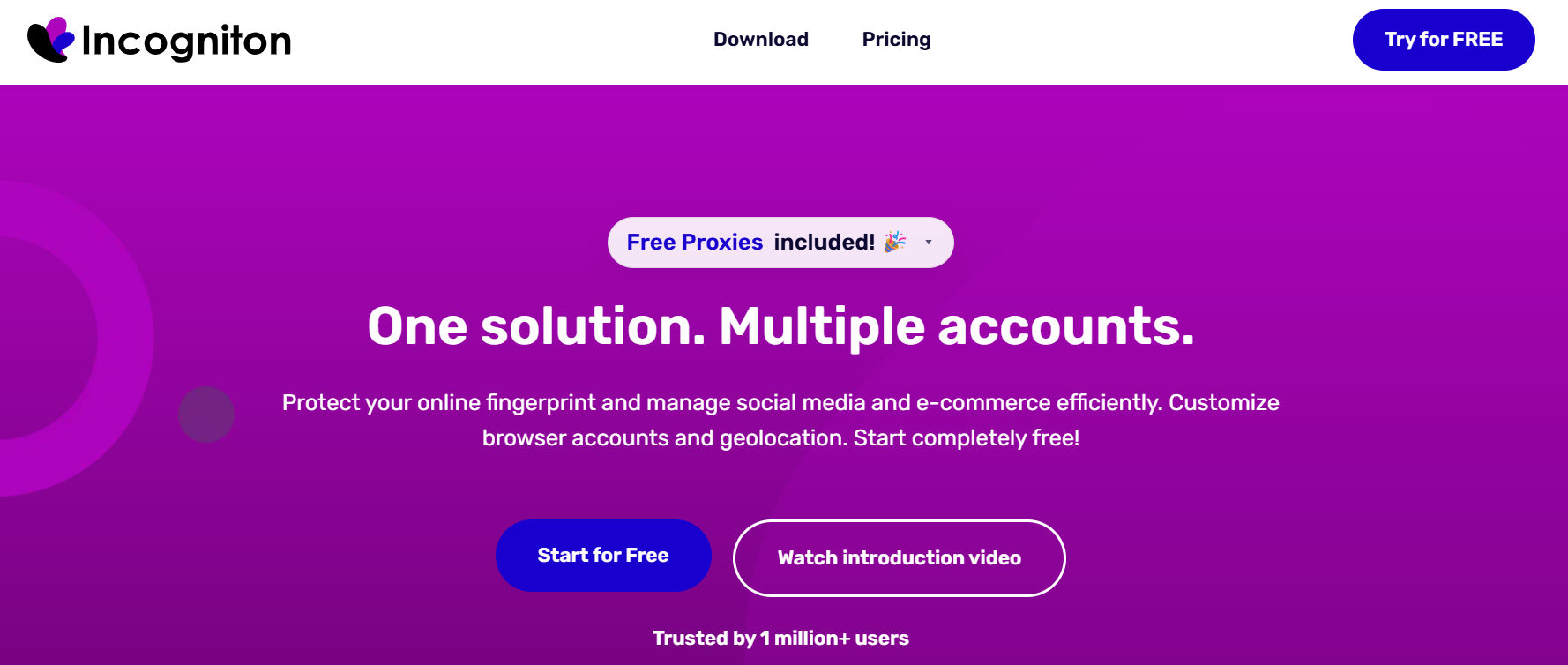
Incogniton is ideal for freelancers and small agencies due to its clean interface, simplicity, and built-in automation recorder.
- Key Features: Profile sync, automation recorder, simple layout
- Pros: Great for beginners and stable enough for mid-level SMM tasks
- Cons: Less sophisticated fingerprinting than DICloak or Multilogin, lower reliability
5. Multilogin
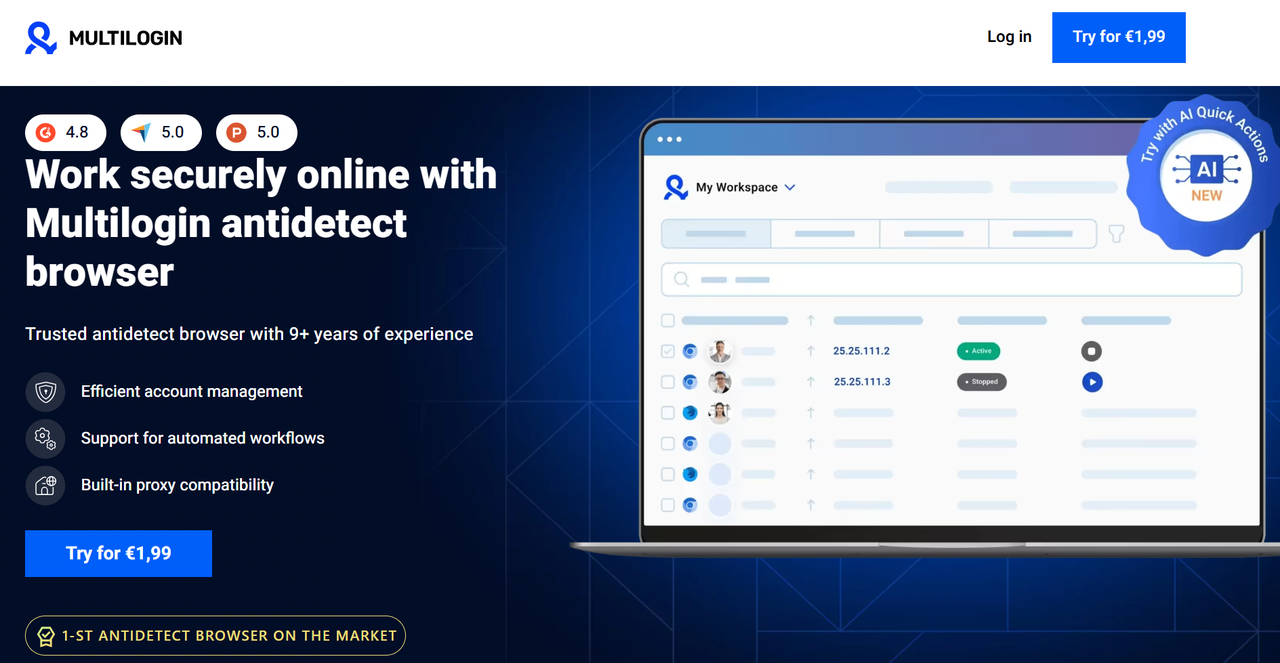
Multilogin is one of the most advanced platforms for technical teams that require precise control over fingerprint parameters.
- Key Features: Deep fingerprint customization, powerful scripting, strong isolation engine
- Pros: Ideal for highly controlled, high-risk workflows
- Cons: Steep learning curve, heavy on system resources, expensive at scale
6. Geelark
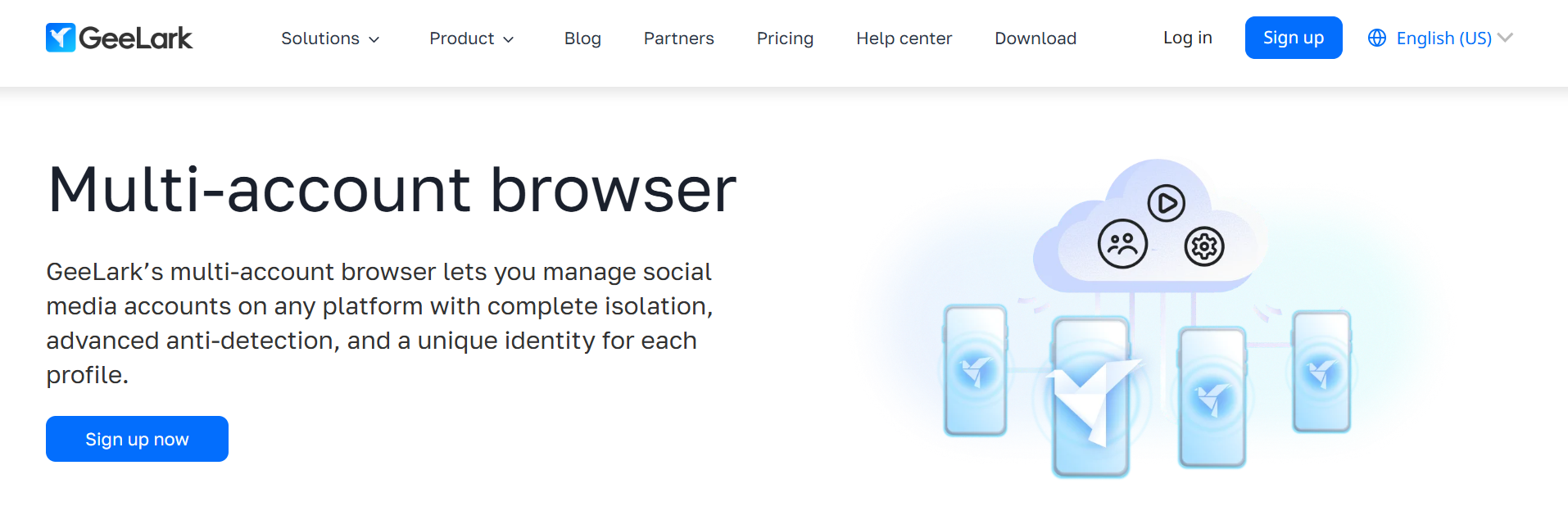
Geelark has gained popularity for its modern user interface and balanced performance, offering clean fingerprints for day-to-day SMM work.
- Key Features: Device presets, proxy integration, straightforward profile management
- Pros: User-friendly and efficient for cross-client operations
- Cons: Limited automation tools, can be expensive at scale
7. Octo Browser
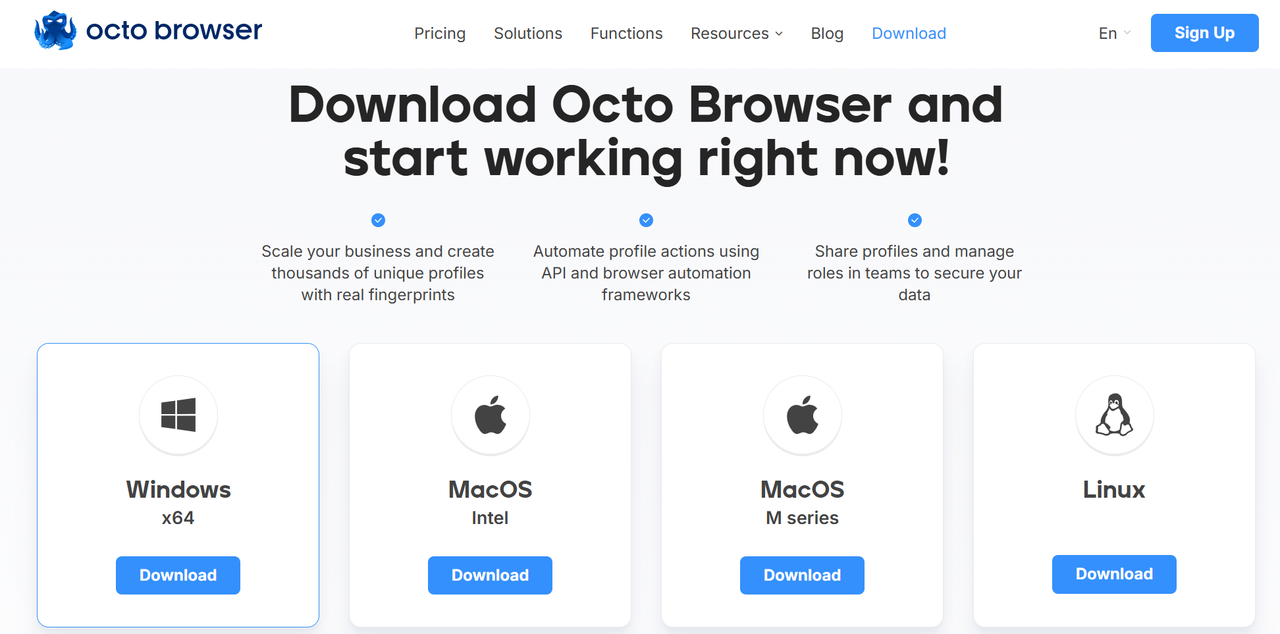
Octo Browser provides a lightweight experience with fast profile switching and solid fingerprint generation, making it a good choice for mid-risk SMM tasks.
- Key Features: Smooth identity isolation, modern interface, efficient resource usage
- Pros: Fast, stable, and ideal for mid-risk tasks
- Cons: Not optimized for large, collaboration-heavy agency structures
8. NSTBrowser
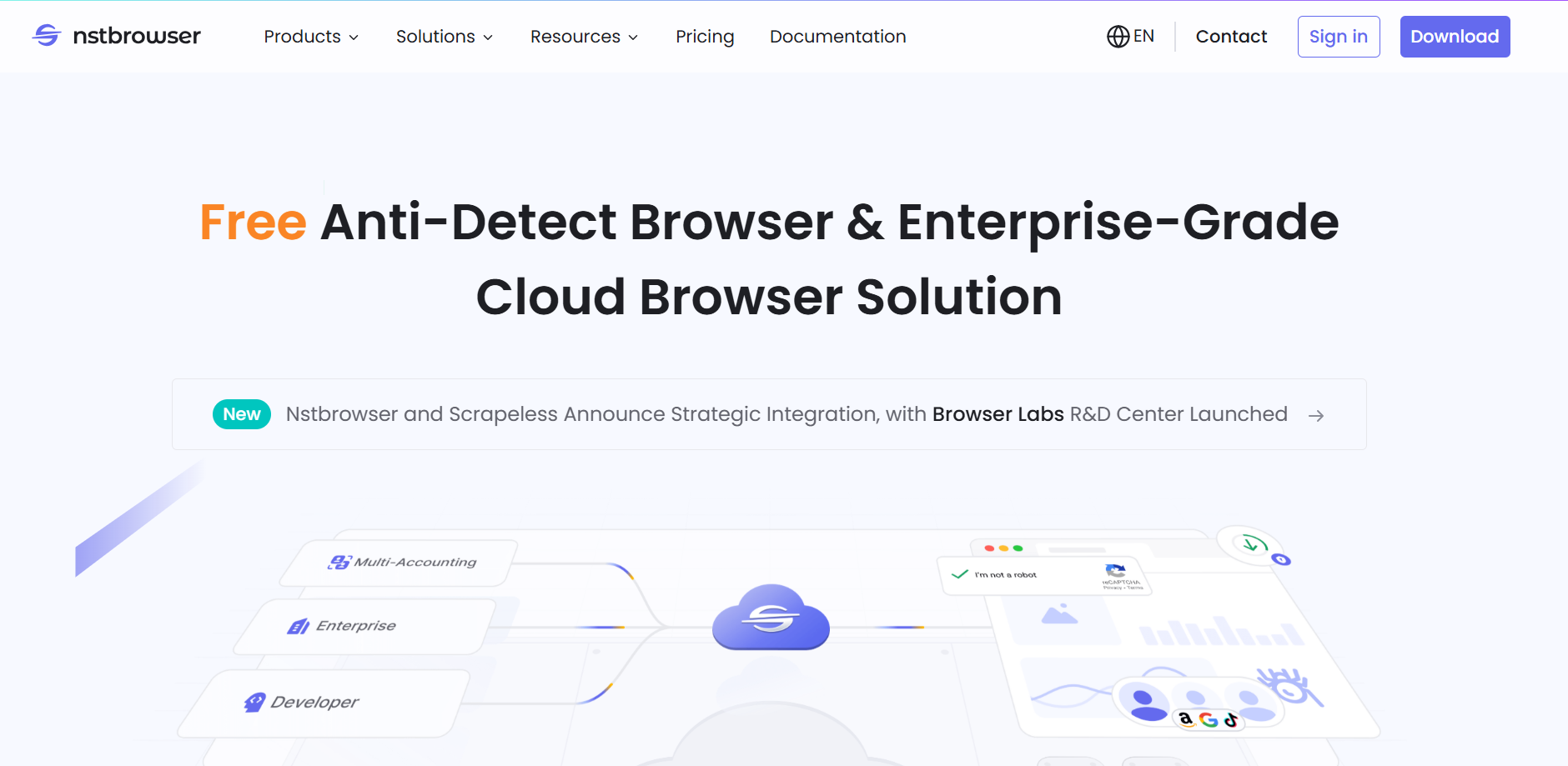
NSTBrowser offers simple but reliable identity separation and is a growing option for small teams handling routine SMM workflows.
- Key Features: Regional fingerprint presets, sandboxed profiles, efficient proxy traffic management
- Pros: Good automation workflows, suitable for medium-volume SMM tasks
- Cons: High learning curve and a slower update cadence
9. Lalicat
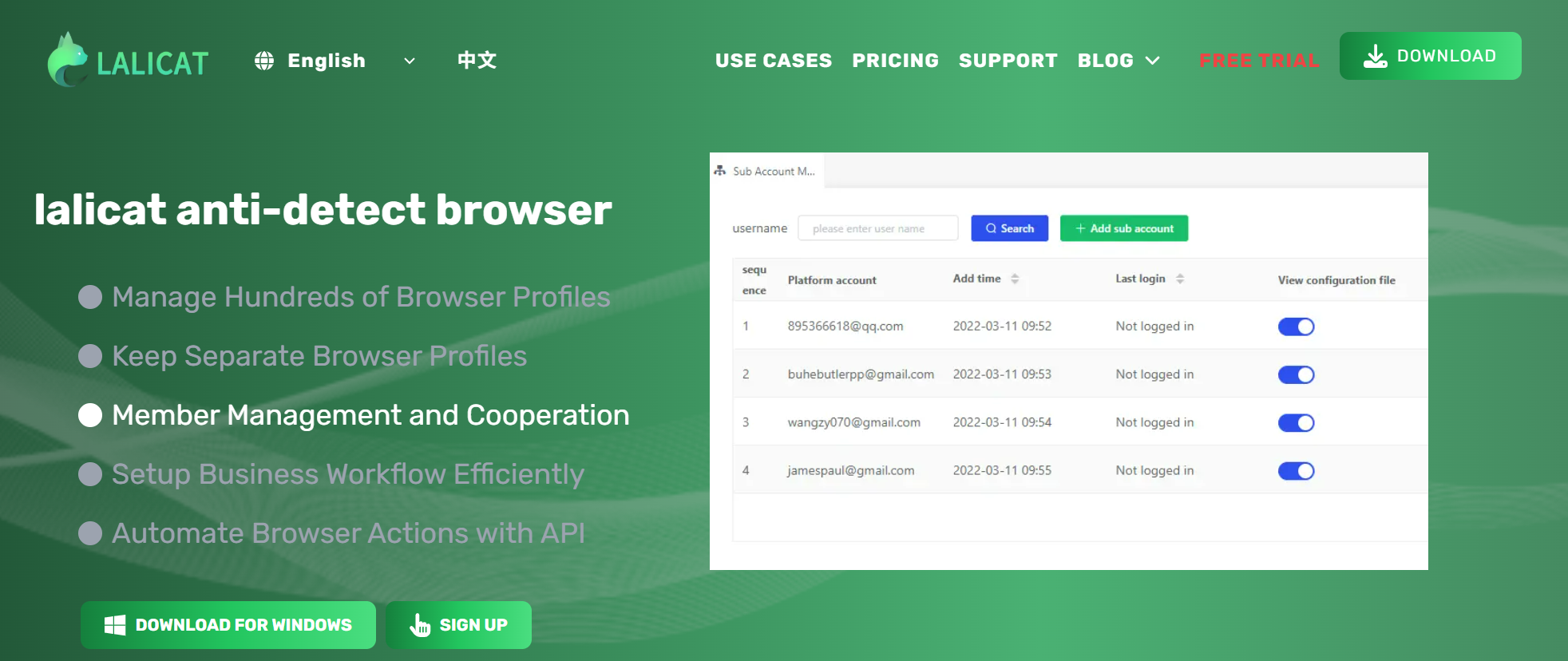
Lalicat is a powerful tool for expert users who want deep manual control over identity customization, but it requires technical proficiency.
- Key Features: Extensive identity customization, scripting support, multi-engine modes, mobile profile creation
- Pros: Great for replicating niche device conditions
- Cons: High complexity makes it a poor choice for beginners
10. Undetectable Browser
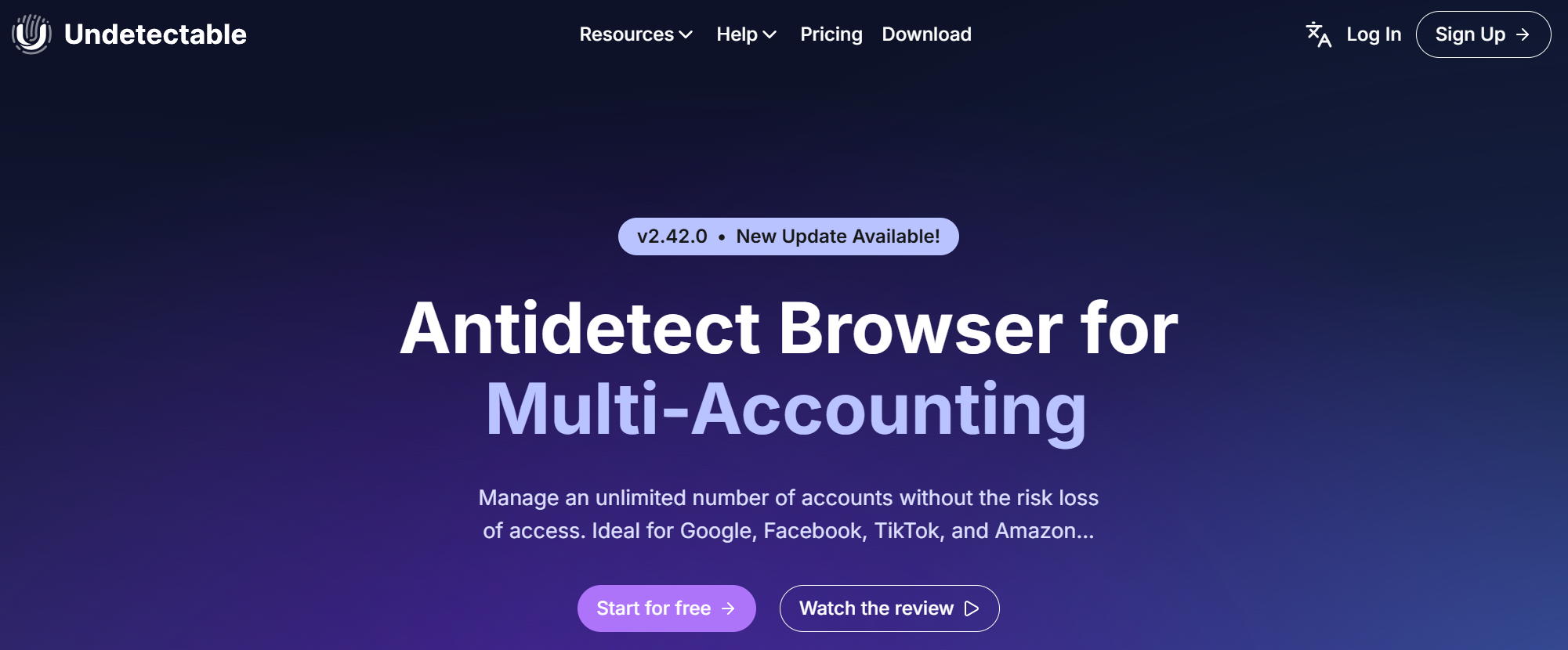
Undetectable is a flexible tool with multiple device presets, making it useful for niche campaigns and experimental work.
- Key Features: Spoofing presets, fingerprint variants, support for mobile platforms
- Pros: Good identity diversity for experimental SMM work
- Cons: Occasional instability and a very steep learning curve
How to Safely Use Antidetect Browsers for Social Media Marketing
To maximize security and avoid detection, follow these best practices:
- Assign a unique digital fingerprint to each browser profile
- Use residential or mobile proxies to mask your IP address
- Never use the same profile for multiple accounts
- Regularly update your browser profiles to stay ahead of evolving detection systems
- Leverage advanced features like team collaboration tools and automation
- Choose a reputable provider with strong security and regular updates
- Use a free plan or trial to test the platform before committing
Common Mistakes to Avoid with Antidetect Browsers for Social Media Marketing
Certain mistakes can compromise your security and lead to account bans. Avoid these common pitfalls:
- Using the same proxy for multiple accounts
- Relying on unreliable free proxies
- Reusing the same browser profile for different accounts
- Neglecting to update browser profiles regularly
- Overusing or poorly configuring automated systems
Final Word: Choosing the Right Antidetect Browsers for Social media marketing for Stability and Scale
In 2026, social media management demands stability, realism, and scale. Antidetect browsers for social media marketing are a necessary part of the modern SMM toolkit, allowing professionals to operate safely across multiple clients.
While many options exist, DICloak stands out for its superior fingerprint realism and collaborative architecture, making it the definitive choice for professional teams prioritizing account stability and operational scale.
Frequently Asked Questions about Antidetect Browsers for Social Media Marketing
Which antidetect browser is best for an SMM agency managing many clients?
DICloak is the strongest option for multi-client workflows due to its accurate fingerprints, stability, and built-in team workspaces that allow for secure profile sharing. It is designed to work seamlessly for antidetect browsers for social media marketing, offering both flexibility and control.
Is an antidetect browser really necessary for social media managers?
Yes. Platforms like Meta and TikTok aggressively track device fingerprints. Without an antidetect browser for social media marketing, switching between client accounts on the same device often triggers verification challenges or account locks. An antidetect browser for social media marketing ensures safer and smoother operations across multiple accounts.
What is the best antidetect browser for SMM automation?
Dolphin Anty and AdsPower offer the strongest built-in automation tools for campaign workflows. DICloak also has a powerful API, making it ideal for teams with custom automation scripts. These antidetect browsers for social media marketing help teams efficiently automate their tasks, saving time and effort.
Which antidetect browser is easiest for a beginner to use?
Incogniton and Geelark are the most beginner-friendly options. Their interfaces are simple, and their default settings work reliably for routine SMM tasks without requiring deep technical knowledge. These antidetect browsers for social media marketing provide an easy entry point for new users.
What should I look for when choosing an antidetect browser for my needs?
Choose based on your scale and risk level. Large agencies should prioritize tools like DICloak for social media marketing for collaboration and high accuracy. Freelancers may prefer the simplicity of Incogniton. Ad specialists often benefit from Dolphin Anty's workflow-oriented design. Technical teams leaning into custom scripts may prefer Multilogin or Lalicat.
 Web Proxy Tools
 Free Tools
 Cookie Plugin
 UA Generator
 MAC Address Generator
 IP Generator
 IP Address List
 2FA Code Generator
 World Clock
 Anonymous Check
 WebRTC Leak Test
 UUID Generator
 Free Web Proxy Site
 Proxy Checker
 FB Ad Checker
 AI Web Scraping
 Free SMM Tools
 Twitter Shadowban Checker
 Instagram Name Checker
 UTM Generator
 Username Generator
 AI Hashtag Generator
 LinkedIn Headline Generator
 Social Media Image Resizer