If your posts are getting fewer views, likes, or new followers, you may start wondering whether your account has a real visibility problem. That is why many creators and brands look for a shadowban checker. It gives you a simple way to test whether your content is still showing up in search, hashtags, and recommendation feeds. In this guide, you will learn how a shadowban checker works, how to spot the signs of a shadowban, how to recover, and how to protect your reach in 2026.
Why Do Social Media Accounts Get Shadowbanned?
A shadowban usually does not look like a full ban. Your account stays online, but fewer people see your posts. Reach drops. Hashtag discovery gets weaker. Search visibility may fall. New followers stop coming in. That is why many people start looking for a shadowban checker. They want to know whether the problem is a real visibility limit or just a bad week in the algorithm.
Common behaviors that trigger shadowbans
Most visibility limits start with patterns that platforms read as unsafe, spammy, or low quality. This can happen when someone posts the same comment again and again, uses mass follow and unfollow tactics, buys likes or views, sends too many DMs in a short time, or reuses content in a way that looks deceptive. YouTube is very clear that fake engagement, including actions that artificially raise views, likes, comments, or subscribers, can lead to enforcement. TikTok also says repeated posting of content that is not suitable for recommendation can make both the account and its posts harder to find. On X, reach can be limited when a post breaks rules, looks low quality, or gets weak behavior signals from users such as blocks and mutes.
How platform algorithms detect violations
Platforms do not rely on one single clue. They usually look at many signals together. X says it uses behavior-based signals for ranking, such as who you follow, which conversations you join, and whether people mute or block you. TikTok says accounts can become ineligible for recommendation if they repeatedly post content that is unsuitable for the For You feed, and it shows users which videos were flagged so they can appeal. Instagram also does not recommend some content from public accounts, and it gives users tools like Account Status and recommendation eligibility checks to see whether content may be limited from reaching non-followers.
Misconceptions about shadowbans
One of the biggest myths is that every traffic drop means a shadowban. That is not true. Reach can fall because the topic lost interest, the post timing was weak, the hook was poor, or competitors made better content that day. X even notes that some posts may seem missing because of spam detection or technical issues, not because of a formal enforcement action. So before you panic, check the basics: are non-followers still seeing your content, are hashtags still working, is search placement weaker than usual, and did your account receive any warning or status notice?
Another common mistake is thinking “shadowban” is always the platform’s official word. Often it is not. Platforms usually talk about reduced recommendation, limited reach, low-quality ranking, ineligible content, or account status issues. That difference matters. If you use a shadowban checker, use it as a testing tool, not as final proof. The smart approach is to combine outside checks with platform signals, then review your recent actions honestly. That gives you a much clearer answer than guessing based on low views alone.
How to Identify If Your Account Is Shadowbanned
A shadowban is hard to spot because most platforms do not show a big warning. Your account may still look normal to you, but other people may stop seeing your posts in search, hashtags, recommendations, or feeds. That is why a shadowban checker can be useful. It helps you test what other users can actually see, instead of guessing based on one bad post.
Signs of reduced visibility and engagement
The first sign is usually a sudden drop that does not match your normal pattern. Views fall fast. Likes and comments slow down. New followers stop coming in. Posts that used to appear in search or hashtag pages become harder to find. On Instagram, content from public accounts may become ineligible for recommendations, which can reduce reach in places like Explore and suggested surfaces. On TikTok, some accounts or videos can become ineligible for recommendation, which directly affects discovery. On X, reach may be limited for posts that break rules or are treated as low quality.
Tools to confirm shadowban status
The best tools are often the platform’s own status pages first, then outside testing tools second. On Instagram, Account Status and recommendation eligibility tools can show whether content may be limited or not eligible for recommendation. On TikTok, users can review whether their account or videos are marked ineligible for recommendation, and they can appeal inside the app. On X, there is no simple “shadowban” dashboard, but official help pages explain when reach can be limited and when accounts may be restricted.
Third-party tools can still help, but they should be treated as testing aids, not final proof. A shadowban checker may test whether your profile shows up in search, whether recent posts appear under hashtags, or whether public content is visible from another account. That kind of outside view is useful because it shows what a normal user may see. Still, these tools cannot always see internal platform flags, so the smartest method is to use both: platform status tools plus a shadowban checker. That combination gives a much clearer answer.
Manual methods for checking shadowbans
You can also test things by hand. First, log out or use a different account that does not follow you. Search your username. Then search a recent caption phrase or hashtag tied to your post. If your content used to appear and now does not, that is worth noting. On Instagram, you can also check whether your account or content is marked with reach limits inside Account Status. On TikTok, check whether there is an ineligible-for-recommendation notice on your profile or affected videos. These manual checks are simple, free, and often more reliable than random online claims.
Another useful method is to compare sources of traffic before and after the drop. If non-follower reach disappears, hashtag exposure weakens, and search discovery falls at the same time, the issue is more serious than normal content fluctuation. But if only one post performs badly while the rest of the account stays steady, that is usually a content issue, not a full shadowban. A shadowban checker is helpful here because it gives you a repeatable way to test visibility over time, instead of making a decision from one weak result.
Risks of Ignoring a Shadowban
A shadowban is easy to dismiss at first. Many creators hope the next post will fix everything. Sometimes reach does recover on its own. But when reduced visibility lasts for days or weeks, ignoring it can create bigger problems. A shadowban checker can help you spot the issue early, but it only helps if you act on what you find. When you do nothing, the loss usually spreads from reach to growth, trust, and income.
Impact on audience growth and reach
The first risk is simple: fewer people see your content. If your posts stop appearing in Explore, search, suggested results, or recommendation feeds, your account loses one of its main growth engines. Instagram says recommendation eligibility affects whether content can be shown to people who do not already follow you. TikTok also says videos must be eligible for recommendation and rewards, which means weak distribution can hurt both discovery and future progress.
Long-term effects on brand reputation
The second risk is reputation damage. When an account keeps posting while its reach keeps shrinking, outside viewers may see a brand that looks inactive, unpopular, or inconsistent. That can hurt trust, especially for creators, stores, consultants, and service brands that depend on public proof of activity. Even when the account owner knows the content is still strong, the audience only sees the results: lower engagement, weaker social proof, and less visible conversation around the brand.
There is also an internal brand problem. If a team keeps ignoring warning signs, it may continue using the same risky tactics that caused the issue in the first place. Over time, that can train the account into a weaker position with the platform. Instagram’s recommendation system and X’s monetization rules both make clear that visibility and policy compliance are tied to content quality and account behavior. So ignoring a shadowban does not just pause growth. It can shape how the platform treats the brand going forward.
How shadowbans can affect monetization
The third risk is money. If fewer people see your content, fewer people click, buy, subscribe, or watch long enough to generate revenue. On TikTok, the Creator Rewards Program requires original content that is eligible for rewards. On X, monetized content must comply with X Rules and content monetization policies. On YouTube, fake engagement and policy violations can lead to suspension from the YouTube Partner Program, and suspended channels are no longer entitled to earn revenue.
Step-by-Step Guide to Using a Shadowban Checker
A shadowban checker helps you test whether your account or posts are still visible to other users. The key is to use it in a simple and careful way, then compare the results with what you see inside your own account.
Step 1: Pick a trusted shadowban checker
Choose a tool that checks public visibility clearly. Avoid tools that promise instant fixes or ask for too much access. For Instagram and TikTok, it is also smart to check the platform’s own status tools first.
Step 2: Enter your username or post details
Type in your account name or the post information the tool asks for. Start with recent posts that had a sharp drop in reach. This helps you test the content most likely affected.
Step 3: Check search and hashtag visibility
See whether your profile shows up in search and whether your posts still appear under hashtags. If your content is harder to find, that can be an early warning sign. On TikTok, videos that are not eligible for recommendation can also lose reach fast.
Step 4: Compare with your analytics
Look at your own data next. Check reach, profile visits, non-follower views, and engagement. If both the shadowban checker and your analytics show a drop, the signal is stronger.
Step 5: Do a manual check
Use another account or log out and search for your username, post, or hashtags yourself. This helps confirm whether the shadowban checker result matches what real users can see.
Step 6: Review platform account status
Check whether the platform has flagged your account or content. Instagram offers Account Status, and TikTok shows when videos or accounts are ineligible for recommendation. This is often more useful than outside tools alone.
Step 7: Test again after changes
If you remove risky content, slow down spam-like actions, or submit an appeal, run the shadowban checker again later. The goal is not one result. The goal is to see whether visibility improves over time.
How to Recover from a Shadowban
Finding a shadowban can feel frustrating, but it does not always mean your account is finished. In many cases, recovery starts with a calm cleanup. A shadowban checker can help you spot the problem, but the next step is fixing the signals that may have triggered it and giving the platform a reason to trust your account again.
Actions to take immediately after detection
Start by slowing down. Stop any spam-like behavior right away. That means no mass following, no repeated comments, no rushed posting, and no shady engagement services. Then review your recent posts, captions, hashtags, links, and profile details. Remove anything that may be misleading, low quality, or too aggressive. On Instagram, checking Account Status and recommendation eligibility is important because it can show whether your content or profile is not eligible to be recommended. On TikTok, the app can show when an account or video is ineligible for recommendation.
How to appeal to social media platforms
If the platform shows a warning or says your account or content is ineligible, use the in-app appeal process. TikTok says users can open the recommendation notice from Inbox or Profile, review the flagged videos, and tap Appeal. For removed content or banned accounts, TikTok also provides appeal steps through notifications in the app. On X, users can file an account access appeal for locked or suspended accounts.
When you appeal, keep it short and factual. Explain that you reviewed the content, removed or corrected anything risky, and believe the limit may be a mistake if that is true. Do not send emotional or vague messages. Clear appeals usually work better than long arguments.
Best practices for regaining visibility
Recovery usually takes steady behavior, not one quick fix. Post less, but post better. Focus on original content, clean captions, natural hashtags, and normal engagement. Avoid anything that looks automated or forced. Instagram says recommendation eligibility affects whether content can be shown to non-followers, and X says reach may be limited when posts violate rules or are judged low quality. That means recovery depends on sending better quality signals over time.
It also helps to watch your analytics closely. Look at non-follower reach, search visibility, profile visits, and engagement quality. If those numbers slowly improve after your cleanup, that is a good sign. A shadowban checker is useful here because it lets you test visibility again after changes, instead of guessing from one post alone.
Preventing Shadowbans in 2026
Avoiding a shadowban is usually easier than fixing one. Most platforms do not limit reach for no reason. They react to risky patterns, low-quality signals, or content that may not be safe to recommend. The best approach is simple: post clearly, act naturally, and check your account health before small problems turn into bigger ones. A shadowban checker can help later, but prevention is always better.
Content strategies to stay compliant
Start with content that is original, clear, and safe for broad distribution. On Instagram, content that does not meet recommendation guidelines may be shown less in places like Explore, Search, and suggested recommendations. TikTok also says accounts or videos can become ineligible for recommendation, and X says low-quality or rule-breaking posts may have limited reach. That means creators should avoid misleading claims, recycled spammy posts, engagement bait, and anything that feels overly aggressive or deceptive.
Avoiding flagged behaviors on major platforms
Many shadowban problems come from behavior, not just content. X says it does not allow inauthentic activity that manipulates the platform, and it also has posting, following, and messaging limits. TikTok says accounts may face restrictions if they try to avoid an existing restriction or spread violations across multiple accounts. Instagram may also make accounts harder to find if they repeatedly post content that goes against recommendation rules.
Monitoring engagement metrics to detect early signs
Early detection matters. If you watch your metrics closely, you can often catch a problem before it becomes serious. Check non-follower reach, search visibility, hashtag discovery, profile visits, and sudden drops in engagement quality. On Instagram, Account Status can show whether content may affect your standing or recommendation eligibility. On TikTok, Account Status helps users review issues tied to posting, comments, profile actions, and more.
Comparing Popular Shadowban Checkers
Not all shadowban checker tools do the same job. Some only estimate risk from your engagement and reach. Others focus on one platform, usually Instagram. A few support several platforms at once. The safest way to compare them is simple: look at what they actually check, how much access they need, and whether their results can be confirmed with official platform tools. TikTok, for example, shows when an account is ineligible for recommendation, and X explains that reach can be limited for rule, quality, spam, or even technical reasons.
Features to look for in a reliable checker
A reliable shadowban checker should be clear about what it measures. Good tools usually check signals like search visibility, hashtag visibility, engagement drop, and non-follower reach. They should also explain that the result is an estimate, not final proof. For example, SocialRails says its Instagram checker looks at hashtag reach, engagement patterns, and visibility, and it also notes that the result is only an estimate. PostEverywhere does something similar across more than one platform and says it uses engagement, reach trends, and hashtag visibility to estimate shadowban risk. That kind of wording is a good sign because it is honest about the limits of the tool.
Pros and cons of free vs. paid tools
Free tools are useful for a quick first check. They are easy to test, and many do not require a login. That makes them good for spotting obvious problems like lost hashtag visibility or a major drop in reach. The downside is that free tools often give broad estimates and cannot see internal account flags. Paid tools may offer deeper reporting, more history, or support for teams, but they still cannot replace the platform’s own status system. So a paid shadowban checker can be more convenient, but it is not automatically more accurate. In most cases, the smart move is to use a checker for outside signals and then verify the result inside the platform.
Which platforms each checker supports
Some checkers are platform-specific, while others are multi-platform. SocialRails is built for Instagram only. Its checker asks for an Instagram username, recent posts, and hashtags, so it fits users who mainly care about Instagram reach problems. PostEverywhere supports a wider mix. Its tool lists Instagram, TikTok, X, Threads, YouTube, Facebook, and LinkedIn. That makes it more useful for creators or brands working across several channels. Still, official support tools are often stronger when they exist. TikTok lets users review ineligible-for-recommendation notices and appeal them in the app. X does not have a classic shadowban checker, but it does explain when reach may be limited.
Enhance Shadowban Detection with DICloak Antidetect Browser
If you manage multiple social media account, shadowban checks can get messy fast. When you log in and out too often, mix sessions, or handle many accounts in the same browser, it becomes harder to tell what is really affecting visibility. DICloak helps you keep that process cleaner. You can give each account its own browser profile, separate cookies, and separate session data, which makes account checks and visibility testing easier to manage.
Manage multiple accounts without triggering platform flags
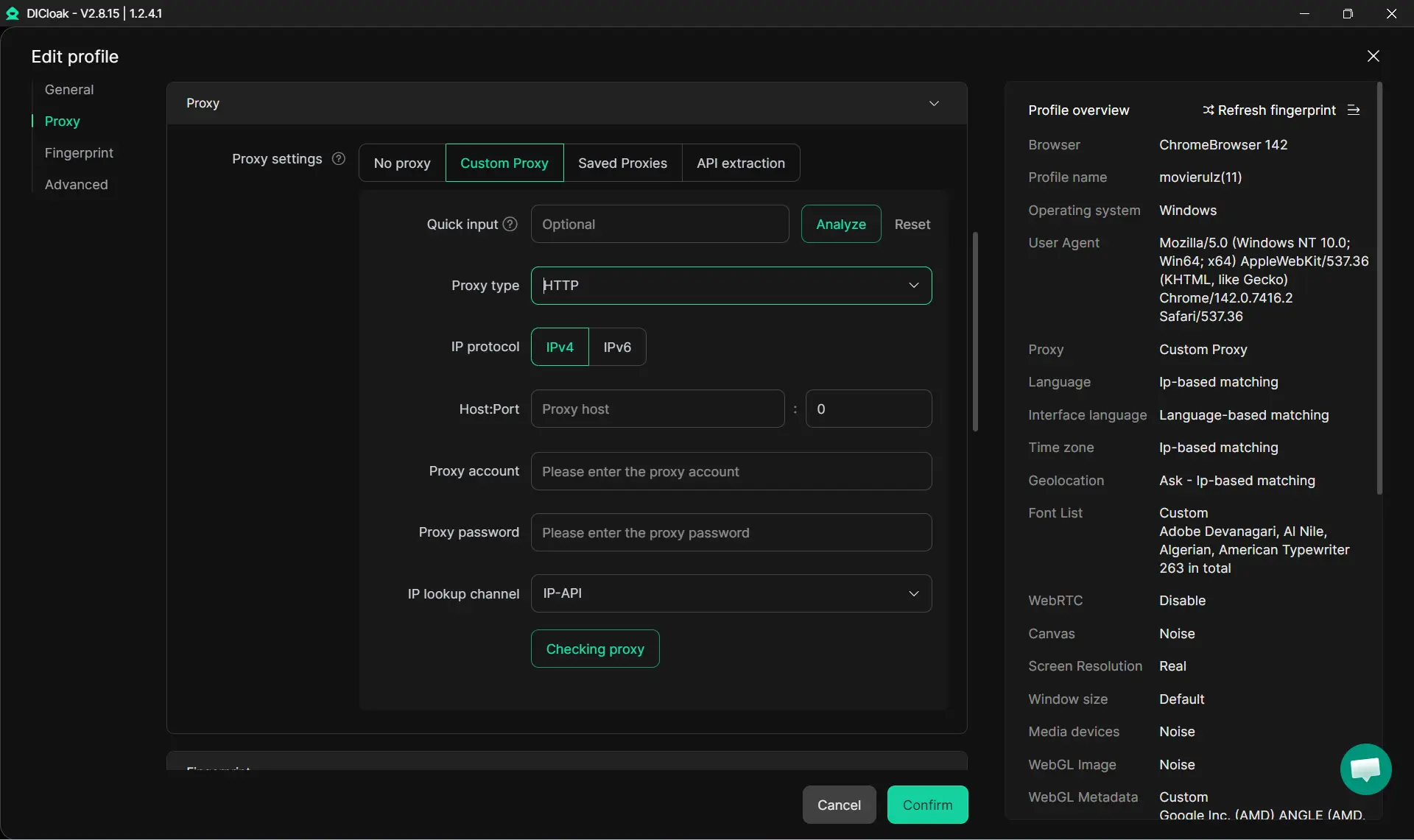
When you check several accounts from one browser setup, platform signals can become harder to read. DICloak helps you separate your accounts by letting you create different browser profiles and configure proxy to each one. This makes it easier for you to keep account sessions apart and reduce confusion during daily checks. If you manage many accounts for your own work or for clients, this setup can help you test visibility more clearly and keep your workflow more organized.
Protect account integrity with unique digital fingerprints
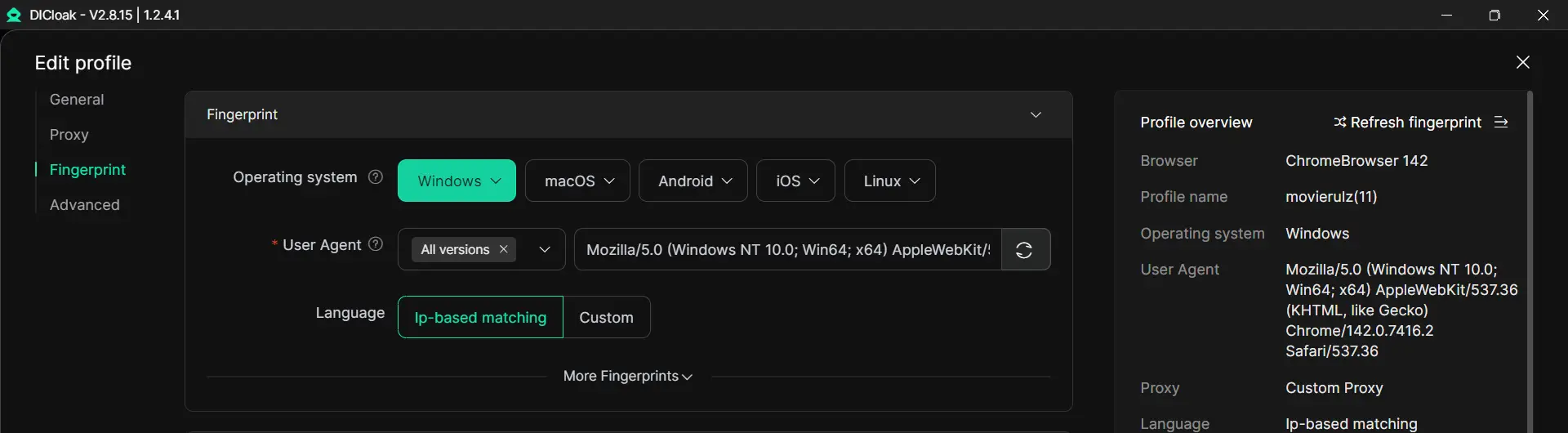
A shadowban checker can help you spot visibility problems, but your account setup also matters. With DICloak, you can have custom fingerprint settings for each browser profile and keep cookies, cache, and login state separate. This gives you more control over each account environment and makes it easier to avoid mixing activity across accounts. When you are trying to understand whether a reach drop comes from content, behavior, or setup issues, that separation can help you make a clearer judgment.
Simplify shadowban recovery using secure automation tools
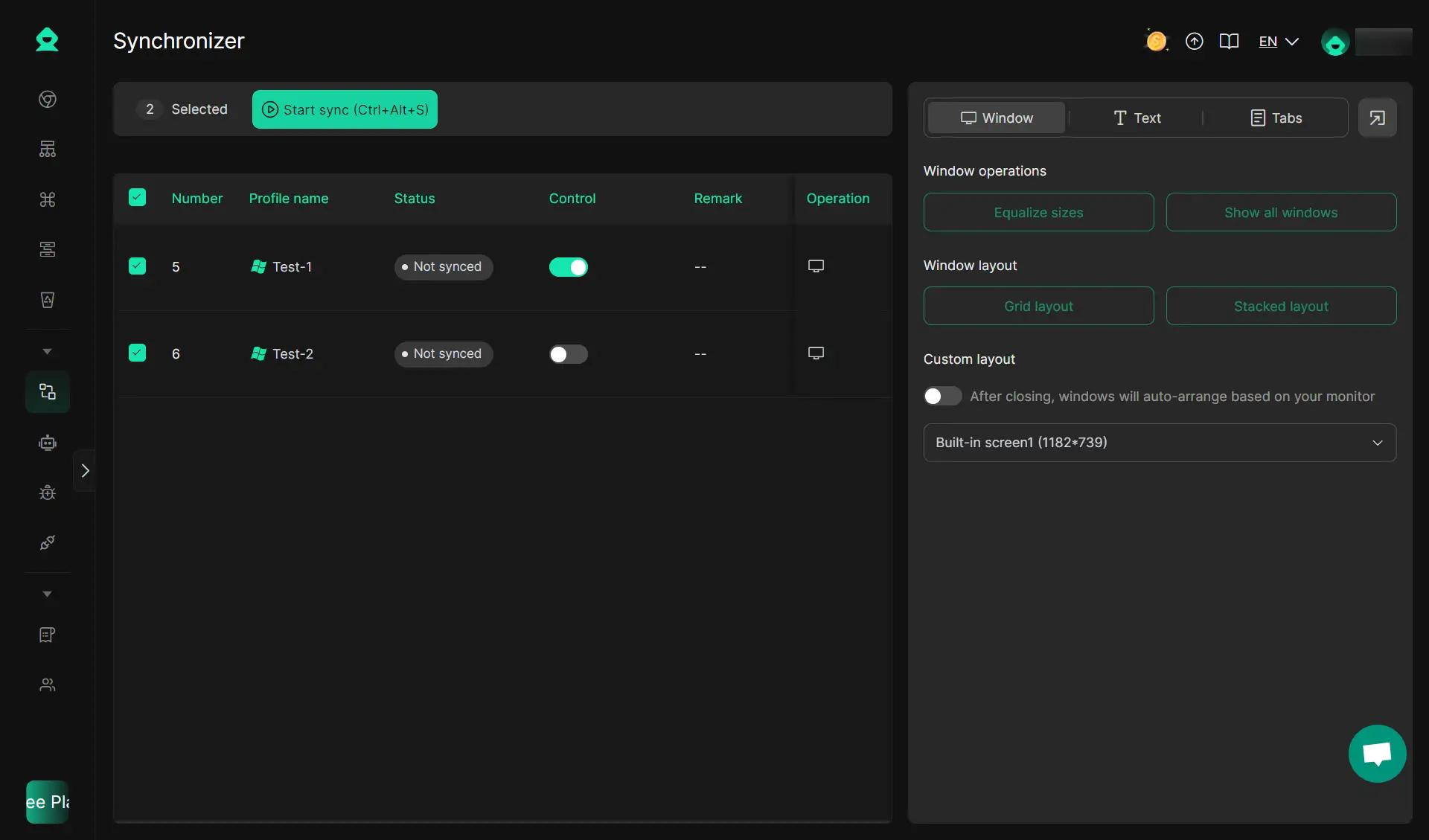
When you recover from a shadowban, you usually need to slow down, review account activity, and make changes carefully. DICloak gives you tools like bulk operations, RPA, and multi-window synchronizer to help you handle repeated account tasks in a more structured way. This can make it easier for you to review profiles, check account status, and manage multiple environments without creating more confusion. The real value is not just speed. It is that you can keep recovery work more controlled and organized across separate account setups.
FAQs About Shadowban Checker
Can shadowbans happen without breaking any rules?
Sometimes yes, at least from the user’s point of view. A reach drop can happen even when you did not mean to break a rule. Platforms may reduce distribution because content is not eligible for recommendation, looks low quality, triggers spam signals, or gets caught in a broader technical or ranking issue. X even says some posts may have limited reach because of experiments or technical reasons, not only clear rule violations.
How long does a shadowban typically last?
There is no universal time limit. Most major platforms do not publish a fixed number of days for a “shadowban.” In practice, visibility limits can last a short time or continue until the flagged content is reviewed, removed, appealed, or the account regains recommendation eligibility. That is why it is better to monitor recovery through account status, analytics, and a shadowban checker instead of assuming it will end after a set period.
Are shadowban checkers 100% accurate?
No. A shadowban checker can only test outside signals like search visibility, hashtag visibility, and engagement changes. It usually cannot see every internal flag inside a platform. That is why these tools are helpful for spotting patterns, but they are not final proof on their own. The best approach is to use a shadowban checker together with official platform tools such as Instagram Account Status or TikTok recommendation notices.
Do shadowbans apply to all types of content?
Not always. Sometimes one post, one video, or one part of your profile is affected more than the whole account. Instagram’s recommendation system focuses on whether content from public accounts is eligible to be recommended, while TikTok says specific accounts or videos can become ineligible for recommendation. This means the problem may affect only certain posts, certain discovery surfaces, or broader account reach depending on what triggered it.
Is it possible to avoid shadowbans completely?
No one can promise that completely. Platform systems change, ranking signals shift, and mistakes can happen. But you can lower the risk a lot by avoiding fake engagement, spammy behavior, repeated low-quality posting, and content that may not be safe for recommendation. YouTube’s fake engagement policy and X’s reach-limiting rules both show that artificial behavior and low-quality signals can lead to reduced visibility or stronger enforcement.
Conclusion
A shadowban can quietly reduce your reach, slow your growth, and hurt your results if you ignore it for too long. Using a shadowban checker can help you catch the problem earlier and understand whether your visibility drop is real or just normal performance changes. The most important thing is to review your account carefully, fix risky behavior, and keep building healthy content habits. In 2026, a smart shadowban checker is useful, but steady account management matters even more.
 Web Proxy Tools
 Free Tools
 Cookie Plugin
 UA Generator
 MAC Address Generator
 IP Generator
 IP Address List
 2FA Code Generator
 World Clock
 Anonymous Check
 WebRTC Leak Test
 UUID Generator
 Free Web Proxy Site
 Proxy Checker
 FB Ad Checker
 AI Web Scraping
 Free SMM Tools
 Twitter Shadowban Checker
 Instagram Name Checker
 UTM Generator
 Username Generator
 AI Hashtag Generator
 LinkedIn Headline Generator
 Social Media Image Resizer