Your Playwright automation script worked perfectly last month. Now it's getting blocked on the same sites, throwing timeout errors or triggering CAPTCHA challenges. You've installed the stealth plugin, but detection systems still catch your bot within seconds. The problem isn't your code—modern anti-bot systems have evolved beyond what basic stealth plugins can handle.
Playwright stealth plugins patch obvious automation signatures, but they can't solve the deeper fingerprinting and behavioral detection that platforms use in 2026. Understanding what these tools actually fix, where they fail, and when to move beyond them will save you weeks of debugging headaches.

What Playwright Stealth Actually Does (And Doesn't Do)
The playwright-stealth plugin patches specific JavaScript properties that reveal automation. When you run pip install playwright-stealth and add it to your Python script, it modifies the browser context to hide telltale signs like navigator.webdriver being true or missing plugins in the navigator object.
The plugin overwrites these detection points:
- Sets
navigator.webdriver to undefined instead of true
- Adds fake plugin entries to
navigator.plugins
- Patches
window.chrome object presence
- Modifies permission API responses
- Adjusts WebGL vendor and renderer strings
Here's what the PyPI documentation honestly states: "Don't expect this to bypass anything but the simplest bot detection." The plugin fixes property-level tells without addressing deeper fingerprinting methods that modern systems rely on.
Canvas fingerprinting generates unique hashes based on how your browser renders text and graphics. Playwright's rendering engine produces consistent, detectable patterns that stealth plugins don't randomize. Behavioral signals like perfect mouse movements or identical timing between actions remain completely untouched.
How Bot Detection Actually Works in 2026
Anti-bot systems have moved far beyond checking navigator.webdriver. Cloudflare, DataDome, PerimeterX, and similar services now use multi-layered detection that makes simple property patching ineffective.
Fingerprint Analysis
Modern detection builds a composite fingerprint from dozens of browser characteristics. Screen resolution, timezone, installed fonts, hardware concurrency, memory size, and WebGL capabilities create a unique signature. Playwright browsers often share identical fingerprints across sessions, making them easy to spot.
Canvas and WebGL fingerprinting deserve special attention. These techniques render hidden graphics or 3D scenes and hash the pixel output. Different hardware, drivers, and browser versions produce slightly different results. Playwright's consistent rendering creates identical hashes that immediately flag automation.
Behavioral Pattern Recognition
Human users exhibit natural inconsistencies that bots struggle to replicate. Real mouse movements follow imperfect curves with slight tremors and speed variations. Typing includes micro-pauses, corrections, and rhythm changes. Scroll patterns vary based on content and user interest.
Playwright automation typically produces perfect Bezier curves for mouse movement and identical timing between actions. Even with random delays, the mathematical precision of automated behavior stands out against human unpredictability.
Network and Infrastructure Signals
Detection systems analyze connection patterns, TLS fingerprints, and request timing. Data center IP addresses, especially from major cloud providers, trigger additional scrutiny. Residential proxies help mask this signal, but they need proper session management to avoid other tells.
The Python Playwright-Stealth Plugin: Capabilities and Gaps
The most common Python implementation comes from the playwright-stealth package. Installation is straightforward:
pip install playwright-stealth
from playwright_stealth import stealth_sync
This plugin patches basic automation signatures but misses several detection vectors. It doesn't randomize canvas fingerprints, modify WebGL output, or simulate human behavioral patterns. The patches it does apply can become outdated as detection systems evolve.
Version compatibility creates another challenge. The plugin needs updates whenever Playwright releases new versions, and there's often a lag between Playwright updates and stealth plugin compatibility. Running mismatched versions can actually make detection easier by creating inconsistent browser signatures.
The plugin works best for sites with basic bot detection that only check obvious automation properties. E-commerce sites with simple protection or older content management systems might not notice stealth-patched Playwright sessions.
Playwright-Extra vs Native Python Stealth
The JavaScript ecosystem offers playwright-extra with stealth plugins that provide more comprehensive patching. This approach uses the Playwright Node.js library with additional stealth modifications.
const { chromium } = require('playwright-extra')
const stealth = require('puppeteer-extra-plugin-stealth')
chromium.use(stealth())
JavaScript stealth plugins typically receive faster updates and more comprehensive patches than Python alternatives. They benefit from the larger Puppeteer community's anti-detection research and development.
However, JavaScript stealth plugins still face the same fundamental limitations. They mask properties but leave canvas fingerprinting, behavioral patterns, and network signals untouched. Your choice between Python and JavaScript stealth usually depends more on your existing tech stack than actual detection performance.
Alternative Playwright Forks and Enhanced Libraries
Several projects attempt to improve Playwright's stealth capabilities beyond basic plugins. rebrowser-playwright modifies the core browser engine to reduce automation signatures at a deeper level.
These enhanced libraries patch Chrome DevTools Protocol exposure, modify browser binary signatures, and add some fingerprint randomization. They take more effort to set up than simple plugins but handle intermediate detection systems better.
SeleniumBase offers a Playwright mode with built-in stealth features and human behavior simulation. It includes mouse movement randomization, typing delays, and scroll pattern variation that basic stealth plugins miss.
Enhanced libraries come with trade-offs in complexity and maintenance. Custom forks might fall behind official Playwright updates, potentially creating security gaps or compatibility problems. They also demand more technical knowledge to configure and debug properly.
Human Behavior Simulation: Beyond Property Patching
Effective detection bypass needs realistic human behavior patterns, not just hidden automation properties. Mouse movements should curve naturally with small imperfections and varying speeds. Typing needs realistic pauses, occasional corrections, and rhythm shifts based on word complexity.
Scroll patterns reveal more than most developers expect. People scroll while reading content, pause to absorb information, and sometimes scroll back up to reread sections. Automated scripts usually scroll at steady speeds or jump straight to target elements.
Implementing realistic behavior simulation requires understanding the specific patterns that detection systems flag. Perfect geometric curves, identical timing intervals, and immediate element targeting all signal automation regardless of property patching.
import random
import asyncio

async def human_type(page, selector, text):
    element = page.locator(selector)
    await element.click()

    for char in text:
        await asyncio.sleep(random.uniform(0.05, 0.15))
        await element.type(char)

        # Occasional longer pauses
        if random.random() < 0.1:
            await asyncio.sleep(random.uniform(0.3, 0.8))
Proxy Integration with Playwright Contexts
Residential proxies provide essential IP reputation benefits that stealth plugins can't address. Data center IPs from AWS, Google Cloud, or Azure face automatic scrutiny on many platforms. Residential IPs from legitimate ISPs appear more trustworthy to detection systems.
Playwright supports proxy configuration per browser context, allowing different sessions to use different IP addresses:
browser = await playwright.chromium.launch()
context = await browser.new_context(
    proxy={
        "server": "http://proxy-server:port",
        "username": "user",
        "password": "pass"
    }
)
Sticky sessions work better than rotating proxies for most use cases. Maintaining the same IP address throughout a session avoids triggering location-based security checks. Frequent IP changes within a single session often trigger additional verification steps.
Quality residential proxy providers offer session persistence, allowing you to maintain the same IP for extended periods. This approach reduces detection risk while providing the geographic and ISP diversity needed for multi-account operations.
When Stealth Plugins Aren't Enough
Advanced detection systems require solutions beyond what any stealth plugin can provide. Cloudflare's Turnstile, DataDome's behavioral analysis, and PerimeterX's machine learning models analyze patterns that property patching can't address.
Managed browser services like Bright Data's Scraping Browser or Browserless provide pre-configured environments with better stealth capabilities. These services handle fingerprint randomization, behavior simulation, and proxy management at the infrastructure level.
Cloud browser APIs offer another alternative for high-detection scenarios. Services like ScrapingBee or Scrapfly manage the entire browser automation pipeline, including stealth measures, CAPTCHA solving, and retry logic.
The decision to move beyond stealth plugins depends on your detection rate and operational requirements. If basic stealth works for your use case, additional complexity may not provide worthwhile benefits. When detection rates exceed acceptable thresholds, managed services often prove more cost-effective than building custom solutions.
Managing Multiple Playwright Testing Environments
Setting up multiple Playwright sessions with different stealth configurations gets messy fast. Each testing scenario needs different proxy settings, browser fingerprints, and behavioral patterns. Handling these variations manually creates configuration drift and unpredictable results.
Teams often need separate environments for different projects, clients, or testing scenarios. Keeping distinct browser profiles with unique fingerprints, proxy assignments, and automation scripts organized takes systematic planning.
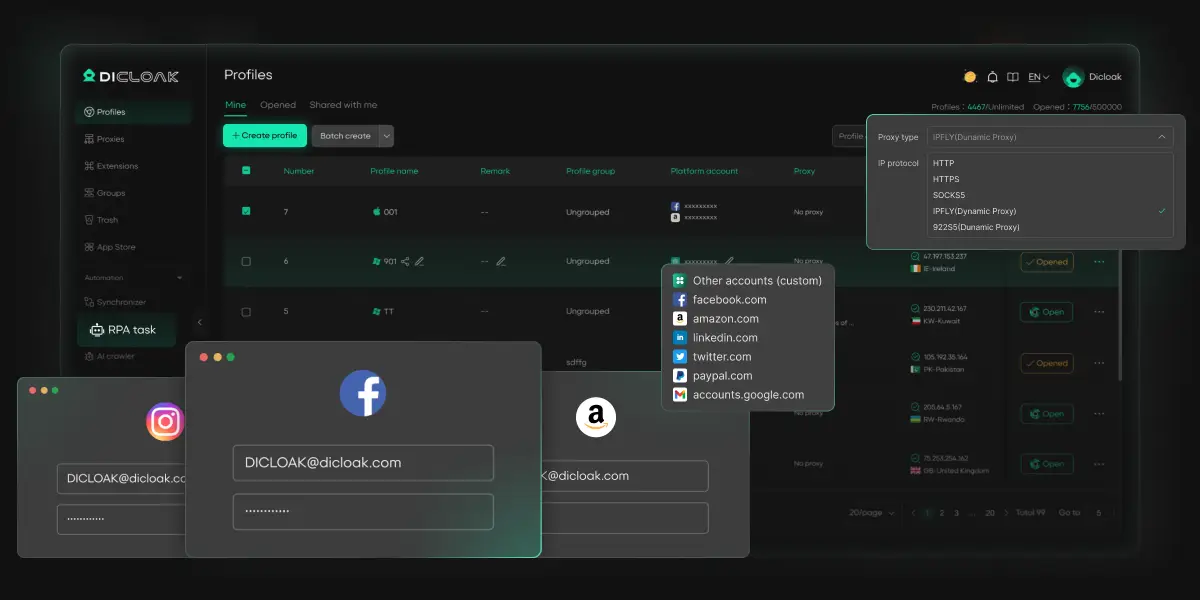
For teams managing multiple Playwright environments at scale, DICloak streamlines profile management and isolation. You can create isolated browser profiles with unique fingerprints for each Playwright testing scenario, assign specific residential proxies to different automation profiles without manual configuration, and organize team access to shared environments while maintaining profile isolation. This reduces configuration overhead when switching between different testing contexts and manages multiple account scenarios through a unified interface rather than separate script management.
The CAPTCHA Arms Race and Maintenance Burden
Stealth plugins create an ongoing maintenance challenge as detection systems evolve. What works today may fail tomorrow when platforms update their bot detection. The arms race between stealth techniques and detection systems requires constant attention and updates.
CAPTCHA challenges represent the ultimate fallback for detection systems. When stealth measures fail, manual intervention becomes necessary. Some services offer CAPTCHA solving APIs, but these add cost and complexity to automation workflows.
All stealth approaches lose effectiveness over time. Browser updates, improved detection systems, and new fingerprinting methods slowly chip away at success rates. You'll need regular testing and updates to keep your automation working.
The maintenance workload often surprises teams initially. Tracking detection rates, updating stealth settings, and fixing broken automation eats up technical resources. Build these ongoing costs into your automation planning from day one.
Legal and Ethical Considerations
Bot detection exists for legitimate reasons including preventing fraud, protecting user data, and maintaining service quality. Bypassing these systems may violate terms of service even when technically possible.
Different jurisdictions have varying laws regarding automated access to websites. The Computer Fraud and Abuse Act in the United States, GDPR in Europe, and similar regulations worldwide create legal frameworks that may apply to your automation activities.
Check the terms of service for any website you plan to automate. Many sites explicitly ban automated access or require permission first. Following these rules protects your organization and the websites you're accessing.
Think about the ethics of your automation work. Heavy scraping can slow down websites for real users. Responsible automation means reasonable rate limits and avoiding unnecessary server strain.
FAQ
Does playwright-stealth work against Cloudflare in 2026?
Basic Cloudflare bot management catches playwright-stealth quickly, often within seconds. The plugin hides obvious automation signs but can't handle Cloudflare's behavioral analysis or advanced fingerprinting. Your success depends on which Cloudflare features the site actually uses.
Can I combine multiple stealth plugins for better results?
Mixing stealth plugins usually backfires by creating conflicting browser signatures. Different plugins might patch the same properties in ways that don't work together, actually making detection easier. Pick one solid plugin and focus on realistic behavior simulation instead.
How often do stealth plugins need updates?
Stealth plugins need updates when Playwright releases new versions or detection systems change their methods. Active plugins typically update monthly or quarterly. Outdated plugins can create new detection points by producing weird browser signatures.
Is playwright-stealth legal to use?
The legality depends on your jurisdiction, the target website's terms of service, and your specific use case. Playwright-stealth itself is legal software, but using it to bypass website protections may violate terms of service or local laws. Always review legal requirements before implementation.
What's the detection rate difference between stealth plugins and managed services?
Stealth plugins typically achieve 60-80% success rates against basic detection, while managed browser services often exceed 90% against the same targets. Advanced detection systems reduce both success rates significantly, but managed services maintain better performance due to infrastructure-level optimizations.
Should I use residential proxies with playwright-stealth?
Yes, residential proxies significantly improve success rates when combined with stealth plugins. Data center IPs face automatic scrutiny regardless of browser fingerprint quality. Residential proxies provide essential IP reputation benefits that stealth plugins alone cannot address.
Making the Right Choice for Your Use Case
Playwright stealth plugins serve specific scenarios well while failing completely in others. They work best for basic bot detection that relies primarily on property checking rather than behavioral analysis or advanced fingerprinting.
Evaluate your detection rates honestly before investing time in complex stealth configurations. If simple approaches work for your targets, additional complexity may not provide worthwhile benefits. When detection exceeds acceptable thresholds, consider managed services or infrastructure-level solutions rather than trying to patch every possible detection vector.
The most effective approach often combines multiple techniques: residential proxies for IP reputation, stealth plugins for basic property patching, and behavioral simulation for human-like interaction patterns. Understanding what each component addresses helps you build the right solution for your specific requirements.
 Web Proxy Tools
 Free Tools
 Cookie Plugin
 UA Generator
 MAC Address Generator
 IP Generator
 IP Address List
 2FA Code Generator
 World Clock
 Anonymous Check
 WebRTC Leak Test
 UUID Generator
 Free Web Proxy Site
 Proxy Checker
 FB Ad Checker
 AI Web Scraping
 Free SMM Tools
 Twitter Shadowban Checker
 Instagram Name Checker
 UTM Generator
 Username Generator
 AI Hashtag Generator
 LinkedIn Headline Generator
 Social Media Image Resizer