The online business world in 2026 is drowning in noise. Most people are still peddling the "standard" SMMA model, basic affiliate marketing, or generic content creation. These models are failing because they position you as a service provider—a line item on a balance sheet that can be cut when times get tough.
The real money has shifted toward becoming a strategic growth partner. This is freelance brand scaling. It’s a pivot away from "tasks" and toward precision-engineered revenue. To succeed here, you have to move beyond marketing jargon and master two things: the psychology of high-ticket offers and the technical infrastructure required to protect your operations. If you aren’t protecting your client accounts from the technical risks of 2026, you don't have a business; you have a ticking time bomb.
What Is Freelance Brand Scaling in 2026?
Freelance brand scaling is the high-performance evolution of the agency model. While an SMMA might try to do "everything for everyone," a brand scaler does one thing: they scale profitability through paid advertising and data-driven precision. You aren't just "running ads"; you are driving a growth engine where every dollar of spend is expected to return a multiple in revenue.
The Evolution from Traditional SMMA to Freelance Brand Scaling:
- Traditional SMMA: Obsesses over vanity metrics like likes, followers, and engagement. They get buried in labor-intensive content calendars and manual community management.
- Freelance Brand Scaling: Obsesses over Return on Ad Spend (ROAS), Cost Per Acquisition (CPA), and total revenue. They leverage paid traffic to bypass the slow grind of organic growth.
Shifting from services to strategic growth
In high-ticket scaling, if you can't track it, you can't bill for it. As a scaler, you stop selling "social media management" and start selling "revenue expansion." This shift moves you from being a cost center to a profit center. When a business owner sees you as the direct cause of their growth, the nature of the relationship changes from vendor to partner.
Why results-driven metrics like ROAS matter
Clients don't pay for your effort; they pay for outcomes. Demonstrating a clear ROAS is the ultimate leverage in fee negotiations. If you can prove that your systems turn $1,000 of ad spend into $5,000 of revenue, a $5,000 monthly retainer becomes an easy "yes" for the client. This clarity is why scalers can command high-ticket prices while generalists struggle to justify their existence.
Why Is Freelance Brand Scaling Replacing the Traditional SMMA Model?
The traditional agency boom created a graveyard of practitioners who were ghosted by clients because they couldn't prove their value. They were trapped in a cycle of creating content that looked "nice" but didn't move the needle on profit.
The brand scaling model offers a leaner, more aggressive path
- Results-driven value: Your worth is undeniable because it's reflected in the client’s bank account.
- Lean operations: By focusing only on high-impact activities like ad optimization, you can maintain high margins without a massive payroll.
- High-ticket potential: The model naturally leads to $3,000–$10,000/month retainers or performance-based percentages.
Avoiding the trap of endless content calendars
Content creation is a high-effort, low-leverage trap. Brand scalers avoid this by focusing on paid platforms—Meta, TikTok, and Google—where traffic is immediate and predictable. You don't need to post every day to be relevant; you need to have an offer that converts when you put money behind it.
Moving toward high-ticket performance retainers
Because your work is directly tied to the bottom line, you can move away from hourly billing. High-ticket retainers are the standard in this industry. In many cases, seasoned practitioners negotiate "equity-lite" deals where they take a percentage of the revenue growth they generate, effectively uncapping their earning potential.
How to Start a Freelance Brand Scaling Business From Scratch
To launch successfully, you need to follow a lean, execution-focused framework that prioritizes cash flow over "perfect" branding.
Finding a high-growth niche
Success is a byproduct of niche selection. Your first priority is finding a market with high customer lifetime value and clear pain points. High-growth sectors like local service businesses (specifically Med Spas and Construction) or e-commerce brands with established products are ideal. You need to operate where the business owner understands that ad spend is an investment, not an expense.
Mastering the psychology of paid ads
Platform algorithms have become so advanced that "hacking" settings is no longer a competitive advantage. The real skill in 2026 is offer design and creative psychology. You must master Meta, TikTok, and Google Ads, but your focus should be on conversion tracking and crafting messages that stop the scroll and compel action. The tech is the tool; the psychology is the engine.
Landing clients through results-oriented outreach
Your outreach must be punchy and confident. Stop asking for a "chance" and start offering a specific growth outcome. A practitioner’s outreach focuses on the bottom line—often utilizing a ROAS-based offer or a clear case study. Cold outreach via LinkedIn or email should lead with the result you can provide, making it a logical business decision for the prospect to take a meeting.
Delivering and systematizing results
Once the client is signed, the focus shifts to execution and scale. This is the stage where you move from a solo practitioner to a business owner. By using virtual assistants for admin tasks and implementing automated reporting systems, you can manage more clients without a linear increase in your workload. Systematizing your testing and optimization workflow is the only way to scale your income without burning out.
Common Myths About Freelance Brand Scaling
Outdated ideas about what an "agency" should look like often prevent talented people from starting.
The misconception that you need a large team
The era of the "big agency" with 50 employees is over for most growth partners. Today, solo practitioners use automation to handle workloads that used to require entire departments. You don't need an office or a team of 10 to hit six figures; you just need the right systems.
Why you don't need dozens of clients to hit six figures
High-ticket scaling is about depth, not breadth. Managing three clients at $5,000/month is far more profitable and less stressful than managing 15 clients at $1,000/month. Fewer clients mean better focus, better results, and a much higher quality of life.
What Are the Risks of Managing Multiple Client Ad Accounts?
The technical reality of this business is that you are often one mistake away from an account ban. Managing multiple client accounts from a single device is the fastest way to lose everything due to browser fingerprinting.
The hidden danger of digital footprints
Ad platforms like Meta and Google use sophisticated fingerprinting to track every move you make. They don't just look at your IP; they analyze your fonts, screen resolution, operating system, and—most importantly—your WebGL signatures and session habits. These data points create a unique digital footprint that links all your profiles.
Preventing account bans and cross-contamination
If you access multiple client accounts through a standard browser, the platforms will link them. This leads to "cross-contamination": if one account is flagged or banned for a policy violation, the platform can link that failure to your other clients, triggering a cascade of bans across your entire portfolio. This is a business-killing event that can be avoided with the right operational security.
How Freelance Brand Scalers Use DICloak to Manage Operations
Operational efficiency is the differentiator. Professional scalers use DICloak as a digital fortress to manage multiple high-value contracts without the risk of platform interference.
Isolating client profiles to ensure account safety
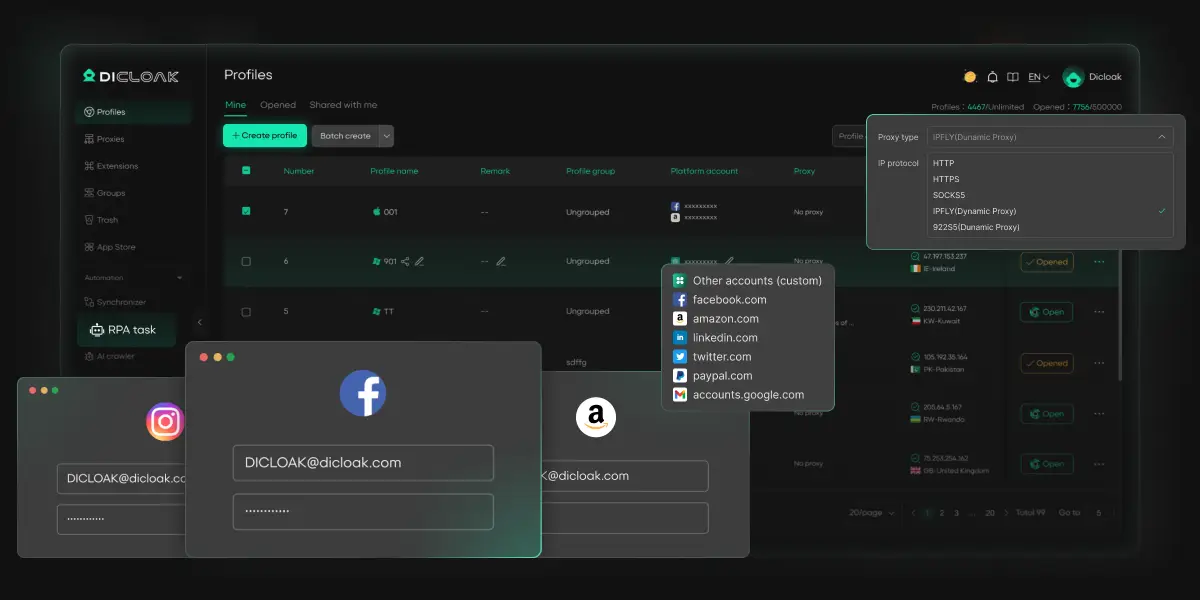
Scalers use DICloak to create isolated environments for every client they manage. Each profile is assigned a unique, hardware-level browser fingerprint and dedicated IP. To the ad platform, each account appears to be a completely independent user on a separate machine. This ensures that an issue with one client’s account stays isolated, protecting the rest of your portfolio and your reputation.
Using synchronization to manage campaigns at scale
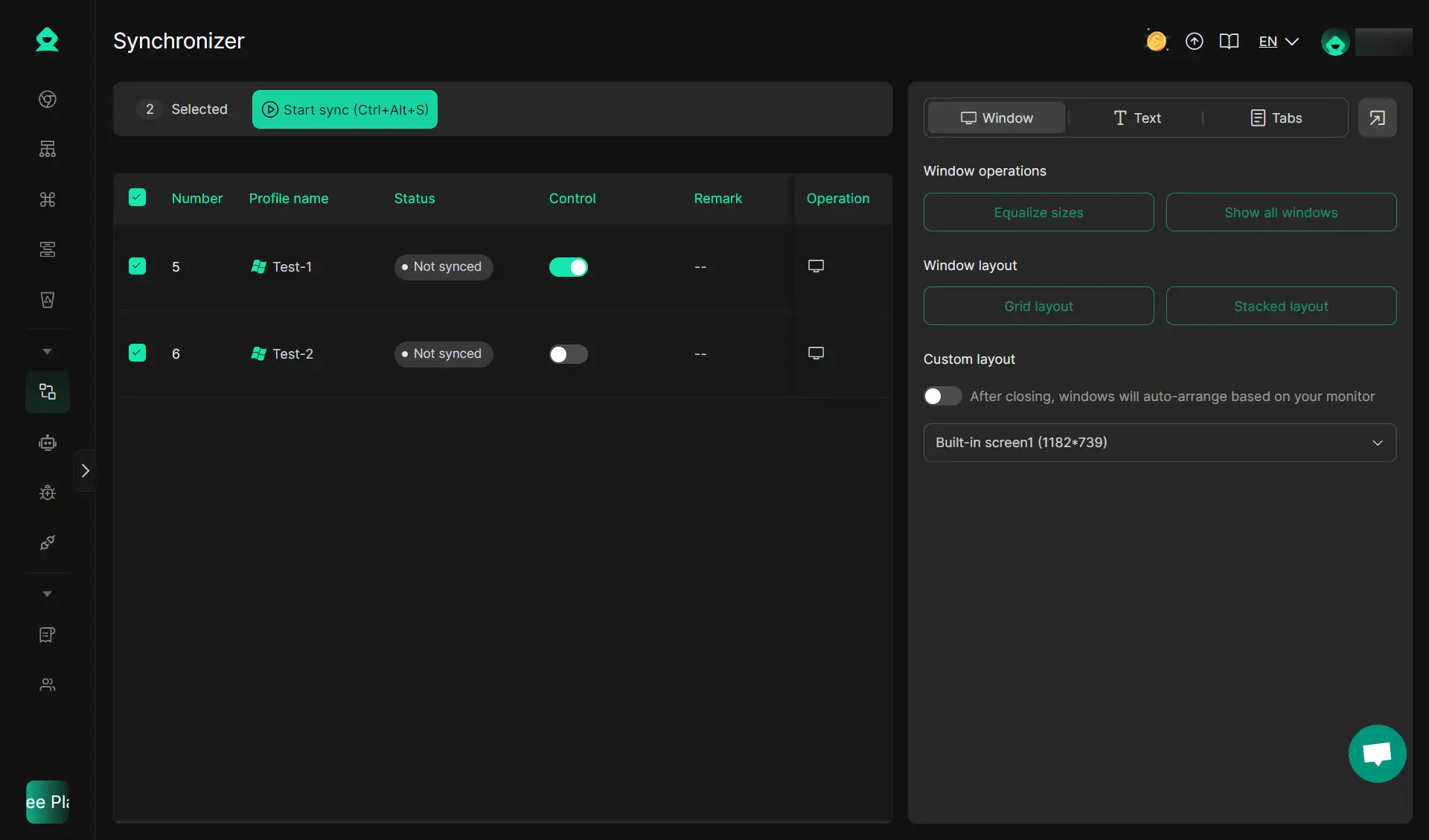
Time is a scaler's most valuable asset. Scalers use the Synchronizer feature in DICloak to maintain operational parity. This allows them to control multiple windows simultaneously—syncing clicks and inputs across 10 or more browser profiles at once. If you need to launch the same test campaign across several different accounts, you can do it in seconds rather than hours.
Integrating AI tools for faster research and execution
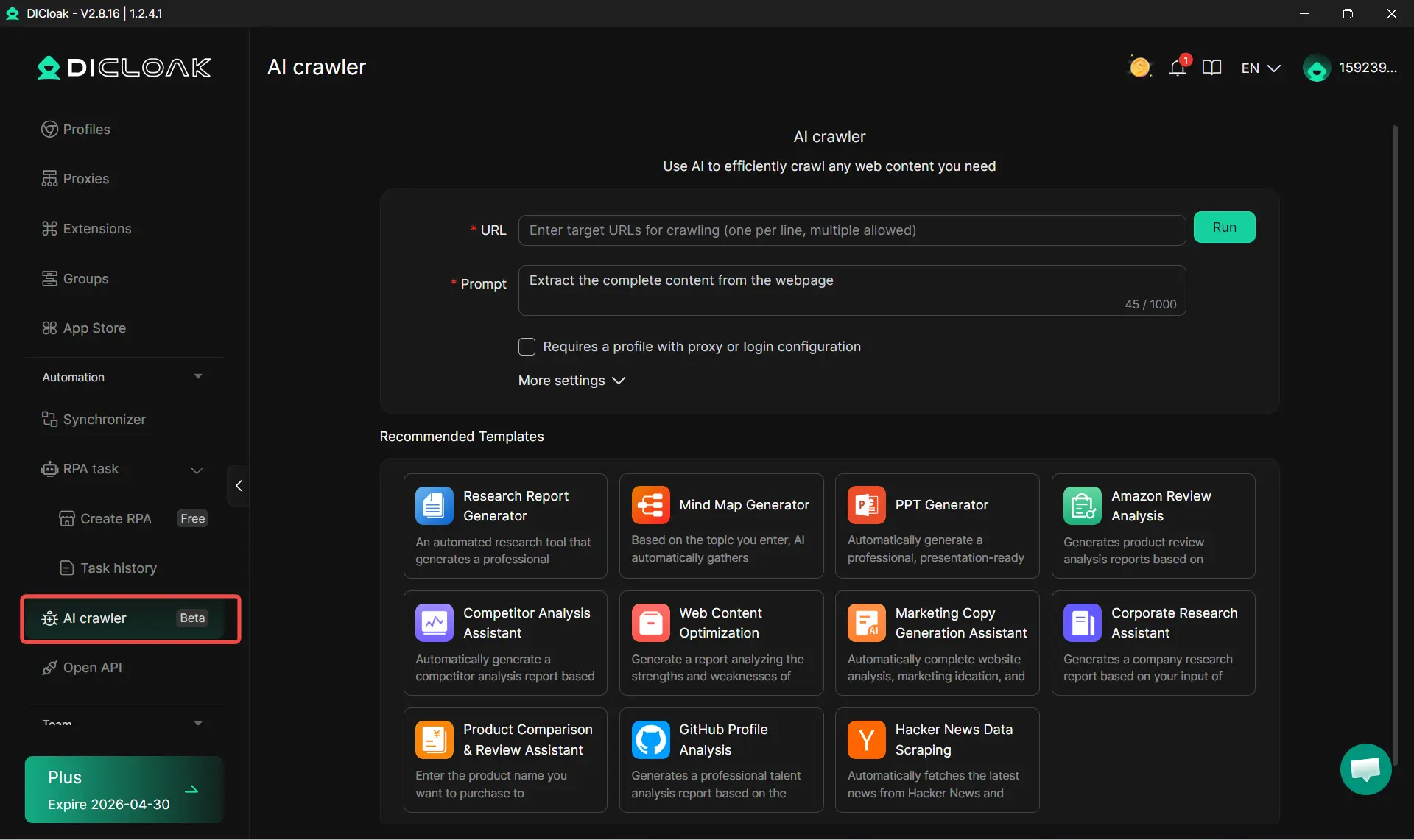
Freelance brand scaling moves fast, so research and execution need to move fast too. Instead of doing every step by hand, many practitioners use DICloak to make the workflow more efficient. AI-powered tools like DICloak’s AI crawler can help gather niche, competitor, or market data faster, while RPA reduces time spent on repetitive tasks.
Is Freelance Brand Scaling the Right Business Model for You?
High-ticket scaling is highly profitable, but it carries a higher level of accountability than traditional freelancing.
Assessing your readiness for performance-based work
There is a clear trade-off: you gain high retainers and professional freedom, but you must be comfortable with the pressure of delivering a positive ROAS. If you prefer "effort-based" billing where you get paid regardless of results, this is not the path for you. However, if you want to be paid for the value you create, the rewards are unmatched.
Building a long-term growth system instead of a job
The goal is to stop trading time for money. By using technical tools like DICloak to handle the heavy lifting of account management and AI to handle the research, you are building a growth engine. This system can eventually be managed by a skeleton crew, giving you a business that provides both income and time freedom.
How to Future-Proof Your Freelance Brand Scaling Career
The landscape will continue to shift as we move through 2026. Staying relevant requires constant adaptation.
Adapting to new platforms beyond Meta and Google
While Meta and Google are the current leaders, the future belongs to those who stay flexible. As platforms like TikTok evolve or new contenders emerge, the core principles of offer design and psychological conversion will remain the same. The tools you use must be flexible enough to handle any new platform the market demands.
Leveraging automation to stay lean
The future of this industry belongs to practitioners who can multiply their output without increasing their headcount. By leveraging automation and advanced browser management, you can remain lean while managing increasingly complex and high-value portfolios.
The Evolution of the Performance Era
Freelancing has evolved. We are now firmly in the performance era, where success is reserved for those who can leverage skill, data, and secure technical infrastructure to drive revenue. By moving away from vanity metrics and adopting a results-oriented system, you can build a business that is not only highly profitable but also operationally secure and truly scalable.
Frequently Asked Questions About Freelance Brand Scaling
Is freelance brand scaling better than starting an SMMA?
For anyone interested in high margins and efficiency, yes. SMMA is often a race to the bottom on price because the services are commoditized. Brand scaling focuses on the one thing businesses will always pay a premium for: profit. It allows for a leaner team and higher fees.
How much budget do I need to start learning paid ads?
You don't need your own budget to learn. You learn by mastering the theory of offer design and then managing small budgets for clients in "low-risk" niches like local construction or med spas. You are using the client’s ad spend to generate results, making your primary investment your time and your tools.
Can I really manage multiple client accounts from one computer?
You can, but using a standard browser is professional negligence. To manage multiple high-stakes accounts without the risk of cross-contamination and bans, scalers use specialized tools like DICloak to isolate fingerprints. It is the only way to ensure one client's bad luck doesn't destroy your entire business.
What is the best niche for brand scaling in 2026?
The best niches are those where the "cost of a lead" is significantly lower than the "value of a customer." Med spas, high-end construction, and established e-commerce brands remain the top choices because the ROI on a successful campaign is massive and easy to prove.
Do I need to be a technical expert to use an antidetect browser?
No. Tools like DICloak are built for performance marketers and scalers. The interface is designed to fit a professional workflow, making it easy to create profiles, sync actions, and integrate AI tools without needing to be a developer. It's about operational leverage, not technical complexity.
Conclusion
Freelance brand scaling in 2026 is no longer about doing more small tasks for more clients. It is about helping brands grow through paid traffic, clear performance metrics, and repeatable systems. The people who do well in this space are usually not the ones with the biggest teams. They are the ones with the strongest offers, the clearest results, and the safest way to manage client operations.
If this model fits your skills and goals, it can become more than a freelance service. It can grow into a lean, scalable business. And as account security, automation, and execution speed become more important, building the right workflow from the start will matter just as much as learning how to run ads.
 Web Proxy Tools
 Free Tools
 Cookie Plugin
 UA Generator
 MAC Address Generator
 IP Generator
 IP Address List
 2FA Code Generator
 World Clock
 Anonymous Check
 WebRTC Leak Test
 UUID Generator
 Free Web Proxy Site
 Proxy Checker
 FB Ad Checker
 AI Web Scraping
 Free SMM Tools
 Twitter Shadowban Checker
 Instagram Name Checker
 UTM Generator
 Username Generator
 AI Hashtag Generator
 LinkedIn Headline Generator
 Social Media Image Resizer