Starting an e-commerce store can feel scary if you do not have a lot of money. Traditional retail requires buying hundreds of items upfront. You have to store them in your garage or pay for a warehouse. But what if you could sell products on Amazon without holding any physical stock?
Selling on Amazon without inventory is one of the smartest ways to start an online business in 2026. You act as the bridge between the buyer and the supplier. When a customer buys a product from your store, the supplier packs and ships it directly to them. This guide will walk you through everything you need to know to build a safe, profitable, and scalable Amazon business without ever touching inventory.
What Does It Mean to Sell on Amazon Without Inventory?
How selling without inventory differs from traditional methods
In a traditional retail store, you buy products upfront from a manufacturer. You pay thousands of dollars before you make your first sale. You take on all the financial risk if those items do not sell.
Selling on Amazon without inventory changes this entire process. You list products on Amazon first. You only pay for the item after a customer pays you on Amazon. Once the buyer completes their order, your third-party supplier ships the item straight to the buyer's house. You never have to pack a box, buy packing tape, or drive to the post office.
Key advantages of not holding physical stock
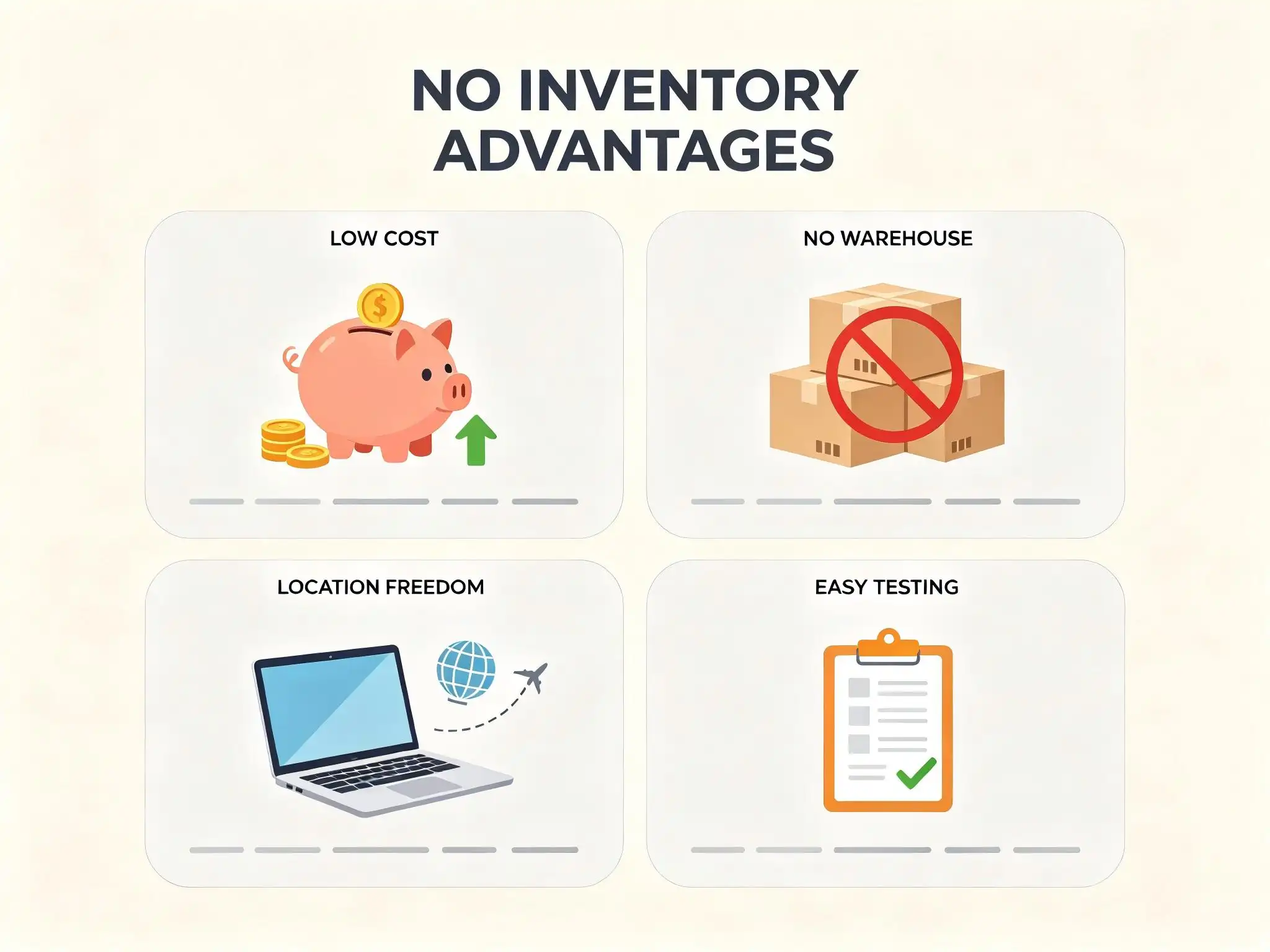
- Ultra-low starting cost: You do not need thousands of dollars in capital. You only pay for items that are already sold.
- No warehouse stress: You save money on monthly storage fees. You do not need to worry about inventory sitting in your living room.
- Maximum location freedom: You can run your Amazon store from anywhere in the world. All you need is a laptop and an internet connection.
- Easy product testing: If a product does not sell, you can simply delete the listing. You lose zero dollars because you never bought physical stock in advance.
Common misconceptions about inventory-free selling
Many people think selling without inventory means getting rich overnight with zero effort. That is not true. You still have to manage customer service, handle returns, and optimize your listings.
Another common myth is that Amazon strictly forbids dropshipping or print-on-demand. Amazon actually permits third-party fulfillment, provided you follow their policies. You must always be the seller of record on all invoices, packing slips, and external packaging.
How to Choose the Right Method for Selling Without Inventory
Comparing dropshipping, print-on-demand, and retail arbitrage
There are three main business models for selling on Amazon without storing inventory:
| Feature |
Dropshipping |
Print-on-Demand (POD) |
Retail Arbitrage (FBA) |
| How it Works |
Sourcing from wholesale suppliers who ship directly to buyers |
Printing custom designs on blank shirts or mugs when ordered |
Buying clearance items in stores and sending them directly to Amazon FBA |
| Startup Cost |
Very Low ($100 - $300) |
Low ($100 - $500) |
Low to Medium ($300 - $1,000) |
| Custom Branding |
Difficult |
Easy |
Not Possible |
| Profit Margins |
10% - 20% |
20% - 35% |
25% - 40% |
Factors to consider when selecting a method
When picking your business model, ask yourself three simple questions:
- What is your total startup budget? If you have under $200, dropshipping or print-on-demand is ideal.
- Do you have creative skills? If you enjoy making graphic designs or witty quotes, print-on-demand lets you create unique products like custom coffee mugs.
- How much time can you spend daily? Retail arbitrage requires driving to physical stores like Target or Walmart to scan barcodes. Dropshipping and POD can be managed entirely online.
Which methods are beginner-friendly in 2026?
Print-on-demand (POD) is currently the most beginner-friendly model on Amazon. Services like Printify or Printful connect directly to Amazon Seller Central. When a customer orders a T-shirt, the supplier prints your design and ships it within 48 hours.
Online arbitrage is also fantastic for beginners. You purchase discounted items on retail sites like Best Buy or Home Depot, send them directly to a prep center, and ship them straight to Amazon FBA warehouses. You never store the goods yourself.
Steps to Start Selling on Amazon Without Inventory
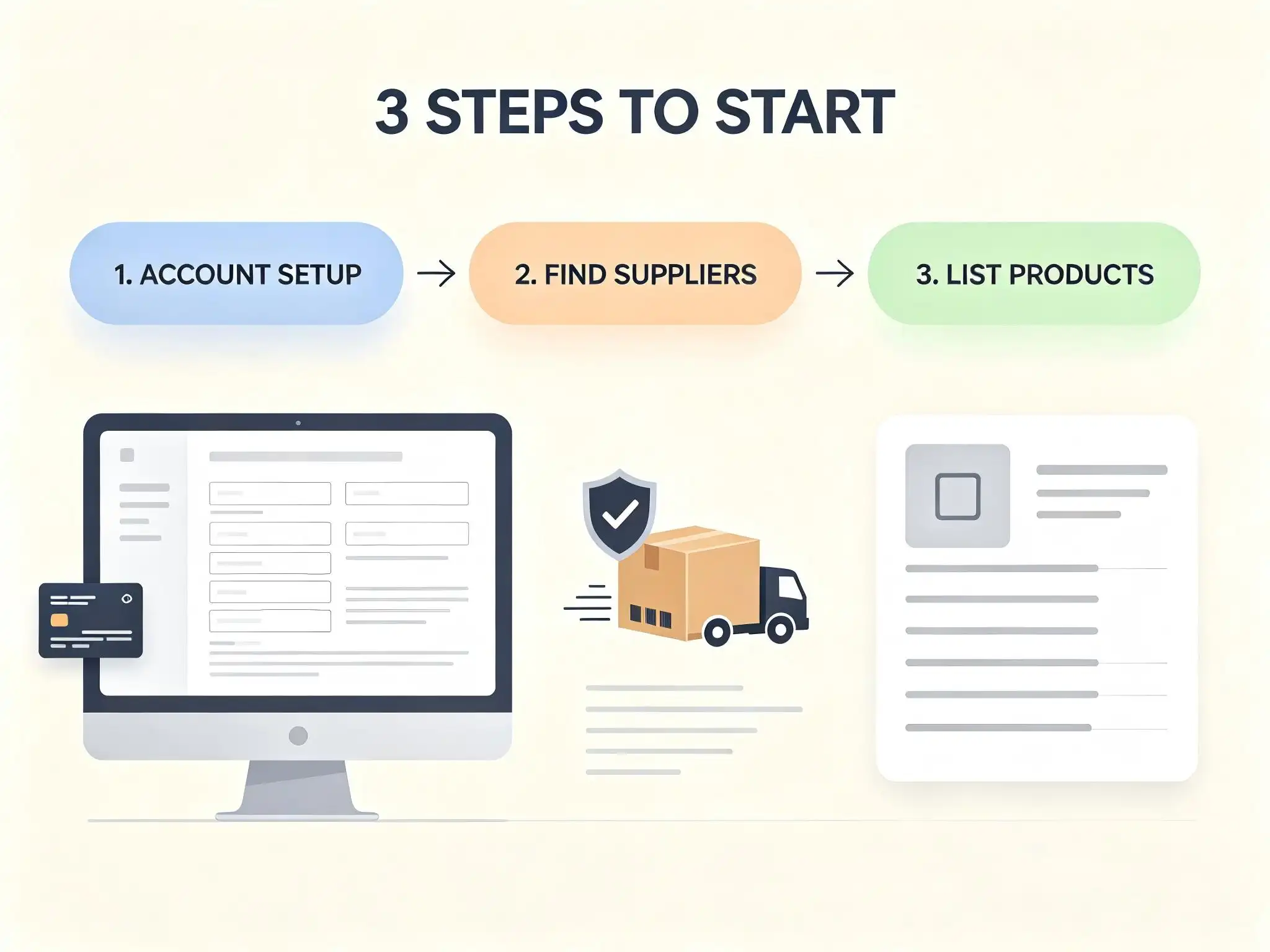
Setting up your Amazon seller account
To begin, visit the official Amazon Seller Central page. You must choose between two account types:
- Individual Account: Free monthly fee, but charges a $0.99 fee per item sold. Perfect if you sell fewer than 40 items a month.
- Professional Account: Costs $39.99 per month, but waives the $0.99 per-item fee. Essential if you want to use automated selling tools.
Prepare your government ID, bank details, tax information, and a valid credit card before registering.
Finding reliable suppliers or service providers
Your supplier is the lifeblood of your store. Look for suppliers that guarantee shipping within 1 to 3 business days.
Real Case Study: Sarah, a new seller in 2026, started dropshipping home kitchen gadgets. She picked a random supplier from an overseas marketplace with a 12-day shipping time. Customers complained about late arrivals, and her Amazon account was quickly flagged. She switched to a verified US-based wholesale distributor who shipped items in custom boxes with her store name inside 48 hours. Her account health score jumped back to 100%, and her monthly sales doubled.
Listing your first product without holding inventory
Once your account is active, create a high-quality product listing:
- Write a clear product title with core keywords.
- Add high-resolution images showing the product on a clean white background.
- List 5 clear bullet points explaining key features and benefits.
- Set a price that covers your supplier cost, Amazon fees, and desired profit margin.
How to Manage Orders and Fulfillment Without Inventory
Automating order processing and tracking
Manual order entry wastes time and creates costly human errors. Use automation tools like AutoDS or Inventory Source. When an order arrives on Amazon, these tools automatically send the order details and customer address straight to your supplier. Once the supplier ships the package, the tracking number is automatically updated on Amazon.
Ensuring timely delivery with third-party logistics
Amazon buyers expect lightning-fast shipping. Work exclusively with suppliers that offer fast third-party logistics (3PL).
If you use retail arbitrage or wholesale, consider using a US-based prep center. You purchase goods online, ship them to the prep center, and they inspect, label, and send the boxes straight to Amazon FBA warehouses on your behalf.
Handling returns and customer service effectively
Customer returns are a normal part of e-commerce. Create a clear return workflow:
- Provide a friendly response to the buyer within 24 hours.
- Provide a prepaid return shipping label addressed directly to your supplier or prep center.
- Issue a full refund once the supplier confirms receipt of the returned item.
Common Mistakes to Avoid When Selling Without Inventory
Why choosing the wrong supplier can hurt your business
If your supplier runs out of stock without telling you, you will have to cancel orders. Canceling orders hurts your Pre-Fulfillment Cancel Rate on Amazon Seller Central. If your cancellation rate rises above 2.5%, Amazon may suspend your account. Always work with suppliers that offer real-time inventory synchronization.
The risks of violating Amazon’s policies
The single biggest mistake new dropshippers make is buying items from retail stores like Sam's Club or Walmart and shipping them directly to Amazon customers. When the buyer receives a package with a Walmart logo on the tape and a Walmart receipt inside, they get confused and file a complaint. Amazon strictly bans this practice. You must ensure all packaging identifies you as the seller.
How to avoid pricing and inventory management errors
Prices on supplier websites fluctuate daily. If a supplier raises their price by $5 and you do not adjust your Amazon listing, you will lose money on every sale. Use repricing software to automatically update your selling prices whenever your supplier adjusts theirs.
How to Scale Your Amazon Business Without Inventory
Expanding your product catalog strategically
Once you find one winning product, look for related items in the same niche. For example, if you successfully sell custom dog mugs using print-on-demand, expand your catalog to include matching dog bandanas, food mats, and leash holders.
Leveraging tools to optimize operations
To build a multi-thousand-dollar business, you must rely on software:
- Helium 10 or Jungle Scout: For deep market research and finding winning products.
- Keepa: To track price history and sales rank over time.
- FeedbackWhiz: To automate customer review requests politely.
Building a strong brand presence on Amazon
Enroll in Amazon Brand Registry as soon as you trademark your brand name. Brand Registry unlocks A+ Content, video ads, and a custom Amazon Storefront page. Having a registered brand protects your listings from hijackers and builds trust with potential buyers.
How to Stay Compliant with Amazon’s Policies in 2026
Key rules for dropshipping and third-party fulfillment
To stay 100% compliant with Amazon dropshipping rules in 2026, follow these core requirements:
- You must be the seller of record on all invoices, packing slips, and external packaging.
- Do not allow the supplier’s name or logos to appear on outer boxes or receipts.
- You are responsible for accepting and processing customer returns.
- You must comply with all standard Amazon seller agreements and policies.
How to avoid account suspension or penalties
Check your Account Health Dashboard inside Amazon Seller Central every single day. Keep your Late Shipment Rate under 4% and your Order Defect Rate under 1%. If a customer messages you with a problem, resolve it quickly and politely before they leave negative feedback.
Advanced Tips for Long-Term Success Without Inventory
How to identify trending products early
Monitor viral social media trends on TikTok, Instagram, and Pinterest. Look for trending lifestyle items or aesthetic home decor before they become saturated on Amazon. You can launch print-on-demand designs or source wholesale items while demand is surging and competition remains low.
Using data analytics to improve performance
Analyze your Amazon business reports weekly:
- Unit Session Percentage (Conversion Rate): Aim for a conversion rate above 10%.
- Click-Through Rate (CTR): If your CTR is low, update your main product image or lower your price slightly.
- ACOS (Advertising Cost of Sales): Keep your ad spend low enough to ensure net profitability.
Building customer loyalty without direct product control
Include custom brand inserts or thank-you cards inside your print-on-demand packages. Offer friendly, fast customer service. When a customer emails with a question, reply within a few hours. Excellent service leads to positive seller feedback, which helps you win the Amazon Buy Box more frequently.
Safely Scaling Your Inventory-Free Amazon Business with DICloak
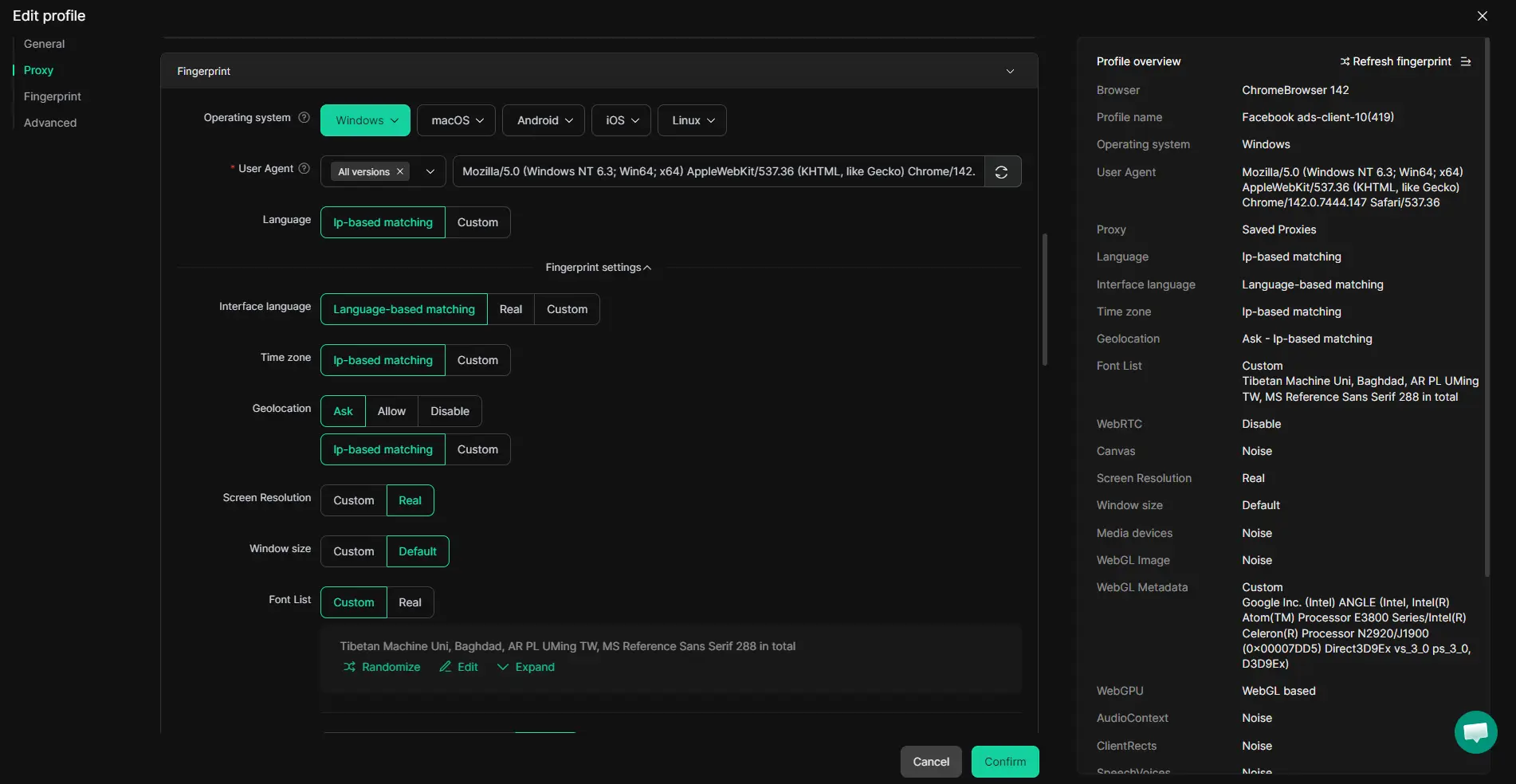
As you grow your e-commerce business, you may want to open separate store profiles for different niches or backup accounts. You can use DICloak to create distinct, completely isolated browser profiles on a single device. You can customize digital fingerprints and configure different types of proxies (like HTTP, HTTPS, or SOCKS5) for every individual profile. This ensures each store runs with its own isolated IP address and hardware profile, allowing you to manage multiple Amazon stores smoothly without cross-account tracking.
Collect competitor data for market analysis
Staying ahead in e-commerce requires analyzing competitor prices, keyword strategies, and customer reviews. You can run automated web scrapers or RPA tasks within isolated browser profiles to safely harvest market data. By collecting clean, unblocked pricing and review data across marketplaces, you can feed these insights into external AI models or pricing spreadsheets to adjust your sales strategies effectively.
Reduce ban risks with isolated account profiles
Managing multiple accounts on a single traditional browser can lead to account linking and unexpected suspensions. You can use DICloak to isolate cookies, storage, and device parameters for each store profile. Furthermore, when working with remote teams or virtual assistants, you can share browser profiles and set member permissions easily. Your team members can access accounts safely without needing master passwords, keeping your account credentials secure and fully protected.
Frequently Asked Questions About Selling on Amazon Without Inventory
Can I sell on Amazon without inventory if I am a beginner?
Yes, beginners can easily sell on Amazon without holding inventory. Print-on-demand and online arbitrage are great starting options. You do not need technical coding skills or a warehouse. You just need to follow Amazon policies, choose reliable suppliers, and provide great customer service.
How much money do I need to start selling on Amazon without inventory?
You can start selling without inventory with as little as $100 to $500. This covers basic software tools, your Amazon seller account fee, and minor marketing costs. Because you only purchase items after a customer pays you, your upfront financial risk remains very low.
What are the best tools for managing inventory-free sales?
Top tools include SellerAmp and Keepa for product research, AutoDS or Inventory Source for automated supplier fulfillment, and Helium 10 for keyword tracking. If you operate multiple seller accounts or run scraping workflows for market research, you can use an antidetect browser like DICloak to keep your browser profiles secure and isolated.
Are there any legal risks with dropshipping on Amazon?
The main risks involve intellectual property (IP) infringement and brand restrictions. If you sell copyrighted designs or list restricted brands without permission, the brand owner may report your store. Always verify that your suppliers have genuine authorization to sell the products you list.
How do I handle customer complaints without physical stock?
When a customer complains about a broken or late item, act with empathy. Apologize immediately and contact your supplier to request a replacement or refund. If necessary, issue a full refund to the buyer out of your own profit margin to keep your Amazon seller rating healthy.
Conclusion
Selling on Amazon without inventory is a realistic, highly scalable way to launch an e-commerce business in 2026. By choosing beginner-friendly models like print-on-demand or online arbitrage, partnering with verified suppliers, and strictly following Amazon's fulfillment rules, you can create a profitable stream of income with minimal upfront risk. Start small, pick a niche you understand, use smart management tools, and build your e-commerce store step by step today!
 Web Proxy Tools
 Free Tools
 Cookie Plugin
 UA Generator
 MAC Address Generator
 IP Generator
 IP Address List
 2FA Code Generator
 World Clock
 Anonymous Check
 WebRTC Leak Test
 UUID Generator
 Free Web Proxy Site
 Proxy Checker
 FB Ad Checker
 AI Web Scraping
 Free SMM Tools
 Twitter Shadowban Checker
 Instagram Name Checker
 UTM Generator
 Username Generator
 AI Hashtag Generator
 LinkedIn Headline Generator
 Social Media Image Resizer