- ResourcesOnline Tools



EN

Growing a Facebook Page can feel harder than it used to. You post, wait, and hope people notice, but many times the results stay small. The truth is, getting followers on Facebook is not only about posting more. It is about building a page that looks trustworthy, sharing content people actually care about, and giving them a reason to stay connected with your brand.
The good news is that Facebook growth does not have to be confusing. With the right setup, better content, real engagement, and a few smart growth tactics, you can build an audience step by step. In this guide, you will learn how to get followers on Facebook in a practical way, so your page can reach more people, earn more trust, and grow with the right audience over time.
Before you focus on how to get followers on Facebook, it helps to understand why followers matter. Real followers do more than make a page look bigger. They can help more people notice your content, trust your brand, and stay connected with your page over time.
If you want to understand how to get followers on Facebook, start with one simple idea: followers are people who choose to keep seeing your updates. On Facebook, this matters because Pages now focus more on follows than likes.
Real followers can help your page in a few important ways:
For example, if a small bakery has only a few followers, many people may miss its updates. But with more local followers, each post has a better chance to be seen and remembered. That is one reason many businesses want to know how to get more followers on Facebook.
Before you go further, it is important to know that followers, friends, and Page likes are not the same thing.
This matters for brands, creators, and small businesses. If you are building a Facebook Page, your main goal is not to collect friends. It is to build a follower base that wants your content. For example, a photographer may have friends in real life, but followers may include future clients who want to see new work and updates. That is why followers are so important for long-term growth.
Once you understand why followers matter, the next step is simple: make your page worth following. Many brands spend too much time thinking about content first and forget the basics. But if your page looks incomplete, confusing, or outdated, people may leave before they ever follow. That is why a strong setup is one of the first real steps to get followers on Facebook.
A good page should feel clear and real from the first second. Meta’s business help says you can create a professional Page by choosing the right category and then adding key business details. A page should not look empty or unfinished. If someone lands on your page and cannot tell who you are, what you do, or how to contact you, trust drops fast.
Think of a local pet grooming shop. If its Facebook Page has a real business name, a clean logo, a friendly cover image, and a clear service category, it already feels more trustworthy than a page with no photo and no details. That first impression matters. People often decide in seconds whether a page looks active and worth following. This is one reason page setup plays such a big role in how to get more followers on Facebook.
Meta also lets Pages add an action button like Contact Us, Book Now, Shop Now, or Learn More. These buttons do more than make the page look polished. They give visitors a next step right away, which can turn casual page visits into real interest.
After your page is created, the next job is filling in the details well. This sounds small, but it has a big effect. A short bio can tell people what you offer. Contact information can remove doubt. A strong profile photo and cover image can make the brand easier to recognize. On Facebook, these pieces work together to help visitors understand your page faster.
The most helpful details to review are:
If even one of these feels wrong or missing, the page can look less reliable. For example, imagine a fitness coach trying to grow on Facebook. If the bio clearly says who the coaching is for, the cover image matches the brand, and the button links to a booking page, visitors can understand the offer fast. If the page has an old photo, no contact details, and no clear message, many people will leave without following.
This part is easy to skip, but it matters because followers usually come after trust. Before people decide to follow, they want to feel that the page is active, real, and useful. That is why clean branding and complete page details are a practical part of how to get followers on Facebook, not just a design task.
A good Facebook Page should not live alone. If you want steady growth, people need more ways to find it. Meta’s Page Plugin allows businesses to embed and promote a public Facebook Page on their website, so visitors can discover the page while already engaging with the brand elsewhere.
This is a smart move for small businesses, creators, and online stores. For example, if you run a bakery website, you can place your Facebook Page in the site footer, on the contact page, or on a thank-you page after checkout. Someone who enjoyed your site may not buy right away, but they may still follow your Facebook Page to keep up with new products and updates. The same idea works for email newsletters, blog posts, Instagram bios, and other brand channels. Each extra link gives people another simple path to follow.
So if you are serious about how to get more followers on Facebook, do not wait for people to search for your page on their own. Put your page in places where interested people already spend time. A strong Facebook growth strategy often starts with small, easy fixes like these. They do not look flashy, but they make it much easier for the right audience to find you and follow you.
Once your page looks clear and trustworthy, the next step is giving people a reason to stay. This is where content starts to matter most. A clean page can help someone trust you, but strong content is what makes them follow. If you want to learn how to get followers on Facebook, you need to post things that people actually want to watch, read, react to, and share. Meta’s guidance for Page growth also points to the same idea: post when your audience is online, use photos and videos, respond to people, and keep your posting balanced rather than excessive.
A lot of pages fail because they only post promotions. They talk about sales, discounts, and products all the time, but they forget to be useful. In real life, people follow pages that help them, entertain them, or make them feel understood. That is a big part of how to get more followers on Facebook. Meta also says original content gets the best distribution, which means Facebook prefers content made by the creator or publisher instead of recycled posts copied from somewhere else.
For example, imagine a small skincare brand. Instead of posting “Buy now” every day, it can share a simple morning routine, explain the difference between dry skin and dehydrated skin, or show how one product fits into a full routine. A local gym can do the same thing by sharing beginner workout tips, quick meal ideas, or short clips that answer common questions. Content like this feels more human. It gives value before asking for anything. That is why it works better for how to get followers on Facebook than constant promotion does.
A simple rule can help here. Try to make your content do at least one of these jobs:
When your posts do this well, your page feels worth following. That is the kind of content people come back for.
Good ideas matter, but format matters too. Meta’s Page engagement guidance says photos, videos, and other visual posts can help increase engagement, and Meta’s Reels best practices say high-quality, relatable, and engaging Reels can help content get discovered by new audiences. Meta also advises creators to avoid low-quality or visibly recycled video content.
This is why many growing pages do not rely on text posts alone. A food business might post a clean photo of a new dessert, then a short Reel showing how it is made, then a Story with a poll asking followers which flavor they want next. Each format does a different job. Photos can catch attention fast. Reels can bring in new viewers. Stories can keep current followers engaged in a more casual way. Meta also describes Stories as a strong way to share real moments visually, which is useful for brands that want to feel more personal and active.
If you are trying to figure out how to get more followers on Facebook, this matters a lot. A useful post may keep people interested, but a short, strong Reel may help new people find you in the first place. That is why the best pages often mix formats instead of repeating the same type of post every time.
Even good content can fail if you post in a random way. Meta recommends posting when your followers are online and adjusting frequency in moderation. In other words, posting too little can make your page feel inactive, but posting too much can wear people out.
A simple example is a local coffee shop. If it posts three times in one day and then disappears for two weeks, people may forget about it. But if it shares a few steady updates each week, such as a Monday drink special, a Wednesday behind-the-scenes video, and a Friday customer favorite post, the page starts to feel alive and reliable. Then, over time, more visitors may choose to follow because they can see the page is active.
The same goes for timing. If your audience is mostly busy during the workday, a lunchtime or evening post may do better than one early in the morning. The best timing depends on your audience, so it helps to watch your Page Insights and test patterns over time. This is one of the most practical parts of how to get followers on Facebook. Growth often comes from doing simple things well, again and again, instead of looking for one perfect viral post.
Once your page is set up and your content is working, the next step is interaction. People may watch a post, but they do not always follow right away. Often, they follow after they feel noticed. That is why real engagement matters so much about how to get followers on Facebook.
A simple reply can make a big difference. When someone asks a question and gets a real answer, your page feels active and human. For example, if a bakery quickly replies to a question about gluten-free cupcakes, it helps one person and also shows others that the business is paying attention. This is a practical part of how to get more followers on Facebook because trust often grows through small moments.
Not every post should only share information. Some posts should invite people to join in. A coffee shop can ask which seasonal drink people want back, or a fitness coach can ask followers about their biggest challenge. These simple questions make the page feel more alive. When people interact easily, they are more likely to remember the page and follow it.
Some of the best engagement comes from your audience. Customer photos, reviews, and stories can make your page feel like a real community. For example, a pet grooming page can share customer dog photos, or a skincare brand can repost user results with permission. This kind of real participation adds fresh content and helps new visitors see that real people are already involved. That makes your page feel warmer, more active, and more worth following.
Once your page has strong content and real engagement, the next step is expanding your reach. This is an important part of how to get followers on Facebook, especially for smaller pages that want to grow faster. Meta says promoting your Page and using ads can help more people discover your business.
You do not always need a big influencer. Smaller creators often have a more focused audience and stronger trust in their niche. For example, a local skincare brand may get better results by working with a few small beauty creators who already talk about simple routines or sensitive skin. This can be a smart way to support how to get more followers on Facebook because the audience is already relevant.
You can also grow by working with brands or communities that share a similar audience. A coffee shop can partner with a local bakery, or a fitness coach can do a short Q&A with a healthy food brand. These simple partnerships help both sides reach new people who are already likely to care. For pages learning how to get followers on Facebook, this is often more effective than broad, random promotion.
Paid promotion works best when you boost content that is already performing well. Meta says boosted posts can help you reach more people beyond your current audience. For example, if a local gym sees that a beginner workout Reel is getting strong engagement, promoting that Reel may help bring in more viewers who are likely to follow. This is one of the more practical paid methods for how to get more followers on Facebook because it builds on content that already shows real interest.
The main goal is not just more reach. It is reaching the right people who are more likely to engage and follow.
Once your page starts growing, do not just keep posting and hope for the best. The next step in how to get followers on Facebook is checking what works and what hurts your growth. Meta’s Insights tools can show follower trends, reach, and engagement, which helps you make smarter decisions over time.
Do not look at follower count alone. A better way is to watch three things together: how many new followers you get, how many people your posts reach, and how people react. Meta says Page Insights can show metrics like followers, visits, reach, and engagement.
For example, a local gym may post a sales graphic, a workout Reel, and a member story in the same week. If the Reel brings the most reach, but the member story gets more comments and new follows, that tells you something useful. This is a smart part of how to get more followers on Facebook. You are not just asking what got views. You are asking what helped the page grow.
Insights are useful because they help you stop guessing. Meta says Insights can help Pages understand their audience better and see the content people interact with most.
So if a bakery sees that behind-the-scenes videos do better than product photos, it can post more of those videos. If a skincare page learns that simple educational tips get more follows than sales posts, it can shift in that direction. That is one of the most practical parts of how to get followers on Facebook. Small changes based on real data often work better than chasing random trends.
Fast growth can be tempting, but page quality still matters. Meta says it does not allow spam meant to deceive or artificially increase viewership, and it also does not allow fake accounts or behavior that artificially boosts popularity. This is why a healthy growth strategy should focus on relevance, trust, and real audience interest.
For brands that want to learn how to get more followers on Facebook, audience quality is an important part of long-term success. Followers are most valuable when they match your niche, respond to your content, and help your page build stronger engagement over time. That is why it is smart to focus on methods that support real visibility, better interaction, and a more active follower base. In the long run, quality helps your page stay more credible, useful, and growth-ready.
As your Facebook strategy grows, you may need to handle more than one Page, ad account, or brand at the same time. This is common for agencies, social media teams, and businesses working in different markets. In that kind of setup, a better browser workflow can help keep account work more stable, more organized, and easier to scale. Tools like DICloak can support this process through isolated browser profiles, custom proxy setup, automation tools, and Synchronizer control.
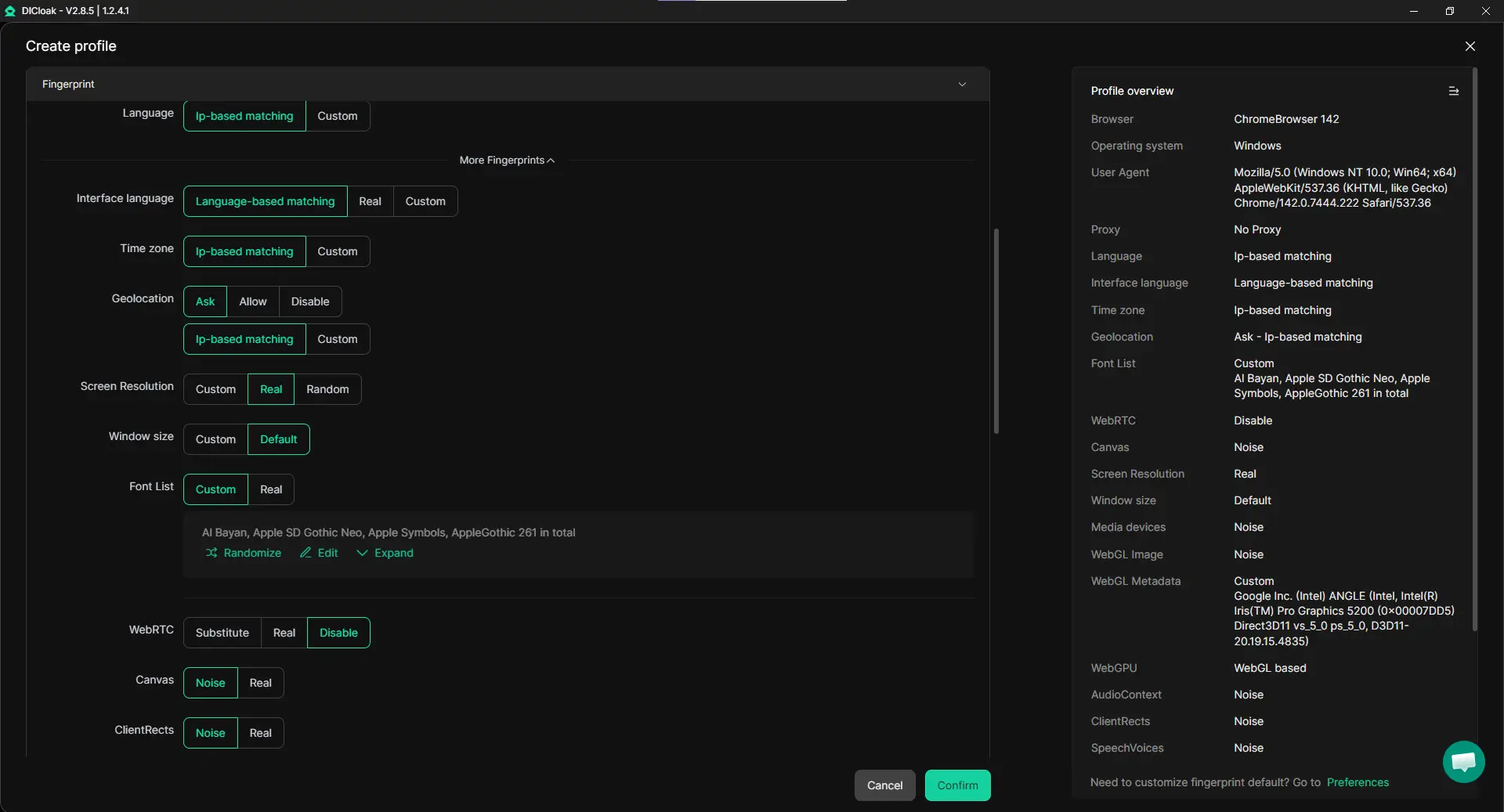
When several Facebook accounts are managed on one device, separation matters. Independent browser profiles can be used for different Pages, Business Manager accounts, or client projects, so each one keeps its own browser profile. With DICloak, each profile can stay separate through customized fingerprint settings such as IP address, user agent, screen resolution, WebRTC, and device configuration. This can help reduce overlap between accounts and make multi-account work easier to manage.
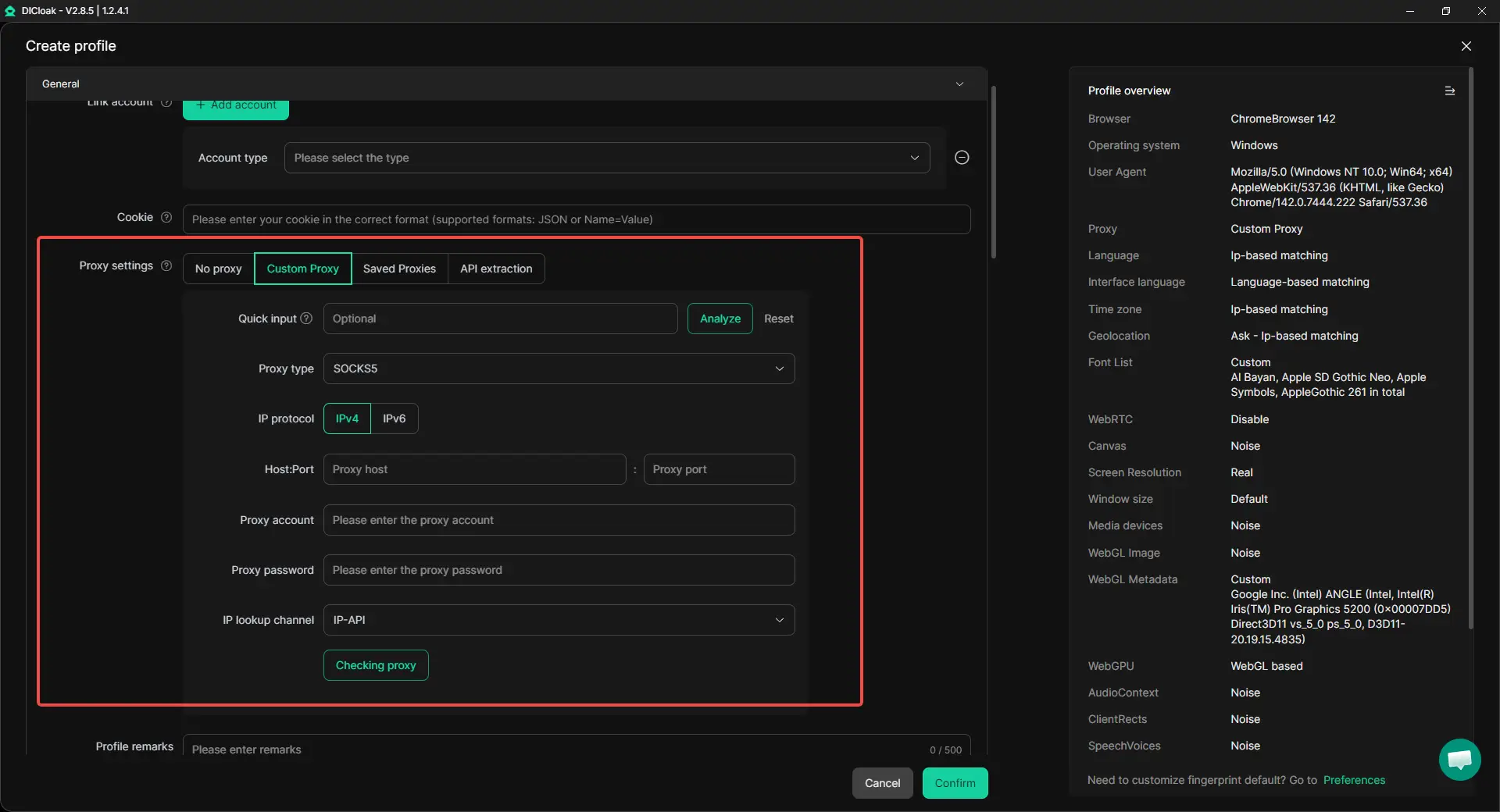
A cleaner setup also depends on network separation. Different proxies can be assigned to different browser profiles, which is useful when handling accounts across countries, brands, or campaign groups. With DICloak, users can configure major proxy types and manage proxies in bulk, which can save time for teams running many accounts at once.
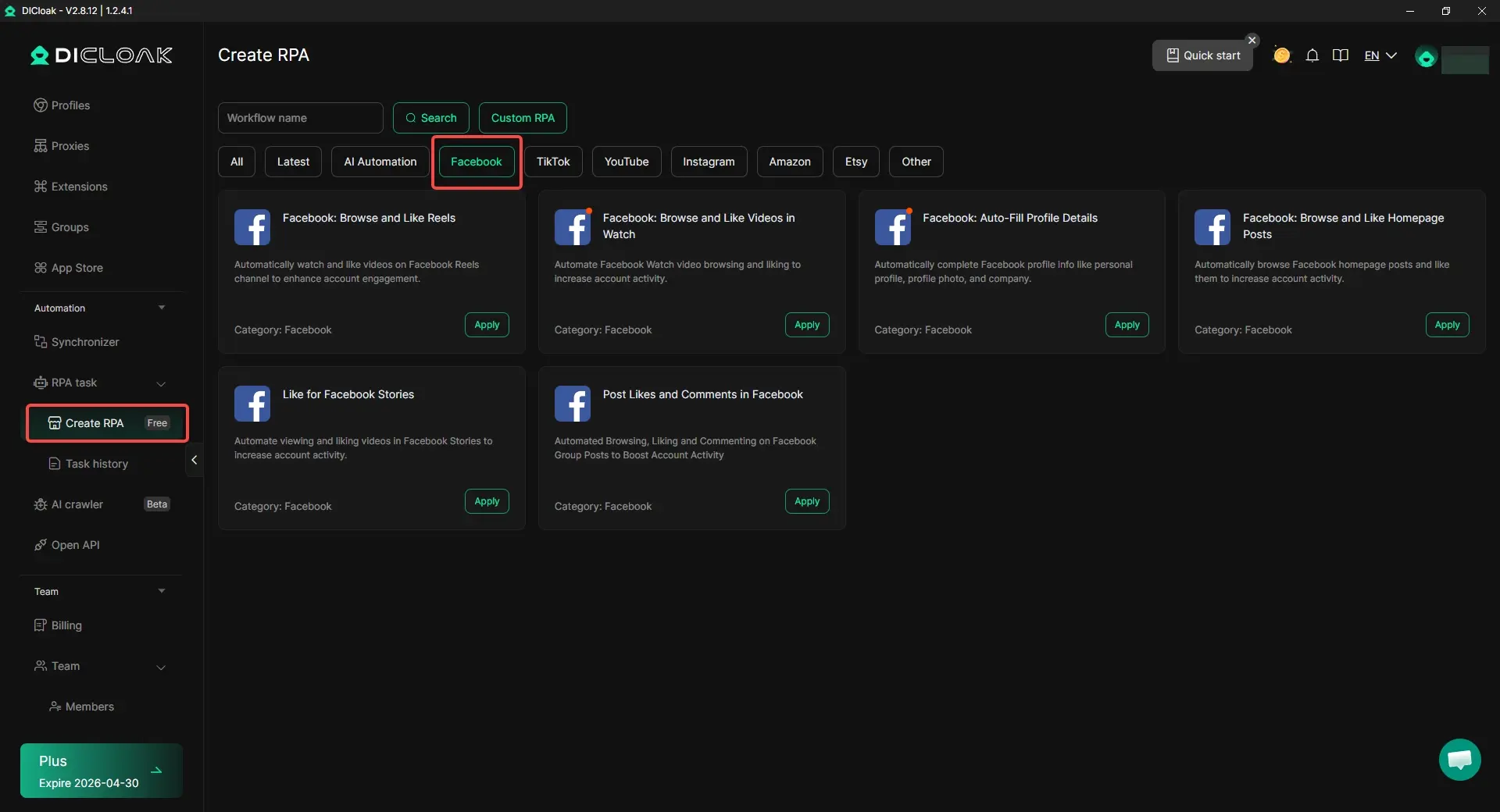
A lot of Facebook work is repetitive. Built-in RPA tools can automate routine Facebook actions like browsing Reels, liking posts, interacting with Stories, commenting, and auto-filling profile details across multiple accounts. With DICloak, repetitive workflows can be automated through built-in RPA features and ready-made templates, which makes daily operations more efficient for teams handling many accounts.
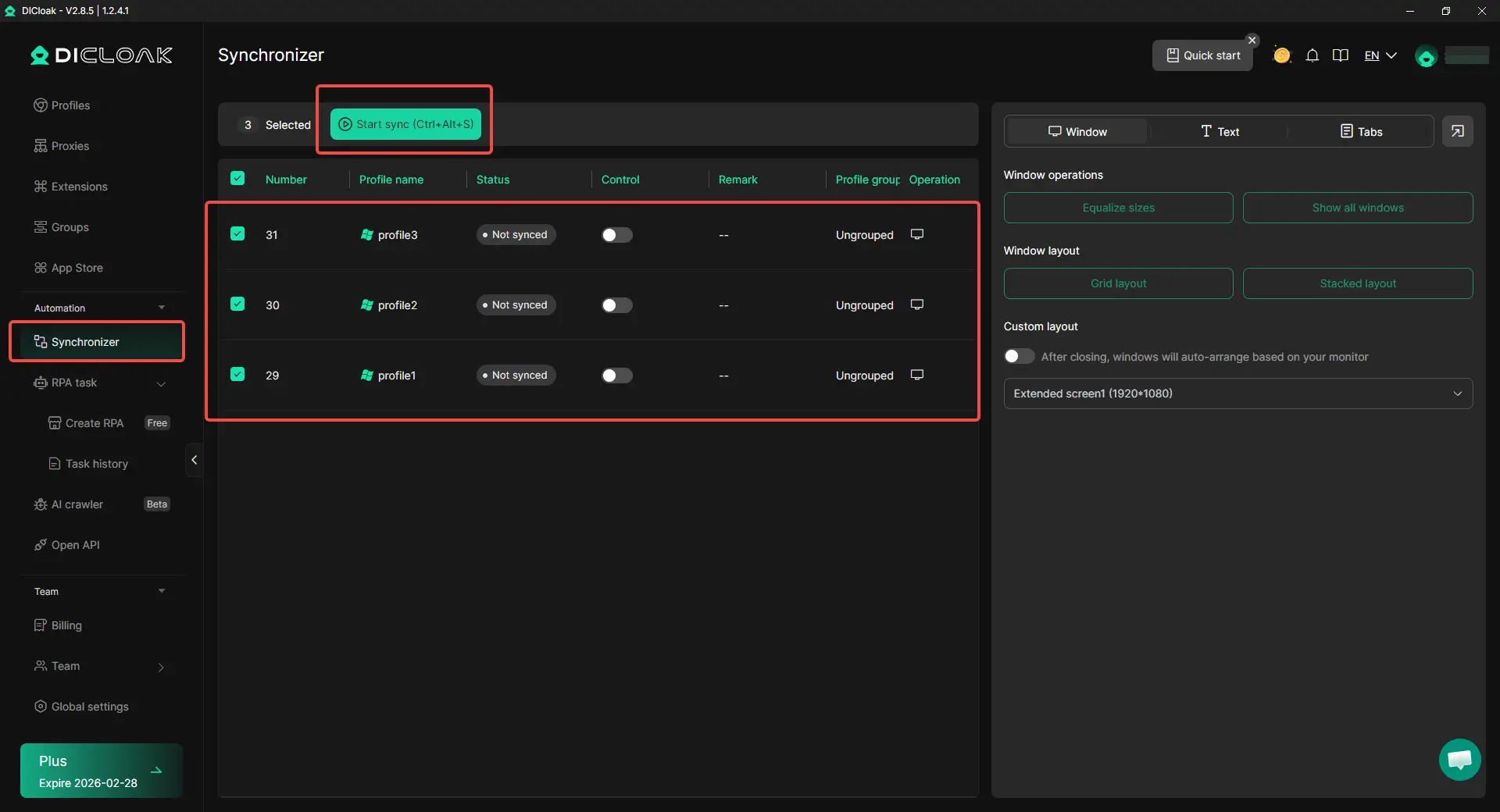
Some tasks need to be done across many accounts in the same way. That is where synchronized control can help. A Synchronizer can mirror actions like clicking and typing across multiple browser windows at the same time, while each profile stays isolated. With DICloak, this feature can be useful for bulk actions, testing workflows, or repeating the same setup process across several profiles.
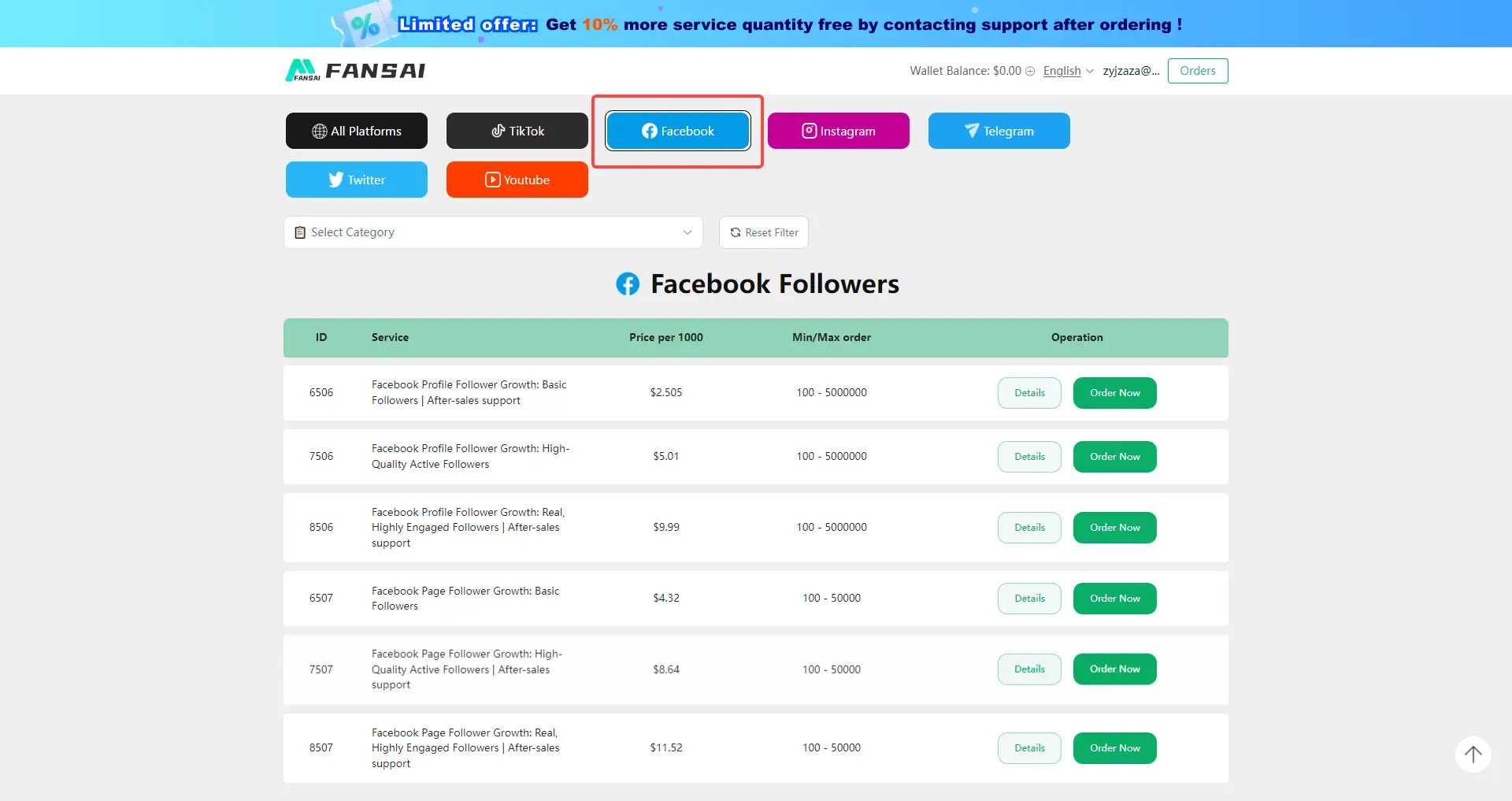
For users exploring how to get followers on Facebook, Fans AI adds a more direct growth option inside the same workflow. It supports follower growth for both Facebook profiles and Facebook Pages, with choices such as basic followers, high-quality active followers, and real, highly engaged followers. Because service type, pricing, and order range are shown clearly, it is easier to choose an option that fits different Facebook growth goals and budgets.
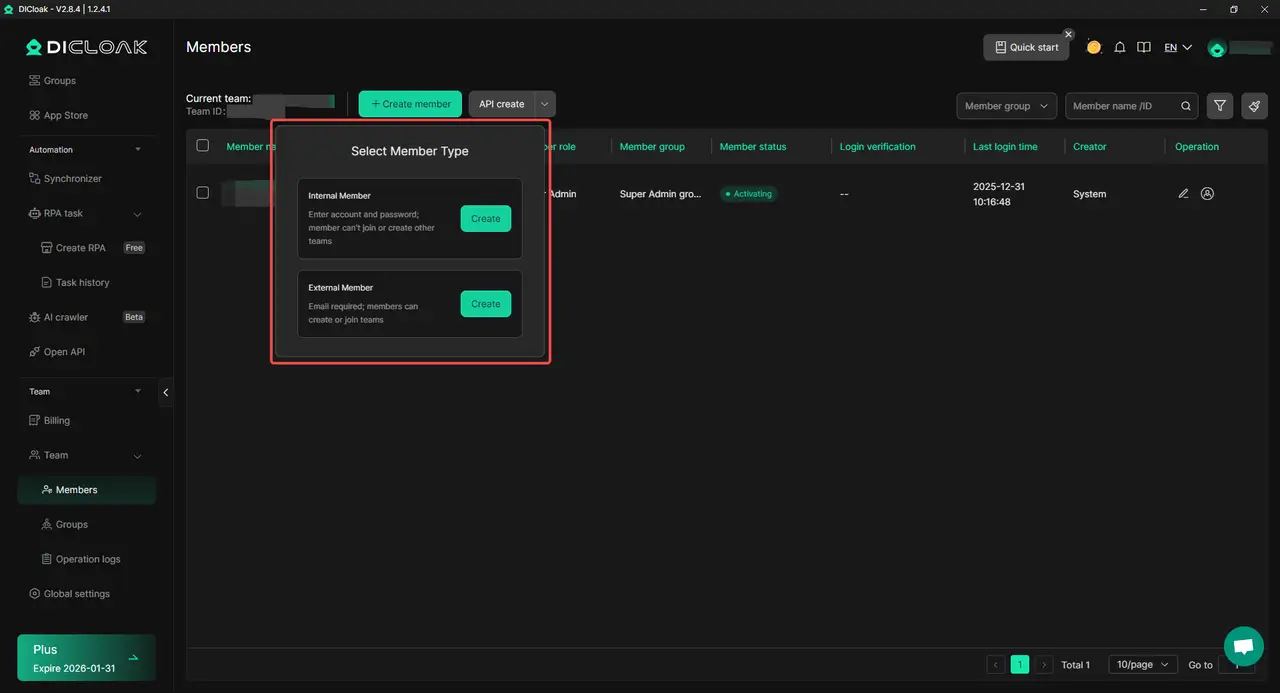
When more than one person handles account work, organization becomes even more important. Features like profile sharing, permission settings, data isolation, and operation logs can help businesses manage access more clearly and keep account work structured across staff members. This is especially useful for teams that manage several Facebook Pages or client accounts at the same time.
For businesses exploring how to get followers on Facebook, this kind of setup can support a more controlled workflow when growth involves multiple Pages, different markets, or team-based account operations. Instead of switching through a messy manual process, teams can use DICloak to build a more stable system for multi-account Facebook management while keeping daily work more efficient.
Getting more followers on Facebook is not about chasing a big number for show. It is about building a page that people trust, enjoy, and want to come back to. A strong Facebook Page starts with the basics: clear branding, complete page details, and easy ways for people to find and follow your account. From there, real growth comes from useful content, short videos, Reels, steady posting, and real interaction that makes people feel seen.
The most effective way to grow is to focus on audience quality, not empty activity. Helpful posts, active replies, community participation, smart promotion, and steady review of your results can all support better long-term growth. For teams or businesses managing multiple Facebook accounts, a more organized browser setup can also make daily work safer and more efficient. In the end, learning how to get followers on Facebook is really about creating a page that feels active, credible, and worth following over time.
Start with a complete page, useful content, Reels, and steady engagement. The fastest progress usually comes from clear setup, strong posts, and active replies.
You can grow by posting helpful content, using Stories and Reels, replying to followers, and sharing your page through your website, email list, and other social channels.
Build a professional page with clear branding, full business details, and a strong action button. Then share content that helps, informs, or entertains your audience.
Reels and short videos can help more people discover your page. Strong video content can bring in new viewers, while good posts and engagement help turn views into follows.
Use separate browser profiles, different proxy settings, and automation tools to keep account work more organized. This can help teams manage Facebook growth more safely and efficiently.