Many people search for a free .edu email because they hope it can unlock student discounts, software deals, and academic tools. But the truth is often more confusing than people expect. Not every .edu email is easy to get, not every online offer is real, and not every school account gives the same benefits.
That is why this guide matters. Instead of repeating vague tips, this article explains what a free .edu email really is, who can get one, which methods are legitimate, and how to avoid risky shortcuts. You will also learn how to check whether your account is working and how to make better use of it once you have access.
What is a .Edu Email Address?
Before looking for a free .edu email, it is important to know what it really means. Many people think a .edu email is just a special email anyone can create. But in most cases, it is a school-issued account linked to a real college or university.
Definition and Purpose of .Edu Emails
A .edu email address is an academic email given by a school that uses a .edu domain. It is not like Gmail or Outlook, where anyone can sign up for free. For example, a student may get an email like name@college.edu after being admitted or enrolled. This is why the term free .edu email can be misleading. The email is usually free for students, but it comes through a real school account, not through public registration.
The main purpose of a .edu email is to support school communication and student access. Schools use it to send class updates, registration notices, financial aid messages, and campus alerts. It is also often used to log in to student portals, online courses, and library systems. So when people search for free edu email, they are often really looking for the school services and student benefits that come with it.
A good example is GitHub Education. Students may qualify with a school-issued email or other proof of enrollment. This shows that a .edu email can help with verification, but it does not work like a magic pass by itself. That is why readers should be careful when they see edu email free offers online. In most cases, the real value comes from verified student status, not just the email address.
Why .Edu Emails Are Exclusive to Educational Institutions
This is the part many readers misunderstand. A .edu email may look simple, but the system behind it is not open to everyone. There are clear rules about who can use a .edu domain and who can receive an email account under it.
- The .edu domain is strictly controlled. The
.edu domain is not open to the public. Only accredited postsecondary institutions in the United States can apply for it. This rule helps keep trust high. When people see a .edu email, they expect it to belong to a real school.
- You cannot directly sign up for a free .edu email. Unlike Gmail or Outlook, there is no public signup page. To get a free .edu email, the school must first own the domain, then create accounts for its students, teachers, or staff.
- Schools decide who gets access. Each institution controls its own email system. For example, many community colleges only give student emails after a person completes the application process and gets a student record in the system.
- The real path is through legitimate enrollment. This means the correct way to get a free edu email is not finding a “free provider,” but becoming part of a real school in a legal and official way.
- An email alone does not always prove student status. Some platforms, like GitHub Education, may ask for extra proof if a school gives emails before full enrollment. This shows that having an edu email free is not always enough for verification.
- Verified status matters more than the email itself. Many users search for free edu email to unlock discounts or tools. But in reality, companies care more about whether you are an active student, not just the email address.
Benefits of Having a Free .Edu Email
Once you understand what a school-issued account really is, the next question is simple: why do so many people want a free .edu email? The answer is not just the email itself. The real value is the access that often comes with it. A valid school account can help students save money, use better tools, and reach more learning resources. Still, it is important to remember that benefits depend on the school and on the company’s own rules, not on the email alone.
Discounts on Software and Tools
One of the biggest reasons people look for a free .edu email is software access. Microsoft says eligible students with a valid school email can get Microsoft 365 Education for free, including tools like Word, Excel, PowerPoint, Teams, and OneDrive. In real life, this can make a big difference. A student writing papers, building class slides, and saving files online may not need to pay for a separate office suite at all.
Adobe is another strong example. Adobe states that student verification can often be done through a school-issued email address, though it may also ask for extra proof if the email cannot be verified automatically. This matters for design, media, and marketing students who need apps like Photoshop, Illustrator, Premiere Pro, or Acrobat. So when readers search for free edu email, what they often want is a simpler way to qualify for student pricing on expensive creative tools.
Google Workspace is a little different. Google Workspace for Education is designed for schools and institutions, not for individual students signing up on their own. Google explains that these education tools include Gmail, Drive, Calendar, and Classroom, and schools provide access through their own systems. That means a free .edu email may help you use Google’s school tools, but it does not mean Google gives every student a separate public discount plan.
Shopping and Service Discounts
A school account can also help with everyday savings. Amazon says students can join its student program with a six-month trial and then continue at a discounted membership rate, but student status must be verified and may need to be rechecked later. This is a good example of how a free .edu email can help start the process, while the real requirement is still active student verification.
Spotify works in a similar way. Spotify says its Student plan is for students enrolled at eligible accredited colleges or universities, and it uses SheerID to verify enrollment. In the U.S., the student plan currently includes Hulu and is offered at a lower monthly price than regular Premium. For many students, this is one of the most practical benefits tied to a free edu email or school status, because it cuts monthly entertainment costs right away.
Apple also offers education pricing for students and educators. On its U.S. education store, Apple promotes special pricing on Mac and iPad, along with savings on AppleCare+ coverage. This is useful for students who need a laptop for writing, coding, design, or remote learning. In other words, people searching for edu email free deals are often really trying to reduce the cost of study tools they already need.
Access to Academic Resources
The biggest long-term benefit may be access to academic resources. Many schools connect student accounts to library databases, journals, and campus research platforms. JSTOR, for example, explains that many college users can log in through their institution, and some schools also allow access through school-linked Google or Microsoft sign-in. That means a school email or school account can do more than unlock discounts. It can open the door to trusted articles, sources, and research help for real coursework.
Online learning tools can also become easier to use with a school identity. Some platforms give students free or lower-cost access after school verification. Notion says students and teachers can upgrade to the Plus Plan for free, and school email domains can help with that process. This is a good example of how a free edu email may support study planning, note-taking, and team projects beyond the classroom.
Cloud storage is another practical benefit. Microsoft explains that OneDrive for work or school lets users store, protect, share, and access files through their school account. Google also provides Drive through Google Workspace for Education, which schools manage for students and staff. So for someone comparing a normal inbox with a free edu email, the difference is often much bigger than email. It can mean built-in storage, class collaboration, and better access to school systems every day.
Overall, the main value of a free .edu email is not that it looks special. The real value is the verified student ecosystem around it. That is why some discounts are automatic, some require extra checks, and some depend fully on what your school provides.
Legitimate Ways to Obtain a Free .Edu Email
After learning the benefits, many readers want to know how to get a free .edu email in a real and legal way. The answer is straightforward. You usually do not sign up for it like a normal email account. In most cases, a school gives it to you because you are a student, graduate, employee, or approved affiliate.
Enroll in a Community College
For many people, this is the most realistic way to get a free .edu email. Many community colleges have simple online applications and lower barriers to entry than four-year universities. After you apply, get admitted, and complete student setup, the school may give you a student portal account and school email.
This is why free edu email can be a confusing phrase. The email may be free to the student, but it comes through real enrollment, not through a public signup page. If someone wants school tools, student discounts, and academic access, this is often the safest path.
Apply for Alumni Email Access
Some schools let graduates keep a school email or use alumni email forwarding. But this depends on the institution. One school may offer a full mailbox, while another may only forward messages to a personal inbox.
Because of that, this option only works for people who already studied there. It can be a valid way to keep edu email free access, but it is not something every graduate will get automatically.
Become an Affiliate or Staff Member of an Educational Institution
Schools also give official email accounts to employees, and sometimes to approved affiliates. This may include staff, research assistants, visiting scholars, or sponsored workers connected to the institution.
This can lead to a free .edu email, but only when the role is official. It is not a shortcut and it is not open to the public. The school must approve the account based on a real need.
Use Online Learning Platforms with Academic Partnerships
Some online learning platforms work with colleges and universities. If you join a school program that includes these services, you may get access to learning tools through your school account.
Still, the platform itself usually does not create a free .edu email for you. The email, when available, still comes from the school. That is why readers should be careful with online claims that promise free edu email access through learning sites alone.
For most people, the most reliable path is still the same. Join a real educational institution in a legal and official way.
Step-by-Step Guide to Creating a Free .Edu Email
Now that the legitimate paths are clear, the next step is understanding how the process usually works in real life. A free .edu email is normally created for you by a school after your status is approved. That means the steps depend on your relationship with the institution, not on a public sign-up form. EDUCAUSE, which manages the .edu domain, makes clear that these domains are reserved for eligible institutions, not individual users.
Method 1: Through Community College Enrollment
This is the most practical route for many readers. Community colleges often have online applications, and California’s official CCCApply system is one clear example. Students apply through the school’s admissions process, then wait for the college to create their student records.
A simple version of the process looks like this. First, choose a real community college and complete the application. Second, verify your identity if the school requires it. Glendale Community College, for example, notes that CCCApply uses ID.me verification for applicants. Third, wait for your student ID or welcome letter. Los Angeles City College says applicants receive a welcome letter with a student ID number and enrollment instructions after the application is processed. After that, the college may give you access to the portal and your free edu email.
This method works best because it follows the normal student path. The email is free to the student, but it only comes after official admission steps. That is why this is the safest and most reliable way to get a free .edu email.
Method 2: Using Online Platforms Offering .Edu Emails
This point needs care because many websites make this sound easier than it is. In most cases, online platforms do not create a real free .edu email for you. Instead, they work with colleges and universities, and you use the school account you already have. Coursera for Campus, for example, is built for universities, and Coursera’s support pages show that learners in for-credit programs are invited through their university email and then configure their accounts from there.
So the step-by-step process is different from what some people expect. First, join a real school program that includes an academic platform. Second, wait for the institution to send your access email. Third, use that school-linked account to activate learning tools. This can feel like a shortcut to edu email free access, but the email still comes from the institution, not from Coursera or another platform.
Method 3: Applying for an Alumni Email Address
This method only works if you already graduated from a school that offers alumni email. Johns Hopkins is a strong example. Its alumni association says graduates can receive an @alumni.jh.edu account with full email capability, and alumni are contacted after graduation about setup.
The process is usually simple. First, confirm that your school offers alumni email or forwarding. Second, check the alumni office or IT page for setup instructions. Third, activate the account if the school invites you to do so. This can be a useful way to keep free edu email access after school, but it depends fully on school policy. Some schools offer a full mailbox, while others only offer forwarding or no alumni email at all.
For most readers, the first method is still the most realistic. A real school creates the account, and that is what makes the free .edu email legitimate.
Are .Edu Email Generators Safe and Legal?
After learning the legitimate ways to get a free .edu email, it is also important to talk about the unsafe side. Many websites and sellers promise quick access to a school email. At first glance, this may look easy and tempting. But in most cases, these methods are neither safe nor legitimate.
What Are .Edu Email Generators?
.edu email generators are usually websites, tools, or sellers that claim they can give you a school email without normal school enrollment or official approval. Some say you can get a free edu email in minutes. Others sell accounts or ask for payment after showing fake promises.
The problem is simple. A real .edu email does not come from a random website. It comes from a real college or university. That school must issue the account to you because you are a student, staff member, alum, or approved affiliate. If a third party claims it can create or sell one outside that system, the method is not legitimate.
This also creates an ethical problem. A .edu email is supposed to show a real connection to an educational institution. Using one without that connection gives a false impression. It is unfair to real students and staff who followed the proper steps to receive their accounts.
Risks of Using Non-Legitimate Methods
Using a fake or improperly obtained free .edu email can cause serious problems.
- Account removal or shutdown: Schools control their own email systems. If they find that an account was created, shared, sold, or used in the wrong way, they can disable it. Once that happens, any services linked to that email may stop working.
- Loss of discounts and tools: Many people want a free edu email for software, streaming deals, or student pricing. But if the account is removed, you may lose access to Microsoft 365, cloud storage, research tools, or student subscriptions.
- Fraud and identity risk: Buying or using a fake academic email can cross into fraud or misrepresentation. Even if a person only wants discounts, the account may still be tied to false identity claims or unauthorized access.
- Privacy and security danger: Many of these accounts come from shady sources. Some may be stolen, reused, or shared with others. That means you could suddenly lose access, or someone else could read your messages and use your account.
- More exposure to scams: Sites that promise edu email free access often ask for personal details, passwords, or payment information. This creates a real risk of phishing, scams, or data theft.
- Harm to real students and schools: When fake
.edu accounts spread online, companies and universities may tighten their checks. That makes it harder for real students to get the benefits they truly qualify for.
Why Ethical Practices Are Important
Using a real free .edu email the right way protects more than just your account. It protects trust. Schools create these accounts for real academic use. Companies offer student benefits because they trust that school accounts represent real students, teachers, and graduates.
When people try to get an edu email free through fake generators or sellers, that trust gets weaker. Over time, schools may tighten access, and companies may demand more proof. Real students end up facing more steps because others tried to misuse the system.
That is why the safest path is still the honest one. If you want a free .edu email, get it through a real institution and use it in a way that matches your actual status. It is more stable, more secure, and much more likely to keep working over time.
How to Verify Your Free .Edu Email Is Working
After getting a free .edu email, you should make sure it really works. A real school email should do more than receive messages. In many cases, it should also connect you to school systems, learning tools, and student benefits.
Testing Your Email Address for Functionality
Start with a basic login test. Sign in to the email account and check that the inbox opens normally. Then send a test email to your personal inbox and reply back. If both messages arrive, your free edu email is working at the most basic level.
Next, test related school services. Try logging in to your student portal, cloud storage, or learning platform with the same account. In many cases, a working free .edu email is linked to these services. If the email works but the school tools do not, the account may still need activation.
Ensuring Access to Benefits and Discounts
After that, test whether the account works for student benefits. A good example is software or student discount programs that accept school emails during verification. Some services may approve your free .edu email right away, while others may ask for extra proof, such as an ID, class schedule, or enrollment record.
This is important because edu email free access does not always mean instant approval for every offer. A working email proves that the account exists. It does not always prove that the student status has already been fully verified.
If your account can log in, send and receive messages, open school tools, and pass at least one official student verification step, your free .edu email is likely working the right way.
Enhance Your .Edu Email Experience with DICloak
After getting a free .edu email, many users do more than just check school messages. They may log in to student portals, manage cloud storage, access learning tools, apply for student discounts, or handle more than one academic account on the same device. In these cases, keeping each account separate becomes very important. A cleaner browser setup can help reduce account mix-ups, cookie conflicts, and login problems.
Students, graduates, and education-focused users sometimes need to handle more than one account at the same time. For example, one browser session may be used for a school email, while another is used for a student discount account, a campus platform, or a second academic identity such as an alumni login. When everything is opened in one normal browser, cookies, login data, and site activity can easily mix together.
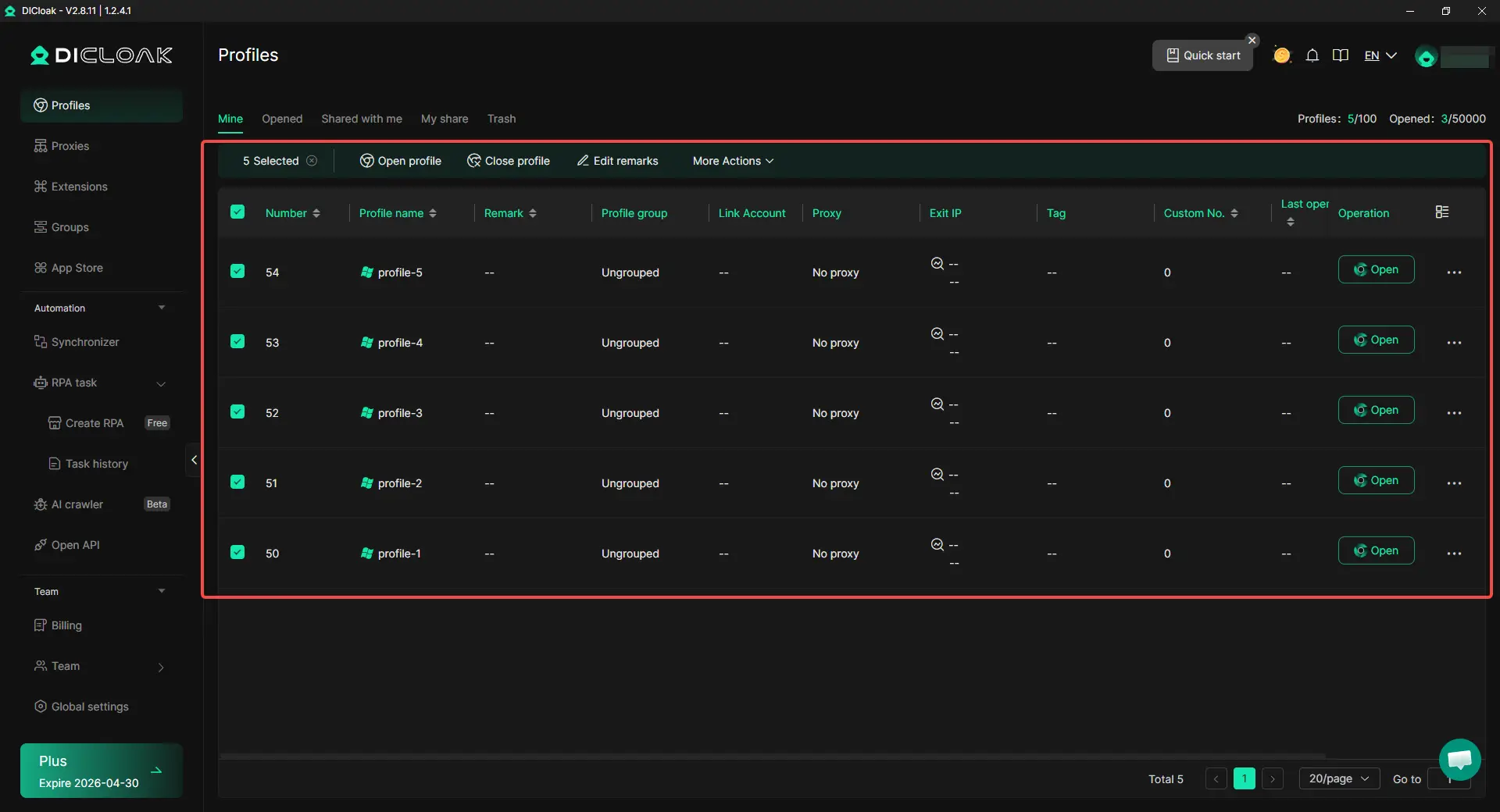
A more controlled setup can help avoid that. With DICloak, users can place each account in a separate browser profile, so one academic login stays isolated from another. This makes it easier to manage a free .edu email alongside other school-related accounts without constant logouts or session conflicts.
Keep Academic Accounts Separate with Isolated Profiles and Unique Fingerprints
When users apply for software discounts, open library platforms, or switch between student and personal accounts, separation becomes very important. In a normal browser, cookies, local storage, login history, and device signals can easily mix together. This may create confusion, repeated logouts, or a less consistent account environment.
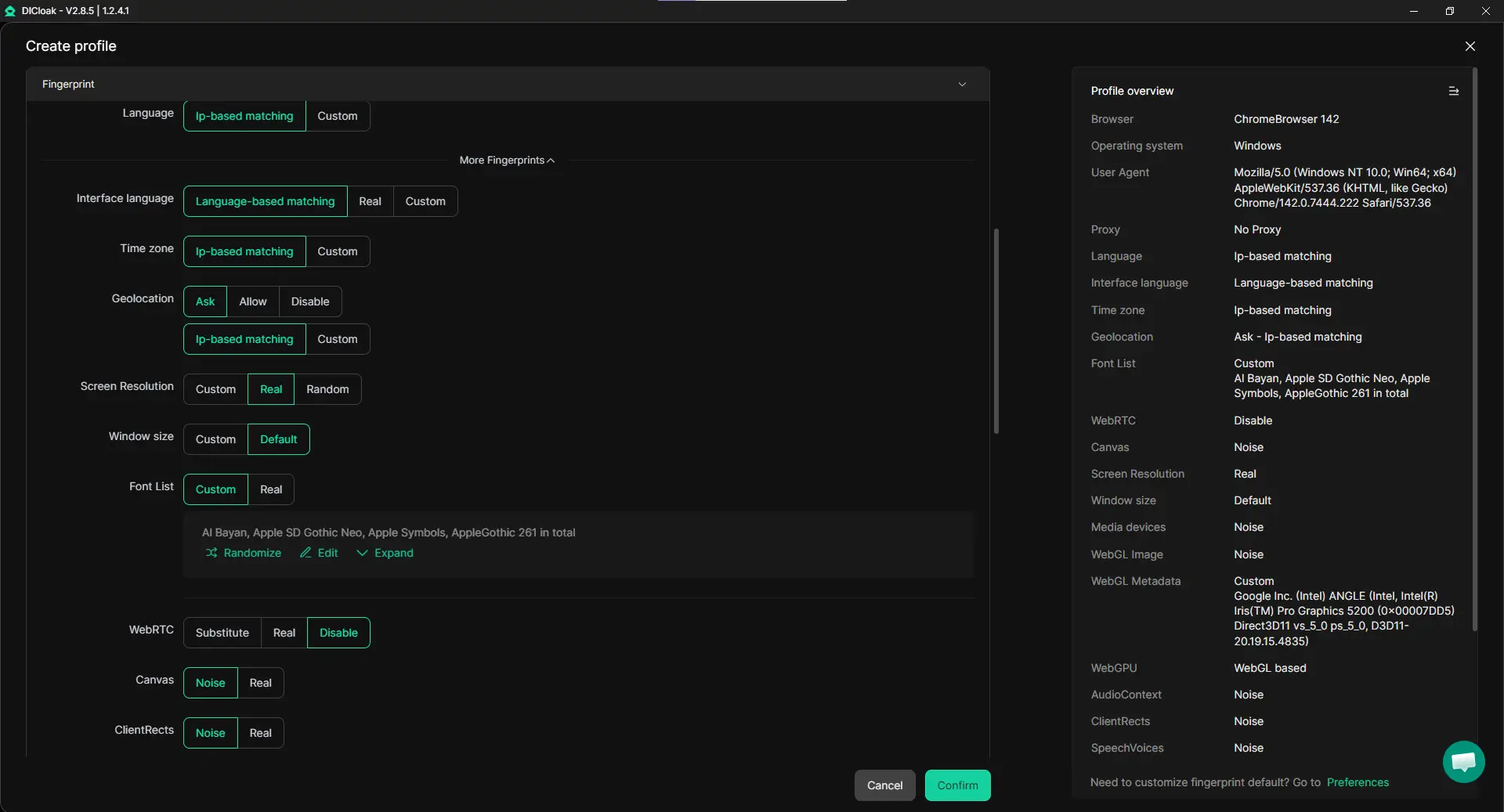
A profile-based setup helps solve this problem. With DICloak, users can keep each account in an isolated browser profile and adjust fingerprint settings for different profiles. This helps each account stay more independent at both the session level and the browser profile level. For someone using a free .edu email together with personal, work, or social accounts, this means better separation, fewer mistakes, and more control in daily use.
Improve Account Consistency with Custom Proxy Settings
Network consistency also matters. Some users log in to school tools from different places, devices, or work setups. In that case, using a stable proxy configuration for a specific browser profile can help keep that account’s network environment more consistent.
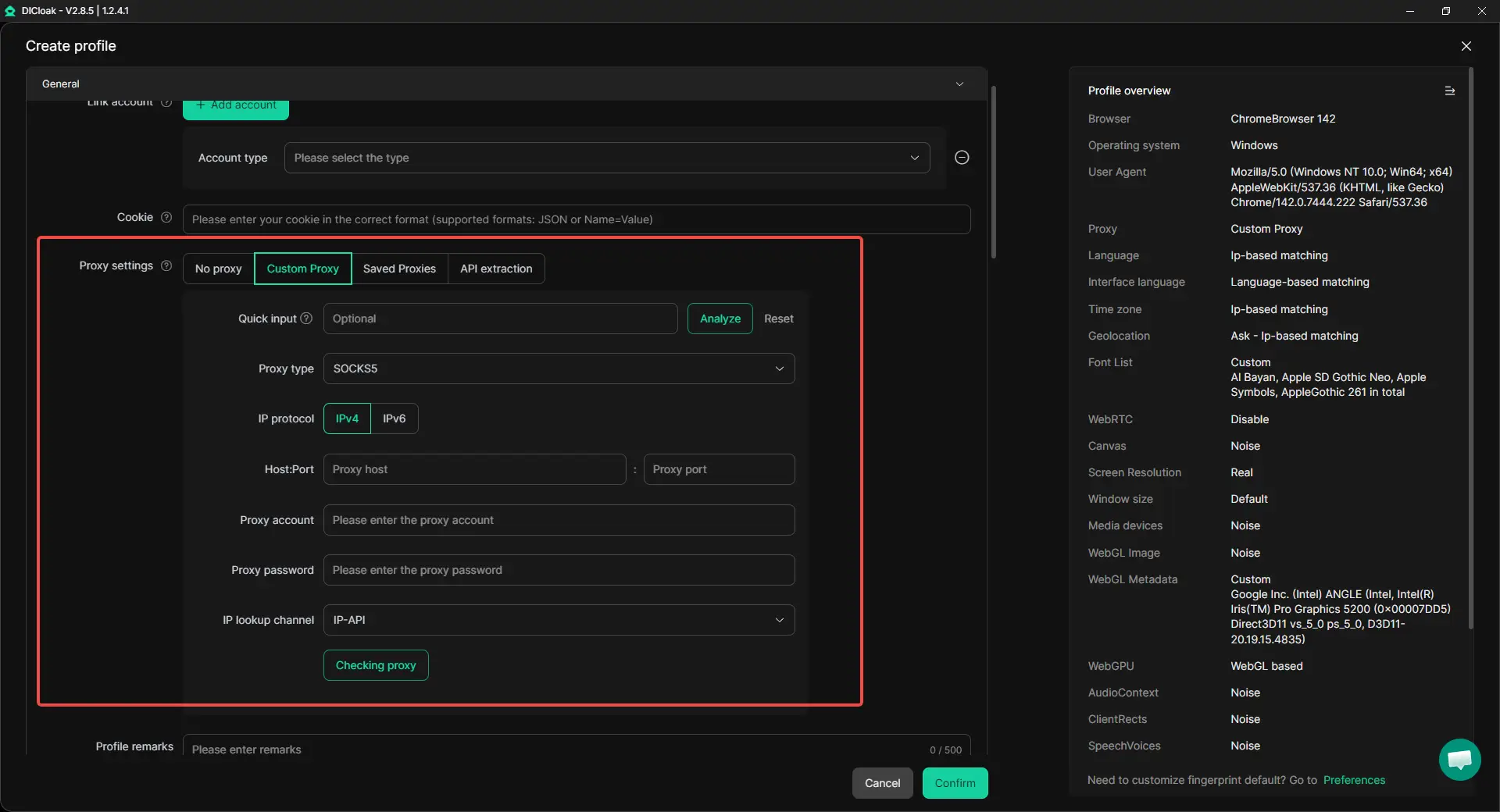
With DICloak, users can assign custom proxies to different profiles and manage them more flexibly. This is especially helpful when a free .edu email is used together with other accounts that need separate environments. Instead of running everything through one shared connection, each profile can follow its own proxy setup. That gives users more control and can support a more stable login experience.
conclusion
A free .edu email is not a public email anyone can create. In most cases, it is issued by a real school to students, staff, alumni, or approved affiliates. That is why the safest way to get a free .edu email is through a legitimate school relationship, not through generators or third-party sellers.
The real value of a free .edu email is the access that comes with it. It may help with school portals, learning tools, software discounts, cloud storage, and student offers. But many platforms also check real academic status, so the email works best when it comes from an official source.
Overall, a free .edu email is most useful when it is obtained legally, verified properly, and used in a real academic setting.
FAQs About Free .Edu Email
Can anyone get a free .edu email?
No, not everyone can get a free .edu email. In most cases, it is issued only by a real college or university to students, staff, alumni, or approved affiliates. You usually cannot sign up for one like a normal public email account.
What can I use a free .edu email for?
A free .edu email can often be used for school communication, student portals, online classes, cloud storage, software access, and student discounts. In some cases, it may also help with verification for academic tools and learning platforms.
Do I need to be a student to get a free .edu email?
Not always. Many people get a free .edu email as students, but some schools also provide one to staff members, approved affiliates, or alumni. The key point is that the email must come from a real educational institution and match your actual relationship with that school.
How long does a free .edu email last?
The length of time depends on the school. Some students keep a free .edu email only while they are enrolled. Some alumni can keep it after graduation, while other schools close the account or only offer email forwarding. It is always best to check the school’s own policy.
Can I use a free .edu email for sensitive accounts?
You can use a free .edu email for many school-related services, but it may not be the best choice for highly sensitive personal accounts. Since schools control these accounts, access rules can change after graduation, job changes, or account deactivation. For banking, legal records, or other long-term personal accounts, a personal email is usually safer.
 Web Proxy Tools
 Free Tools
 Cookie Plugin
 UA Generator
 MAC Address Generator
 IP Generator
 IP Address List
 2FA Code Generator
 World Clock
 Anonymous Check
 WebRTC Leak Test
 UUID Generator
 Free Web Proxy Site
 Proxy Checker
 FB Ad Checker
 AI Web Scraping
 Free SMM Tools
 Twitter Shadowban Checker
 Instagram Name Checker
 UTM Generator
 Username Generator
 AI Hashtag Generator
 LinkedIn Headline Generator
 Social Media Image Resizer