A free edu email account is a valuable tool for students, staff, and alumni of accredited U.S. educational institutions. It provides access to exclusive benefits such as software discounts, cloud storage, and academic tools. But how to get a .edu email? This guide will walk you through the steps to obtain a legitimate free edu email account and explain the eligibility requirements, methods, and legal considerations to keep in mind. Whether you're a student, staff member, or alumni, learning how to get a .edu email can unlock valuable resources for your academic and professional journey.
Understanding Free Edu Email Accounts
What is a .edu Email Address?
A “.edu” email address is an email that ends with “.edu”. The “.edu” domain is for schools and colleges in the United States.
When a school accepts you as a student (or staff), it can give you an email like name@school.edu. This becomes your school email. Many U.S. colleges and universities use .edu domains.
You can use this .edu email just like a normal email. You can send mail, get mail, register on sites, and prove you belong to a school.
Importance of Having a Free Edu Email Account
Having a .edu email means the school recognizes you as a student (or staff). With that recognition, many companies and services give you special deals.
For example, with a valid school email address you may get free or discounted access to certain software.
Also, you can show you are a student. Some online services, student discounts, or academic‑price tools only work if you use a legit .edu email.
This kind of email gives you more chances. It can help you save money. It can make tools easier to use. It can make certain services open only for you.
Benefits of Using a .edu Email Address
Here are some real benefits when you use a free edu email account:
- Free or Discounted Office Tools: Many students with .edu email can get free access to productivity tools. For example, some schools give free access to Microsoft 365 (Word, Excel, PowerPoint, etc.) when you sign up with your school email.
- Cloud Storage and Online Tools: With school‑issued edu email, you may get cloud storage or online tools that help with school work. Some students use those tools to store notes, projects, assignments, or share files with classmates.
- Student Discounts and Deals: A .edu email often unlocks student deals. Some companies give lower prices or extra offers for students. This can include discounts on software, hardware, travel, or other services.

Eligibility and Requirements for Obtaining a Free EDU Email Account
Who Can Get a Free Edu Email Account?
You can get a free edu email account if you belong to a U.S. school, college, or university that uses the “.edu” domain.
The people who usually get a .edu email include:
- Students, when they enroll in courses
- Staff or faculty members at the institution
- Alumni, if the school offers alumni‑email services
For example, some schools let their former students (alumni) keep or re‑activate an edu email address even after graduation.
If you want to know how to get a .edu email, you must first belong to a school in one of these groups.
Necessary Documentation and Information Needed
To get a free edu email account, you usually need to give the school some basic valid information. That includes:
- Your full legal name
- Proof of enrollment or proof of staff/faculty status (for students: acceptance letter, registration info, student ID, etc.)
- Sometimes a mailing address or other contact info
For example, when you enroll in a community college, you fill in your name and address, and the college uses that to set up your student account and assign you a student email.
If you are alumni and want an alumni edu email, some schools ask you to contact their alumni office and provide your name, graduation year, and maybe student ID or other proof.
Always make sure the school is real and accredited. The “.edu” domain is only for U.S. institutions that meet strict rules for accreditation.
Common Methods to Obtain a Free Edu Email Account
Here are some common, legitimate ways to get a free edu email account when you need one:
1. Enrolling in Community Colleges
One of the easiest ways is to register at a U.S. community college. Many community colleges give students a valid .edu email once they enroll. For example, in the San Diego Community College District (SDCCD), students get a “@student.sdccd.edu” email after enrollment.
This method works if you are open to taking at least one class. The cost can be low, especially compared to full university tuition. A community college class may cost far less while giving you full access to a free edu email account.
2. Applying for Alumni Access
If you graduated from a U.S. college or university, you may be eligible to keep or get an alumni‑email address. Many schools provide lifetime or long‑term email access for alumni.
For instance, the Stanford Alumni Association offers a free alumni email (@alumni.stanford.edu) that lasts for life.
If your alma mater supports alumni email, you can contact the alumni office and request the account. You usually need to provide your name, graduation year, and maybe student ID.
3. Educational Program Affiliations and Staff Roles
Sometimes people who work for a school — such as staff, faculty, or affiliates — are eligible for a .edu email account.
If you join as faculty, part-time instructor, or administrative staff, the institution may create a .edu email for you as part of its internal system.
Step-by-Step Guide to Create a Free EDU Email Account
1. Create Your Own EDU Email Address (Recommended for affiliated universities and schools)
If you are a student, staff member, or faculty at a real U.S. accredited school, you can get a legit free edu email account. Here is a simple step‑by‑step idea how that works:
Step 1: Enroll or register at a real college or university.
Step 2: Provide required documentation (for example, school ID, acceptance letter, admission info).
Step 3: The school’s IT or student services will create your official student email.
Step 4: You receive a “yourname@school.edu” email. Then you can log in and use it.
This method is simple. It is real. It gives you a legal, stable edu email. If you follow official rules, you get full perks from being a student or staff.
2. Buy an EDU Email Address
Buying a .edu email address is another method, but it's important to note that the .edu domain is strictly for accredited educational institutions. If you're not directly affiliated with such an institution, you may consider buying a .edu email from a reliable provider. Here’s how you can do it:
Step 1: Research Providers
Start by researching providers who offer .edu email addresses at reasonable prices. Look for companies with positive reviews to ensure they are trustworthy.
Step 2: Contact the Provider
Reach out to the provider's customer service. Ask about the process and any required documents. Ensure that they can provide authentic .edu email addresses, as some sellers may not be legitimate.
Step 3: Compare Pricing Plans
Review different pricing plans. Compare rates with other providers and make sure to check refund policies in case something goes wrong with your purchase.
Step 4: Choose a Secure Payment Method
Check the accepted payment methods. Only use secure and standardized options, such as credit/debit cards or PayPal, to avoid potential fraud.
Step 5: Complete the Purchase
Once you’re satisfied with the provider, complete the payment and follow their instructions to set up your .edu email account. Make sure you can access and use the email as promised.
3. Utilizing EDU Email Generators
A third method to get a .edu email address is by using an EDU email generator. This is a quick and easy way to generate a .edu email address, but it's important to note that these email addresses are often temporary and unreliable. They may also pose security risks, as hackers can easily gain access to these generated addresses.
However, if you still want to proceed, here's a simple step-by-step guide to using an EDU email generator:
Step 1: Visit an EDU Email Generator Website
Go to a trusted EDU email generator website. You will need to enter some basic information, such as your name, the name of the institution, and a personal email address.
Step 2: Generate the Email
Click the “Generate” button. The generator will create a .edu email address for you, usually for a limited time. Note that this method does not require you to enroll in a university or college.
Step 3: Use the Generated Email
You can now use your newly generated .edu email address to access university‑related services, like discounts or software offers. However, keep in mind that this email address is temporary. If you want continued access to these services, you might need to generate a new email address in the future.
While this method is quick, it is not recommended for long-term use due to its temporary nature and security concerns. It’s always better to rely on legitimate methods to get a stable and permanent .edu email address.
Legal and Ethical Considerations of Using a Free EDU Email Account
Legitimacy of Methods to Obtain a Free EDU Email Account
The “.edu” domain belongs only to real U.S. schools and colleges. Since 2001, only accredited institutions can register a new .edu domain.
That means a “free edu email account” is legitimate only if an actual school or college issues it because you are a student, staff, or alum.
Using methods outside that rule — for example buying a .edu address, using a third‑party seller, or a “edu generator” — breaks this rule. These methods claim to give you a .edu email even if you never enrolled. That is not legitimate.
From an ethical view, this is dishonest. A .edu email is meant to show you belong to an educational institution. Using one without real affiliation misrepresents you. It is unfair to real students and staff who follow proper steps.
Consequences of Misuse
If you use a fake or improperly obtained EDU email, you risk serious problems.
- Risk of account removal or deactivation
Many institutions monitor their email accounts. If they detect misuse, they can shut down the account.
That means all services tied to that email — discounts, software access, storage — will stop working.
Using or buying fake .edu emails can count as fraud or identity misrepresentation. In some places, this can lead to legal consequences.
- Security and privacy dangers
Many of these “sold” or “generated” emails come from shady sources. Accounts might be stolen, shared, or re‑used. That means you may lose access suddenly, or even risk someone else accessing your account.
Also, fake .edu accounts may make you more vulnerable to scams or phishing.
- Harm to real students and institutions
Misuse of .edu emails — buying, faking, or forging — damages trust in student benefit programs. Real students may lose benefits or face stricter checks.
Universities and service providers may tighten verification, making it harder for legitimate students to get perks.
Conclusion
In conclusion, obtaining a free edu email account is a valuable benefit for students, staff, and alumni of accredited institutions. Whether you're seeking discounts on software, cloud storage, or academic tools, having a legitimate .edu email can open many doors.
To ensure you’re following the right steps, it’s crucial to obtain your free edu email account through official channels — by enrolling in an accredited school, becoming a staff member, or being an alumni. When using methods like buying or generating .edu email addresses, please be cautious, as they may pose security risks, legal issues, and could lead to losing access to valuable services.
By understanding the eligibility, requirements, and methods to get a .edu email, you can safely enjoy the benefits of being a part of the educational community. Always remember to use your .edu email responsibly to maintain the integrity of these services.
Why choose DICloak Antidetect Browsers for your business?
⚡The DICloak Antidetect Browser has become a global favorite for its unparalleled ability to efficiently and securely manage multiple accounts. Designed for professionals in social media management, affiliate marketing, traffic arbitrage, e-commerce, account farming, airdrops, and more, DICloak offers powerful features like RPA automation, bulk operations, and synchronizer. Additionally, it allows you to customize fingerprints and integrate proxies for each profile, ensuring top-level security and operational efficiency. It’s the ultimate tool for seamless, secure, and scalable operations.
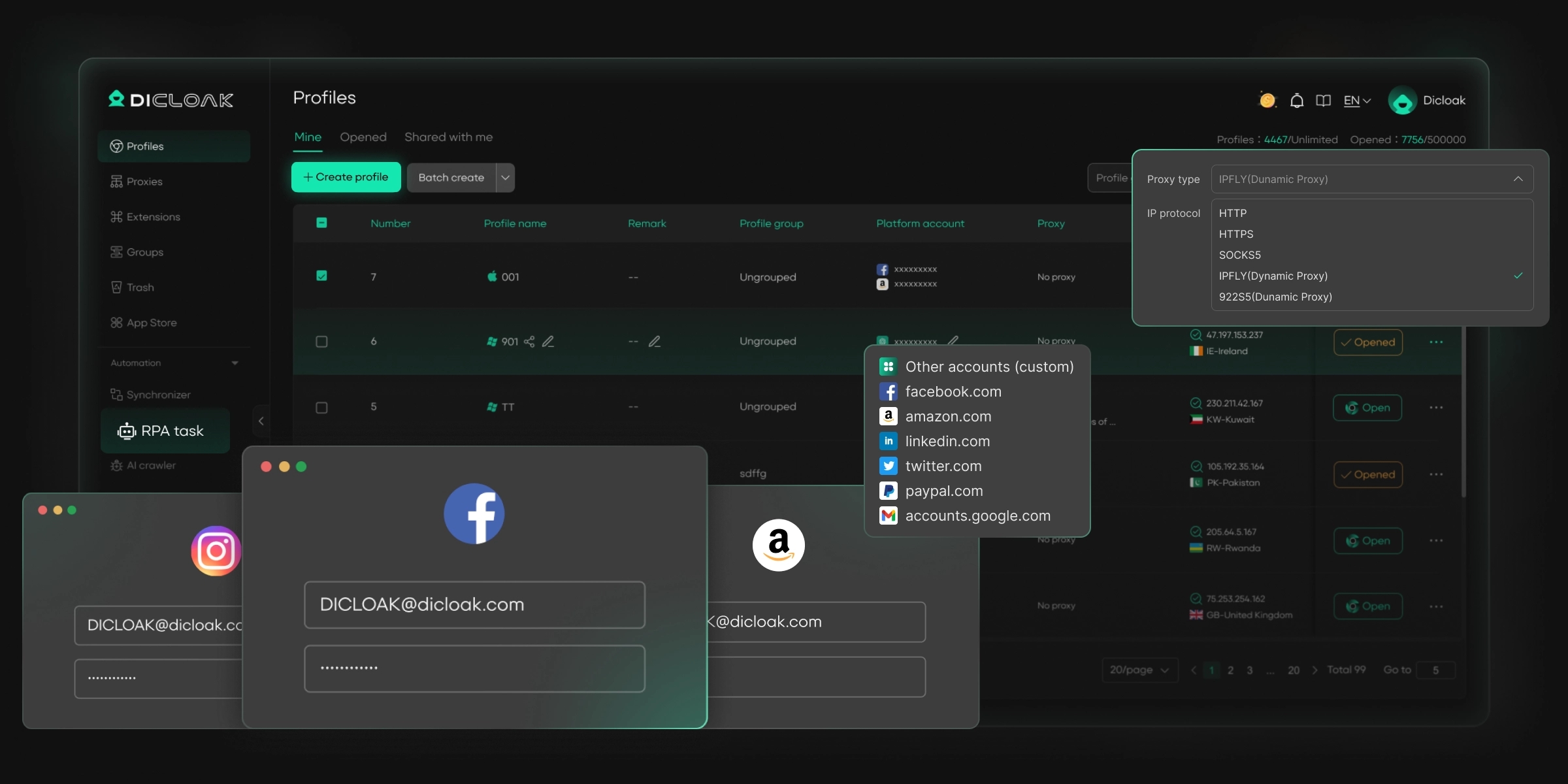
What Makes DICloak Stand Out?
✅ Manage 1,000+ Accounts on One Device: Stop wasting money on extra hardware! DICloak allows you to manage multiple accounts on a single device, cutting costs and boosting efficiency.
✅ Guaranteed Account Safety, No Ban Risks: Every account gets its own isolated browser profile with custom fingerprints and IPs, drastically reducing the risk of bans. Your accounts, your control!
✅ Flexible Proxy Configuration for Maximum Performance: Seamlessly integrate with all major proxy protocols (HTTP/HTTPS, SOCKS5) and manage your proxy pool with bulk operations. No more struggling with IP management—DICloak has you covered.
✅ Streamlined Team Collaboration for Better Results: Easily manage your team with advanced tools like profile sharing, permission settings, data isolation, and operation logs. Your team works smarter, not harder.
✅ Automate the Grind with RPA: DICloak's built-in RPA saves you hours of manual work. Automate repetitive tasks, streamline workflows, and focus on what really matters—growing your business.
✅ Powerful Bulk Tools to Scale Your Operations: Create, import, and launch multiple browser profiles in one click. DICloak makes scaling your business as easy as it gets.
✅ Compatible with All Major Operating Systems: Based on the Chrome core, DICloak supports simulating Windows, Mac, iOS, Android, and Linux operating systems. No matter what platform you need, DICloak has you covered.
🔗 Ready to Get Started?
Visit the DICloak website to explore more details and choose the plan that’s right for you. Start for free today and experience the power of secure, efficient, and scalable multi-account management!
FAQs About A Free EDU Email Account
1. What is a Free EDU Email Account and How Can I Get One?
A free edu email account is an email address provided by a U.S. school, college, or university, typically ending in “.edu”. These accounts are given to students, staff, and alumni of accredited educational institutions.
How to get a .edu email: You can obtain one by enrolling in an accredited school, becoming a staff member, or by being an alumni of an institution that offers this service.
2. Can I Buy a Free EDU Email Account Online?
Buying a free edu email account from a third-party vendor is not recommended. While some websites claim to sell .edu email addresses, these methods are not legitimate and may lead to account deactivation, legal consequences, or security risks.
It’s best to get a .edu email through official channels by enrolling in a school or being a staff member.
3. What Are the Benefits of Having a Free EDU Email Account?
A free edu email account offers various benefits, such as:
- Access to student discounts on software (e.g., Microsoft Office 365, Adobe products).
- Free cloud storage and academic tools.
- Eligibility for exclusive educational content or services.
Having a .edu email is also useful for verifying student status when applying for internships, scholarships, or job opportunities.
4. What Documents Do I Need to Provide to Get a Free EDU Email Account?
To get a free edu email account, you generally need to provide the following:
- Proof of enrollment or affiliation with a U.S. educational institution (such as a student ID, acceptance letter, or staff documentation).
- Personal information, like your name and contact details.
This ensures that the institution can verify your status as a student or staff member before issuing the .edu email.
5. What Are the Consequences of Misusing a Free EDU Email Account?
Using a free edu email account fraudulently can lead to several consequences:
- Account deactivation by the issuing institution.
- Legal repercussions for identity misrepresentation or fraud.
- Loss of access to educational services, software discounts, and other benefits.
It’s important to use .edu emails ethically to maintain the integrity of these services and avoid penalties.
 Web Proxy Tools
 Free Tools
 Cookie Plugin
 UA Generator
 MAC Address Generator
 IP Generator
 IP Address List
 2FA Code Generator
 World Clock
 Anonymous Check
 WebRTC Leak Test
 UUID Generator
 Free Web Proxy Site
 Proxy Checker
 FB Ad Checker
 AI Web Scraping
 Free SMM Tools
 Twitter Shadowban Checker
 Instagram Name Checker
 UTM Generator
 Username Generator
 AI Hashtag Generator
 LinkedIn Headline Generator
 Social Media Image Resizer