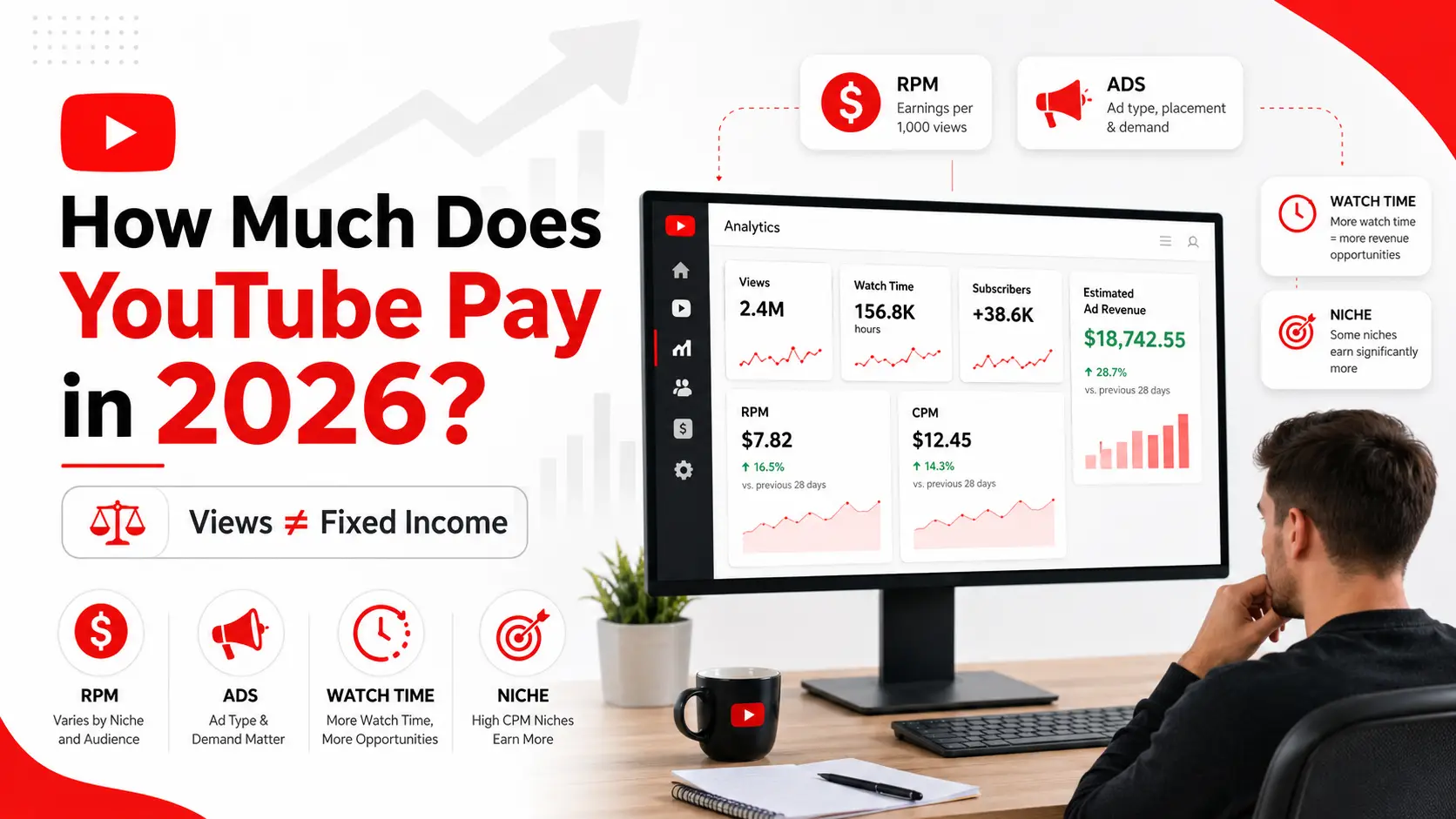
Many creators wonder: how much does YouTube pay in 2026? The answer is not fixed. Earnings vary by video type, audience location, and watch time. This is why how much do YouTubers make per view can differ a lot.
For example, a finance video with 30,000 views in the United States may earn more than a gaming video with 100,000 views in another country. Ads, YouTube Premium, memberships, and sponsorships all affect income. Even with the same views, one video may earn much more than another.
In this guide, you will learn how YouTube payments work, what affects earnings, and how creators can increase their revenue in 2026.
How YouTube Payments Work in 2026
Before asking how much does YouTube pay, it helps to understand how YouTube payments work. YouTube does not pay creators only because a video gets views. Most income starts when a video shows ads, gets YouTube Premium watch time, or uses other monetization features.
To earn from most YouTube tools, creators need to join the YouTube Partner Program. In 2026, creators can qualify with 1,000 subscribers and 4,000 valid public watch hours in the last 12 months, or 1,000 subscribers and 10 million valid public Shorts views in the last 90 days.
Does YouTube Pay for Every View?
No. YouTube does not pay for every single view.
A video can get 10,000 views, but not all of those views will make money. Some viewers may not see an ad. Some may skip the ad too early. Some may watch through YouTube Premium instead of ads.
CPM, RPM, and Ad Views Explained
Three terms help explain YouTube earnings.
Ad views are views where ads are shown. CPM is what advertisers pay for 1,000 ad views. RPM is closer to what the creator earns for 1,000 total video views after YouTube’s share and other revenue sources are counted.
For creators, RPM is often the more useful number. It shows the money that reaches the channel, not only what advertisers paid.
What Percentage of Ad Revenue Does YouTube Keep?
For most long-form video ads, YouTube keeps 45% of eligible ad revenue. Creators receive 55%.
This means advertiser spending and creator income are not the same thing. If ads bring in $100 in eligible revenue, the creator may receive about $55 before other factors are applied.
How Much Does YouTube Pay Per View in 2026
Now that you know how YouTube payments work, let’s answer the question most creators care about: how much does YouTube pay per view in 2026?
There is no fixed rate for one YouTube view. In many cases, one video view may be worth less than one cent. A creator may earn around $0.001 to $0.01 per view from ads, but the real number can be higher or lower.
This is why how much do YouTubers make per view is not a one-number answer. A view only makes money when it helps create revenue. That revenue may come from ads, YouTube Premium, or other monetized features.
How Much Do YouTubers Make Per View?
Most YouTubers do not look at income one view at a time. The number is too small. Instead, they look at earnings per 1,000 views.
Still, here is a simple way to understand it.
If a creator earns $3 per 1,000 views, each view is worth about $0.003. If a creator earns $8 per 1,000 views, each view is worth about $0.008.
So, a single view may not look valuable by itself. But views can add up fast. A video with strong search traffic can keep earning for months or even years.
How Much Does YouTube Pay Per 1,000 Views?
For many creators, YouTube may pay around $1 to $10 per 1,000 views after YouTube’s share. This is often shown as RPM in YouTube Studio.
For example, if a video has an RPM of $4, then 1,000 views may earn about $4. If the RPM is $7, then 1,000 views may earn about $7.
This is only an estimate. Some videos earn less than $1 per 1,000 views. Some business, finance, or software videos may earn much more. The exact number depends on how valuable the audience is to advertisers.
Example Earnings for 10,000, 100,000, and 1 Million Views
Here is a simple example using a low, middle, and high RPM range.
If a video earns $2 per 1,000 views:
- 10,000 views may earn about $20
- 100,000 views may earn about $200
- 1 million views may earn about $2,000
If a video earns $5 per 1,000 views:
- 10,000 views may earn about $50
- 100,000 views may earn about $500
- 1 million views may earn about $5,000
If a video earns $10 per 1,000 views:
- 10,000 views may earn about $100
- 100,000 views may earn about $1,000
- 1 million views may earn about $10,000
These examples show why view count alone can be misleading. A million views sounds huge. But the final income depends on the RPM. In the next section, we will look at why YouTube earnings can vary so much from one channel to another.
Why YouTube Earnings Vary So Much
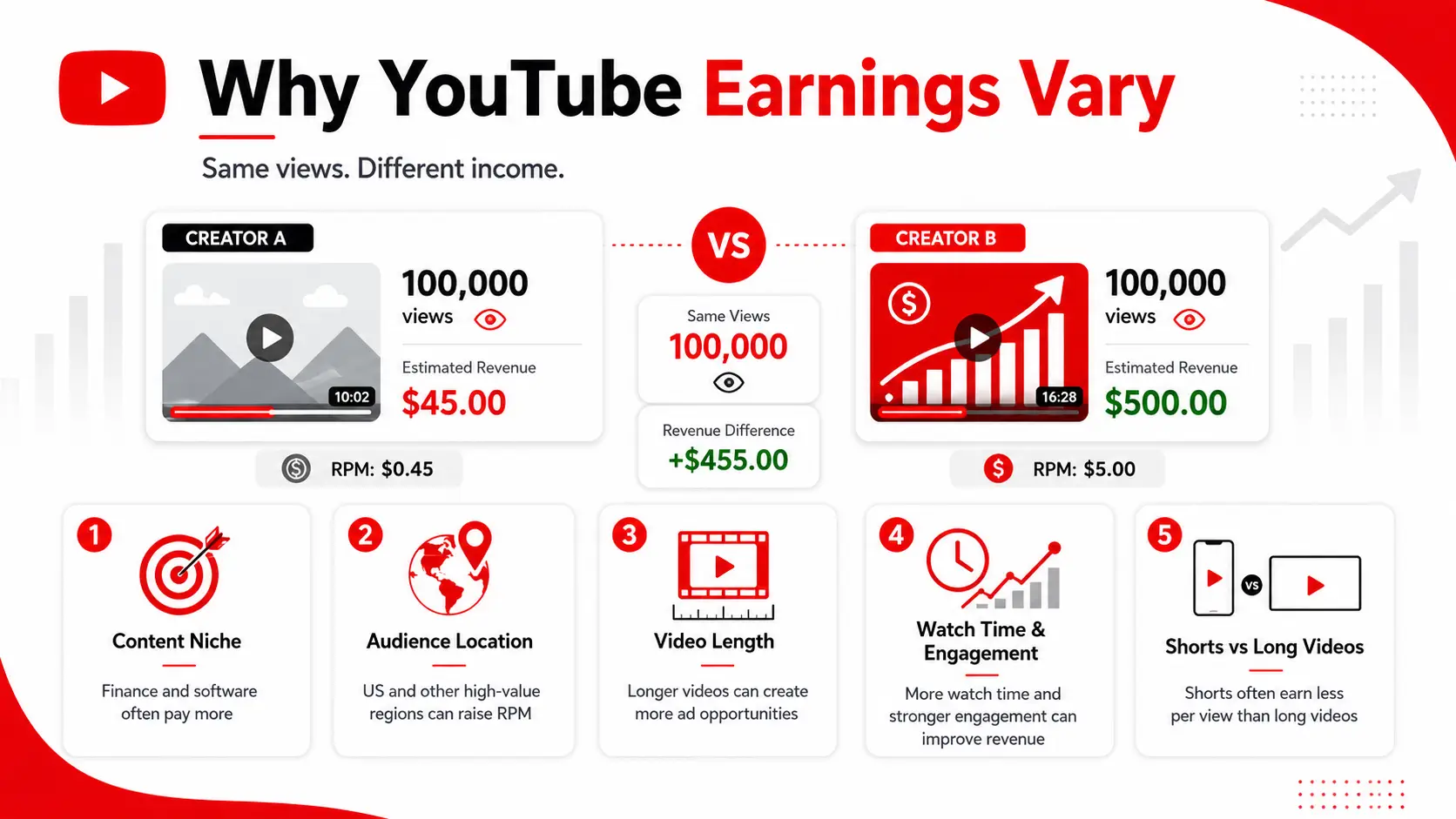
After looking at how much does YouTube pay per view, it is clear that views alone do not tell the full story. Two videos can have the same views but earn very different amounts. The main reasons are topic, audience, video format, and how people watch.
Content Niche and Audience Location
Some topics have higher ad value. Finance, software, business, and education videos often earn more because advertisers pay more for those viewers. Audience location also matters. A video watched mostly in the United States may earn more than a video with the same views from lower ad-cost regions.
Video Length, Watch Time, and Engagement
Longer videos can give YouTube more room to show ads, especially if viewers keep watching. But length alone is not enough. A 12-minute video with strong watch time may earn more than a 20-minute video that people leave after one minute. Likes, comments, and clicks can also show that viewers care about the content.
Shorts vs Long Videos: Which Pays More?
Long videos usually earn more per view than Shorts because they can show more ad types. Shorts can still help creators grow fast, but the income per view is often lower. For example, a Short with 100,000 views may bring less ad income than a long tutorial with fewer views but stronger watch time.
Does YouTube Pay for Subscribers?
After looking at why YouTube earnings vary, it is easy to think that more subscribers always means more money. But that is not how YouTube works. YouTube does not pay creators just for having subscribers. Subscribers help growth, but they do not create direct payments.
Why Subscribers Do Not Create Direct Payments
YouTube pays creators through ads, YouTube Premium, memberships, live features, and other monetization tools. Subscriber count is not a direct payment source.
For example, a channel with 100,000 subscribers may earn very little if its videos only get a few hundred views. But a channel with 10,000 subscribers may earn more if its videos get strong views and good watch time. This is why YouTube pay per subscriber is not a real fixed rate.
How Engaged Subscribers Can Increase Revenue
Subscribers still matter because they can help videos get early views. If loyal subscribers watch, like, comment, and share new videos, the video may reach more people. That can lead to more ad views and better income.
For example, a small education channel may have only 8,000 subscribers. But if those subscribers watch each new video for several minutes, the channel can build steady income over time
Other Ways YouTubers Make Money
After we discussed that YouTube does not pay for subscribers alone, it helps to know that ad money is only one part of creator income. Many YouTubers make money in other ways too. These extra methods can add up fast and make income more stable.
YouTube Premium, Memberships, and Live Features
YouTube Premium allows members to watch without ads. When a Premium member watches your video, YouTube pays you a share of their subscription fee. This adds to ad revenue, even if no ad shows.
Channel memberships are another tool. Fans can pay a monthly fee to get badges, emojis, and special videos. For example, a fitness creator might offer members extra workout videos. If 100 fans pay $4.99 per month, that can be $499 extra each month.
Live streams also bring income. Fans can send Super Chat and Stickers during live videos. For some creators, live viewers send many small payments that add up. Some gaming YouTubers earn thousands from live interactions alone.
Sponsorships, Affiliate Links, and Product Sales
Beyond YouTube tools, creators earn with sponsors. A company may pay a creator to talk about its product. For example, a tech reviewer might get $500 to mention a new gadget in a video. These deals can pay more than ads.
Affiliate marketing is another method. Creators place links in the video description. If a viewer buys something through the link, the creator earns a commission. A beauty YouTuber could earn 5% of every makeup sale from her link.
Finally, many YouTubers sell their own products. This can be T‑shirts, courses, eBooks, or presets. A cooking channel might sell a recipe book. A small audience can still generate good income if they buy direct from the creator.
How to Increase YouTube Earnings in 2026
Now that you know many ways creators make money, let’s talk about how to increase YouTube earnings in 2026. There is no single trick, but a few smart steps can help you earn more from the same views.
Pick Topics with Strong Advertiser Demand
Some topics attract higher ad rates. Videos about money, tech, health, and business often bring higher RPMs. For example, a video about “how to start investing” may earn more than a video about a daily routine. Advertisers pay more when they think viewers may buy products or services. Focus on topics that match strong advertiser demand.
Improve Retention, Titles, and Thumbnails
Watch time and engagement matter. YouTube often rewards videos that keep people watching longer. Try to make your first 15–30 seconds very engaging. Also use clear titles and bold thumbnails. For example, a cooking channel may use “5 Easy Dinner Ideas (Under $10)” instead of “Dinner Ideas”. A strong title and thumbnail can bring more clicks and longer watch time, which often leads to higher earnings.
Build More Than One Income Source
Relying only on ads can be risky. Many creators use multiple income sources. For example, a travel YouTuber might earn from:
- Ad revenue when people watch videos
- Affiliate links from travel gear in descriptions
- Sponsored brand deals with luggage or hotel brands
- Merch or digital guides sold to loyal fans
By combining income sources, the total earnings can grow faster than ad revenue alone.
How DICloak Can Help Creators Manage YouTube Work More Efficiently
As a YouTube channel grows, the work often becomes more complex. Some creators manage more than one channel. Others work with editors, marketers, or clients. In these cases, a clean account setup can help reduce confusion.
Keep Different YouTube Accounts in Separate browser profile
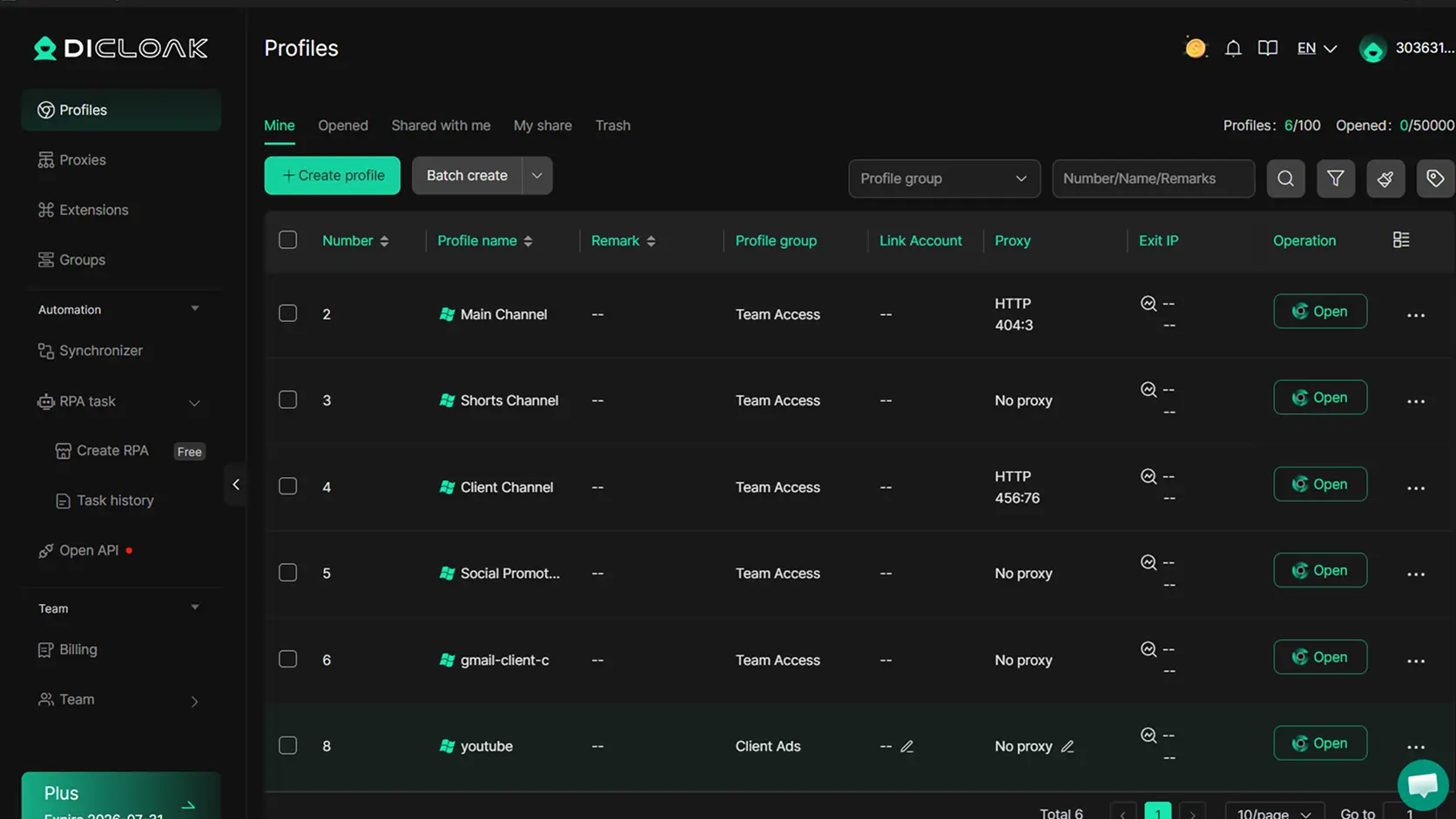
With DICloak, you can create a separate browser profile for each YouTube account. Each profile can keep its own cookies, login data, browser fingerprint, and proxy settings. This helps creators keep different channel environments apart instead of mixing everything in one browser.
For example, you can keep one profile for your main channel, one for a Shorts test channel, and one for a client channel. This makes daily account management cleaner and easier to control.
Use Team Permissions and Automation for Daily Tasks
With DICloak, you can also give team members different permissions. An editor can access the profile they need, while an account manager can handle publishing or daily checks. This is useful for small creator teams that do not want every member to have full access.
You can also use automation tools to reduce repeated work, such as opening profiles, checking account tasks, or handling simple browser actions. DICloak does not increase YouTube earnings by itself. But it can help creators manage accounts and teamwork more efficiently, so they can spend more time on content and growth.
Frequently Asked Questions
How much does YouTube pay per view in 2026?
YouTube does not pay the same for every view. Earnings depend on ad views, watch time, and audience. Most creators look at earnings per 1,000 views.
How much does YouTube pay per 1,000 views?
Creators typically earn $1–$10 per 1,000 views. The exact amount depends on content type, audience location, and RPM.
How much does YouTube pay for 1 million views?
It varies by RPM. For example, $2–$10 per 1,000 views can mean $2,000–$10,000 for 1 million views.
Does YouTube pay creators for subscribers?
No. Subscribers help grow your channel, but YouTube does not pay directly for them.
Can you earn money on YouTube without ads?
Yes. Creators can earn from YouTube Premium, memberships, Super Chat, sponsorships, and affiliate links.
Stay on top of your YouTube earnings by tracking RPM, watch time, ad revenue, and audience performance carefully. For creators or teams managing multiple YouTube channels, DICloak helps keep account environments cleaner, separate, and easier to control. Try DICloak For Free.
 Web Proxy Tools
 Free Tools
 Cookie Plugin
 UA Generator
 MAC Address Generator
 IP Generator
 IP Address List
 2FA Code Generator
 World Clock
 Anonymous Check
 WebRTC Leak Test
 UUID Generator
 Free Web Proxy Site
 Proxy Checker
 FB Ad Checker
 AI Web Scraping
 Free SMM Tools
 Twitter Shadowban Checker
 Instagram Name Checker
 UTM Generator
 Username Generator
 AI Hashtag Generator
 LinkedIn Headline Generator
 Social Media Image Resizer