The Grass network has successfully transitioned from its experimental beta phase into a foundational layer of the Decentralized Physical Infrastructure (DePIN) sector. As of 2026, the protocol has moved beyond simple point accumulation, establishing a live token economy where residential bandwidth serves as the primary collateral for network rewards. For participants who have maintained consistent uptime, the focus has now shifted from farming to the technical execution of claiming and securing $GRASS tokens on-chain.
What is the Expected Grass Airdrop 2026 Timeline?
The 2026 roadmap reflects a mature network moving toward full decentralization. The transition from the "Points Meta" to liquid $GRASS tokens follows a strict cryptographic snapshot and verification sequence.
Key Milestones to Watch
- Q1 2026: Final Epoch Snapshot: The protocol conducts a final audit of network uptime and residential IP quality. This is the point where Sybil-detection algorithms purge low-quality or flagged data-center nodes.
- April 2026: TGE (Token Generation Event): The $GRASS token is minted on the Solana blockchain. Initial liquidity pools are established, and the smart contract for the distribution vault is deployed.
- May 2026: Eligibility Portal Deployment: The official "Check Eligibility" interface goes live. This allows users to sign a message with their linked Solana wallet to verify their final allocation based on epoch multipliers.
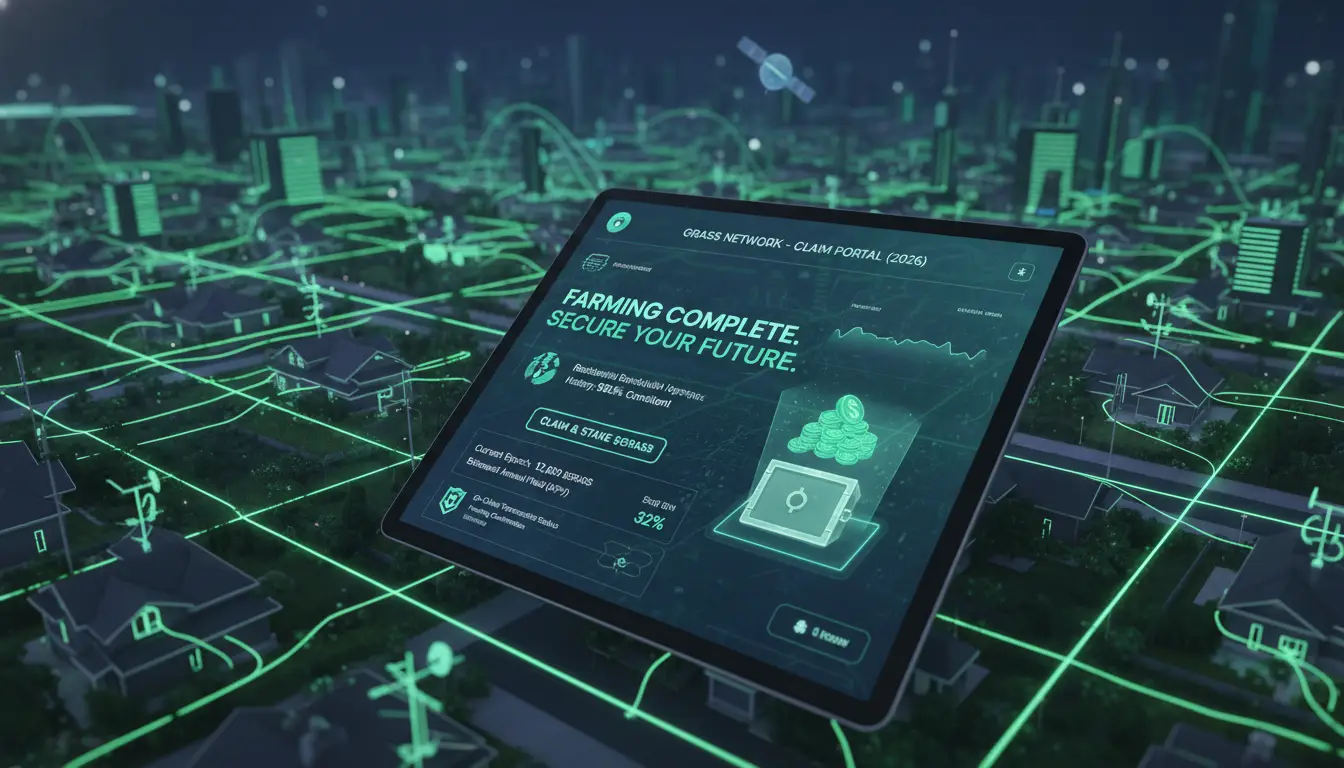
- Q2–Q3 2026: 90-Day Claim Window: A fixed window opens for users to claim their tokens. Tokens not claimed within this period are typically rolled back into the DAO treasury for future staking rewards or network incentives.
How Do You Qualify for Grass Rewards in 2026?
Eligibility in 2026 is no longer just about having an extension installed; it is about the "quality of service" (QoS) provided to the DePIN layer.
Minimum Uptime and Network Requirements
The 2026 qualification threshold requires a minimum of 100+ hours of cumulative uptime per epoch. The network measures not just connectivity, but latency and bandwidth throughput. Nodes that frequently disconnected or exhibited high latency are often relegated to lower reward tiers. Maintaining a "Residential" status is non-negotiable; nodes detected as Data Center IPs are automatically excluded from the reward pool.
Point Multipliers and Tiered Structures
Allocations are weighted by "Epoch Seniority." Early participants from the 2024–2025 beta received a legacy multiplier. Additionally, the 2026 structure incorporates Referral Tiers, where the uptime of your secondary and tertiary nodes contributes a percentage-based bonus to your primary profile, provided those nodes meet the 100-hour minimum threshold.
Step-by-Step: How to Claim Your Grass Tokens in 2026
Claiming rewards during a TGE requires high attention to on-chain security and "seed phrase hygiene" to avoid drainer contracts.
Wallet Connection and Network Verification
You must utilize a Solana-based wallet (e.g., Phantom or Solflare) that was linked to your Grass dashboard prior to the snapshot. During high-traffic claim events, the default RPC nodes may experience congestion. Power users should consider using a private RPC to ensure their claim transaction is included in the block without timeout errors.
Handling Transaction Fees and Gas
The claim process is an on-chain instruction. Ensure your wallet holds a minimum of 0.05 SOL to cover transaction fees and the rent-exempt balance required for the new Token Account (ATA).
The Manual Claim Process:
- Direct Navigation: Go to the official Grass rewards portal (verify the URL via the Grass Foundation Twitter/X and Discord).
- Wallet Signature: Connect your linked wallet and sign a one-time message to verify ownership.
- Contract Audit: Before clicking "Claim," verify the transaction details in your wallet. The contract address should match the official $GRASS mint address published on Solscan.
- Execute Claim: Confirm the transaction. If the network is congested, do not submit multiple times; wait for the "Finalized" status.
- Staking Transition: Once tokens are in your wallet, evaluate the option to move them into the Grass staking contract to earn governance yield and future DePIN emissions.
What Risks Could Disqualify Your Grass Account in 2026?
Grass employs sophisticated "Sybil-resistance" mechanisms that leverage IP reputation databases like MaxMind and IP2Location to filter out non-residential traffic.
Understanding IP Duplication and Network Flags
The network logs the ASN (Autonomous System Number) of every connection. If multiple Grass accounts are detected on a single residential IP, the system flags this as "IP overlap." In 2026, the penalty for this is the "shadow ban" of all but the primary account, resulting in zero point conversion for the secondary profiles.
The Dangers of Low-Quality Data Center Proxies
Data center IPs lack the "organic entropy" of residential connections. Grass's anti-fraud layer detects the absence of typical residential browser fingerprints. Using cheap data center proxies results in a permanent "Suspicious Activity" flag, which disqualifies the account from the 2026 TGE entirely.
How to Safely Maximize Grass Earnings with Professional Tools
For strategists scaling their operations to manage multiple legitimate residential nodes, utilizing a professional-grade antidetect browser is the only way to bypass Sybil detection and account linking.
Users who manage high-volume Grass nodes often rely on DICloak to organize multiple profiles more efficiently. Through one interface, they can manage browser profiles configured to represent different device environments across Windows, macOS, iOS, Android, and Linux.
- Isolated Browser Profiles: Users can create a separate browser profile for each account, and each profile has its own digital fingerprints. By adjusting parameters such as WebGL, WebGPU, and User Agent strings, they can reduce the chance that multiple accounts appear to come from the same device.
- Advanced Proxy Integration: Professional farmers use DICloak to assign a specific, unique residential IP to each profile (user-provided). This ensures each node appears to be a separate, organic residential user.
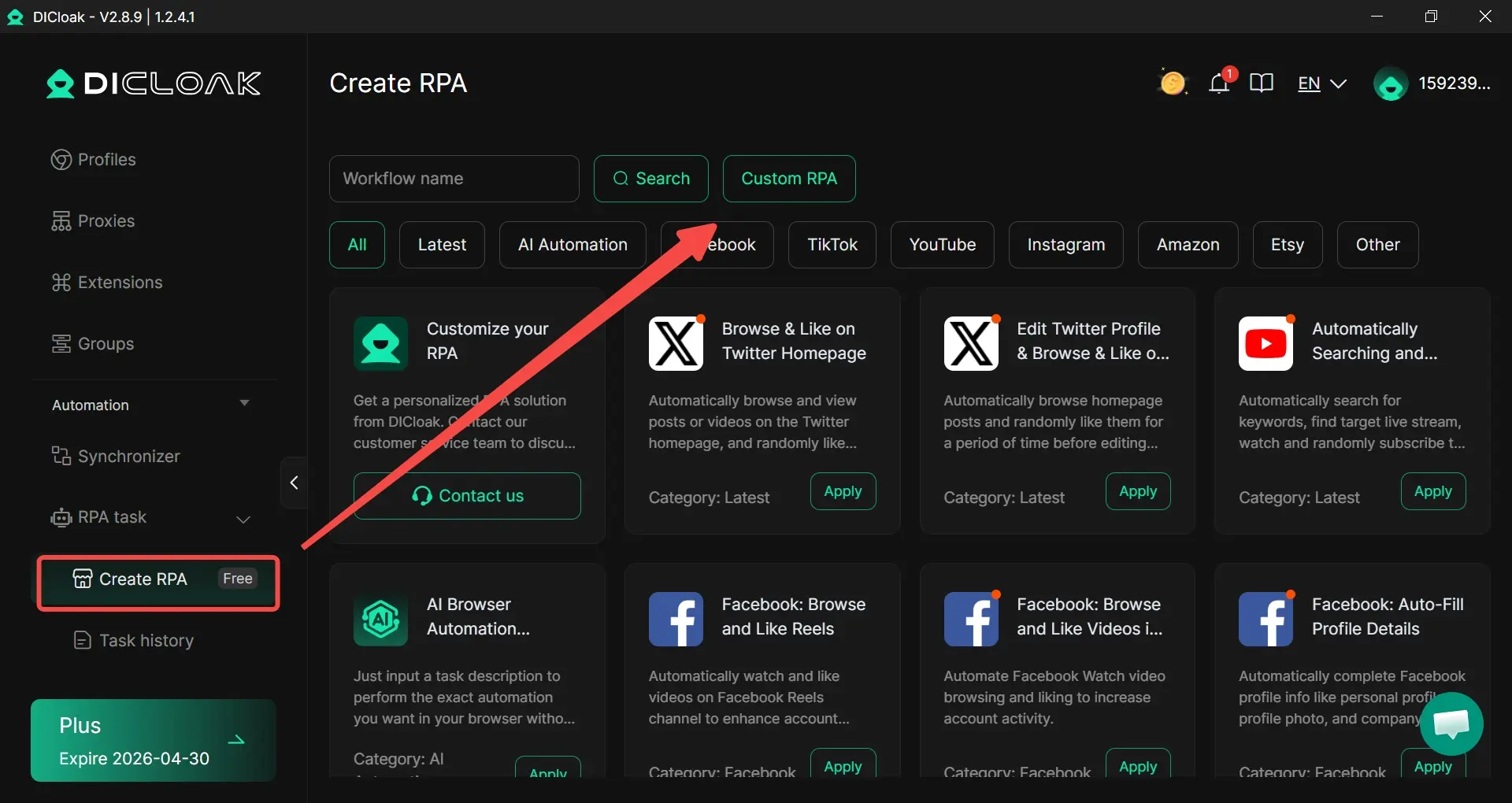
- RPA Automation: In the Plus and Share+ plans, users can use DICloak’s RPA (Robotic Process Automation) to automate routine dashboard check-ins and extension liveness checks, which helps reduce manual workload in daily operations.
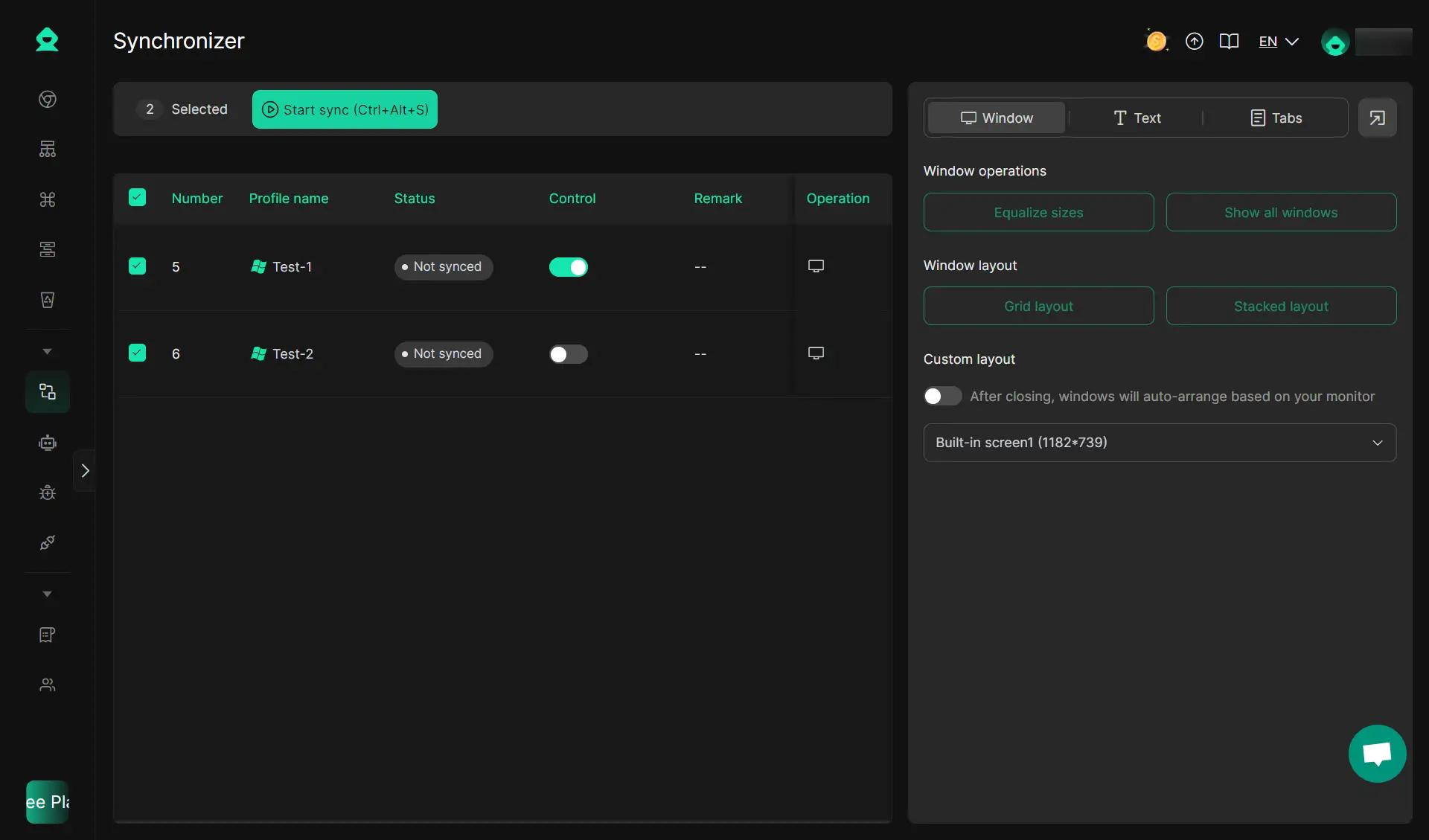
- Synchronizer Tool: During a claim event, users can use the Synchronizer to handle repeated actions such as wallet connections and signature steps across many profiles at once. This can help teams move faster when many accounts need to be processed in a short time.
Common Grass Airdrop Errors and How to Fix Them
Technical friction is common when a network transitions to a live TGE.
Troubleshooting Connectivity Issues
If your dashboard shows "Zero Earnings" or "Extension Disconnected," it is often an IP reputation issue. Ensure your residential ISP hasn't assigned you a flagged CGNAT IP. If using an antidetect setup, verify that your proxy supports the SOCKS5 protocol for low-latency communication with the Grass validators.
Wallet Signature Failures
During peak claim hours, "Wallet Signature Failures" are usually caused by RPC node congestion on the Solana network. To fix this, manually increase the priority fee in your wallet settings or switch to a custom RPC endpoint in your browser extension to bypass the public traffic.
Is Farming Grass Still Profitable in 2026?
The $GRASS token is more than an airdrop; it is the utility engine for the entire DePIN network. In 2026, the profitability meta has shifted toward network staking. By locking your $GRASS tokens, you earn a share of the fees generated by companies purchasing the residential data provided by the network. Maintaining high-quality "uptime" is now a requirement for receiving these ongoing staking rewards, making professional management tools like DICloak even more vital for long-term ROI.
Conclusion
Securing a successful Grass distribution in 2026 requires more than just participation; it requires technical precision. As the network purges low-quality nodes, maintaining high-uptime residential connections and using professional-grade environments like DICloak to prevent account linkage are the only viable paths for power users.
Pro Tip: Always verify claim URLs through at least three independent official sources (Twitter, Discord, and the official website). Treat your linked Solana wallet as a high-security asset—never share your seed phrase and use a dedicated browser profile for all airdrop interactions.
Frequently Asked Questions About Grass Airdrop 2026
Can I run Grass on my phone and PC simultaneously?
You can, but if they share the same IP address, you will not earn double rewards. The protocol recognizes the unique IP, not the device. For multiple devices to be effective, they must be on separate residential networks.
Why are my Grass points not converting to tokens?
This is usually due to a "Sybil Flag." If the network detected bot-like behavior or data center IPs during the final snapshot, your points will be frozen.
What is the contract address for the Grass token in 2026?
The official mint address must be verified on the Grass Foundation's official documentation. Do not trust addresses sent via DMs or found in unofficial Telegram groups. Verify the address on Solscan before interacting.
Is there a deadline to claim the 2026 airdrop?
Yes. The standard claim window is 90 days. After this, unclaimed tokens are typically redirected to the Grass DAO for community incentives.
How do I change the wallet linked to my Grass account?
Wallet changes were locked at the time of the Q1 2026 snapshot. If you did not link a wallet prior to the snapshot, you must contact Grass official support to see if a manual appeal process is available.
 Web Proxy Tools
 Free Tools
 Cookie Plugin
 UA Generator
 MAC Address Generator
 IP Generator
 IP Address List
 2FA Code Generator
 World Clock
 Anonymous Check
 WebRTC Leak Test
 UUID Generator
 Free Web Proxy Site
 Proxy Checker
 FB Ad Checker
 AI Web Scraping
 Free SMM Tools
 Twitter Shadowban Checker
 Instagram Name Checker
 UTM Generator
 Username Generator
 AI Hashtag Generator
 LinkedIn Headline Generator
 Social Media Image Resizer