Global retail ecommerce sales reached about $6.3 trillion in 2024, according to Statista’s retail ecommerce forecast, yet new sellers still fail on one basic choice: picking the wrong business model at the start. The debate around dropshipping vs private label vs wholesale is not about trends or hype. It is about cash flow, risk, and control. If you pick a model that does not match your budget and operating style, margins get squeezed fast by Amazon seller fees, ad spend on Meta Ads, and return pressure driven by customer expectations shaped by Amazon Prime delivery.
This guide gives you a clear decision path. You will see how each model changes startup cost, time to launch, margin ceiling, supplier risk, and daily workload. You will also get practical fit rules, like when fast testing beats brand building, and when owning the product beats fast catalog expansion. The goal is simple: leave with one model that fits your stage now, not a generic list of pros and cons. Start with the core trade-off every seller faces: speed, control, or scale.
How are dropshipping, private label, and wholesale actually different in day-to-day work?
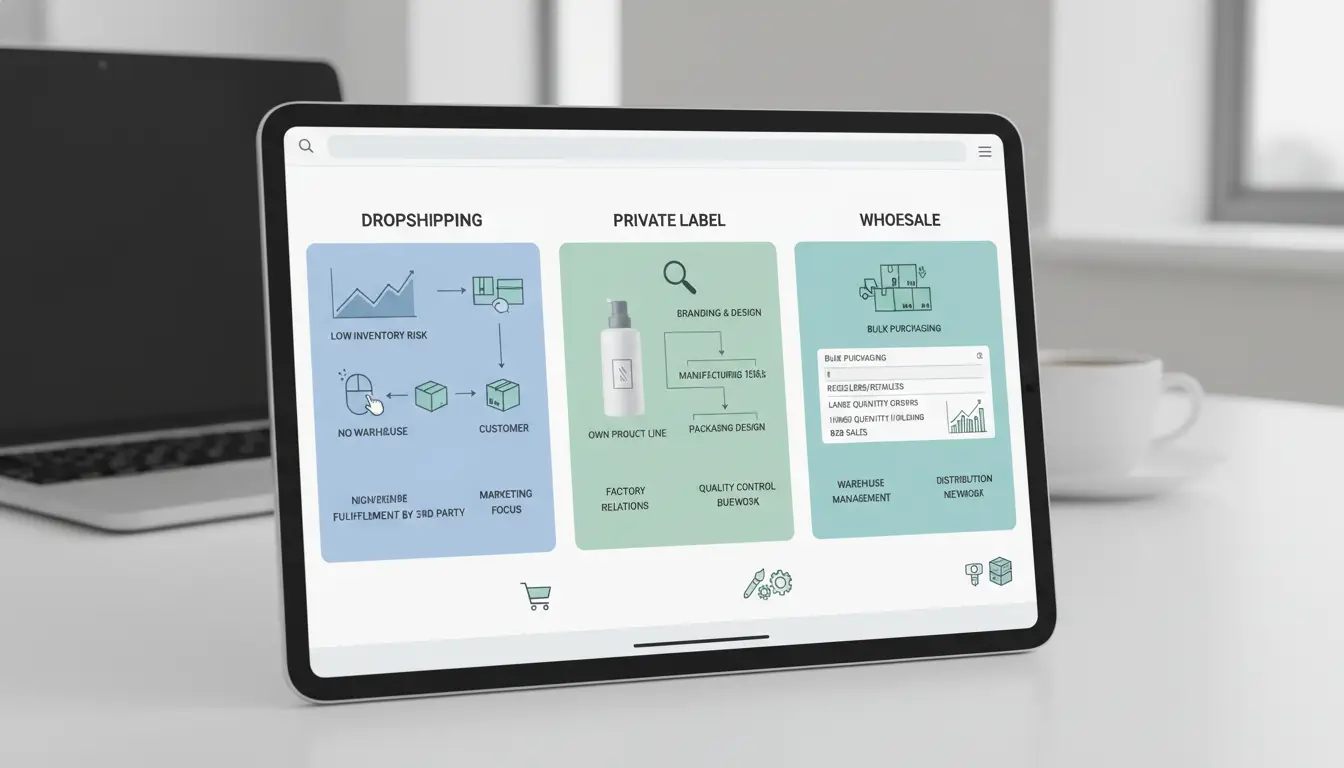
In dropshipping vs private label vs wholesale, the real gap is not theory. It is what you do every week, who owns key decisions, and how hard work gets after early sales.
What your weekly workflow looks like in each model
| Model |
Weekly focus |
Order handling |
Support pressure |
| Dropshipping |
Supplier checks, listing tests, ad tweaks |
Supplier ships each order |
High when stock or shipping changes |
| Private label |
Inventory planning, packaging checks, review tracking |
You ship stock to FBA or a 3PL |
Medium; quality issues hit your brand |
| Wholesale |
Reorder planning, catalog updates, price monitoring |
Bulk inventory flow, often FBA |
Medium to high during price wars |
Dropshipping saves setup time, but your day can turn into supplier firefighting. Private label takes more prep, then runs on tighter process control. Wholesale sits in between: less product building, more inventory and repricing work.
Who controls product, pricing, and customer experience
Dropshipping gives the least control. Supplier stock, ship speed, and pack quality affect your reviews. Private label gives the most control over product, branding, and unboxing. Wholesale gives partial control: you control your offer, not the product itself. Control links directly to repeat purchase potential and review stability, while costs still get shaped by Amazon seller fees and paid traffic like Meta Ads.
Which model is fastest to launch vs hardest to maintain
Dropshipping is fastest to first sale. Private label is slowest due to product prep and inventory cash. Wholesale can launch fast if supplier approval is quick. After 100 orders, dropshipping strain rises from support tickets and supplier errors. Private label strain shifts to forecasting and return control under Prime delivery expectations. Wholesale strain is margin defense and stock timing.
What do startup costs and cash-flow pressure look like for each model?
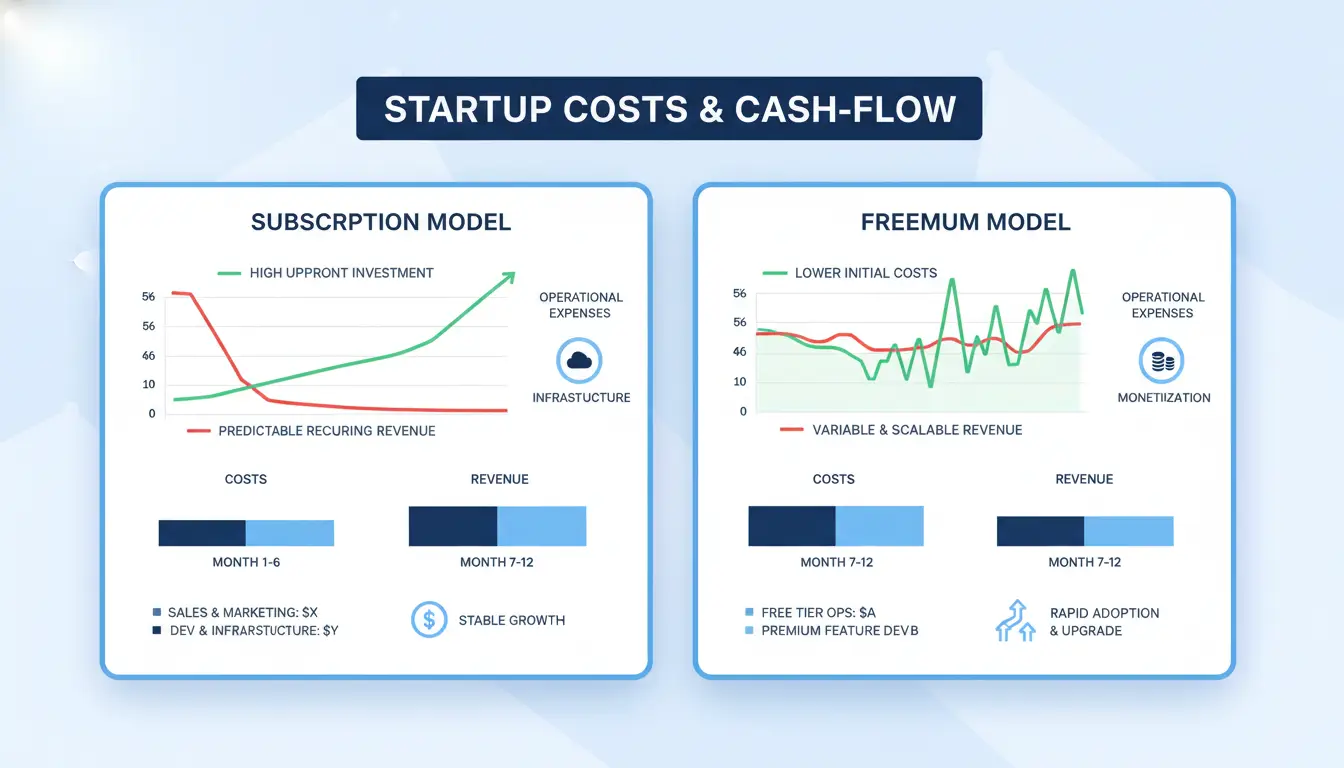
For dropshipping vs private label vs wholesale, cash pressure is less about margin on paper and more about when money leaves your account versus when sales payouts arrive.
Typical upfront cost ranges for beginners
| Model |
Typical startup cash (USD) |
Main upfront items |
Monthly fixed burn before scale |
| Dropshipping |
$300–$1,500 |
Store, apps, product tests, ad tests, basic legal setup |
$100–$500 |
| Private label |
$3,000–$15,000+ |
Product development, MOQ inventory, packaging, freight, trademarks, samples |
$300–$2,000 |
| Wholesale |
$2,000–$10,000+ |
Opening orders, resale permits, prep/labeling, storage, software |
$200–$1,200 |
Private label usually costs more because suppliers often require MOQ (minimum order quantity), and you pay inventory before you know demand. Selling on marketplaces also adds Amazon seller fees.
How payment cycles affect survival in month 1 to month 6
Dropshipping can launch with less cash, but ad spend hits fast. You may pay Meta Ads daily while customer payouts come later, creating a gap. Wholesale and private label tie up cash in inventory. If stock moves slowly, your money stays locked on shelves while storage and fees keep running. Delivery expectations shaped by Amazon Prime delivery can also push refund risk if shipping is slow.
What break-even timelines are realistic (not optimistic)
Dropshipping can break even in 1–3 months if testing works early; 3–6 months is more common. Wholesale often lands around 3–9 months, depending on reorder speed and sell-through. Private label often needs 6–12+ months due to product setup and inventory lead times.
Watch for undercapitalization signs: cutting ads too early, delaying reorders, unpaid software bills, or heavy discounting just to recover cash.
Which model gives better margins, and why do many sellers still earn less than expected?
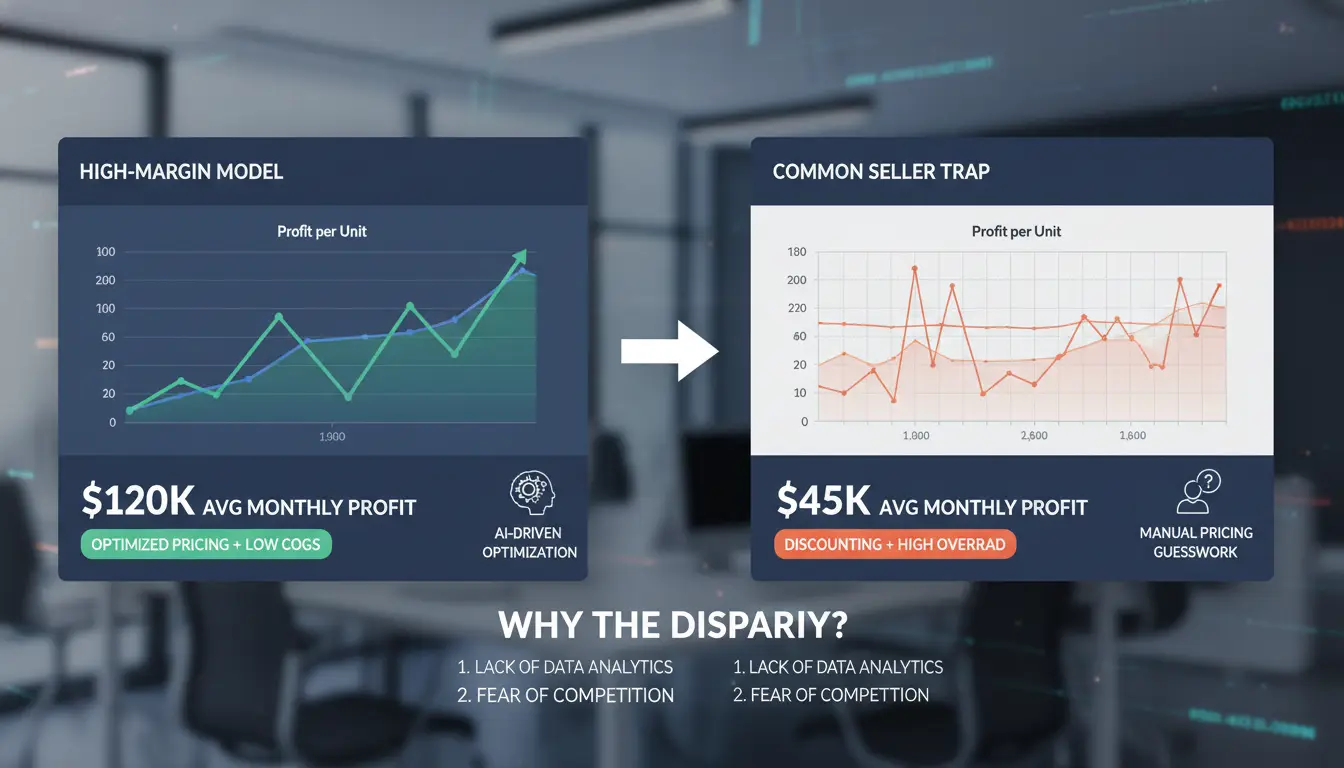
In dropshipping vs private label vs wholesale, sellers often compare supplier price and miss the full profit math. Gross margin is only sales minus product cost. Net margin includes shipping, returns, ad spend, platform fees, and tools. Most margin mistakes happen when sellers judge a model by gross margin alone.
Gross margin vs net margin: the comparison most guides skip
| Model |
Gross margin view |
Net margin pressure points |
Margin stability |
| Dropshipping |
No inventory buy-up |
Higher per-order shipping, weaker return control, ad dependency |
Low |
| Private label |
Better unit economics at scale |
MOQ cash lock, launch ads, return handling, storage fees |
Medium to high if sell-through stays healthy |
| Wholesale |
Lower unit margin than strong private label |
Price competition, marketplace fees, reorder timing |
Medium |
Platform costs can cut net margin fast. Check fee structure on Amazon seller pricing. If customer acquisition depends on paid traffic, watch Meta Ads closely.
Why private label can scale margin but increases execution risk
Private label can lift margin when you control packaging, listing quality, and repeat demand. You can charge more than a generic listing if reviews and branding support it. The trap is MOQ. A bad first order ties up cash, then slow stock adds storage and discount pressure. Margin can look strong on paper while cash flow gets tight. Use a small test batch when possible, then reorder from real sell-through data.
When wholesale beats dropshipping on predictable profit
Wholesale usually wins on predictability. You buy proven SKUs, restock faster, and forecast reorder cycles with cleaner data. Compared with dropshipping, fulfillment control is tighter and customer experience is easier to standardize against Amazon Prime delivery expectations. The ceiling stays limited by price compression on shared listings, so profit growth comes from disciplined buying and inventory turns, not large per-unit markup.
What are the biggest risks in dropshipping vs private label vs wholesale?
In dropshipping vs private label vs wholesale, the top risk is not launch speed. The top risk is losing control where customers still blame you. That shows up in shipping, policy flags, and cash flow.
Supplier and fulfillment risks that damage reviews
| Risk area |
Dropshipping |
Private label |
Wholesale |
| Stock control |
Weak; supplier can run out without notice |
Strong after production, weak during reorder gaps |
Medium; depends on distributor feed |
| Shipping speed |
Often slow, split shipments |
You control prep + carrier choice |
Faster if local distributor has stock |
| Quality consistency |
Can drift between supplier batches |
You set specs, but factory errors still happen |
Brand set quality, but lot issues still occur |
| Refund pressure |
High when delays hit Prime-level expectations |
High if defects appear at scale |
Medium; returns tied to brand rules |
Use a small test order every week, not one big check at launch. Track late shipment rate and defect complaints by SKU.
Platform and policy risks that can pause your sales
Dropshipping gets hit by listing mismatch fast: delivery promise, product details, and supplier substitutions can trigger complaints. Private label faces IP and compliance risk if packaging claims, images, or ingredients break rules on Amazon Product Safety and Compliance. Wholesale often fails on invoice quality and brand authorization checks. Keep clean invoices and resale rights ready.
Financial risks: dead inventory, ad losses, and thin unit economics
Private label can lock cash in unsold inventory. Wholesale can tie cash in wide catalogs with slow movers. Dropshipping avoids inventory risk but can lose money on ads if unit margin is thin after Amazon seller fees and Meta Ads. Before scaling dropshipping vs private label vs wholesale, set hard limits: max loss per SKU test, max return rate, and minimum contribution margin after ads and refunds.
How do you choose the right model based on your budget, skills, and goals?
Use this quick path for dropshipping vs private label vs wholesale. Pick the model that matches your cash, risk tolerance, and work style right now.
| Model |
Cash to start |
Time to launch |
Margin ceiling |
Main risk |
Best fit |
| Dropshipping |
Lowest |
Fastest |
Lower |
Supplier stock and shipping issues |
You need speed and testing |
| Private label |
Highest |
Slowest |
Highest if product wins |
Wrong product bet, inventory lock |
You want brand ownership |
| Wholesale |
Medium to high |
Medium |
Medium |
Price wars on shared listings |
You want stable replenishment |
If you have low budget and need speed, what should you pick?
Choose dropshipping when you need to test demand with low upfront spend and can handle ad testing daily. It fits if your goal is learning product selection and offer testing fast. Skip it if your category has high return rates, long shipping routes, or strict delivery expectations. One bad week of delays can erase thin margins through refunds and support load.
If you want long-term brand equity, when is private label worth it?
Private label is worth it when you can fund samples, packaging, and initial inventory without cash stress. You should already know your winning angle from past sales data or repeat demand. Before larger orders, validate with stable conversion over multiple weeks, low return reasons tied to quality, and predictable reorder pace. If you cannot explain your product difference in one clear line, wait.
If you prefer stable operations, when does wholesale make more sense?
Wholesale makes sense when you can manage supplier terms, restock timing, and catalog depth across multiple SKUs. You need clean operations more than creative branding. To avoid race-to-the-bottom pricing, focus on harder-to-source brands, enforce MAP-friendly suppliers, and track listing competition weekly. For most teams comparing dropshipping vs private label vs wholesale, wholesale wins when process discipline is your edge.
What does a 30-day test plan look like before you commit to one model?
Use one product niche and test all three paths in parallel: dropshipping listing, small wholesale batch, and private label pre-sell page. This keeps the comparison fair for dropshipping vs private label vs wholesale.
Week 1: validate demand and competition with simple benchmarks
Check search interest with Google Trends and demand depth with Amazon Best Sellers. Record price bands, top review themes, and repeat complaints from competitor listings.
Set pass/fail rules before you run ads:
- At least 3 competitors with recent reviews
- Price band leaves room after Amazon seller fees
- Clear pain point you can improve (quality, bundle, or shipping promise)
If a niche fails two rules, cut it now and test a new one.
Week 2 to 3: run a small pilot and track the right metrics
Launch a controlled pilot with equal budget caps per model. Use the same creative angle on Meta Ads to reduce bias.
| Metric |
Dropshipping |
Wholesale |
Private Label |
| Conversion rate |
Track daily |
Track daily |
Track daily |
| CAC |
Keep below gross margin |
Keep below gross margin |
Keep below gross margin |
| Refund rate |
Watch shipping-driven refunds |
Watch defect returns |
Watch expectation mismatch |
| Contribution margin |
Revenue - product - shipping - ads - fees |
Same formula |
Same formula |
Pick one 14-day window and compare like-for-like.
Week 4: decide whether to scale, switch, or stop
Scale only if conversion is stable, CAC stays under margin, and refund rate trends down. Switch model if demand is real but margin is thin. Stop if traffic is costly and refunds stay high after fixes.
Document supplier terms, lead times, defect notes, and ad results before raising budget. This gives a clean decision log for dropshipping vs private label vs wholesale.
How can you manage multiple stores and team access with less account risk?
As your catalog grows, account safety becomes an operations issue, not just a policy issue. This applies no matter where you land in the dropshipping vs private label vs wholesale decision. The core rule is simple: one store, one stable environment, one clear owner path.
Why scaling across stores raises detection and coordination risk
Trouble usually starts when teams mix devices, browsers, and login habits across stores. One person logs in from a home network, another logs in from a cloud desktop, and platform trust checks see unstable behavior. Shared passwords add more risk. When five people can enter one account, no one can prove who changed what.
Human error climbs fast with team size. People open the wrong store profile, post from the wrong brand account, or update billing in the wrong backend. Small mistakes create review flags, payout holds, or forced verification.
How DICloak helps isolate operations by profile, proxy, and permissions
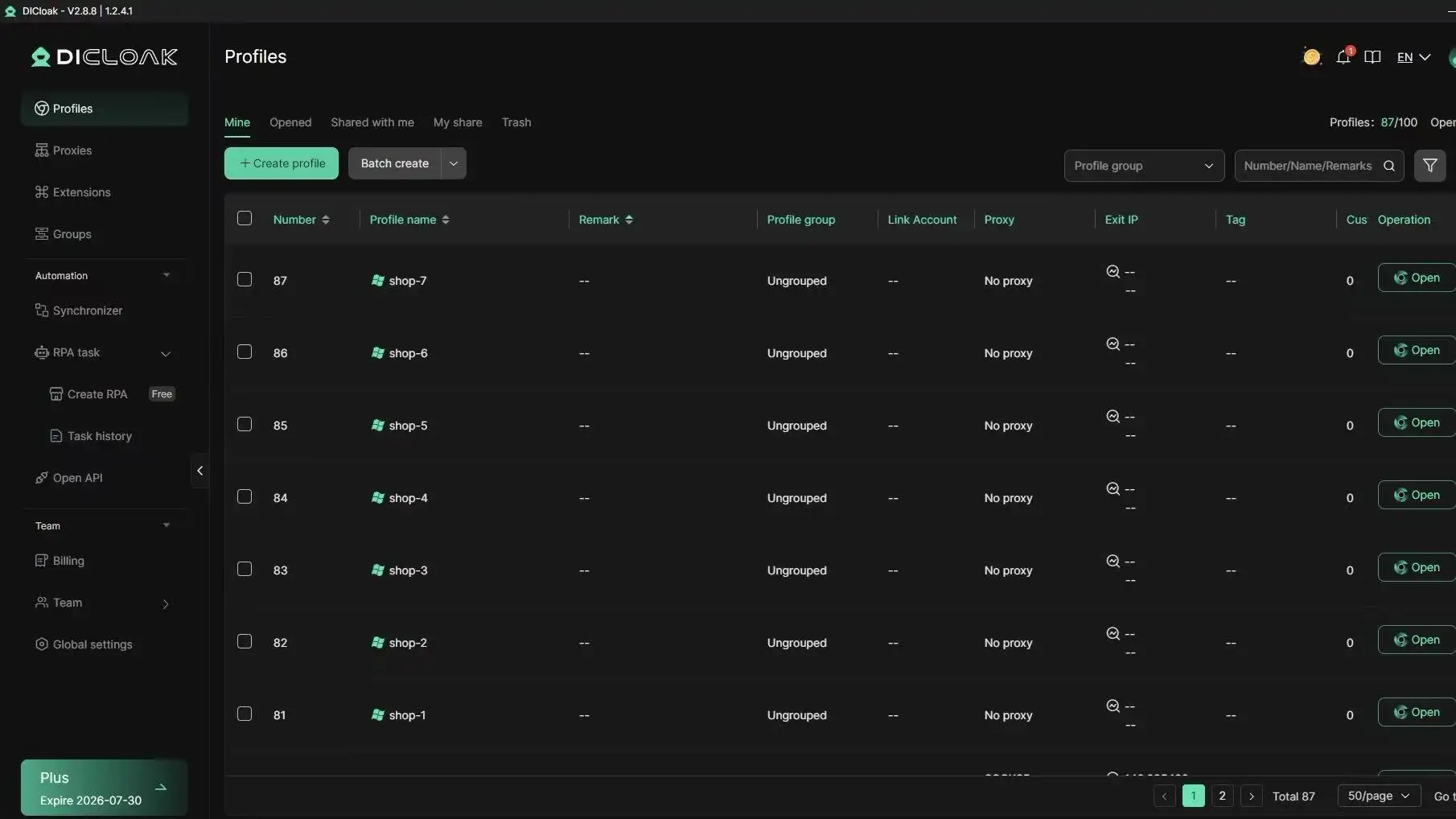
You can use DICloak to split each store into its own browser profile, with its own fingerprint and proxy binding. That keeps store activity consistent and reduces cross-store contamination risk.
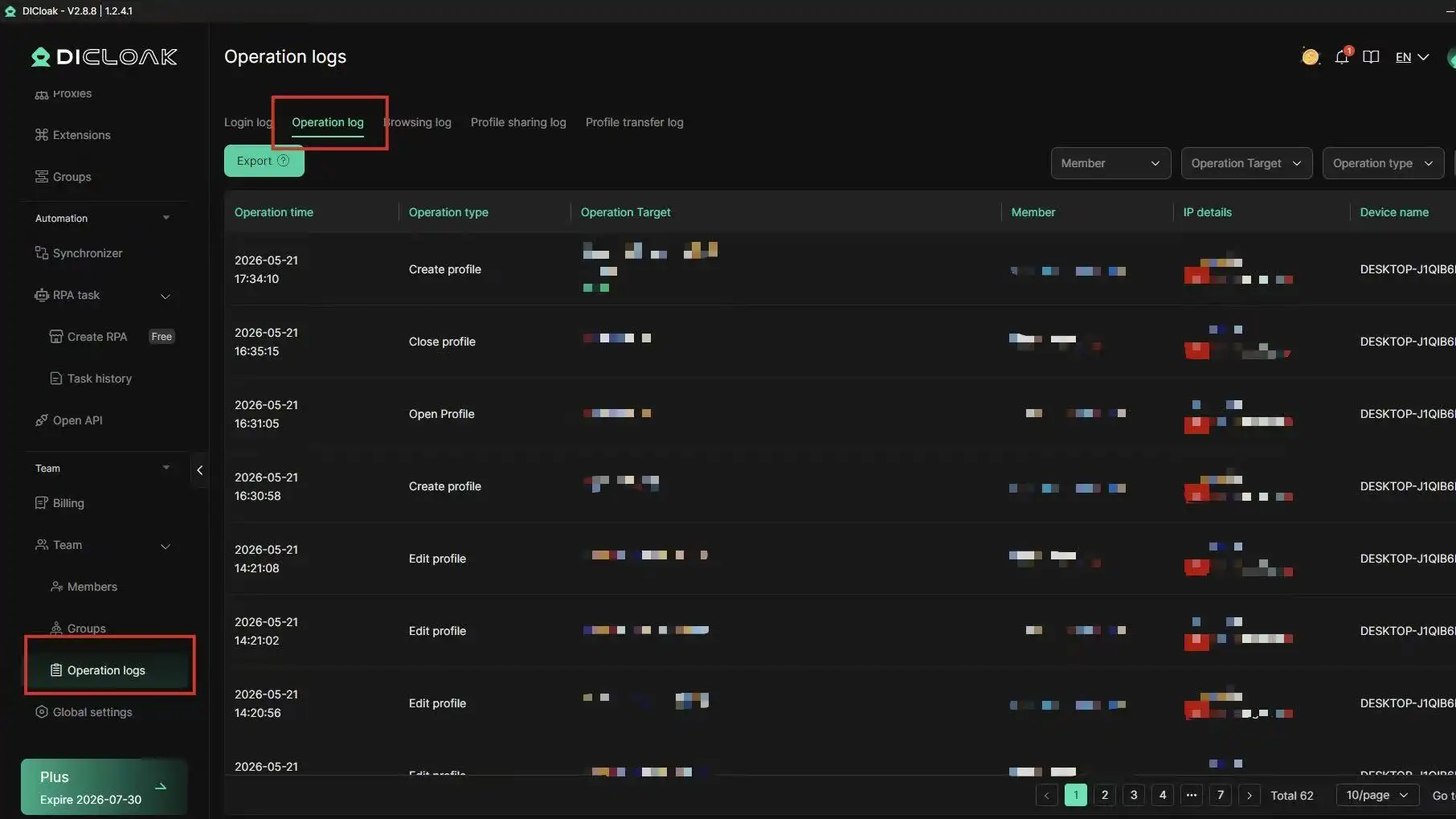
You can also set role-based access, so staff only see the accounts they handle. Profile sharing keeps handoffs clean without sharing raw credentials. Operation logs record who did what and when, which helps during audits or internal reviews.
A practical setup for ecommerce teams handling many accounts
Create one profile per marketplace store, then bind a stable proxy to each profile. Map profile names to team roles, not person names, so handoffs stay clean.
Use bulk actions for repeat tasks like cookie sync or profile updates. Add RPA only for steps your team repeats daily, such as opening seller dashboards and running routine checks. This cuts manual clicks and avoids avoidable mix-ups while you scale across regions and brands.
When should you switch models or combine them as your business grows?
In dropshipping vs private label vs wholesale, switch when your current model blocks profit or control, not when trend videos push you.
Moving from dropshipping to private label: readiness signals
Move when one SKU keeps stable demand for 8-12 weeks, return reasons are clear, and ad CPA stays predictable on channels like Meta Ads. You also need cash to cover MOQ, packaging, and slower inventory turns. If one stockout breaks your sales, your supply chain is not ready yet.
Adding wholesale for stability while keeping high-upside bets
Use wholesale to smooth cash flow while private label grows. A simple split is 60% capital in repeatable wholesale SKUs and 40% in higher-margin tests. As team access expands, errors and account linkage risk rise. You can use DICloak to map one store group to one isolated browser profile with a dedicated proxy, then share profiles without sharing passwords.
Common transition mistakes that erase profits
Scaling too early hurts more than moving late. Forecast from real sell-through, not supplier promises. Tools like DICloak let you set role permissions and operation logs, then run bulk actions or optional RPA to cut manual mistakes across multi-store operations.
Frequently Asked Questions
Is dropshipping vs private label vs wholesale legal in every country?
All three can be legal, but only when your setup follows local rules. You usually need business registration, required licenses, and correct tax collection (like VAT or sales tax). Product laws also matter: cosmetics, supplements, and electronics often need extra approvals. Marketplace policies can ban certain items even when local law allows them.
Can I start with dropshipping and later move to private label without rebuilding everything?
Yes. Start dropshipping to test demand, then move winning items to private label. Keep clean records from day one: sales by SKU, refund reasons, supplier lead times, and customer reviews. In dropshipping vs private label vs wholesale, this data helps you choose features, packaging, and price points before placing your first branded production order.
How many products should I test first in dropshipping vs private label vs wholesale?
Use small, focused test batches. For dropshipping, test about 10–20 products in one niche. For wholesale, start with 3–8 proven SKUs from one distributor. For private label, begin with 1–3 products only. In dropshipping vs private label vs wholesale, clear test rules matter most: margin, conversion rate, refund rate, and reorder speed.
Does wholesale always require large inventory orders?
No. Many distributors offer smaller opening orders for new accounts, such as mixed-case packs or low minimum order values. Ask for starter terms, not full pallet buys. Show a simple sales plan and reorder schedule to build trust. As you prove sell-through, you can negotiate better pricing, payment terms, and larger volume later.
Which model is easiest to run part-time: dropshipping, private label, or wholesale?
At launch, dropshipping is often easiest part-time because you avoid upfront inventory and can test fast. After sales grow, support tickets, supplier issues, and ad management raise workload. Wholesale needs regular reordering and catalog updates. Private label takes the most setup work first, but becomes steadier after brand assets, manufacturing, and logistics are in place.
Conclusion
Dropshipping, private label, and wholesale each offer a different balance of startup cost, control, and scalability, so the best model depends on your budget, brand goals, and operational capacity. If you want low risk and fast testing, start lean with dropshipping, but move toward wholesale or private label as you seek stronger margins, customer loyalty, and long-term growth.
Try DICloak For Free
 Web Proxy Tools
 Free Tools
 Cookie Plugin
 UA Generator
 MAC Address Generator
 IP Generator
 IP Address List
 2FA Code Generator
 World Clock
 Anonymous Check
 WebRTC Leak Test
 UUID Generator
 Free Web Proxy Site
 Proxy Checker
 FB Ad Checker
 AI Web Scraping
 Free SMM Tools
 Twitter Shadowban Checker
 Instagram Name Checker
 UTM Generator
 Username Generator
 AI Hashtag Generator
 LinkedIn Headline Generator
 Social Media Image Resizer