Digital arbitrage sounds simple at first. You find a digital product, service, or traffic opportunity selling at one price, then turn that gap into profit somewhere else. But in 2026, it is not as easy as picking a platform and hoping the numbers work. Margins can disappear fast, competition can get crowded, and account restrictions can shut down a workflow before it even becomes stable. That is why beginners often lose money early, even when the idea itself looks promising. This guide explains what digital arbitrage really means, how to spot opportunities worth testing, what risks matter most, and how to build a cleaner, more sustainable setup from the start.
What Is Digital Arbitrage and How Does It Work in 2026?
If you have been asking what is digital arbitrage, the simple answer is this: digital arbitrage means buying a digital input at one price and earning more from it somewhere else. In most cases, that input is traffic, attention, leads, digital products, or ad inventory. A common example is traffic arbitrage. A marketer buys low-cost clicks from one platform, sends that traffic to a page with ads or an offer, and keeps the difference if revenue is higher than cost. In 2026, many guides still define digital arbitrage this way, especially in paid traffic and content monetization workflows.
A simple example of how digital arbitrage works
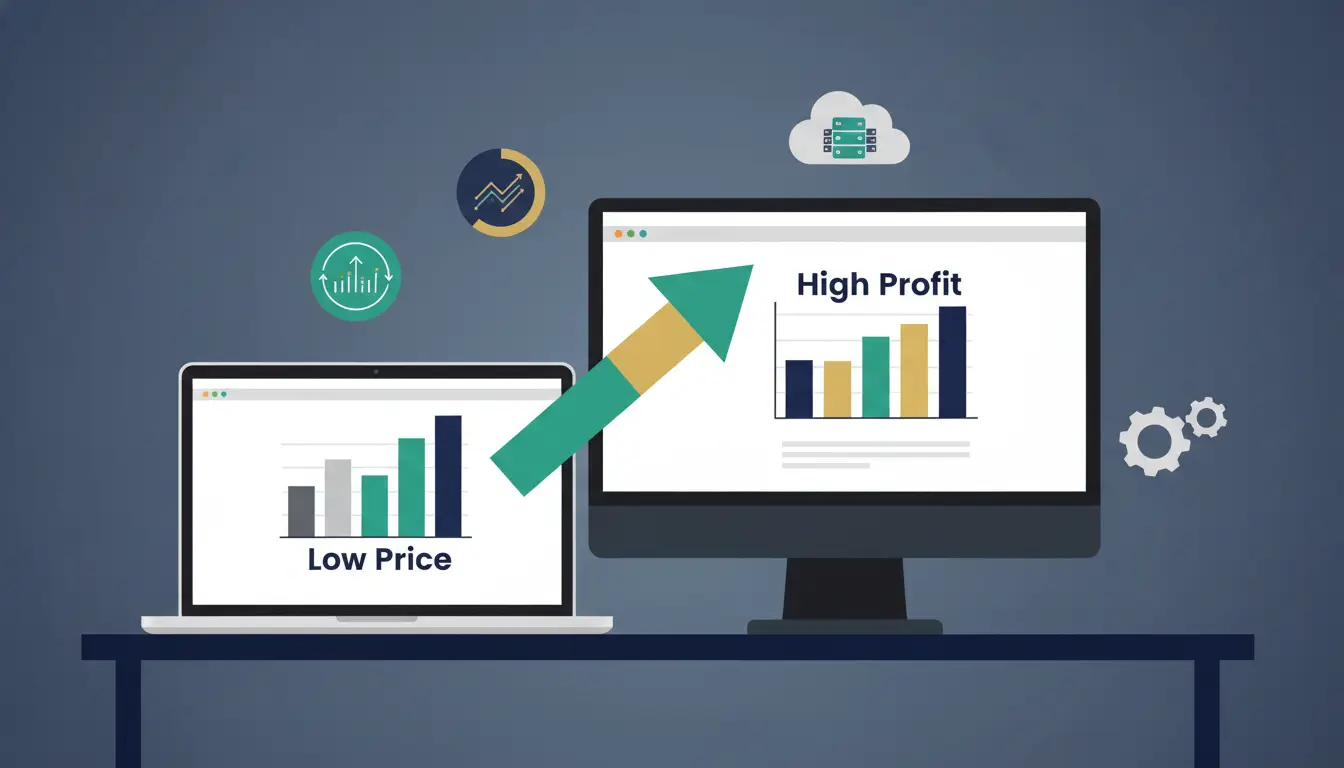
A real-world example makes the digital arbitrage meaning much easier to understand. Imagine you spend $100 on low-cost traffic from a native ad network. You send those visitors to a content page that earns money from display ads or to a product landing page that pays commissions. If that traffic brings in $140, your gross profit is $40 before other costs. That spread is the core idea behind digital arbitrage. RedTrack’s 2026 guide explains the same basic model in simple terms: profit comes from the gap between what you pay for traffic and what each visitor earns back.
This also shows why digital arbitrage is not as easy as it looks. A campaign can fail fast if click costs rise, the landing page converts poorly, or the traffic is low quality. That is why experienced operators watch two numbers very closely: cost per click and revenue per visitor. When those numbers move in the wrong direction, the profit gap disappears.
How digital arbitrage is different from retail arbitrage and affiliate marketing
It is easy to confuse digital arbitrage with other online business models, but they are not the same. Retail arbitrage usually means buying physical products at a low price and reselling them at a higher price. You deal with inventory, shipping, returns, and stock risk. Digital arbitrage usually works with digital assets instead, such as traffic, leads, ad placements, or digital products, so the workflow is faster and lighter, but often more dependent on tracking and optimization.
It is also close to affiliate marketing, but there is an important difference. In affiliate marketing, you promote a brand or product and earn a commission when someone buys or signs up. Adobe defines affiliate marketing as a performance-based partnership model, and FTC guidance also stresses disclosure and truthful online marketing practices. With digital arbitrage, the focus is not just promotion. The focus is buying undervalued digital input and monetizing it at a higher rate. Sometimes that uses affiliate offers, but the business logic is still arbitrage first.
One more note: the phrase Digital Arbitrage Inc does exist as a company name, but that is separate from the business model discussed here. In public company references, Digital Arbitrage Inc is tied to Cloudbeds, not to the general definition of digital arbitrage as a marketing or monetization strategy.
Why Some Beginners Fail at Digital Arbitrage
Now that the basic digital arbitrage meaning is clear, the next question is more practical: why do so many beginners lose money? The short answer is that digital arbitrage looks simple from the outside, but the margin is often thin and the system has many moving parts. A small mistake in traffic cost, tracking, landing page quality, or account setup can break the model very fast. In other words, learning what is digital arbitrage is easy. Running it well is much harder.
Common mistakes that lead to losses
One common beginner mistake in digital arbitrage is testing too little or reading the wrong numbers. Many new users launch a campaign, see a few clicks or conversions, and think it is working. But that is not enough data. RedTrack’s 2026 example explains that profit depends on the spread between traffic cost and revenue per visitor. If cost per click rises from $0.20 to $0.35 while revenue stays flat, the gap can disappear fast. That is why experienced operators watch cost, conversion rate, and revenue per visitor at the same time, not just raw traffic volume.
Another mistake is running low-value pages that do not really help the user. This is where many beginners confuse digital arbitrage with simply sending traffic through a thin page. Google’s Misrepresentation policy says ads and destinations must be clear, honest, and provide the information users need to make informed decisions. In plain terms, if the page feels misleading, shallow, or built only to push people somewhere else, the campaign can struggle or get flagged. A simple example is a page that promises one thing in the ad, then offers very little original value after the click. That kind of mismatch can hurt both performance and compliance.
There is also a budgeting problem. Some beginners spread their money across too many tests at once. A recent beginner guide on arbitrage mistakes warns that small, scattered budgets often lead to weak conclusions because the data is too thin to trust. Instead of learning what works, the advertiser ends up reacting to noise. This is one reason people misunderstand the digital arbitrage meaning. They think it is only about buying cheap traffic, when in reality it is also about disciplined testing, clean tracking, and careful optimization.
Why platform restrictions and account issues can disrupt operations
Another reason beginners fail at digital arbitrage is that platforms do not just care about bids and clicks. They also care about policy, trust, and account behavior. Google’s official policy pages make this very clear. Ads that mislead users, hide important information, or try to work around platform systems can face enforcement.
Meta has similar standards. Its ad standards and policy guidance show that advertisers must follow rules on deceptive behavior, low-quality experiences, and other restricted practices. For a beginner, this matters because digital arbitrage often depends on repeat testing and stable delivery. If an ad account is restricted, a payment profile is flagged, or a landing page review fails, the campaign may stop before the data is even useful.
One more issue is disclosure and trust. If digital arbitrage overlaps with affiliate offers, the FTC expects marketers to be upfront about endorsement relationships and not mislead consumers. That does not mean affiliate-based arbitrage cannot work. It means the page and promotion have to be honest. This is also why the term Digital Arbitrage Inc should not confuse readers here. Digital Arbitrage Inc is a company name in a separate business context, while digital arbitrage as discussed in this article is a marketing and monetization model that still has to follow platform rules, disclosure expectations, and user-trust standards.
How to Find and Test Profitable Digital Arbitrage Opportunities
After seeing why beginners fail, the next step is learning how to find a setup that actually has room to work. This is where many people move from asking what is digital arbitrage to building a real process. In simple terms, digital arbitrage works when you can buy attention, traffic, or another digital input at one price and earn more from it on the other side. But that only works when demand is real, pricing is still favorable, and your margin survives after all costs are counted.
What to look for in demand, pricing, and margins
A good digital arbitrage opportunity usually starts with demand that already exists. That means people are already clicking, searching, or buying in that niche. Then you look at pricing. If traffic is expensive and the payout is low, the math will be tight from the start. RedTrack’s 2026 guide puts it very clearly: the whole model depends on controlling cost per click and revenue per visitor. A simple example is a campaign that buys clicks at $0.18 and earns $0.30 per visitor after ads or conversions. That leaves room to test. But if clicks rise to $0.32 and revenue stays flat, the margin can disappear fast. That is the real digital arbitrage meaning in practice: not just “buy low, sell high,” but “keep the spread alive after real costs.”
This is also why beginners should not chase only “cheap” traffic. Cheap traffic with weak intent can still lose money. A better test is whether the traffic matches the offer and whether the page can turn visits into value. If your landing page is slow, weak on mobile, or not useful, the campaign may struggle even when traffic is affordable.
How to evaluate competition before entering a market
Before entering a niche, look at how crowded it is and how strong the current players are. In digital arbitrage, competition is not just about how many ads you see. It is also about ad quality, landing page quality, and how much others can afford to pay for traffic.
A simple way to think about it is this: if every visible ad in a niche leads to a polished page, fast loading, clear offer, and strong message match, then your test page has to compete with that. If your version is thin or unclear, you may pay for clicks without getting enough return. This is where some people misunderstand what is digital arbitrage. They think the main job is finding an offer. In reality, part of the job is checking whether the market is already optimized by stronger operators. Also, to avoid confusion, Digital Arbitrage Inc is a separate company name in another context, not a signal that a market itself is easy or profitable. The business model still depends on demand, competition, and execution.
How to test and optimize your strategy before scaling
The safest way to start digital arbitrage is with a small, controlled test. Do not scale because one ad gets a few clicks or one landing page gets one conversion. Test one traffic source, one offer angle, and one clear page first. Then watch the numbers that actually matter: click cost, click-through rate, landing page performance, conversion rate, and revenue per visitor. RedTrack’s performance guides keep coming back to the same lesson: tracking is what tells you whether a campaign is truly profitable or only looks active.
How to Manage Risk in Digital Arbitrage
Once you find a setup that looks promising, the next job is risk control. This is where many people stop asking what is digital arbitrage and start learning how fragile it can be. A campaign may look profitable in the morning and weak by the end of the day if costs rise, conversions fall, or a payment or account problem interrupts delivery. In simple terms, digital arbitrage is not only about finding a spread. It is also about protecting that spread before small problems turn into real losses.
How to reduce losses from price changes and weak margins
The first risk in digital arbitrage is margin pressure. If click prices go up or revenue per visitor drops, profit can disappear very fast. That is why strong operators watch a few core numbers every day: cost per click, conversion rate, and revenue per visitor.
A simple example helps. Imagine you buy traffic at $0.20 per click and earn $0.32 per visitor. That looks workable. But if competition pushes your click cost to $0.29 and your page still earns only $0.32, your room for error becomes very small. One weak landing page, one bad traffic source, or one poor device segment can wipe out the gain. In digital arbitrage, a small change in pricing often matters more than people expect, which is why careful testing and daily optimization matter so much.
How to spot scams and unreliable marketplaces
Another big risk is fraud. Some “easy money” offers around digital arbitrage are not real business opportunities at all. The FTC said in March 2026 that it received 3 million fraud reports in 2025 and that reported consumer losses reached $15.9 billion. It has also taken action against online business opportunity scams that used misleading claims and bad business practices. That matters here because fake ad services, fake traffic sellers, and shady marketplaces often use the same promise: fast profit with little risk.
How to protect your accounts and payment methods
The last major risk is operational security. Even a profitable digital arbitrage setup can break if an ad account is hijacked, a payment profile is flagged, or login access is lost. Google Ads specifically recommends 2-Step Verification because it helps prevent unauthorized access even if a password has been compromised. Google also states that its ad ecosystem depends on trust and policy compliance, which means account protection is not just a technical detail. It is part of keeping campaigns running.
A simple example: if one person on a small team reuses weak passwords or skips two-factor protection, one compromised login can pause campaigns, change billing settings, or redirect budget before anyone notices. In digital arbitrage, that kind of interruption can cost both money and data. A safer approach is to use strong unique passwords, turn on 2-Step Verification, review billing access closely, and limit account permissions to only the people who need them. Also, to avoid confusion, Digital Arbitrage Inc is a company name in a separate business context. It is not the same thing as the digital arbitrage meaning discussed in this article, which is still a strategy that depends on good tracking, careful vendor checks, and stable account security.
Best Platforms for Digital Arbitrage in 2026
After you understand risk, the next question is where to run digital arbitrage. There is no single best platform for everyone. The right choice depends on what kind of spread you are trying to create. Some people use digital arbitrage with physical resale, some with affiliate offers, and some with service or course-based products.
Comparing eBay, ClickBank, Fiverr, and Udemy
| Platform |
Best fit for digital arbitrage |
How it works |
Main advantage |
Main limitation |
Good for beginners? |
| eBay |
Product-based arbitrage |
Buy products at a lower price and resell them at a higher price |
Huge marketplace and clear resale model |
You still deal with shipping, returns, and seller fees, so it is less “digital” than the other options. eBay charges selling fees, including final value fees, in most categories. (eBay) |
Sometimes. Easier to understand, but margins can get tight fast. |
| ClickBank |
Traffic and affiliate-based digital arbitrage |
Buy or attract traffic, send it to an offer, and earn commission if users convert |
One of the clearest fits for digital arbitrage because the spread comes from traffic cost versus commission revenue |
Results depend heavily on tracking, landing pages, and offer quality. ClickBank’s own materials focus on choosing a niche, building a platform, and promoting offers, while its marketplace content shows strong activity in health and fitness offers. (ClickBank Support) |
Yes, if the user understands testing and tracking. |
| Fiverr |
Service-based arbitrage |
Package, resell, or coordinate digital services and keep the margin |
No inventory and faster service-based workflow |
Fees reduce margin. Fiverr says freelancers receive 80% of the purchase amount, which means the spread can be harder to protect if pricing is weak. (Fiverr Help Center) |
Maybe. Simpler than building a course, but pricing pressure is real. |
| Udemy |
Course and knowledge-product arbitrage |
Create, package, or promote learning content and monetize demand over time |
No need to handle shipping, and courses can scale over time |
Slower payoff and strong competition. Udemy says instructors get 97% on instructor-promoted sales, but only 37% on many marketplace sales. (Udemy Support) |
Usually not the easiest if the goal is quick testing and fast cash flow. |
Quick takeaway: For most beginners, ClickBank is usually the closest match to pure digital arbitrage, while Fiverr may work better for service-based offers. eBay fits resale better than pure digital workflows, and Udemy is often slower because it depends more on content creation and long-term demand.
How DICloak Helps Simplify Digital Arbitrage Operations
As digital arbitrage gets more complex, many people find that the hard part is not only finding a profitable offer. It is also keeping research, testing, and account work organized. This is where DICloak can help.
Managing multiple account environments more cleanly
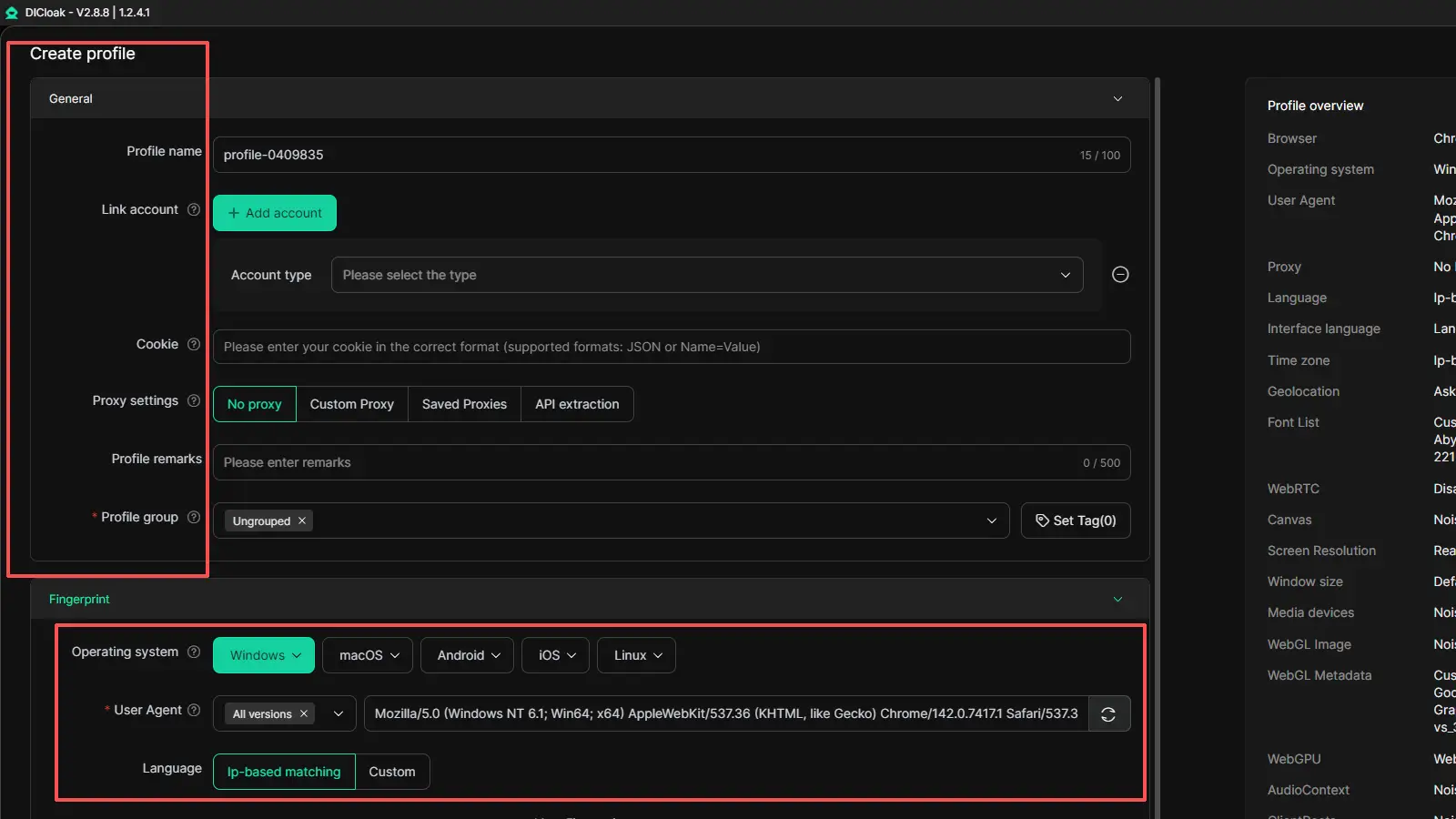
DICloak lets users create isolated browser profiles for different tasks. This helps keep account sessions, cookies, and browser data separate, so daily operations feel cleaner and easier to manage.
Testing offers and workflows across isolated browser profiles
DICloak also makes testing more structured. Users can run different workflows in separate profiles, which is useful when comparing offers, checking traffic paths, or organizing research without mixing everything together.
Automating repetitive tasks for more efficient operations
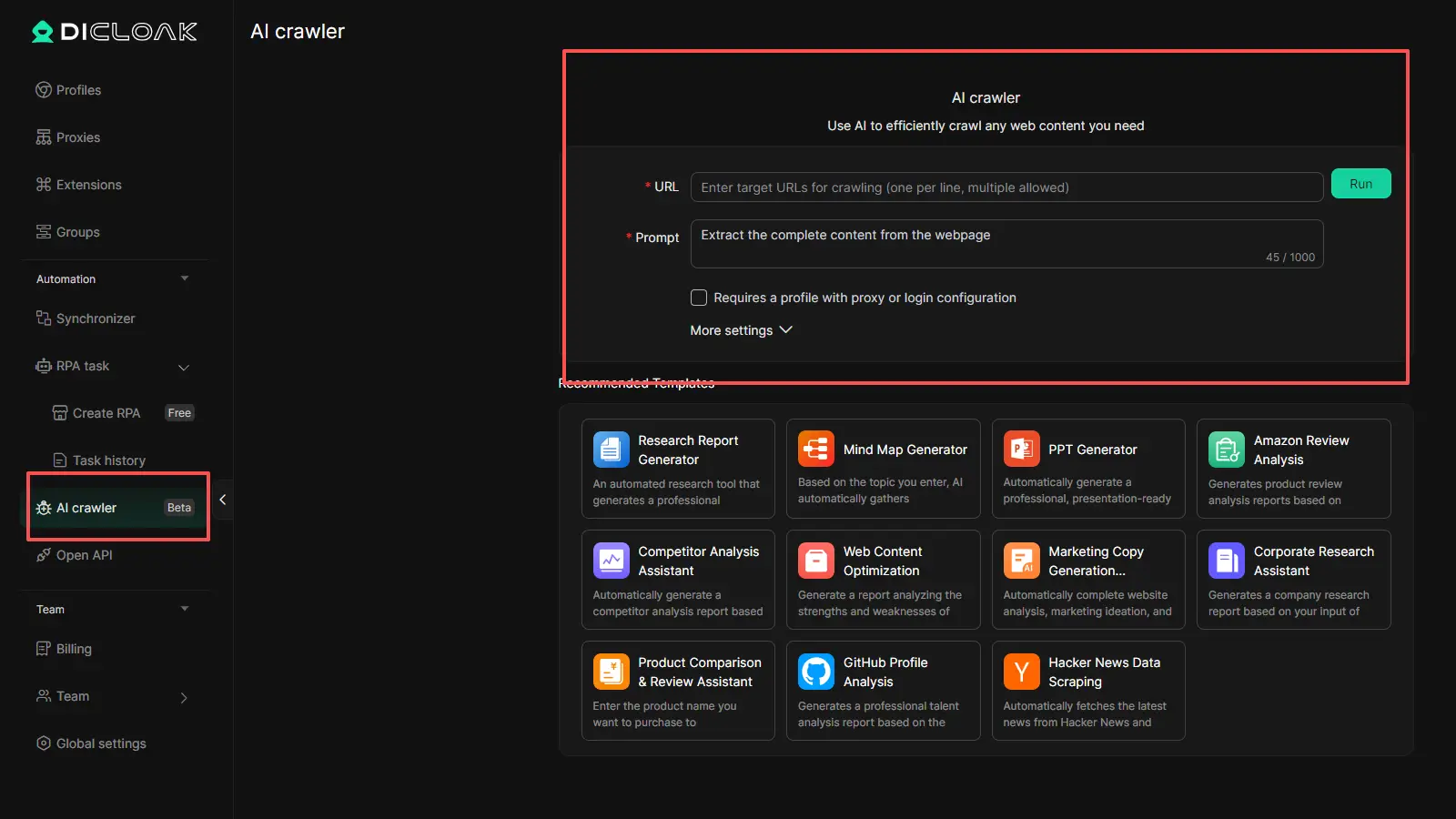
For repeated work, DICloak includes tools like the Multi-Window Synchronizer, AI Crawler, and built-in automation features. These can help reduce manual steps and improve efficiency when handling multiple digital arbitrage tasks.
Overall, DICloak fits best here as a support tool. It does not replace strategy, testing, or compliance, but it can help make digital arbitrage workflows more organized and easier to scale.
FAQ About Digital Arbitrage
Q1: What is the minimum budget needed for digital arbitrage?
The minimum budget for digital arbitrage depends on the model. Small tests are possible, but the budget still needs to be large enough to produce useful data.
Q2: How long does it take to see profits from digital arbitrage?
Some digital arbitrage tests can show results quickly, but stable profit usually takes time. Most people need repeated testing before they find a setup that works.
Q3: Can digital arbitrage be done part-time?
Yes, digital arbitrage can be done part-time. Many beginners start small and manage one niche, one offer, or one traffic source at a time.
Q4: Is digital arbitrage still profitable in 2026?
Yes, digital arbitrage can still be profitable in 2026, but it depends on good testing, strong margins, and careful risk control.
Q5: What’s the difference between digital arbitrage and retail arbitrage?
Digital arbitrage usually involves traffic, leads, services, or digital products. Retail arbitrage focuses on buying and reselling physical goods.
Conclusion
Digital arbitrage can still be a real profit model in 2026, but it is not as simple as buying cheap traffic or picking a random platform. The best results usually come from careful testing, strong margin control, and clean daily operations. If you understand the numbers, manage risk early, and keep improving your workflow, digital arbitrage can become a practical way to build online income over time.
 Web Proxy Tools
 Free Tools
 Cookie Plugin
 UA Generator
 MAC Address Generator
 IP Generator
 IP Address List
 2FA Code Generator
 World Clock
 Anonymous Check
 WebRTC Leak Test
 UUID Generator
 Free Web Proxy Site
 Proxy Checker
 FB Ad Checker
 AI Web Scraping
 Free SMM Tools
 Twitter Shadowban Checker
 Instagram Name Checker
 UTM Generator
 Username Generator
 AI Hashtag Generator
 LinkedIn Headline Generator
 Social Media Image Resizer