In 2026, the LinkedIn feed has evolved into an expertise-first economy where "post and pray" is a death sentence for reach. While content quality is the baseline, timing serves as the ultimate multiplier, determining whether your professional analysis captures engagement velocity or vanishes into the void. Success on the platform requires capitalizing on professional bandwidth during strategic windows where user attention and algorithmic favorability intersect.
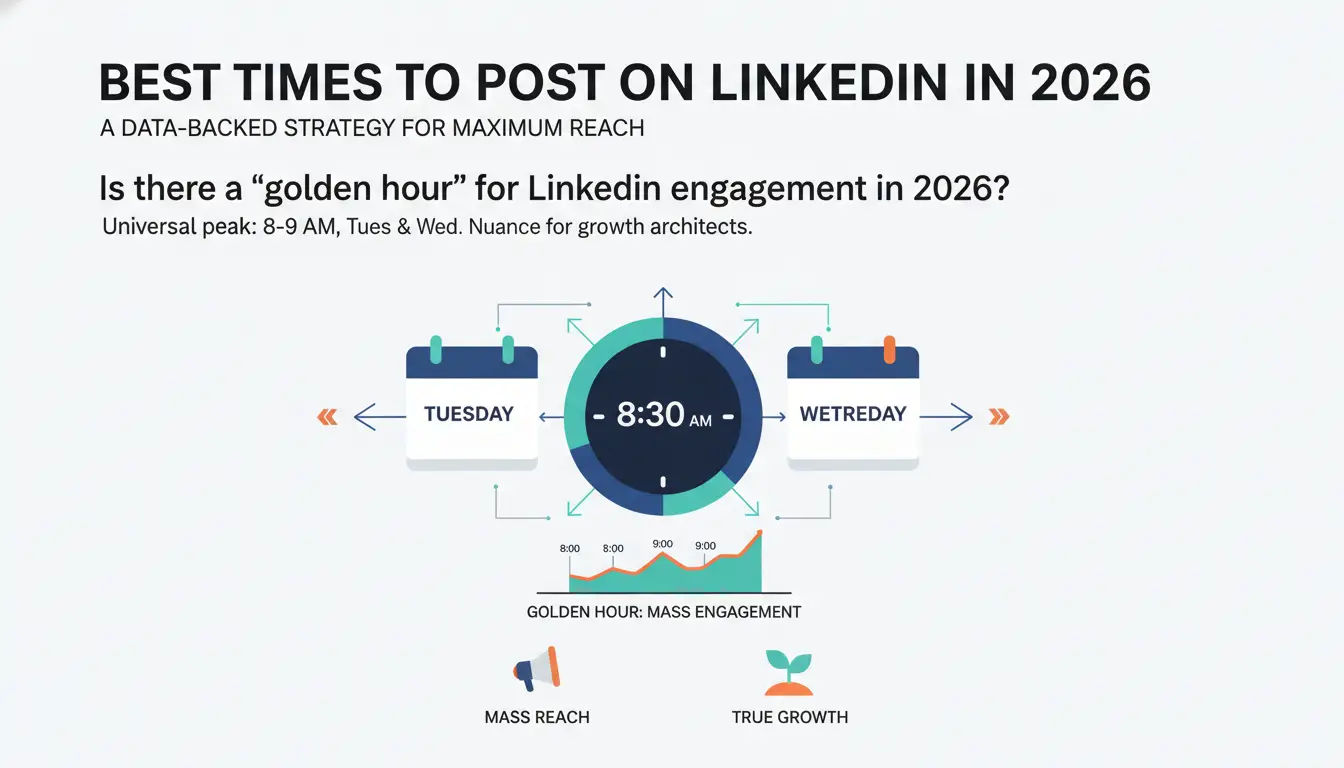
Is there a "golden hour" for LinkedIn engagement in 2026?
Large-scale data analysis reveals a universal peak performance window, but a nuanced approach is required for true growth architects.
The definitive best time for mass engagement on LinkedIn is between 8:00 AM and 9:00 AM on Tuesdays and Wednesdays.
However, it is vital to distinguish between two strategic phases: the technical peak and the engagement peak. Data shows that the earliest visibility advantage begins between 4:00 AM and 6:00 AM. This early window is the technical peak for "early-bird" visibility, ensuring your content is the first thing professionals see upon waking. The 8:00 AM to 9:00 AM window remains the engagement peak, where the highest volume of likes and comments occurs as the global workforce settles into their desks.
Why are weekends traditionally the worst days to post?
Psychologically, the LinkedIn ecosystem remains a "work-only" environment for the majority of its user base. On Saturdays and Sundays, professionals actively disconnect to preserve personal bandwidth. This results in a significant drop-off in engagement, as the psychological barrier to career-focused networking remains high during leisure hours.
What is the best time to post on LinkedIn every day this week?
To leverage maximum reach, you must align your publishing schedule with the specific daily rhythms of the global workforce.
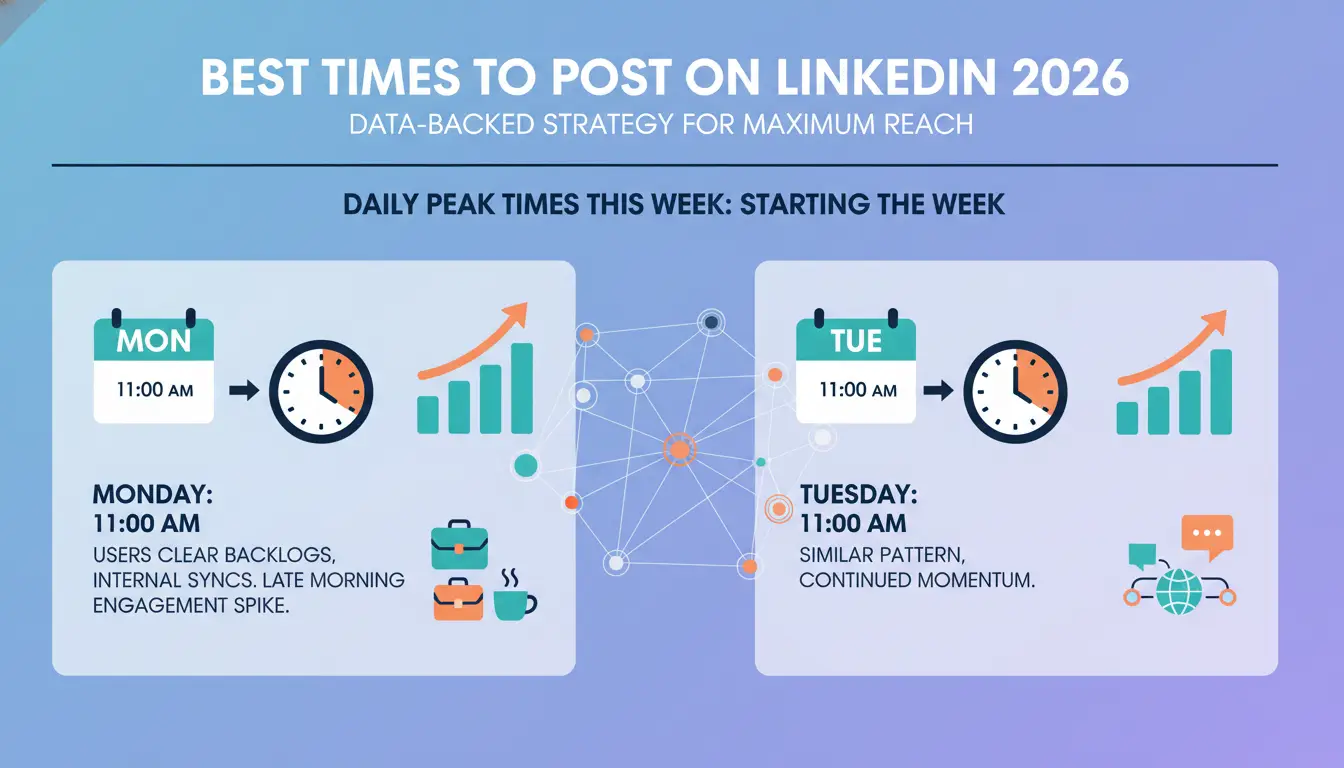
Starting the week: Monday and Tuesday's peak windows
- Monday at 11:00 AM: Users spend the early morning clearing urgent backlogs and attending internal syncs. By 11:00 AM, they transition to networking and industry updates as they approach the lunch hour.
- Tuesday between 6:00 AM and 8:00 AM: Tuesday is one of the highest engagement days of the week. Capitalizing on this early morning routine puts your content at the top of the feed as professionals start their primary work day.
The midweek surge: Optimizing Wednesday and Thursday
- Wednesday at 9:00 AM: Mid-week momentum is at its zenith. Posting at 9:00 AM captures the "settling in" period for the global workforce.
- Thursday at 2:00 PM: Thursday breaks the morning trend with an early afternoon peak. This window targets the "after-lunch" lull, catching professionals scrolling for industry insights before they push through their final tasks.
The Friday anomaly: Why evening posts actually work
- Friday at 8:00 PM: While counterintuitive for B2B strategy, Friday evening sees a surprising surge. Professionals often use this time for a "weekly review" or to catch up on missed industry highlights before signing off for the weekend.
Weekend survival: Catching early-morning scrollers
- Saturday between 4:00 AM and 5:00 AM: High-performing brands utilize this window to reach "high-achiever" early birds before their weekend schedules fill up.
- Sunday at 6:00 AM: This represents the only viable Sunday window, capturing users during their morning routine before the "Sunday Scaries" or family commitments take over.
Summary Table: Daily Peak Windows
| Day |
Peak Posting Time |
| Monday |
11:00 AM |
| Tuesday |
6:00 AM – 8:00 AM |
| Wednesday |
9:00 AM |
| Thursday |
2:00 PM |
| Friday |
8:00 PM |
| Saturday |
4:00 AM – 5:00 AM |
| Sunday |
6:00 AM |
How does your specific industry dictate your LinkedIn schedule?
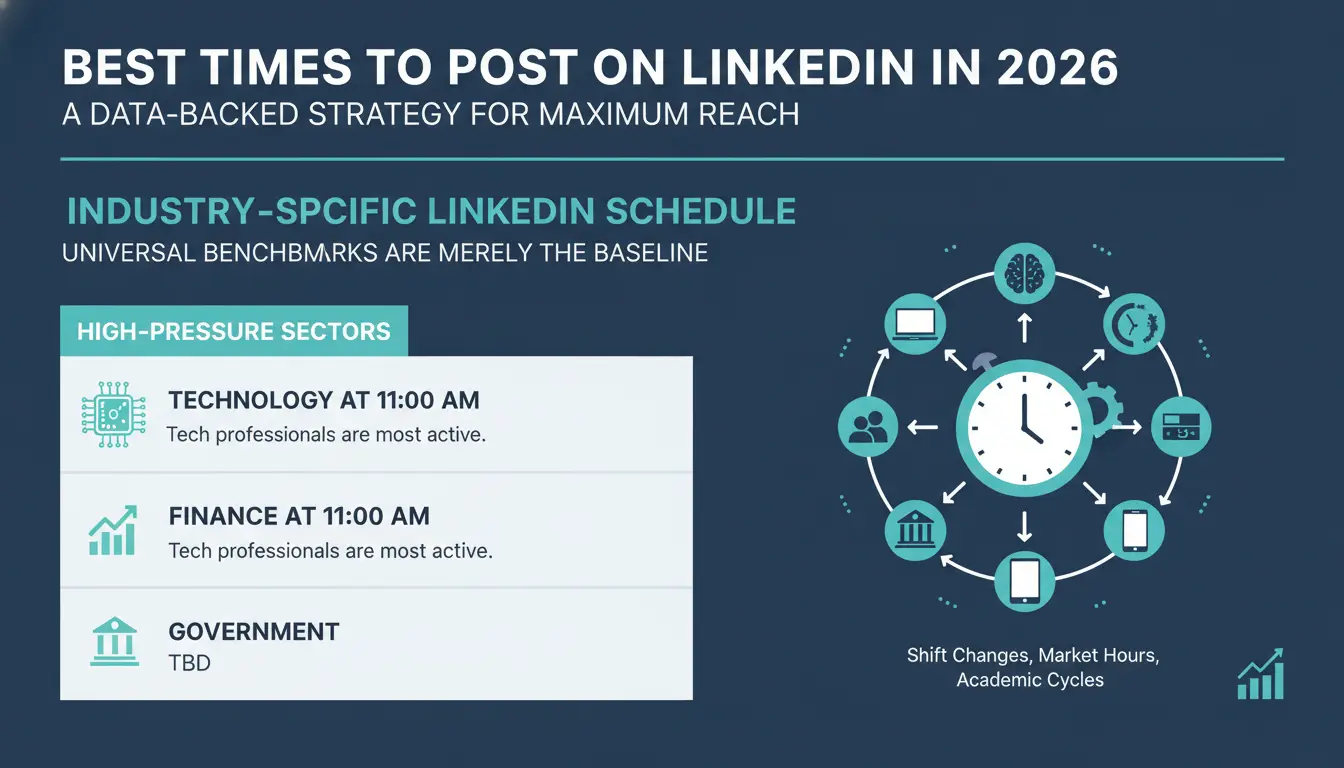
Universal benchmarks are merely the baseline. Strategic growth requires understanding the specific behavioral triggers—shift changes, market hours, and academic cycles—of your niche.
High-pressure sectors: Tech, Finance, and Government
- Technology: Monday at 11:00 AM. Tech professionals are most active immediately following their first weekly standups or sprint planning sessions.
- Financial Services: 5:00 PM Monday, 1:00 PM Wednesday, 5:00 PM – 7:00 PM Thursday, and 11:00 AM – 1:00 PM Friday. These windows capture professionals after markets close or during the midday gap between client calls.
- Government: 3:00 PM Monday, 9:00 AM – 11:00 AM Tuesday, 10:00 AM Wednesday, and 11:00 AM – 1:00 PM Saturday. These windows target steady mid-morning reach and Saturday morning "catch-up" periods.
Service-based industries: Healthcare, Education, and Hospitality
- Healthcare: 9:00 AM to 1:00 PM, Tuesday through Friday. This aligns with morning shift changes and standardized lunch breaks for medical staff.
- Education: 9:00 AM Wednesday and 11:00 AM – 1:00 PM Friday. Engagement peaks before classes begin or during midday breaks when educators find a breather.
- Dining, Hospitality, and Tourism: 12:00 PM Wednesday. Activity peaks exactly at lunch as professionals scroll between service periods or during prep for the next rush.
Industrial and Labor: Construction, Mining, and Manufacturing
- Construction & Manufacturing: 2:00 PM – 4:00 PM Monday, 10:00 AM Tuesday, before 6:00 AM Thursday, and 3:00 PM Friday. These specific windows align with shift transitions and on-site breaks.
Corporate and professional: Real Estate, Legal, and Nonprofits
- Real Estate, Legal, and Professional Services: 8:00 AM – 10:00 AM Thursday and 10:00 AM – 1:00 PM Saturday. These professionals are best reached early in the work day or on Saturday mornings before their client schedules fill up.
- Nonprofits: 11:00 AM – 2:00 PM Tuesday, 12:00 PM – 3:00 PM Wednesday, and 11:00 AM Saturday. Engagement spikes during the lunch hour or late Saturday morning.
How should global teams coordinate posting across different time zones?
Maximizing global reach requires balancing visibility across multiple continents simultaneously.
Identifying the "Natural Overlap" for maximum reach
To capture the widest possible professional audience, target the "Natural Overlap." Posting at 9:00 AM PT is a strategic sweet spot: it captures the West Coast morning routine, the East Coast lunch hour, and the 5:00 PM GMT / 6:00 PM CET end-of-day peak for the European market.
Region-specific peak times for localized campaigns
- CET (Central European Time): 7:00 PM on Thursdays.
- GMT (Greenwich Mean Time): 7:00 AM to 9:00 AM on Thursdays.
- EST (Eastern Standard Time): 5:00 AM Tuesdays; 6:00 AM and 5:00 PM Thursdays; 8:00 AM and 6:00 PM Fridays.
- CST (Central Standard Time): Before 6:00 AM Tuesdays; 6:00 AM Thursdays; 4:00 PM Fridays.
- MST (Mountain Standard Time): 5:00 AM and 3:00 PM on Thursdays and Fridays.
- PST (Pacific Standard Time): 2:00 PM to 4:00 PM on Thursdays and Fridays.
Why is the first hour of your LinkedIn post so critical for reach?
The LinkedIn algorithm uses the first 60 minutes as a "litmus test" for content quality.
The "Quick Engagement" signal and algorithmic promotion
Immediate likes, comments, and shares act as a quality signal. If your audience is active and engages quickly, the algorithm promotes the post into wider feeds, preventing it from being buried.
The 2026 shift toward "Suggested Posts" and relevance
While timing provides the initial spark, LinkedIn has pivoted toward a "Suggested Posts" model to prioritize long-term value. Tim Jurka, LinkedIn’s Senior Director of Engineering, explains: “It's the latest step in our ongoing efforts to emphasize knowledge and advice over mere virality.”
Perfect timing provides three distinct advantages:
- Algorithm favorability: Rapid engagement signals high quality.
- Visibility: Immediate traction increases feed presence during active windows.
- Engagement: Initial momentum helps content transition into a "Suggested Post" for long-term reach.
How can you identify the exact time your unique audience is online?
Generic benchmarks provide a foundation, but elite social media management requires personalized optimization.
Analyzing your own LinkedIn data for patterns
Conduct a monthly audit of your LinkedIn Analytics. Look for correlations between engagement peaks and specific publishing windows. If your content consistently over-performs during a non-traditional window, that is your unique competitive advantage.
Why constant experimentation beats a "set it and forget it" strategy
Audience behaviors are fluid. For instance, Hootsuite’s social team found success at 2:00 PM PST—well outside the morning "golden hour"—simply by testing a new slot after a missed deadline. We recommend a bi-weekly experiment cycle where you shift posting times by 30-60 minutes to find hidden engagement pockets. Additionally, "lurk" on competitors; if they consistently post at specific times, they have likely already done the heavy lifting of audience testing for you.
What is the most efficient workflow for managing multiple LinkedIn accounts?
Managing multiple LinkedIn accounts is not just about posting at the right time. Teams also need a clean system for account separation, regional scheduling, member access, and performance review. A strong workflow helps reduce mistakes and makes LinkedIn publishing easier to scale.
Separate each LinkedIn account into its own browser profile
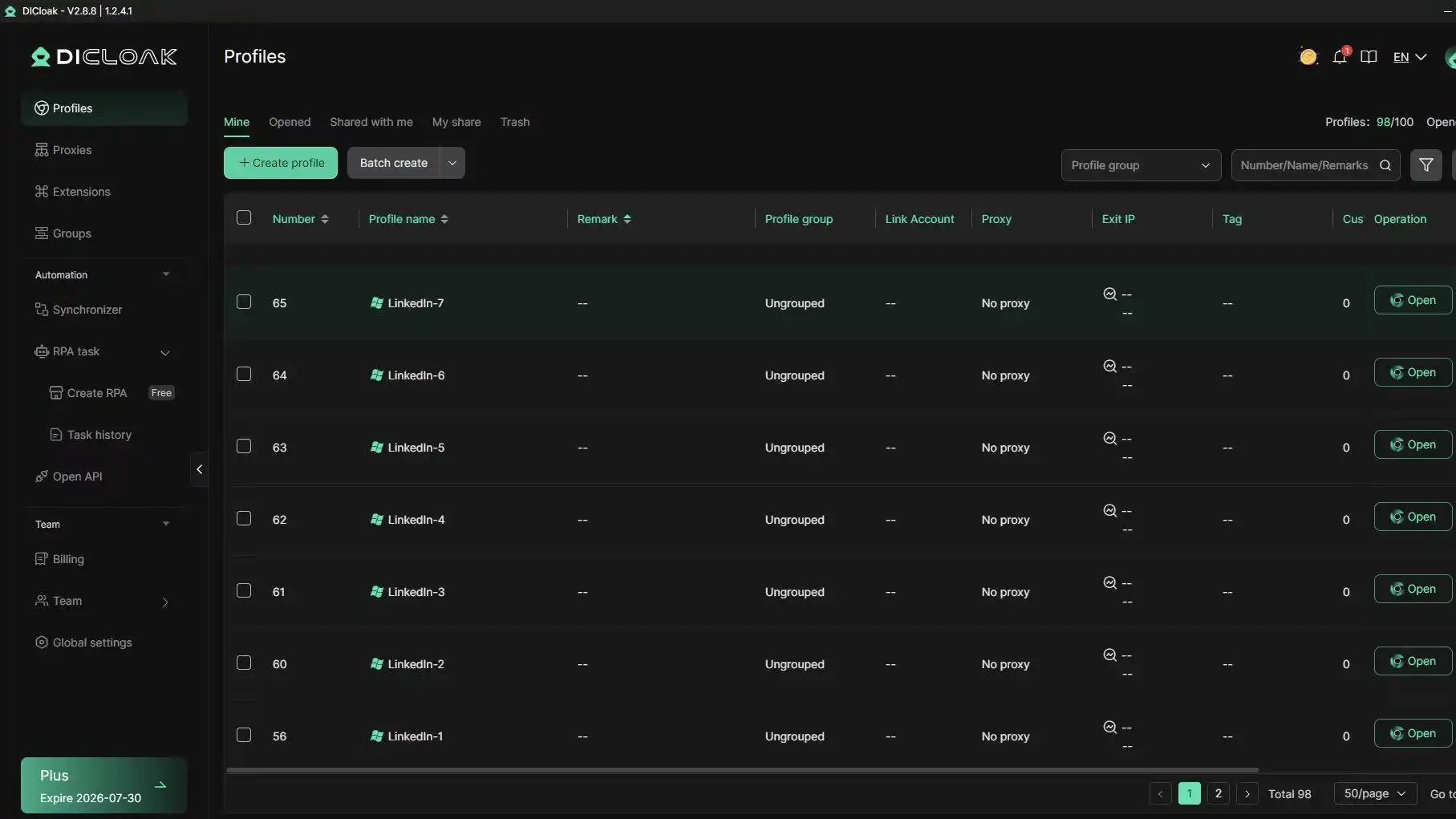
The first step is to keep every LinkedIn account in a separate browser profile. This is useful for teams that manage executive profiles, company pages, regional accounts, or client accounts at the same time.
With DICloak, users can create different browser profiles for different LinkedIn accounts. Each profile can keep its own cookies, login session, fingerprint settings, and user-configured proxy. This helps team members avoid repeated logins and reduces the risk of mixing account sessions.
Use bulk operations and RPA to simplify repeated posting tasks
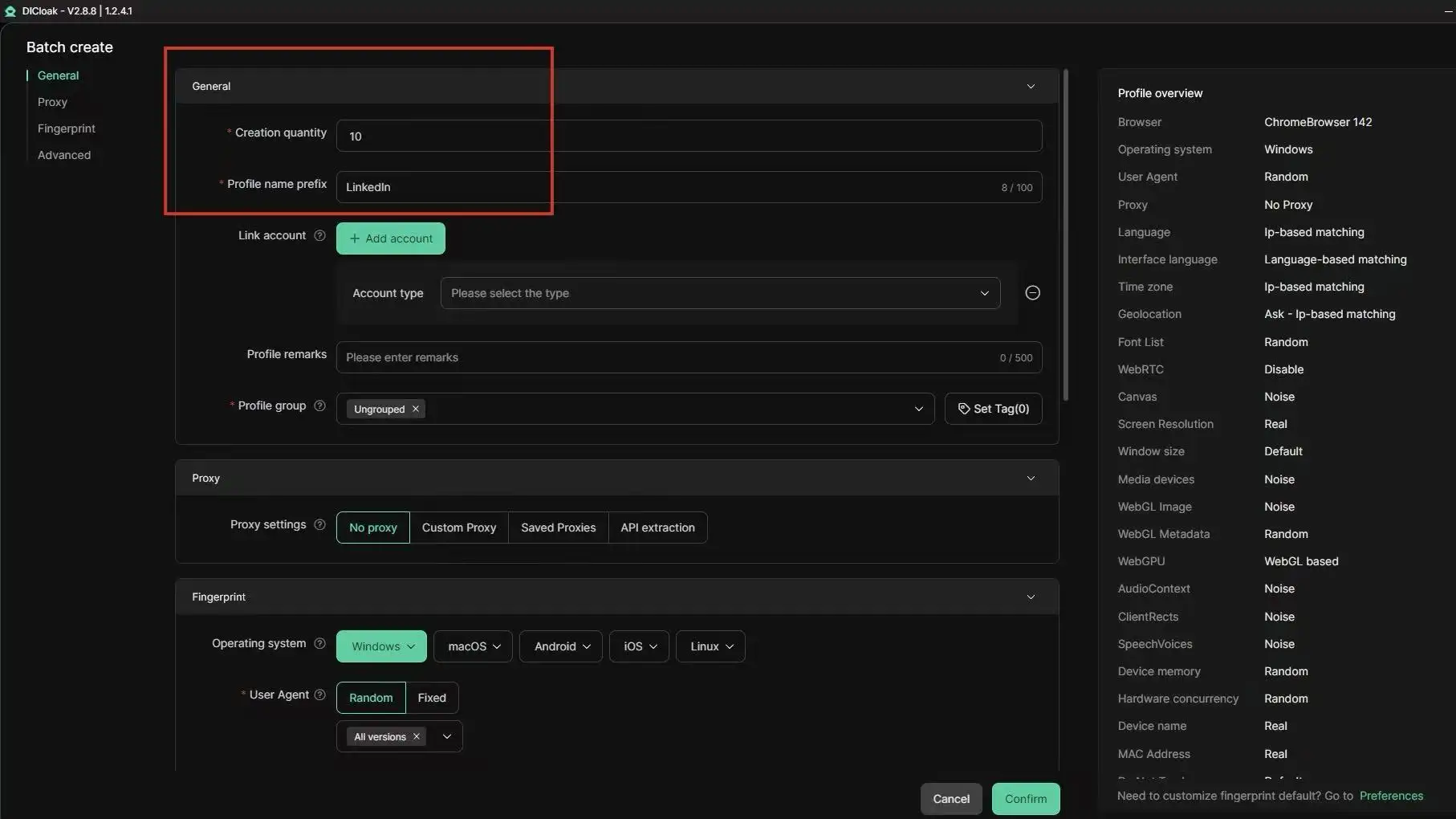
When a team manages many LinkedIn accounts, repeated tasks can take a lot of time. Creating profiles, opening accounts, checking post plans, and preparing daily actions can become slow if everything is done one by one.
DICloak supports bulk operations, so users can create, import, and launch multiple browser profiles more efficiently. This is useful for teams that manage many regional accounts or several LinkedIn profiles for different business goals.
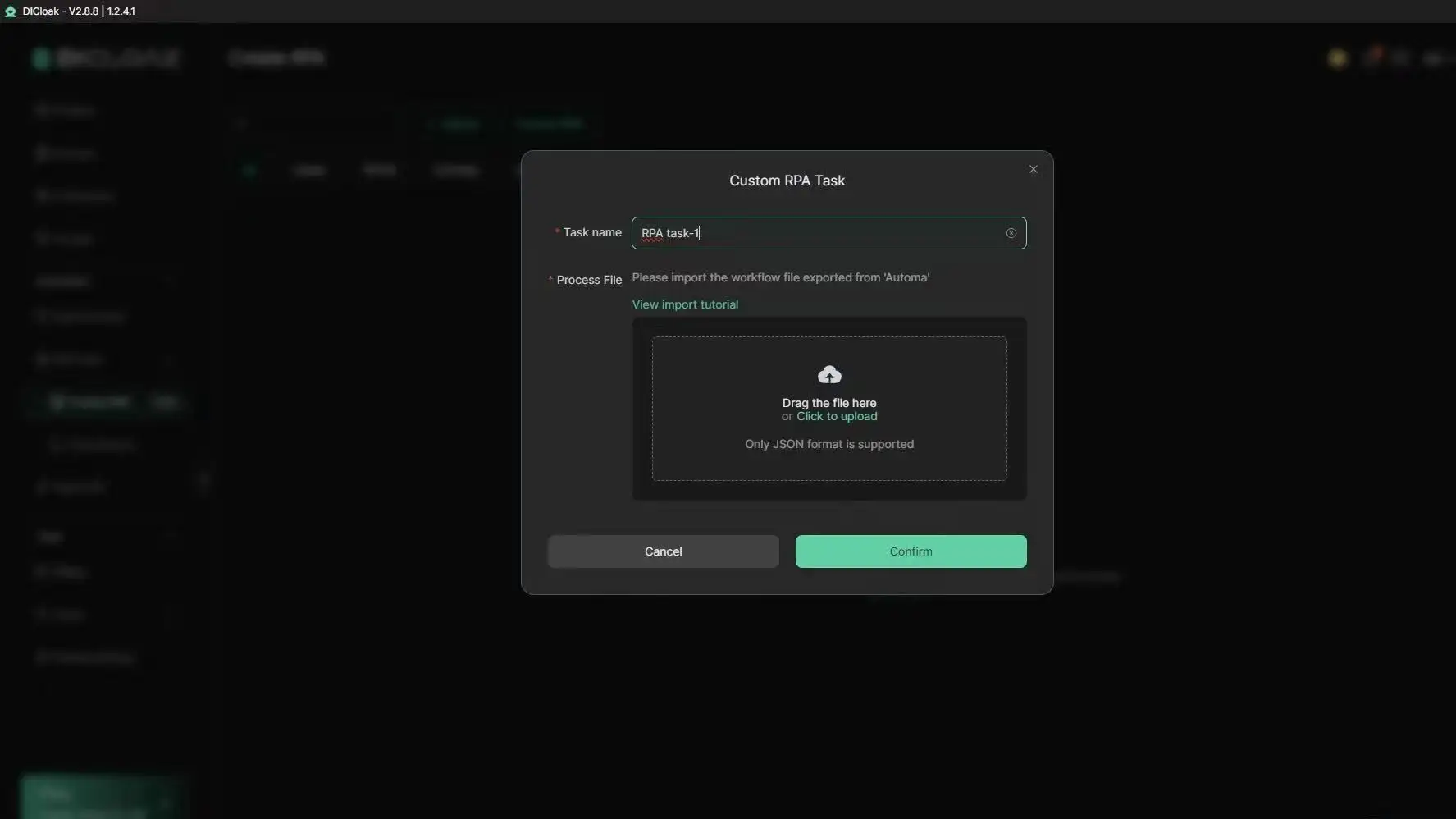
DICloak also provides RPA automation for repeated workflow steps. For example, teams can use automation to reduce manual work in routine account checks, content preparation, or other repeated actions. This helps the team spend less time on repetitive operations and more time on content quality, audience testing, and engagement analysis.
Manage team access for different LinkedIn profiles
For LinkedIn teams, access control is just as important as timing. Not every team member needs to manage every account. A content editor may only need access to company pages. A regional manager may only need access to accounts in one market. An admin may need a full view of all profiles.
With DICloak, admins can share selected browser profiles with specific team members and set permissions based on real work needs. This helps reduce mistakes, protect account access, and keep the publishing process more organized.
This also supports a cleaner global workflow. A U.S. team member can manage U.S. LinkedIn accounts, while a European team member handles CET or GMT posting windows. Each person works with the right account, in the right profile, at the right time.
In short, the most efficient workflow combines timing strategy with account organization. Separate each LinkedIn account, use bulk tools and RPA for repeated work, assign access carefully, and review performance data over time. When the workflow is clear, LinkedIn posting becomes easier to scale.
FAQ
Should I post on LinkedIn during the weekend?
Weekends are usually not the best times to post on LinkedIn because many users are away from work-related content. If you still need to post, try an early morning window, such as 4:00 AM to 6:00 AM. This may help you reach early scrollers before weekend activity drops.
How can posting time help drive larger business goals?
The right posting time helps your content reach people when they are more likely to read, react, and reply. When your post appears during active work hours, it has a better chance to get early engagement. This can turn more impressions into profile visits, leads, and business conversations.
Should executives post at the same time as the company page?
Yes, this can work well when the message is planned carefully. An executive post and a company page post can support each other and create more touchpoints for the same audience. The best approach is to keep the timing close, but make each post feel different and useful.
What if my audience is in multiple time zones?
If your audience is spread across regions, look for overlap windows. For example, 9:00 AM PT can reach the U.S. West Coast in the morning, the U.S. East Coast around lunch, and parts of Europe near the end of the workday. For regional campaigns, use the best times to post on LinkedIn for that specific time zone.
How often should I check my analytics to update my schedule?
Check your LinkedIn Analytics at least once a month. Look at impressions, comments, clicks, and first-hour engagement. The best times to post on LinkedIn can change as your audience grows, so keep testing new windows instead of using one fixed schedule forever.
Conclusion
The best time to post on LinkedIn in 2026 starts with midweek mornings, especially Tuesday and Wednesday from 8:00 AM to 9:00 AM. But the right schedule depends on your audience, industry, and time zone.
Start with the proven peak windows. Then review your LinkedIn Analytics and keep testing. Over time, your own data will show when your audience is most likely to engage.
 Web Proxy Tools
 Free Tools
 Cookie Plugin
 UA Generator
 MAC Address Generator
 IP Generator
 IP Address List
 2FA Code Generator
 World Clock
 Anonymous Check
 WebRTC Leak Test
 UUID Generator
 Free Web Proxy Site
 Proxy Checker
 FB Ad Checker
 AI Web Scraping
 Free SMM Tools
 Twitter Shadowban Checker
 Instagram Name Checker
 UTM Generator
 Username Generator
 AI Hashtag Generator
 LinkedIn Headline Generator
 Social Media Image Resizer