AI is changing digital advertising fast, and meta andromeda is part of that shift. It is pushing advertisers to move away from heavy manual control and focus more on creative quality, clean data, and smarter testing. In this guide, you will learn what Meta Andromeda is, why it matters in 2026, what risks to watch for, and how to use it more effectively for better ad results.
What is Meta Andromeda
Meta Andromeda is an AI-powered ad system developed by Meta Platforms to improve how ads are selected and delivered on platforms like Facebook and Instagram. Unlike older ad systems that relied more on manual targeting and fixed rules, Meta Andromeda uses advanced machine learning to:
- Analyze large amounts of user data
- Understand patterns in user behavior over time
- Match the right ad to the right person faster
In short, Meta Andromeda is part of Meta’s shift toward AI-driven advertising, where automation, personalization, and real-time optimization play a bigger role than manual campaign setup.
Why Meta Andromeda Is Changing Advertising Strategies
Meta Andromeda is changing how ads work on Meta’s platforms. Meta describes it as a new personalized ad retrieval engine. Its job is to help the system find better ad matches faster. In Meta’s engineering update, the company said Andromeda improved retrieval recall by 6% and raised ad quality by 8% in tested areas. That is why meta andromeda matters in 2026. It is not just a small update. It is part of Meta’s bigger move toward AI-led advertising.
How AI-driven automation impacts ad performance
AI-driven automation can improve ad performance by reading more signals and making faster choices than manual setup alone. Meta says Advantage+ uses AI to optimize in real time and show ads to people most likely to act. Meta also said advertisers using its AI-driven targeting features saw a 22% higher ROAS on average, which shows why automation is now a big part of ad strategy.
A simple example helps. In the past, a small shop might build many ad sets for different interest groups and keep changing them by hand. With meta andromeda, Meta’s system can test more signals in the background and help push the right creative to the right person faster. This means advertisers now need to spend more time on good offers, strong creatives, and clean tracking, not just audience splitting. This last point is an inference based on how Meta describes its newer AI-driven system.
What makes Meta Andromeda different from older systems
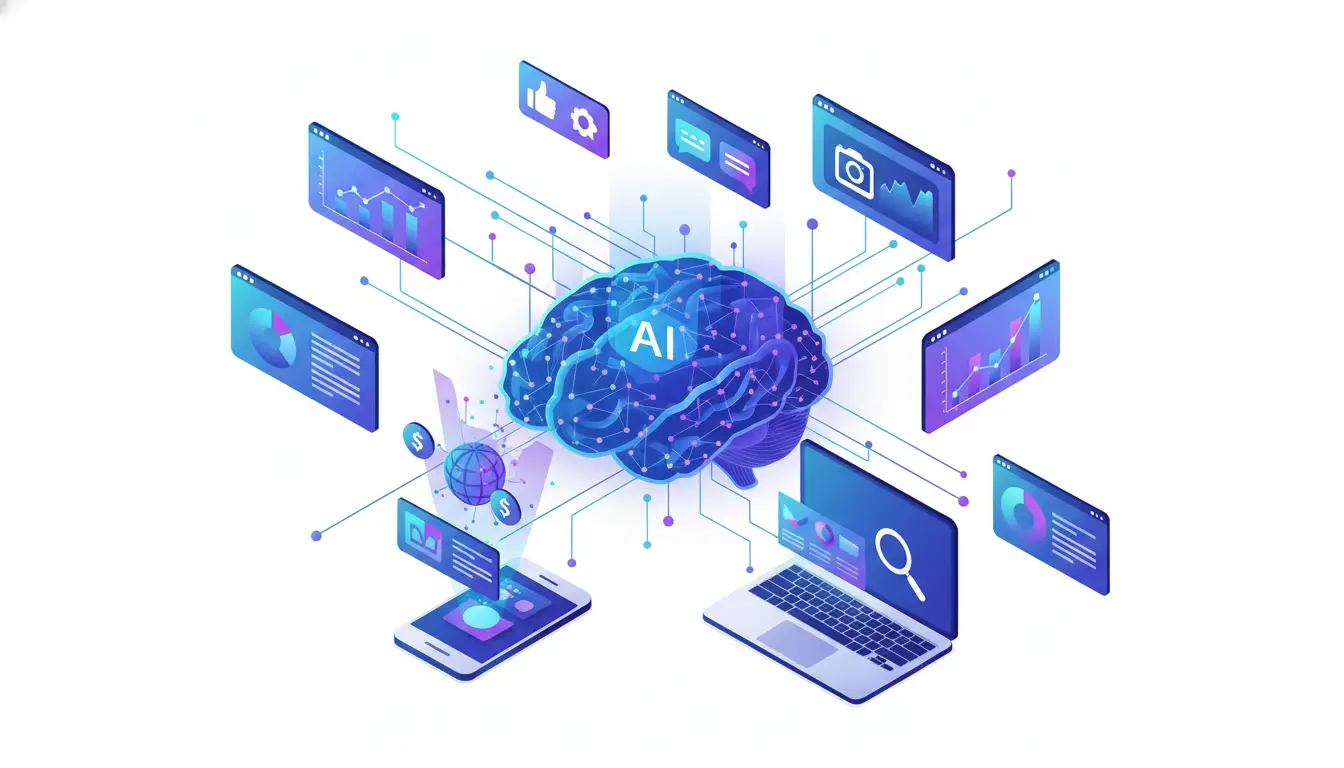
What makes Meta Andromeda different from older systems is the way it learns. Meta said its newer ad recommendation system is built around sequence learning. That means it looks at the order of user actions, not just static data points. Older systems depended more on human-made features and fixed logic, which could miss important behavior patterns.
In simple terms, older ad systems needed more manual structure from advertisers. Meta andromeda is built for a world where the platform does more of the heavy lifting. That matters because ad delivery is now moving toward faster, more automated decisions. Meta’s own reporting and Reuters’ coverage both show that the company is pushing deeper into AI-generated and AI-targeted ads by 2026.
Why advertisers need to adapt to this new paradigm
Advertisers need to adapt because the old playbook is getting weaker. If Meta’s system is doing more targeting, testing, and delivery work, brands cannot rely only on manual control anymore. They need better creative, better conversion signals, and clearer campaign goals. In June 2025, Reuters reported that Meta wanted to automate ad creation and targeting more fully by the end of 2026. That makes the direction very clear.
So the real shift is this: success with meta andromeda is less about forcing the platform to follow tiny manual rules, and more about giving the AI good inputs to work with. Advertisers who understand this early may have a better chance to improve results as Meta’s ad system keeps changing. That conclusion is an inference from Meta’s engineering updates and Reuters’ reporting on Meta’s AI ad plans.
Risks Advertisers Face When Transitioning to Meta Andromeda
Moving to meta andromeda can improve results, but it also brings new risks. Many advertisers are used to manual control. Now, the system relies more on AI signals. If the inputs are weak, the results can drop. This is why some teams see unstable performance at the start. The transition is not just technical. It also changes what you think about ads.
What happens if ad creatives fail to meet Andromeda standards
With meta andromeda, creative quality matters more than before. The system tests many signals, but it still depends on what you give it. If your ad images or videos are weak, the AI has less to work with.
For example, a brand may upload only one static image with a weak message. In older systems, careful targeting could still help. But now, poor creatives often lead to low engagement and higher costs. The system may struggle to find the right audience because the signal is unclear. This can result in higher CPM and fewer conversions.
A better approach is to test multiple creatives. Use different hooks, formats, and angles. This gives the AI more options to learn from and improves delivery over time.
How to mitigate potential setbacks during transition
To reduce risks, advertisers should not change everything at once. A safer way is to test meta andromeda step by step. Keep some stable campaigns running while testing new AI-driven setups.
For example, you can start with one Advantage+ campaign and compare it with your current setup. Watch key metrics like cost per result and conversion rate. If performance improves, scale slowly instead of making sudden changes.
It also helps to focus on clean data. Make sure your tracking is accurate and your conversion events are clear. When the system receives better signals, it can learn faster and perform better.
Is Meta Andromeda Right for Your Business?
Not every business will benefit from meta andromeda in the same way. Some brands see fast growth, while others need time to adjust. The key is to check if your current setup matches how AI-driven ads work. This section helps you decide if this new system fits your goals, budget, and workflow.
How to evaluate if Andromeda fits your advertising goals
- Clear conversion goal You know what you want (sales, leads, installs). AI works best with clear goals.
- Enough data volume Your campaigns already get regular conversions. This helps meta andromeda learn faster.
- Stable traffic flow Your website or funnel has steady visitors. More traffic = better optimization.
- Strong creatives ready You can provide multiple ad creatives (images, videos, copy). AI needs options to test.
- Willingness to reduce manual control You are open to letting the system handle targeting and delivery.
- Focus on results, not setup You care more about cost per result and ROAS than small campaign tweaks.
- Testing mindset You are ready to test, learn, and adjust instead of expecting instant perfect results.
What budget considerations should you account for
Budget is also important when using meta andromeda. AI systems need enough data to learn. If your budget is too small, the system may not gather enough signals to optimize properly.
For example, if you only spend a few dollars per day, results may be unstable. But with a slightly higher daily budget, the system can test more audiences and creatives. This often leads to better and more stable outcomes over time.
You do not need a huge budget, but you do need enough to support testing. A steady budget is often better than frequent changes.
Comparing Andromeda with traditional advertising methods
Traditional advertising methods give you more control. You choose audiences, adjust bids, and manage details step by step. This can feel safer, especially for experienced advertisers.
Meta andromeda works differently. It reduces manual control and lets AI handle more decisions. This can save time and improve performance, but only if you trust the system and provide strong inputs.
Practical Steps to Implement Meta Andromeda Successfully
Using meta andromeda well takes more than turning on a new setting. Teams need to change how they build campaigns, review data, and judge success. In simple terms, the job shifts from “manual control” to “better inputs and smarter testing.”
How to prepare your team for the transition
First, help your team understand that AI will now do more of the delivery work. Meta’s newer ad systems are built around machine learning and sequence-based recommendations, not just fixed audience rules. So your media buyers, designers, and analysts need to work more closely together. The media buyer cannot carry the whole campaign alone anymore. Creative quality, clean data, and clear goals matter more in a meta andromeda setup.
It is also smart to fix measurement before scaling. Meta recommends pairing Pixel signals with the Conversions API because it creates a direct connection between marketing data and Meta’s optimization systems, and Meta says this can improve performance and measurement. If your team enters the meta andromeda phase with weak tracking, the AI may learn from incomplete signals. That can hurt results, even when the creatives look good.
Monitoring and adjusting strategies for better results
Once campaigns are live, do not judge them too fast. With meta andromeda, the system needs time and enough data to learn. Meta’s AI ad tools are designed to optimize in real time, but that does not mean advertisers should make daily hard resets. A better habit is to watch a small group of core numbers, such as cost per result, conversion rate, and return on ad spend, then make measured changes instead of constant edits. This is an inference based on how Meta describes Advantage+ optimization and automated sales campaigns.
Creative testing should stay at the center of your review process. Meta says Advantage+ creative can generate and enhance ad variations across image, video, and carousel formats to optimize performance and personalize delivery. That means when results dip, the first question should not always be “Should we rebuild targeting?” Sometimes the better fix is to test a new hook, a shorter video, or a clearer offer. In a meta andromeda environment, stronger creative options often give the system more room to improve performance.
Finally, keep your strategy flexible because Meta is moving toward even deeper AI automation. Reuters reported that Meta aims to let brands create and target ads with AI in a much more complete way by the end of 2026. So the teams that will do best are likely the ones that learn now: simplify structure, improve tracking, test more creative angles, and focus on business outcomes instead of small manual controls.
Common Mistakes to Avoid with Meta Andromeda
Meta andromeda can improve ad delivery, but it is easy to use it the wrong way. Many advertisers think more automation means less work and fewer decisions. That is not true. Meta says Andromeda helps its system retrieve better ad matches faster, but results still depend on strong creative, clean data, and careful review. In other words, AI can do more heavy lifting, but advertisers still need to guide it well.
Why over-reliance on automation can be detrimental
A common mistake is trusting automation too much and checking too little. Meta’s broader ad push is moving toward more AI-generated and AI-targeted campaigns, but Reuters reported that advertisers still have concerns about brand image, content quality, and oversight. That matters because automation can scale both good inputs and bad inputs. If your offer is weak or your message is unclear, AI may spend money faster without fixing the real problem.
How to ensure ad creatives align with Andromeda standards
Another mistake is giving the system too few creative options. Meta says Advantage+ Creative can automatically create multiple ad variations from a single image, video, carousel, catalog, or existing post. That means the system is built to test and adapt, but it still needs good source material. If your visuals are low quality, your message is vague, or your hook is weak, AI has less to optimize.
A better approach is to prepare several clear versions of the same message. For example, a fitness brand can test one ad about price, one about fast results, and one about community support. This gives meta andromeda more signals to learn from. The goal is not to flood the account with random ads. The goal is to give the system strong, distinct creative angles that match real buyer intent. That guidance follows from Meta’s own explanation that these tools generate and test multiple creative variations.
Avoiding pitfalls in data interpretation and usage
A third mistake is reading weak or incomplete data as if it were a clear answer. Meta’s Conversions API best practices say advertisers should improve event coverage and send accurate signals for better reporting and performance. Meta also recommends strong event coverage between Conversions API and Pixel data. If the tracking setup is messy, advertisers may blame meta andromeda when the real problem is missing or poor-quality data.
This is why teams should not react to one bad day too quickly. A better habit is to look at trends across several days, compare creative versions, and confirm tracking quality before making big changes.
Real-World Scenarios: Success Stories with Meta Andromeda
Public case studies that name meta andromeda are still limited. But Meta has shared strong results from the AI-first ad system around it, especially through Advantage+ and generative AI tools. That gives advertisers a useful early picture of what this new model can do in real campaigns.
How businesses have boosted ROI using Andromeda
Meta has said its AI-driven targeting features helped advertisers see a 22% average lift in ROAS, and its generative AI image tools led to a 7% increase in conversions. Meta also said Andromeda itself improved ad retrieval recall by 6% and raised ad quality by 8% in tested segments. Put simply, the system is getting better at finding the right ad for the right person, which can improve returns when advertisers give it strong creative and clear signals.
A practical example is an ecommerce brand using a broader campaign setup with several creative angles instead of many small audience splits. In this kind of setup, AI can test faster and route spend toward the best-performing ad. That is one reason Meta has kept pushing advertisers toward more automated campaign types. This is partly an inference from Meta’s published engineering notes and its business guidance on AI-led ad delivery.
Lessons learned from early adopters
The biggest lesson from early adopters is simple: automation works best when the inputs are strong. Teams that do well usually simplify account structure, improve tracking, and test more creative versions instead of over-managing audiences. Reuters also reported that Meta is moving toward much deeper AI automation in ad creation and targeting by the end of 2026, so this shift is not temporary.
Another lesson is that meta andromeda is not magic. If the offer is weak, the data is messy, or the creative is boring, AI can scale bad performance too. Early success seems to come from a balanced approach: trust automation more, but keep checking creative quality, conversion signals, and real business results.
DICloak: Enhancing Ad Personalization with Meta Andromeda
As meta andromeda pushes Meta Ads toward more AI-led delivery, advertisers need cleaner testing and more stable account management. So if you want better results, you need strong creativity, clear signals, and consistent campaign operations.
How DICloak improves targeting accuracy
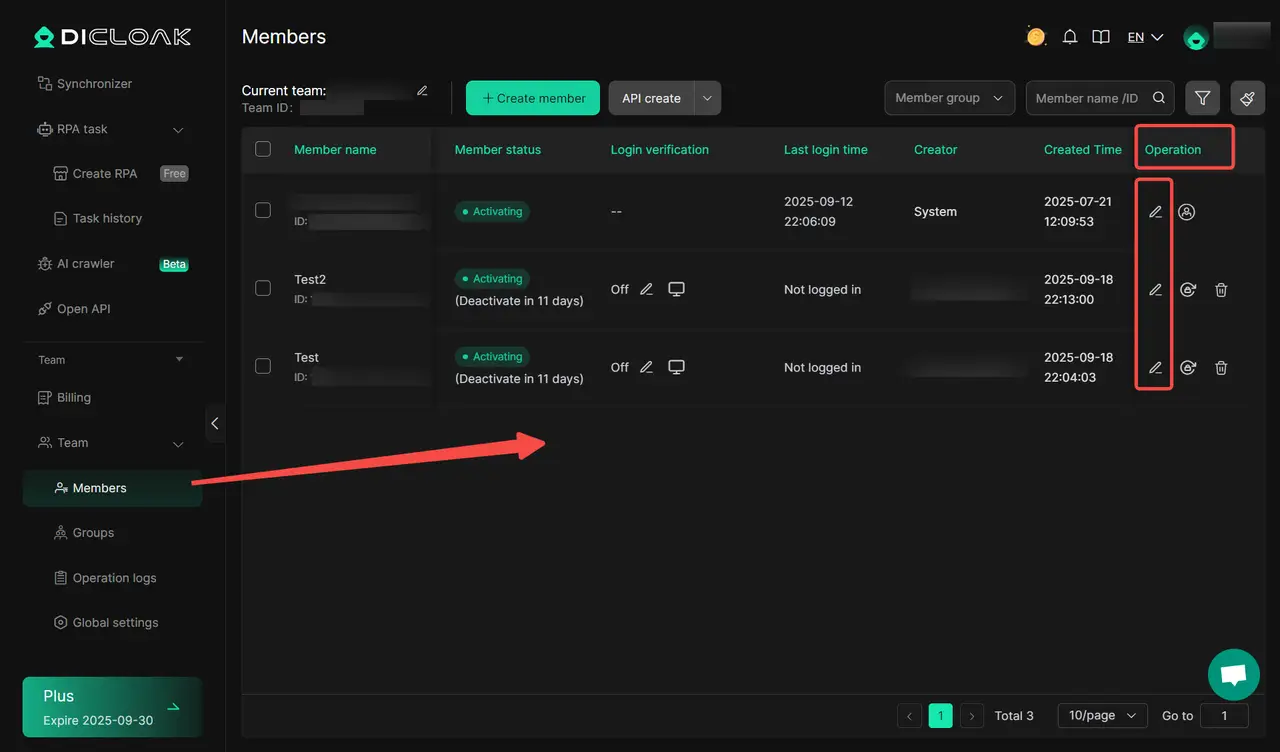
Advertisers can use DICloak to keep different ad accounts, pages, and campaign tasks separate. This does not change Meta’s targeting engine directly. But it helps teams create a cleaner setup, which makes testing more reliable and performance reviews easier to trust.
For example, when one team manages several brands in the same browser, cookies, sessions, and login states can easily get mixed. That can make campaign work messy. With DICloak, media buyers can keep each project in its own browser profile, so each account stays in a more controlled profile.
Teams can use features like:
- Isolated browser profiles to separate brands, pages, and ad accounts
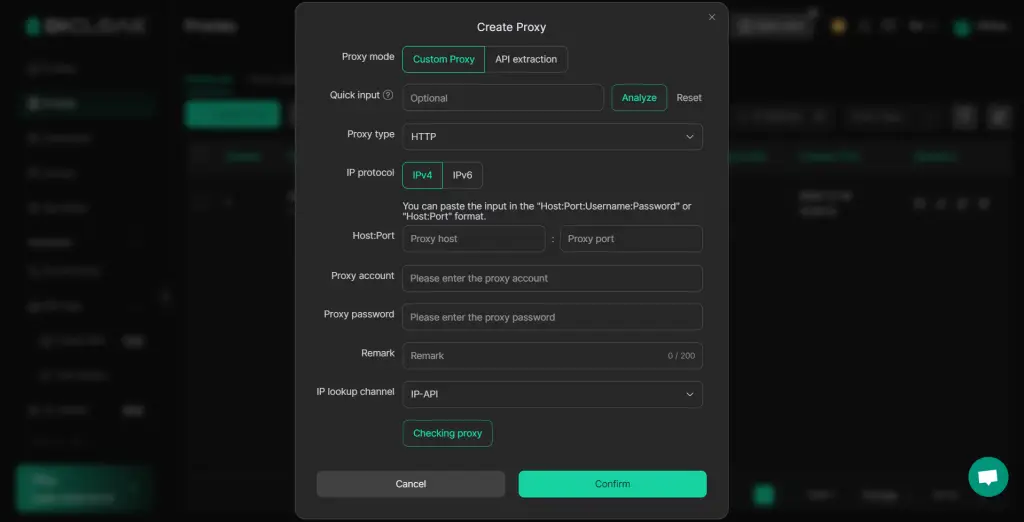
- Custom proxy configuration to support different campaign profiles
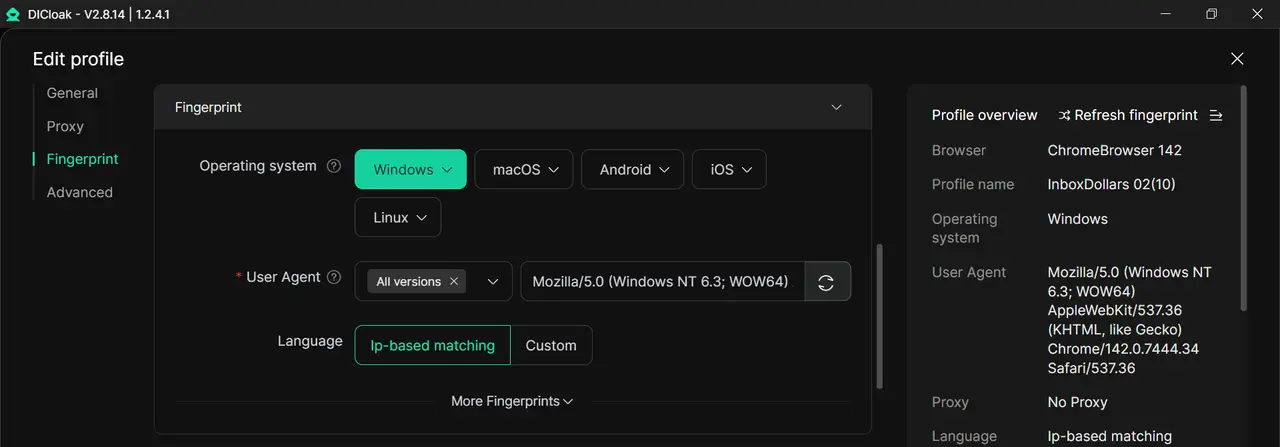
- Fingerprint customization to keep profiles more independent
Tools to leverage DICloak for better engagement
Teams can use DICloak to make daily ad work more organized and more efficient. When several people handle multiple pages, offers, or regional campaigns, a clear setup can save time and reduce mistakes.
Marketers can use tools like:
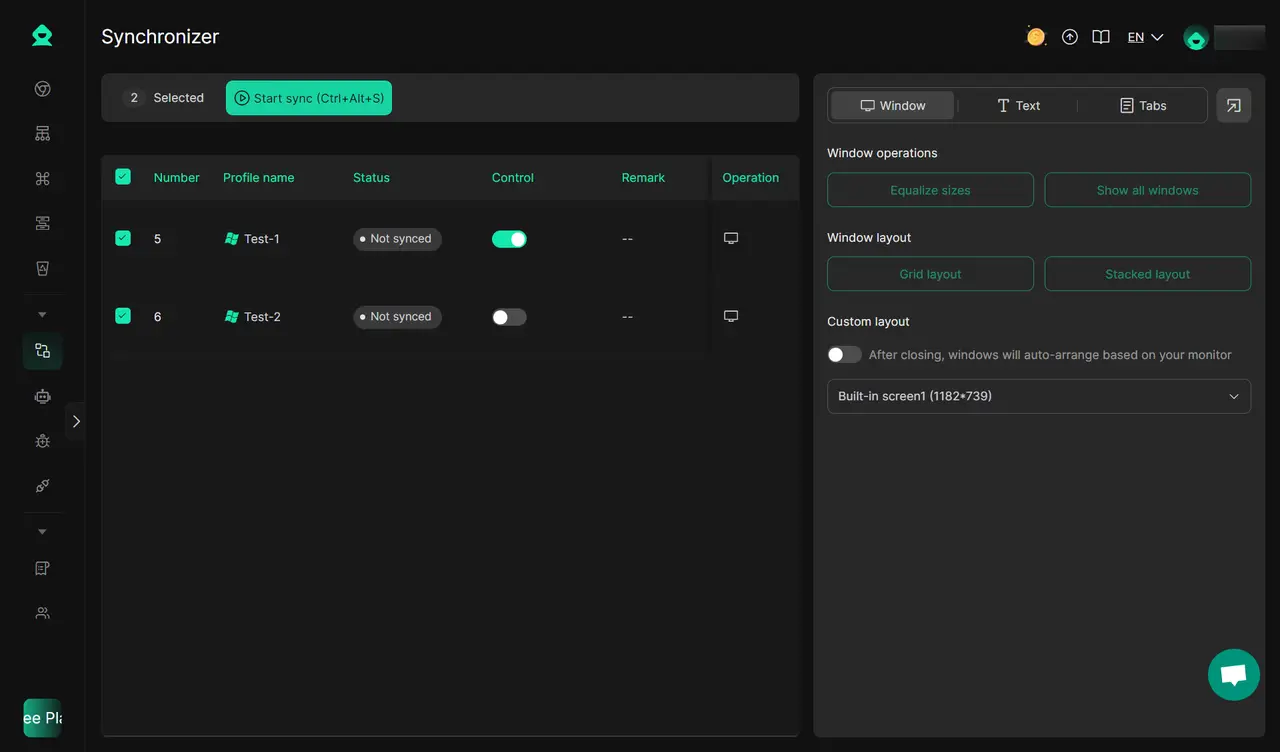
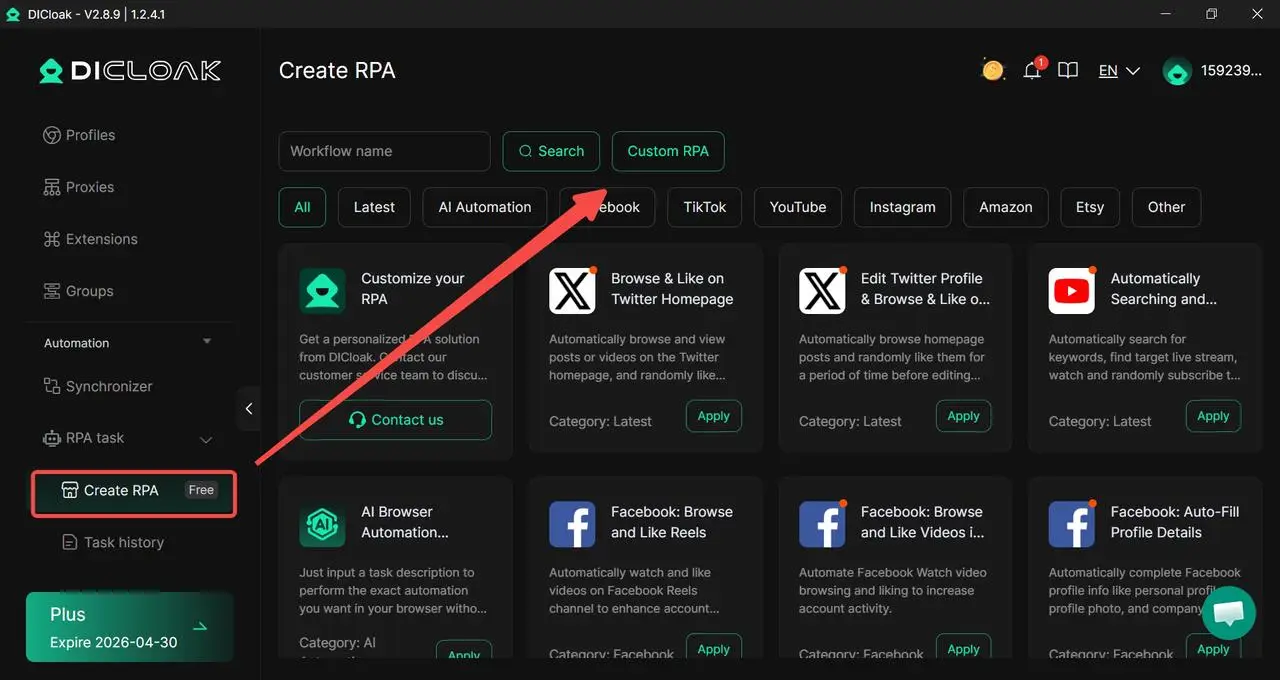
- Multi-Window Synchronizer to repeat actions across profiles faster
- RPA to handle routine tasks more efficiently
FAQs
Can Meta Andromeda work for small businesses?
Yes, meta andromeda can work for small businesses, but it works best when the business has clear goals and enough data for Meta’s AI to learn from. Still, small businesses usually need strong creativity, steady tracking, and patience during testing.
How does Andromeda handle privacy concerns?
Meta Andromeda does not remove privacy concerns, but it works inside Meta’s larger ad system, which depends on data signals that advertisers send through tools like Pixel and Conversions API. In simple terms, businesses still need to follow privacy laws, use consent-based tracking where needed, and avoid sending unnecessary personal data.
What are the initial setup costs for Meta Andromeda?
There is no separate public price for meta andromeda itself. For most advertisers, the first costs are not a software fee. They are the costs of better setup, such as creative production, tracking fixes, and campaign testing. If a business wants stronger measurement, it may also spend time or money on tools and developer work related to Conversions API or API-based ad management.
Does Andromeda require constant monitoring?
No, it is meant to reduce some manual work, not create more of it. Meta describes Andromeda as a retrieval engine built to improve ad matching and efficiency, and Meta’s Advantage+ tools are designed for less setup time. But advertisers still need regular reviews. They should watch results, refresh weak creatives, and check tracking quality instead of leaving everything on autopilot.
How does Andromeda integrate with existing ad platforms?
Meta Andromeda works inside Meta’s own ad ecosystem, so businesses usually access its effects through Meta Ads Manager, Advantage+ campaign products, and the Marketing API.
Conclusion
Meta andromeda is changing how advertisers build, test, and optimize campaigns on Meta’s platforms. It can improve ad delivery and performance, but it works best when businesses use strong creatives, accurate tracking, and a clear strategy. For advertisers who are ready to adapt, learn, and test carefully, Meta Andromeda can become an important part of a smarter ad strategy in 2026.
 Web Proxy Tools
 Free Tools
 Cookie Plugin
 UA Generator
 MAC Address Generator
 IP Generator
 IP Address List
 2FA Code Generator
 World Clock
 Anonymous Check
 WebRTC Leak Test
 UUID Generator
 Free Web Proxy Site
 Proxy Checker
 FB Ad Checker
 AI Web Scraping
 Free SMM Tools
 Twitter Shadowban Checker
 Instagram Name Checker
 UTM Generator
 Username Generator
 AI Hashtag Generator
 LinkedIn Headline Generator
 Social Media Image Resizer