Many users ask the same question when Facebook Marketplace suddenly stops working: why can't i use facebook marketplace anymore? Sometimes the problem shows up as blocked access. Sometimes listings disappear, messages stop working, or Marketplace features are limited without a clear explanation. This is why why can't i use facebook marketplace has become a common search query for sellers, buyers, and account managers trying to understand what went wrong.
This guide explains why can't i use facebook marketplace from a more practical and technical angle. It looks at the most common causes behind Marketplace restrictions, how Meta may evaluate account behavior, why some bans or limits last longer than others, and what users can do to improve account stability over time. It also explains why a cleaner browser profile and better account protection strategies matter if you want to reduce the chance of future Marketplace problems.
The Marketplace Access Crisis: Identifying why can't i use facebook marketplace
Sudden loss of access to Facebook Marketplace often feels arbitrary, yet from the perspective of a cybersecurity analyst, these disruptions are rarely "for no reason." Meta employs an aggressive, automated risk-scoring infrastructure designed to safeguard the platform's ecosystem. When users encounter the frustration of "why can't i use facebook marketplace," they are typically facing the results of Meta’s heuristic analysis—a system that flags unrecognized behavioral patterns or technical footprints as high-risk. These automated systems are calibrated to preemptively neutralize accounts that exhibit the hallmarks of malicious entities, even when the user is a legitimate operator.
Heuristic Analysis: Understanding why can't i use facebook marketplace and Common Detection Triggers
Meta’s moderation engine is primarily focused on identifying "Inauthentic Behavior." This mechanism targets digital identities that lack sufficient "human activity" signals. For instance, creating an account strictly for business management without any secondary social interactions—such as browsing, liking, or organic group participation—triggers a "bot-like" classification.
Specific triggers for Marketplace restrictions include: * Pattern Matching Against Malicious Heuristics: Frequent payment declines, discrepancies between the account profile and the billing entity, or abrupt spikes in activity volume. * Activity Velocity: Exceeding a threshold of 50 friend or group requests within a 24-hour period is a high-probability indicator of automated spam. * Associated High-Risk Entities: Maintaining connections with low-reputation nodes, such as accounts with fake names or groups previously flagged for community standard violations. * Network Inconsistency: Frequent switches in network location or the use of low-quality proxy infrastructure.
Pro-Tip: Authenticity is the primary metric for long-term account health. Avoid the use of temporary "burner" email addresses or mismatched billing names, as Meta's AI tracks the longitudinal history of your digital identity; inconsistencies here often lead to immediate, non-negotiable suspensions.
How Browser Fingerprinting and Metadata Leakage Explain “Why Can’t I Use Facebook Marketplace?
Facebook tracks users through sophisticated Browser Fingerprinting, a method that far exceeds the capabilities of simple IP monitoring. This technique involves measuring "browser entropy"—the unique combination of attributes that differentiate your session from millions of others.
The platform extracts a massive array of data points, including:
- Canvas Fingerprinting: Identifying how your browser renders specific graphics to pinpoint hardware/driver combinations.
- WebRTC Leaks: Bypassing proxy layers to discover the user's true local IP address.
- System Metadata: Screen resolution, installed font libraries, browser extensions, and hardware concurrency.
Meta utilizes these data points to link multiple accounts to a unique hardware profile. If a single account within a fingerprint cluster is flagged, the system often executes a "cascade ban," where all associated accounts are subjected to "multiple account violations" and restricted simultaneously.
How Restriction Length Depends on Violation Severity and Account History About Facebook Marketplace?
The duration of a restriction is dictated by the severity of the violation and the user's history within Meta’s "Progressive Strike System."
- Minor Infractions: Typically result in temporary feature blocks lasting 24–48 hours.
- Serious Temporary Bans: Restrictions spanning 3 to 30 days.
- Permanent Bans: Indefinite loss of access. Unless a successful appeal is filed, all account data is purged after a 180-day window.
The Strike System Hierarchy:
- Initial Warning: No immediate restriction, but the account is placed under heightened surveillance.
- 2–6 Strikes: Triggers temporary feature restrictions (e.g., inability to list on Marketplace).
- 8+ Strikes: Full account suspension.
Critical Note on Severe Violations: Under Meta’s updated 2025 protocols, violations involving the promotion of dangerous individuals, organizations, or non-medical drugs result in an immediate permanent ban. These "Severe Violations" bypass the progressive system and offer zero path for appeal.
How to Resolve why can't i use facebook marketplace Issues?
For standard restrictions, a structured technical appeal is necessary to navigate the automated filters.
- Account Quality Review: Access the "Account Quality" dashboard. Under the "What you can do" section, initiate a "Request Review." Decisions are generally rendered via email within a 48-hour window.
- The Privacy Policy Support Queue: If standard appeals are met with automated rejections, users can exploit a different ticketing queue that is less heavily automated. Navigate to Privacy Policy Questions → "How do I contact Meta with questions regarding the Privacy Policy?" → "What should I do if I have other questions?" → "I still have a question." This path often reaches a human reviewer more effectively than standard channels.
- Compromised Account Vector: If the restriction was caused by an external breach, use the dedicated recovery infrastructure at
facebook.com/hacked.
Pro-Tip: Documentation is essential. When appealing, provide high-resolution screenshots and be prepared to submit government-issued identification. Explicitly describe your operational innocence to provide the human reviewer with the necessary context to override the AI.
Technical Limitations of Conventional Workarounds
Common "quick fixes" often fail because they do not address high-level digital identity tracking.
- Network Isolation (Proxy Only): While a high-quality proxy obscures the IP address, it does nothing to mask browser entropy. Meta still identifies the session via hardware-level attributes.
- The "100-Phone" Strategy: Purchasing dozens of physical devices is an effective but inefficient method. While 100 used phones might cost $5,000 (roughly 18 years of professional software costs), the strategy often fails when users connect all devices to the same office Wi-Fi. Meta detects the single high-risk network IP, linking all 100 devices to one "high-risk" entity.
- Incognito and Cookie Clearing: These methods only clear local storage. They are useless against server-side fingerprinting and hardware-level metadata leakage.
Mitigating Risk with Infrastructure Isolation to Resolve why can't i use facebook marketplace Challenges
To scale Marketplace operations, professionals transition from simple browsing to Digital Identity Isolation. This involves using multi-accounting browsers to create distinct, encapsulated environments for each account.
By generating unique digital fingerprints and isolated browser sessions, this infrastructure ensures that "Profile A" and "Profile B" appear to Meta as entirely separate users on different hardware. This prevents the "Account Linking" that leads to mass bans; if one account is flagged due to a listing error, the rest of the infrastructure remains shielded from the fallout.
How DICloak Helps Create a More Stable Marketplace Environment
After reading the reasons behind the “why can't i use facebook marketplace” problem, one point becomes clear: this issue is often not caused by one simple mistake. In many cases, it is linked to account trust, browser fingerprinting, metadata leakage, unstable sessions, and cross-account confusion. That is why DICloak fits naturally into this discussion. Instead of acting like a quick fix, it works better as a browser infrastructure tool for users or teams that need a cleaner and more controlled Facebook account environment.
DICloak is relevant here because it offers several functions that match the main problems discussed in this article:
- Independent browser profiles for each account DICloak can create a separate browser profile for each Facebook account. This helps keep cookies, local storage, session data, and browser settings from mixing together. For users facing the “why can't i use facebook marketplace” issue, this matters because account overlap is one of the easiest ways to create unstable signals.
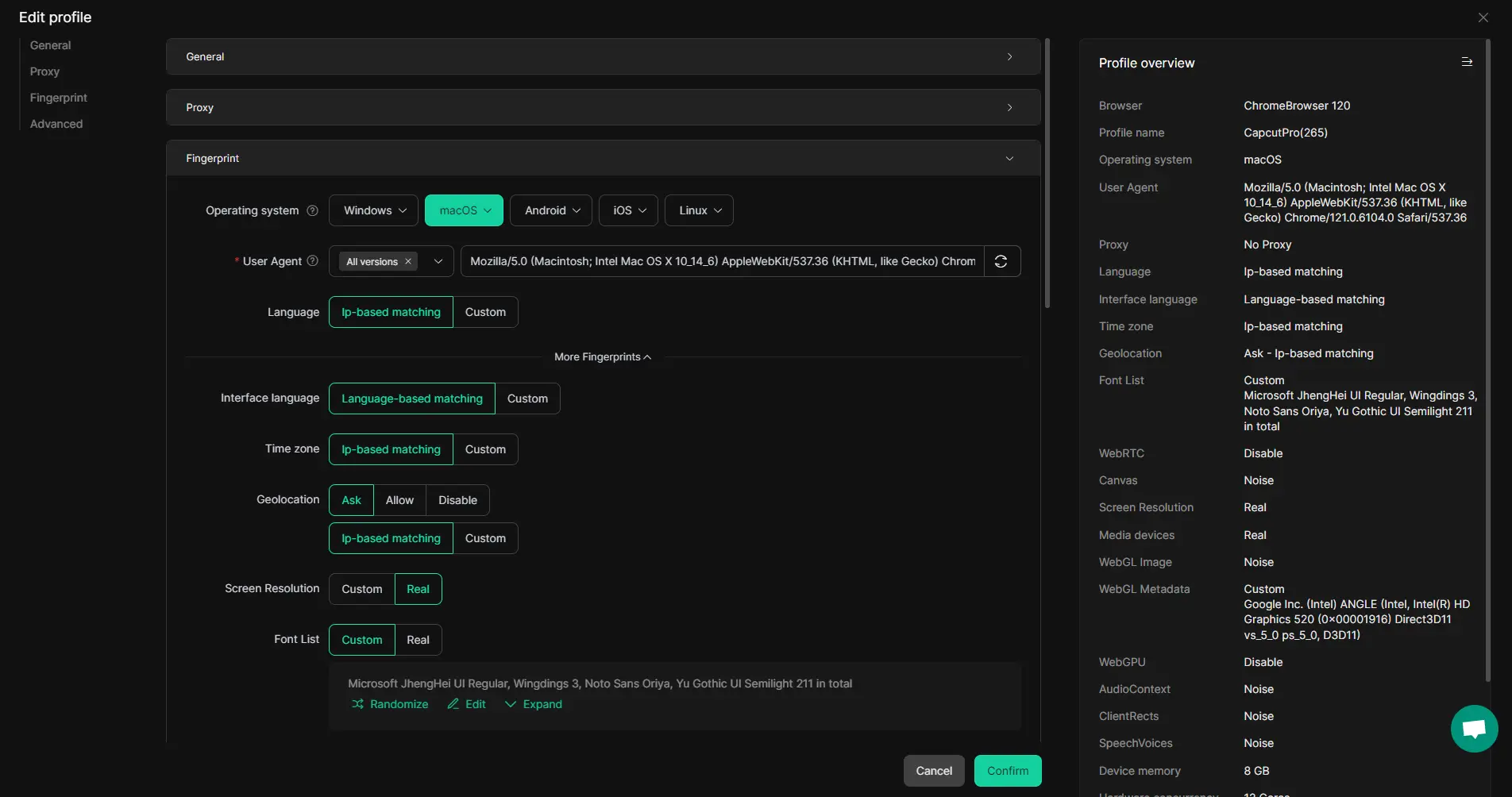
- Custom fingerprint and proxy setup DICloak supports profile-level fingerprint settings and proxy integration. This makes it easier to manage each account inside its own controlled setup instead of forcing multiple accounts through one shared browser profile. That kind of separation is more useful than surface-level fixes like clearing cookies or opening incognito mode.
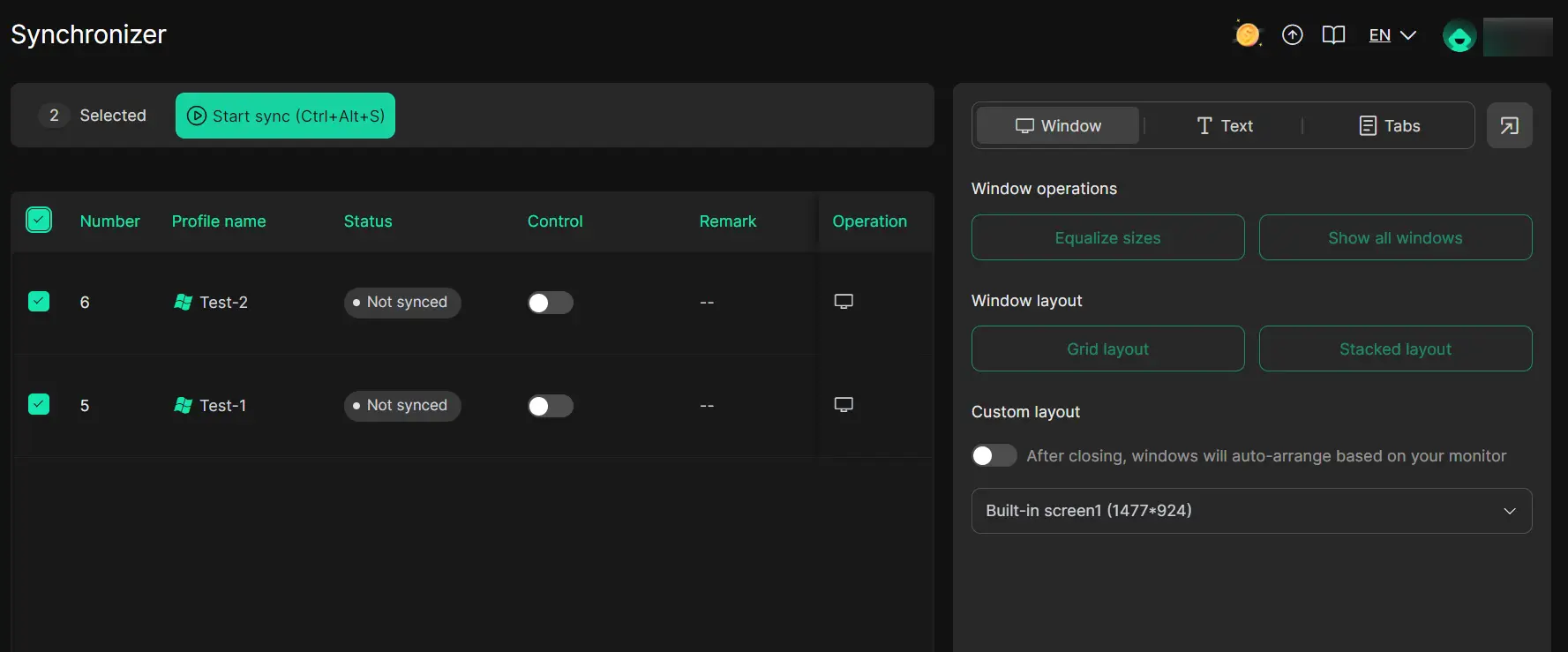
- Multi-Window Synchronizer for repetitive workflow tasks DICloak’s Multi-Window Synchronizer can mirror clicks and typing across multiple profiles. This can save time when users need to handle repeated profile-management work across several accounts. In a Marketplace-related workflow, this is more useful as an efficiency tool than as a direct solution to a restriction.
- AI Crawler for research and information collection DICloak also offers an AI Crawler for no-code data collection. This is not a direct fix for Marketplace access, but it can still support broader Facebook-related workflows where users need to gather structured information more efficiently.
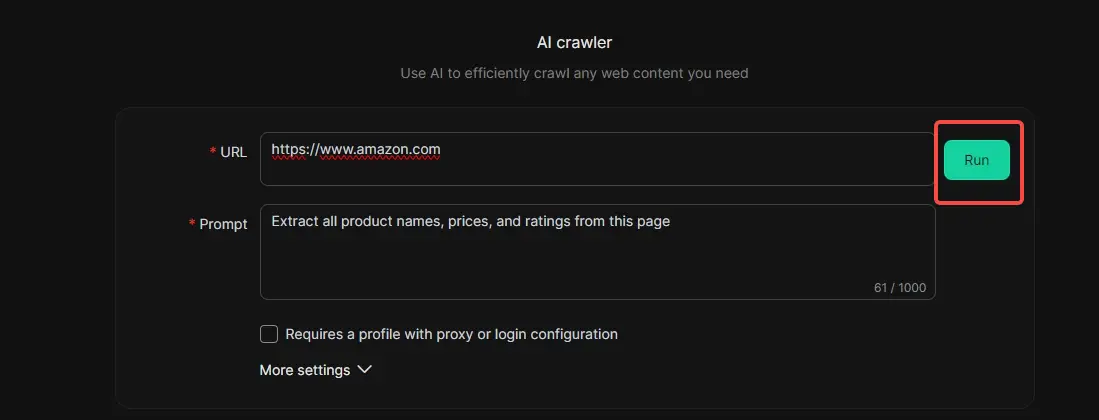
DICloak is best positioned here not as a shortcut, but as a long-term account management tool. For users trying to solve the “why can't i use facebook marketplace” problem, a more stable browser profile, better profile isolation, and cleaner session handling can be much more useful than relying on temporary fixes alone.
Comparative Analysis: Standard Browsing vs. DICloak Infrastructure
| Feature |
Standard Method (Risk-Prone) |
DICloak (Risk-Mitigated) |
| IP Address |
Datacenter or Blacklisted Proxy Pool |
Unique Residential Proxy per profile |
| Device Fingerprint |
Identical across all accounts |
Unique per isolated browser session |
| Cookie Isolation |
Manual/Ineffective clearing |
Native isolation per cloud profile |
| Success Rate |
Low (High risk of linking/bans) |
High (Prevents digital identity linkage) |
FAQ: Navigating why can't i use facebook marketplace Challenges
Q1:Why did all my accounts get banned together?
Meta’s AI links accounts through "digital fingerprinting"—a combination of your IP address, browser entropy (fonts, extensions, resolution), and billing metadata. When one account is flagged, the system initiates a recursive check of all accounts sharing that fingerprint, resulting in a mass "multiple account violation" ban.
Q2:Can I create a new account after a permanent ban?
It is technically possible but carries extreme risk. Meta tracks device IDs, phone numbers, and even behavioral signals. Creating a new account on the same device or network usually results in a ban within hours as the system links it to the previous high-risk entity.
Q3:Why is my account flagged for "No Human Activity"?
If an account is used exclusively for Marketplace or Ad management without organic social interactions, Meta’s heuristic analysis classifies it as an automated bot designed for spam.
Q4:How do I reach a human for an appeal?
Standard "Request Review" buttons are often automated. Using the "Privacy Policy questions" path or the facebook.com/hacked vector can sometimes bypass the initial AI gatekeepers to reach a human support agent.
Final Technical Summary
Resolving the "why can't i use facebook marketplace" crisis requires moving beyond basic troubleshooting. While Meta's AI-driven moderation is increasingly aggressive, it can be managed through professional infrastructure. By utilizing digital identity isolation and tools like DICloak to manage browser entropy and network isolation, users can effectively separate their business assets and ensure long-term operational continuity.
 Web Proxy Tools
 Free Tools
 Cookie Plugin
 UA Generator
 MAC Address Generator
 IP Generator
 IP Address List
 2FA Code Generator
 World Clock
 Anonymous Check
 WebRTC Leak Test
 UUID Generator
 Free Web Proxy Site
 Proxy Checker
 FB Ad Checker
 AI Web Scraping
 Free SMM Tools
 Twitter Shadowban Checker
 Instagram Name Checker
 UTM Generator
 Username Generator
 AI Hashtag Generator
 LinkedIn Headline Generator
 Social Media Image Resizer