In the world of social media, gaining likes and engagement on your Facebook posts is key to growing your audience. You might have heard of tools like the Facebook Auto Liker, promising quick results. But while these tools seem tempting, they come with hidden risks that could harm your account and brand reputation. In this article, we’ll explore what Facebook Auto Liker tools are, the dangers they pose, and why genuine, organic engagement is the best path to building trust and lasting relationships with your audience. Stay with us to discover safer, more effective strategies to boost your Facebook presence the right way.
What is a Facebook Auto Liker?
Many Facebook users are looking for ways to increase engagement on their posts. One method that has gained attention is the Facebook Auto Liker. These tools promise to automatically boost the number of likes on your posts, making them appear more popular without much effort. But what exactly is a Facebook Auto Liker, and how does it work? Let's dive into the details.
Definition and Functionality
A Facebook Auto Liker is a tool or service designed to automatically give likes to your Facebook posts, photos, or comments. These services often advertise that they can boost engagement by adding likes to your content without requiring you to manually interact with each post. Users typically seek these tools to make their posts appear more popular or to quickly increase their social proof on the platform.
The idea behind an Facebook Auto Liker is simple: more likes make a post look more popular, which, in turn, may encourage more organic engagement from other users. However, the likes generated by these tools often come from automated accounts or bots, not real interactions. This can lead to a misleading representation of a post's popularity.
For example, someone using an Facebook Auto Liker might see their photo go from 10 likes to 100 in a short time, without any real interaction from friends or followers. This could create the illusion of high popularity, which might appeal to those looking to gain followers or attention quickly.
How Facebook Auto Likers Work
Now that we know what a Facebook Auto Liker is, let's explore how these tools actually operate. The process is typically straightforward, which is why many users are drawn to them.
- Log in and Grant Permissions: The first step usually involves logging into your Facebook account through the Facebook Auto Liker’s website or app. You grant the tool permission to access your Facebook account, allowing it to interact on your behalf.
- Automated Likes: Once your account is linked, the Facebook Auto Liker service uses automated bots or fake accounts to like your posts. These bots are often designed to mimic real user behavior, but they aren't actual people. In some cases, the service may operate a network of fake accounts that like each other's posts in a mutual exchange.
- Mutual Like-for-Like Networks: Some Facebook Auto Liker tools work on a "like-for-like" basis. This means that in order to get likes on your posts, you must also engage with others by liking their content. It's a system where users contribute likes to each other's posts in a shared network.
For instance, if ten people use the same Facebook Auto Liker service, the tool may automatically like posts from the other nine members. The result is a network of likes that makes it seem like real users are engaging with the content, even though the engagement is manufactured by automated processes. This "fake" engagement can be misleading, making a post seem far more popular than it truly is.
By using these tools, users don’t have to manually like each post or comment themselves. The service takes care of the liking process for them, even adding likes to older posts or comments.
The Risks of Using Facebook Auto Liker
Thinking about using a Facebook Auto Liker might seem tempting. But many experts and even Facebook itself warn against it. In fact, Facebook bans auto‑liker websites.
Using such tools brings serious dangers. Below are three big risk areas you should know before you try.
Account Safety Concerns
When using a Facebook Auto Liker, the main concern is the safety of your Facebook account. These tools often require you to grant access to your Facebook profile, which can open up doors to various security issues. Here are some of the most common safety risks you should be aware of.
Risk of Account Hacking
When you use a Facebook Auto Liker, you usually give the service access to your Facebook account. Some tools ask for your login or access token.
This lets the tool act on your behalf. But if the tool is malicious, hackers may steal your credentials. One known example is “FaceBook Autoliker 2019,” which security researchers describe as a scam. It pretends to give likes, but instead it steals passwords and installs malware.
Once that happens, your account — and other personal info — can be lost to attackers.
Potential for Suspension or Banning
Thanks to automated systems and rules, Facebook Auto Liker usage is often detected. If Facebook notices suspicious activity — like many likes from bots or fake accounts — it may suspend or ban your account. Many users who tried auto‑liker tools end up losing access to their profiles. For a business or a page trying to build a real audience, such a ban can be especially harmful.
Verification Issues and Additional Steps
Sometimes using these tools triggers extra verification by Facebook. The platform may force you to confirm your identity, enter codes, or do other checks.
This causes annoyance and might lock you out temporarily. For some users, especially those who value privacy or convenience, this is a serious downside.
Malware and Security Risks
Beyond account issues, using a Facebook Auto Liker can expose you to malware. Tools like “FaceBook Autoliker 2019” have been flagged as trojans, spyware, or banking‑malware.
There are also reports of fake apps and phishing scams that imitate Facebook or use its name to trick users. For example, some schemes send fake “account suspension warnings” to lure people into installing malware.
Once your device is infected, malware can steal passwords, private data, banking info — or turn your account into a spam or scam machine.
Impact on User Trust and Brand Reputation
Even if the tool does give some “likes,” those likes come from bots or fake accounts, not real people. That means little real engagement, no real comments, no real interest. Over time, this can hurt how others view your profile or page. People might see it as fake or untrustworthy.
For example, businesses that used auto‑liker tools sometimes found their page reach drop. Real followers ignored their posts, because the followers were fake or disengaged.
In worst-case scenarios, compromised accounts were used to spread spam or malware — which shattered user trust and damage brand reputation.
Best Practices for Engagement Without Facebook Auto Liker
Using a Facebook Auto Liker may sound easy. But there are safer, smarter ways to grow likes and followers. These methods build real trust. They also follow rules. In this section, we show practices that work well — and why you should avoid auto‑liker tools entirely.
Why You Should Avoid Facebook Auto Liker
Facebook auto‑liker tools may give you many likes fast, but those likes are often from fake or bot accounts. They do not bring real people or real interest. Because of that, your audience stays small and weak. Using a Facebook Auto Liker can also trigger risks we discussed earlier, such as accounts problems, malware, and loss of trust.
Plus, real engagement matters more. According to recent information about how the Facebook algorithm works, authentic interactions — comments, shares, reactions — earn more visibility than shallow likes from suspicious accounts. Real followers who enjoy your content may comment or share, they may come back, and they may tell others. That builds a real community. Fake likes from a Facebook Auto Liker do none of that.
Because of this, it is much better to skip Facebook Auto Liker. Focus on real, honest work.
Alternative Strategies for Gaining Likes
Rather than using Facebook auto‑liker tools, here are tested ways to gain real engagement and followers.
Creating High‑Quality Content
Good content matters most. Posts with strong visuals — photos, short videos, infographics — get more attention.
For example, a small business page might post a short how‑to video, or a clear photo of a product in use. That feels real. People are more likely to like or share.
Also, vary your content types. Do not always post the same kind of stuff. Mix photos, videos, text, perhaps stories or polls. That keeps your page fresh and interesting.
Engaging with Your Audience
Engagement is not only what you post — it is also how you respond. When someone comments, reply. Ask questions to invite answers. Encourage real discussion. This helps build trust and community.
Also, you can use user‑generated content. For example, if a customer shares a photo using your product, repost it (with their permission). That builds authenticity and encourages others to join in.
Utilizing Facebook’s Built‑In Tools Effectively
The official Facebook tools can help more than auto‑likers. For example:
- Use scheduling to post regularly. Consistent posting helps keep your page active and visible.
- Post at times when your followers are active. Timing can matter — a good post at the wrong time might be missed.
- Try different content formats: videos often get higher reach and more engagement compared to plain text or links.
- Use groups, stories, or live video (if appropriate) to create deeper, more personal connections with your audience. These formats often get more real engagement.
For example, a small brand might run a weekly live Q&A or post a “behind‑the‑scenes” video. That kind of content feels real. It welcomes interaction. Over time, that builds a base of loyal followers — not bots or fake likes from a Facebook Auto Liker.
Conclusion
While Facebook Auto Likers offer quick fixes, they come with serious risks, including account bans, poor engagement quality, and security concerns. Fake likes from bots don’t build a loyal audience or foster trust. In contrast, organic engagement, achieved through high-quality content, genuine interaction, and using Facebook’s built-in tools, provides sustainable growth and a stronger brand presence.
Real engagement may take time, but it fosters long-term relationships, boosts trust, and ensures your brand stays aligned with platform rules. Focus on creating meaningful content, responding to followers, and building a real community to see better results and avoid the risks associated with Facebook Auto Liker tools.
Why choose DICloak Antidetect Browsers for your business?
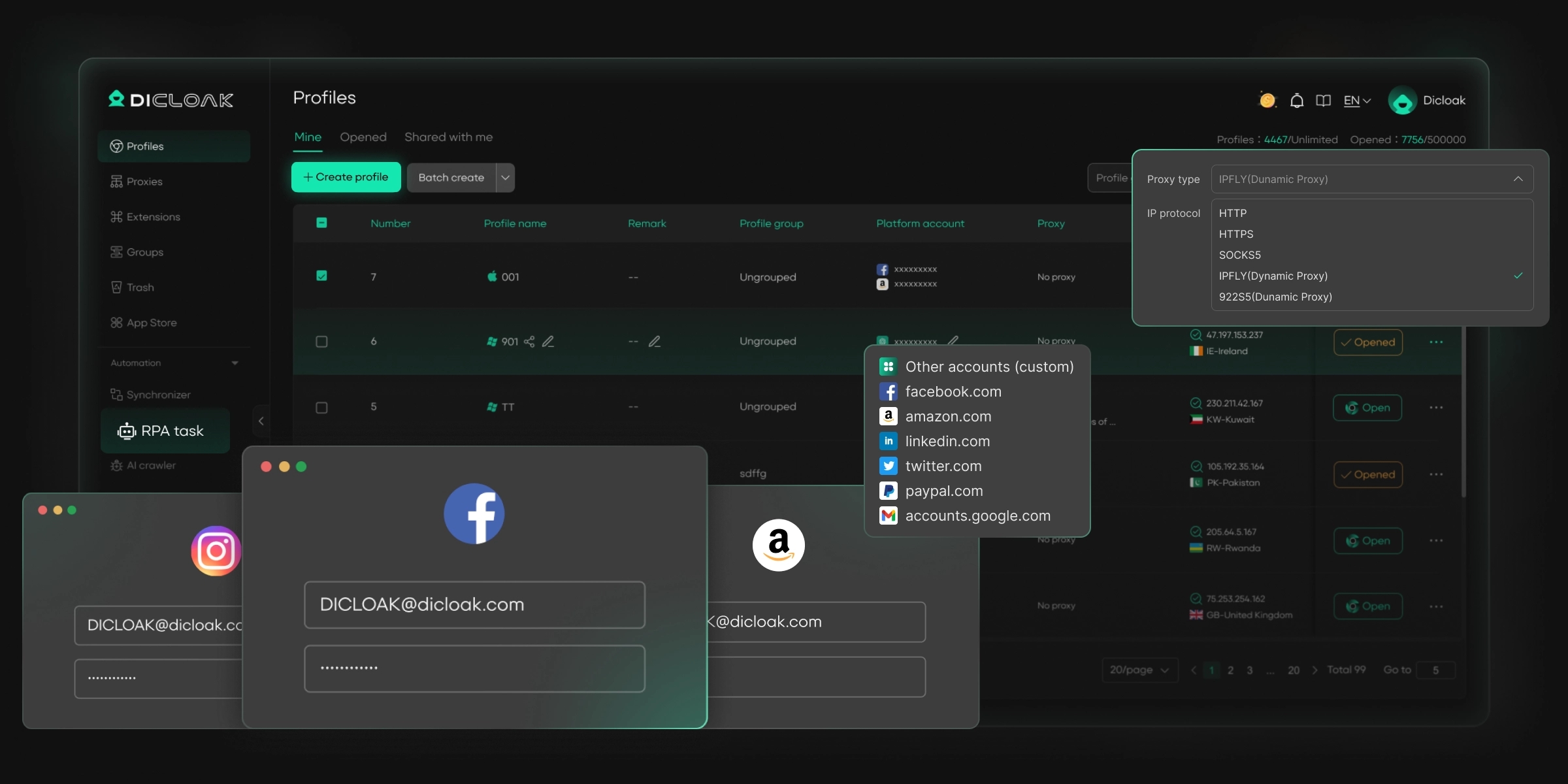
⚡The DICloak Antidetect Browser has become a global favorite for its unparalleled ability to efficiently and securely manage multiple accounts. Designed for professionals in social media management, affiliate marketing, traffic arbitrage, e-commerce, account farming, airdrops, and more, DICloak offers powerful features like RPA automation, bulk operations, and a window synchronizer. Additionally, it allows you to customize fingerprints and integrate proxies for each profile, ensuring top-level security and operational efficiency. It’s the ultimate tool for seamless, secure, and scalable operations.
What Makes DICloak Stand Out?
✅ Manage 1,000+ Accounts on One Device:
Stop wasting money on extra hardware! DICloak allows you to manage multiple accounts on a single device, cutting costs and boosting efficiency.
✅ Guaranteed Account Safety, No Ban Risks:
Every account gets its own isolated browser profile with custom fingerprints and IPs, drastically reducing the risk of bans. Your accounts, your control!
✅ Flexible Proxy Configuration for Maximum Performance:
Seamlessly integrate with all major proxy protocols (HTTP/HTTPS, SOCKS5) and manage your proxy pool with bulk operations. No more struggling with IP management—DICloak has you covered.
✅ Streamlined Team Collaboration for Better Results:
Easily manage your team with advanced tools like profile sharing, permission settings, data isolation, and operation logs. Your team works smarter, not harder.
✅ Automate the Grind with RPA:
DICloak's built-in RPA saves you hours of manual work. Automate repetitive tasks, streamline workflows, and focus on what really matters—growing your business.
✅ Powerful Bulk Tools to Scale Your Operations:
Create, import, and launch multiple browser profiles in one click. DICloak makes scaling your business as easy as it gets.
✅ Compatible with All Major Operating Systems:
Based on the Chrome core, DICloak supports simulating Windows, Mac, iOS, Android, and Linux operating systems. No matter what platform you need, DICloak has you covered.
🔗 Ready to Get Started?
Visit the DICloak website to explore more details and choose the plan that’s right for you. Start for free today and experience the power of secure, efficient, and scalable multi-account management!
FAQ
What is a Facebook Auto Liker and how does it work?
A Facebook Auto Liker is a tool that automates the process of liking Facebook posts, photos, or comments. It uses bots or fake accounts to generate likes on your posts, giving the illusion of more popularity. However, these likes do not come from real user engagement, and they can violate Facebook's terms of service.
Is using a Facebook Auto Liker safe for my account?
Using a Facebook Auto Liker can be risky. These tools often ask for access to your Facebook account, making it easier for hackers to steal your login details. Additionally, Facebook may suspend or ban accounts that use automated services to boost engagement, leading to loss of access and credibility.
What are the risks of using a Facebook Auto Liker?
The main risks of using a Facebook Auto Liker include account hacking, suspension or banning by Facebook, malware infections, and damaging your brand's reputation. Fake likes can also lower user trust and hurt long-term engagement. These tools often fail to provide meaningful interactions with real users.
How can I increase Facebook engagement without using a Facebook Auto Liker?
Instead of using a Facebook Auto Liker, focus on organic engagement by posting high-quality content, engaging with your audience through comments and messages, and using Facebook’s built-in tools such as Stories, polls, and live videos. These strategies lead to authentic connections with your audience and build long-term trust.
Why is organic engagement better than using a Facebook Auto Liker?
Organic engagement is better because it comes from real users who are genuinely interested in your content. Unlike Facebook Auto Liker-generated likes, organic engagement helps build a loyal following, strengthens brand trust, and follows Facebook’s platform guidelines. Over time, this results in sustainable growth and stronger relationships with your audience.
 Web Proxy Tools
 Free Tools
 Cookie Plugin
 UA Generator
 MAC Address Generator
 IP Generator
 IP Address List
 2FA Code Generator
 World Clock
 Anonymous Check
 WebRTC Leak Test
 UUID Generator
 Free Web Proxy Site
 Proxy Checker
 FB Ad Checker
 AI Web Scraping
 Free SMM Tools
 Twitter Shadowban Checker
 Instagram Name Checker
 UTM Generator
 Username Generator
 AI Hashtag Generator
 LinkedIn Headline Generator
 Social Media Image Resizer