In 2026, the choice between a static and a dynamic IP address is no longer a trivial networking preference; it is a high-stakes strategic decision. As we navigate an era defined by AI-powered scraping, aggressive platform scrutiny, and decentralized infrastructure, your IP configuration dictates your degree of visibility, operational reliability, and professional trust.
The modern professional faces a persistent dilemma: the need for a fixed digital identity versus the benefits of a rotating footprint. Choosing the right path requires balancing the stability required for enterprise hosting and remote access against the anonymity and cost-efficiency of rotating addresses. This guide evaluates these configurations through the lens of a network architect, ensuring your choice aligns with the sophisticated security demands of 2026.
What is the real difference between a static and dynamic IP?
From an architectural perspective, an IP address serves as the foundational digital home address for every internet-connected device. It is the primary identifier that enables routing and global communication. The strategic importance of your IP lies in its assignment method—whether it is a permanent fixture in your network stack or a temporary lease managed by your ISP—as this determines your accessibility to external systems and your vulnerability to persistent surveillance.
The key differentiator is the mechanism of persistence. Static IPs are manually assigned and permanent, while dynamic IPs are automatically rotated through a Dynamic Host Configuration Protocol (DHCP).
How a static IP stays constant for your servers
A static IP address remains locked to a device until it is manually altered by a network administrator. This constancy is mandatory for mission-critical infrastructure that requires high-availability external access. In professional environments, static IPs are the backbone for hosting web applications, managing dedicated email servers, and ensuring consistent communication with IoT devices or security hardware. Because the address is a fixed entry point, external systems can always locate the gateway to your network without the friction of address updates.
Why a dynamic IP keeps changing your digital footprint
Conversely, dynamic IPs are transient. They are assigned from a shared pool for a specific duration—or lease time—and change periodically when a user reconnects or at intervals dictated by the ISP. This rotation serves a dual purpose: it allows ISPs to maximize limited address space and provides users with a "default" layer of privacy. By presenting a moving target, dynamic IPs make it significantly harder for advertisers and tracking algorithms to correlate long-term behavioral data with a single device.
While these definitions are technically distinct, the real-world value of a static IP lies in its professional reliability, though this stability is a double-edged sword that creates a permanent beacon for malicious scans.
Why do professionals choose a static IP for hosting and remote access?
Predictability is the prerequisite for business-grade infrastructure. For global teams and high-traffic applications, the network entry point cannot be a variable. A fixed IP acts as the foundational pillar for accessibility, reducing the operational overhead of managing shifting network configurations.
Achieving consistent accessibility for web servers and VoIP
For organizations hosting internal applications or customer-facing servers, a static IP is essential for DNS resolution stability. Because the IP is constant, DNS records do not require frequent manual updates or the reliance on "Dynamic DNS" workarounds, which significantly reduces potential downtime. Furthermore, latency-sensitive services like VoIP and enterprise-grade video conferencing benefit from the fixed nature of static IPs, as it eliminates the risk of dropped sessions caused by a sudden IP lease renewal mid-call.
Simplifying remote desktop and VPN connections for teams
In 2026’s remote-first work culture, IT teams must secure access to internal data without impeding productivity. Static IPs simplify firewall and VPN management by allowing for "allow lists." Security teams can authorize specific, fixed IPs for remote workers, creating a robust security perimeter that doesn't need constant reconfiguration to accommodate changing dynamic addresses.
Improving email deliverability and sender reputation
Dedicated static IPs offer superior control over sender reputation. Dynamic IPs are often part of a shared pool where a "bad actor" can get the entire IP range blacklisted. By utilizing a dedicated static IP, a business can cultivate a "clean" sender history, ensuring that critical communications bypass spam filters and maintain high deliverability rates—a factor that directly impacts professional trust and operational success.
However, while stability is a professional strength, the permanence of a static IP makes it an easier target for persistent targeting, making dynamic rotation the safer choice for casual use and data collection.
When is a dynamic IP the safer choice for casual browsing?
For the majority of residential users and high-volume data operations, dynamic IPs offer an optimal balance of cost-efficiency and passive security. In a landscape where AI-powered automation can rapidly map and scan static targets, the rotation inherent in dynamic IPs provides a tactical advantage.
Enhancing privacy through natural rotation
The primary privacy benefit of a dynamic IP is the disruption of long-term tracking. Since the identifier is temporary, it is much more difficult for websites and data brokers to build a permanent, comprehensive profile of your digital life. This natural rotation serves as a barrier against modern fingerprinting techniques that rely on IP consistency to link disparate browsing sessions.
Reducing the risk of targeted cyber attacks
From a security standpoint, a moving target is inherently more resilient. Static IPs are "easier targets" because they allow attackers to conduct repeated, long-term reconnaissance and vulnerability testing. If a static IP lacks a robust firewall and intrusion detection, it remains a permanent point of interest. A dynamic IP disruptions automated scripts and persistent threats that require a fixed destination to execute multi-stage attacks.
Cost-efficiency and automatic ISP configuration
There is also a clear economic and operational benefit. Dynamic IPs are typically included in standard internet plans at no additional cost and require zero manual configuration. Static IPs, by contrast, usually require a formal request to the ISP, transition to expensive business-tier plans, and manual lease renewals. For users who do not require hosting capabilities, the dynamic model offers a "set it and forget it" experience.
While dynamic IPs protect the casual browser, they introduce unique risks for professionals managing high-value accounts—specifically the "noisy neighbor" effect.
Static IP vs. Dynamic IP: Comparing the critical trade-offs in 2026
Choosing the correct IP configuration is context-dependent, necessitating a trade-off between control and anonymity.
| Feature |
Static IP |
Dynamic IP |
| Cost |
Higher (Often an add-on or business-tier fee) |
Lower (Included in standard residential plans) |
| Privacy |
Lower; easier to track over long durations |
Higher; rotation breaks tracking continuity |
| Security |
Easier target for persistent, repeated attacks |
Safer; disrupts automated targeting scripts |
| Setup |
Manual configuration and ISP request required |
Automatic assignment via DHCP |
| Hosting |
Ideal; provides DNS stability and reliability |
Not ideal; requires frequent record updates |
As we shift from general web usage to the specialized management of multiple digital identities, these trade-offs become even more critical.
How does your IP choice impact multi-account management and security?
In the professional domains of e-commerce, affiliate marketing, and social media management, the IP address is a primary component of your "trust score." On platforms with high security thresholds, such as Amazon, eBay, or Facebook, the choice of IP can mean the difference between scaling a business and facing a permanent ban.
The risk of IP blacklisting in shared dynamic pools
Professionals utilizing standard dynamic IP pools are vulnerable to "guilt by association." In a massive dynamic pool, you are at the mercy of the "noisy neighbor" effect. If a previous user of your assigned IP triggered a ban due to spam or policy violations, your account may be automatically flagged when you inherit that address. This risk is amplified in 2026 as platforms utilize AI to detect patterns across shared dynamic ranges.
Why static residential IPs are the gold standard for e-commerce
To mitigate these risks, high-level professionals utilize stratified IP pools. Static residential IPs—provided by services like IPFLY, which boasts over 10 million real high-quality IPs—are considered the gold standard. Platforms prefer consistency; an account that accesses a site from a stable, ISP-level residential IP located in a fixed geographic region carries a much higher trust score than an account hopping between a massive pool of 90 million+ dynamic IPs. This stability minimizes "suspicious login" triggers and ensures account longevity.
How to implement a professional multi-account workflow
In 2026, an IP address is only a single piece of the identity puzzle. Advanced platforms now scrutinize the entire "browser fingerprint." Professionals now use sophisticated antidetect tools to manage these identities holistically, ensuring each profile remains isolated and untraceable.
Leveraging browser fingerprints to isolate IP identities
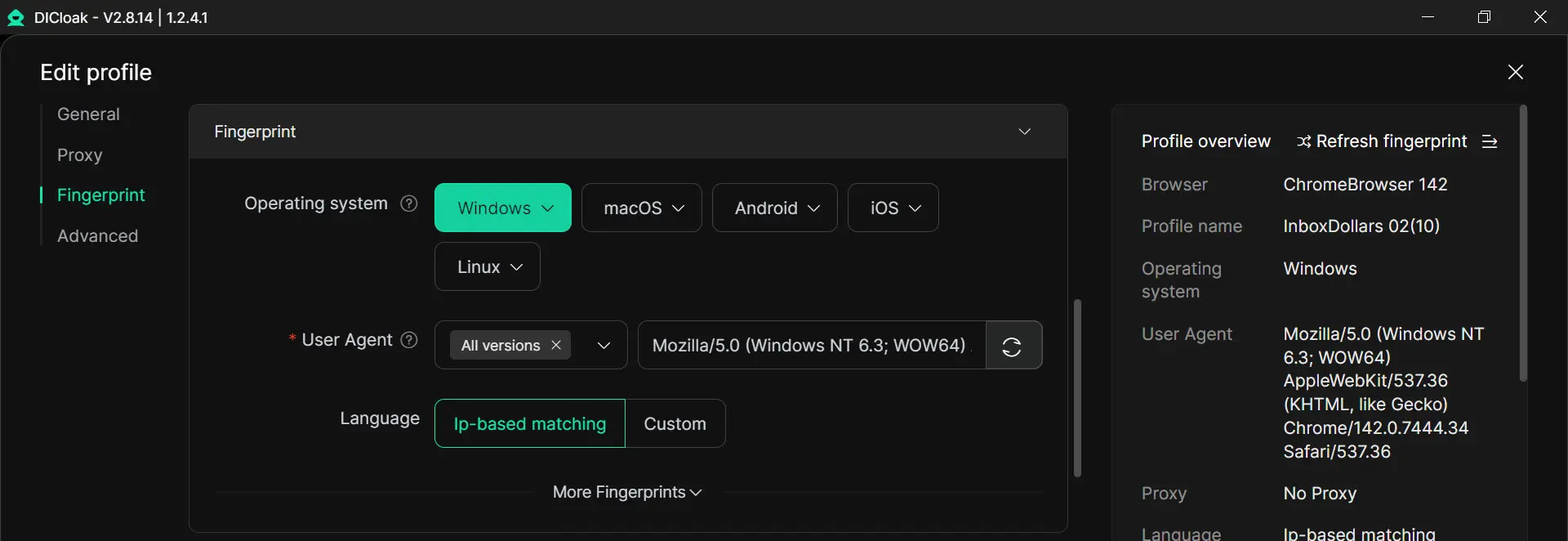
Specialized tools like DICloak allow users to create a Protected Fingerprint for every account. By spoofing hardware and software parameters, professionals can ensure that platforms see each account as a completely separate user on a unique device.
DICloak Professional Features:
- Total Identity Isolation: Users can customize and spoof deep-level fingerprint elements including Canvas, WebGL, WebGPU, and AudioContext to match the IP’s location.
- Cost-Benefit Advantage: Each DICloak profile functions as an isolated profile eliminating immense hardware overhead.
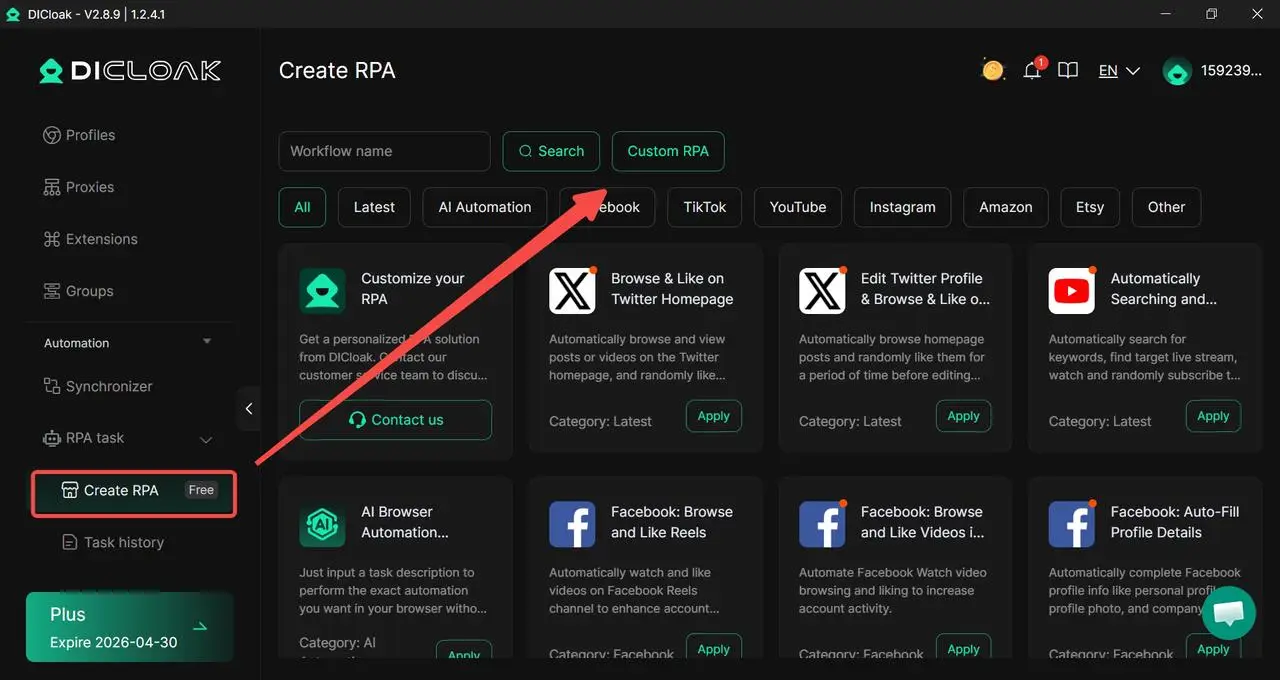
- RPA Automation: Teams utilize built-in Robotic Process Automation to handle repetitive browsing and data entry across hundreds of profiles.
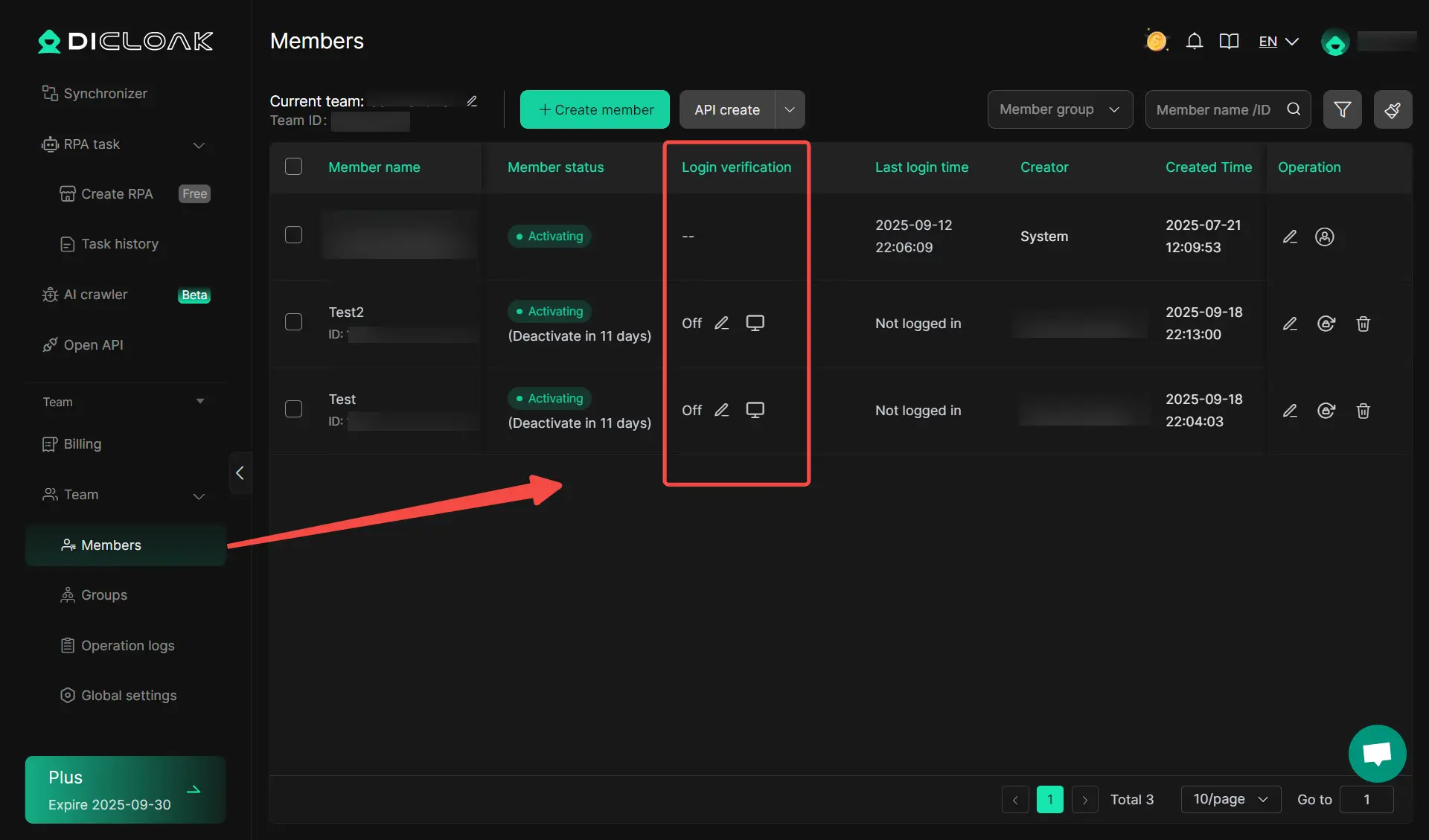
- Shielded Teamwork: Cloud synchronization allows managers to share profiles with team members securely, ensuring "Protected Fingerprints" remain consistent across different devices.
Managing multiple IP types within a single interface
A professional workflow often requires a hybrid approach. You can configure Static Residential Proxies for high-stakes account management (like Amazon or eBay) to maintain trust, while simultaneously utilizing Dynamic Residential Proxies for tasks like web scraping or market research—all managed within a single DICloak dashboard. This allows for scaling to over 1,000 accounts on a single physical machine without triggering platform alarms.
Which IP configuration should you pick for your specific use case?
The decision ultimately hinges on whether your priority is operational stability or rotating anonymity.
Best scenarios for high-stability static IPs
- Enterprise Infrastructure: Hosting web, email, or game servers that require 100% DNS uptime.
- Remote Work Security: Providing consistent, allow-listed VPN and Remote Desktop access.
- E-commerce Trust: Managing high-value accounts on Amazon, eBay, or Shopify using ISP-level residential IPs (e.g., from IPFLY’s 10M+ static pool).
- VoIP and Video Stability: Ensuring uninterrupted real-time communication.
Best scenarios for high-privacy dynamic rotations
- General Web Browsing: Minimizing tracking by advertisers and data brokers.
- AI-Powered Web Scraping: Using a pool of 90 million+ dynamic IPs to bypass rate limits and avoid detection.
- Cost-Sensitive Personal Use: Standard internet usage where manual setup and extra fees are unnecessary.
- Privacy-Conscious Streaming: Accessing content without leaving a permanent digital trail.
Conclusion
In 2026, the debate between static and dynamic IPs is less about finding a "winner" and more about matching network architecture to specific operational goals. For businesses requiring rock-solid reliability, predictable remote access, and high-trust e-commerce accounts, the static IP remains the undisputed king of stability. However, for those prioritizing cost-effectiveness and a rotating shield of privacy, dynamic IPs remain the global standard. By integrating these IP strategies with advanced antidetect technology like DICloak, professionals can achieve a level of security, scalability, and anonymity that traditional networking alone cannot provide.
Frequently Asked Questions about Static and Dynamic IPs
Is a static IP address more secure than a dynamic one?
Technically, no. A static IP is more vulnerable because it is an unmoving target, allowing attackers to conduct persistent scans and targeted attacks over time. Security for a static IP relies on active defenses like robust firewalls, VPN encryption, and intrusion detection systems, rather than the "security through obscurity" provided by rotation.
Do I need a static IP for online gaming?
It is not required, but it is highly beneficial. A static IP provides a more stable connection for VoIP and reduces the risk of being disconnected during an IP lease renewal. If you host your own game servers, a static IP is essential so players can reliably find your server.
Can I change a dynamic IP to a static one?
Yes, but this usually requires two steps: first, contacting your ISP to request a static IP (which often necessitates a business-tier account); and second, manually configuring the IP settings on your router or device. Alternatively, you can use a static residential proxy service to gain the benefits of a fixed IP without altering your primary ISP contract.
How do I see which type of IP address I am currently using?
Follow the "record, restart, and check" method:
- Visit an IP lookup tool and record your current address.
- Restart your router and your computer.
- Check the lookup tool again. If the address has changed, you are using a Dynamic IP. If it is identical, you likely have a Static IP.
Why do dynamic IPs offer better privacy?
They disrupt the "data trail." Because your IP address changes periodically, it prevents websites and advertisers from linking your browsing habits to a single, permanent identifier over months or years, making it significantly harder to build a comprehensive digital profile of your identity.# Static IP vs. Dynamic IP: Which Is Better for Your Privacy and Business in 2026?
 Web Proxy Tools
 Free Tools
 Cookie Plugin
 UA Generator
 MAC Address Generator
 IP Generator
 IP Address List
 2FA Code Generator
 World Clock
 Anonymous Check
 WebRTC Leak Test
 UUID Generator
 Free Web Proxy Site
 Proxy Checker
 FB Ad Checker
 AI Web Scraping
 Free SMM Tools
 Twitter Shadowban Checker
 Instagram Name Checker
 UTM Generator
 Username Generator
 AI Hashtag Generator
 LinkedIn Headline Generator
 Social Media Image Resizer