In the current e-commerce landscape, discounting mechanisms are engineered to optimize the ratio between Customer Acquisition Cost (CAC) and Lifetime Value (LTV). While a "Shein coupon code for new user" provides a targeted one-time incentive for the average consumer, digital growth infrastructure experts view these codes as scalable assets. To move beyond single-use savings, practitioners must implement sophisticated account isolation and risk mitigation protocols. This requires transitioning from standard browsing to a structured, multi-profile methodology that bypasses the automated security triggers inherent in modern retail platforms.
Understanding the Shein Coupon Code for new user and the Discount Ecosystem
The e-commerce discount profile is a multi-layered system where different incentive types serve specific marketing functions. Identifying stacking opportunities requires an understanding of these distinct categories:
- Official Promo Codes: Distributed directly by the platform via internal channels, such as app notifications, emails, or seasonal site-wide events.
- Influencer Codes: Unique alphanumeric strings provided to content creators, typically offering 15%–20% reductions. These are often region-locked or restricted to specific marketing campaigns.
- Third-party Codes: Sourced from external aggregators. These are highly volatile and frequently subject to expiration or usage caps.
- New User/First-Order Discounts: The most aggressive incentive type. These are designed to subsidize the initial transaction cost to convert a lead into a registered user.
- Referral Rewards (Share & Earn): Incentives generated when an existing user's unique link is used to create a new account, resulting in points or coupons for both the inviter and invitee.
Platform security logic dictates that "new user" discounts are restricted to one per physical entity, as the aggressive margin reduction is only sustainable if it results in a unique, long-term customer.
The Technical Logic of Stacking a Shein Coupon Code for new user
Systematic discounting is governed by a rigid "order of operations." E-commerce engines process incentives in a specific sequence to protect platform margins and prevent infinite discount loops.
Order of Operations in E-commerce Discount Engines
When multiple incentives are available, the system calculates the final price using the following hierarchy:
- Sitewide Discounts: The base price is first reduced by active platform-wide events (e.g., "Spend $300, Save $60").
- Promo Codes: The system applies either a "new user" code or an influencer code to the remaining balance. Platforms generally enforce a "one code per order" rule, defaulting to the highest value code if multiple are entered.
- Account-Level Rewards: Referral points and shipping coupons are applied last.
Because points are classified as "account balance" rather than "promo codes," they act as a secondary layer of liquidity that stacks with the primary discount. For example, a 15% influencer code can be layered over a sitewide sale, followed by the application of accrued referral points to further reduce the final invoice.
Why Platforms Restrict Multiple Shein Coupon Codes for new user Applications
To maintain the integrity of their CAC models, platforms deploy "risk control" mechanisms. These systems utilize advanced telemetry to detect and block users attempting to claim multiple new-user rewards.
Platforms go far beyond basic cookie tracking. They utilize browser fingerprinting—specifically Canvas fingerprinting and WebGL tracking—to identify returning hardware. Canvas fingerprinting works by forcing the browser to render a hidden image; subtle variations in how different hardware and driver configurations render pixels create a unique hash (entropy) that identifies the device even if the IP address or cookies are cleared.
Pro-Tip: Device ID tracking is substantially more granular on mobile applications compared to desktop browsers. Mobile apps can access hardware-level identifiers (IMEI, IDFA) that are difficult to mask. Infrastructure experts often simulate mobile profiles on desktop hardware to access "app-only" discounts while maintaining high-level control over fingerprint parameters.
Strategic Methodology: The Multi-Account Referral Loop
The "Share & Earn" system allows for the creation of a referral loop. This involves a primary account generating invitation links for invitee accounts. When an invitee account utilizes a new user code and completes a transaction, the primary account is credited with points or coupons.
Scaling Through Network Isolation and Region Switching
Scaling this process requires rigorous network isolation. Simply toggling between accounts on a single browser results in "chain-banning" due to persistent cache data and WebRTC leaks, which can reveal a user's true local IP address despite the use of basic masking tools.
Furthermore, advanced users employ region switching. By configuring a profile for a specific geographic region (e.g., the US site), users can access localized promotions and higher-value codes that are hidden from their default regional interface. This requires the profile to perfectly match the target region's IP, time zone, and language headers.
Comparing Standard Browsing vs. DICloak Profile Isolation
| Feature |
Standard Browser (Chrome/Safari) |
DICloak Antidetect |
| IP Management |
Shared/Local IP; prone to WebRTC leaks |
Independent Proxy Integration (HTTP/SOCKS5) |
| Fingerprinting |
Broadcasts real hardware hash |
Spoofs/Emulates unique hardware fingerprints |
| Multi-account Capacity |
Manual logout; high risk of association |
1,000+ isolated profiles on a single device |
| Network Isolation |
Low (Cache/Cookie leakage) |
High (Complete sandboxing per profile) |
| Operational Scaling |
Manual, linear growth |
Automated via Synchronizer and RPA |
Implementing Account Safety with DICloak Antidetect Technology
For professional management of high-volume discount accounts, DICloak provides the necessary infrastructure to maintain total profile isolation and prevent account association.
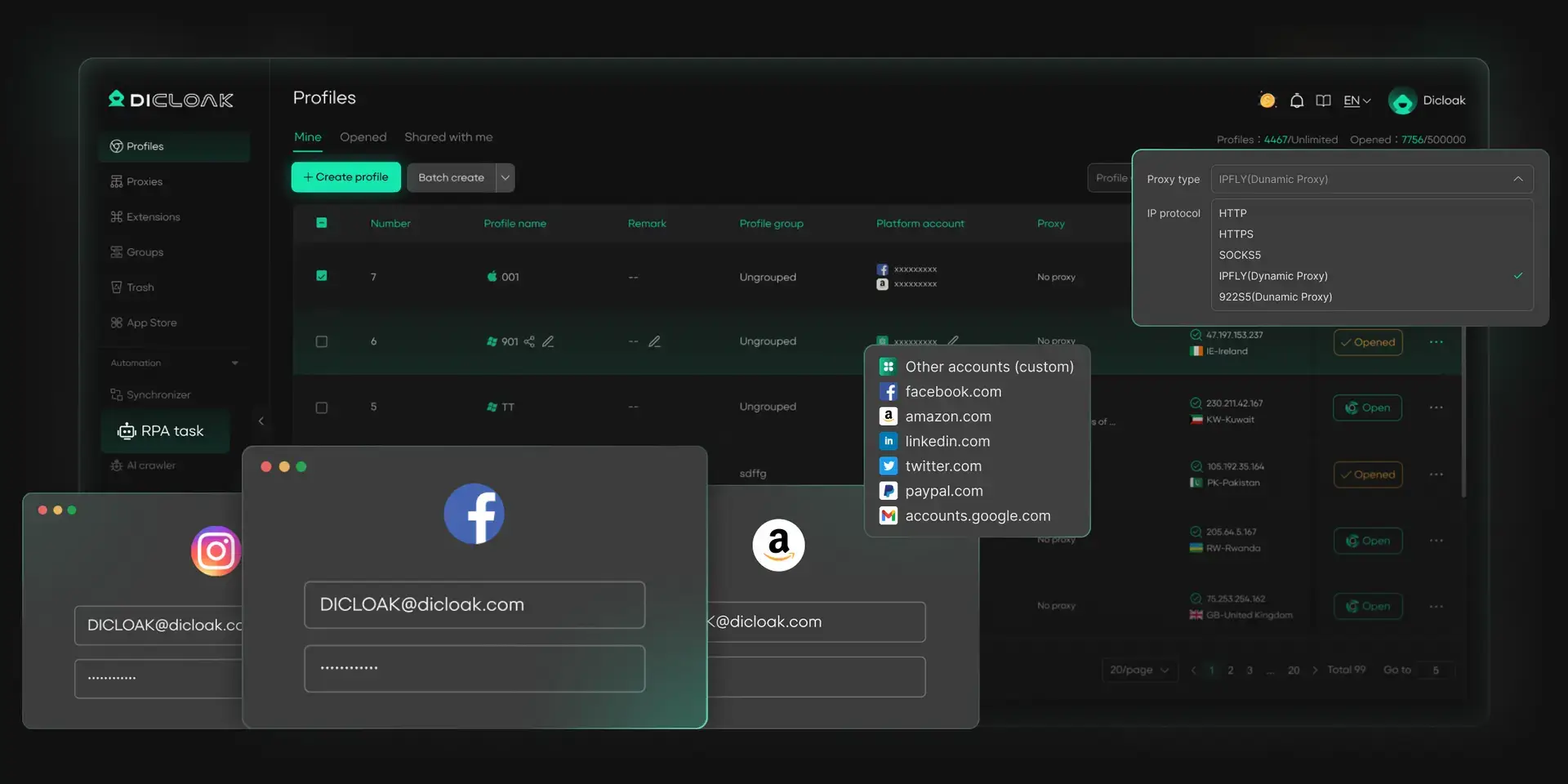
Custom Fingerprinting and Proxy Configuration
DICloak enables the creation of over 1,000 isolated profiles on one machine, each functioning as a unique "virtual device." By integrating user-provided proxies via HTTP, HTTPS, or SOCKS5 protocols, each profile maintains a unique geographic and network identity. This prevents the platform from linking multiple accounts to a single source, which is critical for the success of referral loops.
Synchronizer and Bulk Operations
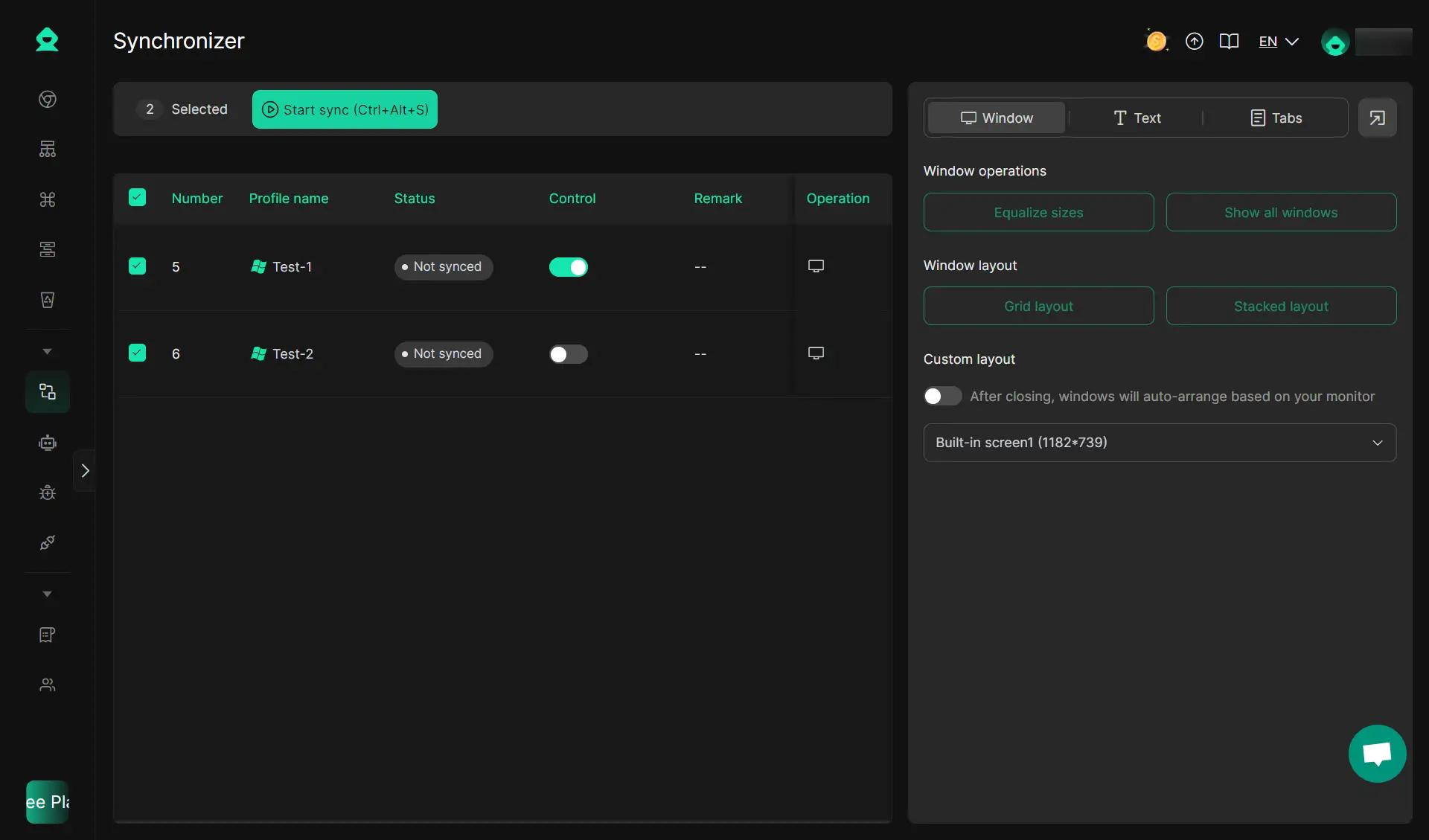
A key differentiator for scaling is the Synchronizer tool. This allows an operator to control multiple browser profiles simultaneously. Actions performed in a "master" window—such as navigating a site or adding items to a cart—are replicated across all active windows. Combined with profile bulk operation for importing and launching, this allows for the rapid execution of multi-account strategies that would be impossible to perform manually.
Workflow Automation via RPA
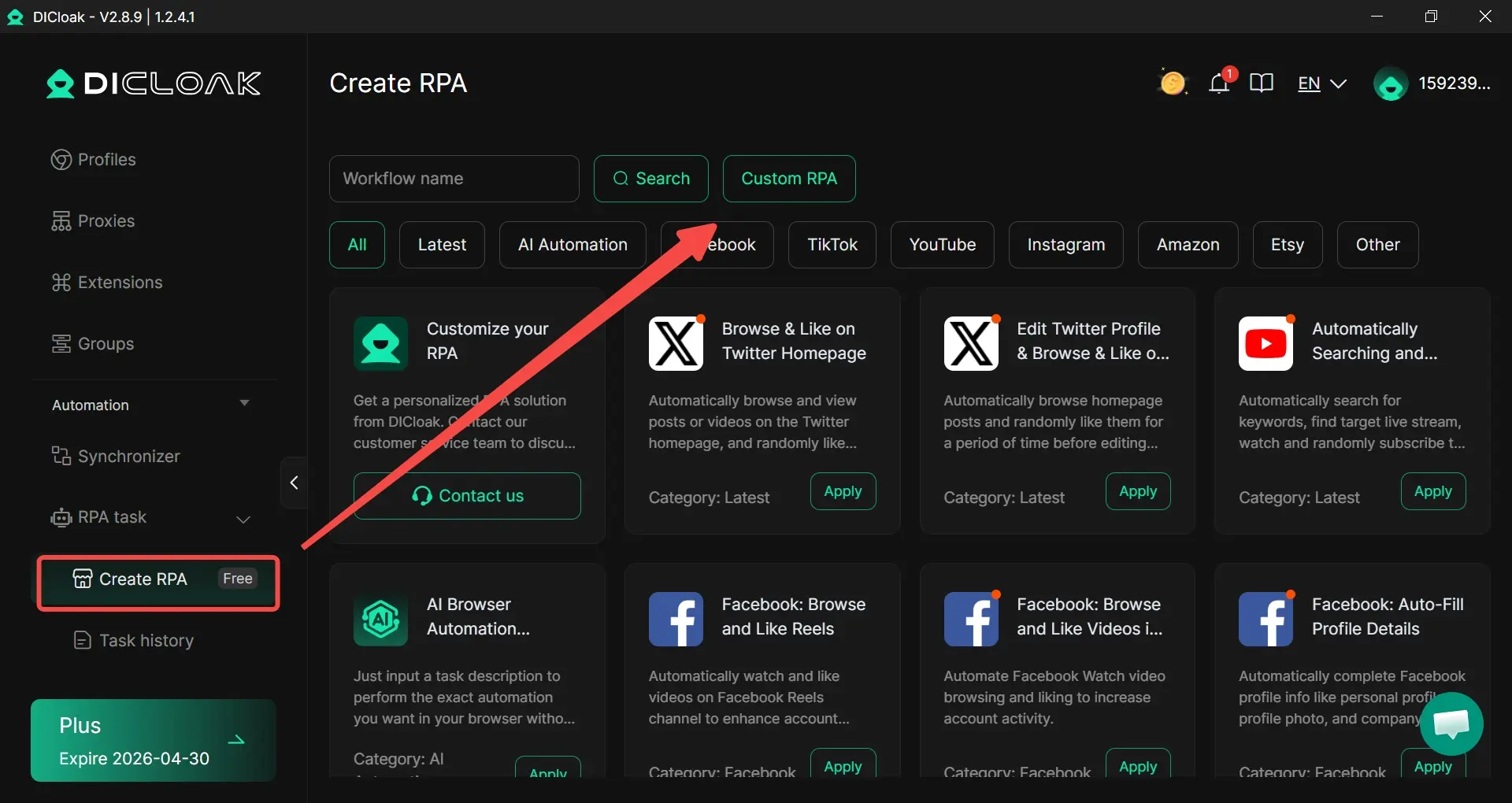
DICloak’s Robotic Process Automation (RPA) handles "the grind" of account maintenance. RPA scripts can automate the registration of new accounts, navigate the site to perform "cookie warming" (simulating human browsing to establish trust with the platform's risk engine), and automatically collect referral rewards. This transition from manual to automated workflows is essential for scaling discount capture.
Professional Guidelines for Managing Shein Coupon Codes for new user Rewards
Managing a multi-account discount strategy involves balancing cost-reduction yields against technical overhead.
| Pros of Scaled Infrastructure |
Cons and Operational Risks |
| Extreme Scalability: Repeatedly capture "one-time" new user discounts. |
Proxy Costs: Requires high-quality, non-blacklisted proxies to ensure isolation. |
| Cost Efficiency: Reduces per-item costs by stacking rewards across a fleet. |
Technical Learning Curve: Implementation of RPA and fingerprinting requires expertise. |
| Risk Mitigation: Isolates account failures; a ban on one account does not affect the fleet. |
Policy Compliance: Dependent on precise configuration to avoid detection by platform risk engines. |
Operational Condition: While these strategies help mitigate the risk of account association, success is contingent on the diversity of browser fingerprints and the prevention of WebRTC leaks through proper proxy management.
Frequently Asked Questions about Shein Coupon Codes for new user Stacking
Can I use the same coupon code on two different accounts?
No. Most promo codes are locked to the account upon redemption. Generic, public codes may work across accounts, but unique referral or "new user" codes are single-use per account entity.
Why was my order cancelled after using a new user code?
This is typically the result of "association" via fingerprinting or IP tracking. If the risk engine detects matching Canvas hashes or shared network metadata between a new account and an existing one, the transaction is flagged for fraud and cancelled.
Is it better to use a "Cloud Phone" or an "Antidetect Browser"?
While cloud phones provide virtual profiles, they often suffer from high latency and significant recurring costs. DICloak’s antidetect technology is more resource-efficient, allowing for the management of 1,000+ accounts on a single local device without the cost of extra hardware while offering superior RPA and Synchronizer capabilities.
Is a Shein coupon code for new user better than other Shein discounts?
A Shein coupon code for new users can be one of the best starting discounts for first-time shoppers, but it is not always the biggest deal. Sometimes seasonal sales, flash deals, or bundle discounts may save you more, so it is smart to compare offers before placing your order.
Why is my Shein coupon code for new user not working?
It may not work if your account is not considered new, the code has expired, or your order does not meet the minimum spending requirement. In some cases, certain items may also be excluded from discount offers.
 Web Proxy Tools
 Free Tools
 Cookie Plugin
 UA Generator
 MAC Address Generator
 IP Generator
 IP Address List
 2FA Code Generator
 World Clock
 Anonymous Check
 WebRTC Leak Test
 UUID Generator
 Free Web Proxy Site
 Proxy Checker
 FB Ad Checker
 AI Web Scraping
 Free SMM Tools
 Twitter Shadowban Checker
 Instagram Name Checker
 UTM Generator
 Username Generator
 AI Hashtag Generator
 LinkedIn Headline Generator
 Social Media Image Resizer