Instagram bots are still a big topic in 2026 because many marketers want faster growth, more reach, and less manual work. But the space is not as simple as it was a few years ago. Instagram’s Terms say people cannot create accounts or access or collect information in automated ways without permission, and Meta also says it takes action against fake engagement and inauthentic behavior. That means the question is no longer just whether Instagram bots can save time. The real question is how much risk they create, what signals make an account look unsafe, and whether there is any way to manage that risk more carefully.
That is why this guide takes a more practical angle. Instead of treating Instagram bots as a shortcut, it explains them as a risk-management problem. You will see what Instagram bots usually do, why they are much riskier than before, how Instagram detects unnatural behavior, and what makes one setup look more trustworthy than another. From there, the article moves into browser fingerprints, cookies, IP quality, and account isolation, because sustainable growth depends on more than automation alone. It depends on whether the full environment looks stable, believable, and consistent over time.
What Are Instagram Bots and Why Are People Still Using Them in 2026?
Before looking at risk, it helps to define what people mean by instagram bots. The term usually covers software, scripts, or connected tools that automate repeat actions on Instagram. Meta’s Terms of Use say users cannot create accounts or access or collect information in an automated way without express permission, which is why this topic now sits in a high-risk area rather than a simple “growth hack” category. In other words, instagram bots are still widely discussed, but they are no longer a casual shortcut. They are part of a much stricter platform environment now.
What an Instagram Bot Usually Does
In practice, instagram bots are usually built to save time on repetitive work. Some are used for simple actions like following accounts, liking posts, viewing stories, or sending preset direct messages. Others are tied to data tasks, such as collecting public profile information, checking hashtags, or tracking competitor activity. A small brand, for example, may be tempted to use a bot to interact with many niche accounts after posting new content. On the surface, that can look efficient because it replaces hours of manual clicking. But the action itself is only one part of the story. What matters just as much is how often it happens, how predictable it looks, and what kind of account environment it comes from. Meta publicly says automated access and unauthorized data collection can violate its rules, which shows why even basic automation is not a neutral activity anymore.
There is also a reason people still search for instagram bots in 2026. The pressure to grow faster has not gone away. Social teams still want to save time, test outreach ideas, and handle repetitive work at scale. A freelancer managing several client accounts may think a small amount of automation will help keep up with daily tasks. A dropshipping team may want faster market signals from public profiles and hashtags. These goals are easy to understand. The problem is that many users focus on the time savings and ignore the platform trust issues that come with them. That is where most trouble begins.
Why Instagram Bots Are Much Riskier Than Before
The biggest change is that Instagram has become much stricter about behavior that looks automated, inauthentic, or abusive. Meta’s Account Integrity policy says it may act against accounts created or used by scripted or other inauthentic means. Meta also says it restricts accounts for unauthorized scraping, which shows that the company is not only looking at content quality. It is also looking at the way accounts access the platform and the way actions are performed. That means instagram bots are riskier now because the platform is watching both behavior and environment more closely than before.
A simple example helps here. A few years ago, some users could run high-volume follows or likes for a while before seeing serious friction. In 2026, the same pattern is more likely to trigger limits, checkpoints, or account distrust if the activity looks too fast, too repetitive, or too disconnected from normal user behavior. Meta’s public guidance around scraping and inauthentic activity supports this broader pattern. The risk is even higher when automation is combined with weak account history, unstable sessions, or mixed browser signals. So when people ask whether instagram bots still work, the better answer is this: they are much harder to use safely, and the cost of mistakes is much higher than it used to be.
This is why the real discussion in 2026 is not just about what instagram bots can do. It is about how Instagram detects unnatural behavior, why some setups look riskier than others, and why account stability matters so much now. That leads directly into the next section.
Why Instagram Is Harder on Bots Than It Used to Be
Once you understand what instagram bots usually do and why people still use them, the next question becomes clear: why is Instagram much stricter now than it was before? The short answer is that Meta has become more serious about platform integrity, automated access, and inauthentic behavior. Instagram’s Terms say users cannot access or collect information in automated ways without permission, and Meta’s Account Integrity policy says it may act against accounts created or used by scripted or other inauthentic means. That means instagram bots now face a platform that is not only watching for spammy actions, but also looking at whether the full account pattern feels real.
How Instagram Detects Unnatural Behavior
Instagram does not need one single “bot signal” to see a problem. In most cases, unnatural behavior is a pattern. For example, if an account starts following many users in a short time, liking large groups of posts in a repeated order, or sending the same type of message again and again, the activity can start to look less human. Meta does not publish a full technical checklist, but its public rules around automated access and inauthentic use show that behavior patterns matter. That is why instagram bots become riskier when the activity is too fast, too repetitive, or too different from normal user behavior.
A simple example helps here. Imagine a small seller who uses one of many public “growth tools” to like hundreds of posts tied to a niche hashtag every day. On paper, that may look like a cheap way to gain attention. But if those likes happen in rigid bursts, at the same hours, with the same action flow, the pattern can look artificial. Instagram may not need to read the user’s intent. The behavior itself can already look suspicious. This is one reason many older instagram bots methods now fail much faster than they did a few years ago. That is also consistent with Meta’s broader enforcement focus on inauthentic activity and unauthorized automated use.
Why Device, Browser, and Session Signals Matter
Behavior is only one side of the problem. The environment behind the action matters too. When people talk about instagram bots, they often focus only on what the bot does. But Instagram also has reason to care about how the account is being accessed. Meta’s help pages on suspicious logins, account risk, and unauthorized third-party access all show that the company pays attention to account security, login sessions, device recognition, and risky app connections. In simple terms, an account does not just need normal actions. It also needs a believable access pattern.
This is why device, browser, and session signals matter so much. If one account logs in through changing browser profiles, unstable sessions, unfamiliar devices, or low-trust third-party tools, the activity can feel less consistent over time. Think about a creator account that is usually opened from one stable phone and one normal browser. Then suddenly it starts showing repeated access from new setups or connected apps the owner does not fully control. Even before any content problem appears, that kind of access pattern can raise risk. For instagram bots, this means the tool itself is only part of the issue. The surrounding browser state, cookies, session continuity, and device consistency also shape how safe or unsafe the account looks.
Why New or Unstable Accounts Get Flagged More Easily
This also explains why new or unstable accounts often run into trouble first. A fresh account has less history, less behavioral context, and fewer signs that it belongs to a real long-term user. If that same account quickly starts showing automated-looking actions, scraping behavior, or unusual access changes, it has less trust to fall back on. Meta’s Account Integrity policy and scraping enforcement pages both support this bigger picture: the company is trying to reduce scripted and unauthorized activity, and weaker accounts are naturally more exposed when they fit risky patterns.
A real-world style example makes this clearer. Compare two accounts using similar instagram bots logic. One is an older account with a long posting history, normal follower changes, and steady login habits. The other is a new account that was created recently, has little content, and begins aggressive actions almost right away. Even if both accounts run the same task, the second one is easier to question because the overall pattern looks less grounded. That does not mean older accounts are safe. It means unstable accounts usually have less room for error. Once you see that, the next step is obvious: if Instagram is looking at trust patterns, then the safest use of instagram bots depends on reducing risky actions and building a setup that looks more stable from the start.
Pros and Cons of Using Instagram Bots in 2026
After looking at how Instagram detects unnatural behavior, the next step is to weigh the trade-offs clearly. In 2026, instagram bots are not simply “good” or “bad.” They can save time and support routine work, but they also create real platform and account risks. Instagram’s Terms of Use say automated access and automated data collection are not allowed without express permission, and Meta’s policies show a strong focus on account integrity and unauthorized third-party access. So the real question is not whether instagram bots can do useful work. The real question is whether the time saved is worth the added risk.
Main Benefits of Instagram Bots
There are still a few clear reasons why people keep using instagram bots.
- They reduce repetitive manual work.
- They can help with scale.
- They can support testing and data gathering.
In short, the appeal of instagram bots is easy to understand. They save time, reduce repetitive effort, and seem to offer faster growth support. That is why they are still part of the conversation in 2026, even though the platform is much stricter now. At the same time, these benefits only tell one side of the story. Instagram’s rules make clear that unauthorized automation and automated collection are not approved, so every claimed efficiency gain has to be measured against the risk that comes with it.
Main Risks of Instagram Bots
The risks are just as important, and in many cases they matter more.
- They can trigger account restrictions.
- They can create security problems through third-party access.
- They can make unstable accounts look even weaker.
- They can hurt long-term account trust.
A simple example makes this easier to see. Imagine two small businesses. One builds growth slowly, posts real content, and handles engagement by hand. The other relies on instagram bots for repeated follow and like actions from an account with little history. The second business may look faster at first, but it also creates a much higher chance of account trouble. Recent reporting has also shown how frustrating Meta enforcement can be for users when accounts are restricted or disabled and appeal options feel limited. That makes mistakes more costly than they look on paper.
So, the risk side is not just about getting caught once. It is about building an account pattern that becomes harder to protect over time. That is why instagram bots now require much more caution than they did before.
Who Should and Should Not Use Instagram Bots
Once both sides are clear, the practical answer becomes easier.
- Who may find them useful: Teams that understand platform risk, work carefully, and treat automation as a narrow support tool rather than a full growth strategy may still see some value in selected workflows. These are usually users who already understand account stability, session control, and the importance of keeping actions limited and believable.
- Who should be very careful or avoid them: New account owners, casual users, creators with only one main account, and businesses that cannot afford account disruption are in a much weaker position. For these users, instagram bots usually create more risk than value. If the account is central to revenue, customer trust, or brand identity, the downside can be too large.
- Who should not depend on them: Anyone hoping for a quick shortcut, fast fake engagement, or careless large-scale automation is taking the highest risk. Instagram’s rules and Meta’s integrity policies are already clear enough on that point.
The simplest way to look at it is this: instagram bots are not a universal solution. They may still offer limited value in tightly managed situations, but they are a poor fit for users who want stable long-term growth without technical overhead or platform risk.
What Are the Safest Ways to Use Instagram Bots for Growth?
Once the pros and cons are clear, the next question is practical: if people still choose to use instagram bots, what does the lowest-risk path look like? The first thing to say is simple. There is no fully “safe” shortcut here. Instagram’s Terms of Use say people cannot access or collect information in automated ways without permission, and Meta’s policies say accounts used by scripted or other inauthentic means can face action. That means the real goal is not to make instagram bots risk-free. The goal is to understand where risk is lower, where it is much higher, and why careless automation usually causes the most damage.
Low-Risk Tasks vs. High-Risk Tasks
A helpful way to think about instagram bots is to compare lower-risk and higher-risk uses in a clear way.
- Lower-risk use usually means limited, supportive tasks. Some teams look at automation mainly for internal support work, such as organizing public information, watching post timing, tracking public hashtags, or helping with light workflow reminders. Even then, users still need to be careful because Instagram’s Terms do not broadly allow automated access without permission. But from a risk point of view, these uses are usually less aggressive than tools that directly push account actions at scale.
- Higher-risk use usually means direct growth manipulation. Tools that promise bulk follows, mass likes, repeated story views, auto-comments, or fake engagement create much more danger. Instagram specifically warns users not to trust apps that offer likes or followers, and it says users should never share login details with apps or people they do not trust. That is a strong public signal that many common “growth bot” offers are exactly the kind of thing users should avoid.
- The highest-risk use is large-scale automation without context. When instagram bots run repeated public actions at high speed, across weak accounts, or through unstable third-party tools, the pattern starts to look less like support and more like inauthentic activity. Meta’s Account Integrity policy explicitly says it may act against accounts created or used by scripted or other inauthentic means.
In simple terms, the safest end of the spectrum is narrow, limited, and carefully controlled. The riskiest end is public-facing engagement manipulation that tries to force growth signals at scale. That is why people who still look into instagram bots need to be honest about what kind of task they are really automating. A small internal support task and a mass-engagement tool do not carry the same level of danger.
Why Gradual Activity Still Matters
Even when people try to keep things limited, speed and pattern still matter a lot. Instagram does not need a single dramatic event to see a problem. Repeated actions, sharp spikes, and sudden changes can be enough to make an account look less natural. Meta’s public focus on account integrity and suspicious third-party access supports this larger point: trust is shaped by patterns over time, not only by one action in isolation.
A simple example makes this easier to picture. Imagine one small business account that grows slowly, posts real content, and adds new actions in a measured way. Now compare that to a new account that suddenly begins heavy outreach, repeated follows, and automated engagement in short bursts. Even before you look at the exact tool, the second account creates a sharper and less believable pattern. That is why gradual activity still matters when people discuss instagram bots. Sudden jumps are easier to question. Slower, more limited changes usually create less pressure on the account. This does not make automation compliant or “approved,” but it does explain why abrupt behavior is often the fastest path to friction.
So the practical lesson is simple. If a user is already operating in a risky area, making everything faster usually makes the risk worse, not better. Gradual activity matters because normal growth tends to look uneven, human, and context-based. Aggressive automation tends to look rigid, repetitive, and detached from real user behavior. That difference is a big part of why some instagram bots setups fail quickly.
How to Build a More Stable Environment for Instagram Bot Activity
After looking at safer and riskier ways to use instagram bots, the next step is the setup itself. This part matters because Instagram does not only react to actions like follows, likes, or messages. Meta’s public rules also show a strong focus on account integrity, unauthorized automation, and suspicious third-party access. At the same time, browser fingerprinting is a real web concept: MDN explains that websites can identify a browser by combining signals from the browser and operating system. Put simply, instagram bots do not exist in a vacuum. The browser, session, and profile environment around them also shape how stable or risky the account looks over time.
Should You Use a Normal Browser or an Antidetect Browser?
A useful way to compare browser choices is to look at the trade-off clearly.
- A normal browser is simpler for one account. If one person only uses one Instagram account and handles everything by hand, a normal browser is usually enough. It is familiar, easy to use, and does not add extra setup work. For low-complexity use, that simplicity is often the main advantage.
- A normal browser becomes messy when many accounts are involved. Once people start managing several accounts in the same browser, things can mix together more easily. Cookies, saved sessions, extensions, browsing habits, and login history may all overlap. Even without bad intent, that kind of overlap can make account management less clean and less predictable. Meta’s help guidance also warns users about risky third-party access and suspicious account connections, which shows that unstable access patterns are already part of the platform’s security focus.
- An antidetect browser is built for profile separation, not magic safety. The main appeal is not that it makes instagram bots “safe.” It does not. The appeal is that it gives each account its own isolated browser profile, which can make sessions easier to keep separate and easier to manage. That matters when teams or operators need cleaner boundaries between accounts.
In short, a normal browser fits simple, low-scale use better. An antidetect browser fits more complex account management better because it is designed around separation. The point is not to promise protection from Meta’s rules. The point is to reduce avoidable mess when several accounts, sessions, and workflows are involved.
Why Profile Isolation Helps Reduce Cross-Account Risk
Profile isolation matters because websites can distinguish browsers through fingerprints, and Instagram is already strict about scripted or inauthentic account use. MDN explains that fingerprinting works by combining browser and device traits into a recognizable pattern. Meta, on its side, says it may act against accounts created or used by scripted or other inauthentic means. So when several Instagram accounts are run from one mixed browser profile, the management problem is not only about convenience. It is also about keeping each account’s state more separate and more stable.
A simple example makes this easier to see. Imagine a small agency running several client accounts. In one shared browser, a staff member logs into Account A, then Account B, then Account C, while using the same extensions, the same browser history, and overlapping sessions. Even if the team is careful, that setup is harder to control. Now compare that to a profile-based setup where each account has its own cookies, saved login state, and browsing context. The second model is easier to keep organized. That does not remove the risk of using instagram bots, but it can reduce cross-account confusion and make session management more consistent. Mozilla’s support material also notes that fingerprinting relies on many browser characteristics, which is why consistency and separation matter in the first place.
The bigger lesson is simple. For instagram bots, risk is shaped by both behavior and environment. Limiting aggressive actions still matters. Human review still matters. But once multiple accounts enter the picture, profile isolation becomes one of the clearest ways to reduce unnecessary overlap.
How DICloak Helps Keep Instagram Bot Workflows More Controlled
After looking at the risks and limits of instagram bots, one point becomes clear: the biggest problem is often not the action alone, but the full browser profile behind it. When multiple accounts are handled in one messy setup, cookies can mix, sessions can break, and browser signals can become less consistent over time. That is why a tool like DICloak fits naturally into this discussion. Instead of acting like a simple shortcut, it works better as a browser infrastructure tool for teams and operators who need more order, separation, and control in multi-account Instagram workflows.
DICloak is useful in this context because it supports several features that match the real problems discussed earlier in this article:
- Independent browser profiles for each account DICloak allows users to create separate browser profiles for different accounts. This helps keep cookies, local storage, session data, and browser settings from mixing together. For instagram bots, that matters because cross-account overlap is one of the easiest ways to create instability.
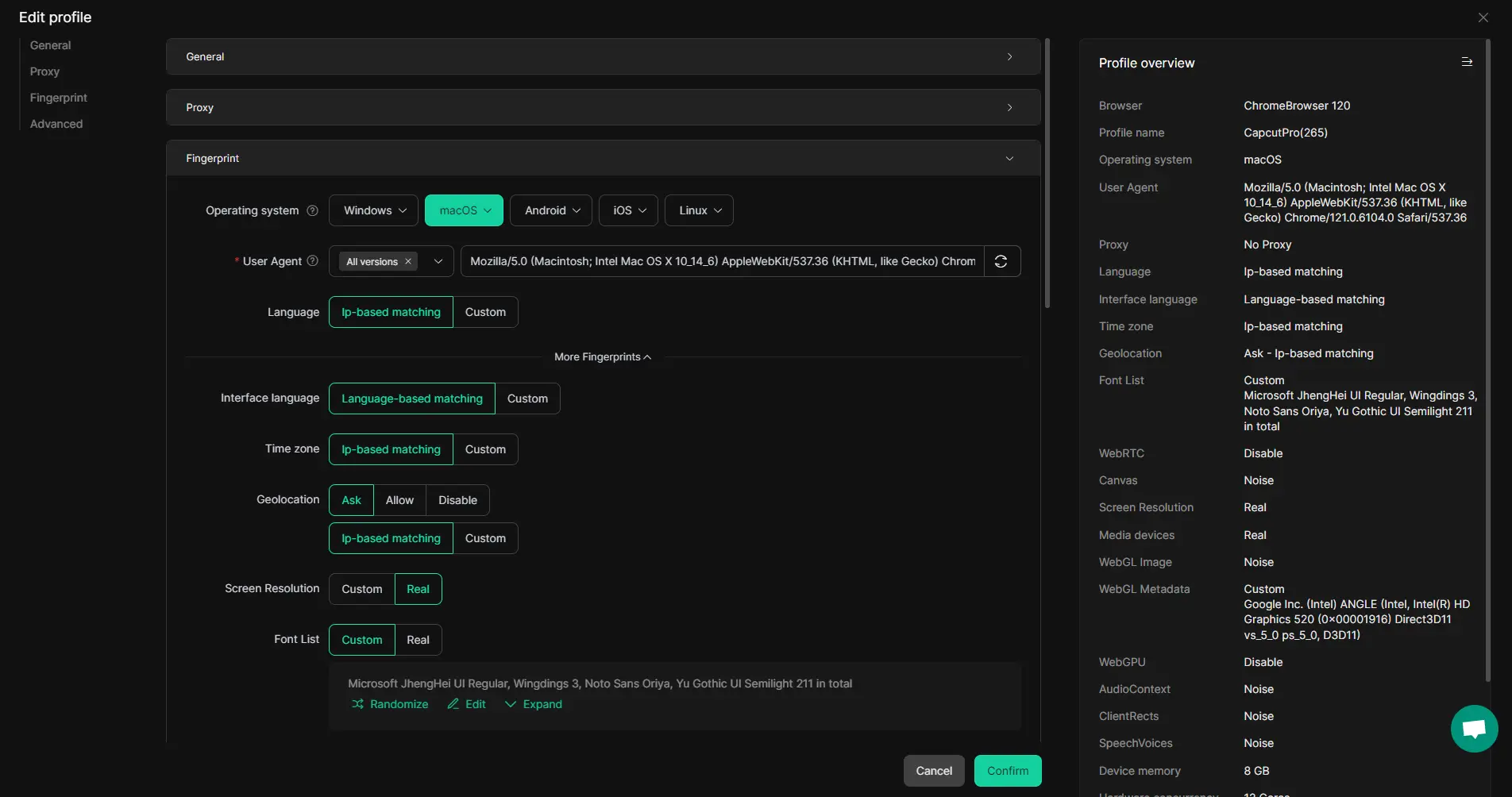
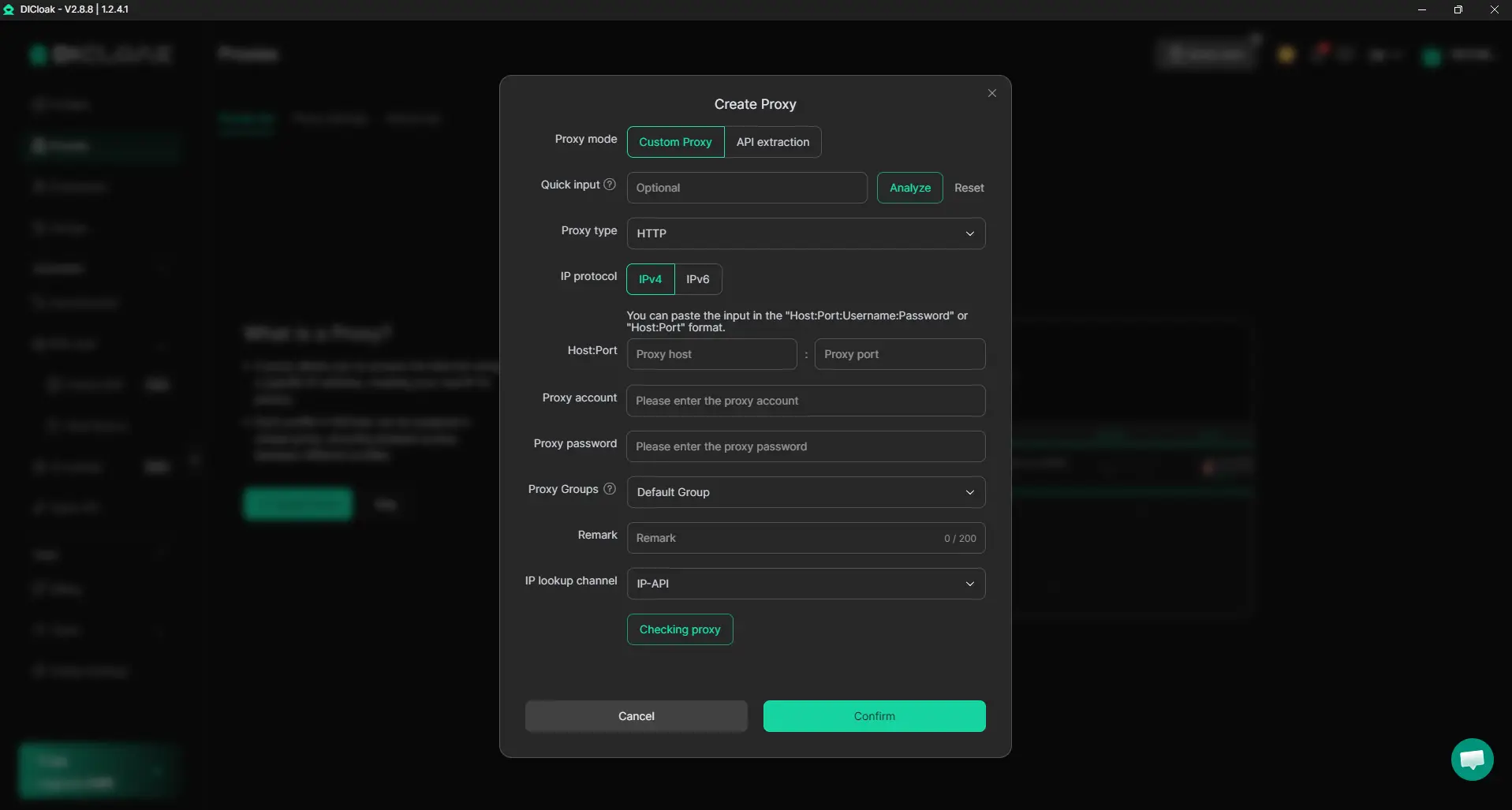
- Custom fingerprint and proxy setup DICloak supports profile-level fingerprint settings and proxy integration. This makes it easier to manage each account in a more controlled way instead of forcing every account through the same browser profile. In a multi-account workflow, that kind of separation is much cleaner than using one normal browser for everything.
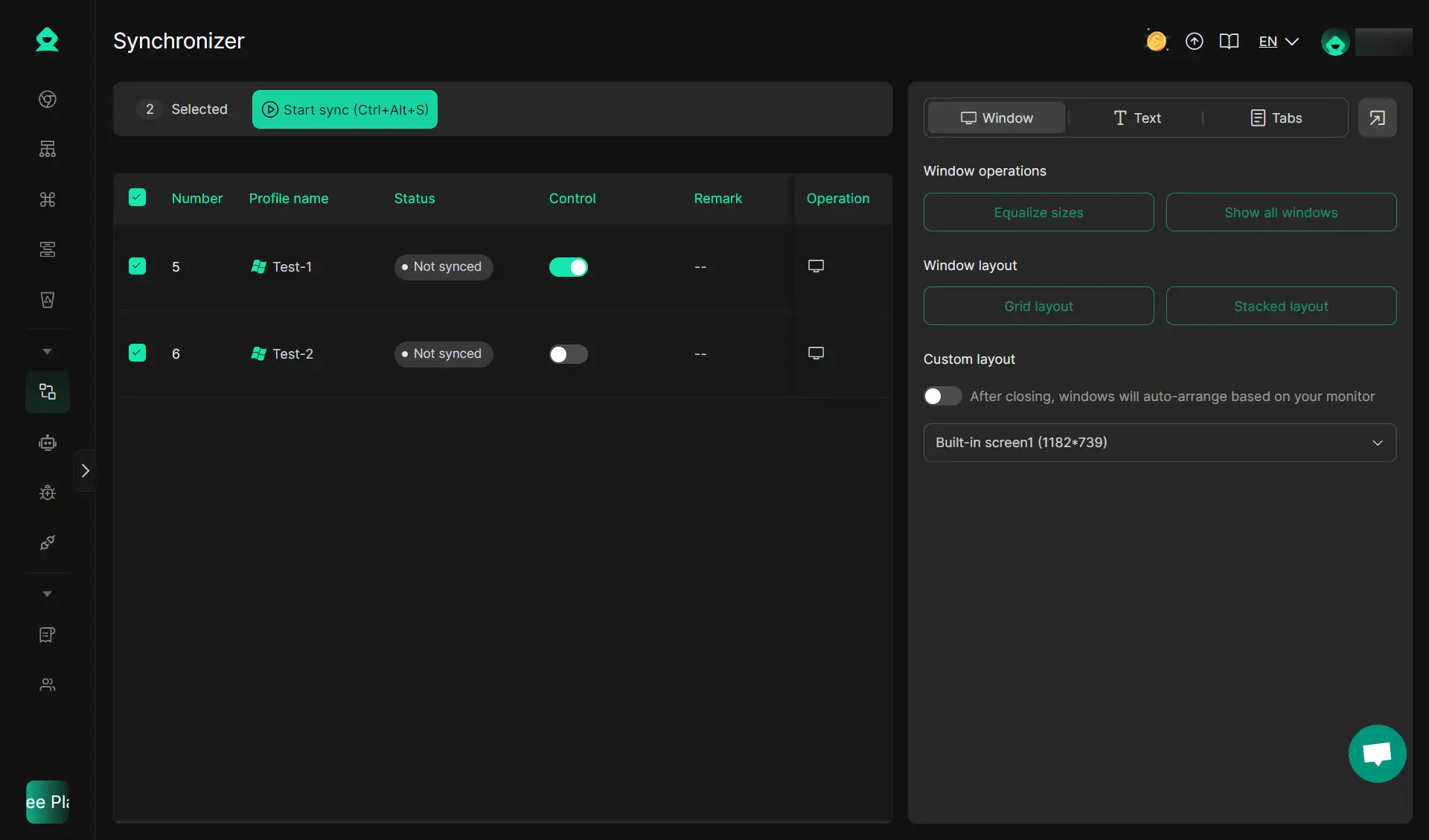
- Multi-Window Synchronizer for repetitive tasks DICloak’s Multi-Window Synchronizer can mirror clicks and typing across multiple profiles. This is helpful for repeated account-management work because it reduces manual tab switching and makes multi-profile operations easier to organize. For teams working with instagram bots, this feature is more useful as a control tool than as blind automation.
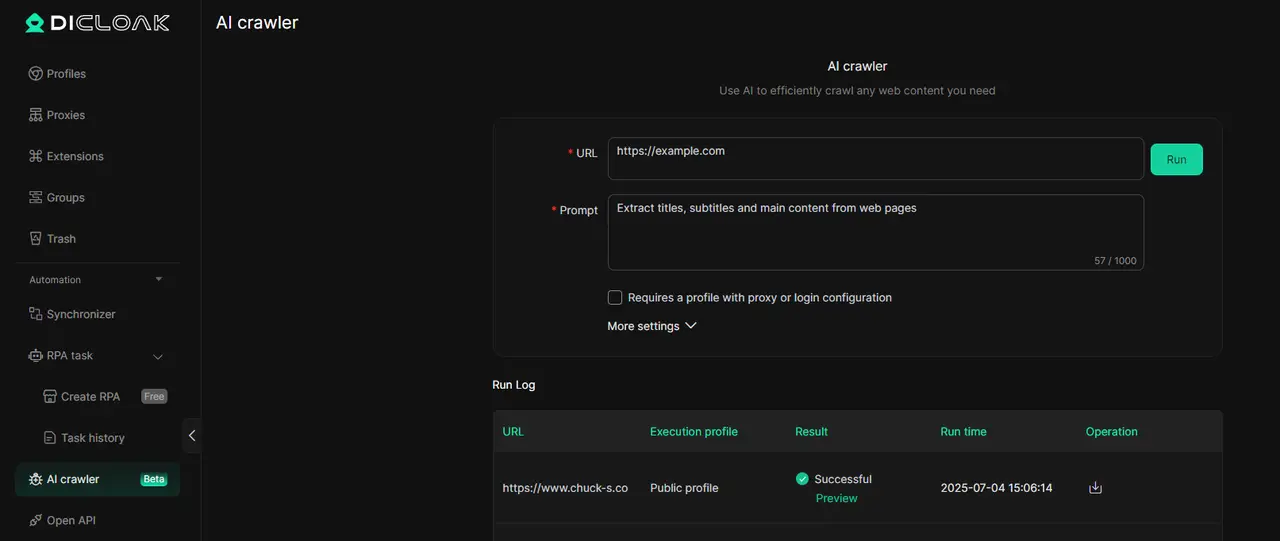
- AI Crawler for research and data collection Not every Instagram workflow is about direct account actions. Some teams need to collect public information, study competitors, or organize market data. DICloak’s AI Crawler helps with that side of the work by turning data collection into a simpler, no-code process. This makes it easier to separate research tasks from direct account activity.
- RPA automation for repetitive workflow support DICloak also adds value through no-code RPA automation. Its official Traffic Bot page shows that users can define browsing steps such as scrolling, clicking, keyword searches, and time on page, then execute and monitor those actions through cloud-based automation. In the context of instagram bots, this matters because many repetitive workflow tasks do not need to be done by hand every time. A more structured RPA setup can help teams save time, reduce small manual mistakes, and keep repeated actions more organized.
FAQs About Instagram Bots
Q1: Are instagram bots still worth using in 2026?
That depends on what you want them to do. Instagram bots can still save time on some repetitive tasks, but they are much riskier than they used to be. If the setup is messy or the activity looks too automated, the downside can be bigger than the time you save.
Q2: Why do instagram bots get accounts flagged so easily now?
Because Instagram looks at more than just likes, follows, or comments. Instagram bots can raise problems when the behavior looks too fast, too repetitive, or too different from normal user activity. Account age, browser consistency, and session stability can also make a big difference.
Q3: What is the safest way to use instagram bots?
The safest way to use instagram bots is to keep things limited, gradual, and under control. Small support tasks are usually less risky than aggressive public actions. It also helps to avoid unstable logins, mixed browser sessions, and careless third-party access.
Q4: Do instagram bots work better with separate browser profiles?
In many multi-account setups, yes. Instagram bots are easier to manage when each account has its own browser profile, cookies, and session environment. That kind of separation can help reduce cross-account mess and make the workflow more consistent.
Q5: Can DICloak help manage instagram bots more cleanly?
It can help make the setup more organized. DICloak gives users separate browser profiles and tools for multi-account management, so instagram bots workflows can be easier to control. It is not a guarantee of safety, but it can support a cleaner and more stable working environment.
Conclusion
In 2026, instagram bots are no longer a simple shortcut for fast growth. They sit inside a much stricter platform environment where behavior patterns, browser signals, session stability, and account trust all matter. That is why the real challenge is not just what instagram bots can do, but how much risk they create when the setup is weak or inconsistent. For some teams, automation can still support limited and repetitive tasks. But long-term results depend on careful control, gradual activity, and a cleaner account environment. Tools like DICloak can help make multi-account workflows more organized by keeping browser profiles separate and reducing cross-account mess. In the end, sustainable growth with instagram bots is less about pushing harder and more about building a stable system that looks consistent over time
 Web Proxy Tools
 Free Tools
 Cookie Plugin
 UA Generator
 MAC Address Generator
 IP Generator
 IP Address List
 2FA Code Generator
 World Clock
 Anonymous Check
 WebRTC Leak Test
 UUID Generator
 Free Web Proxy Site
 Proxy Checker
 FB Ad Checker
 AI Web Scraping
 Free SMM Tools
 Twitter Shadowban Checker
 Instagram Name Checker
 UTM Generator
 Username Generator
 AI Hashtag Generator
 LinkedIn Headline Generator
 Social Media Image Resizer