Why is finding a working KickassTorrents unblocked link so difficult in 2026?
In 2026, the cat-and-mouse game between torrent indexes and global regulators has reached an all-time high. While KickassTorrents (KAT) remains a primary destination for P2P metadata, the official domain was neutralized years ago. Today, users face aggressive ISP-level DNS filtering and Deep Packet Inspection (DPI) designed to throttle or terminate connections to known mirror sites.
The frustration for the average user isn't just the "Site Blocked" landing page—it's the prevalence of SEO poisoning. Malicious actors launch hundreds of clones that mimic the KAT interface to capture traffic. In the 2026 landscape, the technical challenge has shifted from simply bypassing a block to validating the integrity of the mirror. Accessing a malicious clone without a hardened security posture leads directly to IP harvesting, credential theft, or the silent delivery of ransomware.
How do modern KickassTorrents mirrors and proxies actually function?
To navigate this space safely, you must understand that KAT mirrors operate as an indexing layer, not a storage layer.
Indexing vs. Hosting
A KAT mirror does not store the movies, software, or games you are looking for. It is a searchable database of metadata. The actual files reside on the machines of thousands of individual users (peers) globally. When you use an unblocked mirror, you are essentially querying a directory that facilitates a decentralized connection.
The Shift to Magnet Links
By 2026, the industry has almost entirely moved away from traditional .torrent files in favor of magnet links. A magnet link is a cryptographic hash (URI) that allows your torrent client to identify the file's unique "fingerprint" and find peers via a Distributed Hash Table (DHT). This is critical for privacy: magnet links leave a significantly smaller local footprint on your device and bypass the need to download a separate file that could be scanned by ISP monitoring tools.
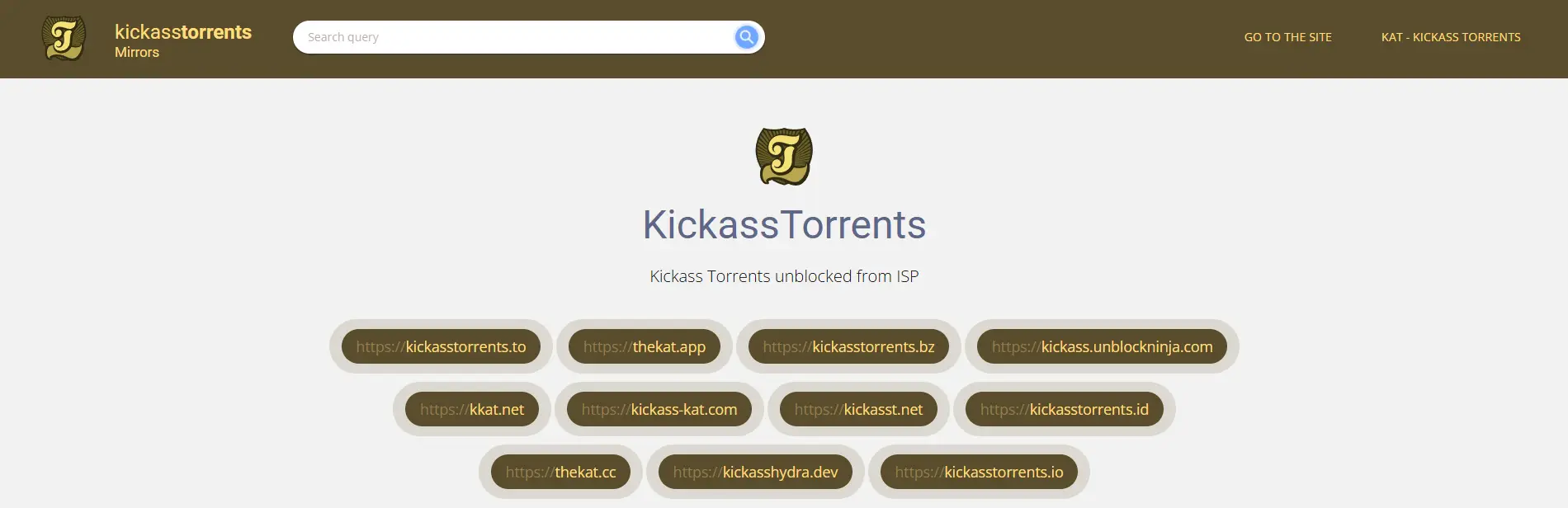
Which KickassTorrents proxy sites are verified for 2026?
The following mirrors have shown the highest uptime and database consistency. Note that domain volatility is a constant; always verify the certificate before interaction.
https://katcr.tohttps://kickasstorrents.tohttps://kickasstorrent.crhttps://thekat.infohttps://kickass.cmhttps://kickass.sxhttps://thekat.cchttps://kickasstorrents.bzhttps://kickasstorrents.cchttps://kickasshydra.dev/https://kickasstorrents.unblockninja.comhttps://kickasst.net/https://kickasstorrents.id/
WARNING: PERSISTENT THREAT ADVISORY Always verify the HTTPS padlock icon in your browser's address bar. These domains are frequently targeted for hijacking. Never enter personal passwords, email addresses, or financial data into any mirror interface. If a site requests a "membership login" to download a public magnet link, it is a phishing attempt.
What are the primary security risks when searching for KAT unblocked sites?
Accessing P2P indexes in 2026 without proper shielding exposes your infrastructure to three primary threat vectors:
Malicious Clones and Phishing
Fake mirrors use familiar layouts to trick users into downloading "required codecs" or "update.exe" files. These are delivery mechanisms for advanced persistent threats (APTs). In 2026, these clones are often backed by sophisticated SEO campaigns to appear at the top of search results.
ISP Monitoring and Legal Notices
ISPs utilize automated scripts to flag traffic directed at known mirror IPs. Without encryption, your provider can log your browsing history and issue automated copyright infringement notices or initiate bandwidth throttling.
Invasive Scripts and Crypto-miners
Many "free" mirrors monetize through browser-based crypto-mining. These scripts hijack your CPU cycles to mine cryptocurrency, leading to hardware degradation, thermal throttling, and system instability.
A practitioner’s guide: How to access KickassTorrents safely
Follow this high-level workflow to ensure a secure session:
- Set up a more consistent network environment: Before accessing P2P-related sites or services, it is better to avoid frequently changing connection settings during the same session. Keeping the network setup more stable can help reduce unnecessary interruptions and lower the chance of obvious environment mismatches while browsing.
- Launch a Secure Browsing Environment: Do not use your primary browser. Utilize an isolated profile or an anti-detect browser to prevent cross-site tracking.
- Select a Verified Mirror: Use the list provided above, confirming the SSL/TLS certificate is valid.
- Neutralize Ad-Traps: Use a robust ad-blocker and script-blocker. In 2026, mirrors are littered with "Fake Download" buttons that lead to malicious redirects.
- Verify Swarm Health: Before downloading, analyze the Seeder/Leecher ratio and read the user comments. Be suspicious of brand-new uploads that have thousands of seeders but zero community feedback—these are often "bait" files.
- Post-Download Sanitization: Before opening any file, check the extension. Avoid executable files (.exe, .bat, .cmd) or "cracks" and "patches." Run a local checksum/hash verification if the source provides it, and scan all files with up-to-date security software.
Why should you use an anti-detect browser for torrenting?
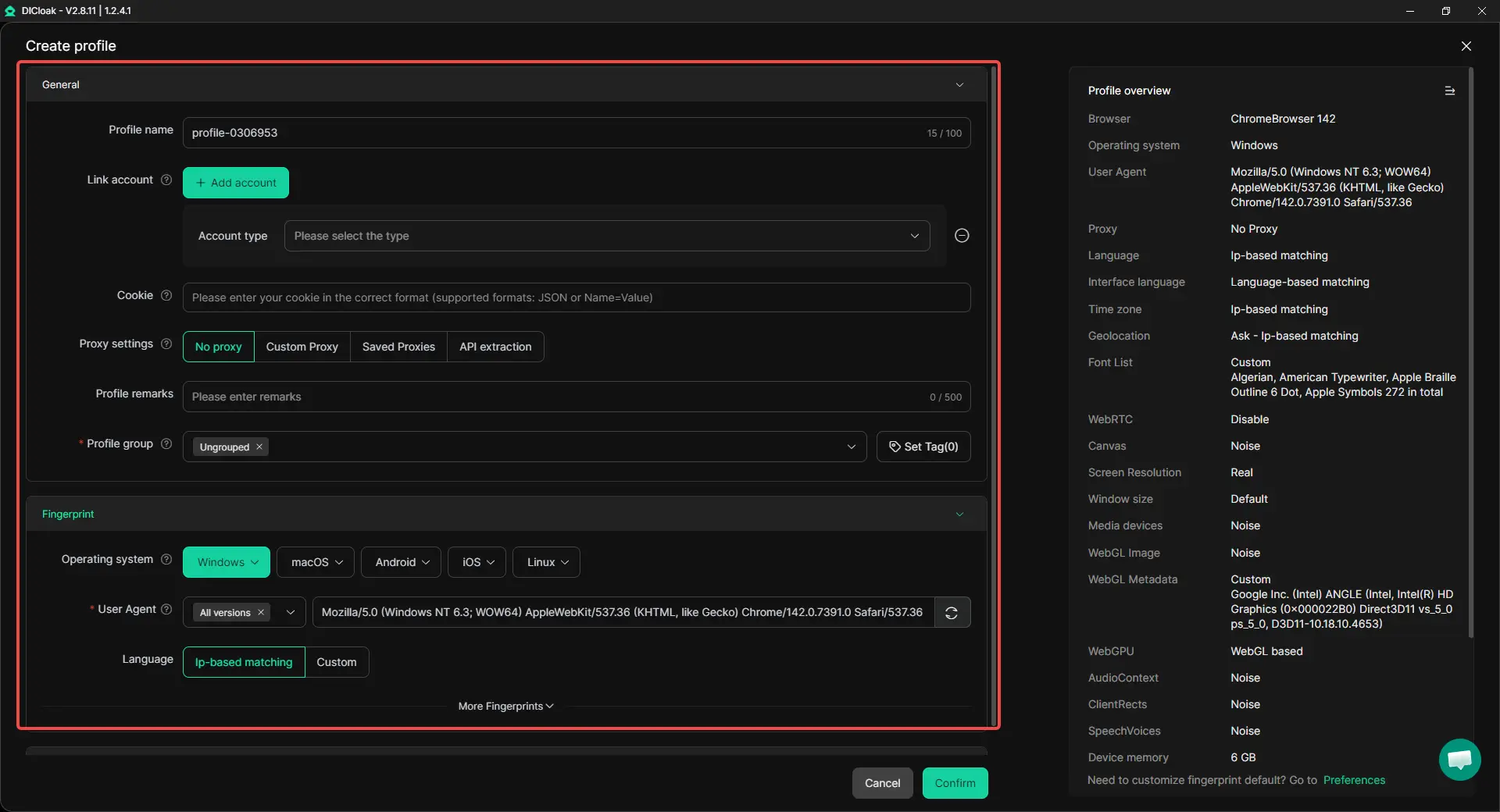
Standard browsers (Chrome, Safari, Edge) are vulnerability points. They allow mirrors to "fingerprint" your device, creating a unique ID based on your hardware and software configuration. Fingerprinting can link your torrenting activity to your real-world identity. When browsing mirror sites, one of the main challenges is keeping different online activities separated instead of letting everything run through the same browser profile. With DICloak, users can build a more organized setup by creating separate browser profiles for different needs and managing them more clearly over time.
Separate profiles with more control over setup
With DICloak, users can create separate browser profiles, each with its own cookies, cache, local storage, and session data. Users can also configure browser fingerprint settings and other profile parameters based on different usage needs. This makes it easier to keep browsing environments apart and manage them more clearly over time.
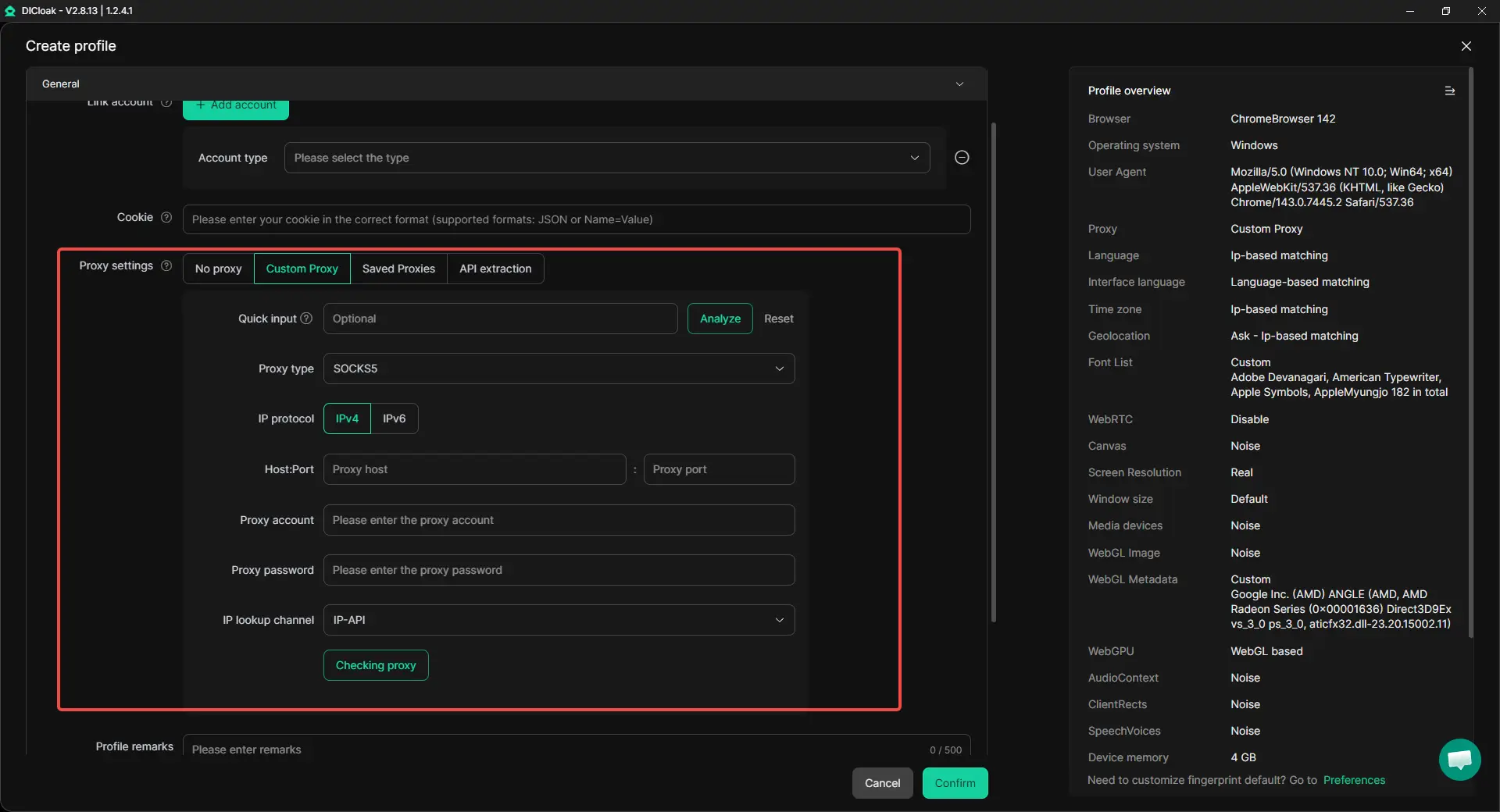
Custom proxy setup for each profile
With DICloak, users can configure a custom proxy for each browser profile. This makes it easier to keep network settings aligned with a specific profile and manage separate browsing environments more clearly.
What should you do if KickassTorrents links are still blocked?
If you encounter access failures, use these technical troubleshooting steps:
Resolving CAPTCHA Loops
If you keep getting stuck in repeated CAPTCHA checks, the site may be treating your connection or browser profile as unusually crowded, inconsistent, or higher risk.
Fix: Try reducing frequent environment changes during the same session, keep the profile setup more consistent, and avoid mixing too many activities in one browser profile. With DICloak, users can separate different tasks into different browser profiles and configure a custom proxy for each profile, which can make the overall setup easier to manage.
Resolving Slow Download Speeds
Slow speeds can happen for many reasons, including connection quality, server load, mirror quality, or traffic congestion during busy hours.
Fix: Try a more stable network setup, avoid low-quality mirrors, and test access at different times of day. In some cases, performance may also improve when the browsing environment and connection settings stay more consistent throughout the session.
Fixing Magnet Link Failures
If clicking a magnet link produces no response, the browser-to-client protocol association is broken.
Fix: Ensure your torrent client (e.g., qBittorrent or Transmission) is updated. Check your OS firewall to ensure the client has explicit permission to accept incoming connections on its assigned port.
What are the best KickassTorrents alternatives to use in 2026?
If KAT mirrors are unreachable, these established indexes are the most reliable fallbacks:
| Site Name |
Strengths |
Risks/Considerations |
| The Pirate Bay |
Massive archive; trusted uploaders marked with skull icons. |
Heavy ad-traps; frequent domain hops. |
| 1337x |
Cleanest UI; excellent community moderation for quality. |
Primary domains are often the first to be blocked. |
| YTS |
Optimized HD movie files; best for low-bandwidth users. |
Strictly movies; audio is often highly compressed. |
| TorrentGalaxy |
Strong library for new releases; includes IMDb info. |
Newer site; less depth in niche categories. |
| Nyaa |
The absolute standard for Anime and East Asian media. |
Very niche focus; old-school, basic interface. |
Frequently Asked Questions (FAQ)
Is it legal to use KickassTorrents unblocked mirrors?
The legality is determined by your local jurisdiction and the nature of the content. While downloading open-source software or public-domain media is legal, downloading copyrighted material without authorization is a violation of law in most regions.
Is it safe to browse the KAT index directly?
Not always. Some mirror sites may log visitor activity, and lower-quality copies can introduce additional privacy or security concerns. Even if you are only browsing, it is still worth treating unofficial mirrors carefully.
What is the difference between a KAT proxy and a KAT mirror?
In the current landscape, a mirror is a full copy of the site and database, while a proxy acts as a gateway to the site. In 2026, the terms are used interchangeably, as both serve the goal of bypassing censorship.
Why do KAT mirrors have so many "Download" buttons?
These are ad-traps designed to lead you to malicious software installers. Legitimate KAT mirrors primarily use magnet links (often a small magnet icon). Avoid any large, flashing buttons.
Are free tools reliable for accessing KickassTorrents?
In many cases, not really. Free tools may have weaker privacy standards, less stable performance, and more limited support for heavy or repeated use. That can lead to a poorer experience and more uncertainty around how your data is handled.
Conclusion
Using KickassTorrents in 2026 calls for a more careful approach, not just a quick workaround. With a more isolated browsing environment through DICloak, better profile separation, and more attention to file safety, users can reduce some of the common risks tied to unofficial torrent sites and mirror pages. Good judgment and security awareness still matter most.
 Web Proxy Tools
 Free Tools
 Cookie Plugin
 UA Generator
 MAC Address Generator
 IP Generator
 IP Address List
 2FA Code Generator
 World Clock
 Anonymous Check
 WebRTC Leak Test
 UUID Generator
 Free Web Proxy Site
 Proxy Checker
 FB Ad Checker
 AI Web Scraping
 Free SMM Tools
 Twitter Shadowban Checker
 Instagram Name Checker
 UTM Generator
 Username Generator
 AI Hashtag Generator
 LinkedIn Headline Generator
 Social Media Image Resizer