If you’re asking is dropshipping dead, you’re not alone. Sellers see rising ad costs, copycat stores, and stricter platform rules, yet some shops claim steady profits, while others get wiped out or banned overnight. The real headache hits when you’ve tried three suppliers in six months and still get refund requests faster than sales.
Scrolling forums, you’ll find half the comments shouting that “dropshipping is over.” But then you spot screenshots from people still scaling new stores in 2026. So does dropshipping still work, or is it just a grind now?
What’s actually changed is the margin for error. The old playbook, generic products, slow shipping, and hoping for a viral TikTok, rarely holds up. Platforms tighten review filters, payment holds last weeks, and one flagged shipment can freeze your account. At the same time, a handful of operators do pull off stable growth by focusing on supply chain control, brand-style assets, and tighter order tracking. It’s less about luck, more about digging into details that most newcomers skip.
If you’re trying to decide if dropshipping is still profitable in 2026, the next section breaks down exactly where stores are failing, and what actually works now.
Why So Many People Ask If Dropshipping Is Dead in 2026
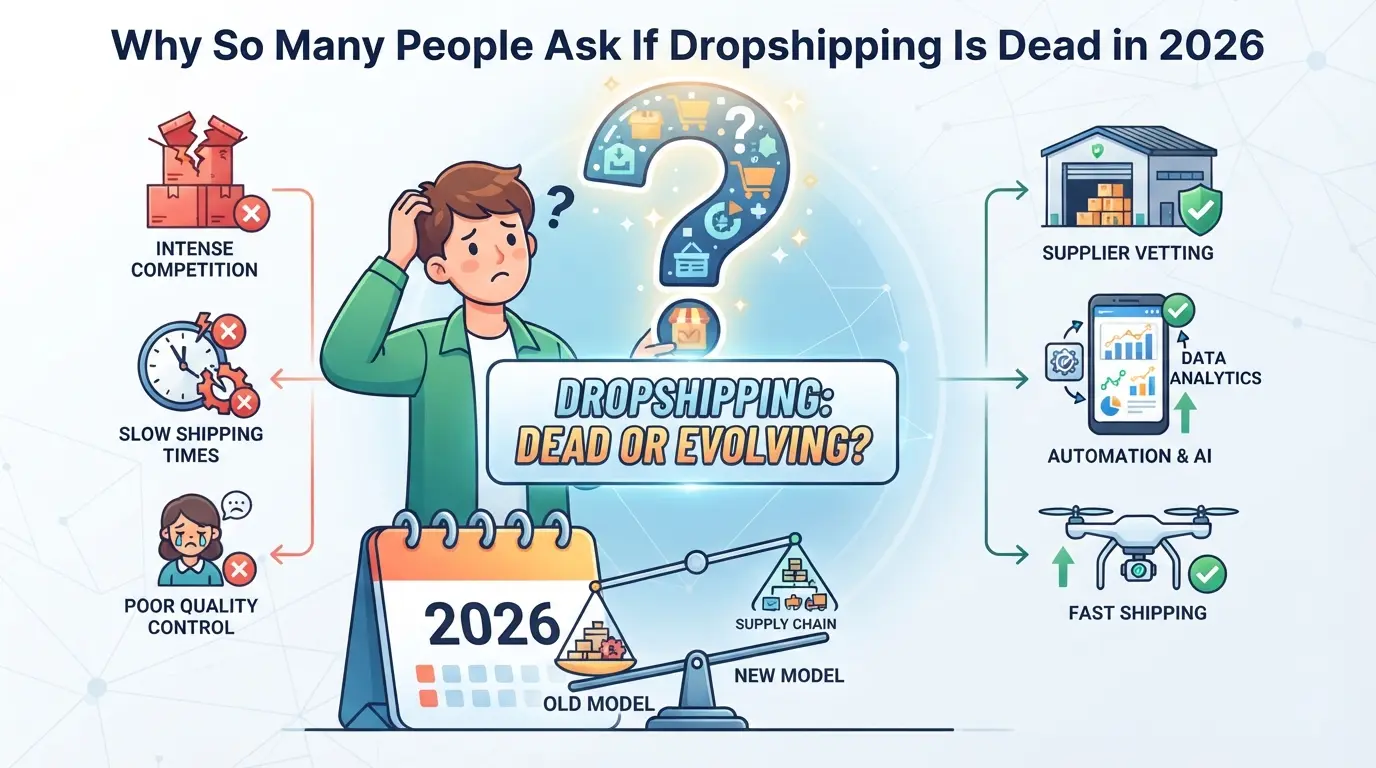
A lot of people ask “is dropshipping dead” because the easy wins are mostly gone. What worked for beginners in 2022 almost never works the same way now, platforms have caught up, and the real risks are much higher.
What Changed in Dropshipping Over the Last Few Years?
The market got crowded, and everyone started selling the same trending products. At the same time, platforms like Shopify and Meta updated rules, making it harder for new stores to slip by unnoticed. Even small mistakes can trigger payment holds or instant bans.
Why Are There So Many 'Dropshipping Is Dead' Videos and Posts?
Influencer hype cycles play a big role. When a few sellers go viral with “I made $100k in 60 days!” stories, hundreds rush in, hoping to copy the formula. The reality is, those stories are outliers, the people who fail rarely post their losses. If you only see the wins, you get the impression that dropshipping is easy, and when it doesn’t work, it feels like the whole model is broken. Content creators also push “dropshipping is dead” for clicks, even if they’re running stores on the side. The real story is that the bar is much higher. Running ads costs more, shipping takes longer, and customers are quick to file chargebacks if something feels off. For every one person who breaks through, dozens get stuck with unsold stock or frozen payouts. The main thing that’s changed is how little room there is for sloppy execution, small mistakes now cost entire stores.
What Real Risks and Barriers Exist in 2026?
- Ad costs on Meta and Google keep rising, $50+ to acquire a single buyer is common for beginners.
- Shipping from overseas often faces 3-6 week delays, leading to refund requests and disputes.
- Payment processors hold funds longer and freeze accounts for minor customer complaints.
The next section goes into the real reasons most new stores fail, beyond just competition or ad spend.
What Actually Makes Dropshipping Fail for Most Beginners
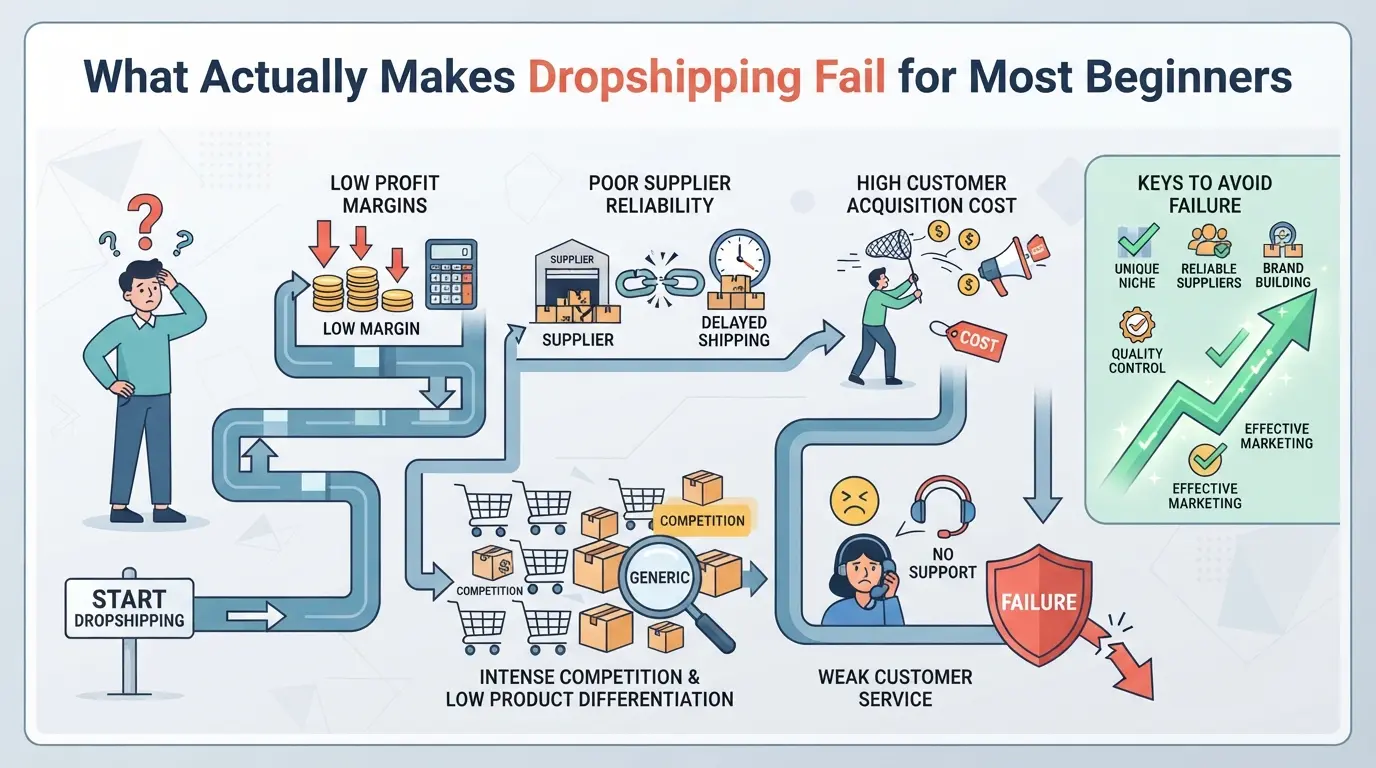
Most new dropshipping stores don’t fail because “is dropshipping dead” is true, they fail for concrete, avoidable reasons. The biggest problems come from picking the wrong products, chasing quick wins, looking like every other store, or missing critical rules. If you want to know why beginners wash out fast, here’s where things really break.
Poor Product Selection and Supplier Issues
Stores struggle when they pick products that are already everywhere or too low quality to keep returns down. A supplier who promises fast shipping but can’t deliver on time will wreck your order flow, and once bad reviews stack up, your payment processor may freeze your funds.
Unrealistic Expectations and Get-Rich-Quick Mindset
Hype makes it seem like anyone can launch a Shopify store, run a few ads, and hit five figures in a month. But real stores rarely work that way in 2026. Here’s what actually happens: a new seller copies a trending product, spends $500 on ads, and gets a handful of sales, maybe even loses money after refunds, chargebacks, or ad account bans. The real trap is expecting instant results instead of planning for tight margins and slow improvement. Stores that survive usually test many offers, reinvest profits, and build up reviews over months, not days.
Lack of Differentiation and Weak Branding
Another common mistake is running a store that looks and feels just like hundreds of others. For example, a new shop sells generic LED dog collars with the same AliExpress photos and bland copy as everyone else. When a customer compares options, there’s no reason to trust or remember that store, so ads cost more and repeat sales never come.
Ignoring Compliance, Platform Rules, and Payment Risks
- Skip the business paperwork, and platforms may ban your store without warning.
- Miss tax setup or proper shipping info, and payment processors can lock your balance for 30+ days.
- Use copyrighted images or sell restricted goods, and you risk legal takedowns or ad account bans.
Each of these mistakes kills more stores than market trends or “saturation.” Figuring out if dropshipping is still profitable in 2026 starts by checking if you can avoid these traps, not just if the method is still talked about online.
How to Tell If Dropshipping Is Still Worth It for You in 2026
If you’re asking “is dropshipping dead,” the real answer depends on your skills, resources, and what you want from the business. The market is tougher, but that mainly means shortcuts and guesswork rarely pay off now.
What Skills and Resources Do You Need Now?
You can’t rely on easy ad hacks or generic supplier lists. To run a dropshipping store that actually lasts in 2026, you need hands-on marketing skills, think paid ads, content, and analytics, plus enough budget to test products without panicking over first losses. Direct supplier negotiation is a must, since cutting out middlemen can be the only way to keep margins above 20%. Product research takes hours, not minutes, and copying last year’s TikTok winner just burns cash. The stores that survive now track every step: from ad spend to supplier delays, returns, and chargebacks.
When Does Dropshipping Make Sense (and When Not)?
- You have at least $3,000 set aside to test products and ads before expecting profit.
- You’re willing to learn paid ads and supplier negotiation, not just copy trending products.
- You can handle delayed payouts, chargebacks, or account reviews without cashflow panic.
How to Assess Your Risk and Commitment Level
If you need fast profit or hate dealing with returns, dropshipping is a rough fit in 2026. The work isn’t just running ads, it’s solving supplier issues, fighting for honest chargeback handling, and handling platform freezes that can last weeks. Only go in if you have a backup plan for when a payout stalls or a supplier flakes.
Checklist: Is dropshipping worth it for you now?
- Can you lose your starting budget without personal stress or debt?
- Do you have at least 10 hours per week, every week, to work on this, ad testing, supplier calls, and support?
- Do you have a clear backup income, or a way to pause and restart if your store is frozen?
Stores fail fastest when owners treat dropshipping like a quick side gig. If you tick all the boxes above, there’s still room, just not for shortcuts. Next, we’ll break down the risks and mistakes that kill stores the fastest in 2026.
What Risks and Mistakes Kill Dropshipping Stores Fastest in 2026
The fastest way to lose a dropshipping store in 2026 is ignoring account risks, scaling too fast, or letting customer complaints pile up. If you wonder "is dropshipping dead," most failures come from these mistakes, not the business model itself.
Underestimating Platform and Payment Account Risks
One platform ban or payment account freeze can erase months of profit, sometimes overnight. Even one flagged shipment or a mismatch in account details is enough to trigger a payment hold that stalls your cash flow for weeks. Treat compliance as a daily checklist, not an afterthought, or your store can go dark with no warning.
Scaling Too Fast Without Reliable Systems
- Confirm tracking numbers update to buyers within 24 hours
- Use order management tools that show real-time inventory
- Set up auto-replies for common customer questions
Neglecting Customer Experience and Refunds
Chargebacks and negative reviews are more than bad optics, they can get your payment provider to cut you off. Fast refunds and clear support are now baseline.
- Issue refunds within 48 hours if delivery fails
- Track and respond to all dispute tickets daily
- Audit supplier quality before new product launches
Next up: how smart operators actually survive and grow even as the margin for error keeps shrinking.
How Modern Dropshipping Stores Survive and Grow in 2026
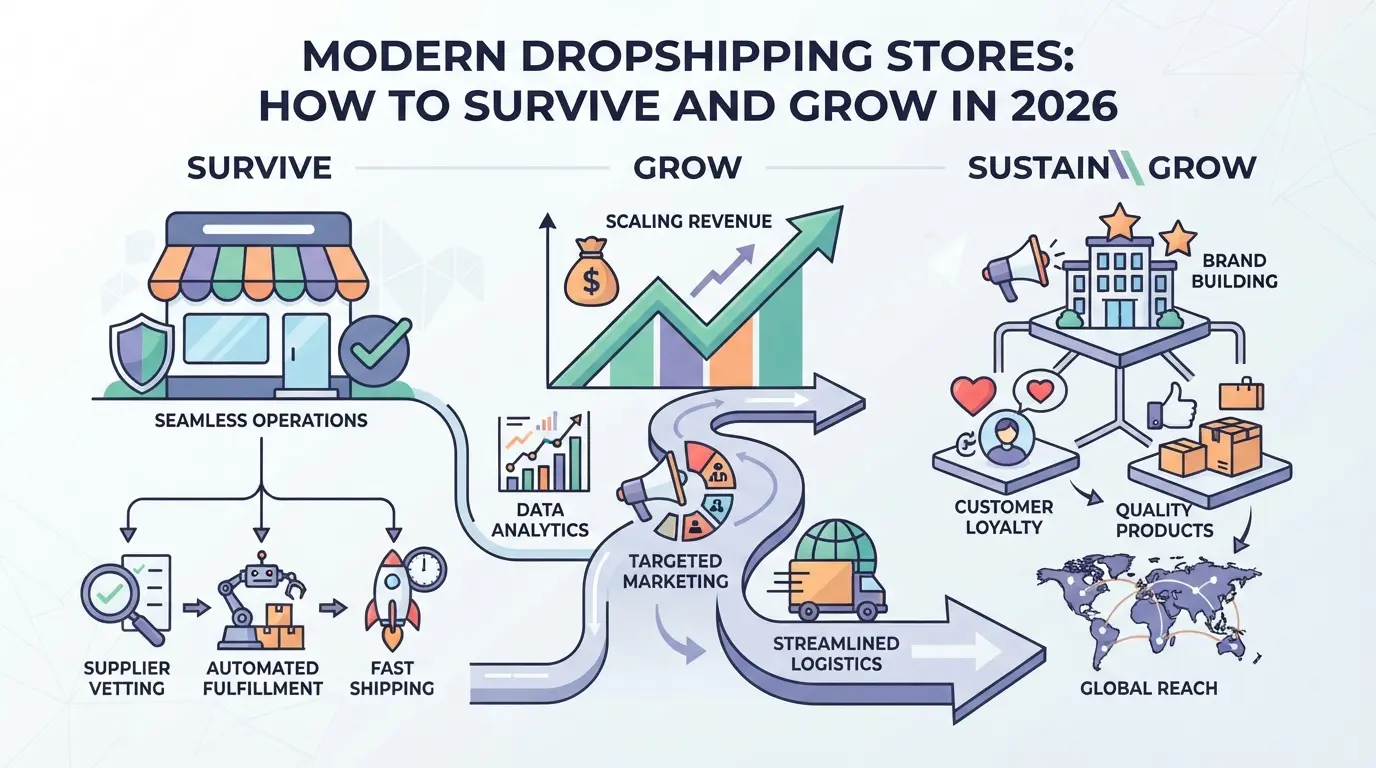
Stores that last in 2026 don’t just copy old hacks, they build real brands, pick harder niches, and fix speed and service before chasing scale. The answer to “is dropshipping dead” is simple: the lazy version is, but the operators who push into the details are still growing.
Building a Real Brand and Customer Trust
Branding now means more than a logo or theme. Customers check for real support, clear policies, and reviews from past buyers. Stores that answer quickly and handle refunds or issues without excuses see repeat orders, word spreads fast when support is actually reachable.
Focusing on Niche Products and Unique Value
Picking a niche is no longer a tip; it’s survival. Saturated categories (like generic phone cases) get buried by ad costs and platform filters. The stores still scaling pick products with built-in stories, think special use-cases, custom bundles, or supply only available to a small group. One store selling ergonomic tools for remote workers stood out by filming tutorials, answering questions live on launch day, and shipping a welcome insert with setup tips. The easy route, listing what everyone else can find, leads to churn and low repeat rates. Winning stores put real energy into explaining why their version is built for a specific customer, not just anyone with a credit card.
Using Domestic or Hybrid Fulfillment for Faster Shipping
Operators who ship from within the buyer’s country (or use a mix: local stock for bestsellers, overseas for slow movers) see fewer refunds and fewer chargebacks. For example, a store selling pet toys moved top items to a US warehouse and cut delivery time to three days, shrinking complaints and boosting post-purchase reviews.
Optimizing Ad Spend and Testing Creatives Efficiently
- Test at least 3 ad angles per product before scaling spend.
- Kill underperformers fast, don’t “hope” an ad will turn around.
- Track every creative’s ROI weekly, not just monthly.
Stores that burn money on one “winning” ad set often stall out. The ones that last treat every $100 as a test, not a sure bet.
The next challenge isn’t just growth, it’s handling more accounts, channels, and team members without tripping platform safeguards or losing control over business assets.
How to Manage Multiple E-Commerce Accounts and Teams More Safely with DICloak
Once you move past basic dropshipping and start juggling several stores, or bring extra people into your operation, the risk of overlap, leaks, or mixups climbs fast. Not every reader needs this, but for those scaling up, keeping platforms, logins, and team actions separated isn’t optional anymore. Here’s how teams can use DICloak to handle multi-account and team workflows more safely:
Separating Store Accounts with Profile Isolation and Fingerprint Configuration
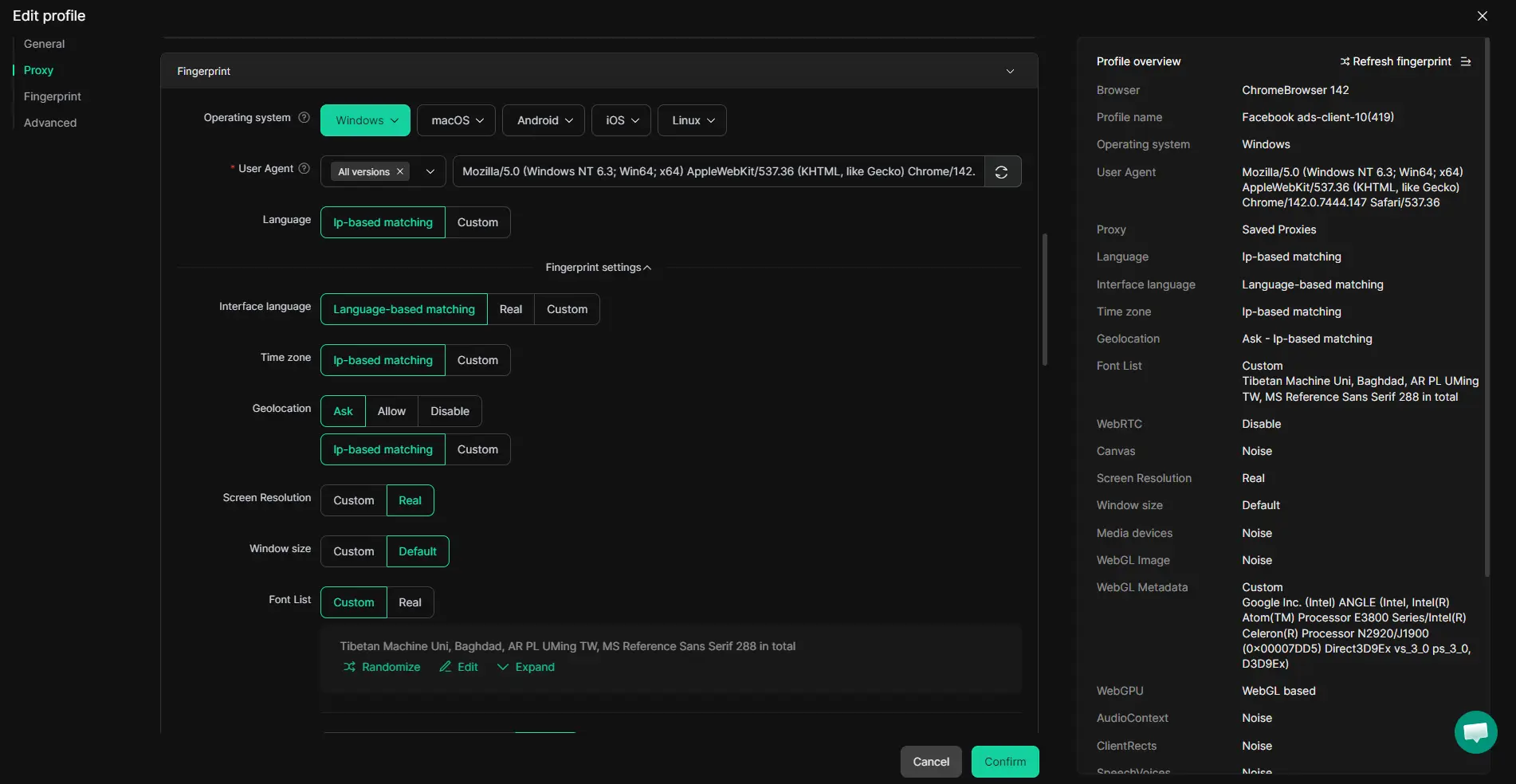
Operators can create a dedicated browser profile in DICloak for each store or account, keeping cookies, sessions, and browser fingerprints separate. For example, you might set up a unique profile with its own system settings and language for every Shopify or Amazon login. This keeps each store’s session data apart, reducing the chance that actions in one account bleed into another. The scope covers browser profiles and session separation; it doesn’t touch store inventory or products.
Assigning User-Owned Proxies to Each Store Profile
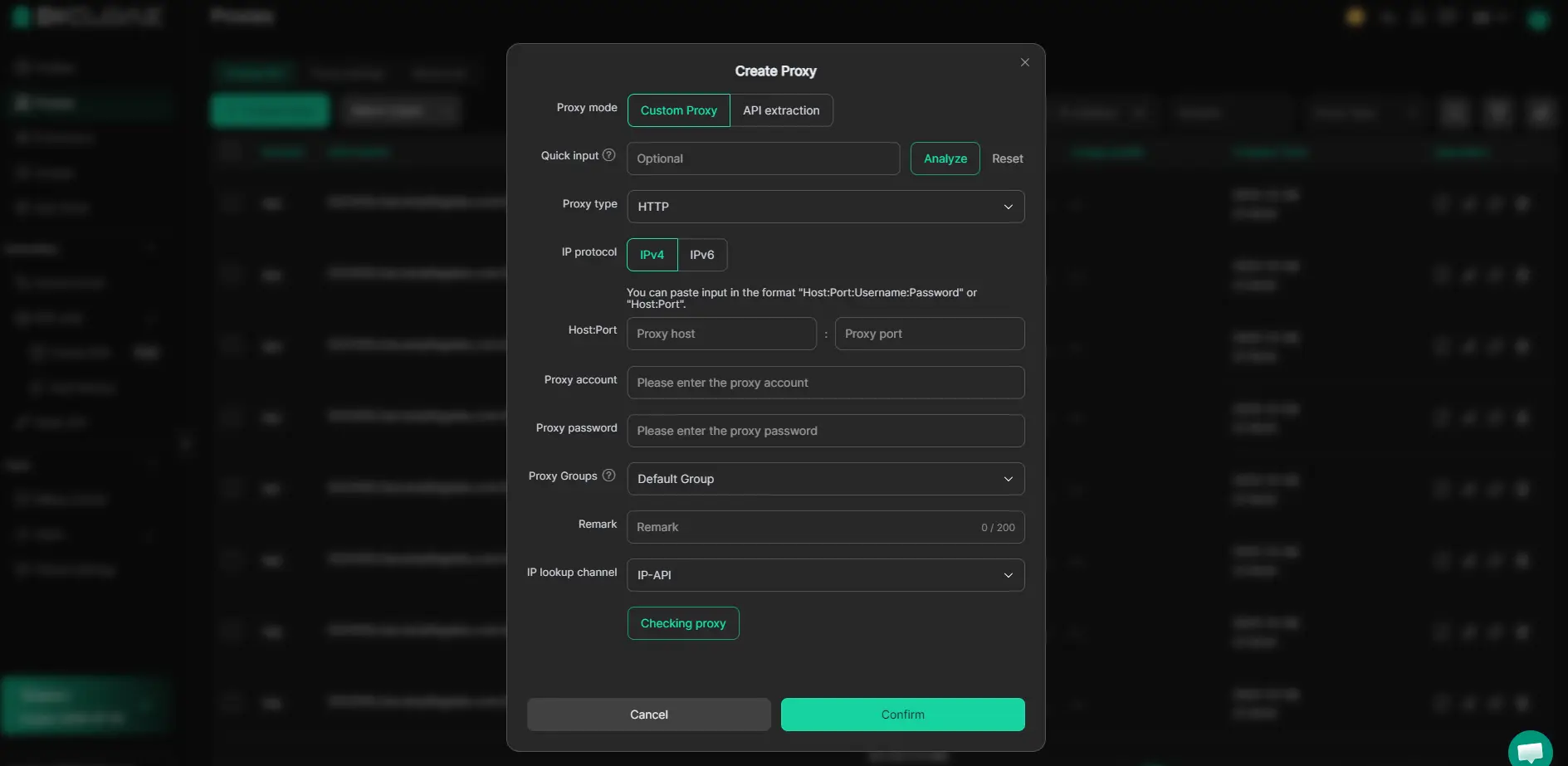
If your workflow needs a certain network route, you can assign your own proxy to any DICloak profile. This means each store’s browser session can use its own connection, say, one profile on your office line, another through a SOCKS5 proxy. Before you start, DICloak lets you test that proxy so you know the connection works. Operators pick, set up, and check these proxies; DICloak itself never supplies them or controls network outcomes.
Controlling Team Access with Permissions and Profile Groups
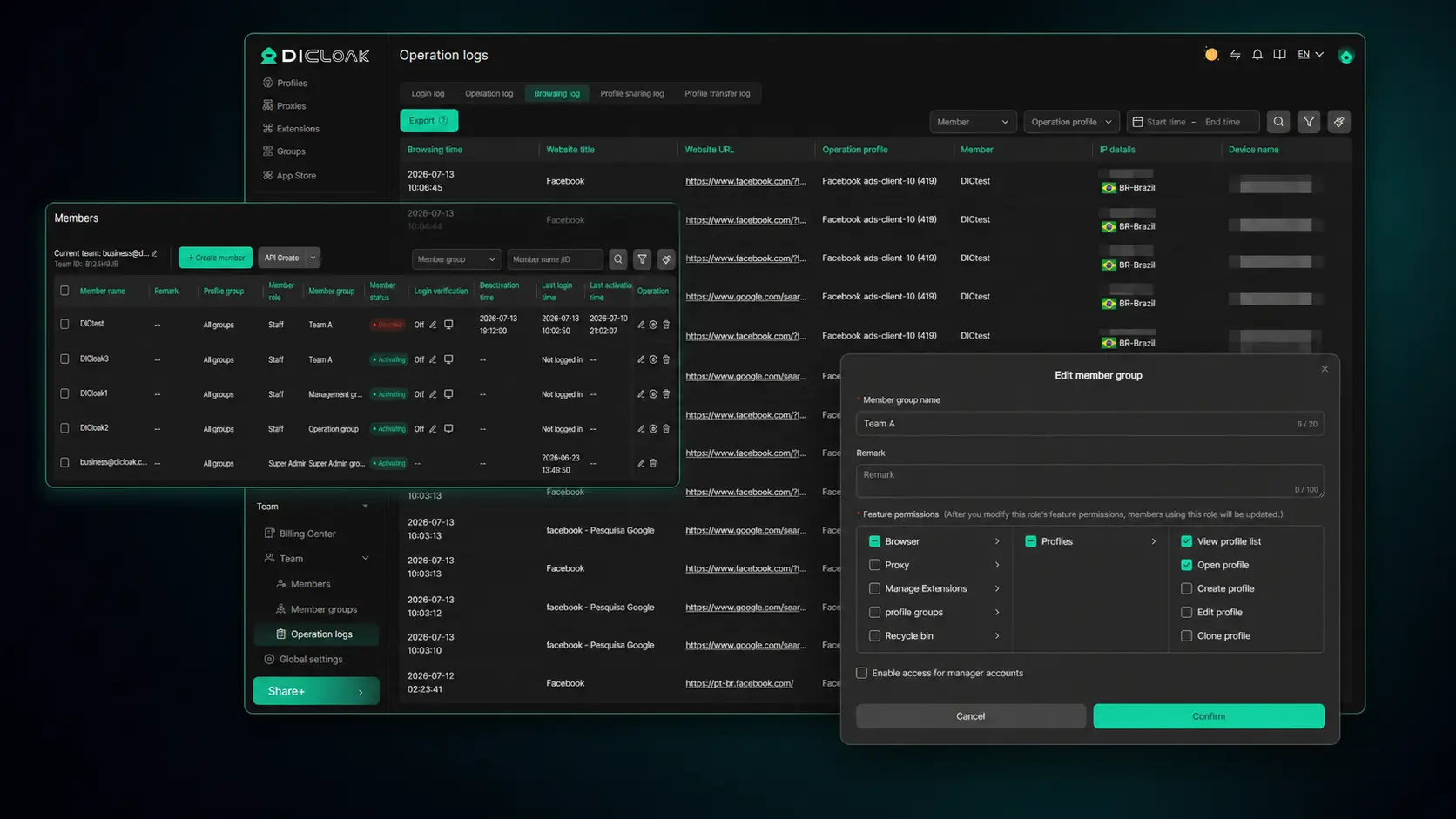
When a team is involved, admins can set up permissions so each member only sees or uses the store profiles they’re supposed to handle. You might have one person limited to viewing orders in two stores, while another can open all profiles but not edit settings. These controls help prevent accidental changes and leaks, but they only apply inside DICloak, not on the e-commerce sites themselves.
If you’re finding that even strong workflows aren’t enough, you may want to check which business models fit your goals better.
When Dropshipping Is the Wrong Choice: Alternatives and Better Fits
Dropshipping works for some, but not every business goal or skill set. If you’re running into constant account bans, thin margins, or slow fulfillment, it may be time to ask if a different model would get you better results.
When to Consider Print-on-Demand, Affiliate, or Inventory-Based Models
| Model |
When It Fits Best |
Main Drawback |
| Print-on-Demand |
You want custom products, small batches, or creative focus |
Production can be slow |
| Affiliate Marketing |
You prefer content, reviews, or traffic-building |
Lower control and lower profit |
| Inventory-Based |
You handle logistics, want better margins, and can pre-buy |
Higher upfront risk |
The biggest difference, inventory-based models need more capital, but you control quality and shipping. Print-on-demand gives creative freedom for niche stores, but scale is slower. Affiliates skip fulfillment headaches, but you trade profits for simplicity.
Signs You Should Pivot Away from Dropshipping
If you’ve been stuck at break-even for months, or keep getting hit with compliance warnings, forcing dropshipping won’t fix the core problem. It’s time to consider what you’re actually good at, if you have strong marketing skills but hate support, affiliate is a better fit. If you care about product quality and can invest upfront, holding inventory opens new options.
Trying to force dropshipping when your strengths or market don’t match the model usually just means more frustration and wasted time. Sometimes switching is the smarter move, even if it means starting fresh.
Frequently Asked Questions About is dropshipping dead
Is dropshipping legal in 2026?
Yes, dropshipping is still legal in most countries in 2026. However, you must follow all platform policies, pay the right taxes, and obey import or customs laws. Selling copyrighted or dangerous items can get your account banned. Always check platform rules and register your business to avoid legal trouble.
Can you still make money with dropshipping in 2026?
You can make money with dropshipping, but it is harder than before. Success now needs unique products, strong branding, and real customer service. Many old tricks no longer work. Profitable stores focus on solving real problems, using quality suppliers, and building trust with buyers.
How much money do you need to start dropshipping now?
Most beginners need at least $500 to $2,500 to test and launch a dropshipping store. This covers website fees, paid ads, tools like email or review apps, and buying test orders. Starting with a bigger budget means you can test more products and ads to find what works.
What platforms are best for dropshipping in 2026?
Shopify and WooCommerce are still top choices for building your own store. Amazon and eBay allow dropshipping but have strict rules and higher risks of account suspension. Each platform has different fees and policies, so you need to pick one that matches your business goals.
Why do most dropshipping stores fail so quickly?
Most dropshipping stores fail because owners choose boring or saturated products, skip building a real brand, break platform rules, or underestimate advertising and shipping costs. Ignoring customer complaints and slow shipping times also drives people away. Success needs research, planning, and good service.
Consider whether you’re ready to adapt to changing market demands and invest in tools that can simplify your business. Taking the next step with innovative solutions could help you stay ahead in the evolving world of ecommerce. Try DICloak For Free
 Web Proxy Tools
 Free Tools
 Cookie Plugin
 UA Generator
 MAC Address Generator
 IP Generator
 IP Address List
 2FA Code Generator
 World Clock
 Anonymous Check
 WebRTC Leak Test
 UUID Generator
 Free Web Proxy Site
 Proxy Checker
 FB Ad Checker
 AI Web Scraping
 Free SMM Tools
 Twitter Shadowban Checker
 Instagram Name Checker
 UTM Generator
 Username Generator
 AI Hashtag Generator
 LinkedIn Headline Generator
 Social Media Image Resizer