As we navigate the digital landscape of 2026, the demand for free entertainment remains high, but the stakes for personal data security have never been greater. SolarMovie continues to be a primary destination for movies and TV shows, yet it exists in a volatile "legal gray area." It does not host content directly; instead, it serves as a gateway to third-party servers that are often unmonitored and malicious. For the modern practitioner, accessing these sites requires more than just a standard browser; it requires a sophisticated security posture to combat AI-driven malvertising and advanced tracking scripts that have become the norm.
What makes SolarMovie a high-risk streaming destination?
From a security standpoint, SolarMovie is a high-entropy environment. The risks are not merely "annoyances" but structural threats to your system's integrity.
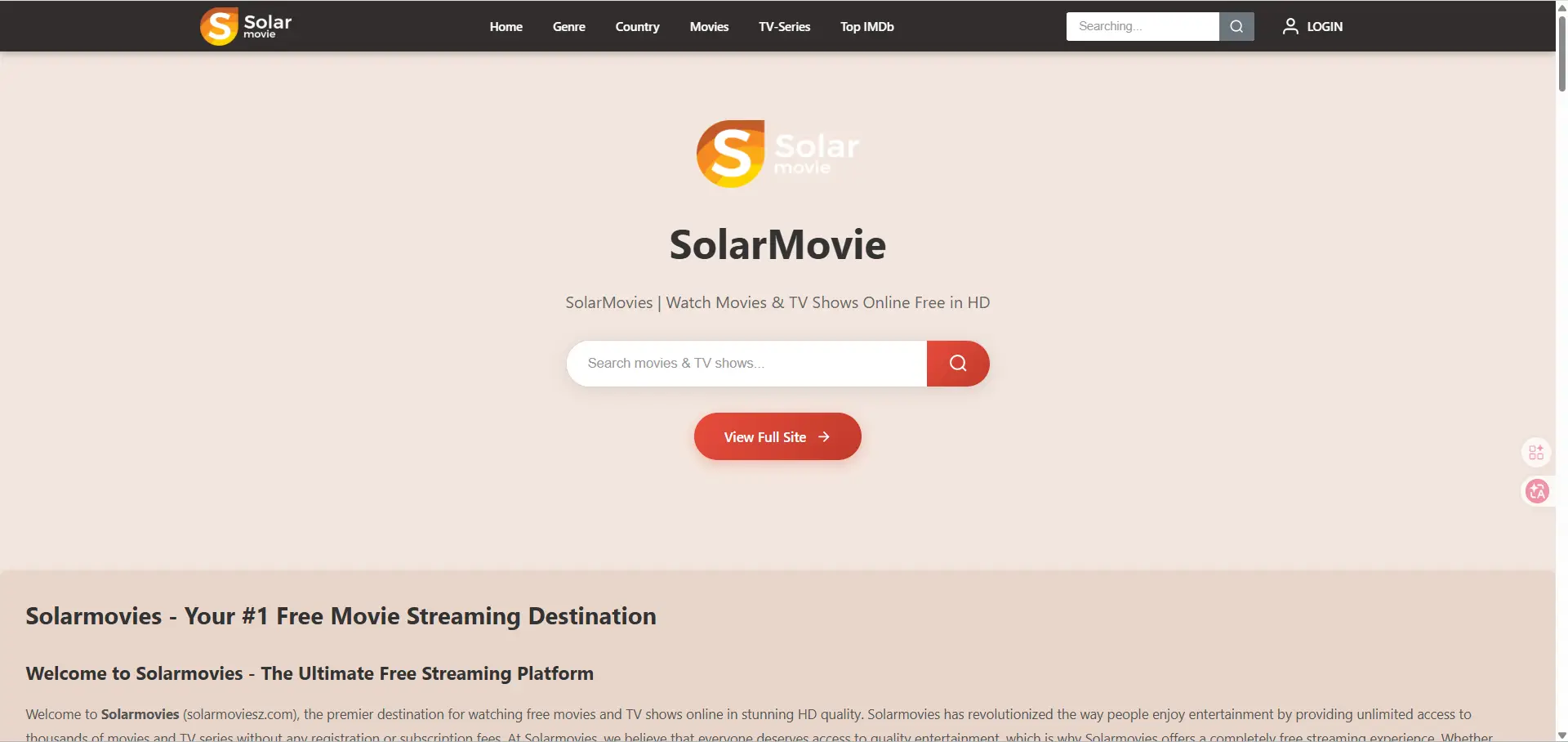
The reality of third-party hosting
SolarMovie acts as a directory, curating links to external servers. Because the platform lacks oversight of these third-party environments, a single click can transition a user from a legitimate-looking interface to a server controlled by malicious actors. This lack of centralized control is the primary vector for exploitation.
Identifying common malware and privacy threats
In 2026, the threats have evolved from simple pop-ups to sophisticated social engineering.
- AI-Driven Malvertising: Highly targeted ads that bypass traditional filters to deliver payloads.
- Fake Media Players & Required Updates: A critical tactic where users are prompted to install "Flash Player updates" or "Browser updates" to view content. These are almost exclusively trojans designed to gain root access to your OS.
- Hidden "Play in HD" Buttons: Elements designed to look like UI controls that actually trigger background scripts or unauthorized downloads.
- Privacy Exposure: Aggressive trackers that harvest IP addresses and device metadata to build persistent digital fingerprints.
Where is the official SolarMovie domain right now?
The volatility of SolarMovie’s URL is a direct result of ongoing copyright pressure and domain seizures. Finding the "official" site is a moving target.
Navigating the proxy and mirror landscape
To maintain uptime, the service relies on a rotating list of mirrors and proxies. Based on current telemetry, active domains often include: * solarmovie.pe * solarmovie.sc * solarmovie.mn * solarmovie.bar
Verified sources for finding current links
Relying on random search engine results is a major security failure, as attackers frequently launch "cloned" sites to phish for data. Practitioners should verify domains through community-verified "megathreads" on privacy-focused subreddits or dedicated tech blogs that track domain migrations in real-time.
How to shield your browser from intrusive ads and pop-ups in SolarMovie
A "naked" browser is a liability. You must implement a multi-layered defense to neutralize scripts before they execute.
Recommended ad-blocking extensions
To mitigate the risk of clicking harmful "Download" prompts, the following tools are mandatory:
- uBlock Origin: Still the industry standard for efficient, low-overhead blocking.
- AdGuard: Superior for handling complex scripts that attempt to detect and bypass ad blockers. These tools are essential for stripping away the deceptive "Play" overlays that obscure actual content.
Using privacy-focused browsers
The Brave browser remains a highly recommended alternative for streaming. Its native shields provide an automated layer of protection against trackers and cross-site scripts, which is critical in an era where AI-injected ads can bypass traditional extension-based filtering.
Protecting your identity with residential proxies while using SolarMovie
Masking your IP address is the first line of defense against both geo-blocking and ISP-level tracking.
Bypassing regional blocks without speed loss
While a VPN provides encryption, it often uses datacenter IP ranges that are easily flagged and blocked by streaming platforms. Residential proxies provide a more "natural" connection by routing traffic through home-user IPs, ensuring higher success rates for accessing region-locked content.
The advantage of rotating residential IPs
For users trying to access SolarMovie, the main advantage of rotating residential IPs is that they can make traffic appear less repetitive and less tied to one fixed address. Because the IP changes over time and comes from residential networks, access may feel more stable than using a single static IP that gets blocked quickly. This can sometimes reduce interruptions like access errors, rate limits, or repeated verification checks. Still, rotating residential IPs do not make SolarMovie safer or remove the legal and security risks that may come with using unofficial streaming sites.
Using DICloak to create a secure SolarMovie streaming sandbox
For those prioritizing absolute isolation, an antidetect environment is the most effective way to separate high-risk browsing from your personal digital identity.
Cybersecurity specialists use isolation to ensure that any trackers or malicious scripts encountered on SolarMovie are trapped within a "sandbox." This prevents cross-contamination, ensuring that a movie session cannot compromise your bank accounts, saved passwords, or personal credentials.
Key features for safe streaming
People utilize DICloak to implement high-level security protocols:
- People create isolated browser profiles to ensure that cookies and trackers from unverified sites never interact with their primary browser data.
- Users manage multiple proxy configurations (user-configured) via a single dashboard, allowing them to switch between nodes instantly if a domain is restricted.
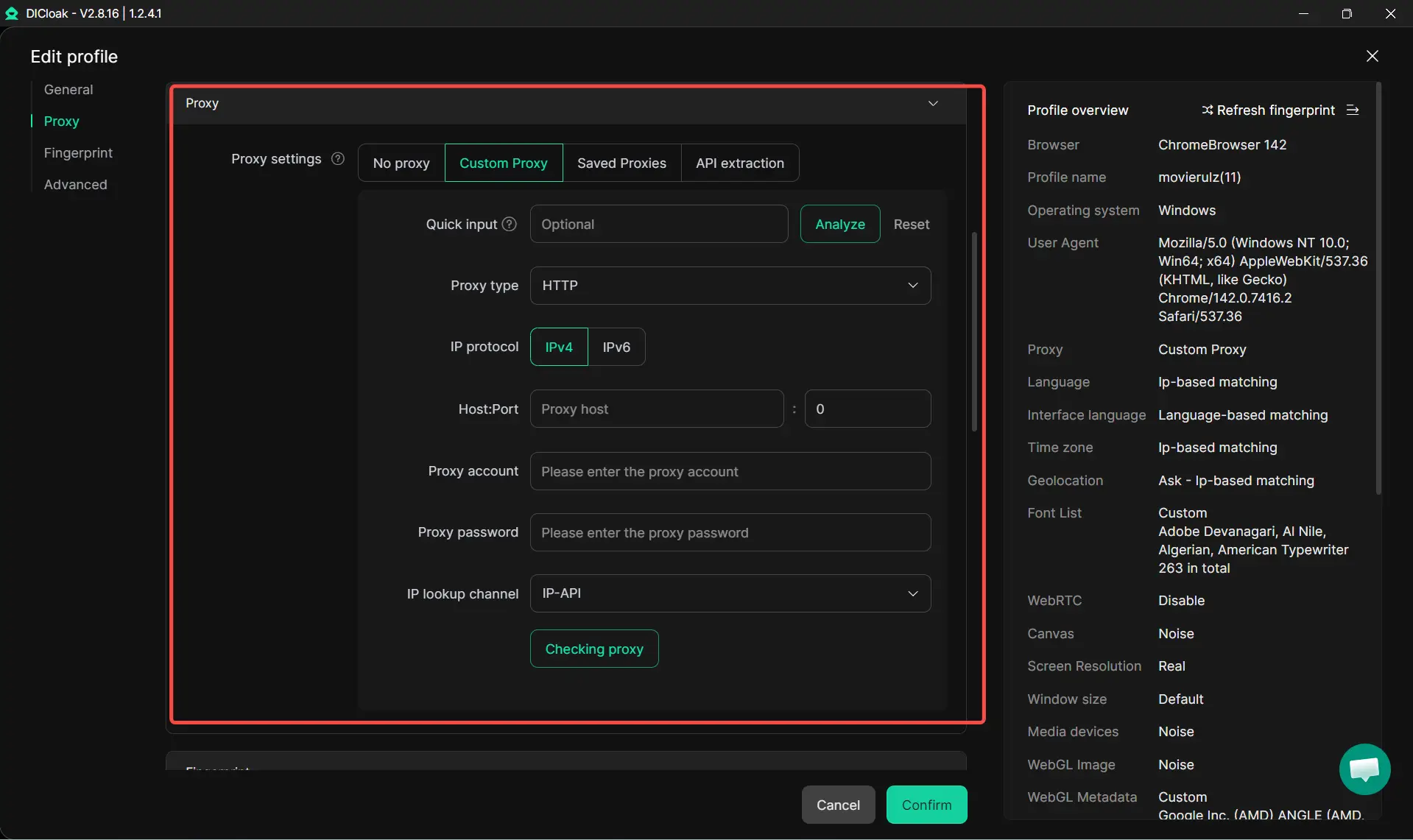
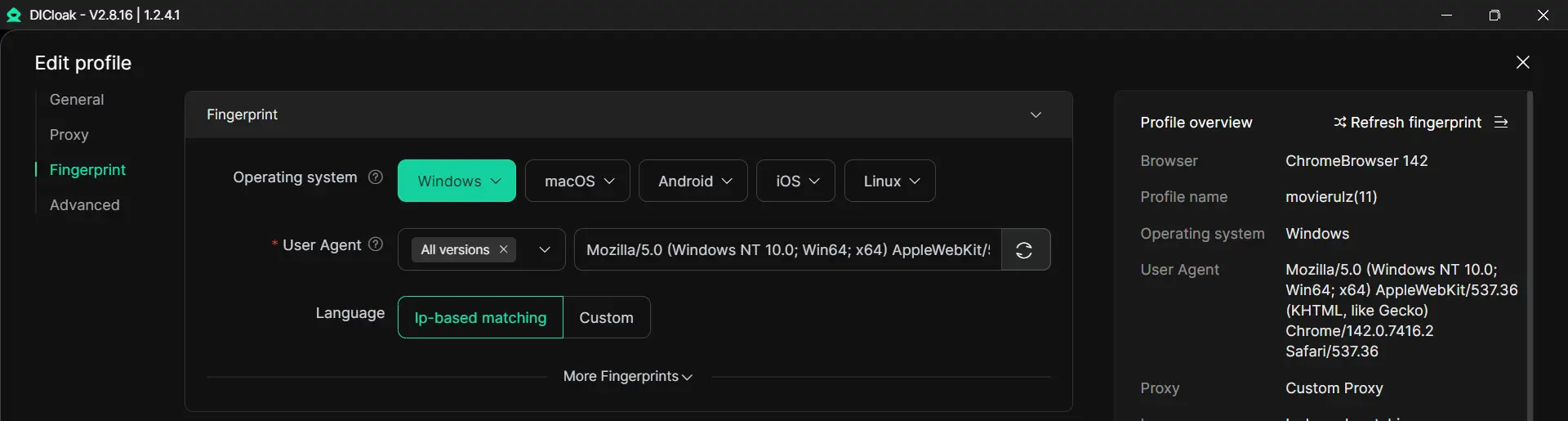
- Technicians customize fingerprint settings including Canvas, WebGL, and AudioContext signatures. By masking these hardware identifiers, users prevent sites from "fingerprinting" their specific computer hardware to track them across different sessions.
Streaming vs Downloading: How to avoid malware
The consumption method determines the severity of the risk.
Identifying fake media links
When a title loads, practitioners ignore the prominent "Download Now" or "Play in HD" buttons. These are deceptive elements. The actual video player usually requires a period to load the "reliable streaming link" from the third-party host.
The dangers of offline files
Downloading content from any SolarMovie mirror is a significant security breach. Offline files frequently contain trojans that bypass OS warnings through social engineering, such as the aforementioned "required browser update" prompts. Furthermore, in many jurisdictions, downloading copyrighted material carries much heavier legal consequences than transient streaming.
Critical security habits for high-risk sites
Security is a process, not a product. Sustained safety requires ongoing maintenance.
Hardware and software maintenance
An active, reputable antivirus suite is non-negotiable. Tools like Bitdefender or Malwarebytes are essential for catching real-time script execution if a browser shield is bypassed.
Post-session data hygiene
Upon concluding a session, it is standard practice to clear all browser caches and cookies. This flushes any persistent trackers. Furthermore, never—under any circumstances—create an account or provide an email address to these platforms.
Legal alternatives when SolarMovie is too risky
If the threat landscape of a specific mirror is too high, several secure, legal platforms offer free content supported by legitimate advertising.
Free and legal streaming options
- Tubi: A massive, legally compliant library.
- Crackle: Reliable content provided by major studios.
- Pluto TV: Effective for live and on-demand content.
- Plex: Offers a robust legal streaming section with no subscription cost.
- YouTube: The "Free to Watch" section contains a growing list of full-length titles.
Accessing region-locked legal content
If these legal services are geo-restricted, practitioners use residential proxies to access the version of the service legitimate for another region, maintaining both security and legality.
Conclusion
In the end, SolarMovie may look like an easy way to watch free content, but it comes with real security, privacy, and legal risks. Ads, fake buttons, trackers, and unsafe third-party links can quickly turn a simple streaming session into a bigger problem. If someone still chooses to visit sites like SolarMovie, using stronger browser protection, careful browsing habits, and isolated environments can help reduce some risk. Still, the safer long-term choice is to use legal streaming platforms whenever possible.
FAQs about SolarMovie
Is it legal to watch movies on SolarMovie?
SolarMovie operates in a legal gray area because it aggregates links rather than hosting files. While viewing a stream may not be prosecuted in all regions, downloading that same content often constitutes a clear legal offense.
Why does SolarMovie have so many pop-up ads?
As a free platform, its revenue is derived entirely from ad networks. Because reputable advertisers avoid these sites, the platforms rely on "shady" networks that frequently serve malicious content and aggressive tracking scripts.
Do I need a VPN or a Proxy for SolarMovie?
A VPN offers encryption, but a residential proxy is often superior for streaming. It provides a natural home-user IP address that is less likely to be flagged by streaming servers, providing better stability and access to geo-blocked mirrors.
What should I do if a site asks me to install an extension?
Immediately close the tab. Browser extensions are a primary delivery method for adware and data-harvesting malware. A legitimate streaming site will never require a unique extension to function.
Can I use SolarMovie on my mobile phone?
Yes, but practitioners strongly advise against it. Mobile operating systems are highly vulnerable to persistent adware and lack the granular control over hardware fingerprinting found in desktop isolation tools. If you must use a mobile device, never download any files, as mobile malware can be incredibly difficult to purge.
 Web Proxy Tools
 Free Tools
 Cookie Plugin
 UA Generator
 MAC Address Generator
 IP Generator
 IP Address List
 2FA Code Generator
 World Clock
 Anonymous Check
 WebRTC Leak Test
 UUID Generator
 Free Web Proxy Site
 Proxy Checker
 FB Ad Checker
 AI Web Scraping
 Free SMM Tools
 Twitter Shadowban Checker
 Instagram Name Checker
 UTM Generator
 Username Generator
 AI Hashtag Generator
 LinkedIn Headline Generator
 Social Media Image Resizer