Managing more than one X account is common for freelancers, agencies, business owners, and social media teams. You may have a personal account, a company account, and several client accounts that all need attention during the same day. Logging out and signing back in every time quickly becomes frustrating, especially when two-factor authentication is involved.
Fortunately, X lets users add multiple accounts and switch between them without logging out each time. The built-in account switcher works well for a small number of accounts, while separate browser profiles can give business and client accounts a clearer workspace. The right setup depends on how many accounts you manage and whether other team members also need access.
How to Switch Between Multiple X Accounts on Mobile
For most people, the X mobile app is the fastest way to move between accounts. Both iPhone and Android let you add several X accounts and switch between them from the account menu. As long as the login sessions remain active, you do not need to enter the password every time you change accounts.
This works well for personal use and small business workflows. If you manage many client accounts, however, it helps to have a clearer system for separating them. This guide on how to manage multiple X accounts explains more advanced account organization when the normal mobile switcher is no longer enough.

Switch X Accounts on iPhone
On iPhone, open X and go to the account menu. If the second account has not been added yet, choose Add an existing account and sign in. After that, return to the account menu whenever you want to switch and select the profile you need.
For example, a freelance social media manager may keep one personal X account and two client accounts in the same app. In the morning, they can answer comments for Client A, switch to Client B for a campaign update, and then return to their personal account later. Because the accounts remain added to X, there is no need to repeat the full login process each time.
The main risk is simple human error. When several accounts look similar, it is easy to post from the wrong profile if you switch too quickly. Before publishing a post or sending an important reply, check the active username and profile picture.
Switch X Accounts on Android
The Android process is similar. Open the account menu, choose Add existing account if needed, and sign in to the additional X account. Once several accounts are connected, open the same menu and select the account you want to use.
A small business might use one X account for brand updates and another for customer support. A staff member can reply to customers through the support account, then switch back to the main brand account for company news. This keeps both sessions available without forcing the user to log one account out first.
The built-in switcher works best when the account list is still easy to understand. If you manage many similar client accounts, clear naming and profile pictures become more important. Otherwise, convenience can turn into confusion.
Fix Common Mobile Account Switching Issues
If an account suddenly disappears from the switcher, first check whether it is still added to the X app. After reinstalling the app or moving to a new phone, you may need to add some accounts again. Also confirm that the username, email, phone number, and password still work.
If X itself is not loading the account list correctly, start with simple checks. Restart the phone, make sure the internet connection is stable, and update the X app. If the issue affects only one account, remove and add that account again instead of signing every account out.
Before reinstalling the app, save important drafts and make sure you can complete any login verification required by the account. This is especially important for work accounts that use two-factor authentication, because a small app problem should not turn into a longer access problem.
How to Switch Between Multiple X Accounts on Desktop
Desktop users have two practical ways to manage multiple X accounts. The first is X’s own account switcher, which is quick and simple. The second is using separate browser profiles, which gives each account a more distinct browser profile.
For two or three accounts, the built-in switcher is often enough. As the number of business or client accounts increases, separate browser profiles become more useful because they keep cookies, settings, and browsing data apart.
Use X’s Built-In Account Switcher
On X.com, open the profile menu and choose the option to add another existing account. After the new account is added, you can return to the profile menu and select the account you want. As long as the session remains active, you can switch between multiple X accounts without logging out.
Imagine a content manager with one personal account and two company accounts. All three can stay available inside the same X interface during the workday. The manager can check one brand’s replies, move to the second brand for publishing, and return to the personal account without entering another password.
This setup is convenient, but all accounts still live inside the same X interface. That makes it easier to post from the wrong account if you move too fast. The built-in switcher is therefore best for users who have a small account list and can easily recognize each profile.
Use Separate Browser Profiles for Multiple X Accounts
Browser profiles provide a stronger visual and data separation between accounts. A freelancer, for example, could create browser profiles called Personal, Client A, and Client B. Each one can keep its own cookies, history, saved passwords, extensions, and browser settings.
This has two practical benefits. First, you can open the client workspace you need instead of switching identities inside the same X window. Second, if one account develops a session problem, you can troubleshoot its browser profile without clearing data for every other account.
For larger workflows, DICloak uses the same basic idea but gives each account an isolated Profile. Users can create separate browser profiles with their own cookies, browser settings, proxy configuration, and stored data. This becomes more useful when many client accounts need to stay organized over time.
How to Keep Multiple X Accounts Logged In
Adding several X accounts is only part of the setup. You also need to keep their session data available if you want to avoid repeated logins. On desktop, cookies and other browser data play an important role in keeping website sessions available.
The goal is not to make an X session permanent. X can still request another login or security check when needed. A better approach is to avoid removing useful session data by accident and give each important account a clear workspace.

Keep Cookies and Login Data
Suppose a social media manager keeps three X accounts logged in through Chrome. Everything works during the week, but on Friday they clear all browser cookies because the browser feels slow. When they return to X, some accounts may need to be added again because the stored session information has been removed.
This is why clearing every type of browser data should not be the first troubleshooting step. Cache and cookies serve different purposes, and deleting cookies can affect active logins. If the problem is only a slow or broken page, you may not need to remove the login data at all.
Incognito mode is also a poor choice for accounts that need to stay logged in over time. Private browsing is designed for temporary sessions. For regular account management, a normal browser profile or an isolated browser profile is usually more practical.
Separate Personal, Business, and Client Accounts
A clear workspace makes account switching easier and reduces mistakes. Instead of placing a personal account, company account, and several client accounts in one browser profile, you can separate them by purpose.
For example, an agency worker could use profiles called Personal, Company, Client A, and Client B. When the worker starts a task for Client A, they open that browser profile and use the X session stored there. When the task is finished, they close it and move to the next workspace.
This setup is especially useful for long-term client work. With DICloak browser profiles, each X account can keep its own browser data and settings instead of sharing one environment with unrelated accounts.
Avoid Accidental Logouts When Switching Accounts
Not every logout is caused by X. Users can also end sessions themselves by clearing cookies, removing accounts, reinstalling apps, or using X’s session controls. If you remove the wrong active session, another computer or phone may need to sign in again.
Imagine a manager who uses the same company account on an office desktop and a laptop. While checking account security, they remove the laptop session by mistake. The account still works on the office computer, but the laptop now shows the login screen.
For team workflows, synced browser data also needs attention. DICloak’s Data Sync can sync selected browser data between authorized users, but admins should control who is allowed to update shared data. This helps avoid a situation where one person logs out and unintentionally changes the session used by another team member.
Common Problems When Switching Between X Accounts
Account switching is usually simple, but problems can still appear after several accounts have been used for a while. One account may disappear from the switcher, X may keep asking for a login, or the same account may work on one device but not another.
These problems are easier to solve when you check one layer at a time. Start with the affected account and device instead of resetting every login at once.
Why an X Account Disappears From the Account Switcher
If one account is missing, first check whether it is still added to X on that device. This often happens after reinstalling the app, clearing data, or setting up a new phone or browser. In many cases, the account itself is fine and only needs to be added back to the switcher.
Also check whether the login details still work. A changed password, email, phone number, or other account update may affect an older saved session. If you manage many accounts, keeping each one in a separate browser profile makes it easier to tell which session belongs to which account.
Why X Keeps Asking You to Log In Again
Repeated login prompts often appear after browser cookies or app data are removed. They can also happen when an active session is ended through X’s account settings. If one device suddenly asks for a login while another still works, check whether the first device’s session was removed.
For example, a manager may have the same business account open on an office PC and a laptop. If the laptop session is ended from the account security page, the next visit on that device will require another login. That does not necessarily mean the account has a larger problem.
If repeated logins happen only inside one browser profile, focus on that profile first. Check whether cookies are being deleted automatically, whether a privacy extension is changing site data, or whether the profile itself has recently been reset.
How to Fix Login and Sync Problems Across Devices
When an account works on one device but fails on another, compare the two setups. Check whether the same X account is actually added, whether the app or browser is current, and whether one device recently cleared browser or app data.
A simple test is to open the account in another browser or device. If the login works there, the issue is more likely connected to the original device or local session. If the account fails everywhere, check the credentials and account access instead.
Teams using shared Profiles should also pay attention to synchronization. If one member logs out and the updated cookie data is synced, another user may later see the same logged-out state. DICloak’s Data Sync settings let admins control how shared browser data is updated, which is useful when several people work with the same account environment.
How DICloak Helps Manage Multiple X Accounts
X’s own switcher is enough for many users, but it becomes harder to manage as the number of accounts and team members grows. At that point, the main challenge is not simply switching accounts. You also need to organize sessions, separate client workspaces, and control who can access each account.
DICloak uses isolated browser Profiles for this type of workflow. Each X account can have its own browser profile, while Profiles can be grouped and assigned to team members. This gives agencies and larger teams a more structured way to manage multiple X accounts.
Keep Each X Account in an Isolated Browser Profile
With DICloak, you can create a separate browser Profile for each X account. The Profile can keep its own cookies, account data, browser settings, and proxy configuration. This prevents unrelated account sessions from being placed inside one browser workspace.
Imagine an agency managing X accounts for a clothing brand, a software company, and a restaurant. The team could create Profiles called Clothing Brand, SaaS Client, and Restaurant. When someone needs to work on the software company account, they open that Profile and return to the browser profile already linked to that client.
If the restaurant account later has a login issue, the team can check only the Restaurant Profile. There is no need to clear cookies or change settings for every other client account.
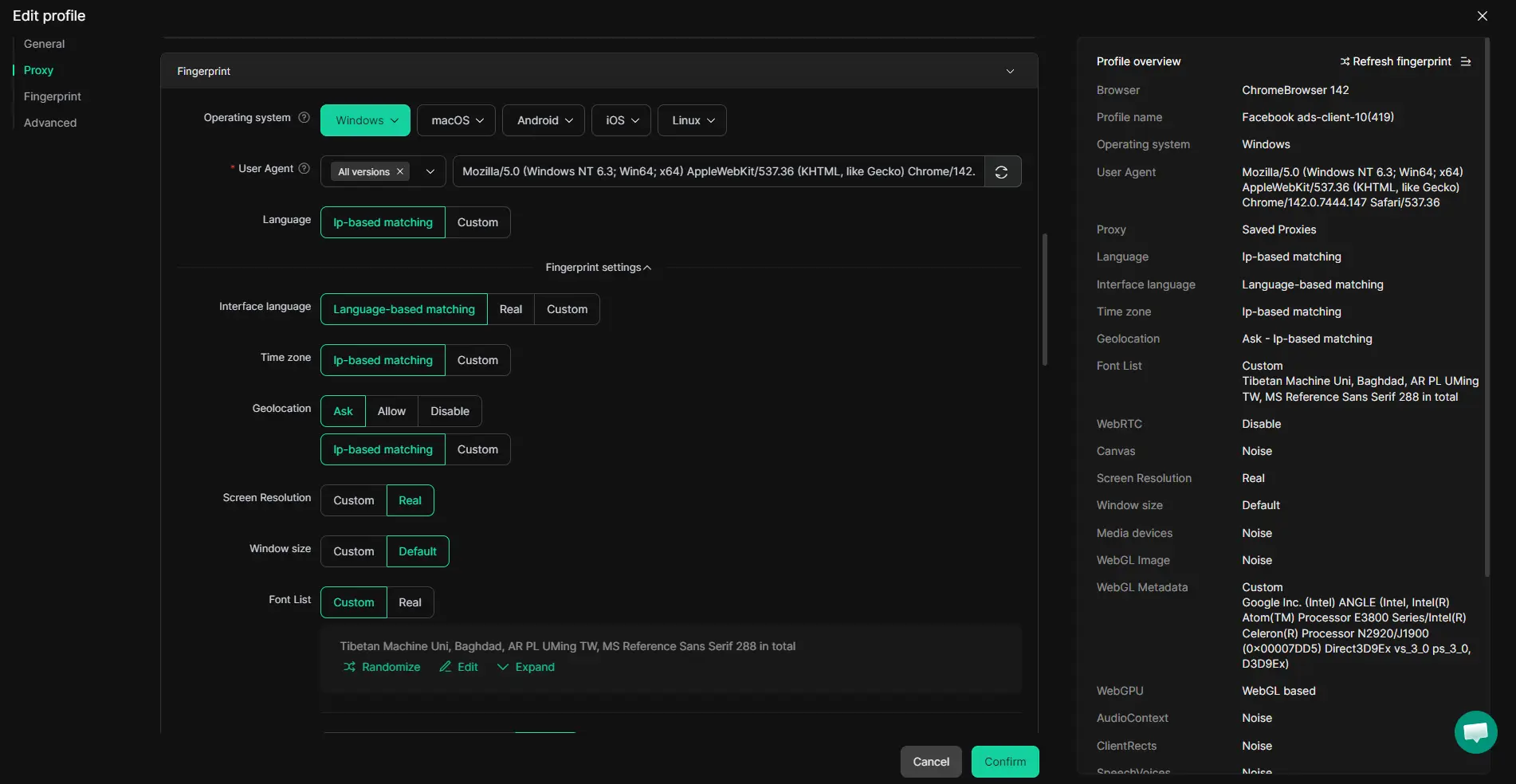
Manage Multiple X Sessions with Separate Profiles
The larger the account list becomes, the more useful organization is. DICloak lets users place Profiles into Profile Groups, so an agency could create groups for E-commerce Clients, SaaS Clients, and Internal Accounts.
A social media manager responsible for ten accounts can then find the correct workspace by group and Profile name instead of checking many open X tabs. This also creates a clearer boundary between clients and lowers the chance of working in the wrong account.
DICloak also supports Multiple Sessions when a workflow requires the same Profile to be opened in more than one session. Admins can combine this with Concurrent Profile Limit controls to manage how many Profiles a member can open at once.
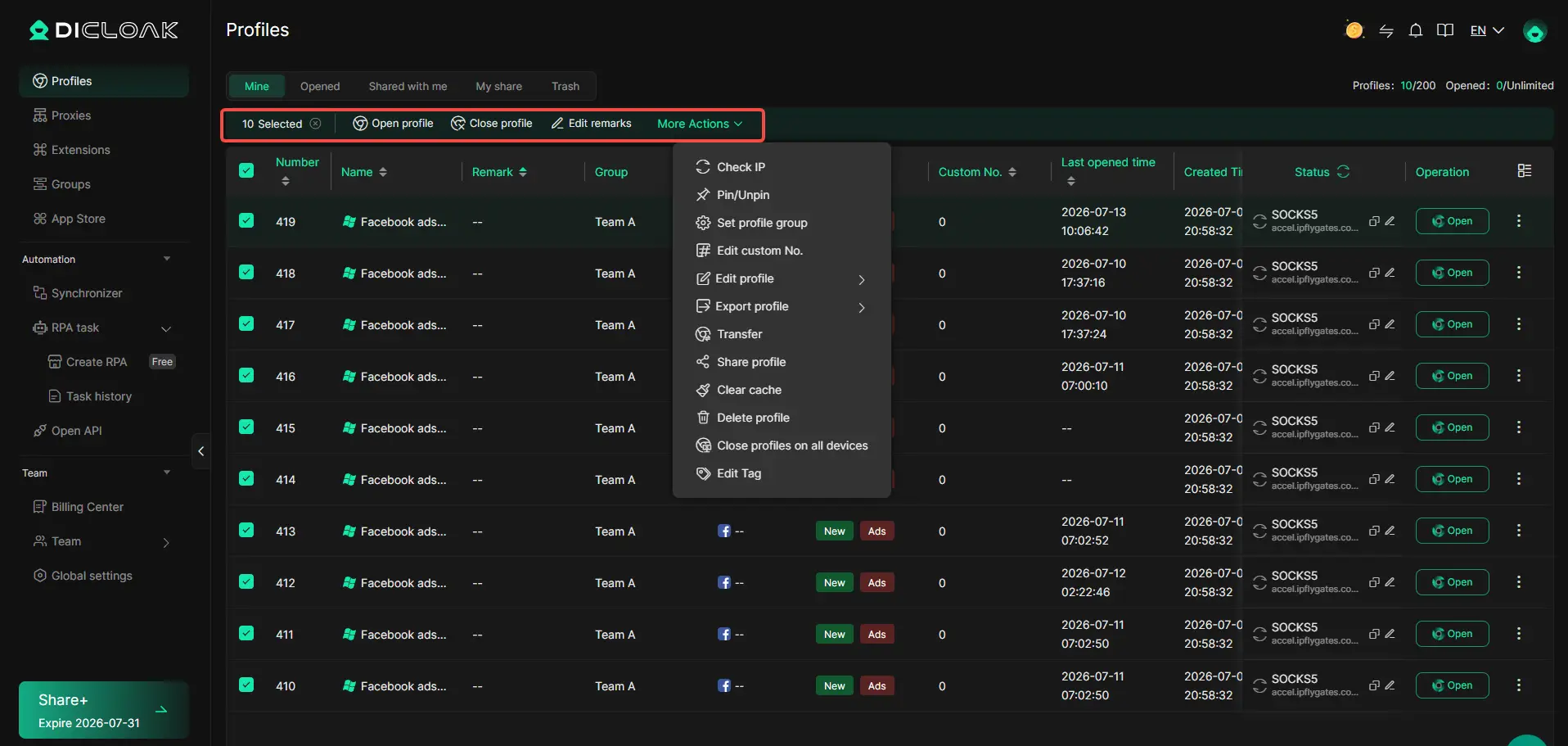
Share X Profiles with Team Members Without Repeated Logins
Team handoffs are one of the situations where repeated logins become most inconvenient. One employee may already have a client X account set up, but another person needs to continue the work from another computer. Rebuilding the same browser profile every time adds unnecessary steps.
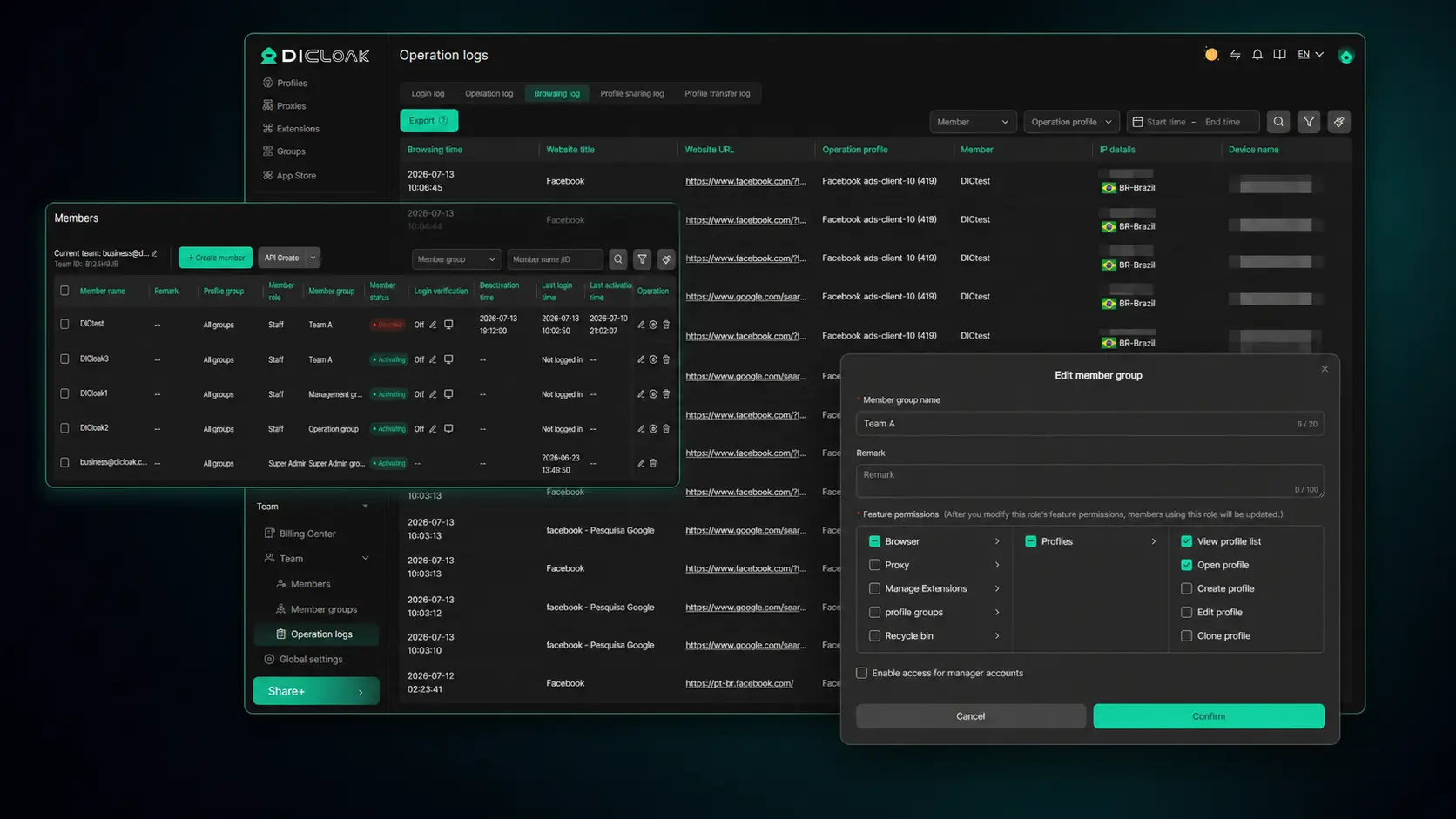
DICloak’s Profile Sharing lets authorized members work with assigned Profiles. When combined with Data Sync, selected data such as cookies, bookmarks, Local Storage, IndexedDB, passwords, and extension data can be synchronized within the team workflow.
For example, a social media manager may prepare the X Profile during the morning shift. An authorized colleague on the next shift can open the assigned Profile and continue the work with the required synced browser data instead of setting up the account again from the beginning.
Admins can also decide which Profiles each member can access. This means a worker responsible for three clients does not need access to every account managed by the agency. DICloak does not make X sessions permanent, but it can make account separation, session management, and team handoffs easier to control.
FAQs About Switching Between Multiple X Accounts Without Logging Out
Q1: Can I switch between multiple X accounts without logging out?
Yes. X lets you add several accounts to the app or website and switch between them from the account menu. This is usually enough when you only manage a few accounts.
Q2: Can I keep multiple X accounts logged in on one device?
Yes. Several X accounts can remain available on the same device while their login sessions are active. Avoid clearing cookies or other login data if you want those sessions to remain available.
Q3: Why does X keep logging me out when I switch accounts?
Common reasons include deleted cookies, cleared app data, reinstallation, or an active session being ended. If only one account has the problem, check that account or browser profile before resetting everything.
Q4: Should I use separate browser profiles for multiple X accounts?
Separate browser profiles are useful when you want clearer separation between personal, business, and client accounts. Each profile can keep its own cookies, settings, history, and login data.
Q5: What is the best way for a team to manage multiple X accounts?
For a small team, X’s built-in switcher may be enough. Larger teams can use separate or isolated browser profiles to keep account environments organized and give authorized members access without rebuilding the same setup each time.
 Web Proxy Tools
 Free Tools
 Cookie Plugin
 UA Generator
 MAC Address Generator
 IP Generator
 IP Address List
 2FA Code Generator
 World Clock
 Anonymous Check
 WebRTC Leak Test
 UUID Generator
 Free Web Proxy Site
 Proxy Checker
 FB Ad Checker
 AI Web Scraping
 Free SMM Tools
 Twitter Shadowban Checker
 Instagram Name Checker
 UTM Generator
 Username Generator
 AI Hashtag Generator
 LinkedIn Headline Generator
 Social Media Image Resizer