Making money online sounds easy until you try to do it fast. In 2026, the real challenge is not finding random side hustles. It is finding methods that can actually turn into cash within days, not months. That is why so many people keep searching for how to make $100 fast. They do not want theory. They want practical ways to reach a clear income target without wasting time on low-pay tasks.The good news is that there are still real paths to that first $100. E-commerce arbitrage, social media monetization, limited-edition reselling, and crypto-based opportunities can all produce results when used the right way. But the market is much tougher now. Platforms are stricter, competition is higher, and simple one-account setups often hit growth limits very quickly. That means speed now depends not only on the method you choose, but also on how well you manage risk, access, and daily execution.
In this guide, we will break down the fastest online earning paths in 2026, the biggest risks behind them, and the tools that can help you work more efficiently as you scale. The goal is simple: show you realistic ways to think about how to make $100 fast and what it really takes to turn that first win into a repeatable system.
Is it actually realistic to make $100 online today without a massive investment?
In the 2026 digital economy, $100 isn't the goal—it’s the baseline. If you aren't clearing $100 a day, you don't have a business; you have a time-consuming hobby. While "get rich quick" noise has saturated the market, practitioners who treat the internet as a series of exploitable systems are seeing daily returns of $150 to $500. This $100 milestone is simply the proof of concept you need before scaling your infrastructure.
However, the days of "low-effort" cash are over. To hit this number today, you must navigate three structural barriers: * Platform Restrictions: Major players (Amazon, TikTok, Meta) have aggressive "one person, one account" policies. Without multi-accounting, you are capped by a single profile’s reach. * Geographic Lockouts: High-paying affiliate offers and arbitrage spreads are often region-locked. If you can't spoof a local presence, you’re losing 70% of the market. * The "Time-for-Money" Trap: Most beginners trade hours for pennies. Real liquidity comes from arbitrage or high-ticket services where the ROI isn't tethered to a clock.
Which E-commerce Arbitrage Strategies Help You Learn How to Make $100 Fast in 2026?
If you need cash in 48 hours, e-commerce is the only game in town where effort correlates directly to liquidity. The secret isn't "creating" a market; it's identifying where the market has priced an item incorrectly.
Why Amazon Retail Arbitrage remains a top contender for quick cash
Amazon is the apex of liquidity. By identifying price discrepancies between local retail clearances or other marketplaces and Amazon’s current buy box, you can exploit the 30% Margin Rule. Successful arbitrageurs in 2026 are netting $150–$500 daily by focusing on high-velocity categories. If the math doesn't show a 30% return after FBA fees, walk away.
Flipping on Facebook Marketplace for immediate local payouts
FB Marketplace is the king of "cash-in-hand" speed because it bypasses the 7-14 day shipping and payout cycles. Focus on electronics, furniture, and collectibles. The strategy is simple: monitor local listings 24/7, negotiate hard, and resell within the same geographic hub. No shipping, no platform fees, just immediate ROI.
The eBay dropshipping model for low-capital starts
To make dropshipping work fast, stop sourcing from overseas. Use domestic wholesalers to ensure 3-day shipping. This satisfies the "fast" requirement and keeps your account health high. You list the inventory first, collect the buyer's cash, and only then purchase the item from your supplier.
Is Social Media Still a Viable Path if You Want to Know How to Make $100 Fast?
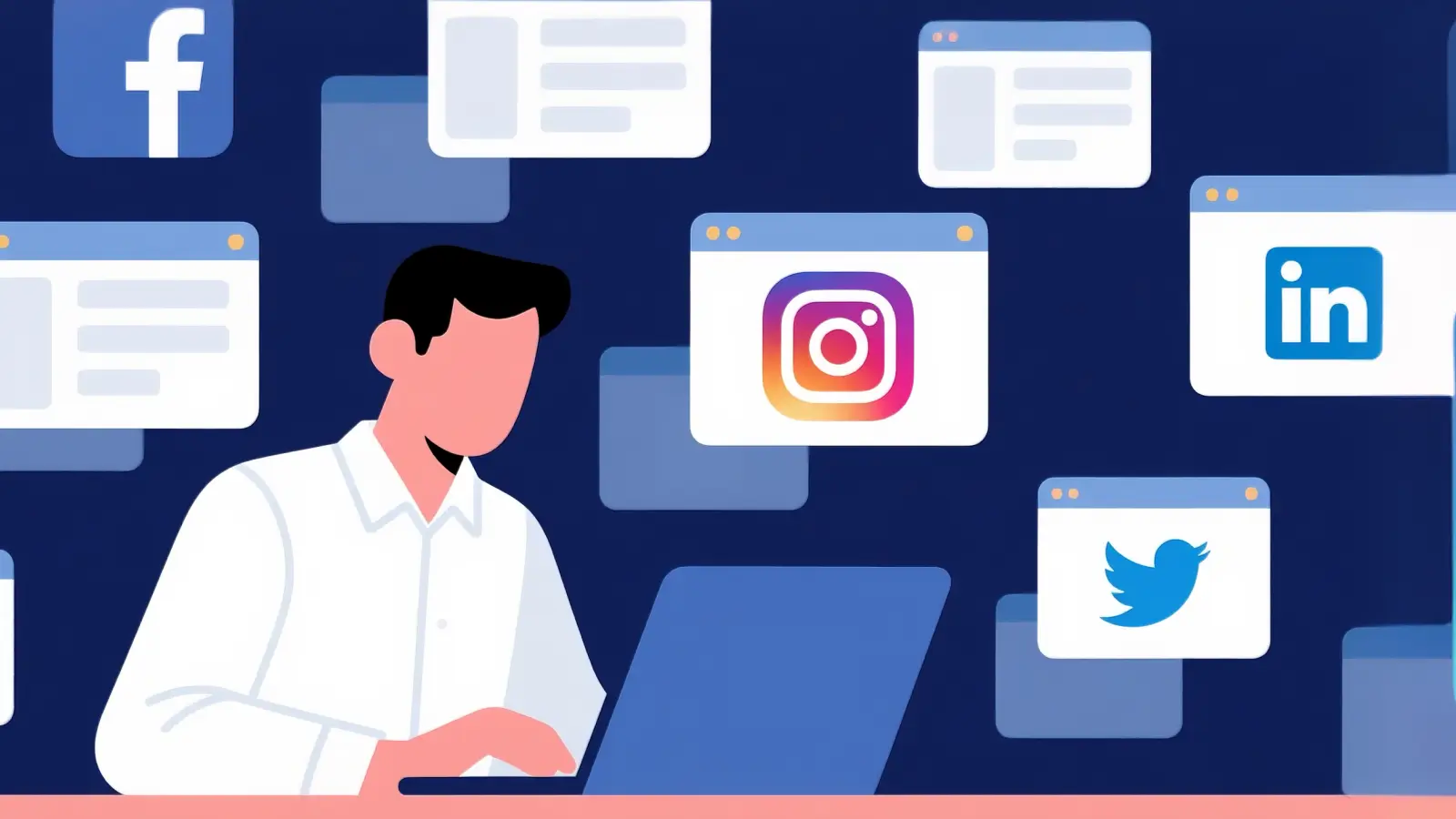
In 2026, social media is a volume game. You don't wait for a viral hit; you build "theme pages" that act as automated traffic funnels.
Monetizing TikTok content through live gifting and creator funds
TikTok's 2026 algorithm is ruthless. To hit $100/day via the Creator Fund, you need the 10k follower threshold and a relentless posting schedule of 1–3 high-quality videos daily. However, for 2026, standard desktop uploads are a red flag. Professional farms now use Cloud Android Emulators or Remote Phones to appear as legitimate mobile users, bypassing the "shadowbans" that plague low-tier creators.
Pinterest and Instagram affiliate marketing for high-intent traffic
Visual search engines convert faster than text. Pinterest users have "buyer intent"—they are looking for a reason to spend. By deploying high-intent pins in lifestyle or home niches, you can drive traffic to affiliate offers that convert at 3x the rate of standard blogs.
LinkedIn B2B lead generation as a high-ticket service
The fastest way to $100 is landing one client, not 100 sales. LinkedIn is the hub for B2B services. By managing multiple optimized professional profiles, you can offer lead generation or "ghostwriting" for executives. One high-ticket contract can exceed your daily goal with a fraction of the manual labor required for retail flipping.
What Are the Biggest Risks When Using Ticket and Sneaker Reselling to Figure Out How to Make $100 Fast?
Limited edition reselling is high-reward but technically volatile. It is the "special ops" of online earning.
The danger of "Sybil detection" and account bans
Platforms like Ticketmaster and SNKRS use advanced "Sybil detection" to identify one person pretending to be twenty. They don't just look at your IP; they look at your UA strings, device IDs, and browser headers. If they detect multiple attempts from the same digital fingerprint, your accounts are toast and your capital is locked.
Managing liquidity during market volatility
In the sneaker world, "bricks" are inventory that doesn't flip. If you tie up your $500 in a shoe that loses hype, your daily $100 goal is dead. You must use real-time market data to ensure every purchase has an immediate exit strategy.
How Do Crypto Airdrops and NFT Flips Help People Try to Make $100 Fast in 2026?
The "early user" reward system is the most "passive" way to hit $100/day, provided you have the infrastructure. Projects distribute tokens to users who interact with their protocols. To make this profitable, you cannot use one wallet; you need dozens. The challenge is preventing "linkage"—if a blockchain explorer sees twenty wallets funded by the same source or managed from the same IP/Device, you are disqualified from the airdrop. This is where isolated digital environments become mandatory to simulate unique, unrelated users.
Why Do Platforms Block New Earners Who Want to Learn How to Make $100 Fast, and How Can You Avoid It?
The biggest hurdle to $100/day is the "one person, one account" rule. Platforms use browser fingerprinting to stop you from scaling. They aren't just looking at cookies; they are analyzing your Canvas, WebGL, AudioContext, and WebRTC leaks.
If you run five Amazon stores or ten TikTok accounts from the same browser, the platform sees identical hardware signatures and bans the entire network. Standard VPNs are useless here; they are a "red flag" for high-security sites. You need a way to look like a unique, local human every time you log in.
How to Use Specialized Browser Technology to Scale Your Income and Make $100 Fast
To move from a "hustler" to an "operator," you need a professional stack. DICloak is the industry standard for managing multiple digital identities without the risk of cross-contamination.
- Isolated Browser Profiles: Every Amazon, eBay, or TikTok account lives in its own "sandbox." No cookies, cache, or data ever leak between profiles
- Deep Fingerprint Customization: DICloak allows you to spoof Canvas, WebGL, and Device Headers at the kernel level. To the platform, every profile is a different person on a different computer.
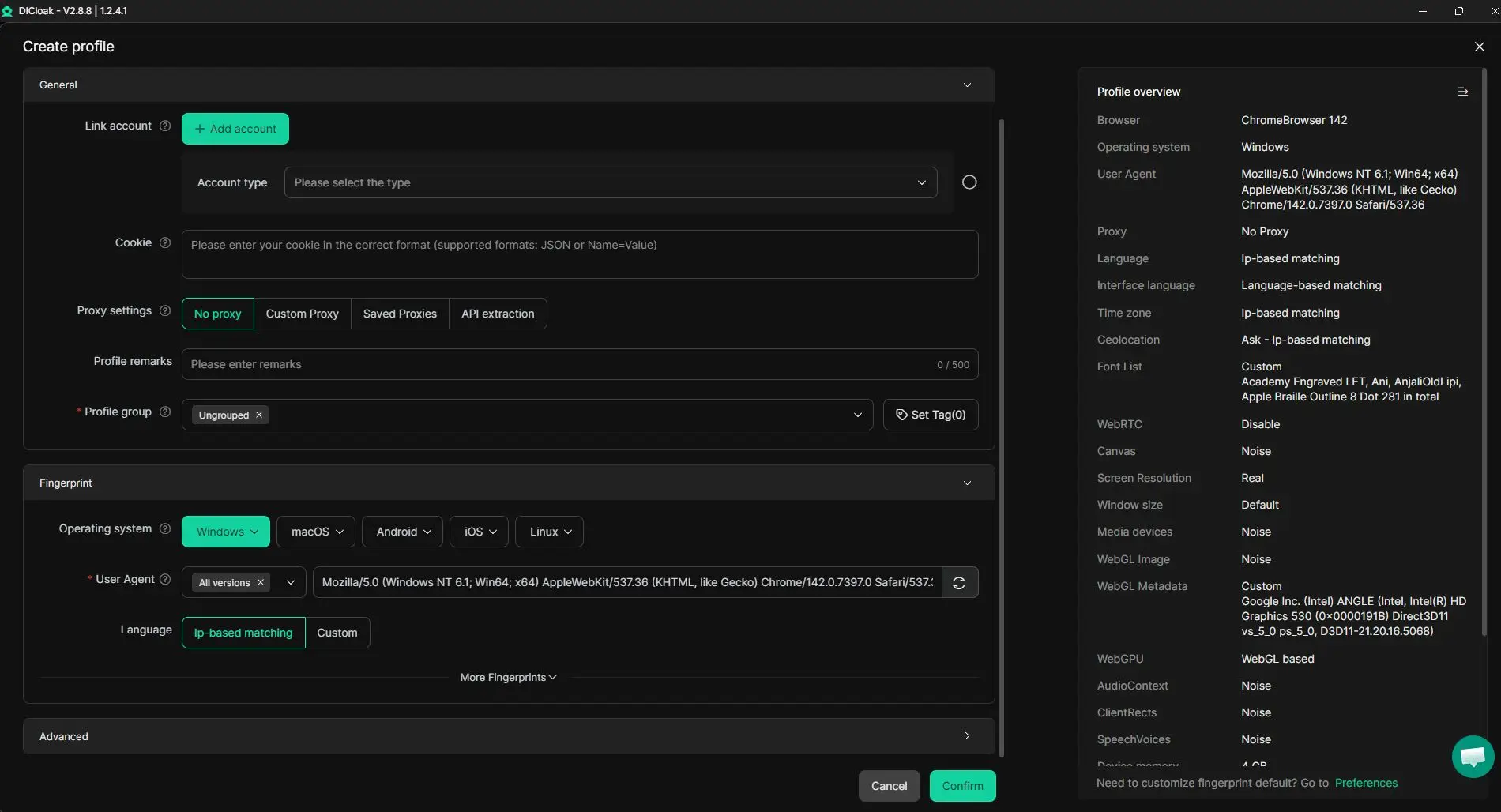
- Mobile & Cloud Integration: For 2026’s mobile-first platforms, use DICloak to manage Cloud Android Emulators and Phone Farming setups, appearing as a genuine mobile user.
- Residential & Mobile Proxy Integration: Swap your IP to appear as a local in high-paying markets. Use Mobile Proxies for social media to mimic real cellular data—the highest trust signal available.
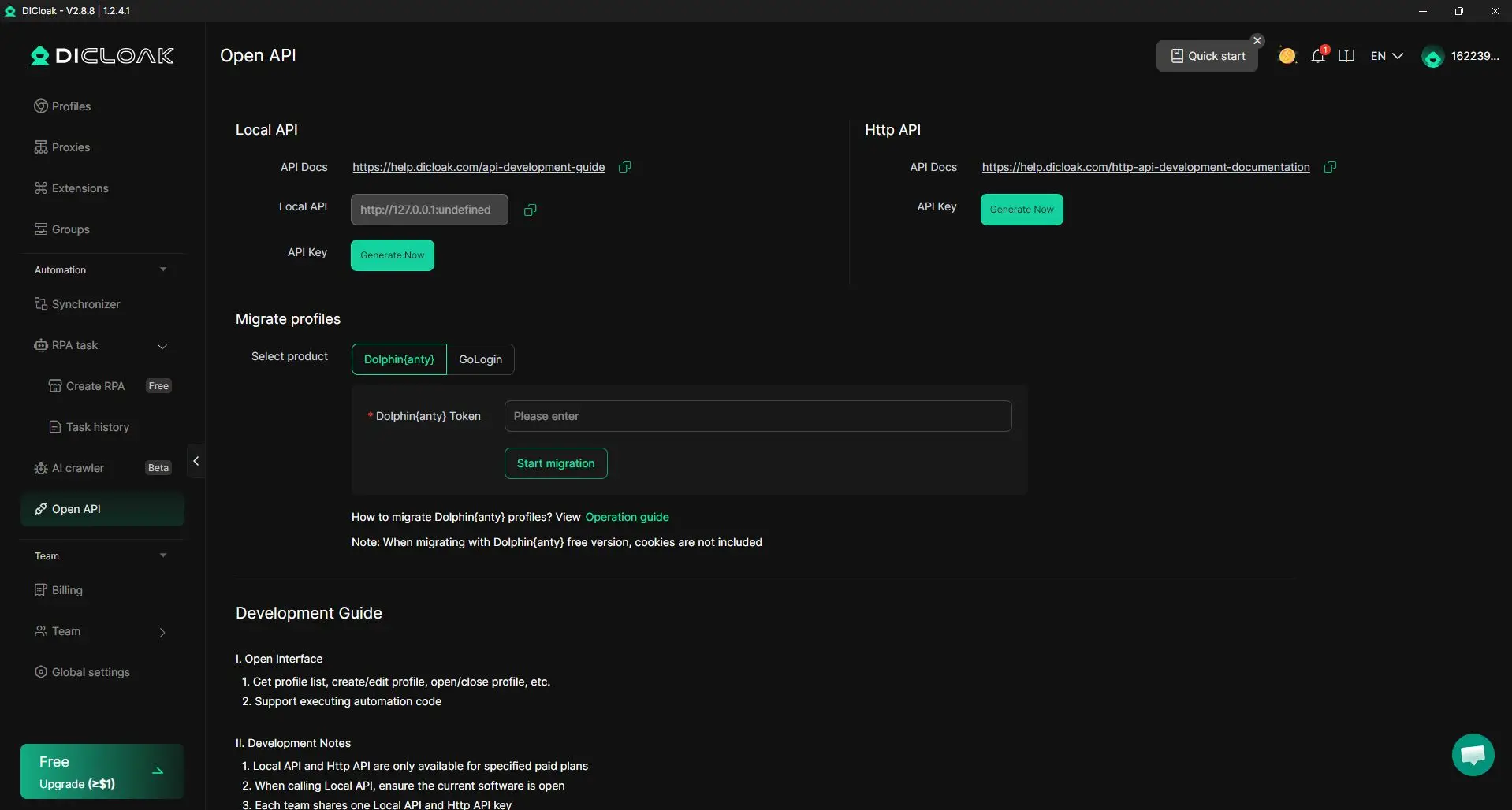
- Automation Support: Use API integrations (Selenium/Puppeteer) to automate price checking and content posting across 50 profiles simultaneously.
What is the fastest action plan to hit your first $100 this week?
- Selection: Pick one "Liquidity" method (FB Marketplace flipping) and one "Scale" method (TikTok affiliate or Amazon Arbitrage).
- Infrastructure: Set up DICloak and create 5-10 distinct browser profiles. Assign a unique Residential Proxy to each.
- The "Warm-Up" Phase (Critical): Do not sell immediately. Spend 48 hours browsing legitimate sites within each profile to establish a cookie history. This builds "trust" with platform algorithms and prevents instant bans.
- Execution & Optimization: List your first 10 items. After 72 hours, see what’s getting traction. Use DICloak’s automation to double down on the winning niche across multiple profiles.
Frequently Asked Questions
Q1:Can I really make $100 today without any technical skills?
Yes. Arbitrage and flipping require market "hustle," not coding. If you can spot a deal at a garage sale or a clearance rack, you can make $100.
Q2:How much starting capital is mandatory?
$0 for service-based work (LinkedIn consulting). For retail arbitrage, I recommend a $100–$500 seed to ensure you can buy enough inventory to hit your daily margin goals.
Q3:Why did my first account get banned immediately?
You likely failed the "fingerprint" test. Platforms saw your device ID or a "dirty" VPN IP. You must use an antidetect browser like DICloak with high-quality residential proxies.
Q4:Is airdrop farming still profitable in 2026?
Only at scale. One wallet might give you $10. Fifty wallets managed through isolated profiles give you $500.
Q5:Which method has the lowest "time-to-payout"?
Facebook Marketplace. It’s the only method where you get physical cash the same day you list.
Q6:Do I need a VPN to make $100 fast?
No. VPNs are for Netflix. For serious multi-accounting, you need Residential or Mobile Proxies and an antidetect browser. VPN IPs are usually blacklisted by major marketplaces.
Final Verdict for 2026 Earners
Making $100 a day in 2026 isn't about working harder; it's about building a system. The difference between the guy who gets banned on day one and the professional clearing $500/day is the quality of their tools. Stop looking for "hacks" and start using professional-grade infrastructure like DICloak to protect and multiply your efforts. Start with one profile, prove the model, and then use automation to scale. The liquidity is there—go take it.
 Web Proxy Tools
 Free Tools
 Cookie Plugin
 UA Generator
 MAC Address Generator
 IP Generator
 IP Address List
 2FA Code Generator
 World Clock
 Anonymous Check
 WebRTC Leak Test
 UUID Generator
 Free Web Proxy Site
 Proxy Checker
 FB Ad Checker
 AI Web Scraping
 Free SMM Tools
 Twitter Shadowban Checker
 Instagram Name Checker
 UTM Generator
 Username Generator
 AI Hashtag Generator
 LinkedIn Headline Generator
 Social Media Image Resizer