Every affiliate marketer hits the same wall: campaigns stall, commissions plateau, and it’s hard to tell if the next step is a waste of budget or a real skill boost. You can watch more tutorials, sign up for another course, or scroll through endless “hacks”, but nothing sticks unless you know what actually moves the needle in daily affiliate work.
What trips up most people isn’t a lack of information. It’s the gap between theory and what gets results: juggling multiple accounts without triggering bans, finding real traffic sources, and building skills that hold up when platforms change the rules. Blindly copying what worked last year often leads to flagged accounts or wasted time.
If you want real progress on how to improve affiliate marketing skills, focus on methods you can test, measure, and repeat, not just broad advice. That means looking at hands-on ways to sharpen affiliate marketing skill development, from automating workflows to using browser profiles safely. The real edge comes from learning how to get better at affiliate marketing by fixing the problems that slow you down or get you blocked.
Practical steps, backed by real use cases, make the difference. Here’s where your time pays off.
What Skills Actually Matter Most for Affiliate Marketing Success in 2026?
Skills that actually drive affiliate marketing results in 2026 are the ones you can test and see working, content that gets real engagement, traffic sources that don’t dry up, and the technical know-how to track what’s working without getting banned. If you want to see progress, stop chasing gimmicks and focus on skills that let you build, measure, and fix your process.
Digital Content Creation and Storytelling
Shortcuts aren’t what gets conversions now. High-quality content is what stands out, especially as platforms crack down on spam and recycled material. Storytelling that connects with real people builds trust and keeps your links from getting ignored. If your posts look generic or rushed, you’ll see clicks drop and accounts flagged.
Traffic Generation and Audience Building
Getting reliable traffic is a balancing act. Organic traffic, meaning unpaid, search-driven visitors, can be slow to build, but it’s less likely to trigger platform bans or sudden drops. Paid traffic works fast but costs more and can get you caught in approval loops or flagged if your campaigns look fake. For example, running Facebook Ads across multiple affiliate accounts sounds easy until you hit inconsistent click rates or see ad accounts suspended for mismatched targeting. Audience targeting isn’t just about demographics; you need to engage people who actually care about what you’re promoting. If you chase high numbers but ignore engagement, your campaigns will burn through money without turning into sales. The real risk is thinking more traffic always means more conversions, when in practice, quality beats quantity every time.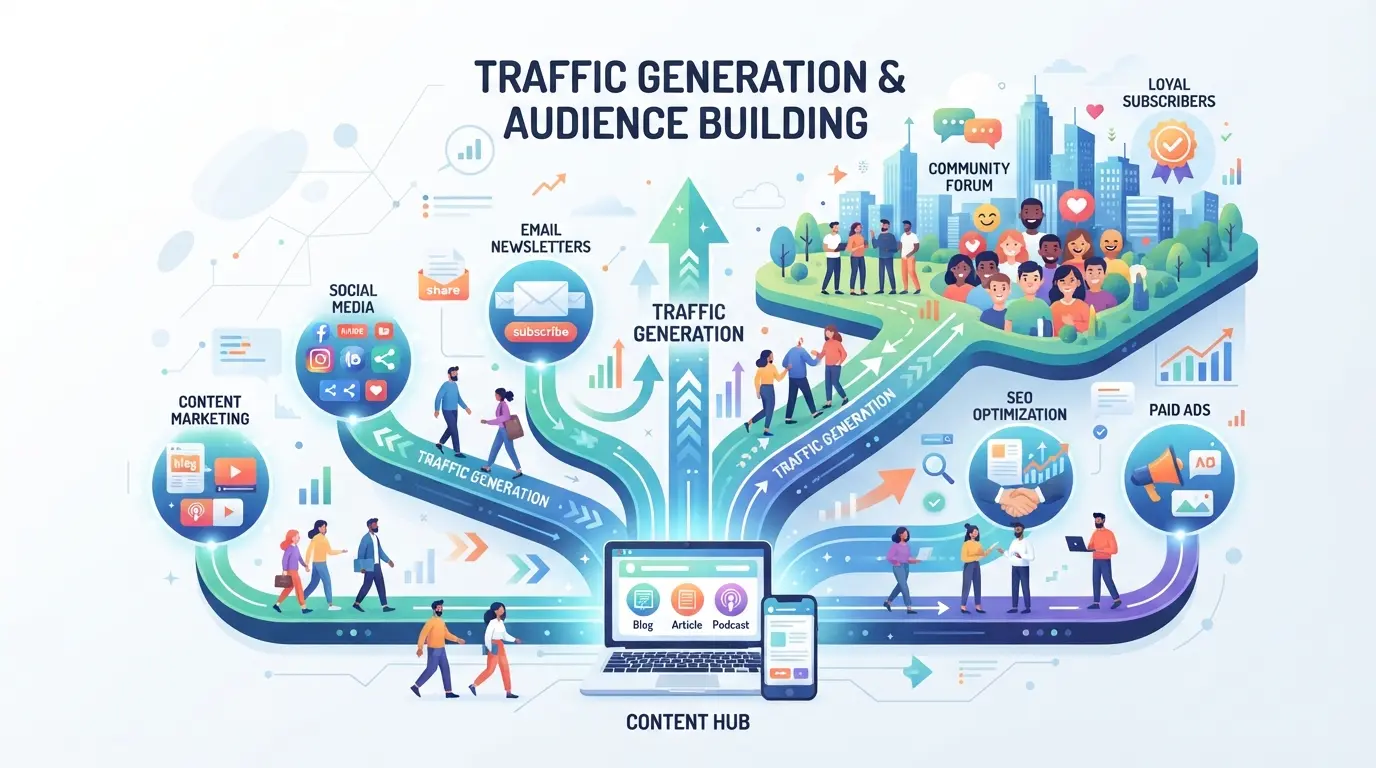
Technical and Analytical Skills
- Use tracking links and analytics to see which campaigns get real clicks and sales, don’t just guess based on likes.
- Know each platform’s compliance rules; missing one detail can get accounts suspended without warning.
- Test conversion optimization, change one variable at a time so you can pinpoint what actually improves results.
Getting better at affiliate marketing means learning from what breaks. If your traffic drops or account gets flagged, don’t just switch platforms, fix the skill gap that caused it. That’s what separates marketers who keep earning from those stuck chasing new tricks. Next, it pays to know what mistakes are most common, and how to avoid repeating them.
What Common Mistakes Hold Affiliate Marketers Back, and How Can You Avoid Them?
Most affiliate marketers hit plateaus because they repeat avoidable mistakes. If you want real skill growth, focus on fixing these blind spots early. Here’s how to dodge the traps that slow down progress.
Choosing the Wrong Niche or Products
Chasing trends without checking both your interest and market demand is a fast path to burnout. If you wouldn’t use the product yourself, or if nobody’s searching for it, you’ll struggle to get results. Do a quick keyword and competitor check before you commit.
Ignoring Data and Analytics
Missing out on data means you keep guessing instead of improving. Use this mini-checklist:
- Track conversion rate, not just clicks
- Check which channels drive actual sales weekly
- Review where traffic drops off in your funnel
Spreading Too Thin Across Channels
Covering every channel at once usually means doing none of them well. Pick one or two that match your skillset and audience, then double down. If you see no traction after 30 days, adjust instead of adding more platforms.
Neglecting Relationship Building
If you treat affiliate managers and partners as faceless contacts, you lose use for higher payouts and early offers. Building simple habits makes a difference:
- Reply to manager emails within 24 hours
- Share feedback or campaign wins monthly
- Join one affiliate community or group for support
How Can You Build and Practice Affiliate Marketing Skills Step by Step?
If you want to actually get better at affiliate marketing, you need a plan you can test, not just theory. Real skill comes from picking one focus, running live tests, and tweaking based on what works or fails. Here’s how to move from reading tips to building skills that show up in your results.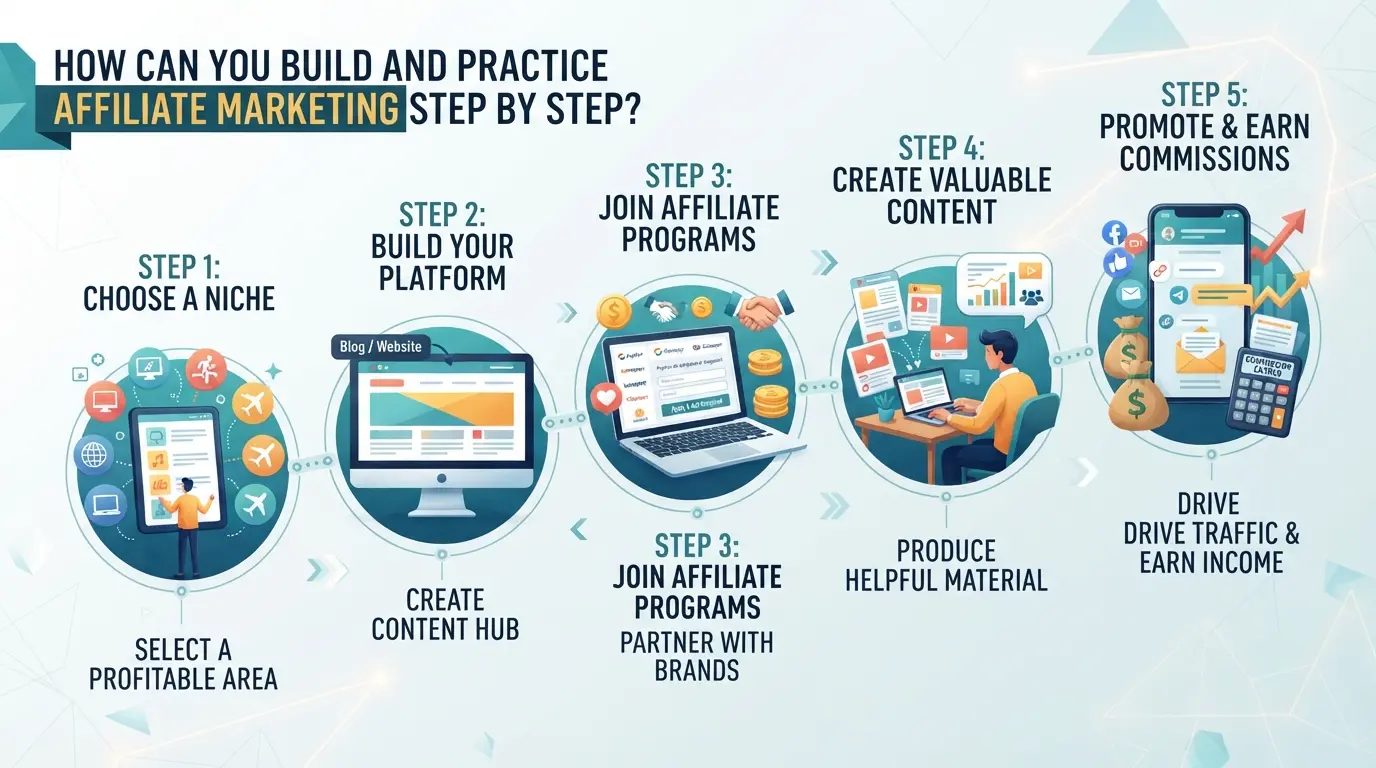
Start with One Channel and Master Its Basics
- Pick one platform (like Facebook, Instagram, or a blog). Don’t try to learn everything at once.
- Study the platform’s rules for affiliate promotions, missing a compliance detail can get you banned.
- Set up your first campaign using a single affiliate link. Keep it simple so you can spot what works.
- Track your logins, cookies, and browser profile. If the account gets flagged, start over and check what fingerprint triggered the issue.
Create and Launch a Test Campaign
- Set up tracking links before you send any traffic, otherwise, you’ll never know what drove a sale.
- Launch a small test campaign with a low daily budget. If you blow your budget early, review your targeting.
- Record every setting you use: audience, ad creative, landing page. This lets you compare results later.
- Review affiliate network terms before going live. Getting paid only happens if you follow the rules.
Analyze Results and Iterate
- Download your campaign data after 3–5 days. Look for patterns: did one ad group outperform the rest?
- Compare click-through rates (CTR) and conversion rates. Low CTR usually means your creative isn’t catching attention; low conversion means your offer or landing page needs work.
- Change only one thing at a time, if you tweak too much, you won’t know what helped.
- If your account gets restricted, check your setup for missed compliance steps or browser fingerprint mismatches.
Expand to Additional Channels or Campaigns
- Only add another platform when you can consistently get conversions on your first. Expanding too soon usually means double the mistakes.
- Clone your working setup but use separate browser profiles and logins for each new campaign. Reusing details can trip platform anti-fraud checks.
- Monitor each channel for bans, traffic drops, or compliance warnings. If you see a sudden drop, roll back your changes and review logs.
- Keep a written log of every change, when something breaks, this is the fastest way to find the cause.
Once your process works on one channel, the right tools can help you ramp up without losing track or getting blocked.
What Tools and Resources Help You Improve Affiliate Marketing Skills Faster?
To get better at affiliate marketing in 2026, use courses, tools, and communities that are active, specific, and let you test what you learn right away.
Top Free and Paid Courses for Affiliate Marketers
| Platform |
Focus Area |
Cost |
| Coursera |
Analytics, Strategy |
Free–$79/mo |
| Udemy |
Paid Ads, SEO |
$15–$100 |
| Authority Hacker |
Niche Sites, Tactics |
$997 |
Look for programs with recent updates, hands-on projects, and real campaign breakdowns. Certifications are only worth it if they include active feedback or live labs.
Essential Tools for Analytics, Content, and Campaign Management
Start with Google Analytics for tracking, a link shortener like Bitly for testing offers, and a content scheduler such as Buffer to batch posts and spot what’s working faster.
Where to Find Supportive Affiliate Marketing Communities
Active forums like STM or Facebook affiliate groups give direct feedback, current traffic source tips, and let you see what’s working now, not just theory from old blog posts.
How Can You Measure Progress and Stay Ahead of Affiliate Marketing Trends?
If you want to know whether your affiliate marketing skills are getting better, skip guesswork, measure what actually changes in your results, not just your workload. Tracking skill growth means setting clear targets and watching how your numbers move after you try a new tactic. You can’t stay ahead by following old playbooks; you need to spot shifts and test quicker than your competitors.
Setting Benchmarks and Tracking Key Metrics
You’ll see real improvement when your numbers back it up. Use these quick checks:
- Track conversion rates for each campaign, did your tweaks actually lift results?
- Set a weekly or monthly goal for new offers tested, not just content posted.
- Review account bans or restrictions: fewer problems usually means your workflow is safer.
Staying Informed on Industry Changes
The fastest way to fall behind is to rely only on last year’s methods. Watch affiliate news sources like official program blogs, trusted subreddits, and group chats where real operators share what’s working now. For example, if you see a spike in account bans discussed across multiple forums, dig into what’s changed, maybe Facebook tweaked its detection system. Ignoring these signals usually means you’ll repeat someone else’s mistake and lose accounts or spend extra just to recover. The real edge comes from testing small, adapting fast, and letting results, not guesses, shape your next step.
How to Manage Multiple Affiliate Accounts and Campaigns More Safely with DICloak
As affiliate marketers grow from running one account to managing several, browser-level workflow issues get harder to ignore. Keeping each platform account’s session, storage, and settings fully separate is where mistakes happen, especially when teams split tasks or campaigns get handed off. For operators who need precise control, DICloak offers a practical way to organize multi-account affiliate work without crossing browser signals or mixing up environments. The scope is limited to browser-profile access; it does not change the connected SaaS tool or campaign content.
Separating Accounts with Profile Isolation and Fingerprint Configuration
Operators can create a new browser profile in DICloak for each platform account they manage. Each profile stores its own browser profile, including operating system, user agent, interface and content language, time zone, geolocation, and screen settings. By configuring supported fingerprint signals for every profile, teams keep logins distinct, reducing accidental crossover between campaigns or users. This setup stays at the browser profile layer and does not act on affiliate offers or platform content directly. 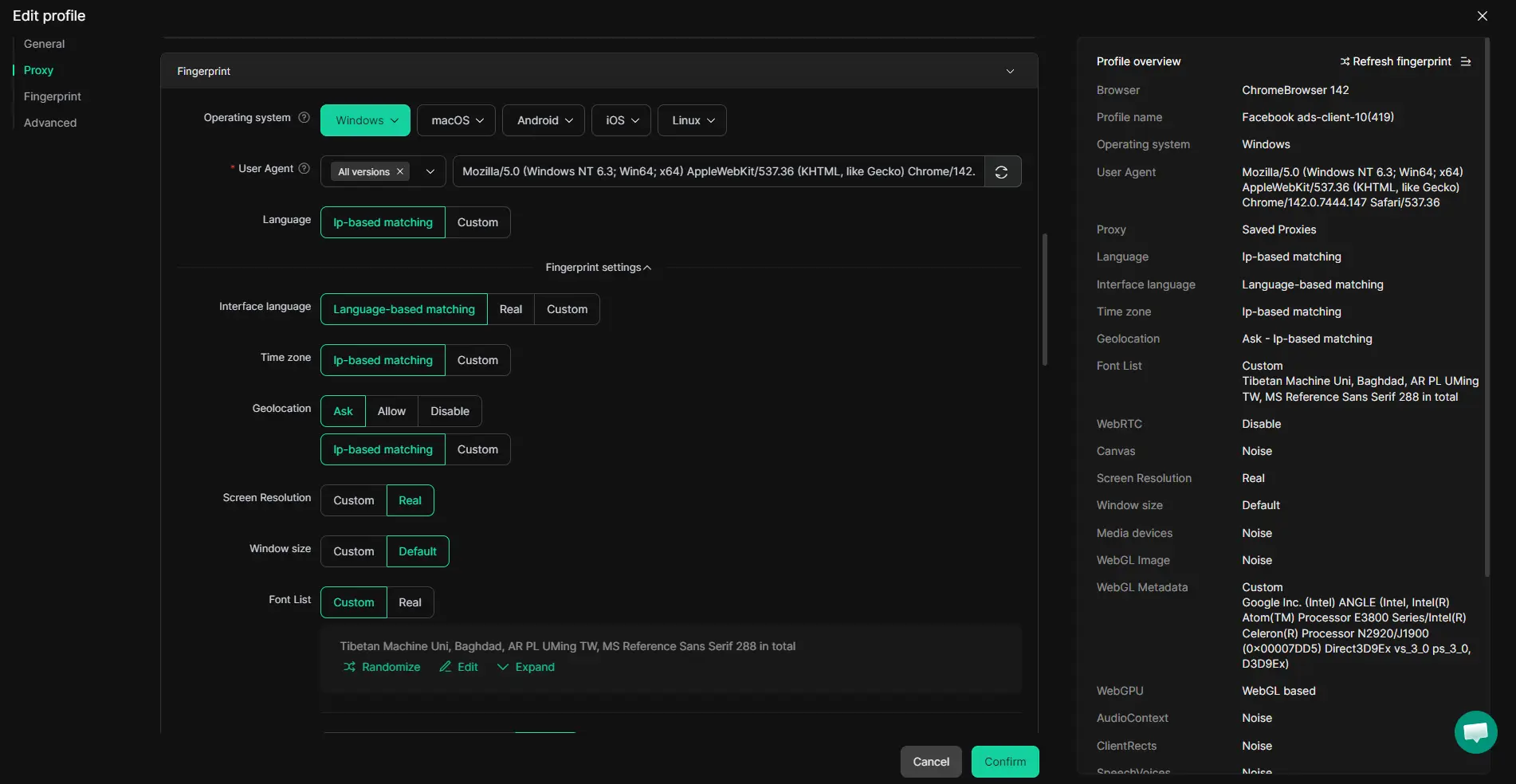
User-Provided Proxy Configuration for Assigned Profiles
Affiliate workflows often call for a dedicated network connection per account, especially if team members handle profiles from different regions or vendors. Users can add their own proxy, HTTP, HTTPS, or SOCKS5, to each DICloak profile and use the built-in connectivity check to confirm the setup. Every proxy must be supplied and tested by the operator; DICloak does not sell or include proxies and does not promise any platform access or outcome. 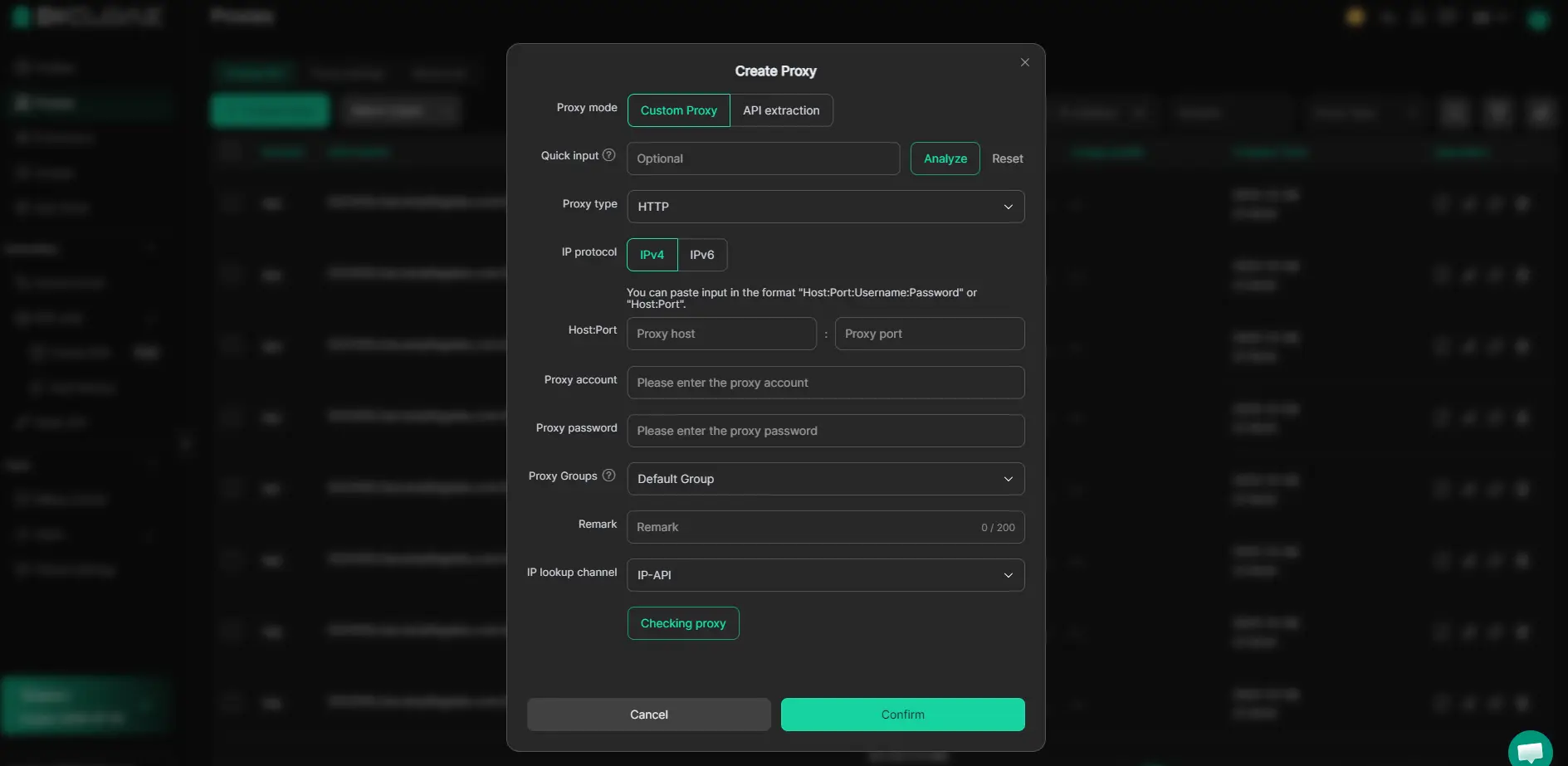
Using Bulk Operations to Scale Profile Management Efficiently
Manually editing proxy or fingerprint settings for dozens of profiles is slow and error-prone. Teams can select multiple profiles in DICloak and apply bulk actions, such as batch-editing fingerprints or updating proxies, directly from the Profiles list. This speeds up routine changes as operations scale, but a mistake in bulk editing will affect all selected profiles at once, so double-check selections before applying any batch action.
With these browser-level controls, affiliate marketers can keep multi-account workflows organized as they move toward larger-scale operations.
When Does It Make Sense to Scale Up Your Affiliate Marketing Operations?
If you’re wondering when to push for bigger results, the answer is simple: scaling makes sense only after your current affiliate setup runs without surprises and you know where your profits come from. Jumping the gun before that usually means you’ll just multiply mistakes, not earnings.
Signs You’re Ready to Scale
- You’re earning steady commissions for at least three months (not just one lucky campaign).
- Each traffic source and offer has a tracked process, so you can repeat wins, not just chase them.
- You’ve handled at least one account problem (ban, payment issue, or traffic drop) and fixed it without guessing.
Risks and Challenges of Scaling
Scaling up means you’ll run into new headaches fast, platform bans, ad account restrictions, or even cash flow gaps. For example, doubling your ad spend without a system to track ROI often just burns your budget twice as fast. The real risk is skipping groundwork: if you haven’t set up separate logins, secure proxies, or clear ad spend limits, a single mistake can wipe out all your accounts at once. Smart affiliate marketers don’t just add more accounts, they pause to stress-test their workflow, so one failure doesn’t knock everything offline.
Scaling works best when you grow only after your existing operation survives a few rough patches. If you’re still patching up basics, wait. If you’ve already solved repeat problems and your tracking is airtight, then expanding is more likely to boost earnings instead of doubling your risks.
Next, if your results stall or drop after scaling, you’ll need a way to spot what changed and fix it fast.
What Should You Do When Your Affiliate Marketing Results Plateau?
Stalled results usually point to a deeper issue, don’t just work harder. Instead, start by looking for what’s blocking growth.
Diagnosing the Cause of a Plateau
- Compare your past and current campaigns side by side, notice where conversion rates drop.
- Check if you’re still relying on one traffic source or offer; tunnel vision is common.
- Review your process: Are you running the same ads or content for months without updates?
Experimenting with New Strategies and Tools
Once you spot a weak link, test one small change at a time, try a new ad channel, rewrite a headline, or add automation for repetitive tasks. Often, the breakthrough comes from tracking results after each tweak, not from following generic advice.
Frequently Asked Questions About how to improve affiliate marketing skills
How long does it take to improve affiliate marketing skills?
Most people notice progress in 3 to 6 months if they practice regularly. Learning how to improve affiliate marketing skills means testing different strategies, tracking results, and adjusting often. Daily or weekly effort, like updating content or trying new traffic sources, helps you learn faster and see which methods work best for your audience.
Do I need to be technical to get better at affiliate marketing?
You don’t need to be a tech expert to improve. Basic skills, like reading analytics and tracking links, make a big difference. Many affiliate tools have easy dashboards and step-by-step guides. As you practice, you’ll learn how to use these tools to find what works and grow your results, even if you’re not technical.
What is the best way to stay updated with affiliate marketing trends in 2026?
Follow industry blogs, join online forums or social media groups, and attend webinars or virtual events. These resources share new tactics, rule changes, and success stories. Subscribing to newsletters from top affiliate networks or marketers also helps you spot emerging trends before others do.
How many affiliate programs should a beginner focus on?
Start with just one or two affiliate programs. This lets you learn the basics, understand each program’s rules, and build up your skills without feeling lost. Once you’re confident and see steady results, you can add more programs to grow your earnings.
Is it safe to manage multiple affiliate accounts from one device?
Managing several accounts on one device is possible when you use browser profiles or proxy tools to keep accounts separate. Always read platform rules, since breaking them can lead to bans. Secure your device with updated antivirus software and use strong, unique passwords for each account.
Now is the time to take what you've learned and apply it to real campaigns, tracking your progress and continually refining your strategies. Experimenting with new tools and analyzing your data will help you uncover what works best for your audience. Try DICloak For Free
 Web Proxy Tools
 Free Tools
 Cookie Plugin
 UA Generator
 MAC Address Generator
 IP Generator
 IP Address List
 2FA Code Generator
 World Clock
 Anonymous Check
 WebRTC Leak Test
 UUID Generator
 Free Web Proxy Site
 Proxy Checker
 FB Ad Checker
 AI Web Scraping
 Free SMM Tools
 Twitter Shadowban Checker
 Instagram Name Checker
 UTM Generator
 Username Generator
 AI Hashtag Generator
 LinkedIn Headline Generator
 Social Media Image Resizer












-01-v14.png?x-oss-process=image/interlace,1/format,webp/quality,q_75)