A contestant on Facebook can lose by only 3 votes, even if their photo is the favorite. That's because in like contests, the difference is who knows exactly how to get Facebook likes for a contest quickly and without risking their account. It's not enough to ask friends for support: Facebook limits the reach of your posts if it detects suspicious actions, and many contests rule out fake likes or duplicate accounts. That's why relying only on message chains or WhatsApp groups often fails when you need it most.
Today, winning requires more than just luck. Understanding how to increase Facebook likes for contests involves knowing what kind of interaction the algorithm detects, when a voting pattern may seem suspicious, and how to avoid blocks or bans that can leave you out of the game. Here it is not only about "having more friends", but about applying strategies to gain likes on Facebook that are safe, natural and really add up. You'll discover methods tested by those who have already won contests, how to avoid the most common pitfalls, and what tools to use if you need to manage multiple accounts without Facebook noticing, for example, using browsing with isolated profiles as DICloak allows.
If you want to get out of the group of those who are one step away from the prize and are looking for results that will withstand any revision, here is the path that the winners are already following.
What should you know before looking for likes for a contest on Facebook?
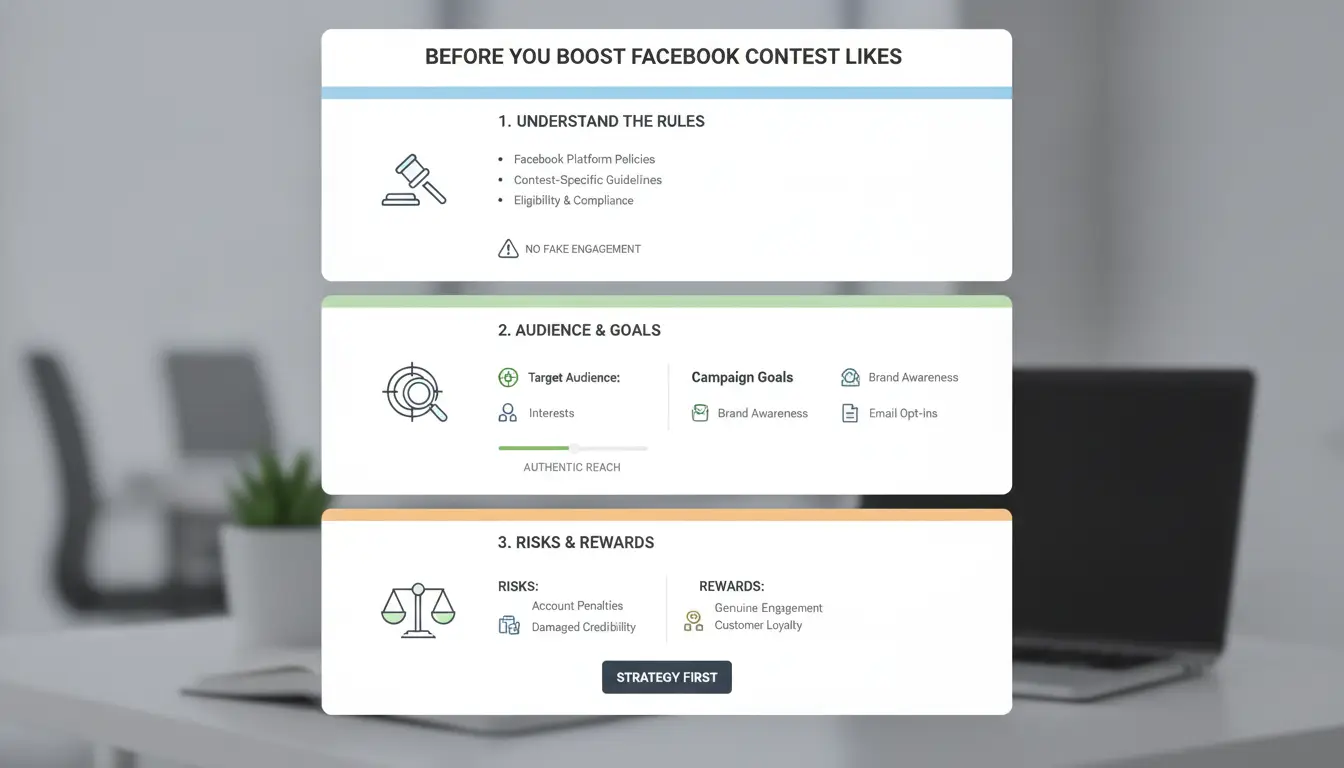
Participating in contests where the winner is the one who gets the most likes sounds simple, but there are details that can leave you out before your time. Before you search for "how to get Facebook likes for a contest," you need to know the rules well and understand the risks that are often overlooked. Facebook not only keeps an eye on the number of votes, but also how you get them. Ignoring these conditions can cost you the prize and, in some cases, even the bill.
Why can Facebook like contests be risky?
Most think that getting likes is just a matter of inviting friends or sharing the link. However, Facebook detects suspicious patterns easily, such as spikes in likes in minutes or votes from newly created profiles. If the system identifies unnatural activity, it can temporarily block your account, delete likes, and even ban related profiles. Contests also often have their own filters to detect cheating, for example, votes coming from "ghost" accounts or from countries that are not allowed.
A penalty not only takes you out of the contest, but it can affect your online reputation or limit your participation in future giveaways. Some organizers manually review profiles that like; If they find that you use artificial methods, such as mass trading, vote-buying, or automated tools carelessly, they can disqualify you without warning. The most common is to see participants eliminated for using fake accounts or asking for likes in groups not allowed by the bases.
What rules do contest organizers usually set?
Each contest may have different rules, but there are patterns that almost always appear. Many require that the participants and those who like them are real people, with active profiles and a certain seniority. They often prohibit the use of newly created accounts just for voting or the participation of bots. They can also ask that the voter be a friend of yours on Facebook or follow the organizing page.
Another common restriction is to limit the collection of votes to certain countries or regions. If you get likes from accounts outside the allowed area, they can void those votes. Many contests clarify that it is forbidden to buy likes or use platforms to exchange votes, because this breaks the equality between participants.
Before thinking about how to increase Facebook likes for contests, check the rules well. Understanding them helps you avoid penalties and plan strategies to gain Facebook likes that do stand up to revision. If you need to manage several accounts to support the vote without raising suspicion, you can use browsing with isolated profiles and proxies, as allowed by DICloak, but always respecting the limits set by the rules.
When you are looking to get votes in Facebook contests, what matters most is not the number, but that each like counts and does not leave you out by an unexpected sanction.
What are the most common mistakes when trying to get likes and how to avoid them?
Searching for how to get likes on Facebook for a contest seems simple, but what most stops those who compete is not the lack of effort, but failing in details that Facebook penalizes immediately. Blocks, sudden loss of likes, or even disqualification are more frequent than you might imagine. Understanding what mistakes most people make and how to avoid them makes the difference between being left out or passing the organizers' filter.
Using bots or like generators: why is it dangerous?
Using bots or services to inflate likes "fast" is still one of the most tempting pitfalls. But Facebook detects artificial patterns with increasing accuracy. If the votes come from newly created accounts, profiles with no real activity or from countries unrelated to the contest, the system identifies it as fraud.
The most common result is temporary or permanent blocking of the participating account. Even if you manage to increase Facebook likes for contests using automatic methods, Facebook will usually remove those likes before the competition ends. There are cases where the organizer reviews interactions and reports suspicious activity, which can lead directly to disqualification.
Comparison of methods to get likes:
| Method |
Risk of blockage |
Deleted Likes |
Accepted by competitions |
| Bots/Generators |
Very high |
Very likely |
No |
| Organic Likes |
Very low |
Rare |
Yes |
| Exchange groups |
Medium |
Sometimes |
It depends on the competition |
Source: Facebook Help Center
The safest solution is to focus on strategies to gain Facebook likes that generate real interaction: ask for support from groups that know you, use eye-catching stories and posts, and avoid any suspicious automation.
Requesting Mass Likes or Spam: Consequences and Alternatives
Sending dozens of identical messages to your contacts or posting the contest link in groups without context usually ends badly. Most commonly, you end up in the spam folder or your friends ignore you for being pushy. Facebook can limit your messages, temporarily block some features, or even mark you as a spammer.
Instead of asking everyone for likes without a filter, it is much more effective to personalize the message. Explain why you care about the contest and ask for direct help, even one-on-one. If you have multiple profiles and need to manage them securely without Facebook detecting it, you can use browsing with separate profiles as allowed by DICloak. This prevents the system from associating suspicious movements and reduces the risk of losing legitimate votes.
If you're looking to get votes in Facebook contests and don't want your efforts to go to waste, avoid shortcuts and always bet on real and controlled interactions.
What are the best organic strategies to get Facebook likes for a contest?
Getting Facebook likes for a contest isn't just about posting and waiting. Winners usually apply very direct and secure techniques that avoid problems with the algorithm and take advantage of the strength of their network. Here are the methods that really work to increase likes naturally, avoid blocks, and add votes that resist any revision.
How to tap into your network of friends and family
Most contests on Facebook are won because someone moves their close circle. It is not enough to ask for likes in general groups, you have to personalize the message and activate those who really want to help you. Sending private messages with a clear explanation of the contest and the direct link to vote usually gets more response than a public announcement. It is key to explain in a few words why you are interested in this award and how you can collaborate without complications.
But don't just stay on your friends list. Many participants create small support groups, where everyone shares the contest on their own networks and helps spread the word. If you have family members in other countries, you can add votes from different places, which helps make the interaction feel more natural to Facebook. WhatsApp or Telegram groups also work to coordinate quick campaigns and prevent the publication from getting lost among other news.
Most importantly, organic likes from real people are the least likely to be flagged as fraudulent, so 100 well-coordinated votes are worth more than 500 from inactive accounts.
Creative and eye-catching publications: examples that work
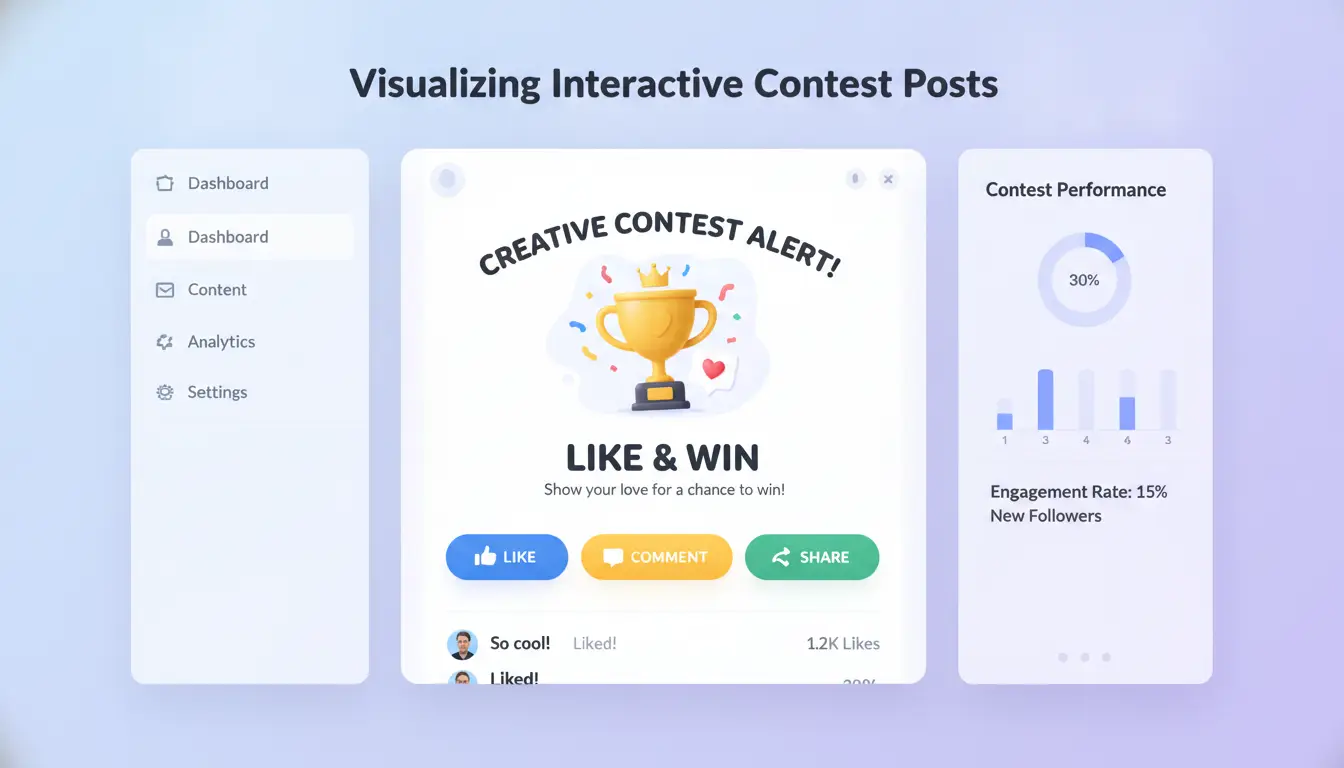
A good post can get strangers to support you. Use clear images and short videos, but with some detail that stands out, for example, a handwritten message, a funny reaction, or a background that connects with the theme of the contest. Facebook favors posts that generate quick engagement, so ask them to like and comment on the same action.
Personal stories work well. If the contest has a prize that you really need, tell why it would help you in your daily life. Empathy moves likes: a sincere story gets friends of friends, and even strangers, to join in. You can check out examples of viral posts on Facebook Business, where they show real cases of interaction.
If you have multiple accounts and need to manage movement without raising suspicion, you can use browsing with isolated profiles, as DICloak allows. This prevents Facebook from detecting unnatural patterns when you or your team support from different profiles.
How to organize support campaigns to maximize likes in your contest?
When you're looking for how to get Facebook likes for a contest, it's not just asking for favors that makes the difference: it's knowing how to organize thoughtful support campaigns. It doesn't matter if you have a few followers. A well-crafted campaign can raise your votes and put you ahead of rivals who rely only on their contact list. Here you will see how to structure actions that really add up and do not leave you out for suspicious movements.
Create events or groups on Facebook to add support
Setting up a private group or a specific event allows you to bring together those who want to help you, without outside noise or risk of your strategy being dispersed. Private groups stand out because you can control who enters, organize ads, and prevent competitors from infiltrating. Thus, the messages and reminders reach directly to those who are going to vote.
When it comes to inviting, what moves people is not only the "vote for me". It works best to explain why you care about the contest, thank each support, and share progress. Motivate by posting partial results, saying thank you in public, and asking that each person invite someone else. This way you create a real chain of support and not just a single request.
Collaborations and alliances: how to ask other pages or influencers for help
If you want to increase your votes, look for allies outside your circle. Identify pages, groups or profiles that are already used to sharing contests or supporting causes. It is key to offer something in return: it can be dissemination, a mention, or even a small raffle among those who help you.
When writing to them, be direct and clear about your goal. Explain how your contest can benefit them: traffic, visibility, or extra interaction. This is one of the strategies to gain likes on Facebook that is most used by those who manage to overcome the barrier of friends and reach new audiences. If you manage multiple accounts to diversify support, you can use navigation with isolated profiles, for example, with DICloak, to avoid blocks due to repeated patterns.
What tools and resources can you use to get likes without risk?
For those looking for how to get Facebook likes for a contest without the algorithm detecting them, the key is to use proven resources and avoid dangerous shortcuts. Earning likes safely doesn't just depend on asking friends. There are apps, platforms, and strategies that make it easy to manage contests, monitor votes, and protect your accounts.
Recommended apps and platforms to manage contests
Tools such as Easypromos or ShortStack allow you to create contests on Facebook, control participation and filter suspicious votes. You can schedule posts, automate reminders, and analyze results without risking your profile blocking. These platforms help avoid frequent mistakes, such as adding likes from fake or newly created accounts, which Facebook usually detects quickly. If you're looking for strategies to gain Facebook likes legitimately, these apps save you time and help you comply with the contest rules.
| Platform |
Publication management |
Monitoring Results |
Price from |
| Easypromos |
Yes |
Yes |
$19/month |
| ShortStack |
Yes |
Yes |
$29/mo. |
Sources: Easypromos and ShortStack official sites
Using Proxies and Managing Multiple Accounts: When Is It Useful and How to Do It Well?
If the contest requires a lot of likes and you manage multiple accounts, separating each profile with a proxy helps avoid blocking. Tools such as DICloak allow many profiles to be operated on the same device without Facebook relating accounts by IP or fingerprint. The trick is not to mix sessions, keep each profile with "normal" activity, and never use newly created accounts just to vote. Thus, you can get votes in Facebook contests without the system detecting strange patterns or penalizing your participation.
Using these resources allows you to focus on how to increase Facebook likes for contests without risking your access or the bottom line.
How to manage multiple Facebook accounts securely with DICloak?
Winning contests on Facebook often requires more than just asking for likes. Many end up blocked for using fake accounts or because Facebook detects suspicious patterns. If you're looking for how to get Facebook likes for a contest without losing your accounts or risking the prize, you need to understand how to avoid linking between profiles and handle each account as if it were unique. DICloak is a tool that allows you to operate several accounts securely, just for scenarios where strategies are needed to gain likes on Facebook without setting off alarms.
Why does Facebook detect and block related accounts?
Facebook identifies connected accounts by fingerprints and usage patterns. If multiple accounts vote from the same device, with the same IP or browser, the system can link and block them. The risk increases when you try to get votes in Facebook contests using profiles created on the same computer, especially if they repeat similar movements.
How does DICloak create isolated and secure environments for each account?
Using DICloak, each account moves in a separate browser with a unique fingerprint. Thus, Facebook cannot relate them to each other or trace direct connections. In addition, you can set up distinct proxies for each profile, further reducing the risk of linking and blocking.
Automation and Collaboration: How DICloak Improves Efficiency in Contests
For those looking for how to increase Facebook likes for contests, automation is key. With DICloak you can schedule repetitive tasks (RPA) and collaborate as a team without sharing sessions, avoiding common mistakes and maintaining the security of each account. The difference is in operating each profile as if it were a real person, leaving no traces that Facebook can detect.
When is asking for likes no longer a good strategy and what alternatives are there?
Asking for Facebook likes for a contest works to a certain extent, but there comes a time when insistence can become a problem. If you only repeat the same request, the algorithm starts noticing artificial patterns and your reach drops. Knowing when to change your approach is part of the strategies to gain Facebook likes that really work.
Signs that your like strategy is no longer working
When you've already asked your entire circle for likes and the low answer, it's because your network is saturated. If you see that you are getting less and less real interaction, fewer comments, fewer shares, it is time to adjust. Facebook detects when participation is forced and can limit your visibility. Therefore, if you are looking for how to get likes on Facebook for a contest, do not just ask for votes.
Alternatives to stand out in contests beyond likes
Many contests reward creativity or participation, not just the number of likes. You can boost comments, ask them to share your post, or bet on dynamics where quality counts more than quantity. Thus, getting votes in Facebook contests becomes more natural, and real interaction helps you stand out.
How to turn participation into a positive experience
Don't forget to thank those who support you. Creating community, beyond the contest, makes all the difference. If you make the process fun, people get involved. So, how to increase Facebook likes for contests is only part of the way. The real advantage is to maintain the connection after the contest.
Frequently Asked Questions
Is it legal to use multiple accounts to get likes on a Facebook contest?
Using multiple accounts to get Facebook likes for a contest can violate both contest rules and Facebook policies. Many contests prohibit the use of fake accounts or multiple profiles. Facebook may disqualify you and block your accounts if it detects fraud. Always check the rules and use only your real profile.
What happens if Facebook detects suspicious activity on my account during a contest?
If Facebook detects suspicious activity, such as getting votes in Facebook contests quickly or unusually, it may restrict your account. This means that you could lose the likes you gained, see limitations to interact or even suffer the permanent blocking of your profile. Avoid practices that seem automated or unnatural.
How many likes are considered enough to win a typical contest on Facebook?
There is no set number of likes to win a typical contest. Analyze how many likes the leading posts have and review the organizer's rules. In some contests, a hundred likes are enough; in others, it can be thousands. To know how to get Facebook likes for a successful contest, study the competition well.
What alternatives are there if I don't get enough likes to win?
If you don't get enough likes, try creativity contests, giveaways, or challenges where they evaluate the quality of the content, not just the number of likes. So, you can stand out by using strategies to gain Facebook likes in a more authentic way, such as original videos or interesting stories, instead of just looking for votes.
How can I motivate my contacts to support me without being pushy?
Motivate your contacts with personalized messages, thank them for their support publicly, and share why winning is important to you. You can offer symbolic incentives such as mentions or small gifts. Thus, you apply how to increase Facebook likes for contests in a positive way, without annoying your friends and family.
Applying strategies such as constant interaction, engaging content, and dissemination in relevant groups can make all the difference when getting likes for a contest on Facebook. Remember that authenticity and creativity are essential to motivate your audience and achieve better results. Try DICloak for free
 Web Proxy Tools
 Free Tools
 Cookie Plugin
 UA Generator
 MAC Address Generator
 IP Generator
 IP Address List
 2FA Code Generator
 World Clock
 Anonymous Check
 WebRTC Leak Test
 UUID Generator
 Free Web Proxy Site
 Proxy Checker
 FB Ad Checker
 AI Web Scraping
 Free SMM Tools
 Twitter Shadowban Checker
 Instagram Name Checker
 UTM Generator
 Username Generator
 AI Hashtag Generator
 LinkedIn Headline Generator
 Social Media Image Resizer