Selling on Amazon is one of the best ways to build an online business today. In 2026, the global e-commerce market is bigger than ever. Millions of customers shop on Amazon every single hour. They buy everything from simple kitchen tools to heavy outdoor furniture. Because the marketplace is so huge and active, choosing the exact right item to sell is the most important decision you will make.
If you pick a product that has too much competition, your listing will get buried on page ten. If you pick a product that nobody wants, your inventory will sit in a warehouse collecting dust, and you will lose money on storage fees. To build a lasting, profitable business, you need a smart, data-driven plan. In this complete guide, you will learn step-by-step how to find high-demand, low-competition products to sell on Amazon in 2026. We will cover how to spot hidden opportunities, source goods safely, and launch your brand successfully.
Understanding Amazon's Marketplace Dynamics
Key Factors Influencing Product Demand
To succeed on Amazon, you must clearly understand what drives customer demand. Demand simply means how many people want to buy an item right now. Search volume is the very first metric you should check. Search volume shows exactly how many shoppers type a specific keyword into the Amazon search bar each month. If a keyword like "stainless steel garlic press" has 50,000 monthly searches, you know there is a massive crowd of people waiting to buy.
Another key factor is customer pain points. A pain point is a small, daily problem that bothers a buyer. For example, many shoppers complain that regular plastic water bottles leak inside their gym bags and ruin their electronics. If you offer a stainless-steel bottle with a special leak-proof lock, you solve their exact problem. Products that fix everyday headaches always enjoy high demand because they offer a real solution, not just a gimmick.
You must also look at sales velocity. Sales velocity means how fast the top sellers are moving their inventory. If you look at the top five sellers in a category and see they are making 300 sales every single month, you know the market is active and healthy.
Analyzing Market Trends and Consumer Behavior
Shopper habits change quickly. What sold well five years ago might not sell at all today. In 2026, buyers care more than ever about eco-friendly materials, home convenience, and personal wellness. For instance, sales of single-use plastic goods are dropping rapidly. At the same time, sales for reusable bamboo kitchen products, organic pet treats, and plant-based cleaners are growing very fast.
To spot these shifts before everyone else, you should observe how people live and shop. Watch what regular creators share on short-video platforms like TikTok, YouTube Shorts, and Instagram. Pay close attention to the comment sections. Look for comments where users say, "I wish someone made a tool that does this!" or "Why doesn't this come in a travel size?" These comments are hidden goldmines. They tell you exactly what the market wants but cannot find.
Identifying Profitable Product Niches
Tools and Techniques for Niche Research
A niche is a specific, narrow segment of a much larger market. Instead of selling general "pet supplies," a smart niche seller might focus exclusively on "orthopedic cooling beds for elderly large dogs." Narrow niches usually have far less competition and attract much more loyal customers. When shoppers feel a product is made exactly for their unique situation, they buy faster and leave better reviews.
To find great niches, you should use specialized Amazon product research software. Popular tools like Helium 10, Jungle Scout, or AMZScout are excellent because they pull hidden sales data directly from Amazon.
You can also do manual research using the "rabbit hole" technique. First, open the Amazon Best Sellers page. Click into a broad category, like "Home & Kitchen." Then, click into a smaller sub-category, like "Storage & Organization." Keep clicking deeper into smaller categories until you find specific, weird items. Look for products that have a Best Sellers Rank (BSR) between 1,000 and 10,000. This sweet spot means the product sells well, but it is not so popular that giant brands control the entire market.
Evaluating Niche Competition and Demand
Once you find an interesting product niche, you must carefully check the competition. Do not skip this step. If every seller on the first page of search results has 5,000 to 10,000 positive reviews, it will be incredibly difficult for a new seller to compete. Buyers trust items with lots of reviews.
You want to look for niches where several top sellers have fewer than 300 reviews. This proves that the market is open and new brands can still make money. You should also check the quality of their current listings. Do the current sellers have dark, blurry photos? Are their product descriptions short and confusing? Do their bullet points lack important details? If you see bad listings making good money, that is a huge opportunity. You can easily create a professional listing with bright photos and clear text to steal their customers.
Analyzing Product Trends and Seasonality
Using Google Trends for Product Insights
Google Trends is a free, powerful tool that shows how interested the world is in any topic over a period of time. It is the best way to avoid products that are just short-lived fads. A fad is a product that gets insanely popular for a few months and then dies forever, like a viral spinning toy.
Before you invest money, type your product idea into Google Trends and select a 5-year view. If the graph goes up steadily year after year, or stays flat and consistent, the trend is stable. This is a safe product. If you see a massive spike that drops down to zero, stay away. You do not want to buy inventory for a product that nobody cares about anymore.
Seasonal Product Opportunities on Amazon
Seasonal products only sell well during very specific months of the year. Good examples include beach towels in June, Halloween costumes in October, and Christmas tree lights in December.
Selling seasonal goods can bring massive profits in a very short window of time. However, it carries extra risks for beginners. If you order too much inventory and do not sell out by the end of the holiday, you will be stuck paying expensive storage fees to Amazon all winter long. Because of this, beginners should usually start with evergreen products. Evergreen products are items that sell consistently all 12 months of the year, such as yoga mats, silicone spatula sets, or aluminum phone stands.
Assessing Product Viability and Profitability
Calculating Costs and Margins
Never launch a product without doing the math first. Business is all about numbers. A product might look great because it sells for $30, but if your total costs are $28, you will quickly run out of money and fail.
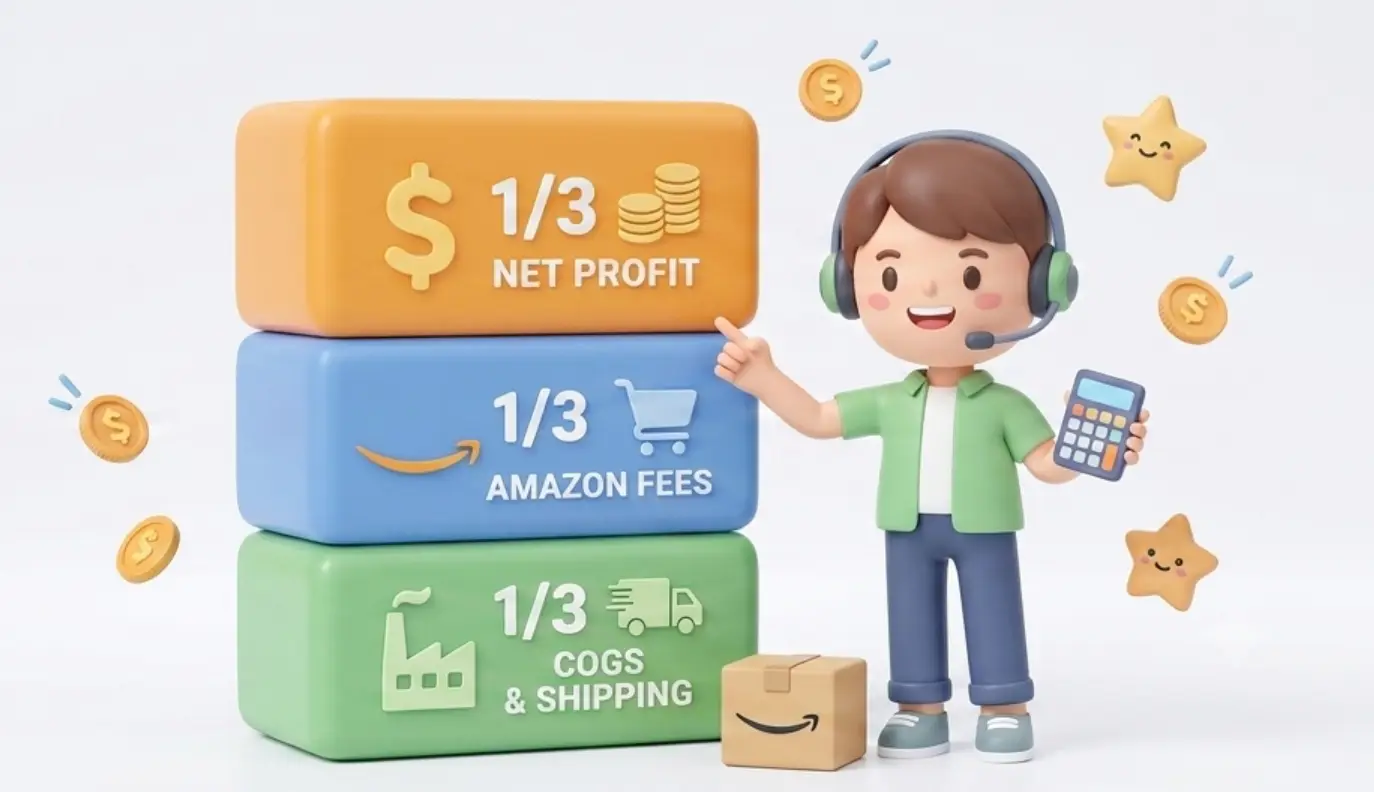
A simple rule of thumb for Amazon sellers is the "Rule of Thirds." Ideally, your product price should be split into three equal parts. One third covers the cost of making and shipping the product. One third covers Amazon's fees. The final third is your actual net profit.
Let's look at a concrete pricing example for a silicone baking mat set. Imagine your target retail price is $30.00. You pay the factory $8.00 to manufacture and ship each unit. Amazon takes $10.00 in fulfillment and referral fees. You also spend about $4.00 per unit on advertising to get the sale. This leaves you with $8.00 in pure net profit per unit. This equals a healthy net profit margin of roughly 26%. You should always aim for a profit margin of at least 20% to 25% after every single expense is paid.
Understanding Amazon Fees and Pricing Strategies
When you use Fulfillment by Amazon (FBA), Amazon handles the hard work. They store your items, pack them in boxes, and ship them to customers in two days. In return, they charge you specific fees that you must understand.
First, there is the Referral Fee. Amazon takes a percentage of every sale just for letting you sell on their platform. This is usually around 15% for most categories. Second, there is the FBA Fulfillment Fee. This is a flat fee based on the exact weight and dimensions of your product package. Small, light items cost less to ship than heavy, bulky items. Finally, there are monthly Storage Fees for holding your inventory in their massive warehouses.
When deciding on your final selling price, study your competitors closely. Most beginner products sell best in the $20 to $50 price range. Prices below $20 leave very little room for profit after Amazon takes its fees. Prices above $50 often cause buyers to think too long before buying, meaning you will need to spend much more money on advertising to convince them to make a purchase.
Sourcing Products for Amazon
Finding Reliable Suppliers and Manufacturers
After you pick a winning product idea, you must find a reliable factory to make it. Business-to-business supplier directories like Alibaba, Global Sources, and 1688 are the most popular platforms for finding global manufacturers.
When you reach out to potential suppliers, keep your messages short, polite, and highly professional. Ask them clear questions. Ask for their Minimum Order Quantity (MOQ), their unit pricing for different order sizes, and their estimated production lead times.
Before you ever place a large order, you must order a single sample unit from at least two different factories. Have the samples shipped to your house. Test them thoroughly in real life. Drop the item, wash it, leave it in the sun, and use it daily. You must make sure the quality meets your high standards. Selling cheap, broken products will result in bad reviews, which will destroy your Amazon listing permanently.
Exploring Private Label and White Label Options
There are two main ways to brand physical products on Amazon: White Labeling and Private Labeling.
White Labeling means you buy generic, already-made items from a factory and simply print your custom logo on the box. This method is fast and cheap, but it is dangerous. Competitors can easily find the exact same factory, buy the exact same item, and steal your sales.
Private Labeling is the much better choice for 2026. This means you actually modify the product to make it vastly better than the competition. For example, you can read the 3-star reviews of competing items on Amazon. If customers constantly complain saying, "The plastic handle breaks easily when wet," you can ask your manufacturer to reinforce your handle with metal pins and add a rubber grip. Customizing your product creates a unique selling point. It gives customers a real reason to pick your item over the competition, justifies a higher price tag, and helps you earn flawless 5-star reviews.
Marketing and Launch Strategies for New Products
Optimizing Product Listings for SEO
Amazon operates like a massive search engine, very similar to Google. To get your product to the top of page one, you must optimize your listing for Amazon SEO. If your listing is not optimized, customers will never find you.
Always place your absolute most important primary keyword near the very beginning of your product title. Then, naturally include secondary and long-tail keywords inside your bullet points and your product description.
For example, if your primary keyword is "Insulated Stainless Steel Water Bottle," your title should start exactly like that: "BrandName Insulated Stainless Steel Water Bottle - 32 oz Leak-Proof Sports Flask for Gym & Travel."
Do not stuff keywords randomly. Write for humans first, but make sure the search engine knows exactly what you are selling. Also, use high-resolution images showing your product being used in real life. Include helpful infographics that point out key measurements and highlight safe materials. Clear, beautiful visuals build immediate trust and increase your sales conversion rate.
Effective Launch Tactics to Boost Visibility
When you launch a brand new product on Amazon, it sits at the bottom of the search results. It has zero reviews and zero sales history. To kickstart the Amazon algorithm and boost your visibility, you need a strong launch strategy.
First, use the Amazon Vine Program. Enrolling your new item in Amazon Vine allows highly trusted reviewers to receive a free sample of your product in exchange for an honest, detailed review. Getting your first ten reviews quickly is crucial for building shopper trust.
Second, run Amazon PPC (Pay-Per-Click) advertising campaigns. Create Sponsored Product ads targeting your top search keywords. Paying for ads places your brand new listing right at the top of search results on day one. Finally, offer promotional discounts. Run a limited-time digital coupon, such as 15% off, on your listing page. Buyers love deals, and a coupon will increase your click-through rate and drive early sales, which tells Amazon your product is a winner.
How You Can Manage Multiple E-Commerce Stores Safely and Efficiently with DICloak
Utilizing Data for Predictive Product Analysis
Doing proper market research requires looking at real-time global e-commerce trends. Because product prices, search rankings, and listings change drastically depending on the country, sellers need a secure way to analyze international market data. Doing this poorly can result in website blocks or endless CAPTCHA loops.
You can solve this by creating isolated browser profiles on your device. Each browser profile you set up operates completely independently. You can easily configure custom residential or datacenter proxies for each specific profile. By opening multiple isolated profiles with unique network settings, you can view Amazon product search results exactly as local buyers see them in the US, Europe, or Asia. This method makes global competitive research, local keyword checks, and accurate price monitoring smooth, reliable, and completely secure.
Exploring Emerging Technologies in E-commerce
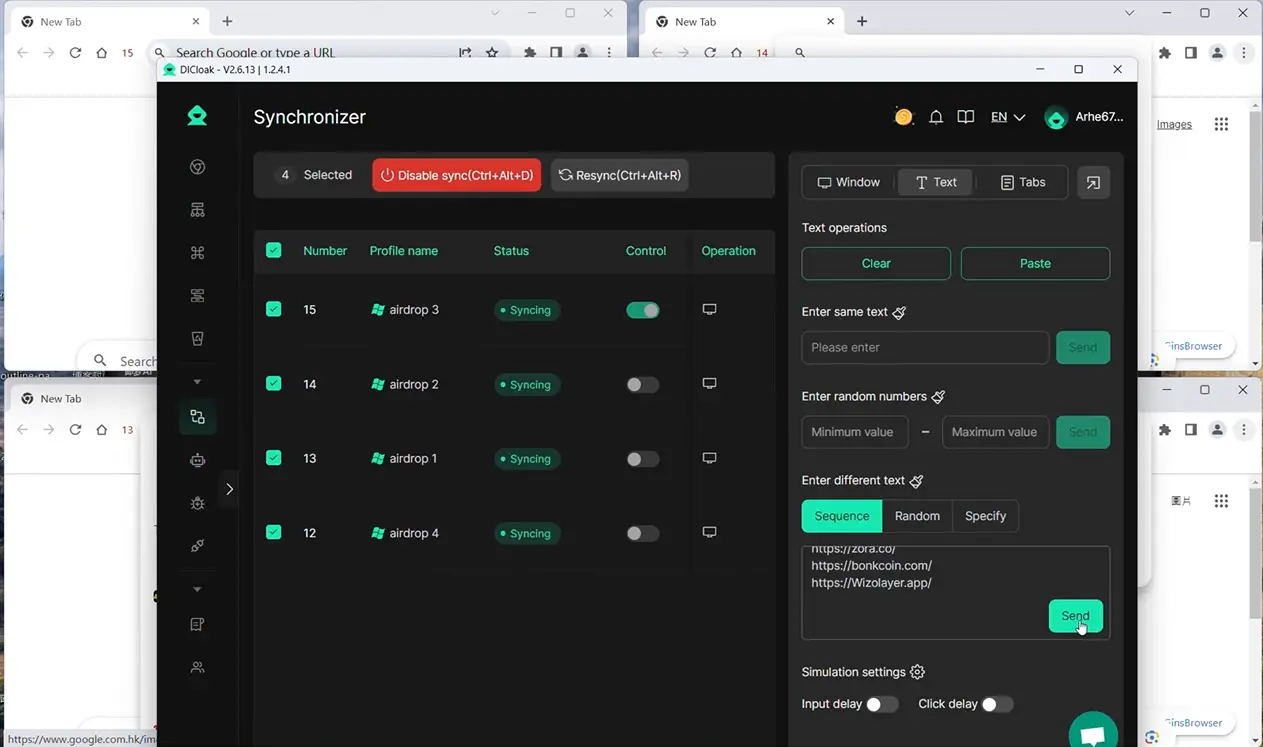
You can use tools like a Multi-Window Synchronizer to perform repetitive browsing actions across multiple different profiles at the exact same time.
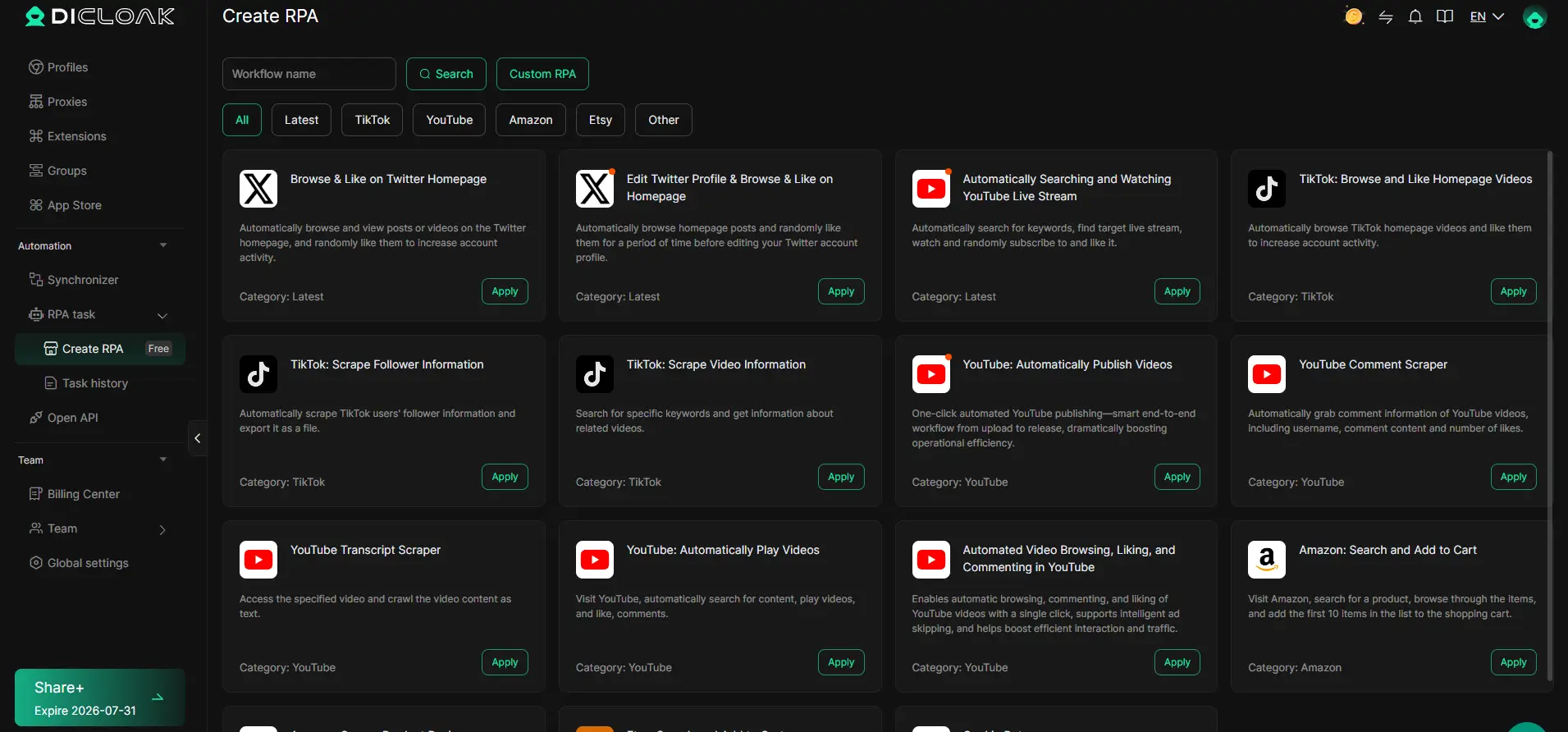
Furthermore, you can build custom Robotic Process Automation (RPA) tasks to handle your routine research clicks and data extraction automatically. Because these automated actions simulate natural, human-like browsing patterns, you can quietly collect valuable competitor insights without facing annoying IP bans or verification friction. This keeps your market research fast and efficient.
Frequently Asked Questions about Amazon Product Research
How do I find trending products to sell on Amazon in 2026?
You can easily spot trending products by monitoring Amazon's "Movers & Shakers" page, which updates every hour to show items with the biggest sudden ranking jumps. You can also monitor trending hashtags on platforms like TikTok and use Google Trends to confirm that overall search interest is steadily rising over a long period.
What are the best tools for Amazon product research?
The most popular and reliable tools for Amazon product research are Helium 10, Jungle Scout, and AMZScout. These software programs provide extremely detailed search volume estimates, historical pricing graphs, profitability calculators, and competitor review analytics to help you make safe decisions.
How can I assess the competition for a product niche?
To assess competition, look directly at the first page of search results for your main keyword. Check how many reviews the top 10 listings have. If most sellers have under 300 reviews, the competition is moderate and safe. If every seller has thousands of reviews and major brand-name dominance, the niche is highly competitive and you should look for a different product.
What factors should I consider when pricing my products?
When pricing your product, you must calculate your total cost of goods sold (COGS), the factory shipping fees, Amazon's percentage referral fees, and the FBA size fulfillment charges. Make sure your final price leaves you with a net profit margin of at least 20% to 25% while still remaining competitive with similar top-rated items.
How do I ensure my product listings are optimized for Amazon SEO?
Place your most important, high-volume keyword right at the beginning of your product title. Naturally include related long-tail keywords in your bullet points and backend search terms. Use high-quality, zoomable images, clearly state your product dimensions, and write bullet points that focus on how the product benefits the buyer's daily life.
Conclusion
Finding high-margin products to sell on Amazon in 2026 comes down to systematic research, patience, and smart execution. Do not guess what shoppers want. Instead, rely on actual search volume data, evaluate customer pain points carefully, and accurately calculate all Amazon fees before you order any inventory.
Focus entirely on finding tight niches with steady demand, reasonable competition, and room for custom product improvements. Use dedicated multi-profile research setups to analyze global marketplaces safely, optimize your listings for search engines, and always deliver real value to your buyers. With consistent effort and the right workflow tools, you can successfully launch a highly profitable e-commerce business on Amazon this year.
 Web Proxy Tools
 Free Tools
 Cookie Plugin
 UA Generator
 MAC Address Generator
 IP Generator
 IP Address List
 2FA Code Generator
 World Clock
 Anonymous Check
 WebRTC Leak Test
 UUID Generator
 Free Web Proxy Site
 Proxy Checker
 FB Ad Checker
 AI Web Scraping
 Free SMM Tools
 Twitter Shadowban Checker
 Instagram Name Checker
 UTM Generator
 Username Generator
 AI Hashtag Generator
 LinkedIn Headline Generator
 Social Media Image Resizer