Every TikTok creator faces the same question: how much does tiktok pay per view? You post, you rack up views, and you wait for the payout, only to realize the numbers rarely match the hype. Realistic tiktok pay per view rate is often much lower than rumored, and the way TikTok calculates creator rewards payout depends on country, account history, and engagement, not just view count.
A common mistake is chasing "viral" videos without checking how TikTok treats views from different regions or account types. If your audience is mostly from low-CPM countries, or your account triggers platform risk flags, the payout for 1000 views can drop sharply, sometimes to a few cents or less. Even accounts with big follower boosts from outside sources can see their TikTok pay per view rate dip when engagement falls, or when the algorithm detects unnatural activity.
Before you start tracking earnings, make sure you know what actually drives TikTok payout. The platform changes its reward formula often, what worked last year might not work now. You need to understand both the official payout rules and the hidden factors that affect your rate, like audience location, account safety, and content type. If you skip these checks, you’ll end up with misleading numbers, wasted effort, or even account restrictions.
Let’s break down what affects TikTok pay per view right now.
What Is TikTok’s Pay Per View Rate in 2026?
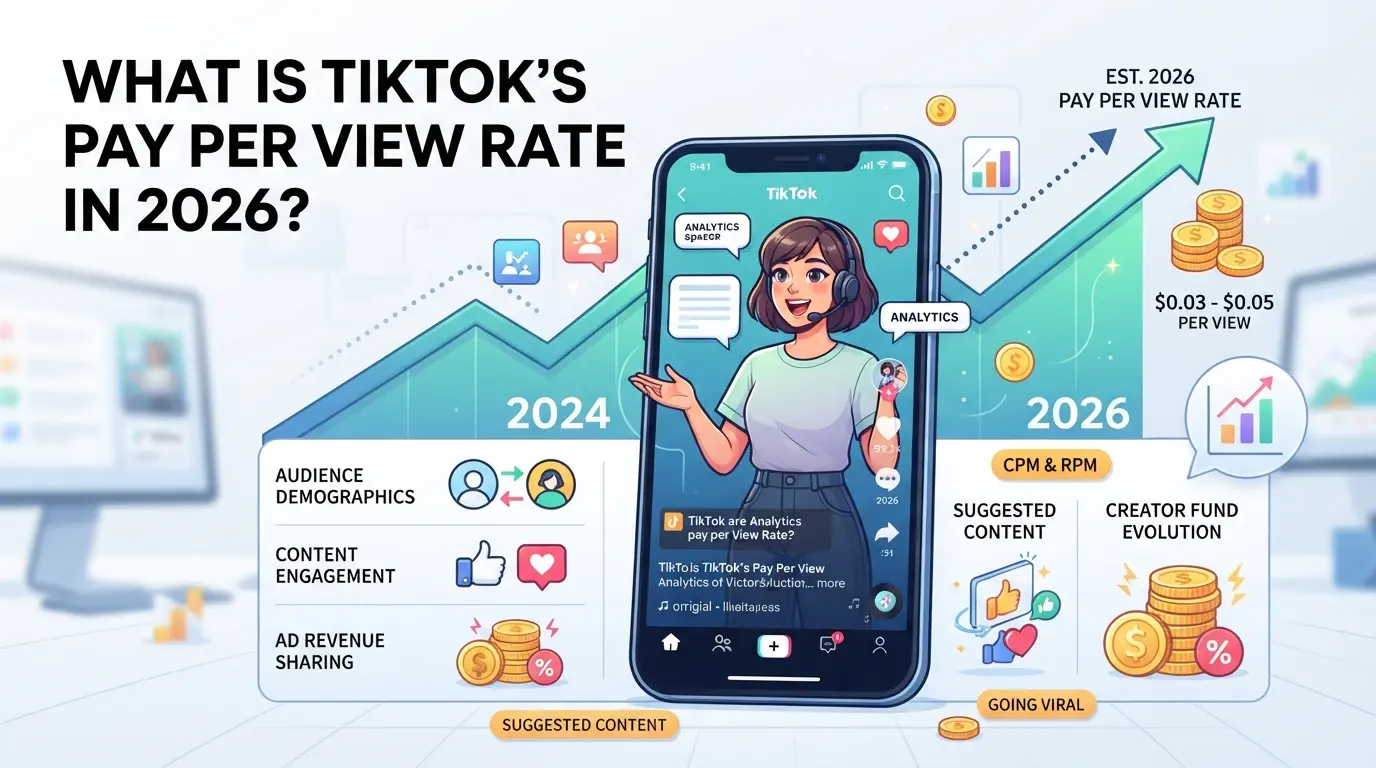
TikTok’s pay per view rate in 2026 averages between $0.01 and $0.03 per 1,000 views for most eligible creators. That means if your video gets 100,000 views, you can expect to earn $1 to $3, before factoring in bonuses or higher rates for premium geos.
Average Pay Per View Rate: What Creators Actually Earn
Most creators earn $0.01-$0.03 per 1,000 views. Rates have dropped since 2024, and stable daily payouts are rare unless your account stays in good standing.
| Year |
Avg. Pay Per 1,000 Views |
Notes |
| 2024 |
$0.02 - $0.05 |
Higher for US/EU audiences |
| 2025 |
$0.015 - $0.035 |
Slight dip; stricter filters |
| 2026 |
$0.01 - $0.03 |
Most accounts hit this range |
How TikTok Calculates Payments for Views
TikTok calculates creator payouts by multiplying eligible views by a base rate, then adjusting for account standing, audience location, content quality, and engagement. The Creator Rewards Program sets the baseline rate, but it’s rarely fixed. If your followers are mostly from regions with lower ad budgets, you’ll get paid at the low end. If your account triggers a quality check, like sudden follower spikes, flagged content, or low engagement, the platform can cut your payout for that video or even freeze rewards for weeks. There’s no official published rate, but most creators find their earnings hover around the low end unless they consistently produce content that drives organic engagement from premium audiences. If you rely on paid boosts or automated views, expect TikTok to drop your rate or remove rewards entirely, this step catches most new creators off guard.
Minimum Requirements to Start Earning Per View
TikTok only pays per view if you meet these checks:
- You must have at least 10,000 followers and 100,000 video views in the last 30 days.
- Your account must be in good standing, no major violations or recent restrictions.
- You need to meet age and location criteria: 18+ and based in a region with rewards enabled.
If you miss any of these, you’ll see zero payout even for viral videos. Now, the next issue is what really shifts your pay rate from day to day, audience quality, account history, and engagement.
What Factors Affect How Much TikTok Pays Per View?
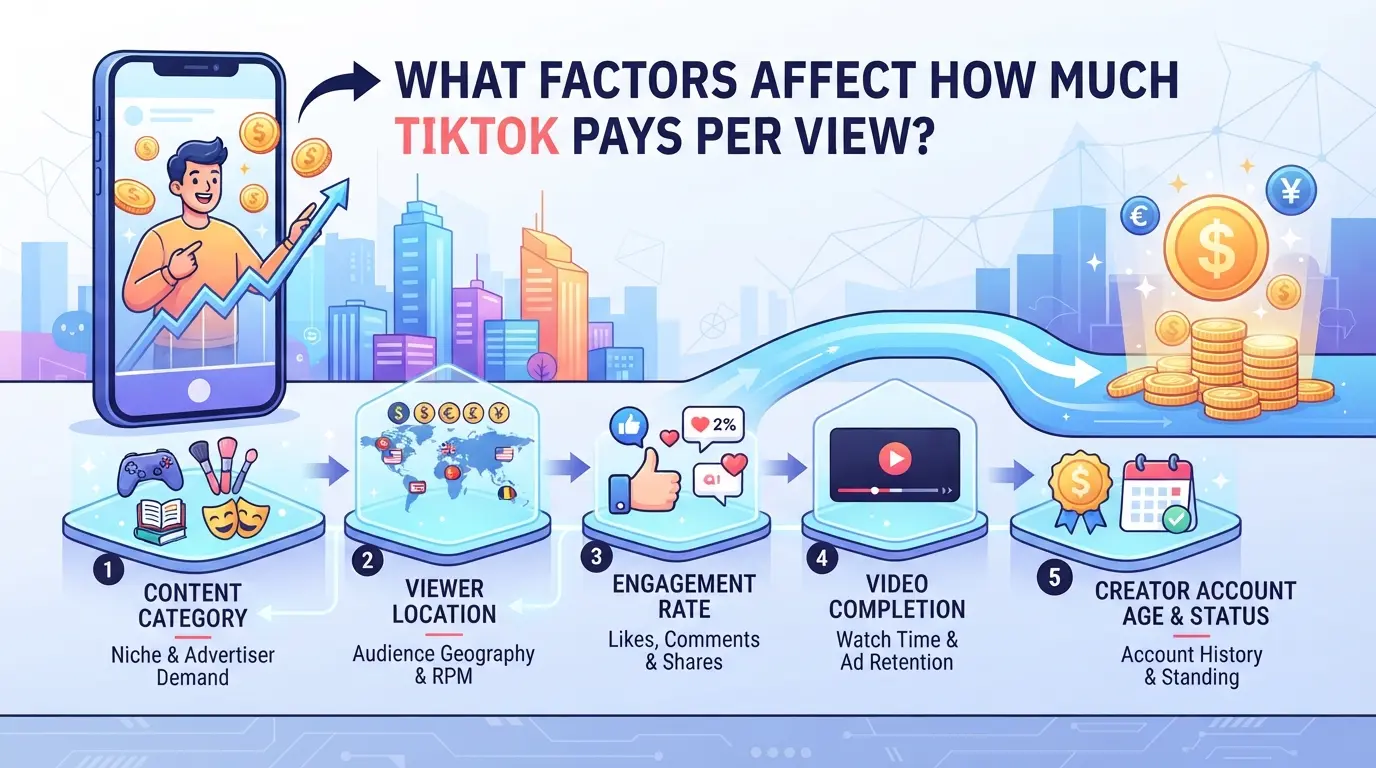
The amount TikTok pays per view can swing a lot because the platform looks at audience location, content quality, and which payout program you’re in. If you only count view numbers, you’ll miss how these hidden variables change your earnings, sometimes by a wide margin.
Location and Audience Demographics
Where your viewers live has a direct impact on your earnings. Creators with a US or Western Europe audience usually see higher CPM (cost per thousand views) than those with mainly Southeast Asia or Latin America viewers. Brands pay more for ads seen by viewers in countries with stronger economies, so TikTok passes some of that extra revenue to creators.
Engagement Rate and Content Quality
TikTok’s algorithm doesn’t just count raw views. It measures how many people like, comment, or share your video, and how long they actually watch. Strong engagement signals (like high watch time and frequent comments) push your content to more For You feeds and can lift your payout per view. For example, a video that gets 20,000 views but only 100 likes often earns less than a similar video with 5,000 views and 800 likes, because the algorithm sees shallow engagement as a red flag for low relevance or possible spam. If you try to boost views without real interaction, say, using click farms or recycled content, your rate can drop sharply or even trigger a payout freeze. Focusing on authentic engagement outperforms chasing raw view numbers, especially when aiming for steady income.
Program Type: Creator Rewards vs. Creator Fund
Switching between TikTok’s Creator Rewards and the older Creator Fund changes how much you earn per view. For example, some creators who move to the Rewards program see a higher payout rate, but only if their content meets stricter engagement and region criteria. If your account doesn’t qualify, you could see your earnings drop after switching, even with the same view counts.
Video Format and Content Category
- Short videos (under 60 seconds) usually earn less per view than longer clips with good watch time.
- Certain niches, like finance, tech reviews, or business tips, tend to get higher rates because brands bid more for those audiences.
- Content flagged as low quality or not advertiser-friendly (like reposts, low effort, or controversial topics) can lower your payout or get you excluded from rewards.
Understanding these factors helps explain why two creators with similar views can earn very different amounts. Next, you'll see how TikTok’s payout programs actually work and what rules shape your earnings.
How Do TikTok’s Creator Rewards and Fund Programs Work?
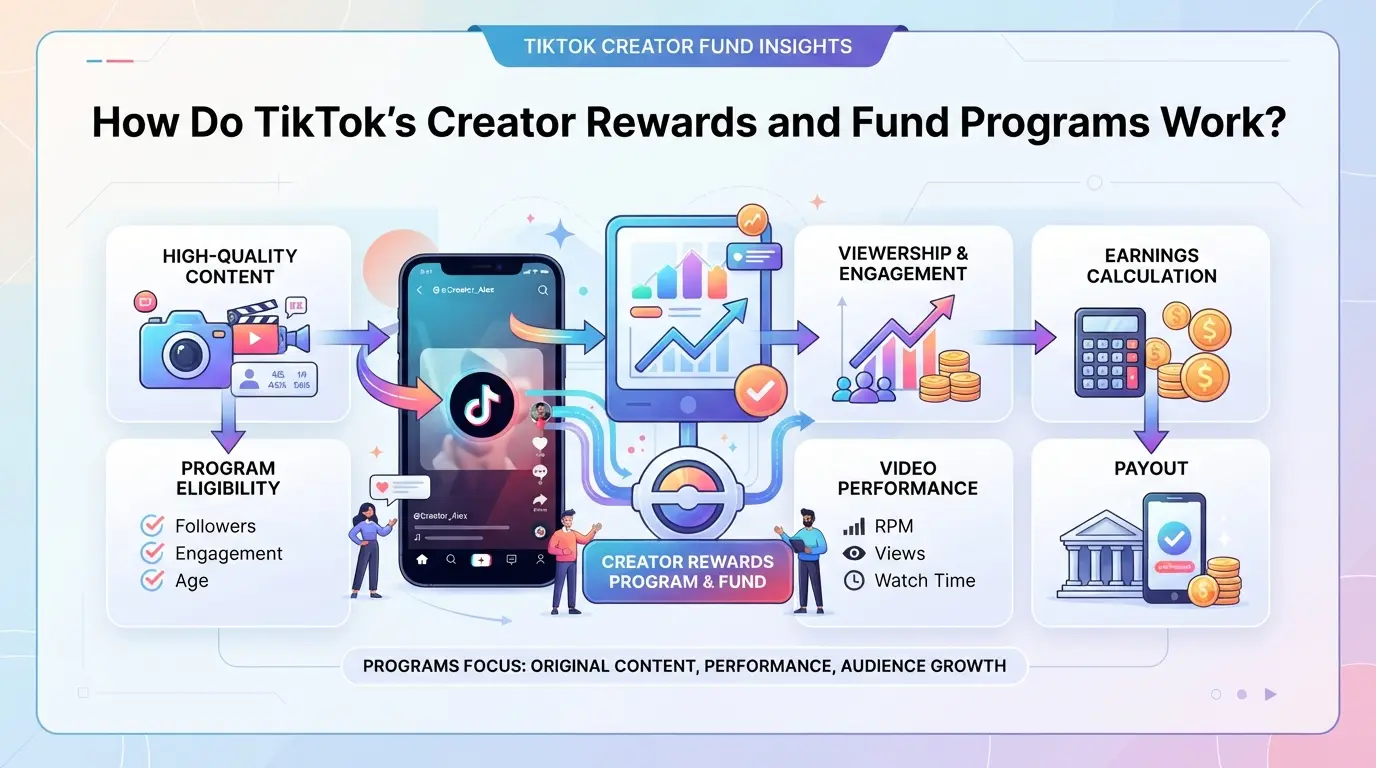
TikTok offers two main programs for creators to earn: Creator Rewards and the original Creator Fund. If you want to know how much does TikTok pay per view, you need to understand the differences in eligibility and payout rules, these decide how your earnings stack up.
Eligibility Criteria for Each Program
TikTok sets clear entry rules for both programs. The newer Creator Rewards has tighter requirements and covers more countries than the Fund. Here’s how they compare:
| Program |
Follower Requirement |
View Requirement |
Countries Supported |
Account Status |
| Creator Rewards |
10,000+ |
100,000 views in 30 days |
50+ (including US, UK, EU) |
No violations, 18+ |
| Creator Fund |
10,000+ |
100,000 views in 30 days |
Limited (mostly US, UK, FR, DE, IT, ES) |
No violations, 18+ |
If you don’t meet the follower or recent view thresholds, neither program will show in your dashboard.
Payout Differences: Rewards vs. Fund
The Creator Rewards program pays based on engagement, location, and content type, with rates often higher than the Fund. Typical payouts for Rewards are $0.02–$0.04 per 1000 views; Fund rates can dip below $0.01 per 1000 views in 2026.
Switching to Rewards is the fastest way to raise your TikTok pay per view rate, if your account qualifies.
How to Switch Between Programs
You can join Rewards directly from your TikTok dashboard if eligible; Fund participants are prompted to upgrade. Be careful: switching resets some analytics and payout tracking. If you switch mid-month, expect a delay in your next payout, sometimes up to 14 days.
Why Do Two TikTok Videos With the Same Views Earn Different Amounts?
Two videos can rack up identical views but see very different payouts. TikTok’s system weighs more than just the view count, location, engagement, content type, and account history all steer how much you actually get paid.
Case Study: Location and Audience Impact
A creator in the US might earn several times more for the same video than one in India. TikTok’s payout rates depend heavily on where your viewers are based, US, UK, and Canada audiences bring higher CPMs, while India or Southeast Asia often pay less.
| Audience Location |
Estimated CPM |
Typical Payout (for 10k views) |
| United States |
High |
Higher |
| India |
Low |
Lower |
Case Study: Engagement and Content Type
Picture two creators: both upload TikTok videos that hit 50,000 views. The first video is a niche tutorial; viewers watch most of it, comment, and share. The second is generic meme content, lots of quick scrolls, few likes. TikTok’s algorithm tracks watch time and interaction. If your video drives more comments, saves, and shares, you’ll see a higher payout, even with the same view count. Long-form or tutorial content usually earns more than meme compilations, because engaged users signal value. Missing this point means you’ll keep chasing views, but your actual TikTok creator rewards payout won’t match.
Case Study: Program Enrollment and Account History
Even with equal views, being in the Creator Rewards Program instead of the older Creator Fund can raise your rate. TikTok also checks account history, accounts flagged for spam or low-quality content will see reduced payouts. If your account has clean records and is in the top reward tier, the pay per view rate is higher. If you get booted from the program, earning drops fast.
Next up: you’ll see how to handle multiple TikTok accounts for social media marketing without triggering platform restrictions.
Managing Multiple TikTok Accounts in DICloak: Workflow for Social Media Teams
For creators or agencies aiming to run more than one TikTok account, it’s not just about content or tracking how much does tiktok pay per view. The real challenge is keeping account sessions separate, avoiding cross-login mistakes, and making sure only the right people have access. Teams that skip strict separation often get hit with login conflicts, accidental logouts, or even platform warnings. Here’s how operators can use DICloak to build a safer workflow for multi-account TikTok marketing, without guessing who touched which account or risking a team-wide freeze.
Profile Isolation and Fingerprint Configuration: Keeping Accounts Separate
Operators start by creating a dedicated browser profile for each TikTok account in DICloak. Each profile holds its own browser storage, cookies, and session data, so one account’s actions don’t spill over to another. Teams can also adjust fingerprint settings for each profile, such as browser type, operating system, time zone, and WebRTC, to fit the account’s history or assigned operator. This setup avoids the most common pitfall: shared browser storage causing session leaks and login loops across accounts. The scope here is browser profile separation only; it has no impact on TikTok’s own payout calculations or content visibility. 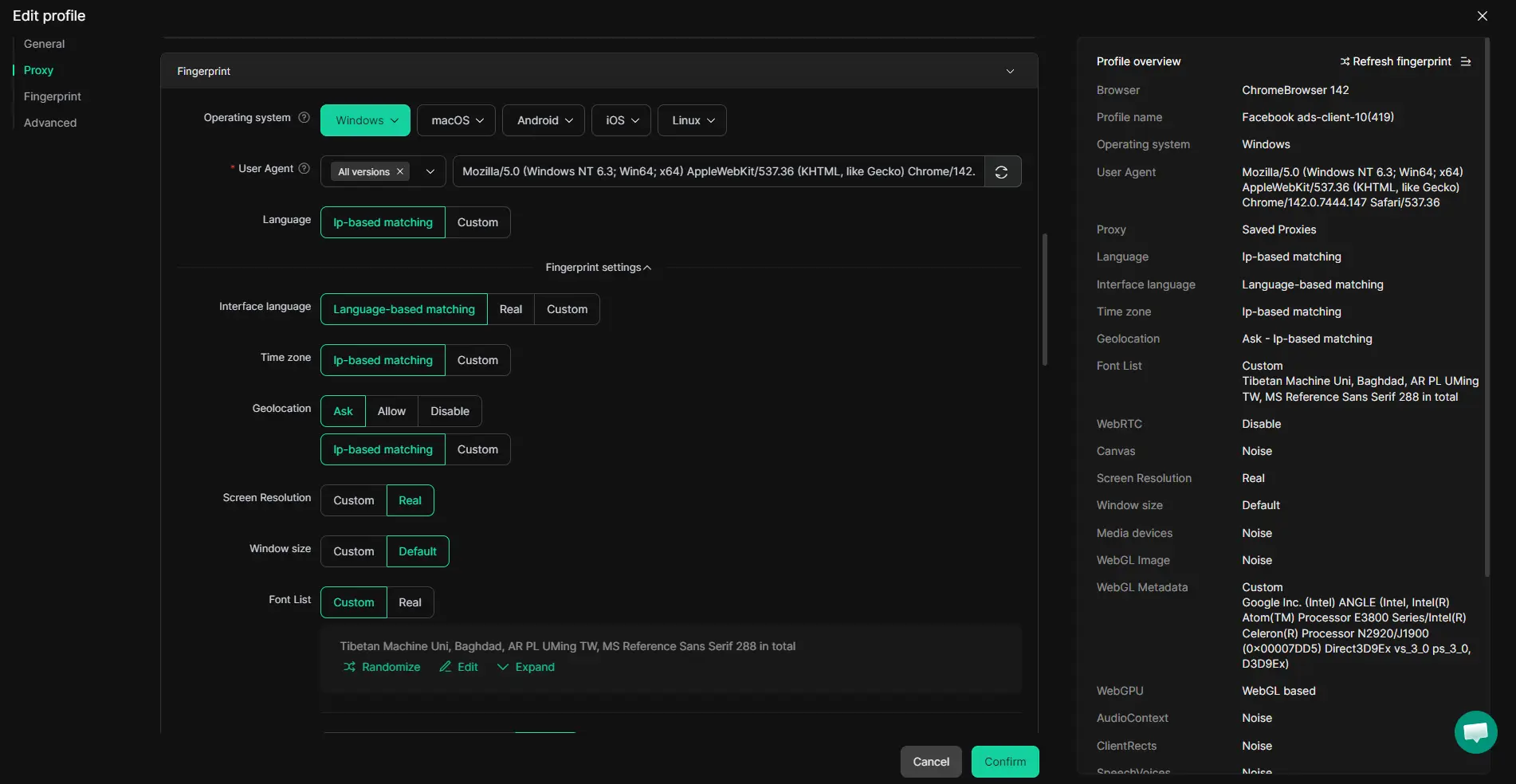
User-Provided Proxy Configuration for Assigned Profiles
For workflows that need each TikTok account to appear from a distinct network location, operators can assign a user-owned proxy to each browser profile. This keeps network signals and geo-location consistent for each session, especially when the accounts target different regions or campaigns. The proxy is configured and tested inside the DICloak profile before opening TikTok, giving the operator a clear view of the resolved IP, country, and time zone. Operators stay in control, DICloak does not sell or provide proxies, and all proxy management choices remain outside the product’s scope. 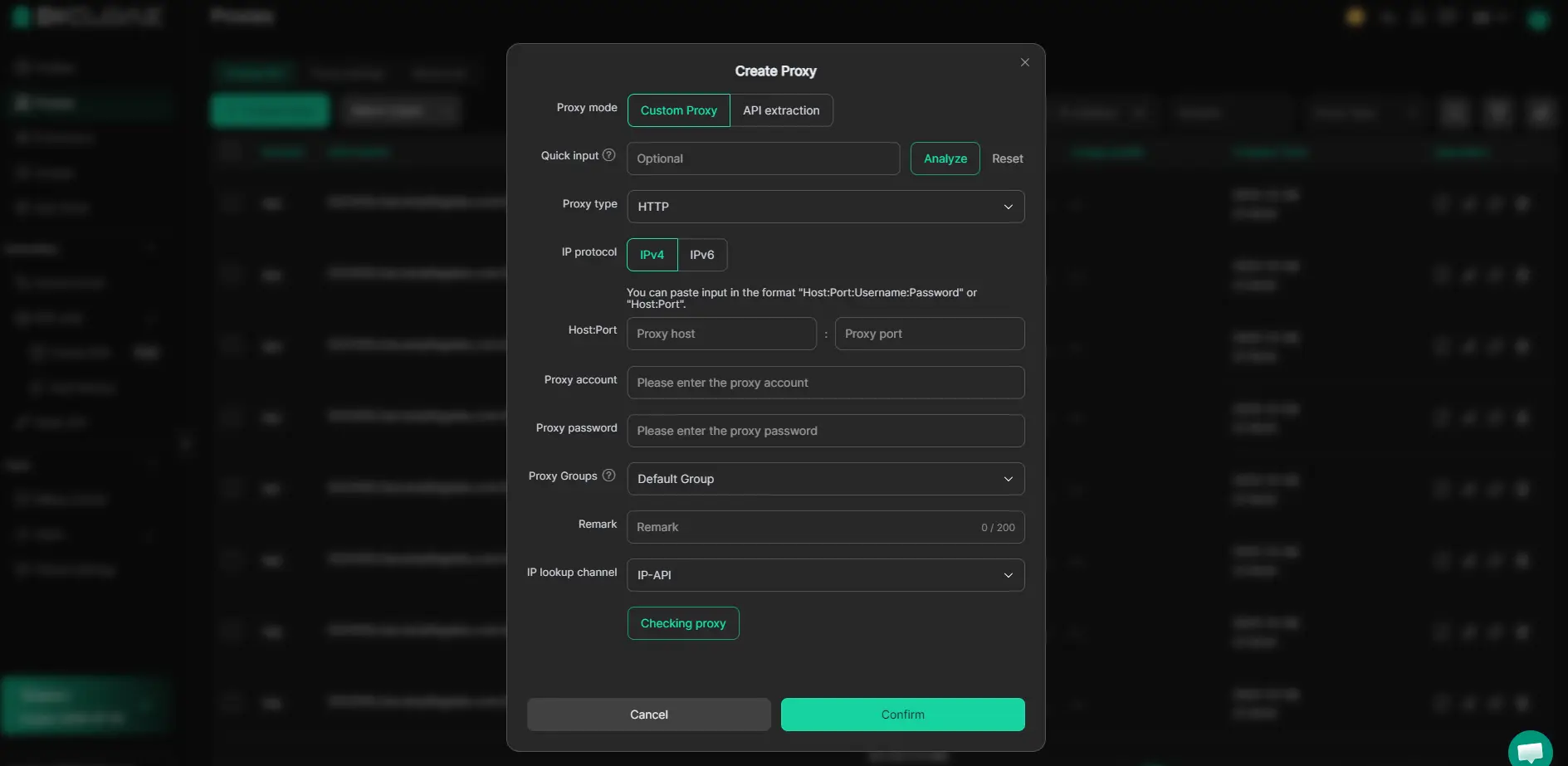
Team Collaboration and Permissions: Controlling Access and Reducing Risk
Admins can set granular permissions for every team member, choosing which TikTok account profiles they can access and what actions they’re allowed to perform. For example, a video editor might get access to only one profile group and just enough access to open assigned sessions, nothing more. This limits the risk of mistakes, lockouts, or accidental changes by less experienced staff. Permission settings apply only within DICloak; platform-side account controls remain unchanged. 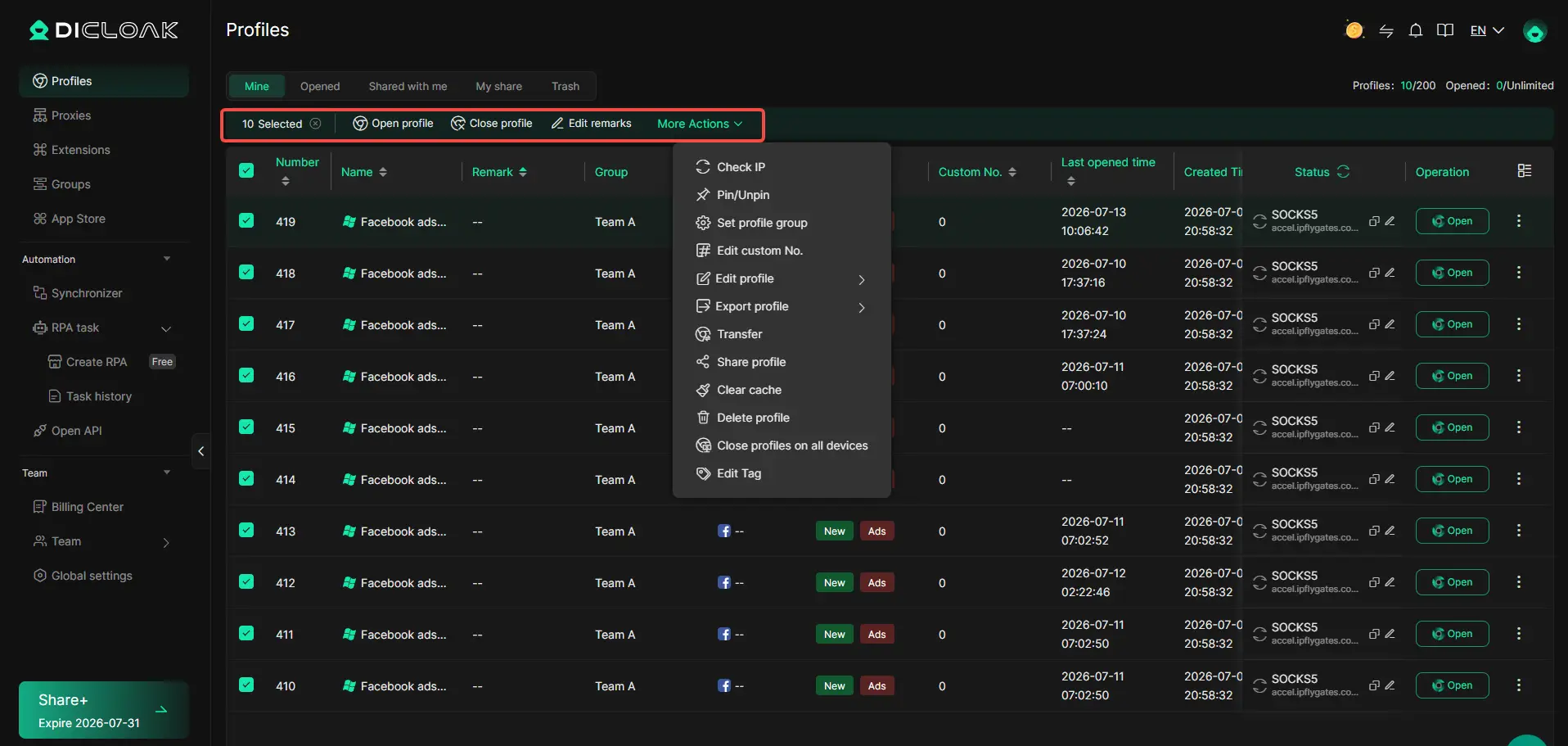
A careful account management workflow like this cuts down on mistakes that lead to restrictions, the next section explains which errors most often cost creators their TikTok earnings.
Common Mistakes That Reduce TikTok Earnings or Trigger Account Restrictions
Creators looking to boost payouts often trip up on basic operational errors, these slip-ups can slash your earnings or even get your account flagged.
Mixing Account Sessions or Fingerprints
Running multiple TikTok accounts in overlapping browser sessions, or sharing device fingerprints, is a fast track to detection. TikTok looks for patterns, if two accounts show up with identical browser or device signatures, both can get flagged as suspicious. Keep each account in a truly separate browser profile with unique fingerprints, or you risk bans and payout freezes.
Using Low-Quality or Shared Proxies
- Check that each account uses a dedicated, non-shared proxy address
- Avoid residential proxy pools with recycled IPs
- Test proxy speed, slow or unstable proxies often trigger security checks
Granting Excess Permissions to Team Members
Giving team members full access to all TikTok accounts increases the risk of mistakes or leaks, especially if someone leaves the team or gets compromised.
- Assign each member only the accounts they directly manage
- Use role-based access, not shared credentials
- Audit permissions monthly for unused or risky access
If you avoid these traps, you’ll protect both your earnings and account stability as you compare TikTok payouts with YouTube Shorts and Instagram Reels.
TikTok vs. YouTube Shorts vs. Instagram Reels: Which Pays More Per View in 2026?
If you want to earn the most per view in 2026, YouTube Shorts usually pays more than TikTok or Instagram Reels. TikTok’s average payout per 1,000 views is lower, but the gap depends on your audience and region.
Pay Per View Rate Comparison Table
Here’s a real-world breakdown of what creators typically earn for 1,000 views (CPM) in 2026:
| Platform |
Typical CPM (USD) |
Notes |
| TikTok |
$0.02 – $0.20 |
Creator Rewards, varies by region |
| YouTube Shorts |
$0.10 – $0.80 |
Ad revenue share, more stable CPM |
| Instagram Reels |
$0.01 – $0.15 |
Bonus programs, invite-only for some |
YouTube Shorts usually gives the highest pay per view for creators focused on ad revenue, while TikTok and Instagram Reels pay less, especially outside top-tier countries.
Other Factors: Audience, Engagement, and Monetization Options
The rate you see on paper isn’t the whole story. Shorts’ payouts depend on ads and channel subs, while TikTok leans on engagement and reward pools. If your main audience is in the U.S. or the U.K., you’ll likely get the best CPMs. If you want predictable income, Shorts offers more stability, TikTok’s rates swing month to month. Reels can work for those with strong Instagram followings, but payouts aren’t as public and may require an invite.
Frequently Asked Questions About how much does tiktok pay per view
How much does TikTok pay for 1,000 views in 2026?
The typical TikTok pay per 1,000 views in 2026 is between $0.02 and $0.04 through the Creator Rewards Program. Your payout depends on factors like audience location, engagement rates, and video content type. Videos reaching U.S. viewers or going viral may earn more, but most creators see payouts in this low range.
How many views do you need to start earning money on TikTok?
To earn directly from TikTok, you must join the Creator Rewards Program. This requires at least 10,000 followers and 100,000 authentic video views in the last 30 days. Payouts do not begin until you reach these minimums and your account is approved for the program.
Can small creators earn meaningful income from TikTok pay per view?
Small creators rarely make significant money from TikTok’s pay per view rate alone, since payments are low unless you get millions of views. To boost earnings, focus on high-engagement content, post regularly, and build an audience. Many small creators combine Creator Rewards with brand deals or affiliate links for better income.
Running multiple TikTok accounts on one device carries risks. TikTok may flag or restrict accounts if it detects unusual activity. To stay safe, use separate emails and avoid switching accounts too often. Always follow TikTok’s community guidelines to reduce the chance of bans.
Does TikTok pay more than YouTube Shorts or Instagram Reels?
TikTok’s pay per view is generally lower than YouTube Shorts, which can pay several cents per 1,000 views. Instagram Reels payouts also vary but are often similar or slightly higher than TikTok. However, all platforms reward creators with viral videos and high engagement, not just views.
If you're aiming to earn with your content, tracking your analytics closely and experimenting with different formats can help you understand what drives higher engagement and potential payouts. Setting realistic expectations and diversifying your monetization strategies will ensure more consistent income as you grow your audience. Try DICloak For Free
 Web Proxy Tools
 Free Tools
 Cookie Plugin
 UA Generator
 MAC Address Generator
 IP Generator
 IP Address List
 2FA Code Generator
 World Clock
 Anonymous Check
 WebRTC Leak Test
 UUID Generator
 Free Web Proxy Site
 Proxy Checker
 FB Ad Checker
 AI Web Scraping
 Free SMM Tools
 Twitter Shadowban Checker
 Instagram Name Checker
 UTM Generator
 Username Generator
 AI Hashtag Generator
 LinkedIn Headline Generator
 Social Media Image Resizer