A new seller can launch a store in one weekend, get orders on day one, and still lose money by week two from ad spend, refunds, and supplier delays. That gap between “store is live” and “store is stable” is why people search for dropshipping explained. You are not just asking what dropshipping is. You are trying to see how money moves, where risk shows up, and what to set up before you run traffic.
The model is simple on paper: you sell, a supplier ships, and you keep the margin. The real work sits in product selection, cash flow timing, return handling, and platform rules. If you sell on marketplaces, policy compliance is not optional, including Amazon’s dropshipping policy. If you run your own store, your legal pages and ad claims still need to follow FTC business guidance. And if you are starting on Shopify, baseline setup choices in Shopify’s dropshipping guide affect your first month more than logo design ever will.
You will leave with a clear map of how dropshipping works, what it can cost, and how to start with fewer preventable mistakes. Here is the core process to understand before you spend your first dollar.
How does dropshipping actually work from order to delivery?
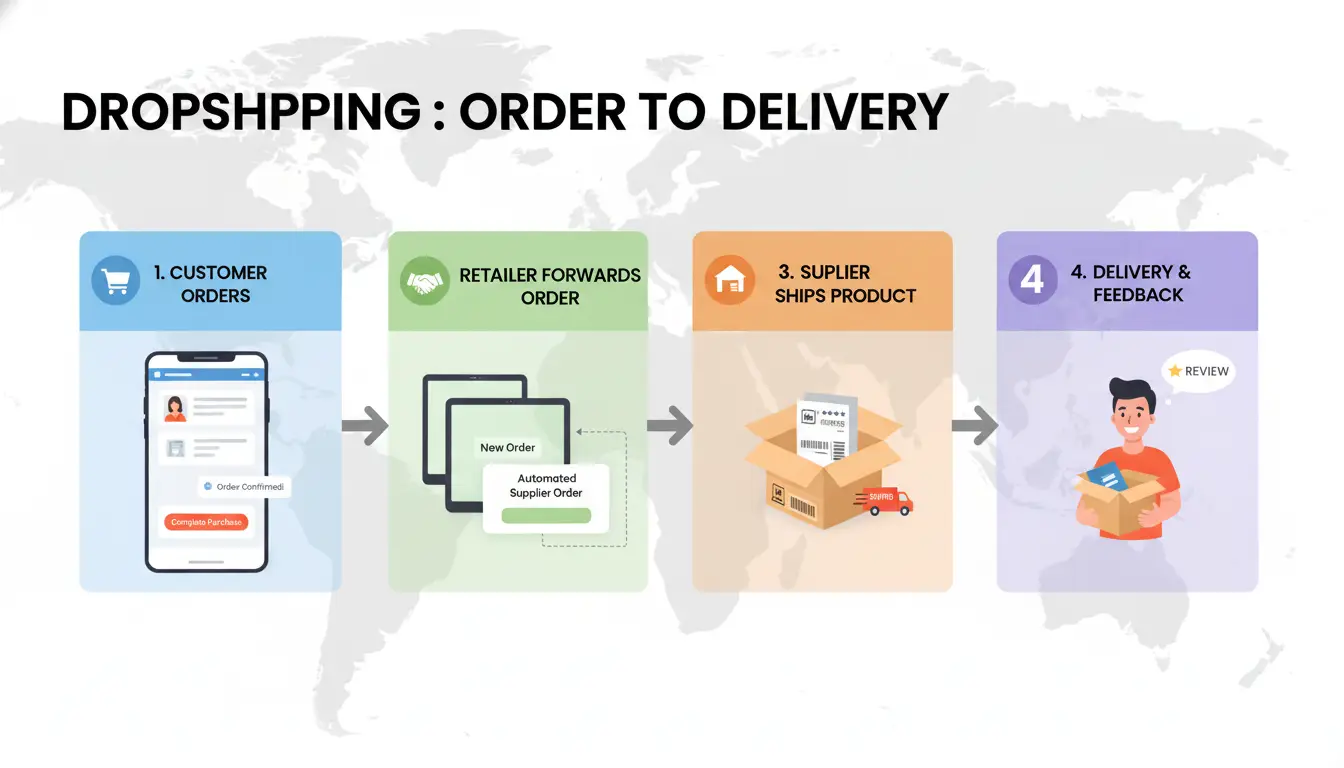
For most new sellers, dropshipping explained in plain terms is simple: you sell, your supplier ships, and you still own the customer relationship.
What happens after a customer places an order
Your store takes payment at checkout and stores the customer’s name, address, item, and shipping choice. You then pass that order to your supplier, often through an app or CSV sync. The supplier picks, packs, and ships straight to your customer. Tracking is sent back to you, then to the buyer.
Cash timing is the part beginners miss. You collect retail price now, then pay supplier cost plus shipping right away. If your payment processor holds funds, you still must pay the supplier on time.
Who controls pricing, support, and customer experience
You set the product page, price, shipping promise, and refund rules. You also handle support emails, chargebacks, and review damage. That duty does not transfer to the supplier.
The supplier controls stock accuracy, packing speed, and actual handoff to the carrier. If they ship late, your brand gets blamed. This is why Amazon’s dropshipping policy requires you to stay the seller of record, and why FTC business guidance still applies to your claims and policies.
Where beginners misunderstand the model
No inventory at home does not mean no operations. You still monitor stock feeds, update listings, answer tickets, and process returns.
A common failure pattern is scaling ads before support and refund flow are ready. If service breaks, the platform and customer hold you responsible, not your supplier. That is the practical core of dropshipping explained.
What should you check before starting a dropshipping store?
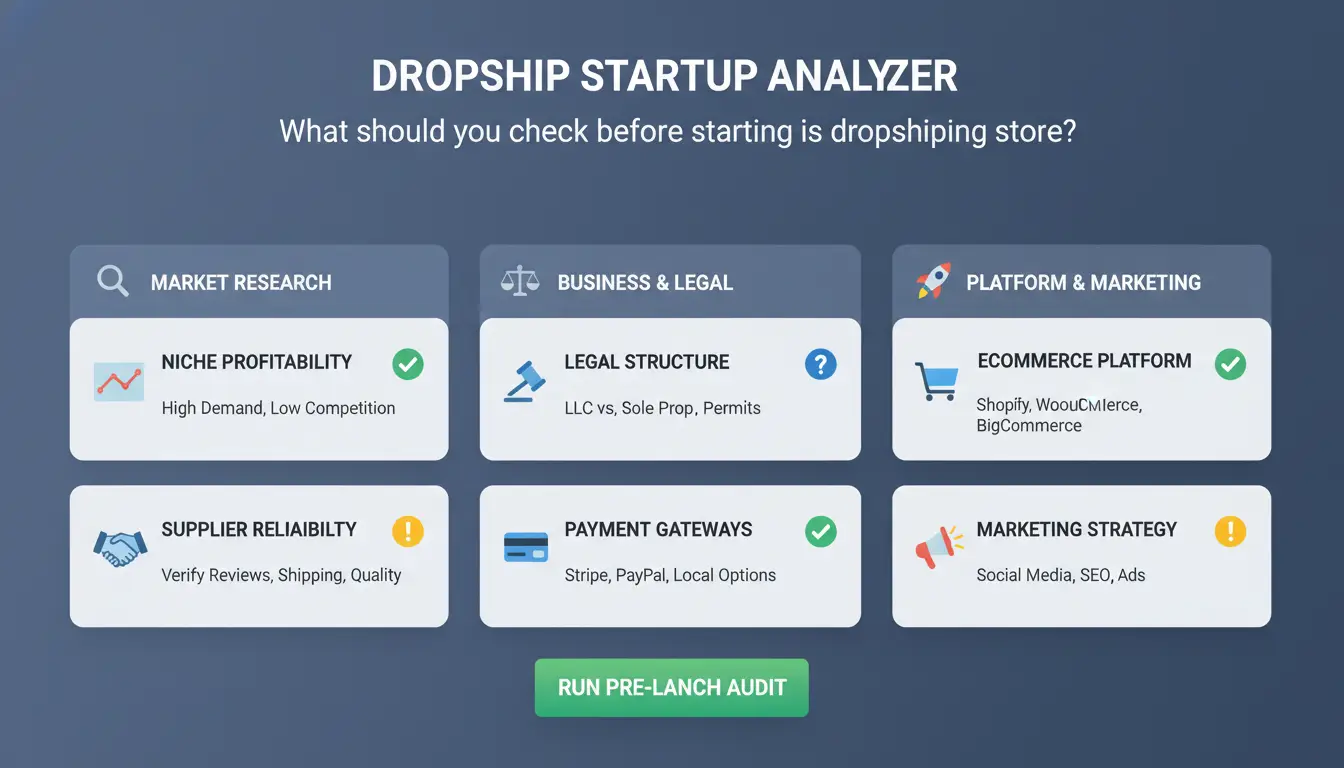
Before you launch, treat this as your pre-flight check. In plain terms, dropshipping explained means you sell while a supplier ships. Your early risk sits in demand, support load, and compliance, not your logo.
How to validate product demand before building the store
Check demand from three angles: search, marketplace, and competitor depth. Use Google Trends to see direction over 12 months, then confirm buyer intent on Amazon Best Sellers and TikTok Creative Center.
| Signal |
Healthy sign |
Risk sign |
| Search trend |
Stable or rising 6–12 months |
Sharp decline after a short spike |
| Marketplace listings |
Multiple sellers with real reviews |
Copycat pages with thin descriptions |
| Ad/creative shelf life |
Reused winning angles over time |
One viral clip, then silence |
If you only check one spike chart, you can mistake hype for demand.
How to pick a niche you can support long term
Pick a niche where customers buy again, like accessories or consumables, not one-off novelty items. Then stress-test operations: return rate risk, breakage risk, and support difficulty. Fragile or size-sensitive products create refund pressure fast. Also check shipping time variance by supplier region before you run paid ads.
What legal and policy basics to confirm first
Set up business registration, tax collection, and invoice flow before taking orders. Verify platform rules and product limits where you sell. For marketplace selling, read Amazon’s dropshipping policy. For your own store, align claims, refunds, and disclosures with FTC business guidance. If you use Shopify, follow Shopify’s dropshipping guide for core setup choices. This is where dropshipping explained becomes executable, not theoretical.
How much does it cost to start, and where does profit really come from?
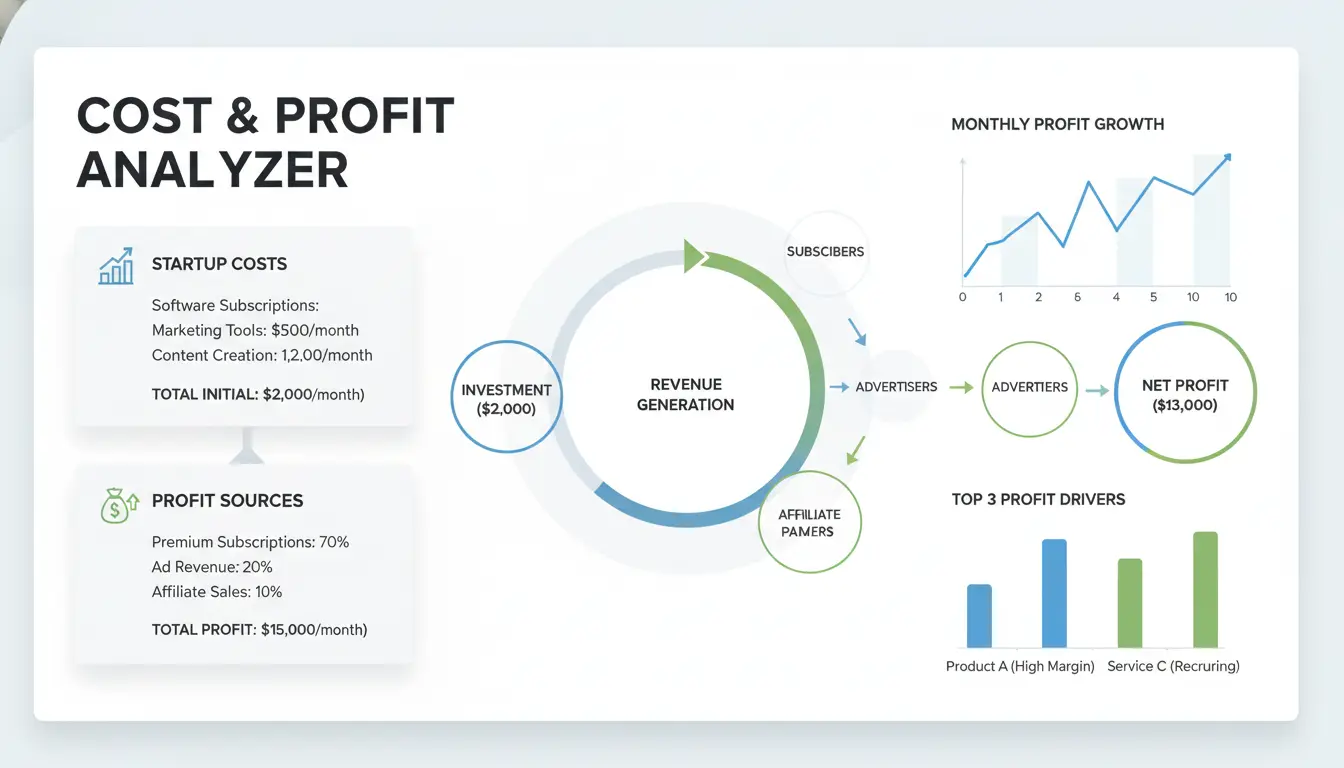
For most new sellers, profit comes from unit economics, not revenue screenshots. In plain terms, dropshipping explained means tracking every dollar tied to each order.
What your first-month costs usually include
Your startup bill usually has five parts: store plan, domain, apps, creative work, and testing spend. You can check current platform fees on Shopify pricing. Domain cost depends on extension and provider. Apps can stay near $0 at the start, or rise fast if you add review, upsell, and email tools.
Ad testing is often the largest early cost. Product samples also count, since you need to check shipping speed and quality before scaling.
How to calculate breakeven and true profit per order
Use this formula per order: product cost + shipping + payment fees + ad cost + refund/chargeback allowance.
| Item |
Example per order (USD) |
| Product cost |
12.00 |
| Shipping |
4.00 |
| Payment fees |
1.50 |
| Ad spend |
8.00 |
| Refund/chargeback allowance |
1.50 |
| Total cost |
27.00 |
| Selling price |
39.00 |
| Contribution margin |
12.00 |
Breakeven ROAS in this example is 39 / 8 = 4.88. If your real ROAS stays below that, sales can grow while cash shrinks.
Why many stores fail even with early sales
Early sales can hide weak retention, rising ad costs, and slow delivery. If return rate climbs, profit per order drops even when top-line revenue rises. Chargebacks can hit later and erase a good week. Keep a weekly sheet with margin, refund rate, and delivery delay rate. That is dropshipping explained in practice.
How do you find reliable suppliers and avoid costly mistakes?
If you read any “dropshipping explained” guide, the weak point is almost always supplier control. A clean ad funnel cannot fix late shipping, bad packaging, or fake tracking. Treat supplier checks like risk control, not admin work.
What supplier vetting criteria matter most
Ask each supplier for the last 30 days of defect and late-shipment records. If they refuse, move on. Check average response time across time zones, not just one chat reply. Confirm daily order capacity and cutoff times.
For fulfillment consistency, place the same SKU order on three different days and compare tracking updates. You should also verify stock visibility and backup sourcing. If one warehouse runs out, you need a second source ready. You can cross-check supplier identity and transaction history on Alibaba and review channel rules in Shopify’s dropshipping guide.
Which red flags usually predict future disputes
Skip suppliers with unverifiable company details, no legal entity name, or terms like “no refunds under any condition.” Vague after-sales terms usually become chargebacks later. Very low pricing is risky when the supplier cannot show packing videos, QC photos, or batch inspection records. Also avoid suppliers that cannot explain who handles last-mile delivery in your target country.
How to run a small sample test before committing
Run 5–10 test orders before scaling ad spend. Send orders to your address and two customer-like addresses in different regions.
| Check item |
Pass rule |
Fail signal |
| Delivery timeline |
Arrives within promised window |
Misses ETA without notice |
| Tracking quality |
Carrier scans update normally |
Reused or stalled tracking number |
| Packaging & product |
Clean package, correct SKU, no damage |
Wrong item, poor protection |
What are the biggest dropshipping risks, and how can you reduce them?
If you want dropshipping explained in practical terms, risk control is the real business model. Most store failures come from late delivery, bad return handling, and policy violations, not from ad setup.
Why shipping delays and stockouts hurt more than you expect
A missed delivery window can trigger refund requests within days, even when the item is still in transit. Stockouts hurt twice: you lose the order and still pay ad costs that brought the buyer.
Set delivery windows with a safety buffer based on supplier history, not promises. Show processing time and shipping time separately on product pages. Send proactive delay notices before customers ask.
How refunds, returns, and chargebacks can erase margins
A single dispute can wipe out profit from several orders once product cost, shipping, payment fees, and support time are counted. This is where “cheap winning product” logic breaks.
Match product claims to real use. Avoid edited photos that create false expectations. Publish return rules in plain language, including who pays return shipping and where items are sent. Keep a supplier agreement that covers defective items, lost parcels, and response deadlines. This is a core part of dropshipping explained, not legal fine print.
How to protect your store from policy and compliance issues
Policy issues can stop payouts or suspend listings. If you sell on marketplaces, follow Amazon’s dropshipping policy. On your own store, keep ad claims, refund terms, and disclosures aligned with FTC business guidance.
Avoid restricted products. Keep records for invoices, tracking, customer messages, and refund decisions. Good records speed up appeals and reduce avoidable account risk.
How can you manage multiple stores and ad accounts with lower detection risk?
If you run several stores, the main risk is account linkage, not ad strategy. In plain terms, dropshipping explained at scale means you need repeatable account hygiene, clear team access, and stable login behavior.
Why account linking happens when teams scale too fast
Teams often trigger linkage by working in one shared browser setup. Cookies, local storage, and browser fingerprint data can overlap across accounts. Platforms can read that overlap as one operator behind separate stores.
Login behavior can also flag risk. Example: one account logs in from Device A in the morning, then Device B with a new IP at night. Add mixed time zones and random session resets, and trust drops fast. The safest pattern is one account, one profile, one proxy, one owner flow.
How to use DICloak for isolated profiles and independent proxies
You can use DICloak to create a separate browser fingerprint profile for each store or ad account. Keep profile data isolated, so sessions do not bleed into each other.
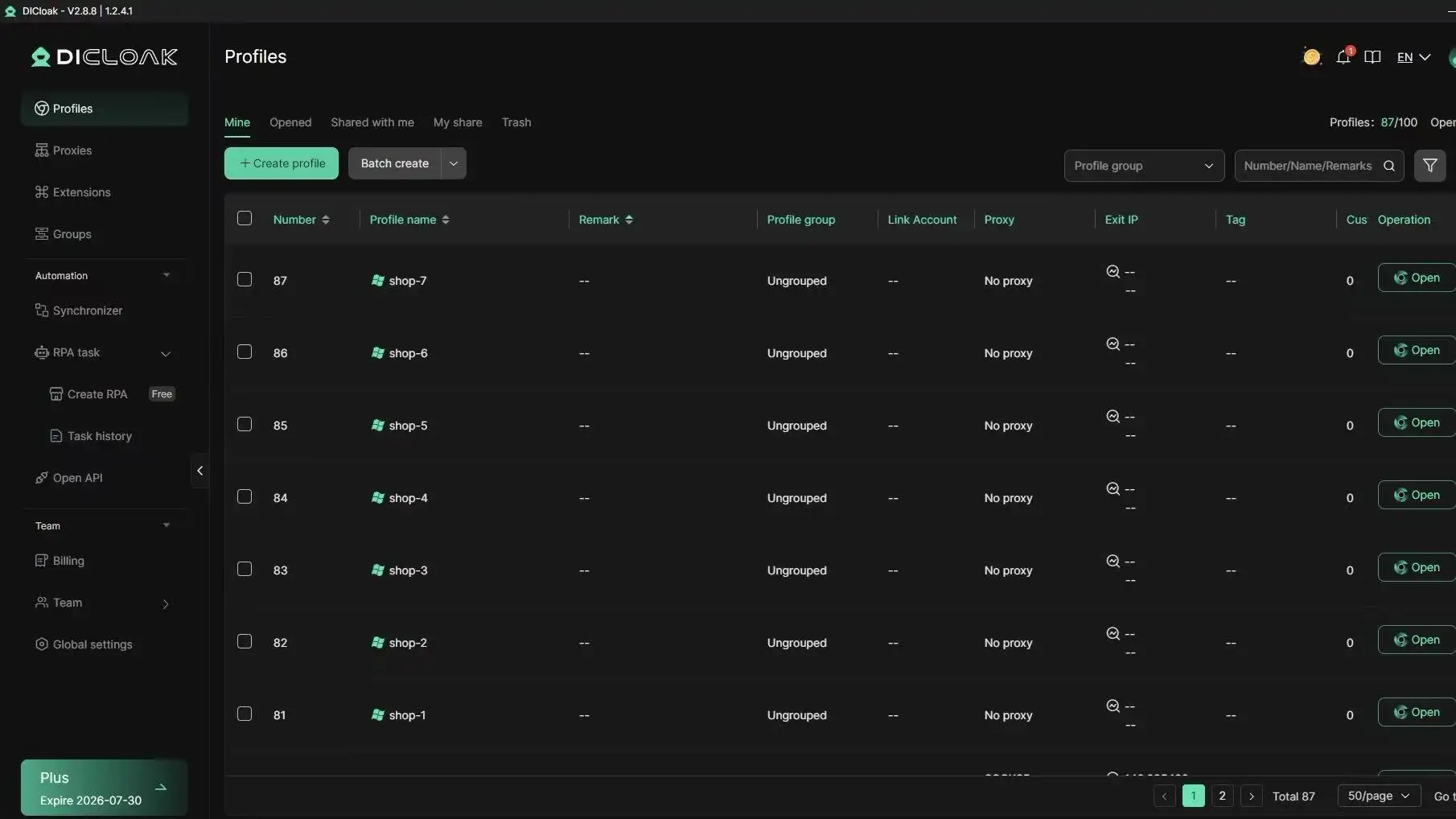
Bind a dedicated proxy to each profile and keep it fixed. That keeps network identity stable per account and lowers cross-account signals.
How team permissions, logs, and automation reduce costly errors
Access control should match job scope. Give media buyers ad access, not billing edits. Give assistants product upload rights, not account security controls.
Use operation logs to track who changed what and when. This cuts blame loops during incidents and speeds rollback.
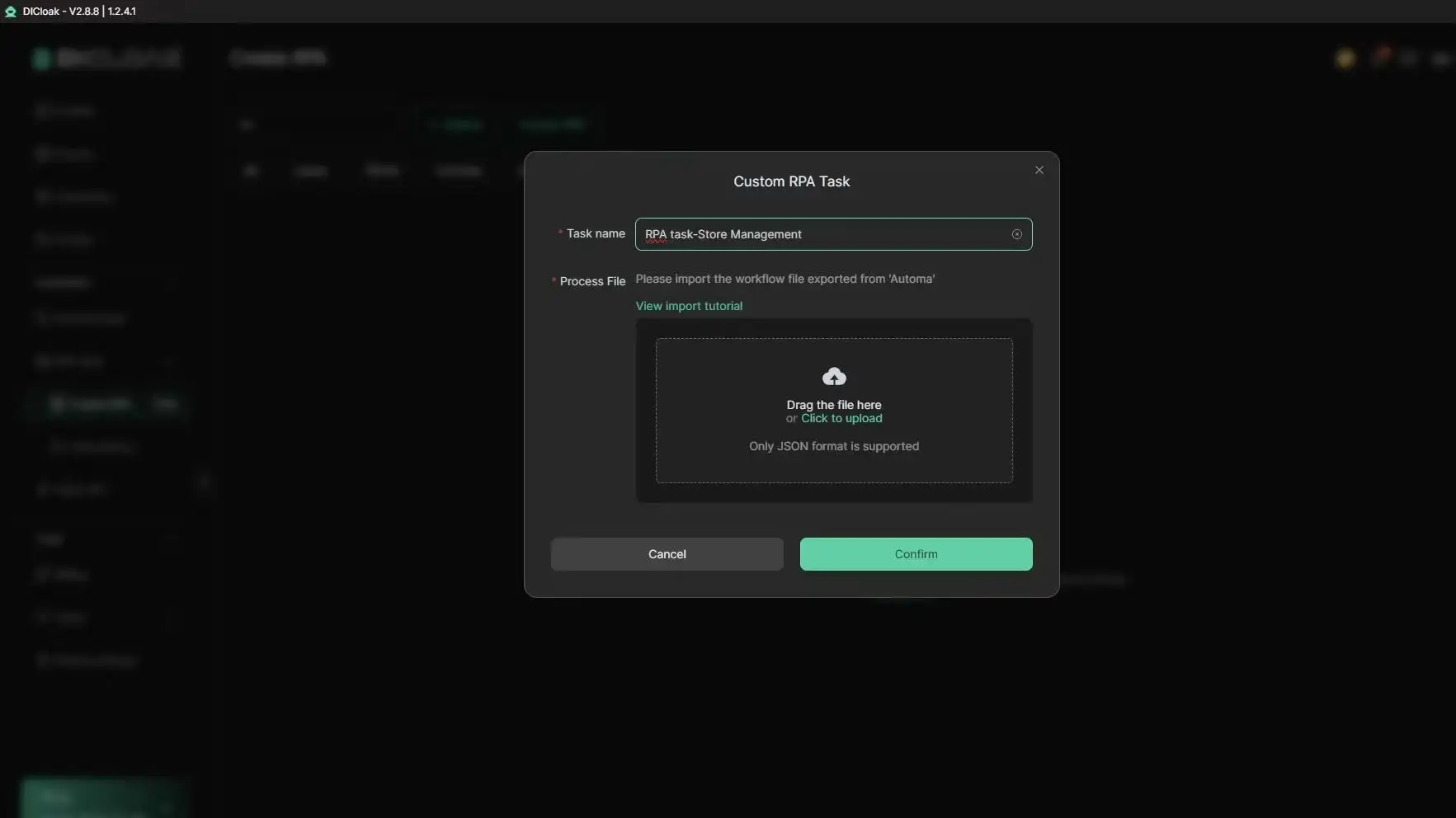
For repeat tasks, use bulk actions and RPA in DICloak to keep execution consistent. That is where dropshipping explained moves from “manual hustle” to controlled operations with fewer preventable account hits.
How do you grow from first sales to a stable dropshipping business?
After early orders, growth usually breaks on conversion leaks, weak repeat purchase flow, and account risk. In practical terms, dropshipping explained at scale means tighter execution, not just more ad spend.
What to improve first after getting initial orders
Start with one product page at a time. Clarify delivery time, returns, and what is included. Remove checkout friction: fewer fields, clear payment errors, mobile speed checks. Track conversion by source, device, and landing page. You can use tools like DICloak to map one store or ad account to one isolated browser profile, with unique fingerprints and dedicated proxies, so account actions stay separated during scaling.
How to increase average order value without hurting trust
Bundle related items with a real price break, not fake urgency. Add post-purchase upsells and free-shipping thresholds only when margins stay safe. Tools like DICloak let you run team permissions and operation logs, so staff can handle ads, support, and store edits without risky shared logins.
When to switch winning products to private labeling or inventory
Move when demand is steady and return rates stay controlled for several weeks. Switching too early locks cash; switching too late caps margin. Use bulk profile actions and RPA to keep repetitive account tasks consistent as you expand.
Is dropshipping still worth it in 2026, or should you choose another model?
If you want dropshipping explained in one line: you sell before you buy stock, so cash risk is lower but control is lower too. It still works in 2026 for the right operator. It fails fast when someone expects passive income, ignores support load, or picks weak suppliers.
Who should start with dropshipping and who should not
A good fit: you have a small test budget, can run ads or content tests each week, and can handle customer messages daily. You care about learning demand before you lock money into inventory.
A poor fit: you need high margins from day one, want fast shipping control, or do not want to manage disputes, refunds, and supplier delays. Platform rules still apply, including Amazon’s dropshipping policy.
Dropshipping vs holding inventory: what changes most
| Model |
Upfront cash |
Margin control |
Shipping control |
Brand experience |
| Dropshipping |
Low |
Lower at start |
Supplier-led |
Harder to control |
| Holding inventory |
Higher |
Higher if managed well |
Seller-led |
Easier to improve |
Holding stock can improve repeat purchase rate through faster delivery and custom packaging. Dropshipping gives faster market testing. For a new store, Shopify’s setup guide is a practical baseline.
A practical decision checklist before you commit
Use this quick check before you commit:
- Do you have 3-6 months of runway for ads, apps, refunds, and chargebacks?
- Can you answer support tickets every day, including weekends?
- Can you verify supplier response time and defect handling before launch?
- Do you know your legal basics for claims, refunds, and disclosures under FTC business guidance?
If you answer “no” to two or more, pause. Fix those gaps, then start. This is the core of dropshipping explained for real-world decisions.
Frequently Asked Questions
Is dropshipping explained differently for Shopify, Amazon, and eBay?
The core model in dropshipping explained is the same: you sell first, then a supplier ships. But each platform has different rules. Shopify gives store control, while Amazon and eBay enforce strict shipping and tracking standards. Fees also vary by listing type, payments, and referrals. Read each seller policy before launch.
How long does it usually take for a dropshipping store to become profitable?
Most stores need several weeks to a few months of testing before steady profit appears. You must test product offers, pricing, and ad creatives fast, then cut weak campaigns. Profit also depends on supplier speed and defect rates. Slow shipping, frequent refunds, or poor communication can erase margins quickly.
Can dropshipping work without paid ads?
Yes. You can grow through SEO blog posts, TikTok or Reels content, email lists, and creator partnerships. This path lowers ad spend risk, but traffic builds slower. You need a content calendar, keyword targeting, and weekly publishing. Track clicks and conversion rate so you can improve pages that already get visitors.
Do I need to contact suppliers before launching my store?
Yes, contact suppliers before publishing products. Ask for live stock updates, processing time, carrier options, return address, and damaged-item policy. Request sample photos or place a test order to verify packaging and delivery speed. Clear communication now prevents canceled orders, chargebacks, and support overload when sales start.
What is the biggest misconception in most dropshipping explained guides?
Many dropshipping explained posts make it sound passive. Real stores need daily work: customer support, order tracking, dispute handling, and supplier follow-up. You must monitor product quality and shipping times, then replace weak suppliers fast. If you ignore operations, refunds rise, reviews drop, and ad performance gets worse.
Conclusion
Dropshipping is a low-risk way to start an online store because you can sell products without holding inventory, but long-term success depends on choosing reliable suppliers, maintaining healthy margins, and delivering a strong customer experience. If you treat it like a real business by testing products, tracking performance, and building trust with your audience, dropshipping can become a scalable model rather than a short-term trend.
Try DICloak For Free
 Web Proxy Tools
 Free Tools
 Cookie Plugin
 UA Generator
 MAC Address Generator
 IP Generator
 IP Address List
 2FA Code Generator
 World Clock
 Anonymous Check
 WebRTC Leak Test
 UUID Generator
 Free Web Proxy Site
 Proxy Checker
 FB Ad Checker
 AI Web Scraping
 Free SMM Tools
 Twitter Shadowban Checker
 Instagram Name Checker
 UTM Generator
 Username Generator
 AI Hashtag Generator
 LinkedIn Headline Generator
 Social Media Image Resizer