Most students hear about the depop campus manager role through social posts, then get stuck because the real hiring details are spread across different channels and timelines. If that sounds familiar, you are not behind; the role is less about having a perfect resume and more about showing clear proof that you can build local traction for a peer-to-peer fashion platform like Depop.
This guide gives you a practical path: what the campus manager role usually includes, what recruiters look for in student applications, how to shape your outreach examples, and how to present campus results in a way that hiring teams can trust. You will also see where to verify role updates through official pages like the Depop Help Centre and how Depop fits into the wider resale business context noted in Etsy’s acquisition announcement.
The short version is simple: candidates stand out when they show real campus execution, not just interest in fashion resale. Start with what the role actually asks you to do day to day.
What does a Depop campus manager actually do on campus?
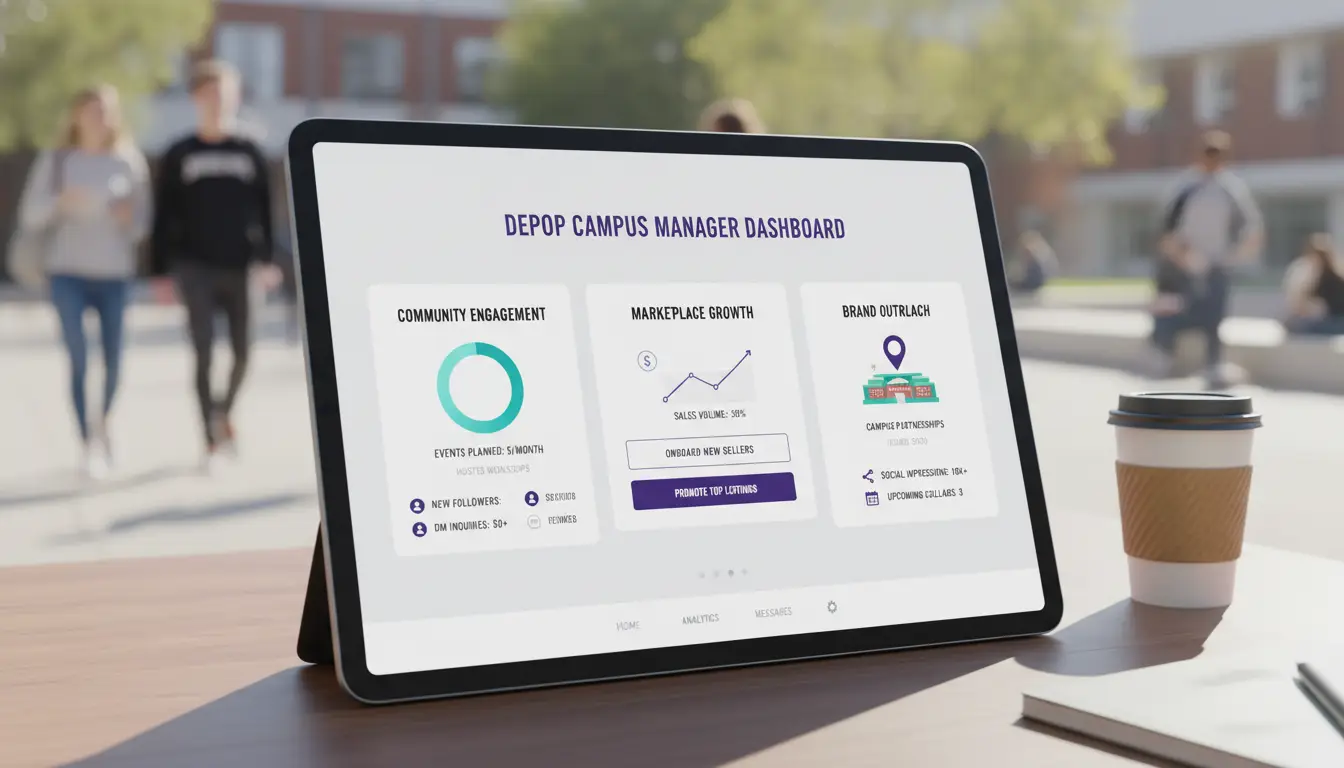
A depop campus manager runs local growth, not just posts on Instagram. You plan small in-person moments, recruit student sellers, and turn campus interest into trackable actions the brand team can review. The role is judged by repeat participation and trusted feedback, not by one viral post.
Core responsibilities beyond posting on social media
You build a student network across clubs, halls, and creator circles. You host pop-ups, styling swaps, or onboarding sessions that help new sellers list items. You also collect what students ask for, what blocks sign-ups, and what content style gets real replies, then report it back through structured updates.
Typical goals and performance signals
Teams usually look at event attendance, referral link activity, seller sign-ups, and return participation at later events. Follower count helps, but relationship quality carries more weight: can you get people to show up again, list products, and share peer referrals? For role updates, check the Depop Help Centre.
How the role differs from influencer partnerships
Influencer work is often one sponsored post. A depop campus manager represents the brand through a semester and keeps a feedback loop open between students and the internal team. That long cycle fits Depop’s resale focus inside Etsy’s portfolio.
Who should apply for a Depop campus manager role, and what skills matter most?
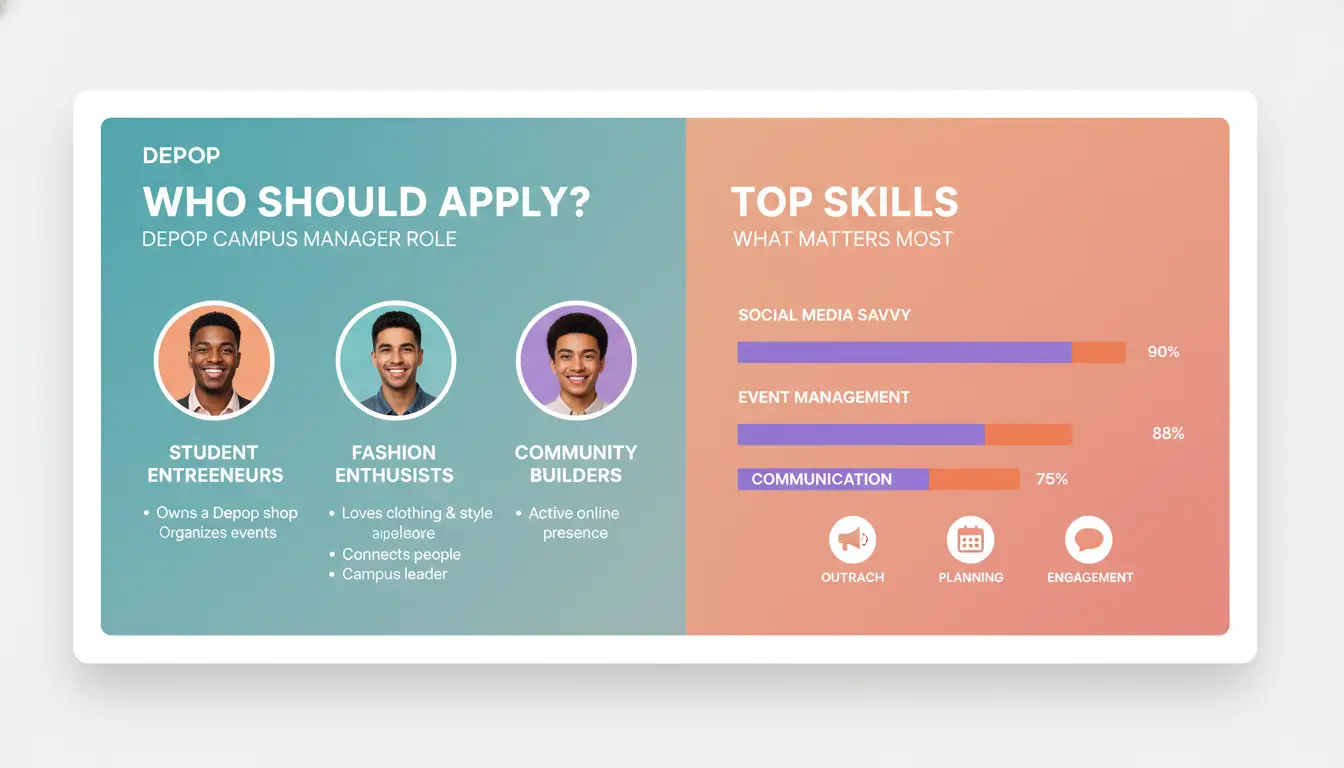
If you are considering a depop campus manager application, screen yourself on proof of execution, available hours, and campus fit before you spend time on forms.
Minimum profile: what strong candidates usually have
Strong applicants can point to a real student network they can activate fast: clubs, societies, creators, or event partners. You should be comfortable sending outreach messages, pitching ideas in person, and following up. The key proof is past action: ran a pop-up, grew a student page, hosted a creator meetup, or drove sign-ups for a campus event. Interest alone is weak; track record is what gets interviews.
Nice-to-have strengths that improve selection odds
You gain an edge if you can plan short content cycles, spot trend shifts, and read simple metrics like saves, clicks, and resale conversions. Hands-on experience with resale or peer-to-peer selling helps since you already understand listing quality, buyer trust, and community tone.
Fit check: schedule, motivation, and campus environment
Be realistic about time. If your class load already causes missed deadlines, campaign work will slip too. Check whether your campus has an active fashion resale culture and creator activity. Review official updates through the Depop Help Centre. If your campus audience matches that behavior, the depop campus manager role is a practical fit.
How does the Depop campus manager application process usually work?
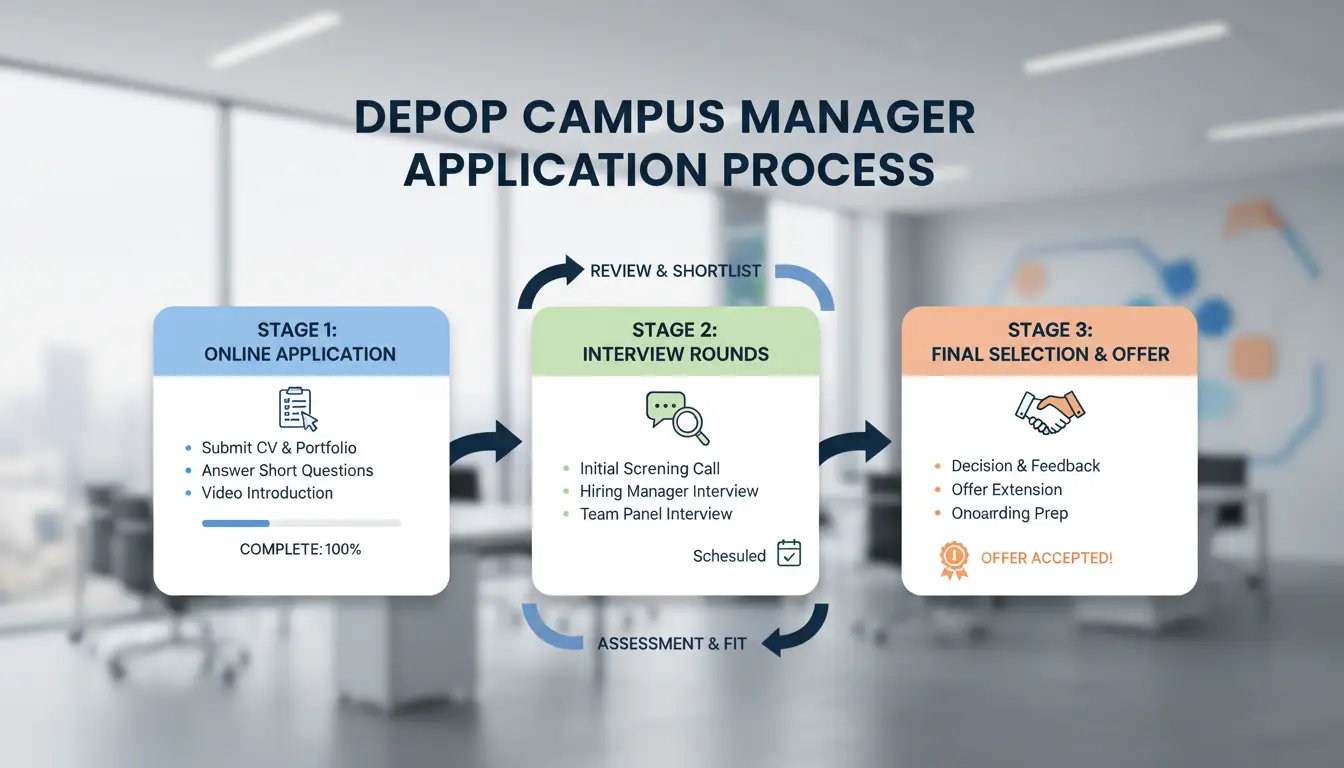
For a depop campus manager role, the flow is usually simple but time-sensitive. Most misses happen when students wait until interview week to collect proof of past work.
Where to find openings and verify active programs
Check official channels only: the Depop Help Centre, verified Depop social accounts, and the parent company careers pages linked through Etsy investor and company updates. If a form is shared in a random group chat, verify it against an official post before you submit personal data. Save the posting date and deadline in your calendar.
Application stages from form submission to final selection
Typical stages: form submission, recruiter screening, short task or campus activation idea, interview, then decision and onboarding steps. Screening checks fit and communication. The task checks how you plan real student outreach. Interviews check ownership, pace, and local campus judgment. Prepare one clear story per stage: what you planned, what you ran, and what changed after results.
What documents and proof points to prepare early
Prepare a one-page resume, portfolio links, and 2–3 campus examples with numbers (attendance, sign-ups, seller leads, repeat activity). For a depop campus manager application, include one 30-day campus plan with channels, budget assumptions, and a weekly reporting format.
What makes a Depop campus manager application stand out?
For a depop campus manager application, energy helps, but proof wins. Hiring teams want to see how you think, test, and adjust on campus. Show what you can deliver in 30 days, with numbers you can defend.
Build a mini campus growth plan in one page
Map three audience groups: student sellers, student buyers, and club leaders who can host events. Set one action for each group, like dorm pop-up signups, thrift styling booths, or club referral codes. Add realistic month-one targets, such as 40 signups, 15 first listings, and 10 completed sales. This reads stronger than “I love resale” because it shows scope, pacing, and execution.
Show evidence: outcomes, not only activities
Turn campus work into impact language. “Ran three events” is weak. “Three events, 120 attendees, 38 QR scans, 14 new seller accounts” is useful. Use before/after snapshots from any project, even outside resale.
| Activity |
Evidence you should report |
| Club campaign |
Reach, signups, attendance rate |
| Social push |
Clicks, saves, profile visits |
| Event booth |
QR scans, listing starts, seller follow-through |
If policy questions come up, confirm details through the Depop Help Centre.
Interview answers that demonstrate judgment
Share one low-turnout event and your fix by the next week. Explain how you handled negative feedback without arguing. If budget or time was tight, show what you cut and why. That judgment is what separates a strong depop campus manager candidate.
What should you expect after getting selected as a Depop campus manager?
Getting selected as a depop campus manager usually means a fast start, weekly communication, and clear proof of campus impact. You are expected to run campaigns, report results, and pass student feedback back to the team.
Onboarding, training, and reporting rhythm
You will usually get campaign briefs, brand rules, and examples of approved messaging early. Read policy pages in the Depop Help Centre before posting, especially rules on listings, payments, and safety.
Most programs run on a weekly check-in rhythm. Keep one simple tracker: events run, creator posts, seller sign-ups, and common student questions. Send short updates on a fixed day each week, so your manager can spot blockers fast.
How to plan your first 30 days
Start with quick wins: one pop-up table, one dorm talk, and one creator collab in your opening weeks. These actions build social proof quickly.
Balance awareness with seller activation. Awareness gets attention, but seller activation creates listings and repeat use. A practical split is event content plus direct support for new student sellers who need setup help.
How to collaborate with student groups and creators
Work with clubs that already gather students: fashion societies, sustainability groups, and media clubs. Use a short partnership playbook: goal, date, post format, and tracking link.
Keep content authentic, but follow brand and platform rules. If a post format feels risky, ask your contact before publishing. This keeps the depop campus manager program trusted through the semester.
Why do many applicants fail, and how can you avoid common mistakes?
If you want a depop campus manager role, weak applications usually fail for one reason: they show interest, not execution. Reviewers trust proof, not intent.
Weak signals that reviewers quickly notice
Generic motivation letters get ignored fast. “I love fashion” does not show campus impact. Replace that with a simple campus plan: one target group, one channel, one action, one metric. Another weak signal is inflated reach claims. If you say “I can reach 10,000 students,” show how: society partnerships, class ambassadors, or event booths. No path, no trust.
Mistakes during interviews and trial tasks
Trial tasks often test constraints. If you ignore budget, event dates, student exam periods, or posting rules, your idea looks unrealistic. Trendy concepts also fail when outcomes are vague. “Boost awareness” is weak. “Run 2 pop-up sign-up days and track 150 QR scans” is stronger. For depop campus manager interviews, tie each idea to a measurable result and a fallback if turnout is low.
A practical pre-submission checklist
Check message clarity: can someone read your pitch in 20 seconds and repeat it? Check targets: each activity needs one number and one deadline. Check role fit: confirm current program details via the Depop Help Centre. Check quality: every link works, spelling is clean, and numbers match across CV, form, and task.
How can student teams run multiple Depop or e-commerce accounts with less operational risk?
If you are acting as a depop campus manager, the hard part is not posting more. It is keeping each account stable while multiple students work fast. Most account problems start with shared access, not bad content.
Why shared devices and mixed logins create account risk
When teammates sign into different shop accounts on one laptop, platforms can see mixed signals: changing IPs, repeated browser fingerprints, and cross-login patterns. That can trigger checks or temporary limits. Permission issues also show up fast. One person edits listings, another changes recovery email, and no one tracks who did what. If a dispute happens, your team has no clean record.
A safer workflow using DICloak for team collaboration
You can use DICloak to create isolated browser profiles, then bind each profile to its own proxy and fingerprint setup. This keeps account environments separate, even on shared hardware. You can also assign role-based permissions, share only the profiles a teammate needs, and review operation logs when changes look wrong. That gives student teams a clear accountability trail for each account action.
When to add bulk actions or RPA automation
Add bulk actions when your team repeats the same listing or campaign steps each day. Use RPA when manual clicks cause frequent mistakes, like posting from the wrong account or skipping required fields. For a depop campus manager handling multi-account growth, tool-assisted setup becomes worth it once errors start costing time, listings, or account trust.
What should you do if there is no open Depop campus manager program right now?
Create your own campus resale or creator initiative
Run a small thrift pop-up, styling booth, or creator swap on campus, then track posts, sign-ups, and sales leads. Real proof beats interest statements. Keep screenshots, event photos, and a one-page recap you can attach when the next depop campus manager cycle opens.
Build adjacent experience through ambassador-style roles
Join student ambassador programs and resale clubs, then show weekly output: content, outreach, and partner messages. If you share logins with teammates, account linkage risk rises from repeated device fingerprints. Tools like DICloak let you run one profile per account, bind a proxy per profile, set team permissions, and share profiles without sharing raw credentials.
Set a 60-day preparation plan before reapplying
Set weekly targets: 2 content posts, 1 micro-event, and 1 results log. Use DICloak operation logs plus RPA for repeat posting steps to cut team mistakes and keep clean records for your next application. Recheck updates in the Depop Help Centre.
Frequently Asked Questions
Is a depop campus manager role paid, unpaid, or incentive-based?
A depop campus manager role can be structured in a few clear ways by program cycle: a fixed stipend, performance-based commission, or perks like product credits, event budgets, and exclusive training. Official postings usually list pay terms and deliverables. Expect defined weekly goals, such as content output, event support, seller recruitment, and reporting.
Can international students apply for depop campus manager opportunities?
International students can apply when the posting includes their country, campus, and legal work status. Check the official role page for location limits, visa or work authorization rules, and payroll setup requirements. Some depop campus manager programs are campus-specific, while others are regional. Read eligibility lines before you apply to avoid delays.
Do you need a large social following to become a depop campus manager?
You do not need a huge follower count to win a depop campus manager spot. Recruiters often value proof you can lead peers, run events, create consistent content, and drive sign-ups or sales actions. Show examples: club leadership, past brand ambassador work, campaign calendars, and posts with strong comments, saves, or shares.
How much weekly time should a depop campus manager expect to spend?
Plan for about 5–10 hours per week during normal periods. During launch weeks, pop-up events, or heavy campaign pushes, time can rise to 10–15 hours. Regular tasks include content planning, outreach, event prep, and weekly reporting. Build your class schedule with flexible blocks so deadlines and activation days do not conflict.
Is depop campus manager experience useful for future marketing or e-commerce jobs?
Yes. depop campus manager experience maps directly to internship and entry-level hiring needs. You practice campaign execution, community growth, creator outreach, event marketing, and basic analytics reporting. In interviews, you can present clear outcomes, such as audience engagement lifts or conversion actions, which helps recruiters judge real marketing and e-commerce readiness.
A Depop Campus Manager role is a practical way to build marketing, community, and entrepreneurship skills while helping students discover sustainable fashion through peer-led campaigns. Success comes from staying consistent with content, understanding campus trends, and turning authentic connections into measurable growth for both your network and your future career. Try DICloak For Free
 Web Proxy Tools
 Free Tools
 Cookie Plugin
 UA Generator
 MAC Address Generator
 IP Generator
 IP Address List
 2FA Code Generator
 World Clock
 Anonymous Check
 WebRTC Leak Test
 UUID Generator
 Free Web Proxy Site
 Proxy Checker
 FB Ad Checker
 AI Web Scraping
 Free SMM Tools
 Twitter Shadowban Checker
 Instagram Name Checker
 UTM Generator
 Username Generator
 AI Hashtag Generator
 LinkedIn Headline Generator
 Social Media Image Resizer