Many people want to buy Twitter (now X) accounts because it looks faster than building an audience from zero. An older or niche account may seem like an easy way to save time, reach the right users, and grow trust more quickly. But buying accounts also comes with real risks, including scams, low-quality followers, and platform rules. In this guide, you will learn what types of Twitter accounts people buy, how to choose more carefully, and how to manage them more safely.
Why People Buy Twitter Accounts
The main reason people try to buy Twitter accounts is speed. Instead of spending months posting every day, they hope to save time and effort by getting instant access to an existing audience.
For example, a crypto promoter may want an account that already speaks to Web3 users, or a local business may want an account with followers in one city.
Another reason is social proof. An account with age, posts, and followers can look more established than a brand-new profile, which may help people trust it faster.
Still, that benefit is never guaranteed, because if the account has fake engagement, poor history, or policy issues, the buyer may end up with low results or even an account problem later. That is why any discussion of buy Twitter accounts should also recognize the platform, security, and authenticity risks involved.
Is It Legal and Safe to Buy Twitter Accounts?
Buying accounts may seem simple, but it comes with real risks. When people search buy Twitter accounts, they often focus on speed, but safety and rules matter just as much.
In most countries, buying a social media account is not clearly illegal by itself. However, it can break platform rules. X (Twitter) requires accounts to stay authentic and does not support misleading identity or spam behavior. If an account looks suspicious after a transfer, it may be limited, suspended, or even removed.
Safety is another big concern. Many buyers face scams or low-quality accounts. For example, someone may pay for an account with “10,000 followers,” only to find that most followers are inactive or fake. In other cases, the original owner may recover the account later if ownership was not fully secured.
There are also hidden risks. If the account has a bad history—such as past violations, spam activity, or reports—it can affect future performance. Even if the account looks normal, it may already be flagged by the system.
In short, while people still try to buy Twitter accounts, it is not always safe or reliable. Understanding the risks first is important before making any decision.
Types of Twitter Accounts Available for Purchase
Aged Twitter Accounts
Aged accounts are older accounts with a longer posting history. Buyers usually want them because they may look more established than a brand-new profile. For example, a small brand may feel that a 3-year-old account looks more trustworthy than one created last week. But age alone does not guarantee value. If the account has past spam, fake engagement, or policy issues, that history can still hurt performance later. X also bans inauthentic behavior and spam, so an “old” account is not automatically a safe one.
Verified Twitter Accounts
Verified accounts attract attention because the blue check can make a profile look more credible at first glance. But this point needs care in 2026: on X, a blue checkmark now usually means the account has an active Premium or Premium+ subscription and passed eligibility review, not that it went through the older public-interest verification system. X also says accounts must have a display name, profile photo, confirmed phone number, and no signs of being misleading, deceptive, or spammy to receive or keep the checkmark. So if you want to buy this kind of account, you should understand that the badge depends on ongoing account status, not just the account being old.
Niche-Specific Twitter Accounts
Niche-specific accounts are usually marketed to buyers who want instant access to a certain audience, such as crypto, sports, local news, or fashion. The appeal is simple: instead of starting from zero, a buyer hopes to reach people who already care about that topic. For example, a software seller may prefer an account whose followers already engage with tech content. This can save time, but only if the audience is real and still active. If the followers came from spammy growth tactics or the identity change feels misleading, results may drop fast, and the account may face trust issues under X’s authenticity rules.
Where to Buy Twitter Accounts Safely
Having told you everything about the type of accounts you should buy, let’s show you where you can find such accounts.
Top Marketplaces for Buying Twitter Accounts
| Marketplace |
Account Types |
Replacement Policy |
Refund Policy |
Payment Methods |
Escrow Protection |
Best For |
| Z2U |
Aged, niche, bulk accounts |
Limited (case-based) |
Partial (disputes only) |
Crypto, PayPal, cards |
Yes |
Budget buyers, bulk purchases |
| FameSwap |
Aged, niche, influencer-style accounts |
Yes (short-term support) |
Limited |
PayPal, Escrow, wire |
Yes |
Social media brands & influencers |
| SocialTradia |
Niche, influencer, pre-grown accounts |
Yes |
Yes (within conditions) |
PayPal, cards |
Yes |
Safer, curated account deals |
| AccsMarket |
Aged, bulk, various social accounts |
Yes (automated system) |
Limited |
Crypto, cards, WebMoney |
Yes |
Bulk buyers, automation users |
Red Flags to Watch Out For When Choosing a Marketplace
Not every listing is reliable, so it is important to stay cautious when trying to buy Twitter accounts.
- Unrealistic pricing If an account with thousands of followers is sold at a very low price, it may have fake or inactive followers. For example, an account with “20K followers” but almost no likes or comments is often a warning sign.
- Lack of account history transparency A trustworthy seller should show basic details like past content, engagement levels, and account activity. If this information is missing, the account may have hidden issues such as past violations or spam activity.
- Poor reviews or no customer support Marketplaces without clear reviews, ratings, or support systems are riskier. If something goes wrong, you may have no way to recover your payment or resolve disputes.
How to Buy Twitter Accounts: Step-by-Step Guide
- Step 1: Define Your Goals and Budget
Before you buy Twitter accounts, be clear about what you need. Do you want traffic, brand awareness, or a niche audience? Set a simple budget based on that goal.
- Step 2: Research and Choose a Trusted Marketplace
Not all platforms are reliable. Take time to compare marketplaces, check reviews, and see how they handle disputes.
- Step 3: Verify Account Metrics and Authenticity
Always check the real value of the account. Look beyond follower count. Focus on engagement, activity, and niche fit.
- Step 4: Secure the Transaction
Use safe payment methods. Avoid direct payments without protection.
- Step 5: Transition and Manage Your New Account
After the purchase, secure the account right away. Change the email and password and enable two-factor authentication. Then, slowly integrate the account into your strategy.
Using DICloak Antidetect Browser for Managing Purchased Twitter Accounts
Managing Twitter (X) accounts safely becomes just as important as the purchase itself. Running multiple accounts in one normal browser can create shared data signals, such as cookies and device fingerprints, which may link accounts together and increase risk.
A more stable approach is to separate each account into its own profile. With DICloak, users can create isolated browser profiles, where each account runs with its own fingerprint and proxy setup. This helps keep accounts independent and reduces the chance of cross-account issues.
For example, a marketer managing several Twitter accounts for different niches can assign one profile per account. This way, login sessions, cookies, and activity do not mix. It also makes daily management cleaner and more organized.
In addition, automation tools can help reduce repetitive work. DICloak includes features like RPA and a multi-window synchronizer, which allow users to perform actions across multiple profiles while still mimicking natural behavior. This can save time when handling multiple accounts at scale.
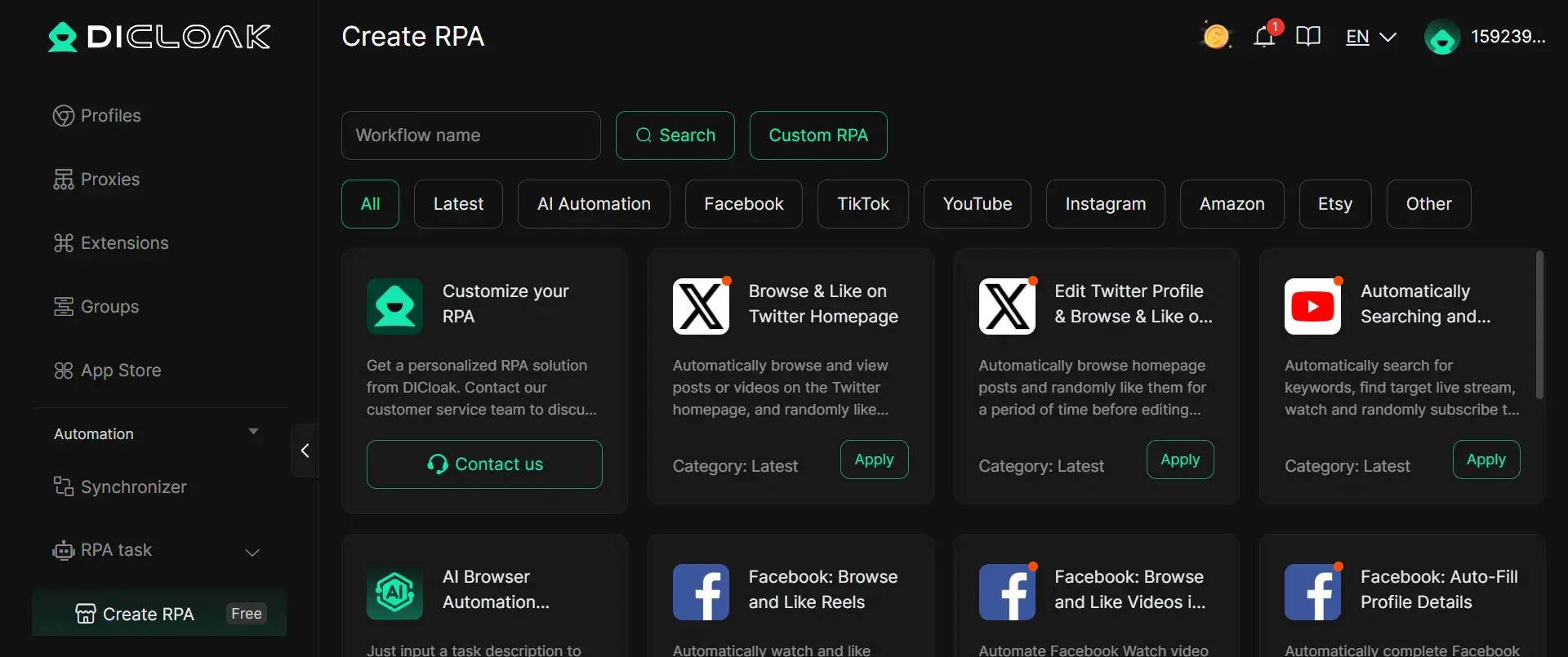
Overall, when dealing with multiple accounts, keeping each profile separate and maintaining consistent activity patterns is key. A structured setup can help you manage accounts more smoothly and reduce unnecessary risks over time.
Here’s how to do that all on DICloak:
- Head to DICloak's website, download the app, and sign up using your Google account or email.
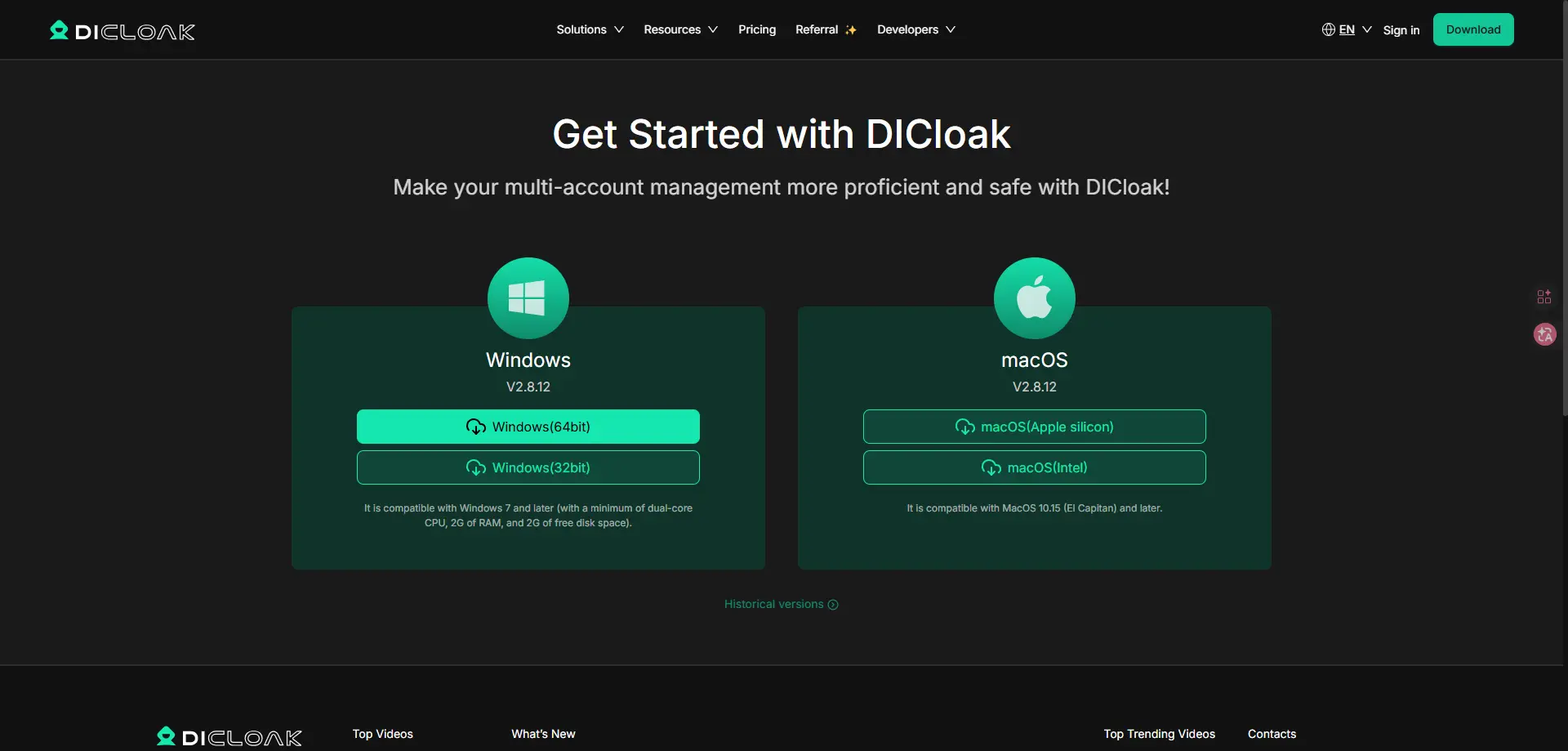
- Once your account is registered, you can directly use the free trial with 5 profiles.
- Click “Create Profile” and enter a profile name. Also, you can bulk import profiles if you need.
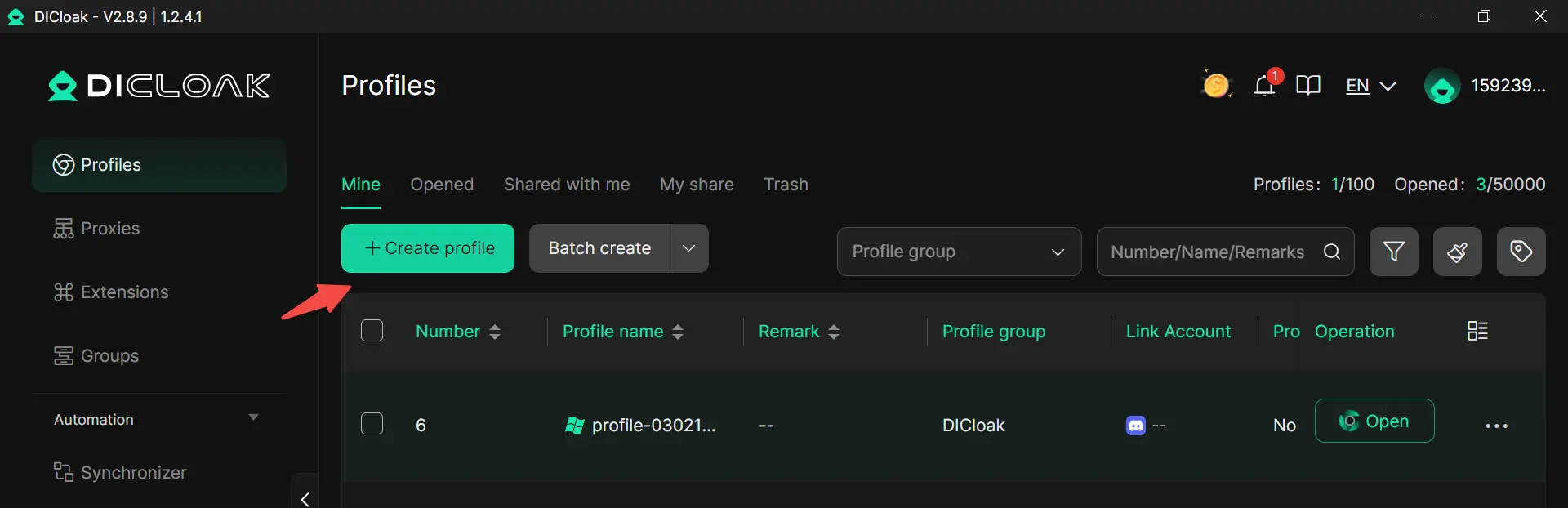
- Set the profile group if you want to organize better.
- Configure your purchased proxies.
- Click confirm.
- Open your profile, visit X, and then log in to your X accounts.
Conclusion
Buying Twitter accounts may help save time, but it is not risk-free. The best results usually come from checking account quality, avoiding weak marketplaces, securing the transfer, and managing each account carefully after purchase. With the right setup and safer account management habits, it is easier to reduce risk and use purchased accounts in a more stable way.
Frequently Asked Questions About Buying Twitter Accounts
Is it safe to buy X accounts in 2026?
Buying X accounts can be risky if the account has fake followers, past violations, or weak transfer security. Before you buy X accounts, check account history, engagement quality, and seller reputation carefully.
Where can I buy X accounts with lower risk?
Many buyers look for marketplaces with escrow, seller reviews, and clear account details. If you want to buy X accounts more safely, avoid listings with unclear history, no support, or prices that look too good to be true.
What should I check before I buy X accounts?
Before you buy X accounts, review follower quality, engagement rate, posting history, niche relevance, and any signs of spam. A smaller account with real activity is often better than a larger account with weak engagement.
Can I buy X accounts for marketing or business use?
Yes, many people buy X accounts for brand promotion, niche marketing, or audience access. But if you buy X accounts for business, you should move carefully, secure the login, and avoid making sudden changes that may hurt trust or performance.
How do I manage multiple profiles after I buy X accounts?
After you buy X accounts, the first steps are changing credentials, enabling two-factor authentication, and keeping each account organized. If you manage multiple accounts, it is recommend to use DICloak to separate browser profiles, and stable activity patterns can help reduce cross-account risks.
 Web Proxy Tools
 Free Tools
 Cookie Plugin
 UA Generator
 MAC Address Generator
 IP Generator
 IP Address List
 2FA Code Generator
 World Clock
 Anonymous Check
 WebRTC Leak Test
 UUID Generator
 Free Web Proxy Site
 Proxy Checker
 FB Ad Checker
 AI Web Scraping
 Free SMM Tools
 Twitter Shadowban Checker
 Instagram Name Checker
 UTM Generator
 Username Generator
 AI Hashtag Generator
 LinkedIn Headline Generator
 Social Media Image Resizer