You post a product video, get a small spike of views, then watch retention drop hard before the 3-second mark, and sales stay flat. That pattern is common on TikTok, where distribution depends on early watch behavior, not just follower count. For ecommerce teams, the hook is the make-or-break part of the video: the opening line, visual, or promise that keeps a shopper from swiping away.
This guide is built for one goal: help you find the best tiktok hooks for ecommerce and turn them into repeatable scripts your team can test every week. You will learn which hook types fit product demos, problem-solution clips, UGC-style ads, and offer videos, plus how to match hooks to intent signals from TikTok Creative Center and your own store data in Shopify Analytics. You will also get a practical testing flow, including what to change when watch time rises but add-to-cart does not.
Before testing new hooks, you need a clear way to judge what “good” looks like for views, watch time, and sales.
What makes a TikTok hook actually convert for ecommerce (not just get views)?
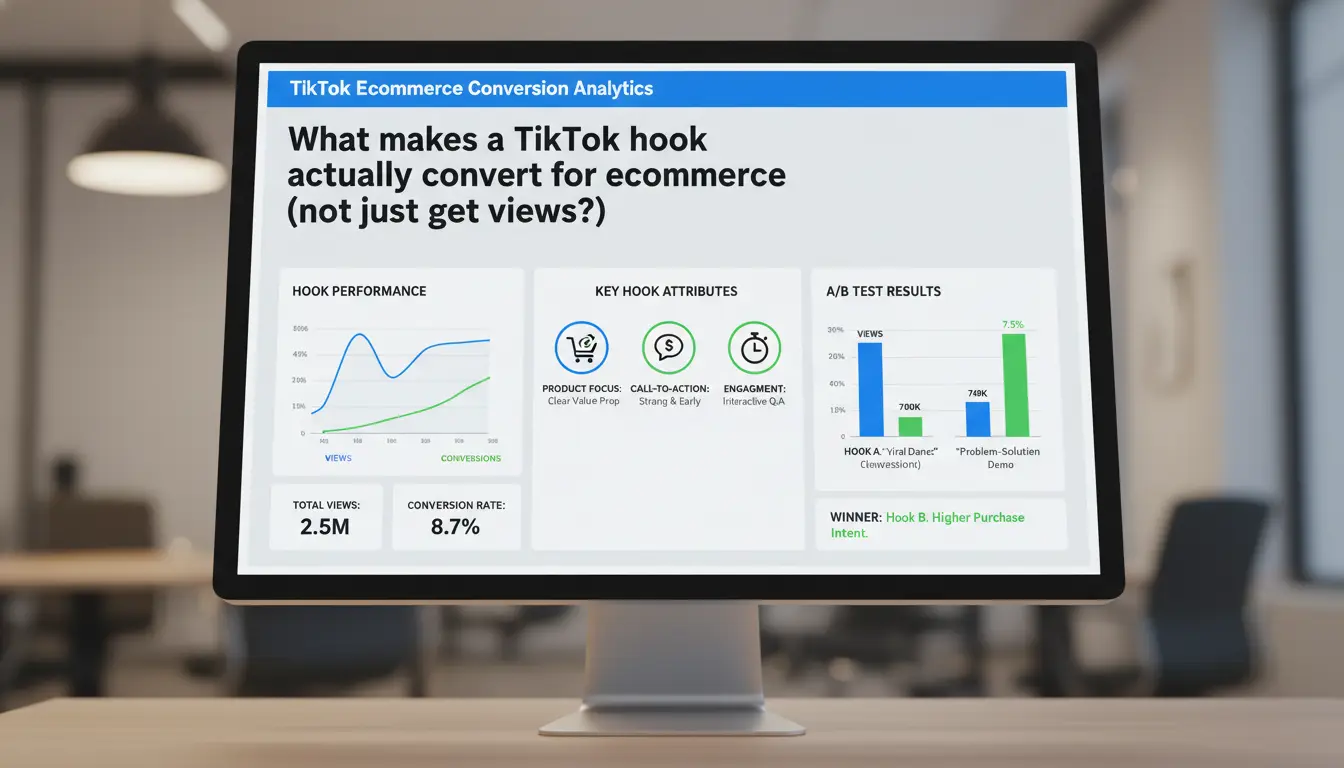
A hook that converts does one job: attract the right buyer, not random attention. The best tiktok hooks for ecommerce filter early, then connect to a product promise in the next 3–5 seconds. If watch time climbs but carts stay flat in Shopify Analytics, your hook is pulling the wrong crowd.
Why high views can still produce low sales
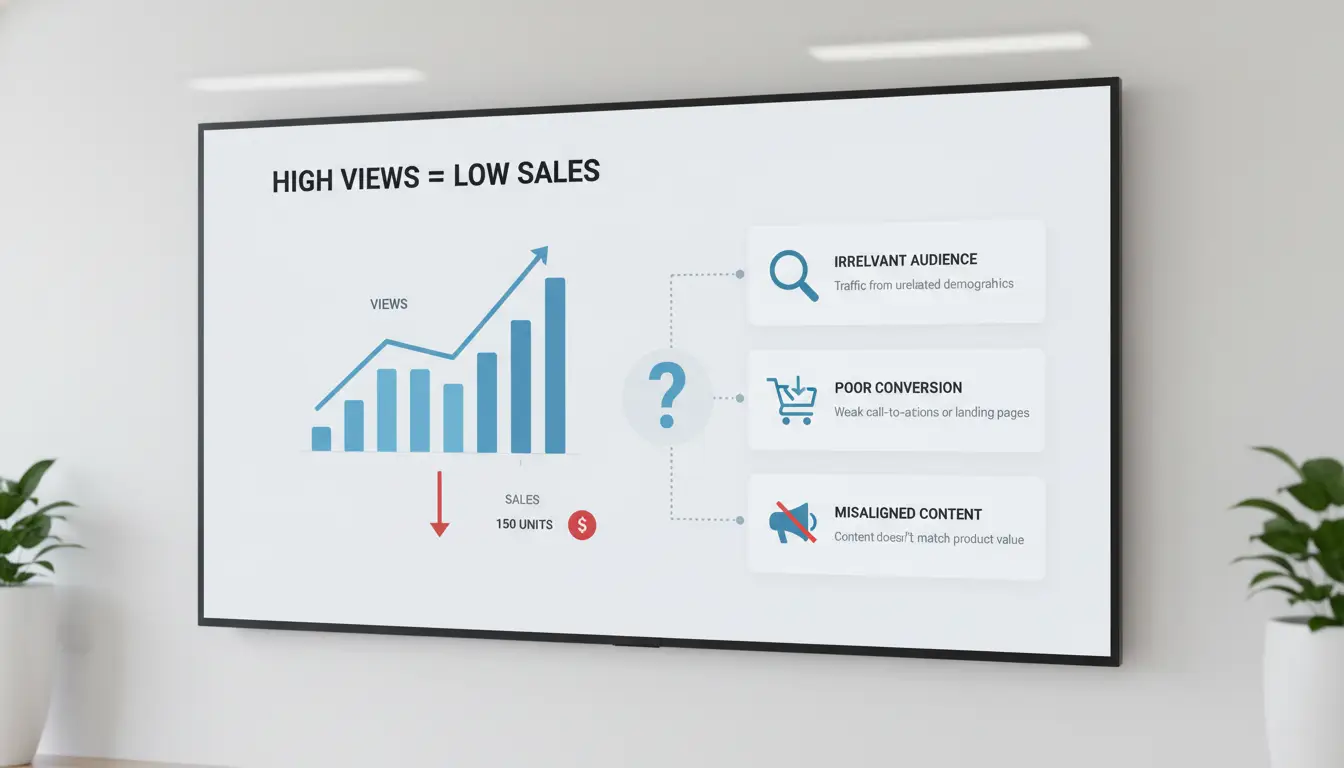
High views can come from surprise, drama, or curiosity that has nothing to do with your product. That traffic often drops when price, use case, or product type appears.
The weak point is usually the handoff. Your opening line gets attention, but the next shot does not prove fit. Example: “You won’t believe this hack” gets views; “If your pet sheds on black clothes, watch this lint tool test” gets buyers.
If the hook does not pre-qualify the shopper, view count becomes a vanity metric.
The 3 conversion signals a strong ecommerce hook should trigger
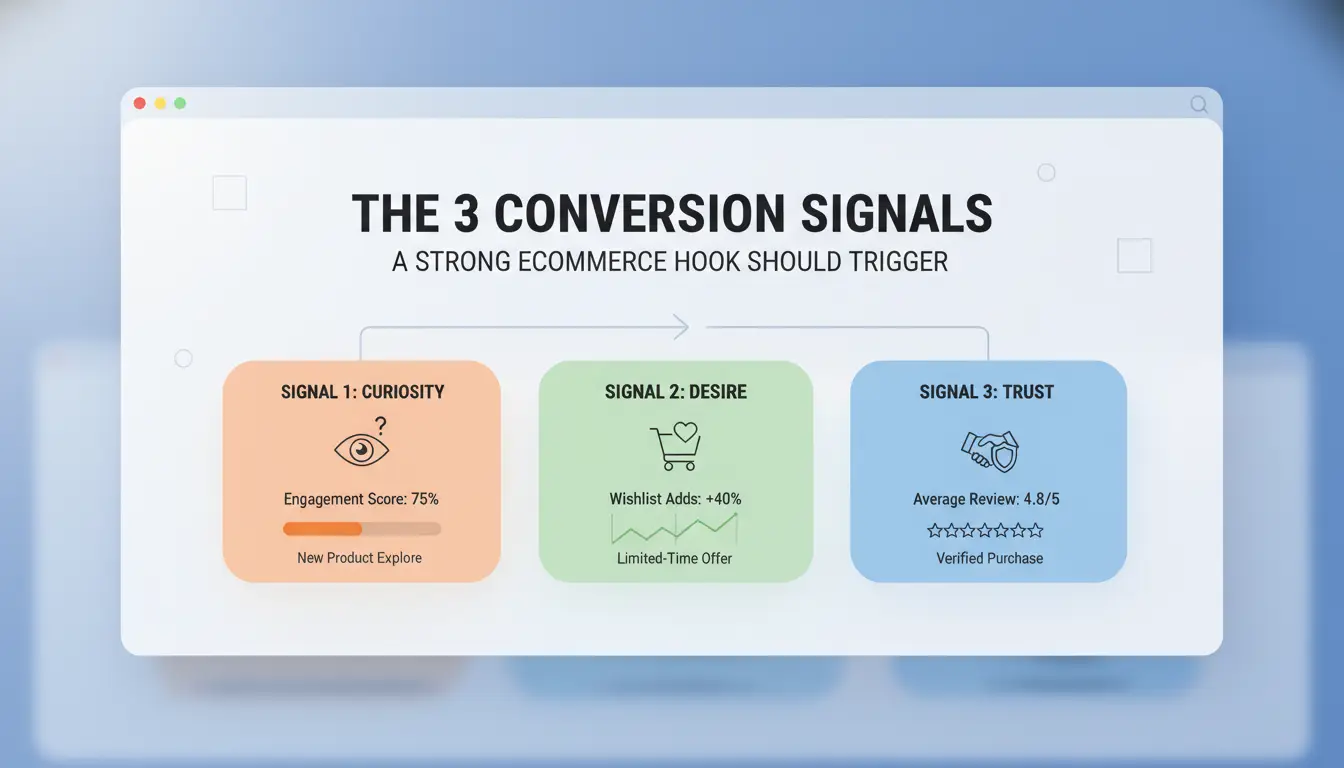
Signal one: instant self-identification. The viewer should think, “that is my problem.” Signal two: clear outcome. Promise one result only: save time, save money, or reduce effort. Signal three: proof path. Show how the claim is true within seconds (demo, before/after, side-by-side).
You can use trend and audience cues from TikTok Creative Center to shape hooks, then validate conversion quality in store data.
How product category changes hook strategy
| Product type |
Hook angle that converts |
Early proof needed |
| Impulse-buy, low-ticket |
Fast visual payoff, clear pain |
3-second demo + price anchor |
| Impulse-buy, premium |
Identity/status cue |
Quality close-up + trust cue |
| Considered, low-ticket |
Practical use case |
Step-by-step result |
| Considered, premium |
Risk reduction |
Comparison, warranty, return clarity |
Use this map when testing the best tiktok hooks for ecommerce, so edits focus on revenue behavior, not just retention.
Which TikTok hook types work best at each ecommerce funnel stage?
If you want the best tiktok hooks for ecommerce, match the hook to buyer awareness, not just video style. Cold viewers need a stop-scroll trigger. Warm viewers need proof. Hot viewers need a clear reason to act now.
| Funnel stage |
Hook types |
What to say in 1 line |
Main KPI to watch |
| Cold |
Pattern interrupt, myth-busting, problem-first |
“Your cleanser may be causing breakouts, not fixing them.” |
3-second view rate, hold rate |
| Warm |
Comparison, use-case |
“Before you buy brand X, see this side-by-side test.” |
25% watch rate, product page clicks |
| Hot |
Urgency, offer-led + proof |
“Ends tonight: 15% off, 2,000 buyers this month.” |
Add-to-cart rate, checkout start |
Use trend and retention signals from TikTok Creative Center and conversion events from Shopify Analytics.
Top-of-funnel hooks for cold audiences
Pattern interrupt works when the opening visual breaks category norms in 1 second. Myth-busting works when shoppers hold wrong beliefs. Problem-first lines work when pain is obvious and common. Example: “Your pet hair roller misses 40% of couch fibers, watch this.”
Mid-funnel hooks that build trust and consideration
Comparison hooks reduce doubt fast. Show two products, same task, same lighting, same time. Use-case hooks call out a specific struggle: “If your curls fall flat by noon, try this routine.” Keep claims visible and testable.
Bottom-of-funnel hooks that push purchase action
Urgency should be real: stock count, shipping cutoff, or time-boxed bundle. Offer-led hooks convert better when tied to social proof from your store or TikTok Shop. Hot traffic usually responds to proof + deadline in the same opening line.
How do you write high-performing ecommerce hooks in the first 3 seconds?
Use this 3-step system to build the best tiktok hooks for ecommerce fast, then improve them each week with real performance data. The key is simple: lead with buyer pain, prove relevance in one line, then move to payoff without a hard sell.
Step 1: Start from customer pain, not product features
Pull pain points from three places: product reviews, post comments, and return reasons. If buyers say “hard to clean,” “takes too long,” or “size runs small,” those phrases become your opening words.
Turn each pain into a spoken line:
- “If your blender smells after one use, watch this.”
- “Stop buying leggings that turn see-through in sunlight.”
- “Your phone stand should not slip during calls.”
You can validate pain language with winning ad patterns in TikTok Creative Center and match it to refund and conversion signals in Shopify Analytics.
Step 2: Use a proven hook formula and plug in specifics
Use short formulas, then fill in one concrete detail.
- “Stop doing X if you want Y.”
- “I tested X for 7 days, here’s what happened.”
- “Most people get X wrong in under 10 seconds.”
Specifics make hooks believable. Add a number, a time window, or a real scene:
- “in 30 seconds”
- “before work”
- “after one wash”
Step 3: Script the bridge from hook to product payoff
After the hook, add a bridge line that keeps watch time:
- “Here’s why this keeps happening.”
- “Watch this side-by-side test.”
Then show product proof in action, not claims. Place CTA after payoff:
- “If you want this setup, link is on this page.”
If watch time rises but add-to-cart stays flat, keep the hook and rewrite the bridge or proof scene. This is how teams keep finding the best tiktok hooks for ecommerce without guessing.
How should you structure the rest of the TikTok after the hook to drive checkout clicks?
After you test the best tiktok hooks for ecommerce, the next win comes from what happens in the next 10 to 20 seconds. A clean flow keeps watch time stable and moves people toward product-page or checkout clicks. Track drop-off points in TikTok Creative Center and match them with add-to-cart and checkout steps in Shopify Analytics.
A simple post-hook structure: Hook -> Proof -> Demo -> Offer -> CTA
Use short timing blocks:
- 0-2s: hook (problem, promise, or strong result)
- 2-5s: proof (real clip, review screenshot, before/after)
- 5-11s: demo (show how it works in real use)
- 11-15s: offer (price, bundle, free shipping if true)
- 15-18s: CTA (tap product card, shop now, claim deal)
Keep one idea per cut. If each shot answers one question, retention stays higher than fast random cuts.
Where to place social proof for maximum impact
Put proof right after the hook, not near the end. Early trust lowers swipe risk. Use one strong proof type at a time:
- UGC clip: “I replaced X with this for 7 days”
- Testimonial screenshot with date and order context
- Creator reaction clip showing real use
Add trust markers during demo: close-up texture, package label, return window, and shipping speed from your store policy page.
How to align CTA style with product price and audience temperature
For the best tiktok hooks for ecommerce, CTA style should match intent level.
| Audience state |
Lower price impulse item |
Higher price consideration item |
| Cold / discovery |
“See colors” / “Watch full demo” |
“See reviews” / “Compare options” |
| Warm / intent-ready |
“Shop now” / “Claim today’s deal” |
“Check bundle” / “Start with starter set” |
Use TikTok Ads guidance to keep CTA wording clear and compliant.
What mistakes kill ecommerce TikTok hooks before they can convert?
If you want the best tiktok hooks for ecommerce, the goal is not just watch time. You need qualified clicks and buyer intent. A hook fails when it wins attention from the wrong viewer or promises something the product page cannot confirm.
Overhyped claims that trigger skepticism
Big claims like “works in 24 hours” or “fixes everything” can lift early views, then hurt trust and add-to-cart rate. People stay for the drama, then leave when proof is thin. That traffic is noisy and expensive to retarget.
Keep urgency believable. Use bounded claims: who it helps, what changed, and how fast in normal use. Pair the line with visible proof in the same clip: demo steps, before/after context, or customer footage. You can sanity-check claim style against live ad patterns in TikTok Creative Center.
Generic hooks that could fit any product
Hooks like “You need this now” or “Don’t buy before watching” fit almost any niche, so they rarely pre-qualify buyers. Retention may look fine, but purchase intent drops because viewers cannot tell if the product is for them.
Add product context in the opening 2 seconds: user type, use case, and pain point. Example: “If your cold brew turns sour by day two, try this filter routine.” That line filters audience quality fast.
Hook-message mismatch with landing page or product page
If the hook sells “quick fix” but the product page explains “daily routine,” conversion falls. The viewer feels baited.
Run a pre-publish check: hook claim, hero image, top benefit, price visibility, and proof block must match. Use your checkout and funnel reports in Shopify Analytics to spot mismatch patterns by creative ID. This is how teams turn the best tiktok hooks for ecommerce into stable weekly wins.
How can you test TikTok hooks fast and know which ones drive sales?
Set up a weekly hook testing sprint
Test 3 hook concepts per product, 2 video versions per hook, over 7 days. Change one variable only: angle, wording, or visual open. Keep offer, caption, and CTA the same. Judge only after each video gets at least 1,000 impressions and 100 landing page visits. This keeps weak samples from killing potentially good ideas. For the best tiktok hooks for ecommerce, speed matters, but clean test design matters more.
Track the right metrics at each stage
Use TikTok Creative Center and your ad dashboard to track top-funnel signals: 3-second hold rate, average watch time, and CTR. Then check Shopify Analytics for add-to-cart rate and purchase rate from each ad link.
If hold rate rises but add-to-cart drops, your hook is attracting the wrong shopper intent.
Decide when to iterate, scale, or kill a hook concept
Scale when retention and revenue move together for 3 straight days. Iterate when watch metrics improve but clicks or cart rate lag; rewrite promise-to-product match. Kill when two fresh edits still fail to recover CTR or purchase rate. This is how teams find the best tiktok hooks for ecommerce without wasting ad spend.
How do ecommerce teams scale TikTok hook production across multiple accounts without quality drop?
Quality drops when teams copy winning hooks too fast without control. You can scale faster if each account has a fixed owner, fixed environment, and fixed review checklist. Keep one shared hook bank tagged by angle, format, and intent signal from TikTok Creative Center and store outcomes from Shopify Analytics. That gives your team a repeatable way to find the best tiktok hooks for ecommerce without turning your process into guesswork.
Why multi-account hook testing creates operational risk
Shared browsers create linkage risk. One person logs into two stores, cookies mix, and platform trust can drop. IP jumps across sessions can trigger extra checks. Manual handoffs also break quality. A writer changes the hook, an editor trims the claim, a media buyer uploads an old cut. You lose version control, and test results stop being clean.
How DICloak helps run social media marketing workflows safely
You can use DICloak to isolate each account in its own browser profile with its own fingerprint and proxy settings. That separation reduces cross-account traces during daily posting and ad testing. You can also set role-based access, share profiles with teammates, and keep operation logs. If two people touch one account, logs and permissions are what keep test data trustworthy. This is useful when you test the best tiktok hooks for ecommerce across brand, UGC, and offer variants at the same time.
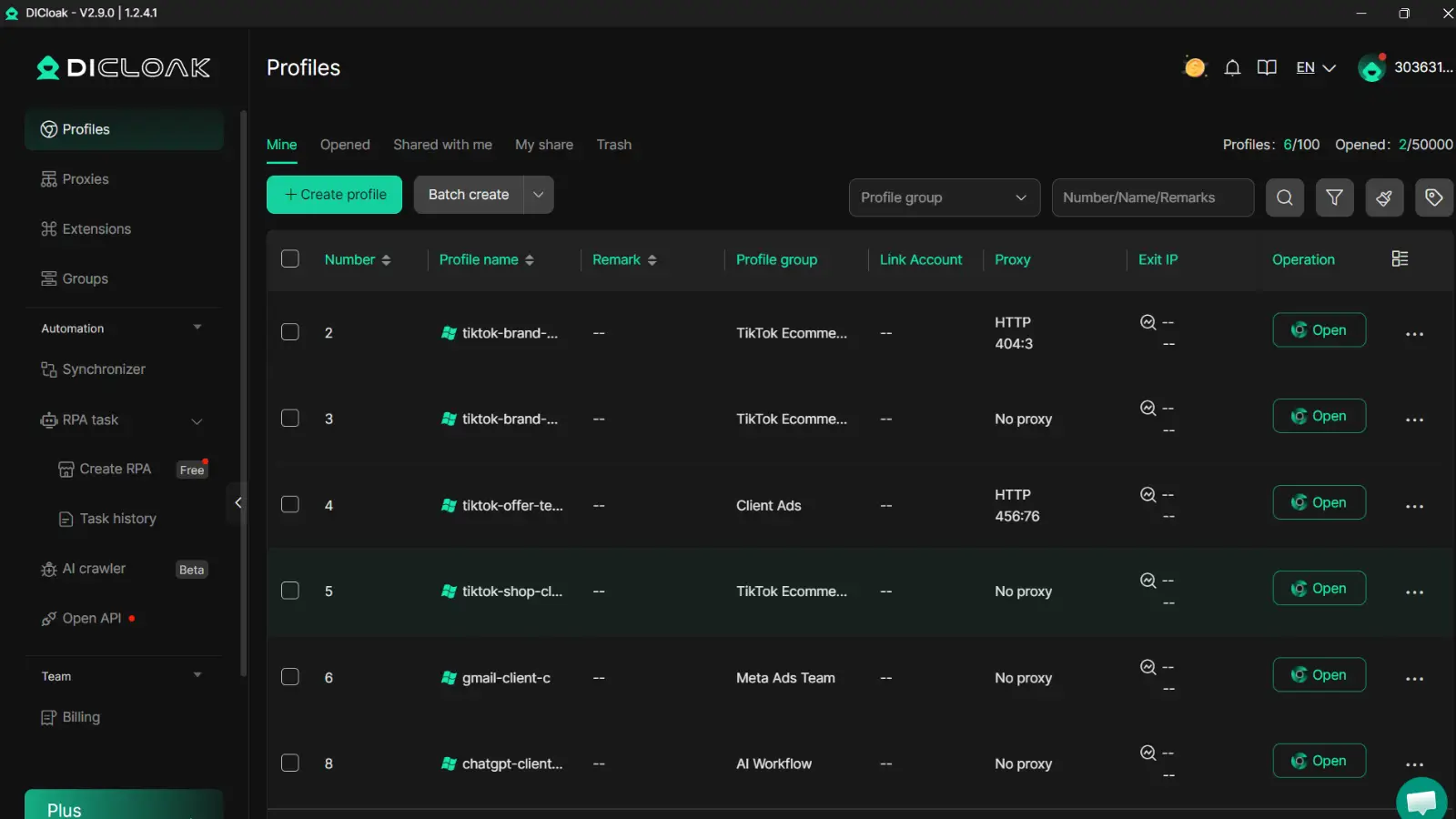
A practical team setup for scaling hook experiments
Assign one profile per brand or account cluster. Use a strict naming format: Brand-Region-Account-Owner. Run one weekly cycle: script draft, compliance check, edit, upload, QA, publish. Use batch actions and RPA for repeat tasks like title checks, upload order, and link QA. Keep humans focused on hook quality and creative judgment.
When should you reuse trending hooks vs create original hooks for your product?
When trend hooks help you gain reach quickly
Use trend hooks when a sound or format is still rising in TikTok Creative Center. Your window is short, often days, so post fast and keep one product promise in the opening line. Keep brand fit by swapping only the hook shell, not your core claim, offer, or CTA. This is how teams find the best tiktok hooks for ecommerce without losing message clarity.
When original hooks outperform trend formats
Original hooks win when your product solves a specific pain point that trend scripts cannot explain in 3 seconds. Use your Shopify Analytics data to map hooks to high-intent actions like add-to-cart and checkout start. Tools like DICloak let you test across TikTok accounts with isolated fingerprints and one proxy per profile, lowering account linkage risk while your team scales.
A decision checklist before publishing
| Goal now |
Better hook path |
| Fast reach this week |
Trend hook |
| Stable CPA this month |
Original hook |
You can use DICloak team permissions, profile sharing, operation logs, batch actions, and RPA to keep tests consistent across editors and buyers.
Frequently Asked Questions
How long should the best tiktok hooks for ecommerce be?
For the best tiktok hooks for ecommerce, keep the hook to one or two short lines in the first 1–3 seconds. Start with a clear problem or benefit, then add curiosity. Example: “My hair stopped breaking after this one change.” Use retention to decide final length. If viewers drop before second three, cut words fast.
Do UGC-style hooks or polished brand hooks work better for ecommerce TikTok ads?
UGC-style hooks often win when trust is low or the product is new, because they feel like real customer proof. Polished brand hooks can perform better for premium products that need strong quality signals. For the best tiktok hooks for ecommerce, split test both formats by audience, product type, and price point, then scale the stronger winner.
Can I use the same TikTok hook across organic posts and Spark Ads?
Yes. Reuse the same hook if it already grabs attention, but adjust the bridge and CTA. Organic viewers usually want quick education or entertainment before they buy. Spark Ad traffic needs a tighter path to product value, offer, and checkout. Keep discovery content in organic, and make paid versions more direct and conversion-focused.
How many hook variations should an ecommerce brand test per product?
Start with 8–12 hook angles per product, then cut weak ones early. Mix styles like problem-first, result-first, myth-busting, comparison, and objection-handling. For the best tiktok hooks for ecommerce, review early retention first, then confirm with downstream metrics like add-to-cart rate and purchase rate. A high-retention hook that does not sell should not be scaled.
Are negative hooks safe to use for ecommerce products?
Negative hooks can work when used responsibly. Use them to name a real mistake or pain point, not to scare people with false claims. Keep messaging accurate, show proof in the video, and stay within TikTok ad policies. A strong rule: if you cannot support the claim on-screen, do not use that hook.
The best TikTok hooks for ecommerce are clear, curiosity-driven openers that spotlight a specific problem, promise a quick payoff, and match your product to what viewers already care about. Keep testing hook angles, first-frame visuals, and wording to find the combinations that stop the scroll and turn attention into consistent conversions.Try DICloak For Free
 Web Proxy Tools
 Free Tools
 Cookie Plugin
 UA Generator
 MAC Address Generator
 IP Generator
 IP Address List
 2FA Code Generator
 World Clock
 Anonymous Check
 WebRTC Leak Test
 UUID Generator
 Free Web Proxy Site
 Proxy Checker
 FB Ad Checker
 AI Web Scraping
 Free SMM Tools
 Twitter Shadowban Checker
 Instagram Name Checker
 UTM Generator
 Username Generator
 AI Hashtag Generator
 LinkedIn Headline Generator
 Social Media Image Resizer