Web scraping is changing fast in 2026. More teams now want tools that are smarter, easier to use, and better for AI workflows. Firecrawl is one popular option, but it is not the right fit for everyone. Some users want lower costs. Some need no-code tools. Others need more control, better scaling, or stronger compliance support. In this guide, we look at the best firecrawl alternatives and compare their features, pricing, and use cases, so you can find the right tool for your needs.
What is Firecrawl
Firecrawl is a web scraping tool made for AI and data workflows. It helps users crawl websites, scrape page content, and turn messy web data into clean output. Many people use it to collect page text, links, metadata, and structured JSON. This is why it often comes up before people start comparing firecrawl alternatives.
One key feature is its AI-powered extraction. Instead of only pulling raw HTML, Firecrawl can help turn page content into organized data. For example, if you scrape an ecommerce page, you can extract fields like product name, price, and description in a cleaner format. This saves time for teams building AI apps, research tools, or data pipelines.
Firecrawl also uses a token- or credit-based pricing model. This works well for some teams, especially those with steady usage. It also supports large crawling jobs and structured data extraction, which makes it useful for startups, developers, and product teams that need web data at scale.
Why Look for Alternatives
Even so, Firecrawl is not the best fit for everyone. One common issue is pricing. For startups and small businesses, credit-based costs can grow fast when scraping many pages or running repeated jobs. This is one reason people start looking for more budget-friendly firecrawl alternatives.
Another problem is ease of use. Firecrawl is more suitable for technical users. If someone has no coding experience, setup and workflow building may feel harder than expected. Many non-technical users prefer tools with visual dashboards, ready-made templates, or no-code integrations.
Some users also face limits when projects grow. Large-scale scraping needs stable scaling, cost control, and flexible workflow management. If a team needs to scrape thousands of pages often, they may want a tool that gives more control over performance and spending.
Customization is another reason people explore firecrawl alternatives. Firecrawl works well for many common cases, but some teams need custom scraping rules, special browser actions, or deeper control for specific websites. In those cases, a more flexible tool may be a better choice.
In simple words, Firecrawl is a strong tool, but it is not perfect for every user. If you want lower cost, easier setup, or more control, it makes sense to compare other firecrawl alternatives before choosing the right platform.
How We Selected the Best Firecrawl Alternatives
We did not choose these Firecrawl alternatives by name only. We looked at what real users need when they scrape websites for research, sales, AI, or product data.
First, we checked core features. We gave more weight to tools that support AI-ready extraction, JavaScript rendering, and automation. That matters because many modern websites do not load all content in plain HTML.
Second, we compared pricing models. Some tools use subscriptions, some use usage-based billing, and some offer free starting options.
Third, we looked at ease of use. Some users want no-code tools. Others want full API control. So we treated usability as a major part of the review, not a small detail.
We also checked scalability and performance. A scraping tool may look great in a demo but fail on large jobs. That is why we looked for signs like batch support, scheduling, concurrency, and support for repeated runs.
Last, we looked at security and compliance. We treated this as a key factor because businesses need tools that support responsible data collection, not just fast scraping.
7 Firecrawl Alternatives for 2025
If you are comparing firecrawl alternatives, the best choice depends on your budget, skill level, and scale.
Bright Data
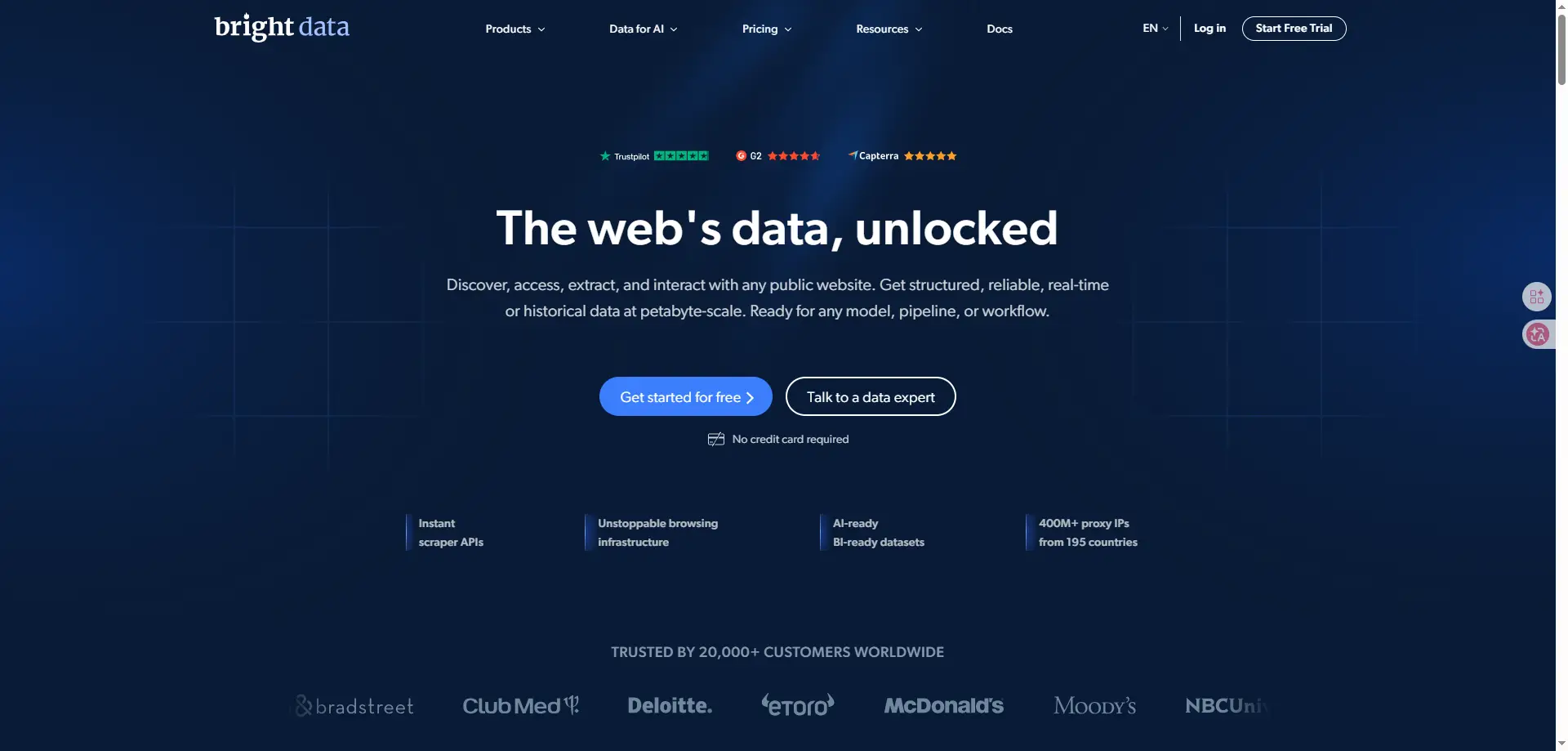
Bright Data is one of the strongest firecrawl alternatives for enterprise use. Its Web Scraper products focus on large-scale data collection, and Bright Data highlights features like JavaScript rendering, CAPTCHA solving, automated proxy management, webhook or API delivery, and worldwide geotargeting. It also offers record-based pricing, which can help teams estimate cost by output instead of raw crawl activity. For example, a large ecommerce team tracking prices across many regions may like Bright Data because proxy and scraping tools are already built into one system.
Crawl4AI
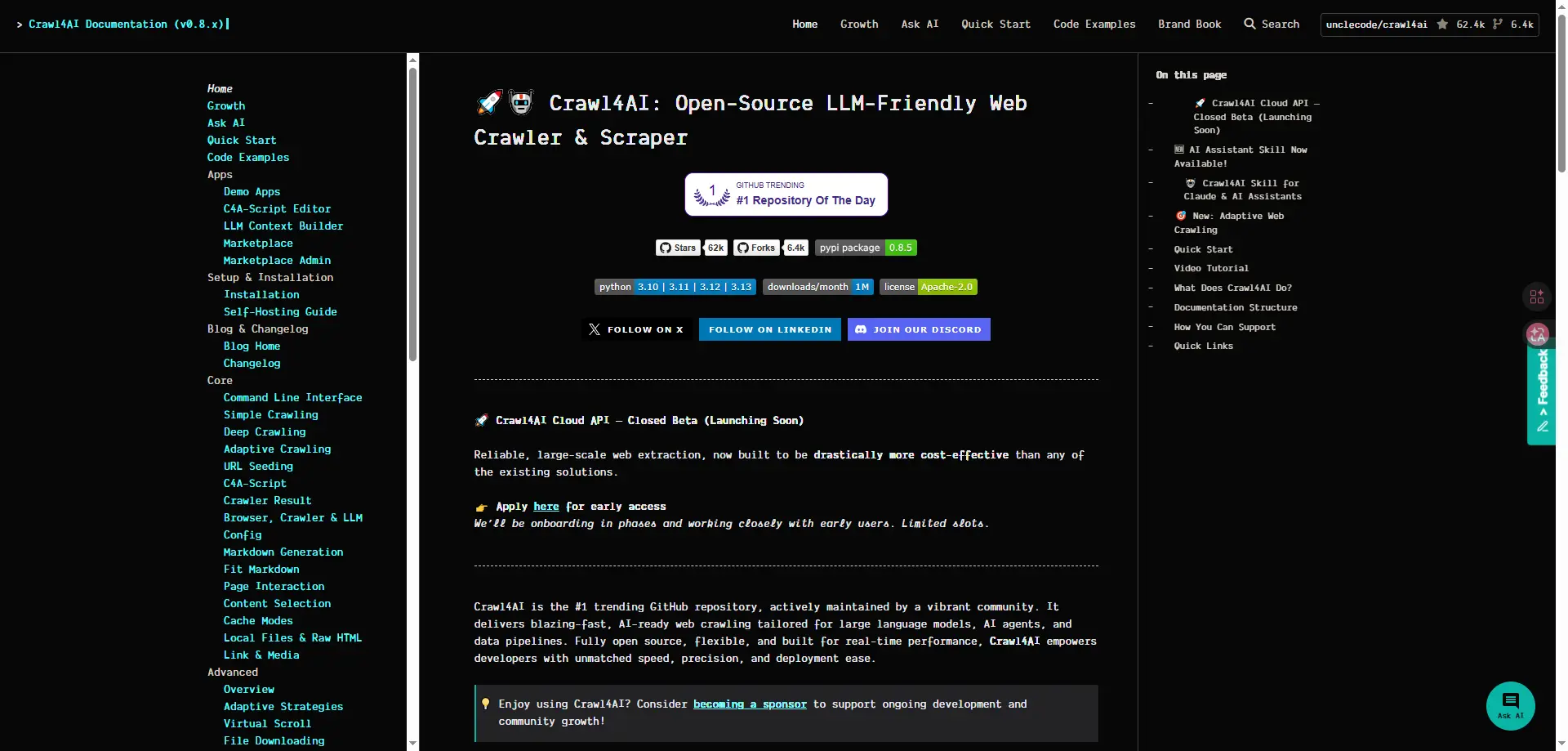
Crawl4AI is a good pick for developers and startups that want open-source flexibility. Its official docs describe it as an open-source, LLM-friendly web crawler. It supports Markdown output, CSS-based extraction, LLM-based extraction, and dynamic pages that load with JavaScript. That makes it one of the more flexible firecrawl alternatives for teams that want control and do not mind a more technical setup. A small AI startup, for example, could use Crawl4AI to turn web pages into clean content for retrieval or training workflows without paying for a closed platform first.
ScrapeGraphAI
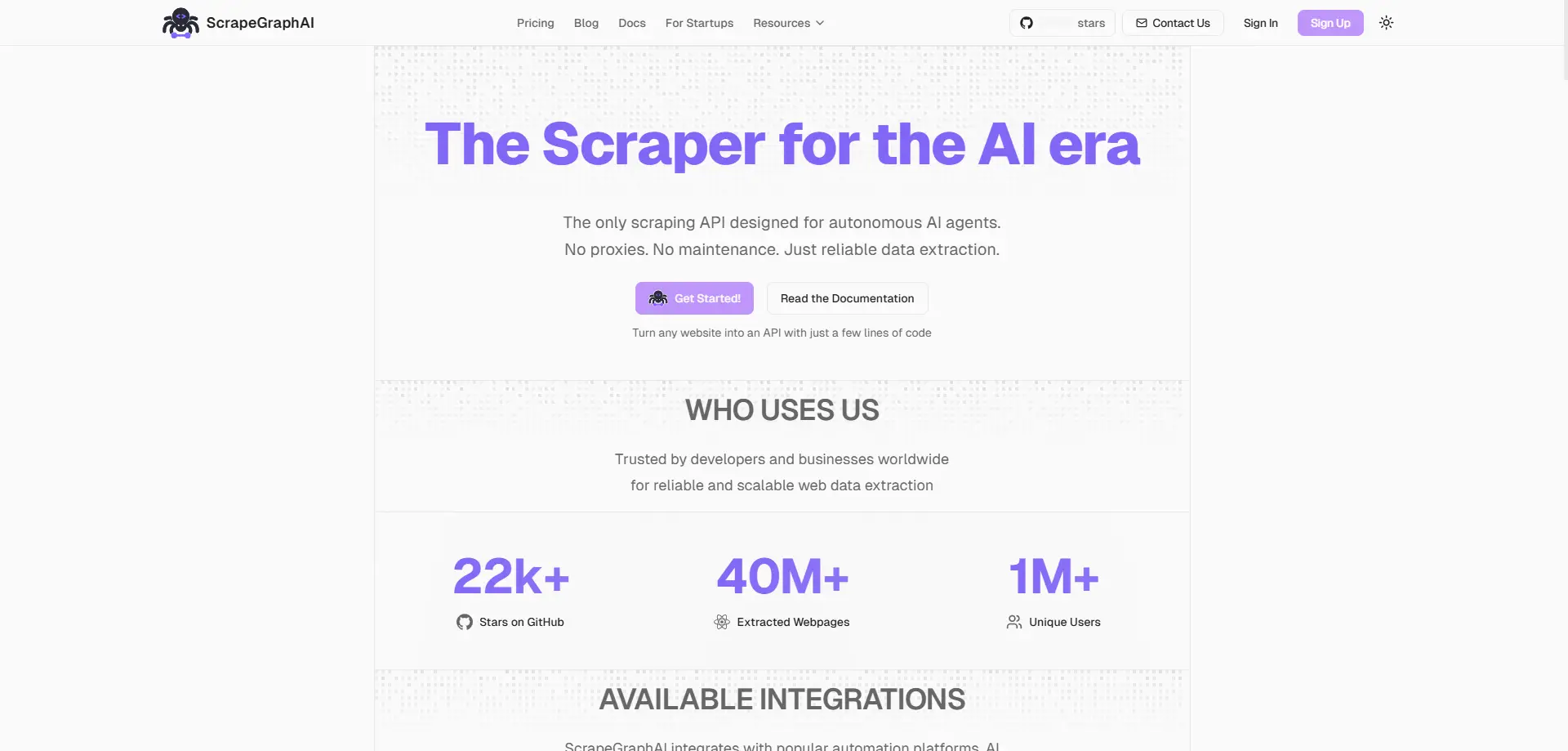
ScrapeGraphAI stands out because it focuses on AI-based extraction through simple prompts. Its site says users can extract structured data from websites without dealing with selectors, proxies, or constant maintenance. Its tools also support multi-page crawling, JavaScript rendering, and natural-language extraction. Pricing starts with a free plan, then paid tiers for bigger projects. This makes ScrapeGraphAI one of the more modern firecrawl alternatives for businesses that want automation without building every step by hand. For example, a sales team could use it to pull company names, emails, or product details from multiple pages with less manual setup.
Apify
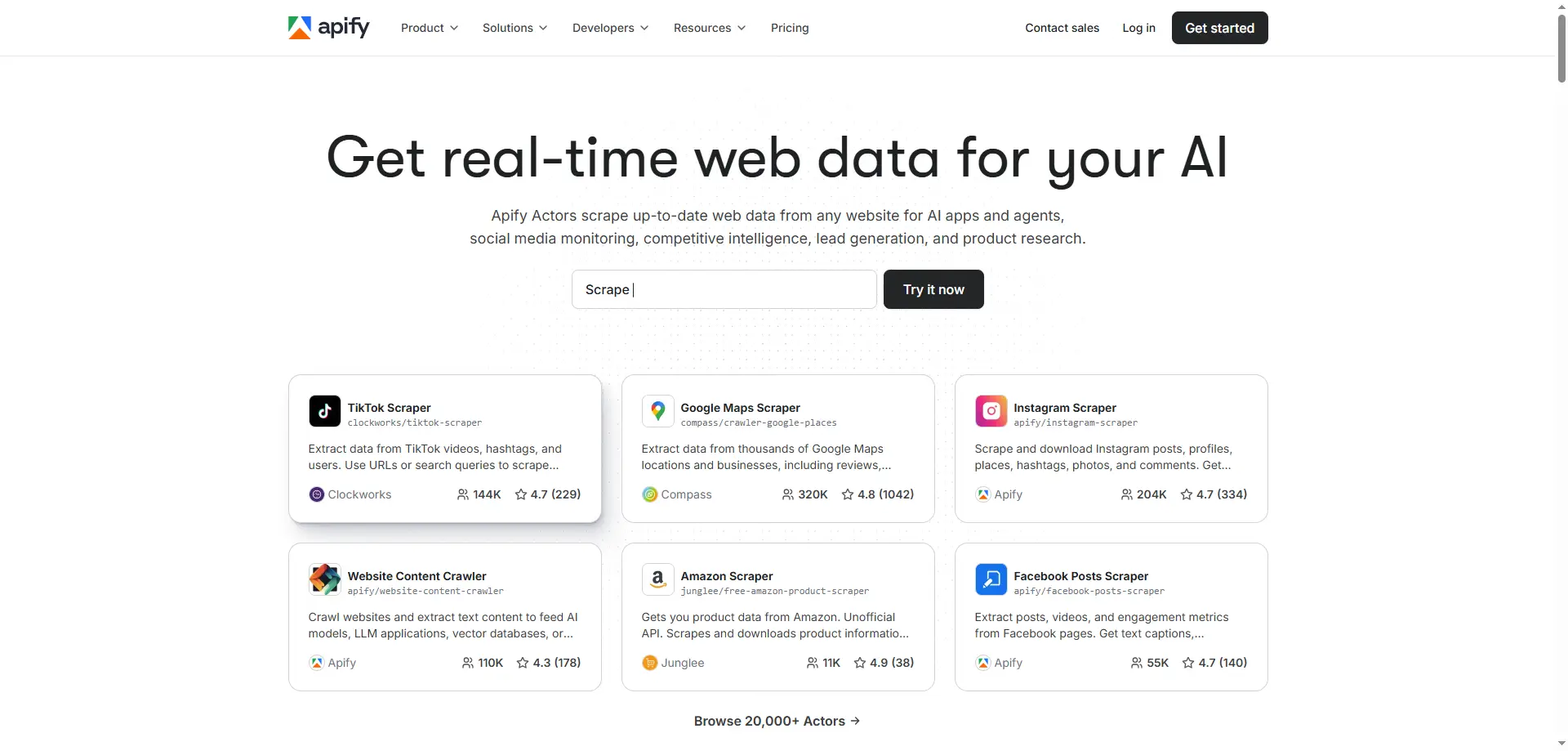
Apify is one of the best-known firecrawl alternatives for teams that want a full scraping platform. Its pricing page shows that users can run tools from the Apify Store, where some Actors are free and others have their own rental fee. This marketplace model is useful because users can start with pre-built Actors instead of building everything from zero. That is helpful for common jobs like scraping ecommerce listings, Google Maps results, or social data. Apify works well for developers, but it is also useful for companies that want scheduling, automation, and ready-made scraping workflows in one place.
Octoparse
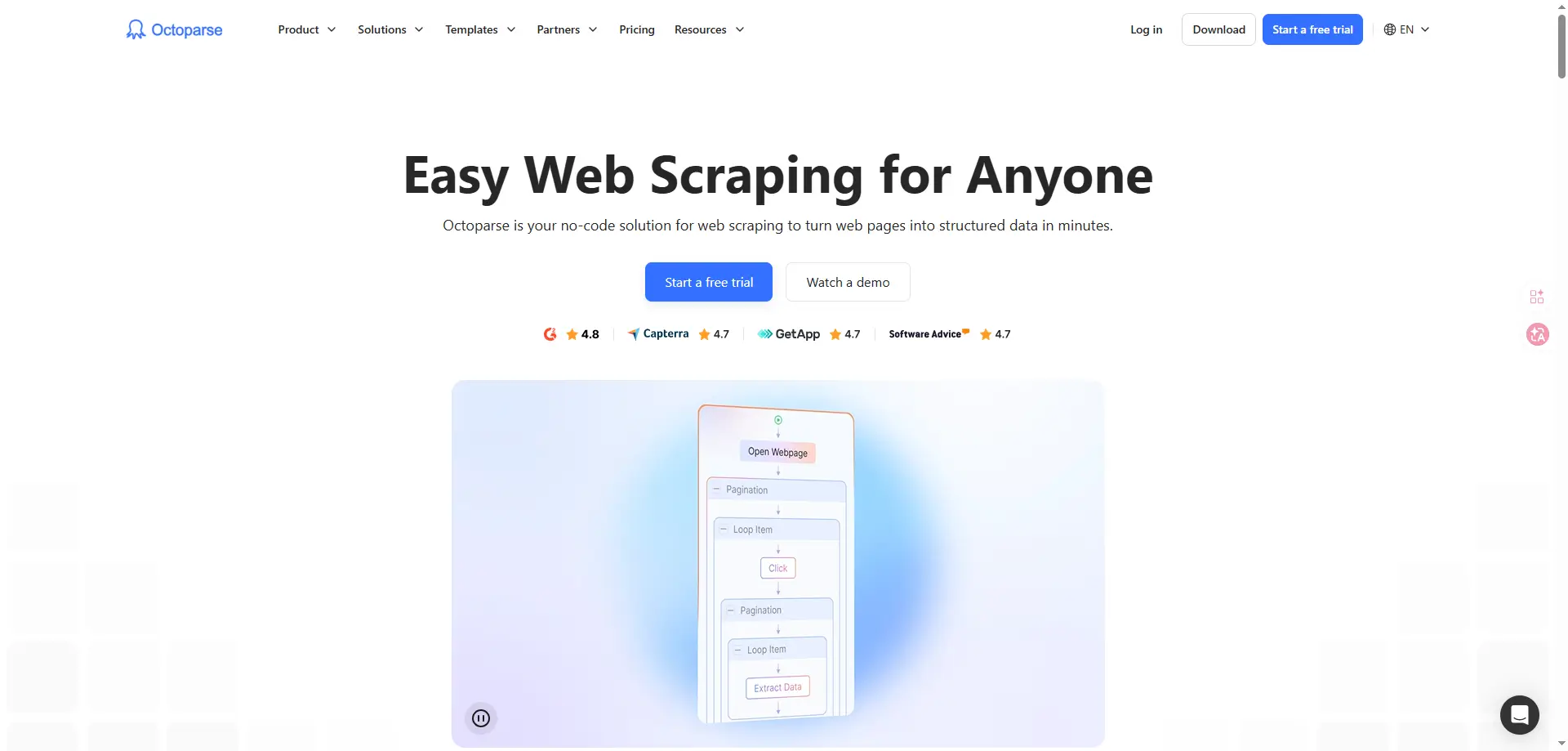
Octoparse is a strong choice for non-technical users. Its website describes it as a no-code web crawler, and that is the main reason it appears on many lists of firecrawl alternatives. It is built for people who want a visual workflow instead of code. Octoparse also offers template-based scraping and pay-per-result options for some tasks. A simple example is a marketing team that wants to collect blog titles, product prices, or review data without asking a developer to write scripts. For beginners, that easier setup can matter more than advanced customization.
Zyte
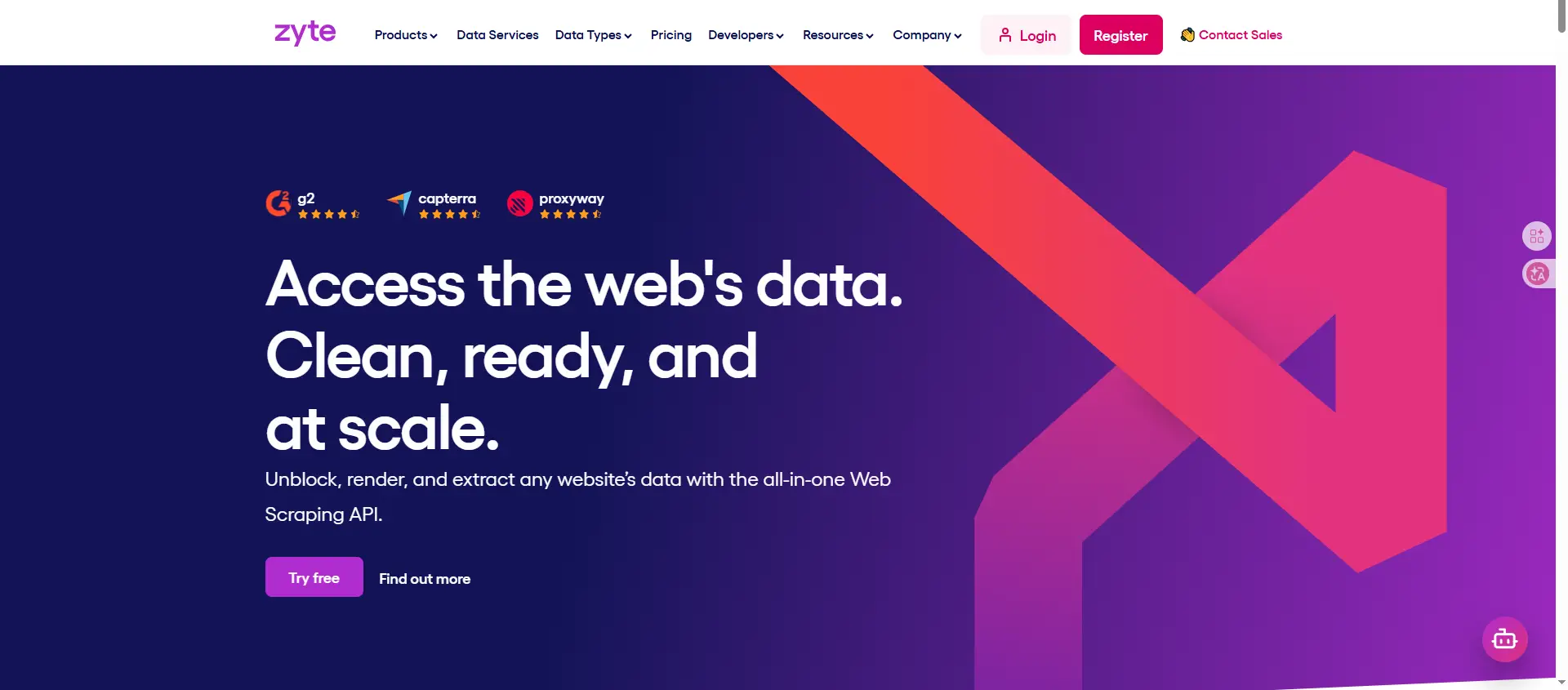
Zyte is a smart option for teams that care about scale and compliance. Its Zyte API combines unblocking, browser rendering, and extraction in one system. Zyte also publishes a lot of guidance around legal and ethical scraping, including compliance checklists and reviews of key legal issues. That makes it one of the more trusted firecrawl alternatives for larger projects where compliance matters as much as raw scraping power. For example, a company collecting public product data at scale may prefer Zyte because it gets both technical support and a stronger compliance-focused framework.
DICloak Antidetect Browser AI Crawler
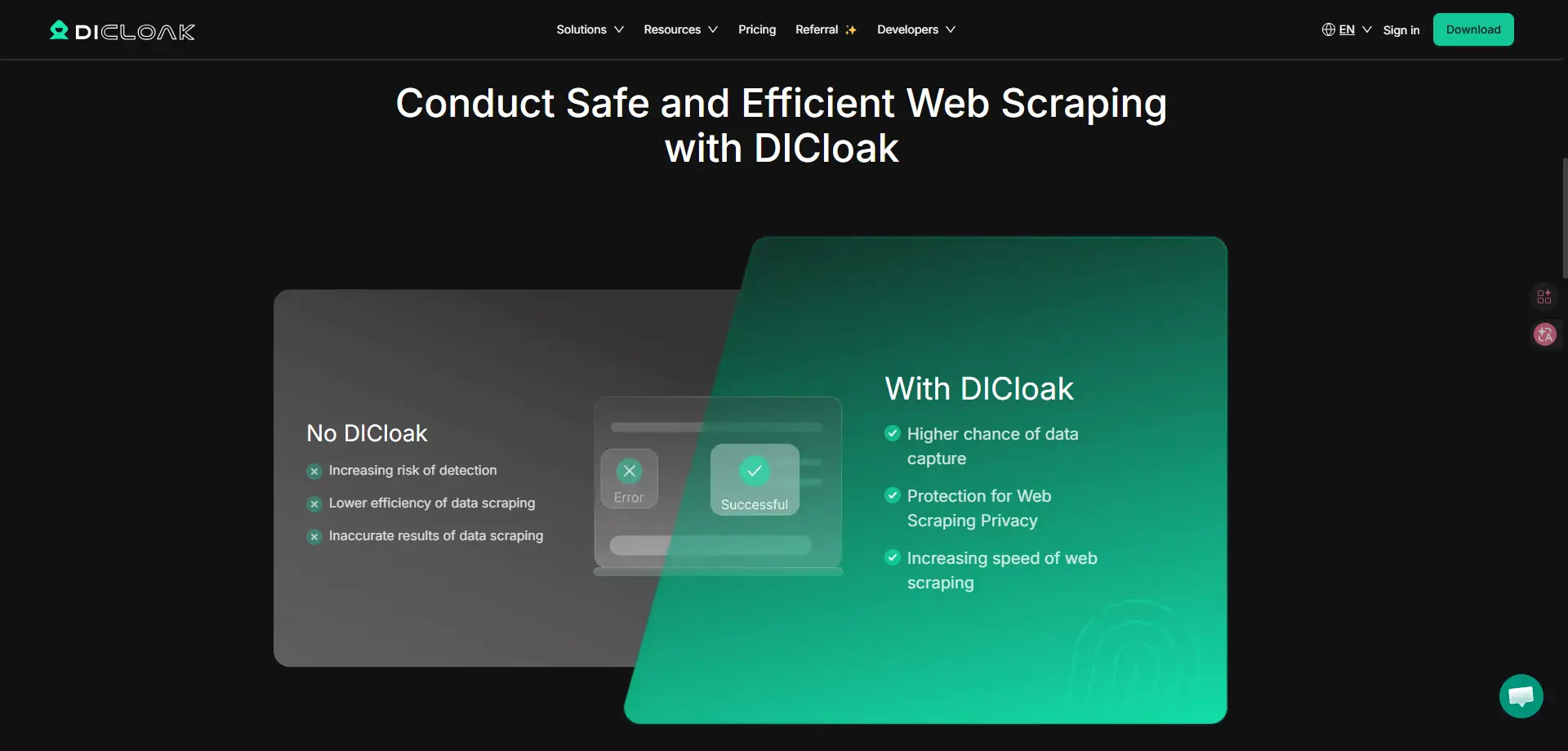
The DICloak Antidetect Browser AI Crawler is a smart tool that helps you automatically collect information from websites kind, a kind of robot that reads webpages for you and grabs the data you need. Designed with both novices and advanced users in mind, it's perfect for those wondering how to crawl a website without getting blocked by modern detection systems. You don’t need to know how to code or be a tech expert. Just tell this AI crawler what website you want to collect information from, and what kind of data you're looking for—and it does the rest while avoiding detection with precision. Whether you're a developer, marketer, or researcher, understanding how to crawl a website without getting blocked is essential—and this tool does just that.
Feature Comparison: Firecrawl vs Alternatives
| Tool |
Features |
Open-Source |
Premium Features |
Programming Languages |
API Integrations |
Pricing |
G2 Rating |
| Firecrawl |
AI-ready scraping, crawling, search, browser sandbox, JSON/Markdown/screenshot output |
Partial |
Yes |
Python, Node.js, cURL, CLI |
API-first workflow |
Free plan; paid credit-based plans |
N/A |
| Bright Data |
Web Scraper API, proxy network, CAPTCHA handling, JavaScript rendering, async delivery |
No |
Yes |
API-first; examples shown in cURL and common app stacks |
Strong API and external delivery support |
Usage-based; Web Scraper API starts around $0.001/record |
4.6/5 |
| Crawl4AI |
AI-ready crawling, Markdown output, structured extraction, dynamic page support |
Yes |
Limited / Cloud API in beta |
Python |
Custom Python pipelines |
Open-source; cloud pricing not broadly published yet |
N/A |
| ScrapeGraphAI |
Natural-language extraction, multi-page scraping, JS rendering, agentic browser actions |
Partial |
Yes |
Python, JavaScript, TypeScript, cURL, REST API |
REST API + LlamaIndex, CrewAI, Vercel AI, Langflow and more |
Free tier; paid plans from about $17/month |
4.8/5 |
| Apify |
Actor marketplace, scheduling, cloud runs, datasets, anti-blocking, automation |
Partial |
Yes |
JavaScript, Python |
Very strong integrations and APIs |
Free; then $29/month + pay-as-you-go |
4.7/5 |
| Octoparse |
No-code visual builder, templates, scheduling, cloud scraping, export tools |
No |
Yes |
No-code; API available for paid workflows |
API, Google Sheets, Zapier, databases |
Free; paid plans start around $83/month monthly |
4.8/5 |
| Zyte |
Smart proxy management, JavaScript rendering, AI-based data extraction, anti-blocking, compliance-focused scraping |
Partial (Scrapy ecosystem) |
Yes |
Python (Scrapy), API-based (REST) |
Strong API integrations (Zyte API) |
Usage-based pricing (pay per request) |
4.3/5 |
| DICloak Antidetect Browser AI Crawler |
AI crawler, anti-detect browser profiles, proxy setup, account login support, RPA, window sync, Open API |
No |
Yes |
Browser-based; supports integration with Python scripts and web scraping APIs |
Open API + proxy/account workflow support |
Free; paid plans start at $8/month |
5.0/5 |
How to Choose the Right Firecrawl Alternative
Here are some factors to consider:
Factors to Consider
- Look at your technical skill first. Some firecrawl alternatives are better for developers, like Playwright, Puppeteer, and Crawl4AI. Some are easier for beginners, like Octoparse.
- Match the tool to your budget. Startups often need lower-cost or free-start options. Larger companies may choose premium tools for stronger support and scale. Apify offers a free tier and paid plans, while Bright Data and Zyte are more enterprise-focused.
- Think about your main use case. If you need simple scraping, a no-code tool may be enough. If you need browser automation, JavaScript rendering, or AI extraction, choose more advanced firecrawl alternatives.
- Check integration needs. Some teams need APIs, cloud workflows, or links to AI tools and databases. In that case, tools like Apify, ScrapeGraphAI, or Zyte may fit better.
- Do not ignore compliance. For large-scale or business use, ethical scraping and legal risk matter. This is one reason some users prefer compliance-focused firecrawl alternatives like Zyte.
FAQs About Firecrawl Alternatives
What are the best Firecrawl alternatives in 2026?
Some of the best Firecrawl alternatives in 2026 include Bright Data, Crawl4AI, ScrapeGraphAI, Apify, Octoparse, Zyte, and DICloak Antidetect Browser AI Crawler. The best choice depends on your needs, budget, and technical skill level.
Are there any Firecrawl alternatives free to use?
Yes, there are several Firecrawl alternatives free to start with. Tools like DICloak provide free plans or trial options with features like browser profile management, proxy setup, and basic automation. This makes it useful for users who collect data through real browser actions, especially when managing multiple accounts or running repeated scraping tasks.
Which Firecrawl alternatives are best for beginners?
If you are new to web scraping, the best Firecrawl alternatives are usually no-code or low-code tools like Octoparse and Apify. They are easier to set up and do not require strong programming skills.
Which Firecrawl alternatives are best for developers?
For developers, strong Firecrawl alternatives include Crawl4AI, Playwright-based solutions, Apify, and Zyte. These tools offer more control, API access, and better support for custom scraping workflows.
How do I choose between paid and Firecrawl alternatives free options?
Start with Firecrawl alternatives free if you only need basic scraping, testing, or small projects. Choose a paid tool if you need better automation, large-scale scraping, stronger support, or advanced features like JavaScript rendering and compliance tools.
Conclusion
Firecrawl is a useful tool, but it is only one option. The best choice depends on what you need most, such as lower cost, easier setup, better automation, or large-scale scraping support. That is why many users start comparing different firecrawl alternatives before making a decision. Whether you are a beginner, a developer, or a business team, the right tool can save time and make web scraping much easier. If you are also looking for firecrawl alternatives free, starting with a flexible or free-plan option can be a smart first step.
 Web Proxy Tools
 Free Tools
 Cookie Plugin
 UA Generator
 MAC Address Generator
 IP Generator
 IP Address List
 2FA Code Generator
 World Clock
 Anonymous Check
 WebRTC Leak Test
 UUID Generator
 Free Web Proxy Site
 Proxy Checker
 FB Ad Checker
 AI Web Scraping
 Free SMM Tools
 Twitter Shadowban Checker
 Instagram Name Checker
 UTM Generator
 Username Generator
 AI Hashtag Generator
 LinkedIn Headline Generator
 Social Media Image Resizer