Have you noticed a sudden drop in engagement on your Facebook posts—fewer likes, comments, and shares than usual? It might not be your content . That's the problem. This drop in visibility could be due to a Facebook shadowban. But what exactly does that mean, and how can you fix it?
In this guide, we’ll dive into what a Facebook shadowban really is, how it affects your account, and the steps you can take to get back on track. Let’s explore how to recognize and recover from this hidden penalty.
What is Facebook Shadowban?
Imagine posting on Facebook, only to find that your content isn’t reaching the audience it used to. Likes, comments, and shares suddenly drop, and you’re left wondering why. This might be the result of a Facebook shadowban—a silent restriction that limits your visibility without any warning.
A Facebook shadowban occurs when the platform quietly reduces the reach of your posts or even your entire account. There’s no notification to alert you; the drop in engagement happens without explanation. Before you know it, your content is hardly seen.
Facebook Shadowban: It’s Real, It’s Silent, and You Won’t Be Notified
A Facebook shadowban quietly reduces the visibility of a user’s posts or even their entire account without any notification. You won’t get a warning—your content simply stops reaching people like before.
So, does Facebook really do this? While the platform doesn’t officially use the term "shadowban," many users have experienced it firsthand. Facebook’s algorithm can suppress posts it deems spammy or inappropriate, doing so silently. The absence of any alert makes a Facebook shadowban especially frustrating, leaving users guessing why their engagement has dropped.
Why Facebook Shadowbans Happen More Often Than You Realize
Many everyday actions on social media can unintentionally lead to a Facebook shadowban. The platform’s algorithm monitors behavior that might seem normal—or even helpful—for growing your audience.
Some common triggers include:
- Violating Guidelines: Sharing content that breaks Facebook’s community standards, such as hate speech or false information.
- Spam-Like Activity: Posting too often or overusing hashtags can raise red flags.
- Automation: Using bots or automated tools to like, comment, or post is a major warning sign.
- Clickbait: Misleading titles or content that fails to deliver on its promise can reduce reach.
From the algorithm’s perspective, posting too frequently can resemble bot activity rather than genuine user engagement. Facebook prioritizes real human interactions, so behavior that mimics automation can trigger a Facebook shadowban, quietly limiting your content’s visibility.
How to Spot a Facebook Shadowban: The Signs Are Often Subtle
The effects of a Facebook shadowban aren’t announced through notifications—they show up as a pattern of declining engagement. You may suddenly see a sharp drop in likes, comments, and shares. Another clear sign is that your posts stop appearing under the hashtags you use, drastically limiting their discoverability. Overall, your account’s visibility decreases, making it harder for even your current followers to see your content.
This lack of transparency is a challenge for any strategist. Without a direct alert, falling metrics can mislead you, making it hard to tell whether your content is underperforming organically or being restricted by a Facebook shadowban. The result? Weeks of wasted effort trying to fix a strategy that wasn’t actually broken.
Overcoming a Facebook Shadowban: The Solution Is Changing How You Post, Not Clicking a Button
Reversing a Facebook shadowban isn’t about pressing a button—it requires reviewing your account and adjusting how you post. There’s no instant solution; you need to show the algorithm that your activity now complies with the platform’s rules.
Steps to recover from a Facebook shadowban include:
- Audit Your Content: Review recent posts carefully. Edit or remove anything that may violate Facebook’s guidelines.
- Take a Break: Reduce posting frequency. Giving your account a few days of rest can help the algorithm reset.
- Engage Authentically: Focus on genuine interactions. Reply to comments and join conversations without using bots or automation.
- Appeal if Needed: If you’re confident the shadowban is a mistake, consider contacting Facebook directly. While not guaranteed, it can help in exceptional cases.
Be patient—Facebook shadowbans don’t have a set duration. Depending on the situation, restrictions can last from a few days to several weeks.
Dealing with a Facebook shadowban can be frustrating, especially if your account drives business or engagement. Understanding triggers is key, but using tools like DICloak can help protect your accounts and reduce banned risks. More on how it works will follow.
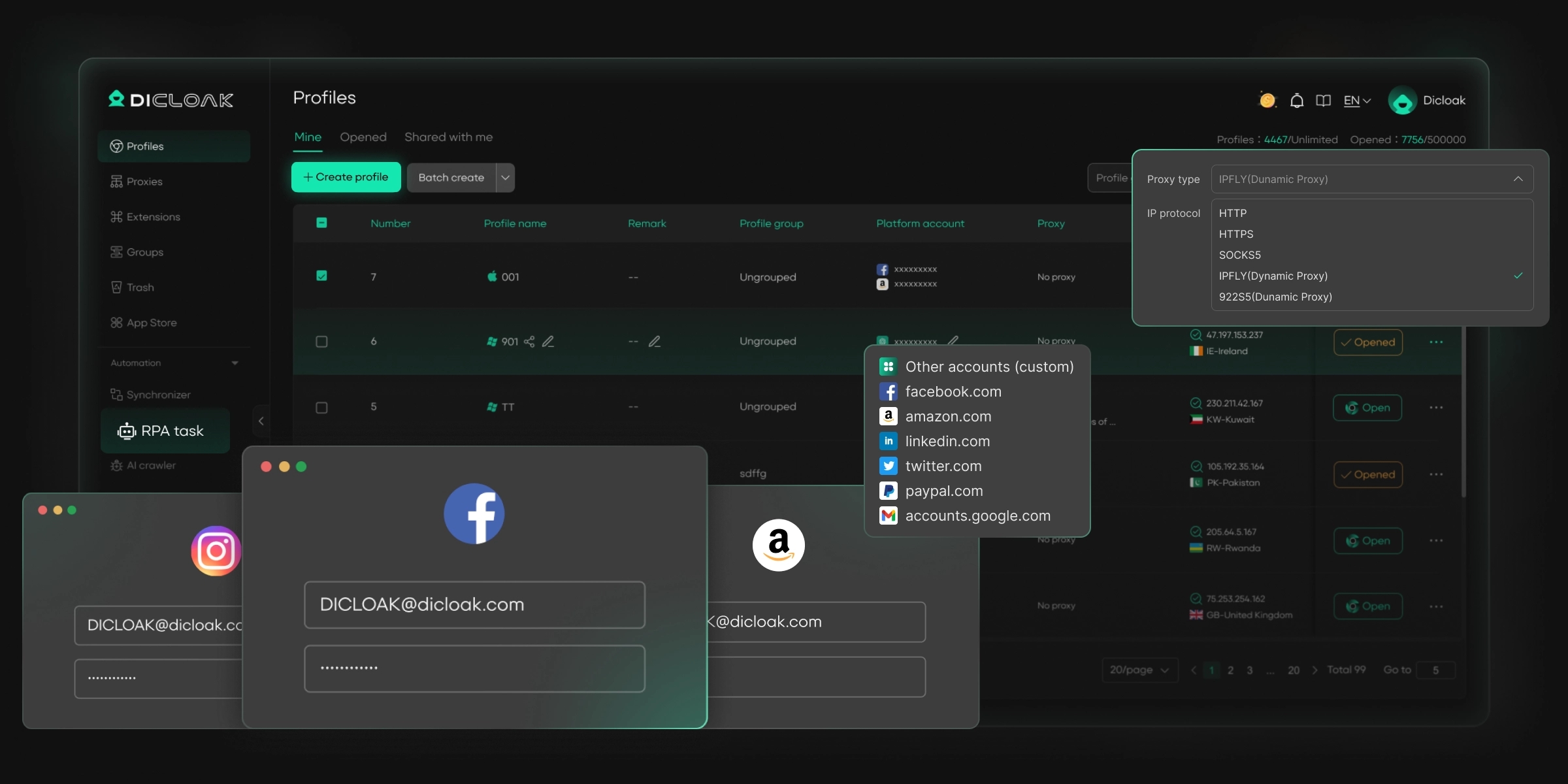
⚡The DICloak Antidetect Browser has become a global favorite for its unparalleled ability to efficiently and securely manage multiple accounts. Designed for professionals in social media management, and more, DICloak offers powerful features like RPA automation, bulk operations, and a synchronizer. Additionally, it allows you to customize fingerprints and integrate proxies for each profile, ensuring top-level security and operational efficiency. It’s the ultimate tool for seamless, secure, and scalable operations.
What Makes DICloak Stand Out?
✅ Manage 1,000+ Accounts on One Device: Stop wasting money on extra hardware! DICloak allows you to manage multiple accounts on a single device, cutting costs and boosting efficiency.
✅ Guaranteed Account Safety, No Ban Risks: Every account gets its own isolated browser profile with custom fingerprints and IPs, drastically reducing the risk of bans. Your accounts, your control!
✅ Flexible Proxy Configuration for Maximum Performance: Seamlessly integrate with all major proxy protocols (HTTP/HTTPS, SOCKS5) and manage your proxy pool with bulk operations. No more struggling with IP management—DICloak has you covered.
✅ Streamlined Team Collaboration for Better Results: Easily manage your team with advanced tools like profile sharing, permission settings, data isolation, and operation logs. Your team works smarter, not harder.
✅ Automate the Grind with RPA: DICloak's built-in RPA saves you hours of manual work. Automate repetitive tasks, streamline workflows, and focus on what really matters—growing your business.
✅ Powerful Bulk Tools to Scale Your Operations: Create, import, and launch multiple browser profiles in one click. DICloak makes scaling your business as easy as it gets.
✅ Compatible with All Major Operating Systems: Based on the Chrome core, DICloak supports simulating Windows, Mac, iOS, Android, and Linux operating systems. No matter what platform you need, DICloak has you covered.
🔗 Ready to Get Started?
Visit the DICloak website to explore more details and choose the plan that’s right for you. Start for free today and experience the power of secure, efficient, and scalable multi-account management!
FAQs
1.How long do Facebook shadowbans last?
A Facebook shadowban can last from a few days to several weeks, depending on the severity of the violation and corrective actions taken.
2.How do I know if I’m shadowbanned?
Signs of a shadowban include a sudden drop in engagement, fewer likes and comments, and posts not appearing under hashtags or news feeds.
3.How can I stop a shadowban?
To stop a shadowban, remove violating content, reduce posting frequency, avoid excessive hashtags, and engage authentically with your audience.
4.How do I get unshadowbanned?
To get unshadowbanned, clean up your account by removing problematic posts, avoiding spam-like actions, and possibly appealing to Facebook support.
5.Why do people get shadowbanned?
People are typically shadowbanned for violating Facebook’s guidelines, spamming, using automation tools, or posting misleading or inappropriate content.
Conclusion: Staying Safe with the Algorithm
A Facebook shadowban can quietly block your content from reaching your audience. By avoiding rule violations and spam-like behaviors, you can protect your reach and maintain a consistent content strategy. Focus on authentic engagement and real value to prevent silent penalties.
As Facebook’s algorithm gets smarter, the challenge remains: how can creators keep their voice visible despite a Facebook shadowban?
 Web Proxy Tools
 Free Tools
 Cookie Plugin
 UA Generator
 MAC Address Generator
 IP Generator
 IP Address List
 2FA Code Generator
 World Clock
 Anonymous Check
 WebRTC Leak Test
 UUID Generator
 Free Web Proxy Site
 Proxy Checker
 FB Ad Checker
 AI Web Scraping
 Free SMM Tools
 Twitter Shadowban Checker
 Instagram Name Checker
 UTM Generator
 Username Generator
 AI Hashtag Generator
 LinkedIn Headline Generator
 Social Media Image Resizer