Ghost commerce is often promoted as a new way to make money online without creating products or holding inventory. In practice, the term has no single, widely accepted definition. Some sources use it for affiliate marketing, where you send buyers to another merchant. Others use it for dropshipping or branded stores that outsource production and shipping. Still others apply it to content businesses that earn through ads, sponsorships, or leads.
That is why the label alone tells you very little. To understand any ghost commerce offer, you need to follow the money: who attracts the customer, who collects the payment, who owns the relationship, and who handles problems after the sale. This guide explains those differences, the real costs involved, and what it takes to get started in 2026.
Why Ghost Commerce Is Hard to Define
Before looking at how ghost commerce works, it helps to understand why the term causes so much confusion. There is no single, widely accepted ghost commerce definition. Different sources use it for several online business models that reduce the operator’s involvement in product creation, inventory, or fulfillment.
Why the Definition Varies
Some descriptions focus on inventory-free ecommerce. The operator runs an online store, sets prices, and attracts customers, while a supplier handles production, storage, or shipping. This version is closely related to dropshipping, print on demand, and outsourced ecommerce.
Other descriptions focus on promotion rather than direct selling. The operator creates content or builds an audience, then directs potential buyers to another merchant. Revenue comes from affiliate commissions instead of product sales.
A broader interpretation includes niche websites, newsletters, YouTube channels, and social media pages that earn through advertising, sponsorships, affiliate offers, or lead generation.
These businesses share some features, but they do not operate in the same way. That is why ghost commerce is better understood as a broad marketing label rather than one fixed business model.
The Three Common Ghost Commerce Models
For clarity, this guide groups the most common uses of the term into three models:
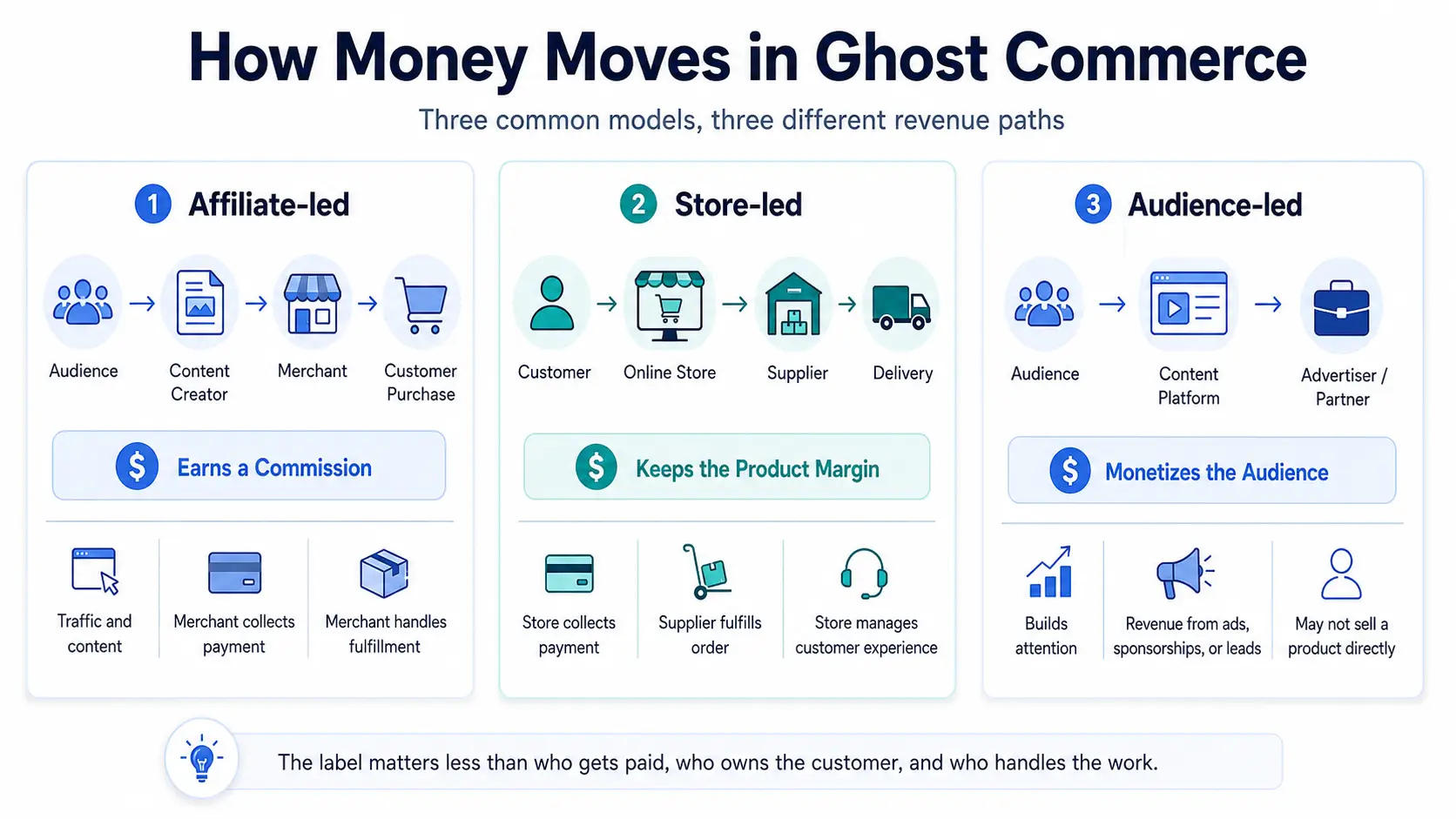
- Affiliate-led: The operator promotes another company’s products and earns a commission.
- Store-led: The operator owns the storefront and customer relationship, while a third party handles physical fulfillment.
- Audience-led: The operator builds an audience and earns through ads, partnerships, commissions, or leads.
These are practical categories, not official industry definitions.
To identify the real ghost commerce business model behind an opportunity, ask:
- Who collects the payment?
- How does the operator earn money?
- Who owns the customer relationship?
- Who handles fulfillment, support, and refunds?
The next section follows these questions to explain how ghost commerce actually works.
How Ghost Commerce Actually Works
Once the label is removed, how ghost commerce works becomes easier to understand. Follow three things: where the money goes, who controls the customer relationship, and who is responsible after a sale.
How the Money Flows
The way a ghost commerce business makes money depends on the model behind it.
In an affiliate-led model, the operator creates content and sends potential buyers to another company. The merchant collects the customer’s payment, while the operator earns a commission for the referral. In the United States, marketers who receive compensation for promoting a product should clearly disclose that relationship.
In a store-led model, the customer buys from the operator’s own storefront. The operator sets the retail price and collects the payment. After supplier, shipping, platform, advertising, and refund costs are deducted, the remaining amount becomes the operator’s margin.
An audience-led model may not involve a product sale at all. A niche website, newsletter, or social media channel can earn through advertising, sponsorships, affiliate offers, or fees for qualified leads.
The table below shows why ghost commerce vs. affiliate marketing and ghost commerce vs. dropshipping cannot be explained only by whether the operator holds inventory.
| Model |
Who collects the customer’s payment? |
How the operator earns money |
Who controls the price? |
| Affiliate-led |
The merchant |
Referral commission |
The merchant |
| Store-led |
The operator |
Product margin |
The operator |
| Audience-led |
A platform, advertiser, merchant, or business partner |
Ads, sponsorships, commissions, or lead fees |
Depends on the revenue source |
The most useful question is not simply, “Does the operator store the product?” It is:
Who pays the operator, and what must happen before that payment is earned?
Who Owns the Customer Relationship
Control over the customer is another major difference between ghost commerce models.
An affiliate publisher usually controls the content and traffic source but not the final transaction. The merchant manages the checkout, collects the buyer’s information, and decides how to communicate with the customer after the purchase.
A store-led operator has more control. The customer visits the operator’s store, sees its branding, pays through its checkout, and contacts it when something goes wrong. The operator may also retain customer information for order updates, support, and future marketing, subject to applicable privacy and marketing rules.
An audience-led business owns access to its readers, viewers, or subscribers. However, that audience is not always the same as a list of paying customers. A YouTube channel may have thousands of followers while the advertiser or affiliate merchant still controls the final sale.
This leads to a useful rule:
More control over pricing and the customer relationship usually brings more responsibility for the customer experience.
Who Handles Fulfillment, Support, and Refunds
Physical fulfillment and customer responsibility do not always belong to the same party.
In an affiliate-led model, the merchant normally handles payment, shipping, returns, and customer support. The publisher’s main responsibility is to promote products honestly and disclose relevant commercial relationships.
In a store-led model, a supplier may package and ship the product, but the customer still sees the operator as the seller. When an order is delayed, damaged, or incorrect, the customer contacts the store—not the unseen supplier.
For businesses selling merchandise online to U.S. consumers, sellers must have a reasonable basis for their promised shipping times. When they cannot ship as promised, they may need to obtain the customer’s consent to the delay or provide a refund. Using a third-party supplier does not automatically remove these obligations.
Consider three simple ghost commerce examples:
- A TikTok creator recommends software through an affiliate link and earns a commission when viewers subscribe.
- A branded online store collects customer payments while a supplier ships the products.
- A niche website attracts search traffic and earns through ads, sponsorships, affiliate offers, and leads.
All three may be described as ghost commerce. But their income, control, costs, and responsibilities are different. That is why the real business model matters more than the label.
Is Ghost Commerce Legit—and Can It Be Profitable?
The business models placed under the ghost commerce label can be legitimate. However, that does not mean every course, service, or income claim using the term is trustworthy. The real question is whether the operator has a clear revenue source, a practical way to attract customers, and an honest view of the costs and responsibilities involved.
What Is Legit About Ghost Commerce?
Affiliate marketing, dropshipping, print on demand, outsourced fulfillment, advertising, and lead generation are established ways to run an online business. Using another company to manufacture or ship a product is not inherently deceptive. Neither is earning a commission for referring a customer.
What matters is how the business is presented and operated. Affiliate publishers should clearly disclose material relationships with the brands or merchants they promote. According to the FTC, disclosures should make the relationship easy for consumers to understand and should appear with the endorsement itself.
Store-led operators also need to give customers accurate information about products, delivery, and refunds. The exact legal requirements vary by location, platform, and business structure, so the label ghost commerce does not determine whether a business is compliant.
A useful legitimacy check is to ask:
- What is being sold or promoted?
- Who pays the operator?
- What work does the operator perform?
- What costs and responsibilities remain after fulfillment is outsourced?
A business that can answer these questions clearly is easier to evaluate than one built around vague promises of “hidden” or “automatic” income.
What Profitability Actually Depends On
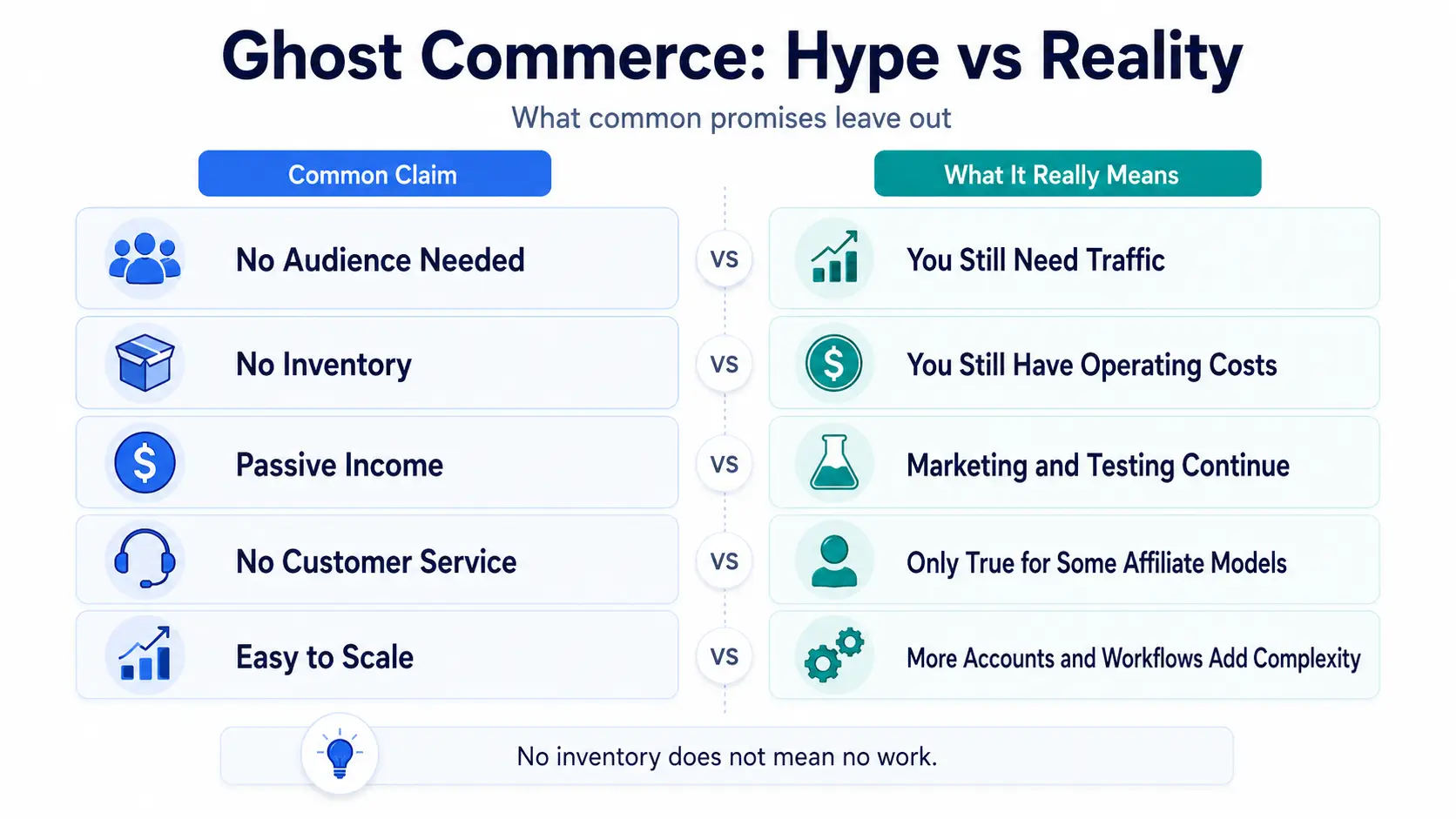
A ghost commerce business can be profitable, but having no warehouse does not guarantee a healthy margin.
Profit depends on the model. An affiliate publisher must earn enough commission to cover content, advertising, software, and time. A store-led operator must account for supplier costs, shipping, payment fees, advertising, refunds, chargebacks, and customer support. An audience-led business may spend months building traffic before advertising or sponsorship revenue becomes meaningful.
A simple starting point is:
Actual profit = revenue − traffic costs − platform fees − fulfillment costs − refunds − tools and operating expenses
There is no reliable universal ghost commerce profit margin because affiliate commissions, product sales, advertising, and lead generation have very different cost structures.
The U.S. Small Business Administration defines the break-even point as the stage where total revenue equals total cost. Reaching that point requires operators to identify both fixed expenses and costs that increase with each sale or conversion.
Two common claims therefore need more context:
- “No audience needed” may mean you can start without existing followers. It does not mean you can earn without traffic.
- “No inventory needed” may reduce storage and purchasing costs. It does not remove content, advertising, platform, support, or refund costs.
Organic traffic usually requires time and consistent content. Paid traffic requires money and testing. Partnerships require trust, access, or an audience that another business values.
Red Flags in Ghost Commerce Courses and Income Claims
The term becomes risky when it is used to hide how the money is made or to exaggerate how little work is required.
Be cautious when a program:
- guarantees income or a specific return;
- describes the business as fully passive from the beginning;
- says no traffic, skills, budget, or testing is required;
- displays sales revenue without showing expenses or refunds;
- never explains whether earnings come from commissions, product margins, or selling the course itself;
- pressures buyers to pay a large fee before providing clear operating details;
- uses a few exceptional results as though they were typical.
These concerns are not theoretical. In 2025, the FTC took action against several ecommerce business-opportunity operators over allegations involving false or unsupported claims about large profits and passive income from online stores. One settlement permanently banned Click Profit and several operators from the industry after the FTC alleged they had sold consumers expensive promises of highly profitable online stores.
FTC guidance also states that sellers covered by the Business Opportunity Rule may need to provide specific disclosures and written support for earnings claims. Whether that rule applies depends on how a particular opportunity is structured.
This does not mean ghost commerce is a scam. It means the underlying business should be judged separately from the marketing around it.
A legitimate opportunity should explain how customers are acquired, how revenue is generated, what expenses remain, and what work the operator must continue doing. If those answers are missing, the promise matters less than the missing details.
Which Ghost Commerce Model Fits You?
There is no single best ghost commerce business model. The right choice depends on what you want to control, which skills you already have, and how much customer responsibility you are willing to take on.
Before choosing, consider three questions:
- Do you want to recommend products or sell them directly?
- Do you want to control pricing and customer data?
- Are you willing to manage support, refunds, and supplier problems?
Your answers can help narrow the options.
Choose an Affiliate-Led Model If You Want to Focus on Content
An affiliate-led model may suit people who prefer content creation, SEO, social media, or audience building over store operations.
You promote products from another company and earn a commission when someone completes a qualifying action through your link. The merchant normally controls the price, checkout, fulfillment, and customer service.
This model may be a good fit when you:
- want to start without managing inventory or orders;
- already understand a niche or audience;
- enjoy creating reviews, tutorials, comparisons, or educational content;
- prefer lower operational responsibility;
- are comfortable depending on affiliate programs and commission rules.
The main limitation is control. You cannot normally change the product price, checkout experience, or merchant’s policies. A program may also reduce commissions, change its terms, or close your account.
For beginners researching ghost commerce vs. affiliate marketing, this is usually the clearest distinction: affiliate operators generate referrals, but they do not own the final transaction.
Choose a Store-Led Model If You Want More Control
A store-led model may be more suitable when you want to build your own storefront, set prices, and create a recognizable brand.
This category includes dropshipping, print on demand, and other forms of outsourced ecommerce. A supplier may produce or ship the product, but the operator manages the customer-facing business.
This model may fit you when you:
- want control over branding and product presentation;
- want to set retail prices;
- are willing to test suppliers and product samples;
- can manage customer questions, refunds, and delivery issues;
- have enough budget to test traffic and offers.
Store-led businesses offer more control than affiliate marketing, but they also create more responsibility. Supplier delays, poor product quality, high advertising costs, and refunds can quickly reduce margins.
Choosing this model means accepting that outsourcing fulfillment does not remove the need to manage the customer experience.
Choose an Audience-Led Model If You Want to Build a Long-Term Asset
An audience-led model focuses first on building attention around a specific topic. The main asset may be a niche website, newsletter, YouTube channel, podcast, or social media page.
The audience can later be monetized through:
- affiliate offers;
- advertising;
- sponsorships;
- paid partnerships;
- lead generation;
- digital products or services.
This model may suit people who:
- want to build around a topic instead of one product;
- can publish useful content consistently;
- are willing to wait longer for meaningful revenue;
- want to combine several income sources;
- prefer building an audience they can reach repeatedly.
The main challenge is time. Growing search traffic, subscribers, or social reach can take months. Platform algorithms and advertising demand may also change.
A Simple Ghost Commerce Decision Guide
| Your main goal |
Model that may fit best |
| Recommend products without handling orders |
Affiliate-led |
| Control pricing, branding, and customers |
Store-led |
| Sell custom products without storing stock |
Print on demand |
| Build an audience and use several revenue sources |
Audience-led |
| Generate qualified leads for other businesses |
Lead generation |
For most ghost commerce beginners, the best starting point is not the model that sounds easiest. It is the one that matches their strongest skill.
A content creator may be better suited to affiliate or audience-led commerce. Someone experienced in ecommerce, advertising, or customer service may be more prepared for a store-led model.
Choose the real business model first. The ghost commerce label should come second.
How to Start Ghost Commerce Without Overbuilding
Learning how to start ghost commerce does not mean building a full website, opening several social accounts, and paying for multiple tools on day one. Start by proving that a real audience wants the offer and that the revenue can cover the cost of reaching them.
Validate the Audience and Revenue Path First
Before choosing tools or designing a brand, answer five basic questions:
- Who are you trying to reach?
- What problem or need does the offer address?
- What action should the audience take?
- Who will pay you when that action happens?
- How much can you realistically earn from each conversion?
The validation process depends on the model.
For an affiliate-led business, check whether people are already searching for or discussing the product category. Review the commission, payout conditions, cookie duration, and program rules. A high commission means little if the offer does not convert or the audience does not trust it.
For a store-led business, order a sample before promoting the product. Check the quality, packaging, shipping time, tracking, and return process. Then estimate the margin after supplier costs, delivery, payment fees, advertising, refunds, and support.
For an audience-led business, confirm that the topic can support regular content and more than one revenue source. A niche may attract views but still be difficult to monetize if advertisers, affiliate programs, sponsors, or lead buyers are not interested in the audience.
This first step prevents a common mistake: building an entire operation before confirming how the business will make money.
Build Only the Minimum Setup Your Model Needs
A simple setup makes it easier to test the idea and identify what is not working.
An affiliate-led model may only need:
- one content channel;
- one relevant affiliate program;
- trackable links;
- a clear affiliate disclosure;
- a basic method for tracking clicks and conversions.
A store-led model normally needs:
- a simple storefront;
- a tested supplier and product sample;
- a payment method;
- clear shipping and refund policies;
- a customer support channel;
- basic order and profit tracking.
An audience-led model may begin with:
- one clear topic;
- one primary publishing platform;
- a realistic content schedule;
- one audience growth method;
- at least one confirmed monetization path.
A website can be useful, but it is not required for every ghost commerce business. A social media affiliate project may begin without one, while a store-led model usually needs a dedicated storefront.
The same principle applies to ghost commerce startup costs. There is no universal minimum budget. Affiliate and content models may require less cash but more time. Store-led models often require product testing, platform fees, customer support, and a larger traffic budget.
Test One Traffic Channel and Track the Right Numbers
New operators often spread themselves across SEO, TikTok, YouTube, Instagram, email, and paid ads simultaneously. This creates activity, but it makes the results difficult to understand.
Choose one main traffic channel first. The best choice depends on the audience and your strongest skill:
- SEO for topics with clear search demand;
- TikTok or Instagram for visual and trend-driven products;
- YouTube for tutorials, reviews, and detailed comparisons;
- paid ads for faster testing when enough budget is available;
- email for audiences you can reach repeatedly;
- partnerships for niches built around trust and professional relationships.
Track results from the first visit to the final conversion. Useful metrics include:
- traffic source;
- click-through rate;
- conversion rate;
- revenue per visitor;
- customer acquisition cost;
- product margin or affiliate commission;
- refund rate;
- time spent per conversion.
These numbers help identify the real problem.
- Traffic without clicks may mean the content and offer do not match.
- Clicks without conversions may point to weak trust, pricing, or landing pages.
- Sales without profit may mean acquisition, fulfillment, or refund costs are too high.
- No consistent traffic may mean the channel or topic needs to change.
For ghost commerce beginners, the goal of the first test is not immediate scale. It is to learn whether one audience, one offer, and one traffic channel can produce a repeatable result.
Expand only after the basic model works. Adding more products, accounts, channels, or team members before that point usually adds complexity faster than revenue.
How DICloak Supports Multi-Account Ghost Commerce Operations
A beginner testing a single offer on a single platform may not need a specialized account management tool. The need becomes clearer when a ghost commerce business expands across several brands, content channels, storefronts, affiliate projects, or advertising accounts.
DICloak is not a product research, supplier, payment, or traffic platform. Instead, operators can use it to keep browser-based accounts, project data, and team access organized as the business becomes more complex.
When Multiple Accounts and Channels Become Difficult to Manage
An affiliate-led operator may create separate content brands for different niches. Each brand may have its own social media accounts, affiliate dashboards, email tools, and analytics platforms.
A store-led operator may need to manage:
- several storefronts or product brands;
- separate social media accounts for each store;
- different advertising accounts and campaigns;
- supplier and marketplace dashboards;
- team members responsible for content, ads, or store operations.
An audience-led business may also run several niche websites, YouTube channels, newsletters, or faceless social media pages at the same time.
Managing all these accounts in a normal browser can become difficult. Cookies, login sessions, extensions, bookmarks, and project data may become mixed together. Team members may also need access to specific accounts without gaining control over every project.
How Operators Can Keep Ghost Commerce Workflows Organized with DICloak
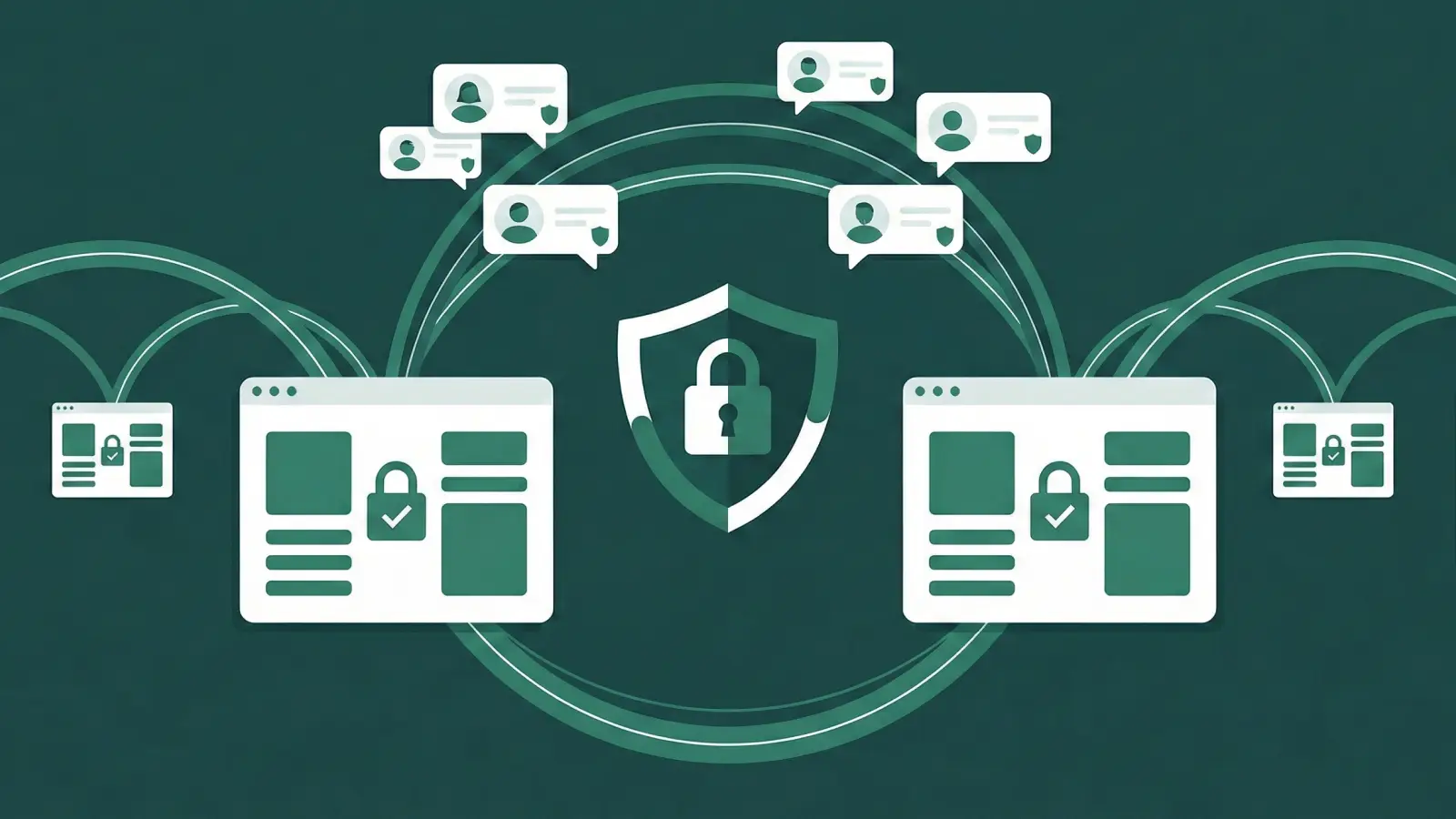
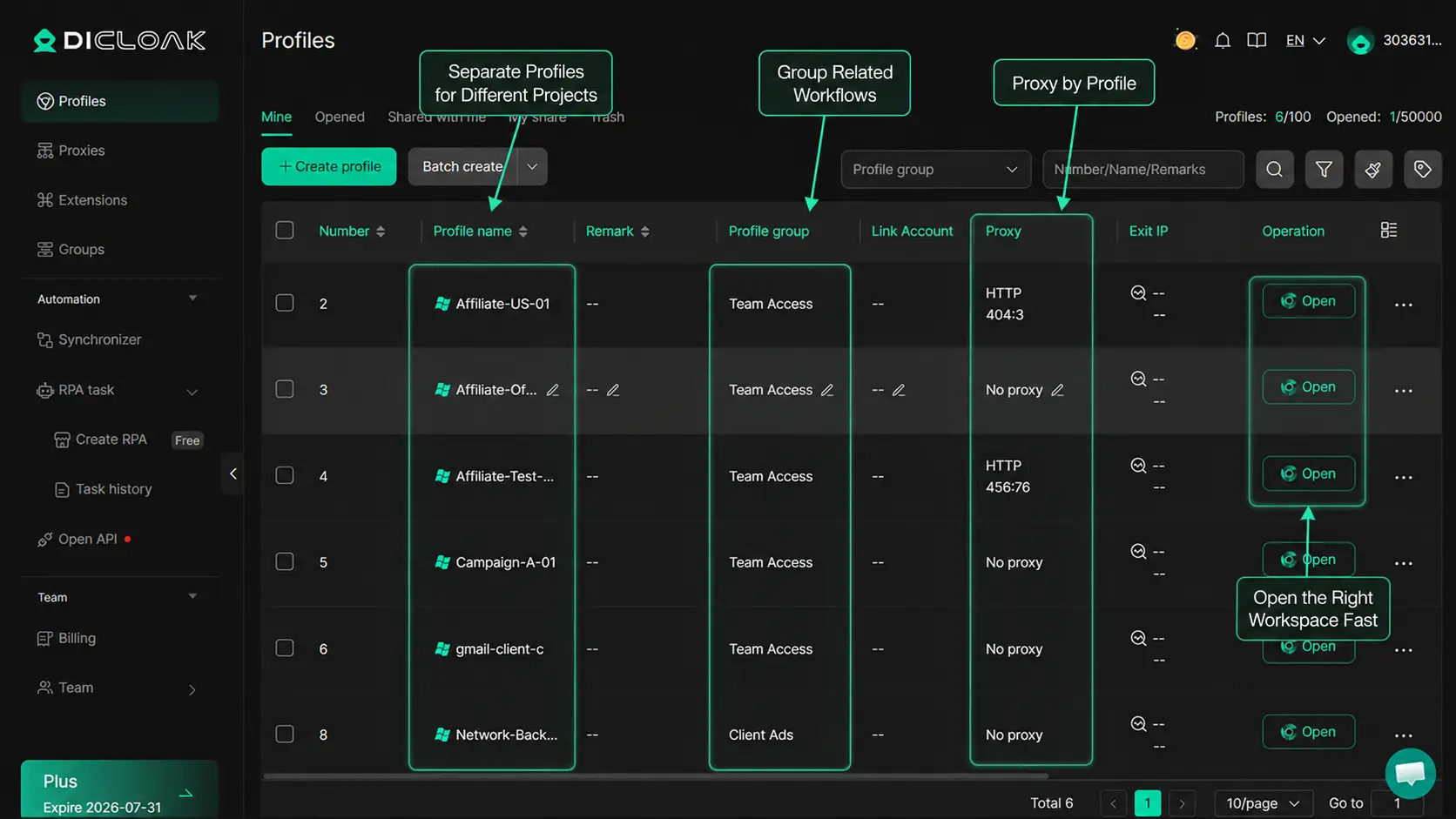
With DICloak, operators can create a separate browser Profile for each brand, store, affiliate project, or social media account.
Each Profile can keep its own:
- cookies and login status;
- browser fingerprint settings;
- extensions and browsing data;
- bookmarks and startup URLs;
- user-configured proxy connection.
This setup helps keep one project’s browser sessions and data separate from another. Users can also configure HTTP, HTTPS, or SOCKS5 proxies for individual Profiles. DICloak does not sell proxies.
Operators can group, label, and manage Profiles in bulk. For example, separate Profile groups can be created for:
- affiliate content brands;
- ecommerce stores;
- social media channels;
- advertising projects;
- client accounts.
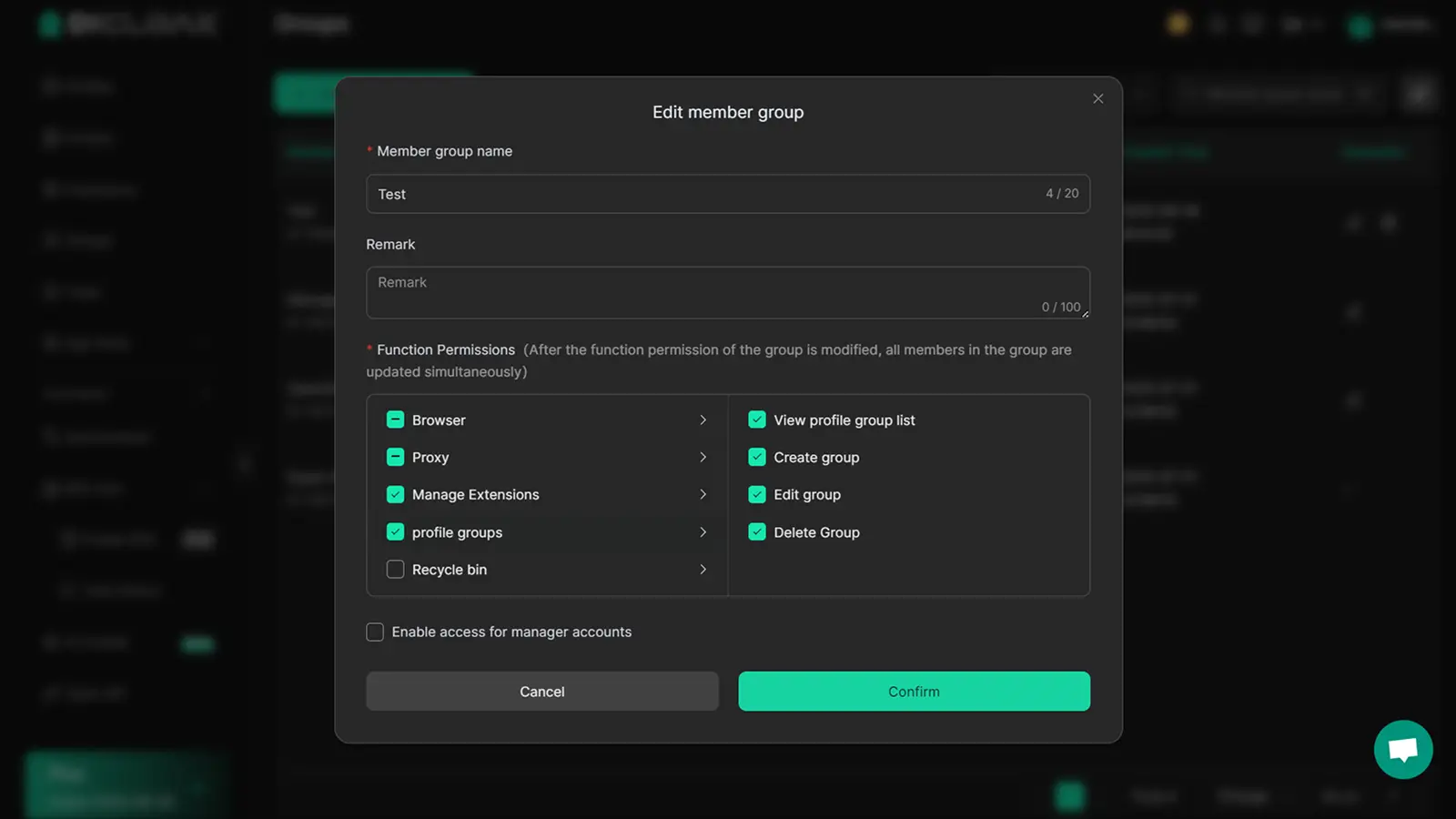
For team-based operations, specific Profiles can be assigned to the members responsible for them. Permission settings can limit which projects each person can access, while operation records make collaboration easier to review. This can be useful when one member handles content, another manages advertising, and another monitors store operations.
Operators can also use batch operations, RPA, and the Synchronizer to reduce repetitive browser work. These tools can help with launching multiple Profiles, organizing routine tasks, and reducing repeated manual actions across projects.
FAQs About Ghost Commerce
Is Ghost Commerce the Same as Dropshipping?
Not exactly. Dropshipping is a specific fulfillment method in which a supplier ships products directly to customers. Ghost commerce is a broader label that may also include affiliate marketing, print on demand, content monetization, and other outsourced online business models.
Do You Need a Website for Ghost Commerce?
It depends on the model. A store-led business usually needs an online storefront. An affiliate or audience-led project may begin through TikTok, YouTube, Instagram, a newsletter, or another content platform without a dedicated website.
Can You Start Ghost Commerce Without Followers?
Yes, but you still need a way to attract traffic. Beginners can start without an existing audience, then build reach through SEO, social media content, paid advertising, email, or partnerships. No followers does not mean no customer acquisition work.
How Much Does It Cost to Start Ghost Commerce?
There is no fixed ghost commerce startup cost. Affiliate and content models may require less money but more time. Store-led models may involve website fees, product samples, advertising, payment fees, refunds, customer support, and supplier costs.
Is Ghost Commerce Legal?
The term itself is not illegal. The underlying business must still follow applicable advertising, affiliate disclosure, tax, shipping, refund, consumer protection, privacy, and platform rules. Requirements vary by country, location, and business model.
Understanding what ghost commerce is starts with identifying the real business model behind the label. Look at who attracts the customer, who collects the payment, how revenue is earned, and who handles fulfillment, support, and refunds. Choose one clear model, test one traffic channel, and track real profit instead of relying on broad income claims.
Operators managing several brands, affiliate projects, storefronts, social accounts, or advertising workflows also need to keep each project clearly separated. With DICloak, users can organize accounts in independent browser Profiles, assign access to team members, and reduce repetitive browser work with batch tools and automation.Try DICloak for Free.
 Web Proxy Tools
 Free Tools
 Cookie Plugin
 UA Generator
 MAC Address Generator
 IP Generator
 IP Address List
 2FA Code Generator
 World Clock
 Anonymous Check
 WebRTC Leak Test
 UUID Generator
 Free Web Proxy Site
 Proxy Checker
 FB Ad Checker
 AI Web Scraping
 Free SMM Tools
 Twitter Shadowban Checker
 Instagram Name Checker
 UTM Generator
 Username Generator
 AI Hashtag Generator
 LinkedIn Headline Generator
 Social Media Image Resizer