Before buying tickets for a concert, sports game, or live show, many people see prices that feel confusing or unfair. Some tickets sell out fast, then reappear at much higher prices. This is where scalp tickets come in. To make smart choices and avoid overpaying, it is important to understand what scalp tickets are, how ticket scalping works, and why prices can rise so quickly.
What Are Scalp Tickets?
Definition of Ticket Scalping
Scalp tickets are event tickets bought with one clear goal: resale for profit. This practice is called ticket scalping. Instead of attending the event, the buyer plans to sell the ticket later at a higher price. The higher price is what creates the profit.
For example, a concert ticket may cost $120 when it first goes on sale. A scalper buys it quickly. A few days later, that same ticket appears online for $300 or more. The ticket itself has not changed. Only the price has. This price gap is what most people mean when they talk about scalp tickets.

Overview of the Scalping Process
The scalping process usually starts the moment tickets are released. Popular events sell out fast. Scalpers know this. They try to buy as many tickets as possible during the first sale window.
Today, most scalp tickets are handled online. Scalpers often move faster than regular buyers. They may purchase tickets in bulk and hold them while demand grows. Once tickets are sold out on official sites, fans look elsewhere. That is when scalp tickets appear on resale platforms at much higher prices.
Imagine a sports final or a major tour stop. Tickets disappear in minutes. Fans who arrive late feel stressed. They still want to attend. Scalpers rely on this pressure. They raise prices because they know someone may still pay.
How Ticket Scalping Works in Practice
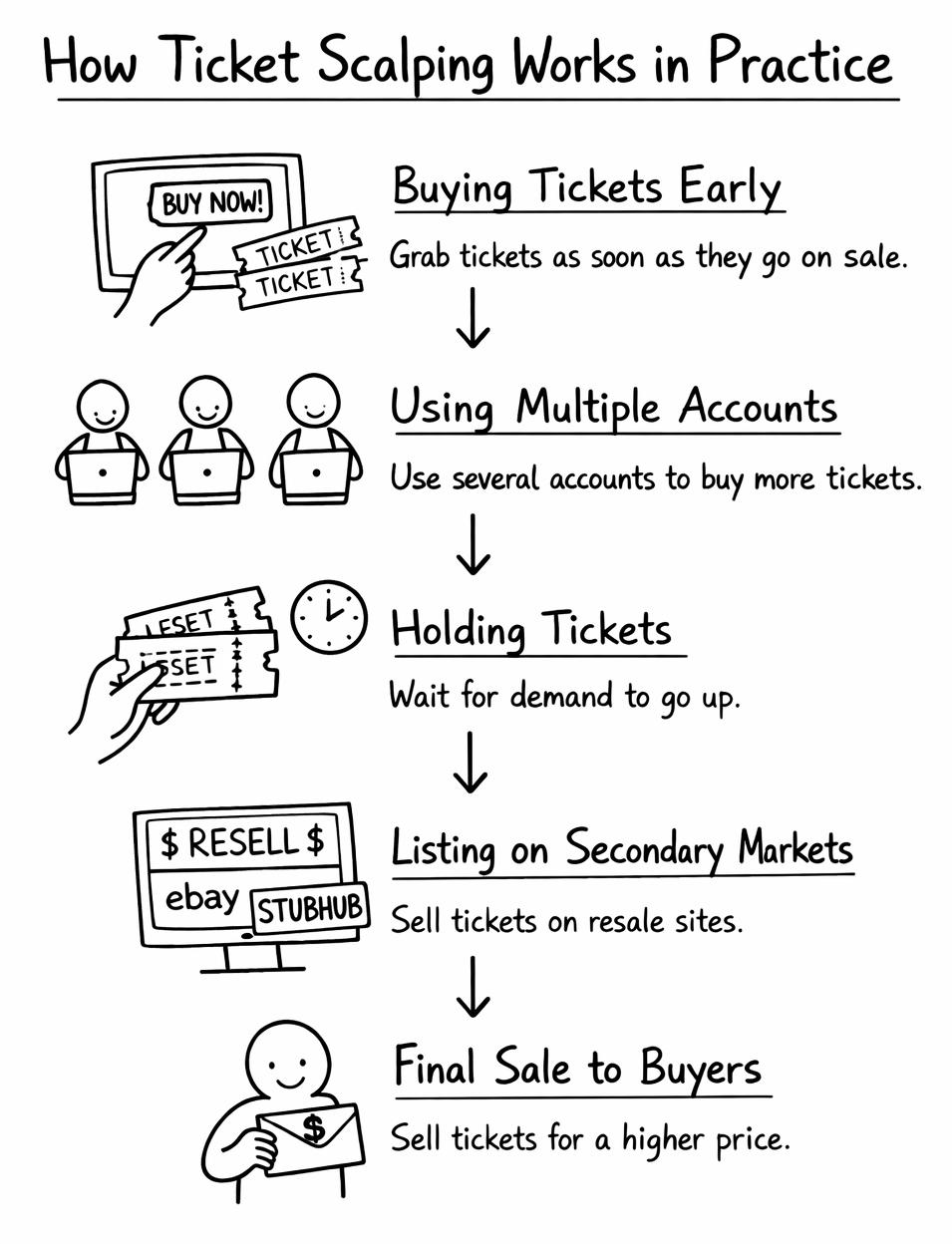
Ticket scalping follows a clear and repeatable process. Scalp tickets usually move through the steps below:
- Buying Tickets Early Scalpers focus on the first sale. They are ready the moment tickets are released. Popular events sell out fast, so speed matters.
- Using Multiple Accounts To buy more tickets, scalpers often use several online accounts. Each account looks like a different buyer. This allows them to collect scalp tickets in larger numbers.
- Holding Tickets After buying, scalpers usually wait. As the event gets closer, demand increases. Fans who missed the first sale feel more pressure.
- Listing on Secondary Markets Scalpers place scalp tickets on resale platforms. Prices are set by the seller, not the event organizer. High demand often means higher prices.
- Final Sale to Buyers Buyers pay the listed price and receive the ticket digitally. At this stage, scalp tickets are often much more expensive than the original price.
This simple process explains why scalp tickets appear quickly and why prices rise so fast after tickets sell out.
Legal and Ethical Considerations Surrounding Scalp Tickets
After seeing how scalp tickets move from the first sale to resale markets, many buyers ask the same question: is this legal, and is it fair?
The Legality of Ticket Scalping in Different Regions
The legality of scalp tickets depends on location. In some regions, ticket scalping is legal but regulated. In others, it is restricted or banned for certain events. Some laws limit how much higher a resale price can be. Others require sellers to clearly disclose ticket details.
For example, a person may legally resell scalp tickets online in one area, but face fines in another for the same action. This is why buyers and sellers must understand local rules before trading tickets.
Regulations and Compliance: What You Need to Know
Many governments and ticket platforms have rules to reduce abuse. These rules may limit bulk buying, block automated purchases, or require verified resale. Some venues also ban ticket transfers entirely, which can make scalp tickets invalid at entry.
A common risk for buyers is purchasing a ticket that cannot be used. Even if payment goes through, entry may be denied if the ticket breaks event rules.
Ethical Implications of Ticket Scalping
Ethically, scalp tickets remain controversial. Supporters see resale as a free market choice. Critics argue that scalping locks out real fans and inflates prices unfairly.
For many buyers, the issue is access. When tickets sell out instantly and reappear at much higher prices, the experience feels frustrating. This tension is why scalp tickets continue to raise strong opinions on both sides.
Understanding both the legal and ethical side helps buyers make safer and more informed decisions.
How Scalp Tickets Are Handled Online
Online ticket scalping follows recognizable patterns. Understanding these patterns helps explain how scalp tickets move through the resale market.
1. Focus on High-Demand Events
Scalp tickets are most common for events that sell out fast. Big tours, championship games, and limited shows create strong demand. When many fans want few seats, resale prices rise quickly.
2. Speed and Automation
Tickets often disappear within minutes. Some sellers rely on automated buying to move faster than regular fans. Platforms try to stop this behavior, but it still shapes how scalp tickets enter the market.
3. Multiple Buyer Profiles
Another pattern is spreading purchases across several accounts. Each account looks separate. This makes it easier to collect more tickets during the first sale and later resell them.
4. Resale on Well-Known Marketplaces
After purchase, scalp tickets usually appear on major resale sites. These platforms manage payment and digital delivery. Prices are set by sellers and often reflect demand, not face value.
5. Limited Personal Exposure
Online resale reduces face-to-face contact. Digital tickets and online payments add distance between buyers and sellers. This shift is why street scalping is now rare.
6. Price Tracking Over Time
Prices change as the event gets closer. Interest often grows near the event date. Sellers watch these shifts and adjust prices. Buyers who wait may pay more.
Knowing these patterns helps readers recognize scalp tickets early and understand why prices move the way they do.
As online scalping grows more complex, some sellers rely on technical tools to manage scale and risk. Antidetect browsers like DICloak are often used to run automated workflows while keeping accounts separated. Each browser profile works in an isolated environment, which reduces account linking and improves stability during high-traffic sales. This setup is designed to protect account access and manage activity more safely across platforms, especially when rules and detection systems are strict.
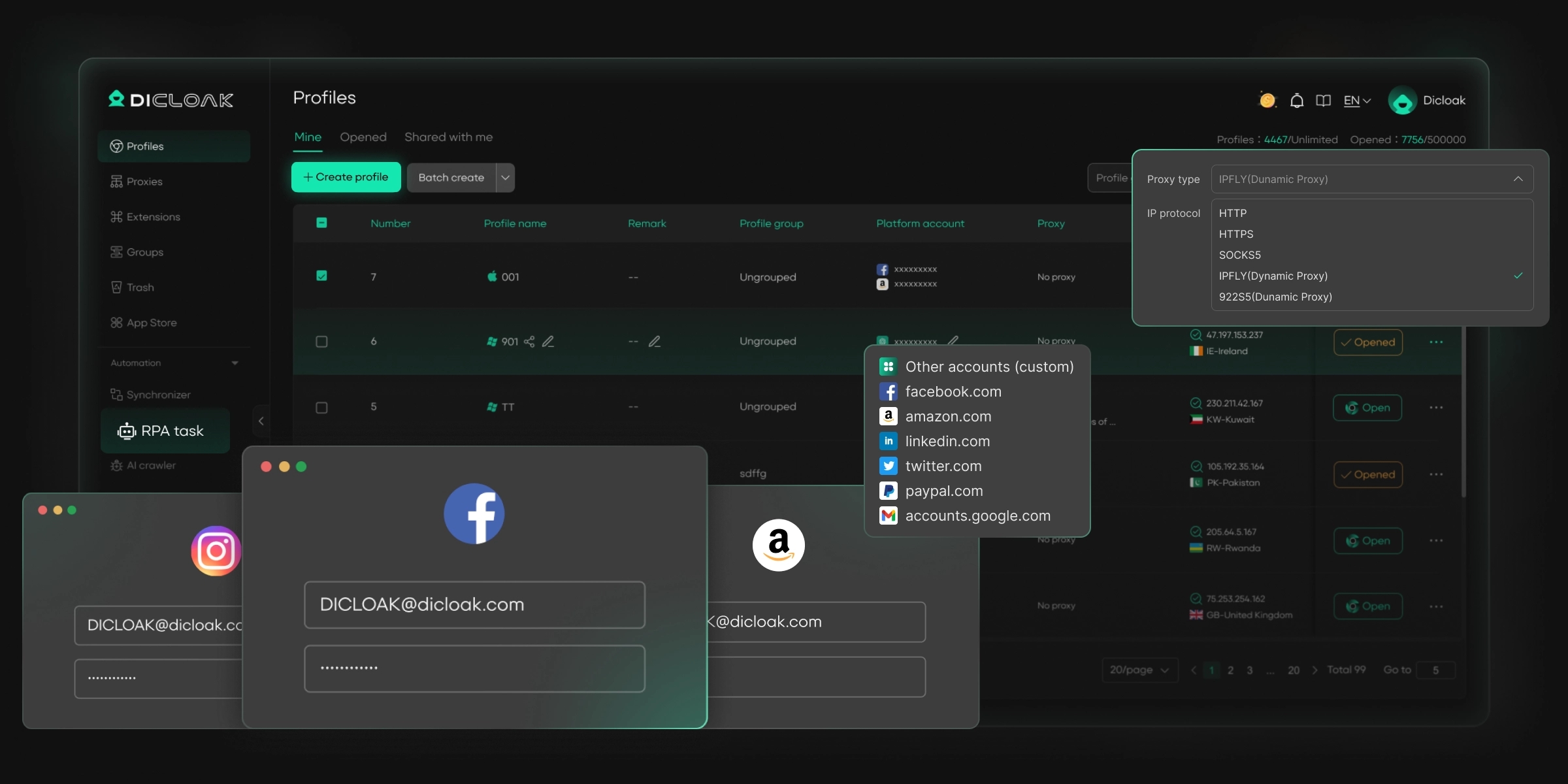
⚡The DICloak Antidetect Browser has become a global favorite for its unparalleled ability to efficiently and securely manage multiple accounts. Designed for professionals in social media management, and more, DICloak offers powerful features like RPA automation, bulk operations, and a synchronizer. Additionally, it allows you to customize fingerprints and integrate proxies for each profile, ensuring top-level security and operational efficiency. It’s the ultimate tool for seamless, secure, and scalable operations.
What Makes DICloak Stand Out?
✅ Manage 1,000+ Accounts on One Device: Stop wasting money on extra hardware! DICloak allows you to manage multiple accounts on a single device, cutting costs and boosting efficiency.
✅ Guaranteed Account Safety, No Ban Risks: Every account gets its own isolated browser profile with custom fingerprints and IPs, drastically reducing the risk of bans. Your accounts, your control!
✅ Flexible Proxy Configuration for Maximum Performance: Seamlessly integrate with all major proxy protocols (HTTP/HTTPS, SOCKS5) and manage your proxy pool with bulk operations. No more struggling with IP management—DICloak has you covered.
✅ Streamlined Team Collaboration for Better Results: Easily manage your team with advanced tools like profile sharing, permission settings, data isolation, and operation logs. Your team works smarter, not harder.
✅ Automate the Grind with RPA: DICloak's built-in RPA saves you hours of manual work. Automate repetitive tasks, streamline workflows, and focus on what really matters—growing your business.
✅ Powerful Bulk Tools to Scale Your Operations: Create, import, and launch multiple browser profiles in one click. DICloak makes scaling your business as easy as it gets.
✅ Compatible with All Major Operating Systems: Based on the Chrome core, DICloak supports simulating Windows, Mac, iOS, Android, and Linux operating systems. No matter what platform you need, DICloak has you covered.
🔗 Ready to Get Started?
Visit the DICloak website to explore more details and choose the plan that’s right for you. Start for free today and experience the power of secure, efficient, and scalable multi-account management!
Key Risks to Consider When Dealing With Scalp Tickets
Scalp tickets can bring profit, but they also carry real risks. Many sellers and buyers face problems they do not expect.
- Legal Trouble Laws on scalp tickets differ by location. In some places, resale is limited or restricted. Breaking these rules can lead to fines or other penalties.
- Account Suspension Ticket platforms watch for unusual activity. Using bots or many accounts can trigger alerts. When this happens, accounts may be closed, and future purchases may be blocked.
- Fraud and Scams The resale market attracts bad actors. Fake listings, invalid tickets, or payment disputes are common. Even experienced users can lose money if they are not careful.
- Unexpected Financial Loss Demand can drop. If an event loses hype, scalp tickets may not sell. Sellers may be forced to lower prices or take a loss.
Understanding these risks helps people make smarter choices and avoid costly mistakes when dealing with scalp tickets.
Common Approaches Seen in Ticket Scalping
There is no guaranteed formula for success. In practice, scalp tickets are usually handled through a mix of planning, speed, and caution.
- Event Selection High-demand events attract the most attention. Shows that are likely to sell out fast tend to drive higher resale interest.
- Speed and Automation Fast purchasing tools are often used to compete with large crowds at launch. Manual buyers usually move slower during peak sales.
- Account Protection To reduce account linking and shutdowns, some sellers rely on isolated browsing environments. These setups are designed to keep activity separated and accounts more stable.
- Resale Platform Choice Scalp tickets are commonly listed on well-known resale platforms. Using established marketplaces helps reduce disputes and transaction issues.
These elements explain how many people approach the resale market and why some listings appear quickly after tickets sell out.
FAQs About Scalp Tickets
How Does Ticket Scalping Work?
Ticket scalping usually starts when tickets first go on sale. Scalpers buy tickets at face value, often very quickly. These tickets are then resold on secondary markets at higher prices once demand increases.
Is Ticket Scalping Legal?
Ticket scalping laws depend on location. Some regions allow it with limits, such as price caps or disclosure rules. Other areas restrict or ban it entirely. It is important to check local laws before buying or selling scalp tickets.
Can You Get Banned for Scalping Tickets?
Yes. Many ticket platforms actively monitor suspicious activity. Using bots, automation, or multiple accounts can lead to account bans. Once banned, users may lose access to future ticket sales and purchases.
Conclusion
Scalp tickets are bought early and resold at higher prices when demand is strong. Throughout this guide, we explained how timing, resale platforms, and market pressure affect prices, along with the legal and account risks involved. For those operating at scale, tools like an antidetect browser can help keep online activity separated and accounts more stable in a strict detection environment. For buyers and sellers alike, understanding how scalp tickets move through the market makes it easier to avoid mistakes, reduce risk, and make smarter decisions.
 Web Proxy Tools
 Free Tools
 Cookie Plugin
 UA Generator
 MAC Address Generator
 IP Generator
 IP Address List
 2FA Code Generator
 World Clock
 Anonymous Check
 WebRTC Leak Test
 UUID Generator
 Free Web Proxy Site
 Proxy Checker
 FB Ad Checker
 AI Web Scraping
 Free SMM Tools
 Twitter Shadowban Checker
 Instagram Name Checker
 UTM Generator
 Username Generator
 AI Hashtag Generator
 LinkedIn Headline Generator
 Social Media Image Resizer