The Unique Digital Landscape of Russia in 2026
The Russian search market remains a distinct global outlier as we navigate the 2026 digital landscape. While much of the world follows a Google-centric model, Russia maintains a sophisticated dual-power structure where local platforms and international giants coexist. For any brand or digital growth consultant targeting this region, a one-size-fits-all global strategy is no longer viable. Success requires a deep understanding of how local linguistic nuances and platform-specific ecosystems influence user behavior.
Since 2025, the market has shifted sharply toward local trust and data privacy. Users now demand platforms that comply with national data regulations while offering specialized services tailored to the Russian lifestyle. As a result, global SEO tactics often fail to capture the semantic relevancy required to rank in this region. Navigating this environment starts with understanding the dominant force that sets the standard for the entire market.
What Search Engines Are Used in Russia in 2026? Top Russian Search Engines Explained
Yandex: The Dominant Leader Among Top Russian Search Engines
Yandex is the primary gateway to the Russian internet, serving as the first point of contact for over 60% of the population. As a local leader, it has evolved into more than a search engine, becoming an essential infrastructure for both personal and professional life in 2026.
Market Share and Morphological Parsing
Holding a steady 60% to 65% market share, Yandex’s competitive edge is rooted in technical superiority. Its search algorithms excel at morphological parsing—the ability to understand the complex grammar of the Russian language. For example, a search for "Putina" (the genitive form of Putin) is processed with native semantic relevancy that global competitors often miss. This linguistic precision ensures that Yandex remains the most trusted source for accurate information retrieval in the region.
The Ecosystem Advantage
Yandex maintains user loyalty through a massive ecosystem of over 30 integrated services. Platforms like Yandex.Taxi, Yandex.Market, and Yandex.Money create a seamless environment where users can move from search to purchase without leaving the brand's influence. By 2026, over 17,400 Russian businesses have adopted Yandex’s organizational tools, demonstrating the platform’s deep penetration into the corporate sector.
Active Security and EEAT
A critical factor in Yandex’s success is its commitment to user protection. The engine utilizes active security technology to detect malicious sites and rogue files in real-time. It was the first to implement DNS encryption to protect users from ISP tracking and financial threats. This focus on financial protection and data privacy has solidified Yandex as the most "trusted" engine for commercial transactions. While Yandex dominates local queries, global players still provide a vital window to the rest of the world.
Google.ru: The Global Integration of Top Russian Search Engines
Google.ru serves as the primary alternative in Russia, capturing approximately 30% to 35% of the search market. It remains the essential tool for technical research, international operations, and high-speed mobile browsing.

Global Resource Integration and Video Search
Google’s reach is unmatched, indexing content in 112 languages compared to Yandex’s 47. This makes it the go-to platform for global tech events and international policy. Furthermore, YouTube remains Russia's top video platform, driving over 230 million monthly searches directly into the Google ecosystem. This high-impact data flow makes Google indispensable for brands targeting younger, tech-savvy demographics.
B2B Dominance and Mobile Performance
In the professional sphere, 65% of Russian B2B users rely on Google-integrated services like Gmail for international logistics and foreign order verification. Google has also mastered mobile performance in remote regions like Siberia. Through the widespread use of AMP technology, mobile load times have been slashed from 8 seconds to under 3 seconds, ensuring accessibility even in areas with limited infrastructure. This performance, combined with semantic search powered by neural networks, keeps Google relevant despite local competition.
Mail.Ru: Social Connectivity and Top Russian Search Engines
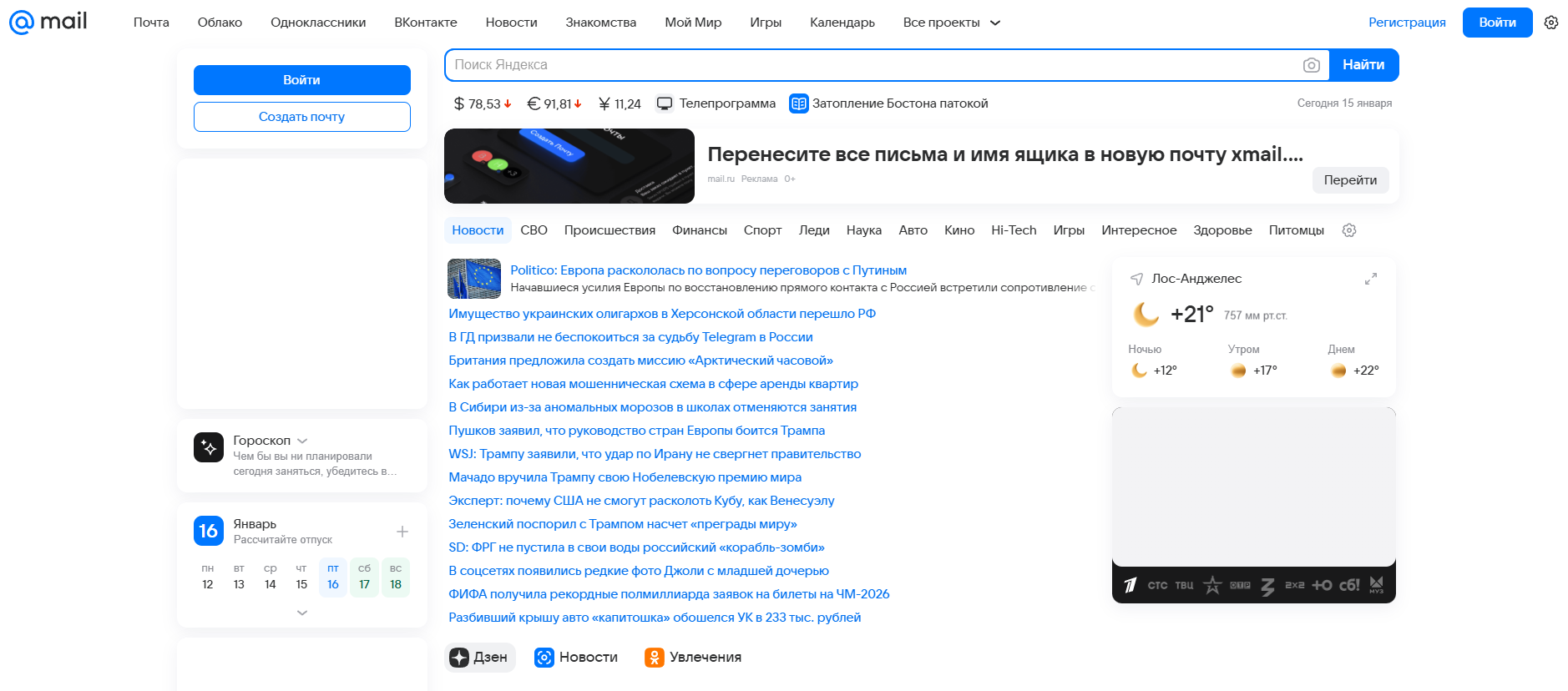
Mail.Ru occupies a unique space by blending communication with information retrieval. It holds roughly 3% to 5% of the market and thrives on its deep connection to Russia’s most popular social networks.
Social and Email Integration
The engine is heavily influenced by activity on VK and Odnoklassniki. Search results prioritize content shared by a user's social circle, making "tourism" queries show travel guides from friends. For those concerned with data footprints, the platform offers a "Social Isolation Mode," allowing users to keep their search history separate from their social and email accounts.
Personalized Speed
Mail.Ru leverages email keywords to deliver results 40% faster than traditional competitors. By analyzing inbox data like flight confirmations, the system can predict a user's needs—surfacing gate directions or airport news in less than a second. This personalization makes it a favorite for users who value efficiency.
Rambler: News and Business Directories Among Top Russian Search Engines
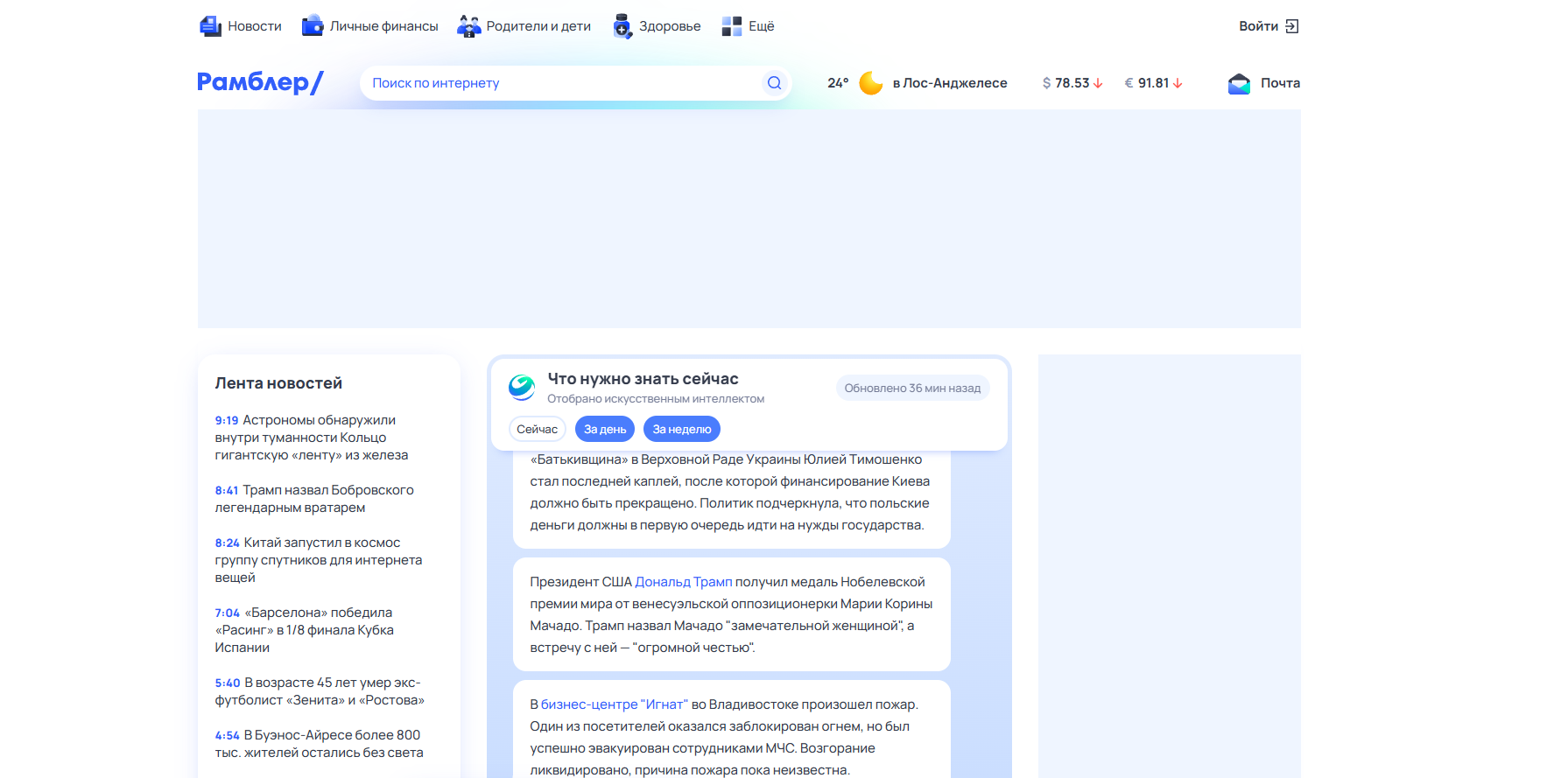
With a 20-year legacy, Rambler remains a vital resource for older demographics and regional users. It holds a 1% to 2% market share but serves as a trusted local business portal.
Local Directory and News Aggregation
Rambler functions as a specialized news aggregator and business directory. It is particularly effective for finding local services like pharmacies or plumbers in smaller cities. Its text-heavy, low-complexity results provide a straightforward user experience that builds trust in regional markets where complex algorithms are less prioritized.
Sputnik: Official Data and Top Russian Search Engines
Sputnik is a state-owned engine designed for specialized bureaucratic research. While it captures less than 0.5% of the market, its role in policy verification is significant.
Accuracy in Official Policy
Sputnik indexes parliamentary records and official state media reports while intentionally excluding e-commerce and entertainment content. This creates an uncluttered, 100% accurate environment for government staff and researchers who need verified records of national narratives and legislative changes.
Ru.Yahoo.com: Legacy Gateways and Top Russian Search Engines
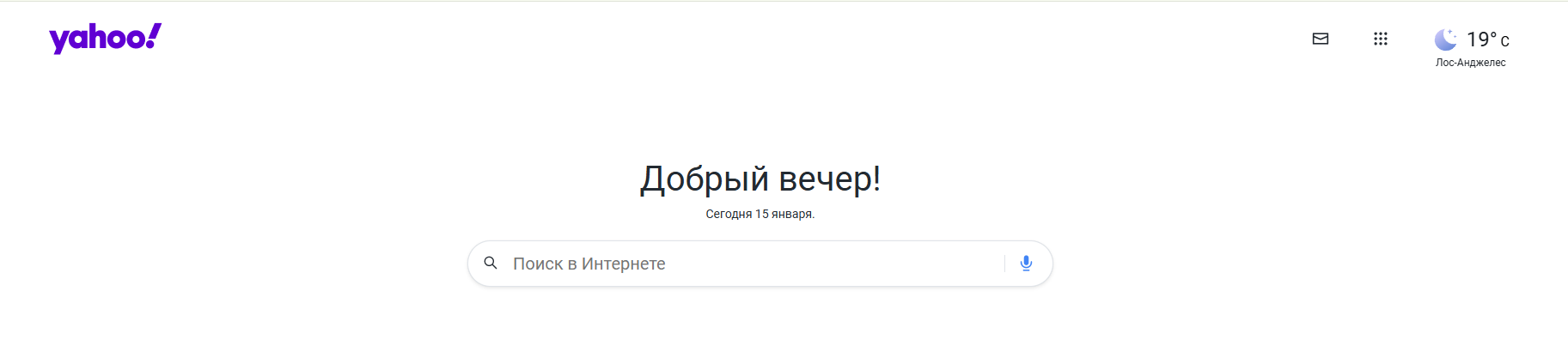
Ru.Yahoo.com persists as a "relic" interface for a small but loyal user base, holding less than 0.3% of the market.
Simplicity and Historical Archives
The platform is primarily used by seniors who prefer its 2010s-era design and minimal technical requirements. Additionally, its historical cache is a valuable resource for researchers studying early Russian internet culture, providing snapshots of the web from before 2020.
Understanding these diverse platforms is the first step toward building a winning SEO strategy.
Understanding User Habits for Top Russian Search Engines
The psychological profile of the Russian user in 2026 is defined by extreme price sensitivity and a preference for detail. In a volatile economy, users have become professional comparison shoppers.
Long-Tail Queries and Strategic Research
Russian users rarely use generic keywords. They favor long-tail phrases like "summer chiffon floral midi bodycon dress" to filter out irrelevant results immediately. There is also a high volume of "Brand A vs Brand B" searches. Your content must include direct competitor analysis to satisfy this need for comparative data.
Peak Hours and Sales Sensitivity
Search activity peaks between 7 PM and 11 PM on weekdays. More importantly, search volume for deals and discounts can jump by over 200% during holidays like New Year and Victory Day. If your strategy does not account for these specific windows, you will miss the majority of the market's conversion opportunities.
Mastering SEO and SEM for Top Russian Search Engines
Winning in the Russian market requires an integrated approach that balances organic visibility with strategic paid advertising.
A 6-Step Framework for Success
- Define KPIs: Set clear goals based on the 2026 economic landscape.
- Keyword Research: Use Yandex Wordstat and Google Trends to identify regional variations.
- Content Strategy: Create how-to guides and blog posts that answer specific Russian consumer "pain points."
- On-Page Optimization: Fine-tune meta tags and monitor performance via Yandex Webmaster.
- Off-Page Optimization: Build high-quality backlinks from .ru and .рф domains.
- Continuous Monitoring: Use analytics to adjust for shifting search patterns in real-time.
Managing these complex strategies across thousands of accounts requires specialized technology to ensure security and prevent platform bans.
Scaling Operations for Top Russian Search Engines with DICloak
DICloak is the essential tool for digital growth consultants managing the diverse account networks required for modern SEO and SEM. It allows specialists to scale operations without the risk of detection or account linking.
Fingerprint Protection and Account Safety
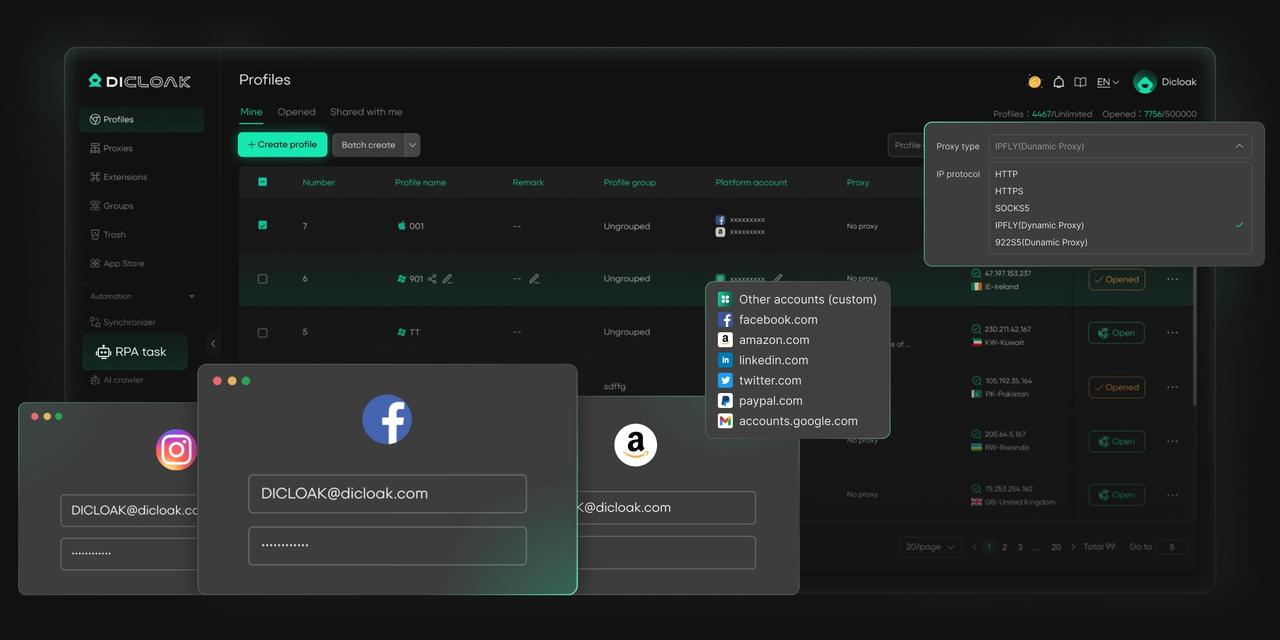
DICloak creates unique virtual identities for every profile. Based on the Chrome core, it can simulate multiple operating systems, including Windows, Mac, iOS, Android, and Linux. By spoofing IP, geo-location, and WebGL, it ensures that Yandex and Google see each account as a separate, legitimate user. This isolation is crucial for protecting the integrity of your marketing campaigns.
Automation and High-Value Use Cases
The browser features built-in RPA (Robotic Process Automation) and a Synchronizer to "automate the grind." This is particularly valuable for:
- Traffic Arbitrage: Launching and monitoring ads across hundreds of profiles simultaneously.
- Account Farming: Developing aged profiles with realistic footprints to increase trust scores.
- E-commerce Scaling: Managing multiple marketplace stores on a single device without cross-contamination.
Choosing the Right DICloak Plan for Top Russian Search Engines
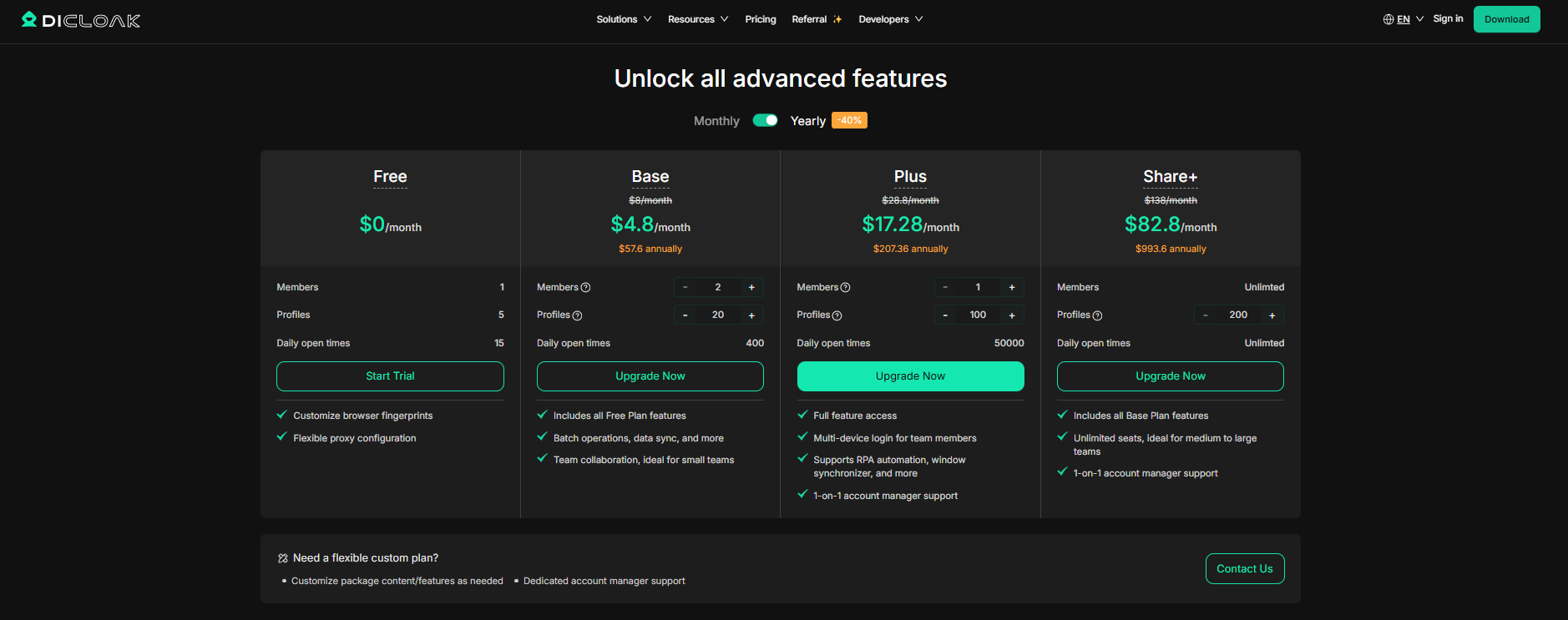
Selecting a plan depends on the scale of your digital operation. DICloak offers tiers designed for both solo specialists and global agencies.
Detailed Plan Comparison
Frequently Asked Questions about Top Russian Search Engines
Which search engine is best for localized marketing in Russia?
Yandex is the superior choice for localized efforts due to its 60-65% market share and its specialized morphological parsing of the Russian language.
Can I manage Yandex and Google.ru accounts together without being banned?
Yes. Using DICloak allows you to isolate each account in its own virtual environment, preventing the cross-account linking that leads to mass bans.
Does DICloak offer a free trial for SEO specialists?
Yes, the Free Plan provides 5 profiles, allowing specialists to test environment isolation at no cost.
Why is Google still popular in Russia despite Yandex's dominance?
Google remains essential due to its Android integration and its superior indexing of international technical documents, covering 112 languages compared to Yandex's 47.
How do I protect my digital footprint when doing SEO research in Russia?
The most effective method is using DICloak’s anti-fingerprinting technology, which masks your device's real parameters and allows you to simulate a standard Russian user through local proxies.
 Web Proxy Tools
 Free Tools
 Cookie Plugin
 UA Generator
 MAC Address Generator
 IP Generator
 IP Address List
 2FA Code Generator
 World Clock
 Anonymous Check
 WebRTC Leak Test
 UUID Generator
 Free Web Proxy Site
 Proxy Checker
 FB Ad Checker
 AI Web Scraping
 Free SMM Tools
 Twitter Shadowban Checker
 Instagram Name Checker
 UTM Generator
 Username Generator
 AI Hashtag Generator
 LinkedIn Headline Generator
 Social Media Image Resizer