AI has already revolutionised how companies conduct penetration testing by automating vulnerability detection and providing faster, more relevant security information.
Traditional Penetration testing methods take a lot of time and labor to perform, and AI-powered security platforms will continually scan for vulnerabilities in code and configurations to provide early detection of risk in the development lifecycle.
In this article, we compare some leading AI-powered Penetration testing and security platforms that help modern teams find and prioritise real threats and strengthen their overall security posture.
Why AI Is Transforming Penetration Testing
AI is changing how PT occurs through automation of Vulnerability Discovery, simulation of real-world attack paths, and providing better priority for exploitable risk based on better data. Organizations are now able to use AI-based PT Platforms to perform continuous assessments of their environment, reduce false positives, and provide a more rapid response to security gaps that may have occurred in the past, as well as support modern DevSecOps workflows.
1.Aikido Security
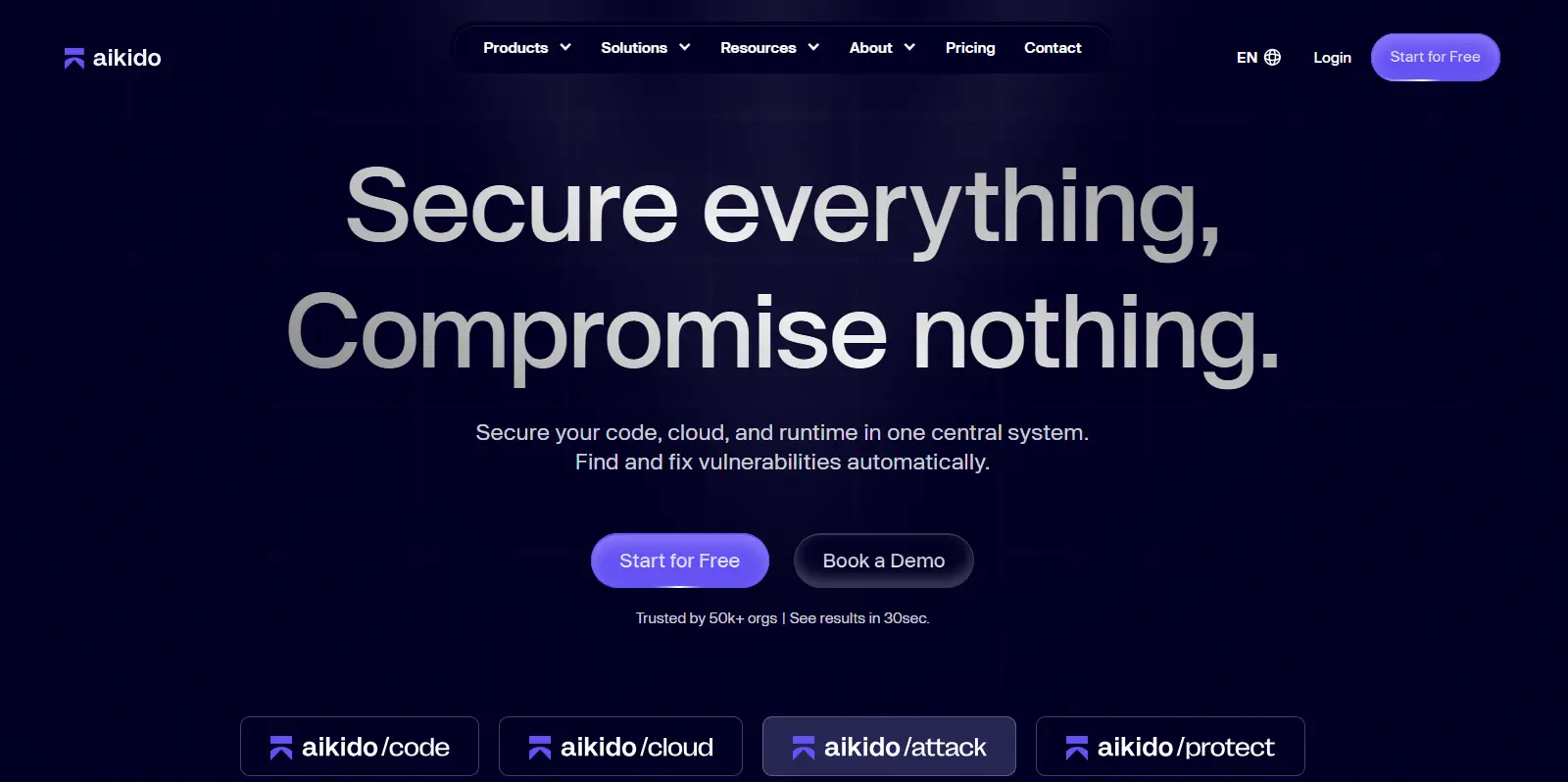
Aikido Security is an AI application security solution designed for both developers and security professionals that provides fast, relevant information so as not to impede software delivery. The Aikido combines advanced automation capabilities with deep vulnerability scanning capabilities, along with contextual prioritization of vulnerabilities based on code, dependencies, containerized applications, and cloud infrastructure.
With less "noise" and identifying only those vulnerabilities that have a high risk to your organization, Aikido enables you to prioritize your efforts on those vulnerabilities that are most critical.
Key features:
- AI-based vulnerability prioritization: Identifies the most vulnerable items in terms of impact.
- Comprehensive scanning capabilities: Scans for vulnerabilities in all areas (source code, open-source libraries, cloud, and infrastructure).
- Automated detection: Finds vulnerabilities earlier in the development process.
- Developer-first integration: Designed to fit into your existing workflows (i.e., integrate directly into your preferred IDE, CI/CD pipeline, or GIT repository).
- Unified dashboard and reporting capabilities: Provides one centralized location to view and analyze the results of scans.
- Remediation guidelines: Provides step-by-step instructions for fixing vulnerabilities.
- Collaboration capabilities: Supports the ability to assign and track individual vulnerabilities among multiple team members.
Why Choose Aikido?
Aikido is a unique solution that combines the power of AI-based analysis, comprehensive scanning capabilities, and developer-centric design. This combination allows organizations to achieve speed, accuracy, and a seamless security workflow. Aikido differs from traditional pentesting in that it provides continuous actionable intelligence regarding vulnerabilities while minimizing the amount of manual effort required.
2.Pentera

Pentera is a continuous security validation technology platform that conducts simulations of real-world cyber attacks to verify your network's defense capabilities. Continuous testing of all of your security controls, as well as identification of any potential attack vectors through intelligent automation, are key features of the platform.
Key Features:
- Automated Attack Simulation: Mimics the behavior of an actual attacker with safety.
- Continuous Security Validation: Validates your defenses across multiple environments.
- Remediation Guidance: Detailed, Prioritized Recommendations for Fixes.
- Reporting (Compliance & Risk): Enterprise-Grade Reporting Supports Compliance and Risk Assessment Activities.
The Pentera platform will validate your external and internal attack surface by utilizing AI to assist in your infrastructure-level pentesting activities.
3.Cymulate
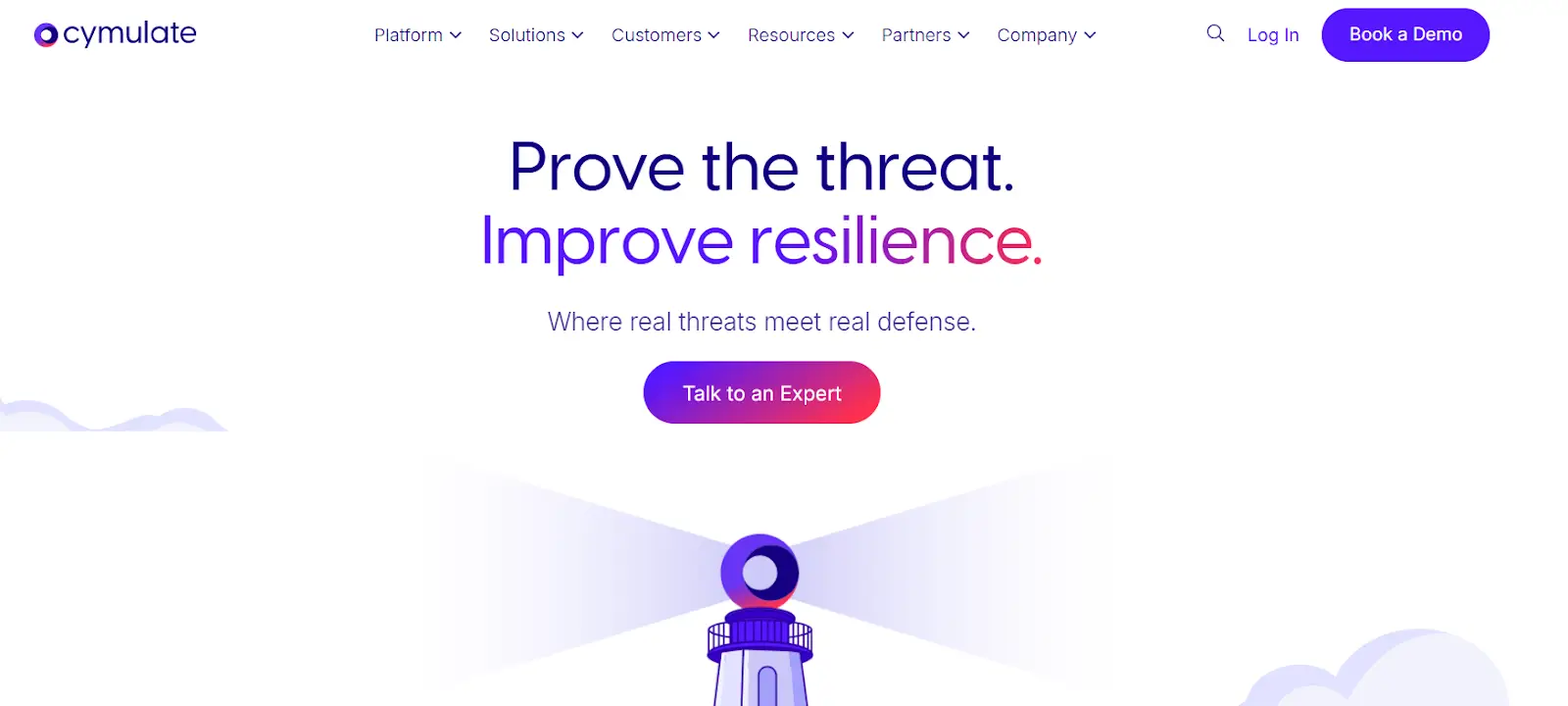
Cymulate is a breach and attack simulation platform that leverages automation and artificial intelligence to enable organizations to test the resilience of their systems to evolving threats and tactics.
Key Features:
- Breach and Attack Simulations: Evaluate the effectiveness of various attacks.
- Threat Intelligence Integration: Provides relevant threat intelligence in order for the organization to be able to utilize the results of its simulations for actual planning purposes (to determine what types of attacks would most likely occur).
- Risk-Based Scoring: Enables organizations to focus on the areas where they have the greatest need for improvement in terms of remediation.
- Continuous Exposure Assessment: Continuously validates whether or not the organization's defenses are adequate as an additional layer of security.
Cymulate provides a real-world simulation of threats and utilizes data-driven risk scoring to enhance organizations' ability to proactively defend themselves from potential threats.
4.HackerOne
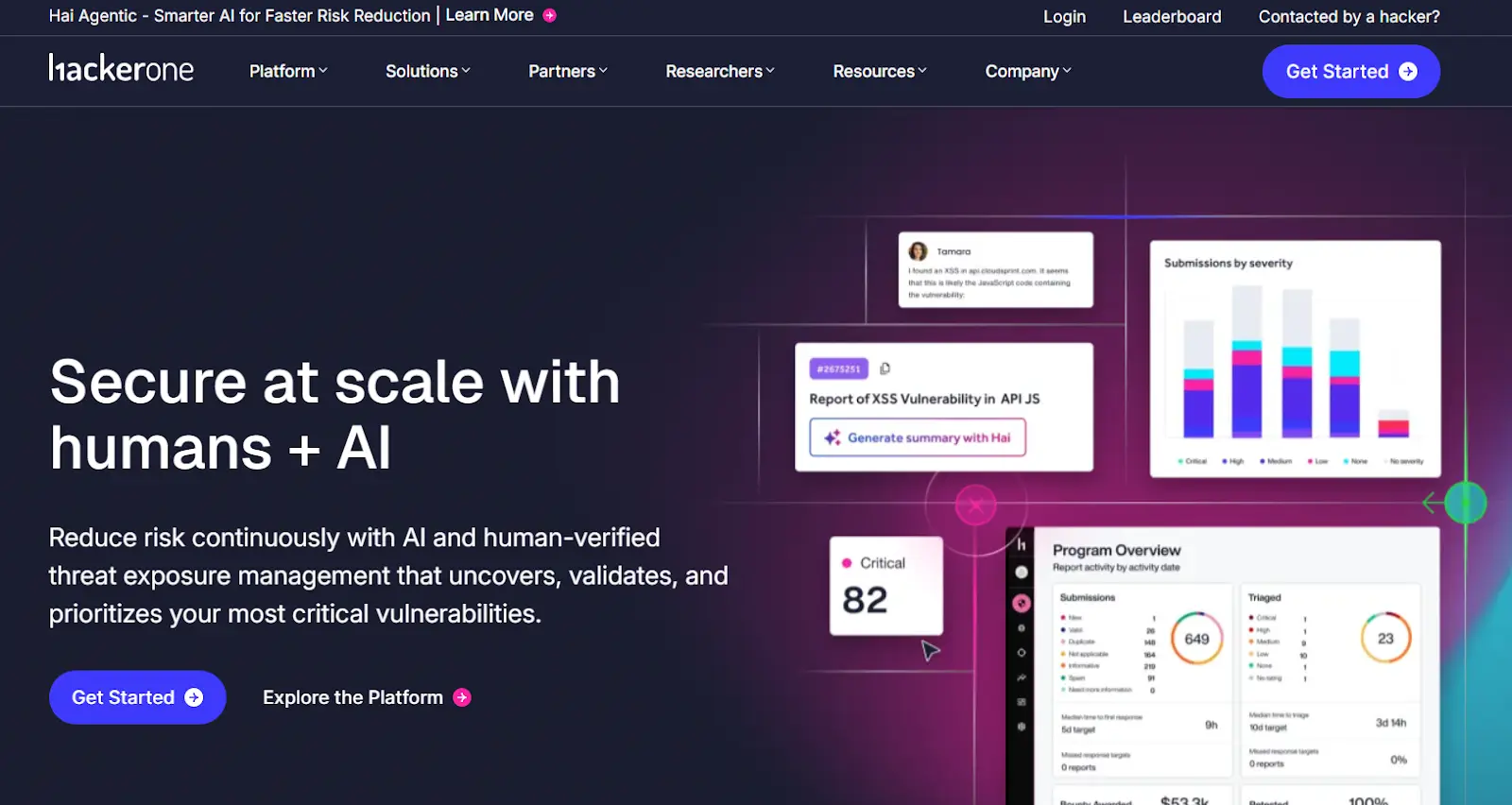
HackerOne offers an integrated combination of both human-based bug bounty programs and AI-enhanced vulnerability scanning. Although the program is not fully automatic, it does offer an integration of AI-driven analysis with human testing for the identification of more complex vulnerabilities.
Key Features:
- AI-Assisted Vulnerability Triage: Identifies duplicate and lower-value reports.
- Global Ethical Hacker Community: Enhances testing scope.
- Integrated Reporting and Remediation Workflows: Simplifies fixes.
- Continuous Security Testing Model: Continues after initial pentest.
Why it stands apart from other Pentesting Tools:
HackerOne offers a combination of crowdsourced and automation capabilities, making it a unique, AI-enabled pentesting solution.
Final Thoughts
AI-driven pentesting tools are revolutionizing the way organizations address security challenges as they allow organizations to test continuously, intelligently, and in line with current software development processes. Manual assessments have historically been used by organizations for occasional testing and validation of their systems, whereas AI-automated pentesting tools can discover vulnerabilities, validate a realistic attack path, and prioritize risk in relation to potential loss.
With an AI-driven pentesting tool, an organization will be able to move toward proactive, data-driven security, which is continually evolving in response to the current threat landscape.
 Web Proxy Tools
 Free Tools
 Cookie Plugin
 UA Generator
 MAC Address Generator
 IP Generator
 IP Address List
 2FA Code Generator
 World Clock
 Anonymous Check
 WebRTC Leak Test
 UUID Generator
 Free Web Proxy Site
 Proxy Checker
 FB Ad Checker
 AI Web Scraping
 Free SMM Tools
 Twitter Shadowban Checker
 Instagram Name Checker
 UTM Generator
 Username Generator
 AI Hashtag Generator
 LinkedIn Headline Generator
 Social Media Image Resizer