Why Your Antidetect Browser for Crypto Trading Choice Determines Your ROI
In 2026, profitable crypto operations are no longer about luck. They are about industrial-scale precision. Sybil farming has evolved into a legitimate business model, where traders manage hundreds of accounts to secure token allocations. Your Return on Investment (ROI) relies entirely on your ability to remain undetected. If your browser choice is weak, your entire operation collapses.
The difference between a six-figure airdrop payday and a total loss often comes down to a single digital leak. You are not just fighting other traders; you are fighting enterprise-grade security systems designed to flag airdrop hunting activity instantly.
The Evolution of Sybil Slayer Algorithms in 2026
Security algorithms have become ruthless. In the past, simple IP changes were enough to hide. Today, protocols like LayerZero and zkSync use "Sybil Slayer" AI to analyze thousands of data points. These systems look for hardware consistency across multiple accounts.
If you run 50 profiles that all claim to be different users but share the exact same Canvas hash or WebGL readout, you create a "cluster." The algorithm flags this cluster immediately. Once flagged, account bans are not applied to just one wallet. They are applied to your entire network. A cheap or misconfigured browser does not just risk one account; it risks your entire portfolio.
On-Chain Clustering vs. Off-Chain Fingerprinting
To succeed, you must understand the two fronts of this war.
On-Chain Clustering: This happens on the blockchain. If you fund 20 wallets from the same Binance deposit address, the blockchain records a permanent link between them. No browser can fix this. You must use strict funding protocols to separate these wallets.
Off-Chain Fingerprinting: This happens in the browser. Websites track your User-Agent, screen resolution, fonts, and battery status. This is where your Antidetect Browser for Crypto Trading is critical.
Your browser must spoof these off-chain details perfectly. It ensures that Profile A looks like a Mac user in New York, while Profile B looks like a Windows user in London. If your browser leaks your real device data, the on-chain separation does not matter. The project will link your wallets via your IP or hardware ID.
The Financial Cost of Identity Leaks in IDO Participation
The stakes in 2026 are purely financial. Consider the cost of a modern IDO (Initial DEX Offering) campaign on CoinList or a major L2 airdrop:
Capital Expense: You might spend $5,000 in gas fees across 100 wallets over six months.
Time Expense: Your team spends hundreds of hours executing transactions.
Opportunity Cost: The potential reward could be $50,000 to $100,000.
If your browser leaks your identity, you do not just lose the reward. You lose the $5,000 in sunk capital costs. A single "linkage" error turns a profitable venture into a massive debt. High-quality tools like DICloak are an insurance policy against this total loss scenario. They protect your initial investment by guaranteeing that your accounts remain isolated and eligible for rewards.
How Your Hardware Betrays Your Antidetect Browser for Crypto Trading
You might have the best residential proxies in the world. You might have clean wallet addresses. But if you ignore your physical device settings, you will still get banned. This happens because modern security systems do not just look at where you are (IP address). They look at what you are using.
Your computer broadcasts specific hardware identifiers every time you visit a website. These identifiers create a unique profile of your machine. In the crypto world, this is fatal. If an exchange sees 100 different accounts logging in from a device with the exact same Audio, GPU, and Battery footprint, they know it is one person. You need advanced masking technology to create a distinct digital skin for every profile.
Canvas and WebGL: The Biological Signatures of Your GPU
The most common way crypto platforms catch Sybil farmers is through Canvas fingerprinting. This sounds technical, but the concept is simple.
When you visit a Decentralized Exchange (DEX) or a site like CoinList, the website secretly asks your browser to draw a hidden image. This image includes text, colors, and 3D shapes. How your computer draws this image depends on your specific Graphics Processing Unit (GPU), your drivers, and your operating system.
Because no two hardware setups are exactly alike, the resulting image creates a unique "hash" or code. This code is your fingerprint.
Why this matters for crypto trading: If you run 50 profiles on one high-end PC, every single profile will draw that image exactly the same way. The security algorithm sees 50 wallets with identical GPU data. It flags them as a cluster.
To fix this, high-quality browsers use noise injection. They alter the drawing process slightly for each profile. Profile A draws the image 0.01% differently than Profile B. To the security system, these look like two completely different computers.
Media Device Enumeration and WebRTC Leakage
Your computer has a list of plugged-in devices. This includes your speakers, microphones, and webcams. Browsers can see this list using a feature called Media Device Enumeration.
Imagine you have a specific setup:
- 1 Logitech C920 Webcam
- 1 Blue Yeti Microphone
- 2 generic monitor speakers
The odds of another user having this exact combination in the same order are low. If you use an antidetect browser that does not hide this list, you are broadcasting a consistent identity across all your accounts.
The WebRTC Threat: WebRTC is a technology that helps browsers handle video and audio calls. However, it has a major flaw for privacy. It can leak your real Local IP address, even if you are using a proxy or VPN.
For a crypto farmer, a WebRTC leak is a disaster. It exposes your true location to the exchange. Good antidetect software will disable WebRTC or fake the local IP address to match your proxy location (e.g., showing a London local IP if you are using a London proxy).
Behavioral Biometrics and Typing DNA in Crypto Apps
Hardware is not the only traitor. Security systems now track how you use your hardware. This is called Behavioral Biometrics.
Crypto apps specifically look for "bot-like" behavior. They measure:
- Typing Speed: Do you type 400 characters per minute with zero errors? That looks like a script.
- Flight Time: This is the milliseconds between pressing one key and the next. Humans have irregular rhythms. Bots are perfect.
- Mouse Movements: Humans move the mouse in curves. Bots often move in straight lines or jump instantly between buttons.
Sophisticated security vendors like Cloudflare or Akamai use this data to assign a "Trust Score." If your score is too low because your typing is too perfect, you may be blocked from an IDO queue.
Modern tools like DICloak combat this with "Smart Typing" and human emulation. When you use an automation script or a synchronizer, the software adds tiny, random delays and natural mouse curves. This tricks the biometric sensors into believing a real human is sitting behind the screen.
How an Antidetect Browser for Crypto Trading Isolates Your Identities
Hardware leaks and biological typing patterns are dangerous. To stop them, you need more than just a proxy. You need a specialized tool that rebuilds your digital presence from the ground up.
A modern antidetect browser for crypto trading does not just hide your location. It creates a protective wall around your data. This process is called identity isolation. It ensures that no matter how many wallets you manage, each one appears to exist on a completely different physical device.
Profile Virtualization: Creating Discrete Binary Containers
Standard browsers like Chrome or Safari are designed to connect your data. They share cookies, cache, and local storage between tabs to make your browsing faster. For a crypto farmer, this "efficiency" is a critical weakness.
Profile virtualization solves this by creating separate digital containers. Think of your computer as a large office building.
- Standard Browser: An open-plan office where everyone can hear everyone else.
- Antidetect Browser: A building with 100 soundproof rooms.
When you open a profile in a tool like DICloak, it creates a virtual environment. This environment has its own isolated cookies, local storage, and distinct hardware fingerprint. Profile A might look like a Windows PC using Chrome. Profile B runs simultaneously but looks like a Mac using Safari.
This ensures secure browsing because the websites cannot "cross-reference" your data. To the crypto exchange, you are not one person with 50 tabs. You are 50 different people scattered across the world.
Kernel-Level Spoofing vs. Browser-Level Injection
Not all antidetect software is built the same. Understanding the engine under the hood is vital for your security.
The Cheap Method: JavaScript Injection
Low-quality browsers use simple scripts to lie to websites. The browser injects a line of JavaScript that says, "I am an iPhone." However, sophisticated security systems can detect this injection. They see the code that tells the lie. This often leads to immediate account bans.
The Professional Method: Deep Core Spoofing
Enterprise-grade tools use deep core modifications. They alter the browser's internal code (the kernel). When a website asks, "What is your screen resolution?", the browser natively answers with the spoofed data. There is no extra script to detect.
This level of identity isolation is what separates a hobbyist from a professional. Tools that modify the browser core pass "Pixelscan" tests because the fingerprint appears 100% natural, not like a mask applied over your real face.
The Role of Synchronizers in Mass Account Operations
Managing 50 or 100 accounts manually is impossible. You cannot log into each MetaMask wallet one by one without losing hours of time. This is where the Synchronizer becomes essential.
The Synchronizer allows you to control one "Master" window. Whatever you type, click, or scroll in that window is replicated instantly across dozens of "Slave" windows.
How it remains safe: If 50 accounts click a button at the exact same millisecond, the exchange’s AI will flag it as a bot attack. Modern synchronizers prevent this by adding "human noise."
- Random Delays: Action in the slave window happens 200ms to 700ms after the master.
- Cursor Drift: The mouse path is slightly different in each window.
This technology allows you to farm airdrops at an industrial scale while maintaining the appearance of uncoordinated, organic human traffic.
The Top 10 Solutions: Best Antidetect Browser for Crypto Trading Reviewed
We just discussed how profile virtualization and synchronizers protect your wallets from getting linked. Now, let's apply those strict criteria to the market leaders. This section provides product reviews and a detailed comparison of the top tools available in 2026.
Not every browser can handle the complex needs of crypto farming. Some are built for simple social media ads, while others offer the robust automation needed for airdrop hunting. Below is a quick comparison of the best options to secure your digital assets.
| Product |
Best For |
Free Plan |
Starting Price |
| DICloak |
High-Value Account Protection |
5 Profiles |
$8/month |
| Multilogin |
Enterprise Teams |
None |
€9/month |
| GoLogin |
Cloud Flexibility |
3 Profiles |
$49/month |
| AdsPower |
Automation & Sync |
2 Profiles |
$9/month |
| Dolphin{anty} |
Affiliate Arbitrage |
10 Profiles |
$10/month |
| Incogniton |
Beginners |
10 Profiles |
$19.99/month |
| Undetectable.io |
Local Profiles |
5 Cloud / 10 Local |
$49/month |
| Hidemyacc |
Team Sharing |
5 Profiles |
$10/month |
| IxBrowser |
Cost Efficiency |
Unlimited (Daily Limit) |
Free |
| Kameleo |
Mobile Emulation |
No |
€59/month |
DICloak: Advanced Fingerprint Precision for High-Value Accounts
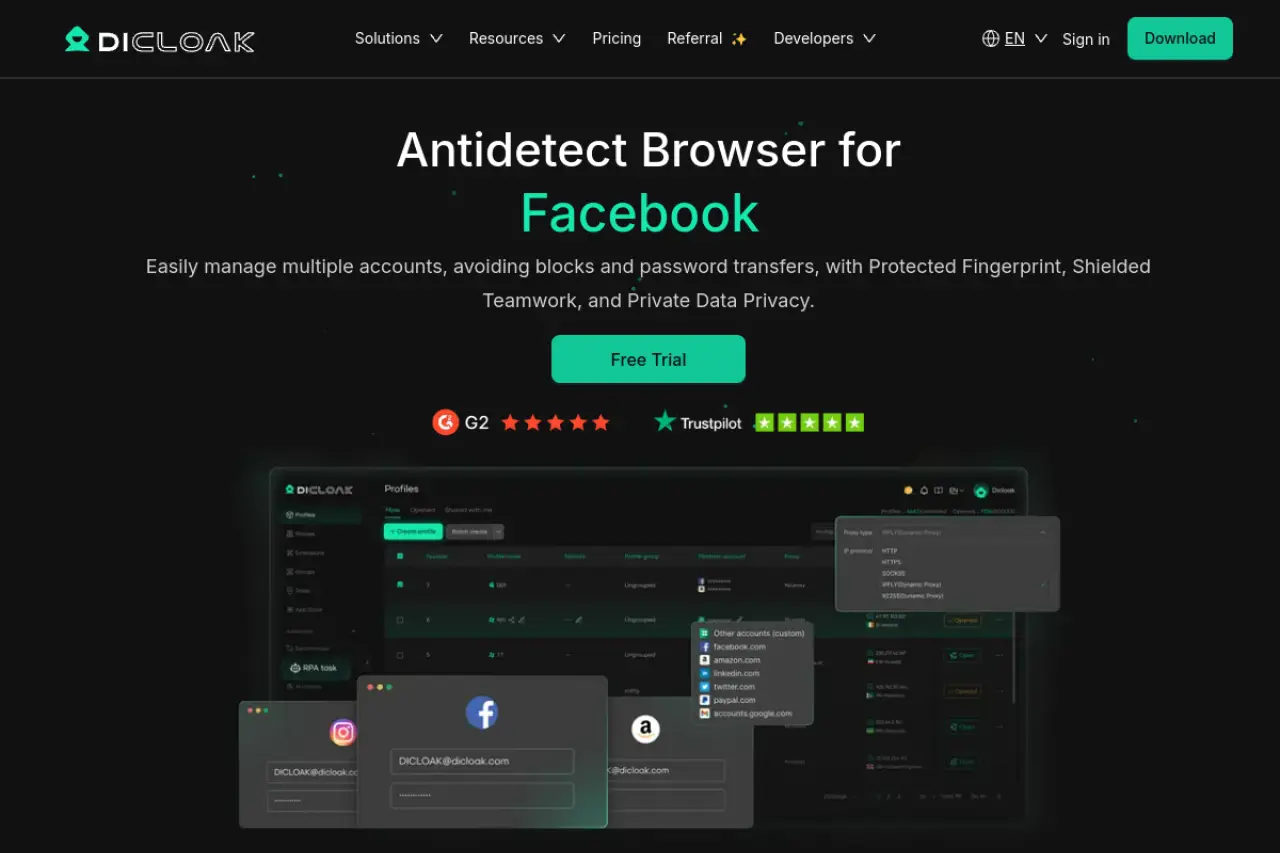
DICloak is our top recommendation for serious crypto traders. It stands out because it focuses deeply on fingerprint precision. In crypto, a single leak can disqualify 50 wallets from an airdrop. DICloak uses advanced technology to ensure every profile looks like a genuine, unique device to exchange security bots.
This tool is not just about hiding; it is about efficiency. It includes built-in RPA (Robotic Process Automation). This means you can automate boring tasks like "warm-up" browsing. You can set the browser to visit news sites automatically to build a trust score before you connect your wallet. For teams managing hundreds of accounts, this automation saves hours of manual work every day.
Key Features:
- Browser Profile Isolation: Creates completely separate containers for each wallet.
- RPA Automation: Bots handle repetitive tasks to mimic human behavior.
- Team Collaboration: Share profiles safely without revealing passwords.
Pricing:
- Free: $0/month (5 profiles).
- Base: $8/month.
- Plus: $28.8/month (Includes RPA bots and Synchronizer).
- Share+: $138/month (Unlimited team members).
Verdict: DICloak offers the best balance of security and price. It is the ideal choice for scaling a Sybil farm safely.
Multilogin: The Premium Standard for Enterprise-Level Trading
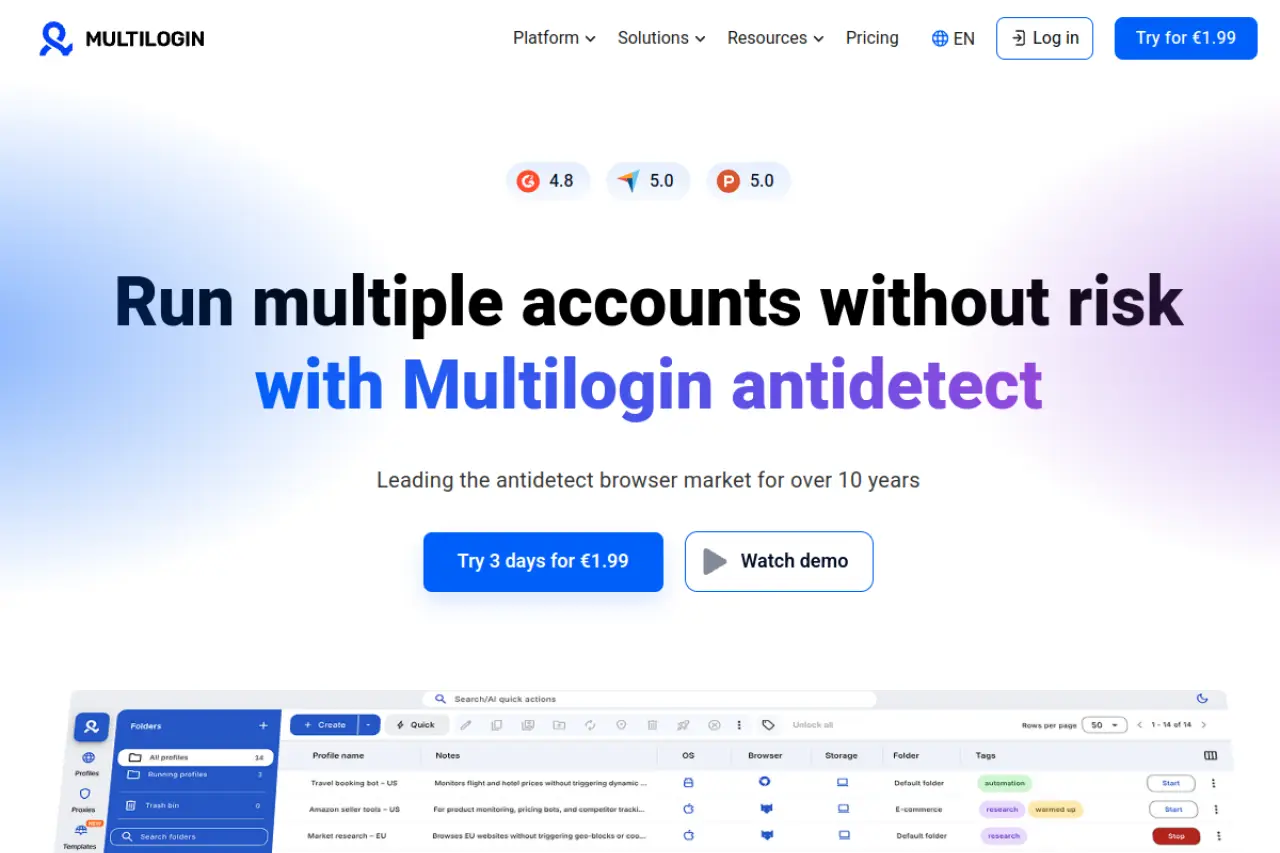
Multilogin is often called the "gold standard" in the industry. It is designed for large teams with high budgets. If you are managing millions of dollars in assets, the cost is worth it. It uses two custom privacy browsers: Mimic (based on Chrome) and Stealthfox (based on Firefox).
For crypto trading, Multilogin excels at consistency. It prevents data leaks effectively. However, it requires a higher monthly investment compared to others. It creates a very stable environment for high-stakes trading where you cannot afford a single crash or error.
Key Features:
- Dual Privacy Engines: Choose between Mimic or Stealthfox cores.
- Residential Proxies: High-quality traffic included in some plans.
- Automation: Supports Playwright, Puppeteer, and Selenium.
Pricing:
- Pro 10: €9/month (10 profiles).
- Pro 50: €49/month.
- Business: €159/month (300 profiles).
Verdict: Best for enterprise teams who need established reliability and have a larger budget.
GoLogin: Cloud-Based Flexibility for Decentralized Teams
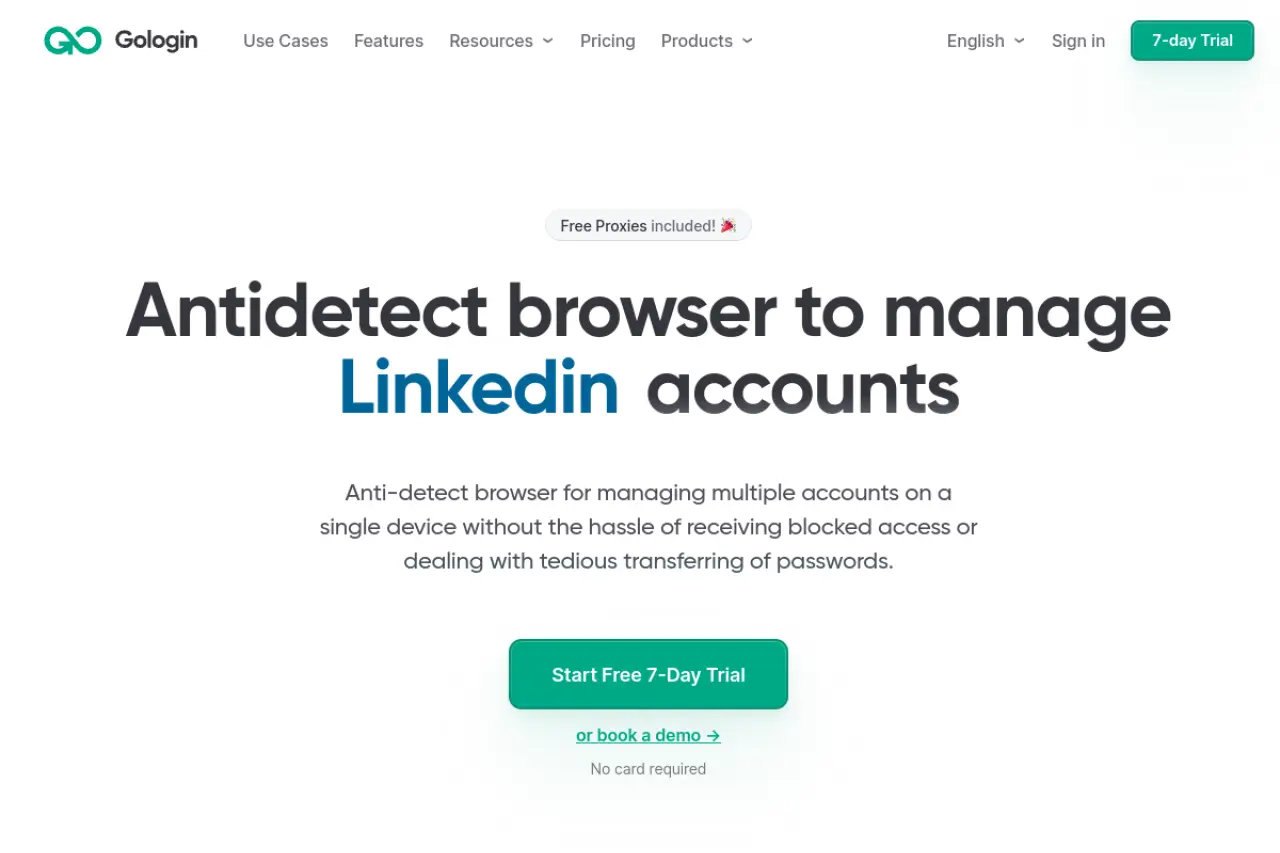
GoLogin is excellent if you need to access your farm from multiple devices. It is one of the few tools with a functional Android app. This allows you to check your crypto accounts on the go without triggering security alerts.
The platform uses a cloud-based launching system. This means your profiles are stored securely in the cloud, not just on your local hard drive. For a decentralized team spread across different countries, this makes sharing access instant and safe.
Key Features:
- Android App: Manage profiles from your mobile device.
- Free Proxies: Comes with built-in proxy traffic (though we recommend paid residential IPs for crypto).
- Cloud Storage: Profiles sync across devices automatically.
Pricing:
- Professional: $49/month (50 profiles).
- Business: $119/month (300 profiles).
- Enterprise: $199/month (1,000 profiles).
Verdict: The top choice if you need mobile access or have a remote team.
AdsPower: The Automation Powerhouse for Crypto Arbitrage
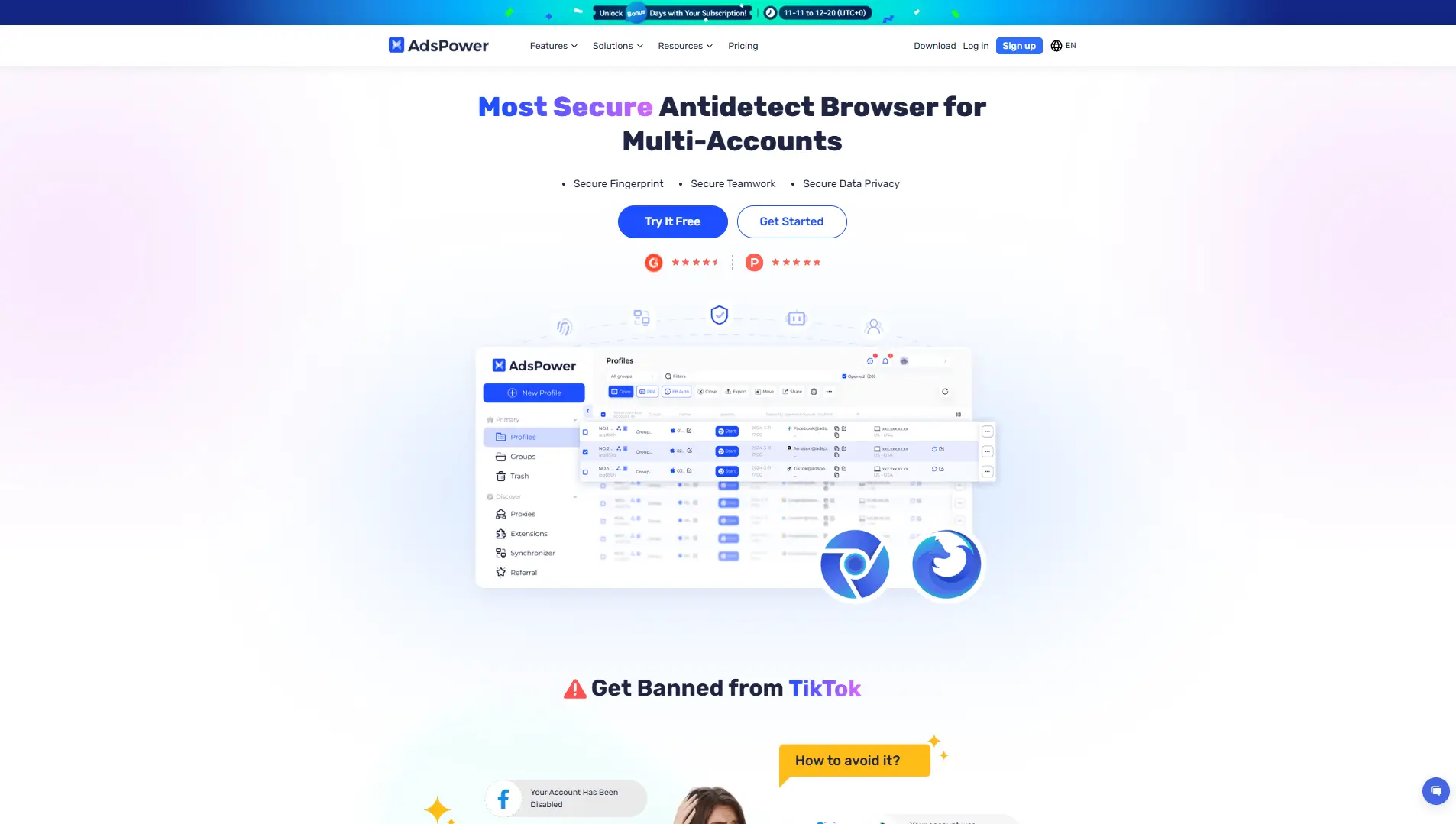
AdsPower is famous in the crypto community for one specific feature: the Synchronizer. This tool allows you to open 50 windows and control them all at once. If you type a password in the main window, it types it in all 50 others instantly.
This is critical for time-sensitive events like IDO registrations or claiming airdrops. Speed matters. AdsPower also offers an RPA robot to automate "farm maintenance" tasks, keeping your accounts active without you lifting a finger.
Key Features:
- Window Synchronizer: Replicate actions across dozens of profiles in real-time.
- RPA Robot: No-code automation for repetitive tasks.
- Dual Engine: Supports both Chrome and Firefox kernels.
Pricing:
- Free: $0/month (2 profiles).
- Professional: $9/month (10 profiles).
- Business: $61/month (200 profiles).
Verdict: Essential for users who need to perform the same action on many wallets simultaneously.
Dolphin{anty}: Optimized for Affiliate and Traffic Arbitrage
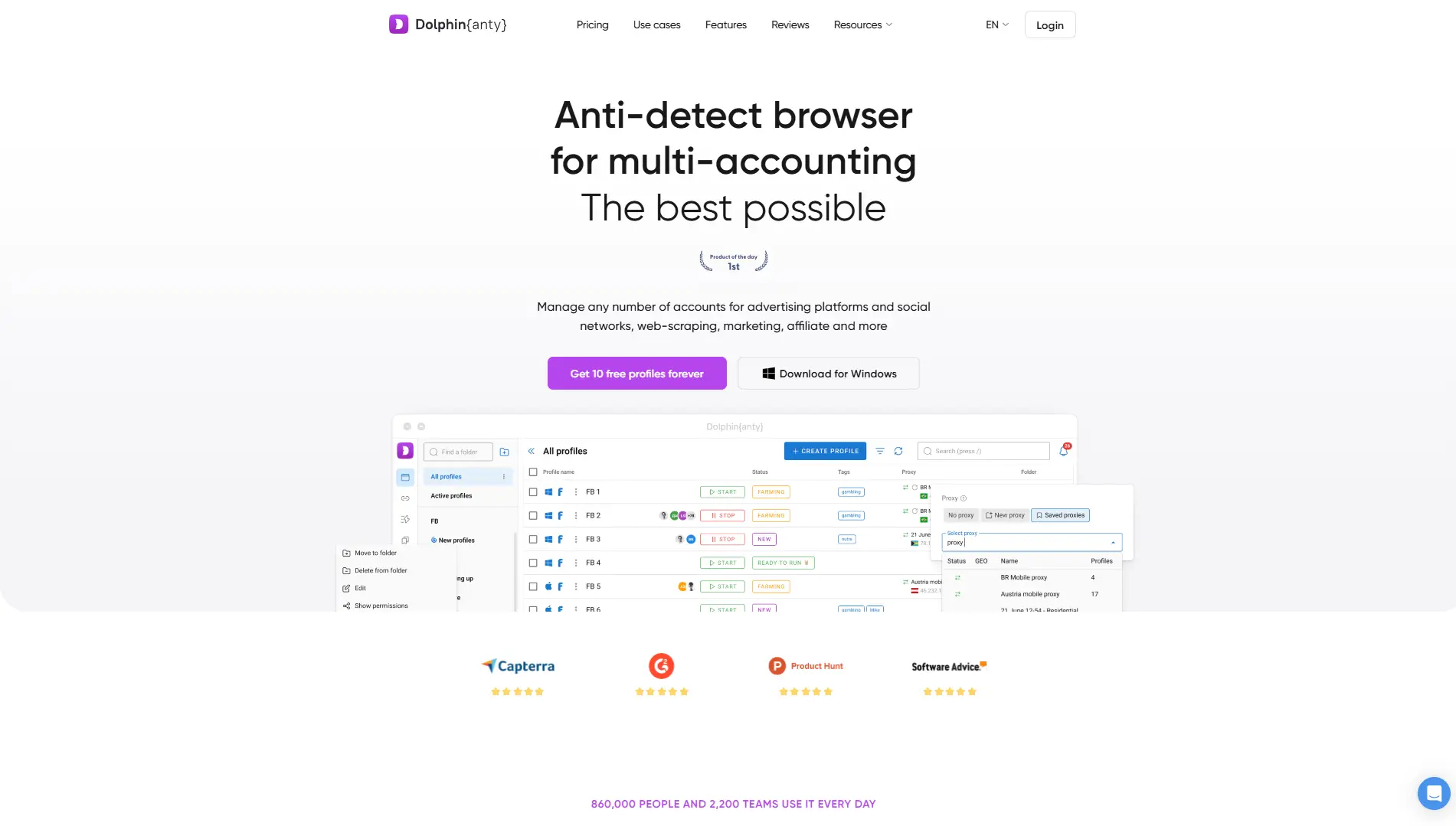
Dolphin{anty} was originally built for affiliate marketing, but it works well for crypto too. It has a very user-friendly interface. You can see statuses, notes, and tags for every profile at a glance.
For crypto farmers, the "Scenarios" feature is useful. It allows you to build simple scripts to automate browser actions. While it may lack some of the deep technical options of DICloak, it is very easy to learn for beginners.
Key Features:
- Real Fingerprints: Copies fingerprints from real users to blend in.
- Cookie Robot: Visits sites to build cookie history automatically.
- Smart Notes: Easy tagging system to track which wallets are eligible for airdrops.
Pricing:
- Free: $0/month (10 profiles).
- Starter: $10/month (20 profiles).
- Base: $89/month (100 profiles).
Verdict: Great for users who want a visual, easy-to-organize interface.
Incogniton: Simplified Multi-Account Scaling for Beginners
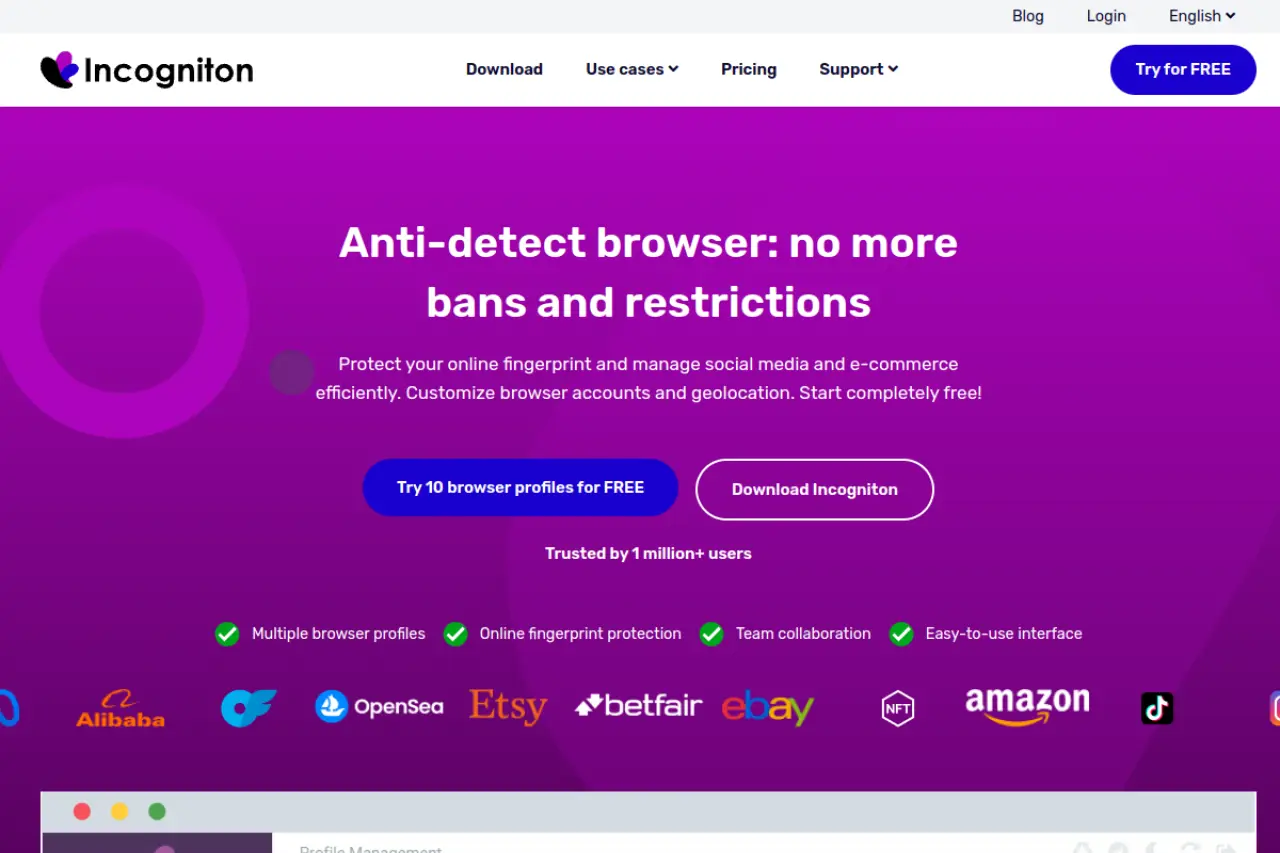
Incogniton is a strong contender for those starting on a budget. Their free plan is generous, allowing you to manage 10 profiles at no cost. This is perfect for testing a small airdrop strategy before spending money on software.
The tool supports Selenium and Puppeteer automation. This is helpful if you have a developer on your team who can write scripts. It provides a stable environment to keep your identities separate without overwhelming you with complex settings.
Key Features:
- Generous Free Plan: 10 profiles included forever.
- Cookie Collector: Automates browsing to create a history.
- Bulk Creator: Create many profiles quickly.
Pricing:
- Starter: Free (10 profiles).
- Starter Plus: $19.99/month.
- Entrepreneur: $29.99/month (50 profiles).
Verdict: The best entry-level option for testing strategies without upfront costs.
Undetectable.io: Unlimited Local Profiles for Power Users
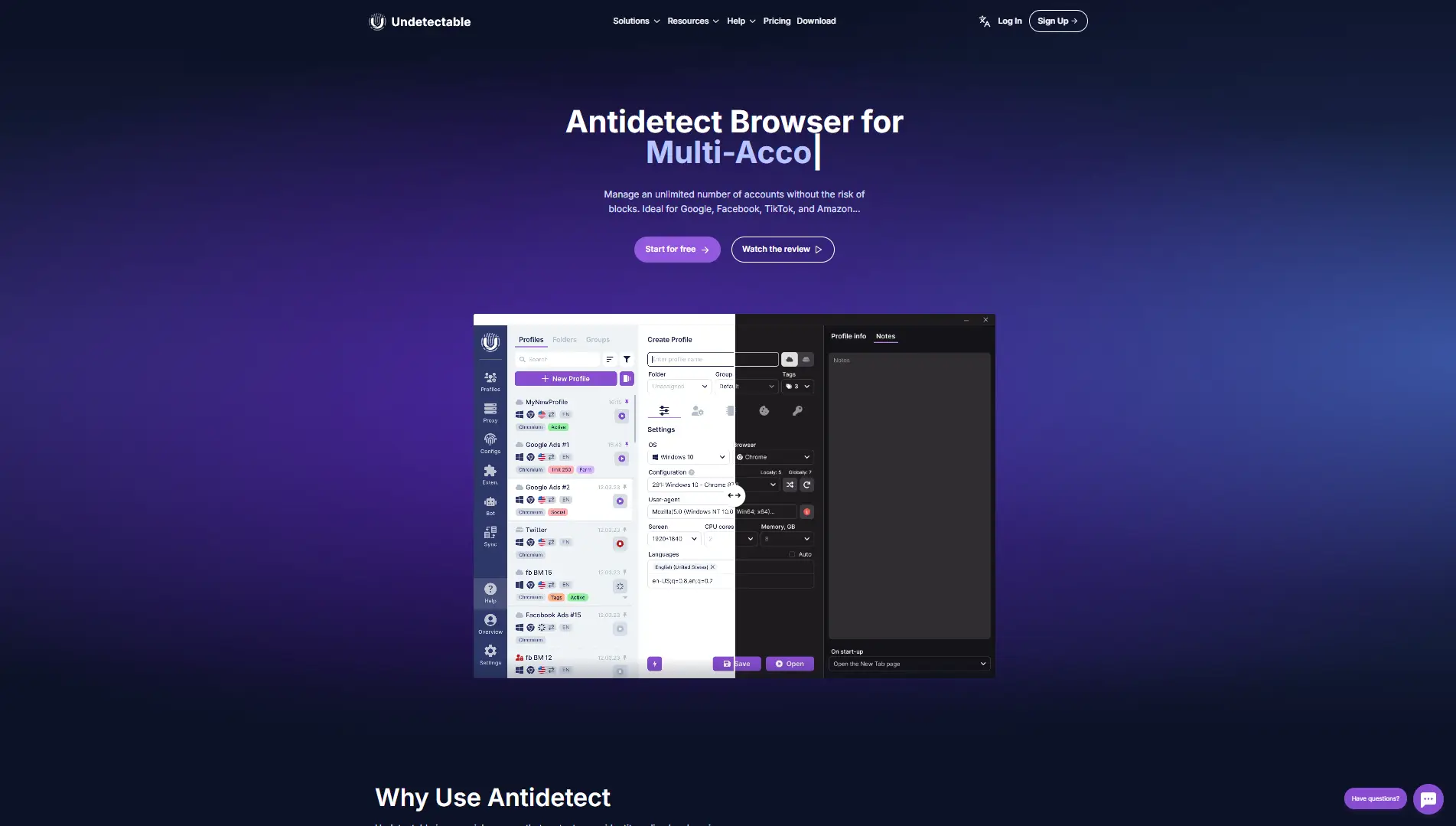
Undetectable.io offers a unique benefit: unlimited local profiles. Most competitors charge you based on the number of profiles you save. Undetectable allows you to store as many as your hard drive can hold, only charging for cloud sync features.
This is massive for crypto farmers who might need 500 or 1,000 dormant accounts. You can keep them stored locally and only load them when needed. The interface is modern and supports mass creation tools.
Key Features:
- Local Storage: No limits on the number of local profiles created.
- Fingerprint Manager: extensive configuration options.
- Bot Automation: Supports cookie warming scripts.
Pricing:
- Free: 5 cloud profiles.
- Base: $49/month (Unlimited local profiles).
- Professional: $99/month.
Verdict: Perfect for users with huge profile lists who want to save on monthly storage fees.
Hidemyacc: Specialized Fingerprint Creation for Global Markets
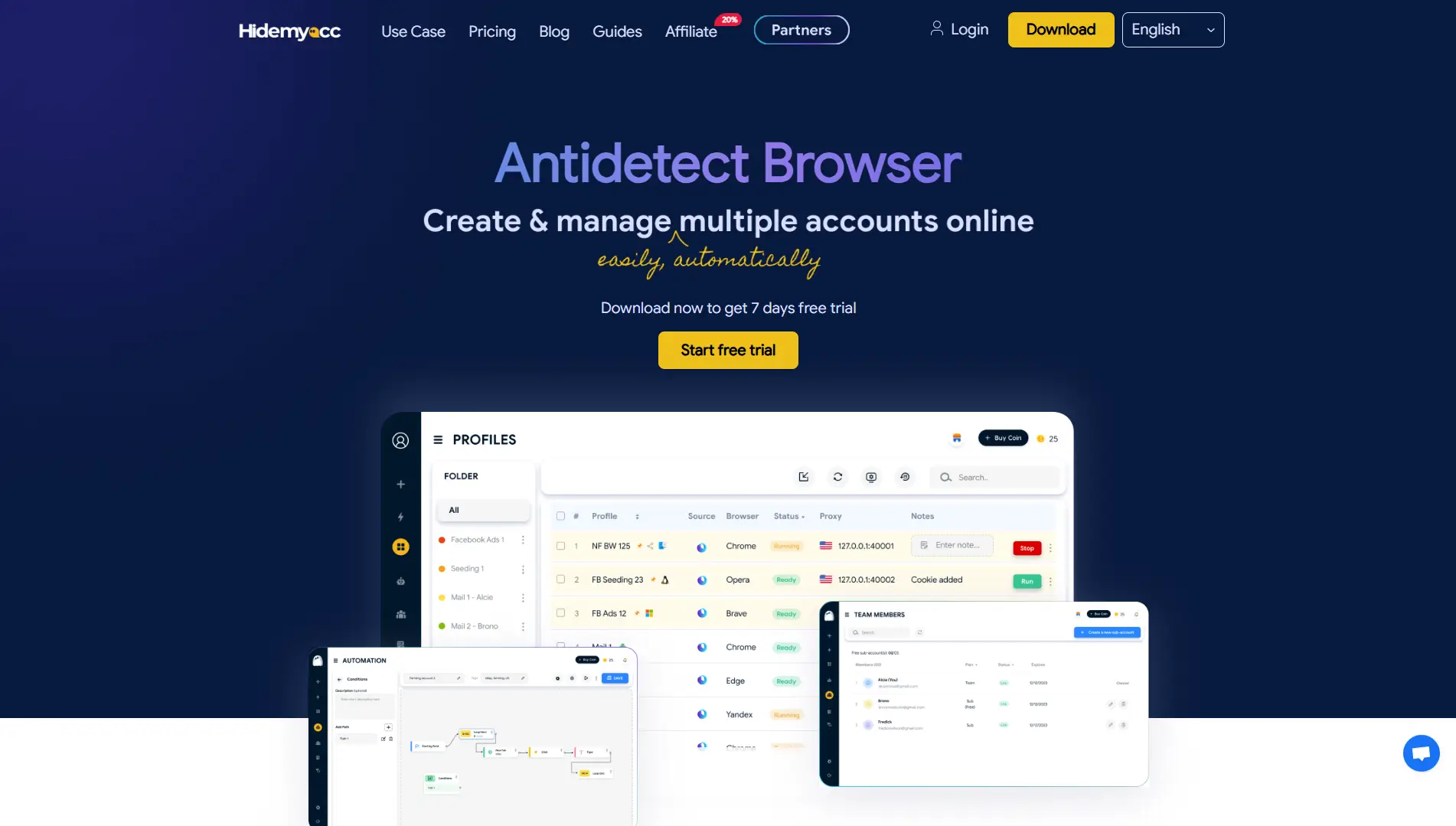
Hidemyacc is designed to bypass tough security systems. It constantly updates its database of fingerprints to match the latest real-world devices. This is important for "cat and mouse" games with strict crypto exchanges.
A standout feature is "Magic Link." It allows you to share a profile with a team member via a simple URL. They can open the browser profile without needing your login credentials. This speeds up team workflows significantly.
Key Features:
- Magic Link: Instant profile sharing.
- Auto-Proxy Matching: Helps assign proxies to profiles automatically.
- Mobile Fingerprints: Simulates mobile devices effectively.
Pricing:
- Mini: $10/month (5 profiles).
- Starter: $29/month (30 profiles).
- Base: $49/month (100 profiles).
Verdict: A solid choice for teams that need fast sharing capabilities.
Learn more at: hidemyacc.com
IxBrowser: The Free-Forever Option for Small Volume Farming
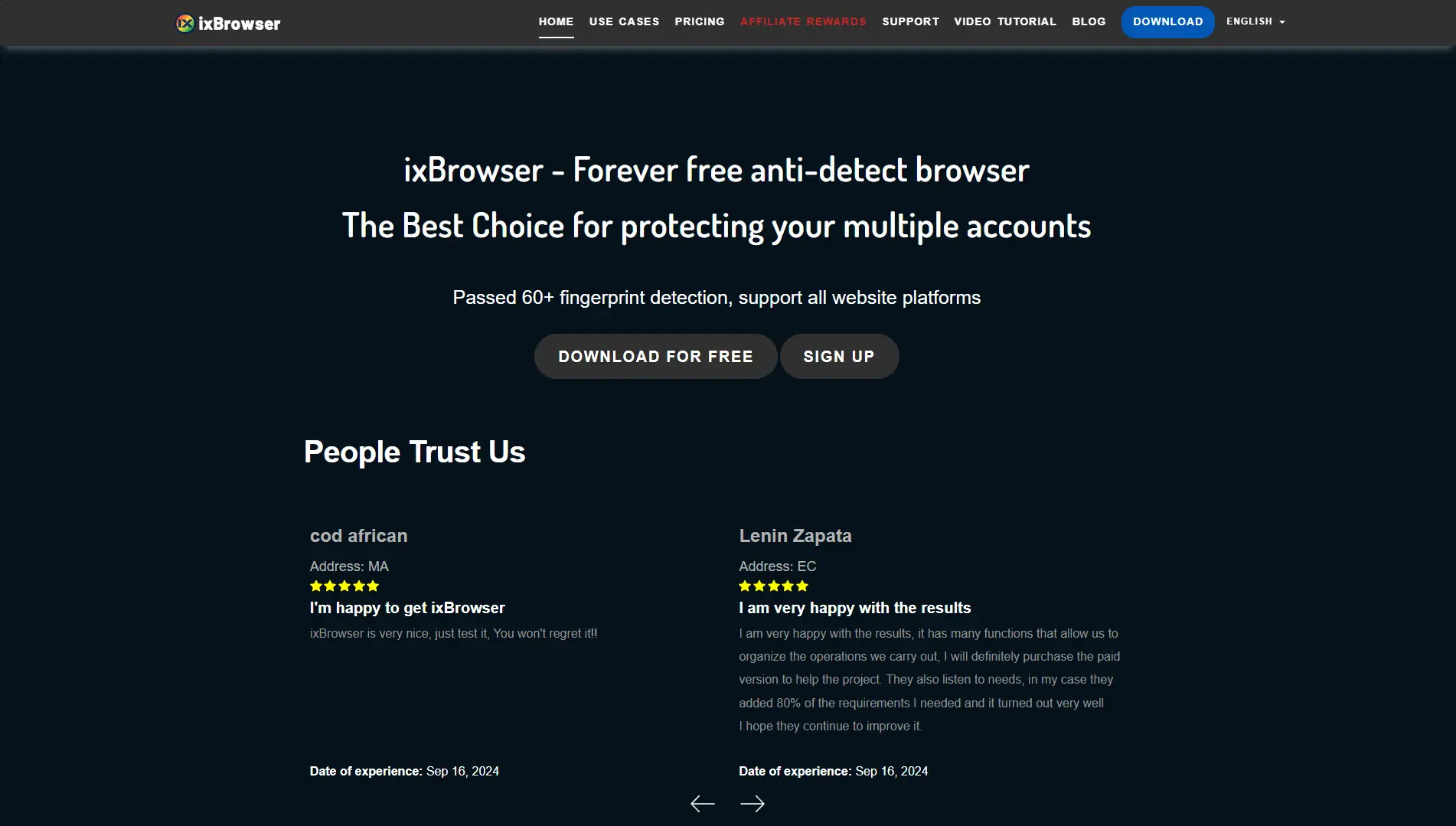
IxBrowser breaks the mold by offering a "Free Forever" model for its core features. You can create unlimited profiles, though there is a daily creation limit. This is ideal for hobbyists or traders with very low margins.
While it is free, it still offers decent isolation. It is not as feature-rich as DICloak or Multilogin, but it gets the job done for basic separation. It is a good backup tool to have in your arsenal.
Key Features:
- Free Forever: No monthly subscription for basic use.
- Profile Transfer: Move profiles between users easily.
- Extension Support: Compatible with Chrome extensions like MetaMask.
Pricing:
- Free: $0/month.
- Professional: $3.99/month.
- Business: $9.99/month.
Verdict: The most cost-effective solution for basic browsing needs.
Kameleo: Mobile-First Stealth for Modern Crypto Apps
Kameleo focuses heavily on mobile emulation. Many modern crypto apps and wallets are "mobile-first" or have exclusive features for mobile users. Kameleo allows you to emulate Android and iOS devices on your desktop.
This is different from a simple "User Agent" switch. Kameleo actually spoofs the touch events and screen dimensions of a phone. If your strategy involves farming apps that check for touchscreen inputs, this tool is necessary.
Key Features:
- Mobile Profiles: True Android and iOS emulation.
- Canvas Spoofing: Intelligent noise for graphics protection.
- Unlimited Profiles: Local profile storage is unlimited on paid plans.
Pricing:
- Free: €0/month (Manual only, no automation).
- Startup: €59/month.
- Business: €299/month (Includes mobile emulation).
Verdict: The specialist choice for mobile-app based crypto farming.
Mastering the Workflow with an Antidetect Browser for Crypto Trading
Choosing the right software is only the first step. To see a return on investment, you need a strict Operational Strategy. Even the best antidetect browser cannot save you if your on-chain behavior links your accounts together. You must behave like 100 separate humans, not one person running 100 tabs. This section outlines the Standard Operating Procedure (SOP) to keep your crypto farm undetected and profitable.
The Funding Isolation Protocol: Preventing On-Chain Clusters
The most common mistake in airdrop farming is funding multiple wallets from a single source. If you send ETH from your main wallet to 50 farming wallets, you create a "cluster." Airdrop projects use AI to find these clusters and ban them instantly. Your browser hides your IP, but the blockchain is public.
Follow this SOP to break the link:
- The Mixer Method: Never send funds between your farm wallets.
- CEX Isolation: Use a Centralized Exchange (CEX) like Binance or OKX as a buffer.
- The Process: Deposit funds to the CEX. Withdraw to Wallet A. Deposit more funds. Withdraw to Wallet B.
- Why it works: Exchanges use "hot wallets" with millions of transactions. This breaks the on-chain trail between your accounts.
FAQ: Frequently Asked Questions about Antidetect Browser for Crypto Trading
Managing a large-scale crypto operation is complex. You are not just trading; you are managing digital infrastructure. Mistakes here cost money. Below are the most common questions we receive from teams scaling their airdrop farming operations. These answers address the technical hurdles that often lead to bans or loss of funds.
Can I use an Antidetect Browser for Crypto Trading on a mobile phone?
Most professional antidetect browsers are built for desktop computers because they require significant processing power. However, they can simulate mobile devices perfectly. You can set your browser profile to appear as an iPhone or Android device to the website. This allows you to access mobile-only crypto apps from your PC. Some tools, like GoLogin, do offer a companion Android app, but desktop management is safer for high-volume work.
Will an Antidetect Browser for Crypto Trading hide my IP address automatically?
No, the browser does not hide your location by itself. It only masks your device fingerprint (hardware info). To hide your location, you must purchase and connect Residential Proxies to each profile. If you use the browser without a proxy, the crypto exchange will see your real IP address and link all your accounts together. You need both the browser and the proxy for full security.
Is using an Antidetect Browser for Crypto Trading legal for airdrop farming?
Using privacy software to protect your data is generally legal in most jurisdictions. However, creating multiple accounts to farm rewards usually violates the Terms of Service of the specific crypto project. You are likely not breaking the law, but you are breaking the rules of the platform. If caught, the project developers have the right to disqualify your wallets and withhold your tokens.
What is the 'Synchronizer' feature, and why is it essential for crypto?
The Synchronizer is an automation tool found in advanced browsers like DICloak. It copies your mouse clicks and typing from one "Master" window to dozens of "Slave" windows instantly. This is essential for efficiency. Instead of doing a token swap 50 times, you do it once, and the software replicates it across all 50 accounts simultaneously.
How many profiles can I run simultaneously on one PC?
This depends entirely on your computer's RAM (memory). Each browser profile consumes resources similar to a standard Chrome tab, roughly 300MB to 500MB of RAM. A standard business laptop with 16GB of RAM can safely run 10 to 15 profiles at once without lagging. If you need to run 50+ profiles simultaneously, you will need a powerful desktop or a cloud server.
 Web Proxy Tools
 Free Tools
 Cookie Plugin
 UA Generator
 MAC Address Generator
 IP Generator
 IP Address List
 2FA Code Generator
 World Clock
 Anonymous Check
 WebRTC Leak Test
 UUID Generator
 Free Web Proxy Site
 Proxy Checker
 FB Ad Checker
 AI Web Scraping
 Free SMM Tools
 Twitter Shadowban Checker
 Instagram Name Checker
 UTM Generator
 Username Generator
 AI Hashtag Generator
 LinkedIn Headline Generator
 Social Media Image Resizer