Defining the TrafficHunt Methodology in Modern Affiliate Marketing
The "TrafficHunt" methodology represents a high-performance framework for media buying that prioritizes infrastructure resilience over mere creative optimization. This strategy utilizes Facebook traffic funneled through Progressive Web App (PWA) technology to drive conversions in highly competitive verticals like gaming and XGames. In a landscape where platform algorithms are increasingly aggressive, TrafficHunt succeeds by establishing a scalable and reliable operational foundation that minimizes the technical footprint of the buyer.
For the Senior Cybersecurity Analyst, the priority is clear: success is a function of infrastructure stability. High-quality creatives are irrelevant if the underlying account assets are flagged by automated security systems before they can exit the "learning" phase. A risk-aware setup ensures that campaigns remain active long enough to gather the data necessary for significant scaling.
Why TrafficHunt Prefers PWA Technology over Traditional WebViews
The evolution of traffic arbitrage has necessitated a move away from standard WebView applications. Traditional WebViews—which essentially wrap a website within a mobile app shell—are highly susceptible to platform bans because they are tethered to external app store ecosystems.
PWAs offer a more stable environment by functioning as web-based applications that bypass the App Store Review Guidelines entirely. By avoiding the scrutiny of store moderators, campaigns can launch without the high failure rate associated with app store rejections or sudden de-platforming. This structural independence allows for longer campaign lifecycles and significantly higher operational uptime.
Structural Advantages of PWAs for Cloaking and TDS
Within the TrafficHunt framework, the PWAs provided by networks like iMonetizeIt serve as a comprehensive technical stack. Unlike basic landing pages, these PWAs integrate several mission-critical mechanisms directly into the user flow:
- Cloaking: Obfuscating the final offer page from platform auditors to protect the campaign from manual reviews.
- Integrated TDS (Traffic Delivery Systems): Dynamically routing users based on metadata to the most relevant offer.
- Native Retention Tools: Built-in push notifications and custom designs that function natively on the user's device, maintaining engagement without requiring additional third-party software.
- Analytics and Postbacks: Real-time data transmission to the affiliate network to optimize spend based on granular performance metrics.

Modern platforms utilize advanced browser fingerprinting to identify and link multiple accounts to a single hardware source. By measuring attributes like font rendering, hardware concurrency, and device entropy, platforms can execute "chain bans." To mitigate this risk, media buyers must maintain total isolation between browser profiles, helping that no technical cross-contamination occurs.
Understanding Canvas and WebGL Isolation Techniques
Platforms often use Canvas and WebGL APIs to generate a unique hash of a user's graphics hardware. DICloak manages these identifiers not by simply blocking them—which itself is a suspicious signal—but through noise injection and parameter spoofing. By injecting unique, statistically probable noise into the rendering process, DICloak ensures that every profile possesses a unique digital hash while remaining within the bounds of "normal" browser entropy. This prevents the platform from identifying the underlying hardware signatures.
Simulating Diverse Operating Systems for Account Authenticity
Maintaining a high "trust score" requires the browser profile to perfectly match the target audience's technical profile. For mobile-centric campaigns targeting the FR (France) or UK markets, simulating Android 9+ is critical. DICloak facilitates this through system-level simulation of Windows, Mac, iOS, and Linux. This helps that the platform sees a legitimate, varied user base rather than a suspicious cluster of identical hardware signatures.
Implementing Infrastructure for TrafficHunt Campaigns
A professional setup requires specific technical "consumables" to sustain high-volume operations. The TrafficHunt blueprint relies on the following infrastructure components:
- Virtual Cards: Using reliable payment providers like e.pn to ensure that billing triggers do not cause account suspensions.
- Trust Layering: Utilizing "King" accounts (aged, high-trust assets) to manage clusters of "auto-reg" accounts used for high-frequency testing.
- High-Quality Proxy Management: Ensuring that the IP reputation matches the target GEO (e.g., France).
Advanced Proxy Management and Network Isolation
The choice of protocol is a critical operational decision. SOCKS5 is generally preferred for its performance and support for UDP traffic, making it ideal for simulating modern app environments. Conversely, HTTP/HTTPS proxies are used for standard web-based traffic where higher compatibility with legacy systems is required.
Pro Tip: Avoid mixing residential and datacenter proxies within the same account group to prevent triggering security alerts based on inconsistent IP reputations.
Technical Comparison: Standard Browsing vs. DICloak Isolation
| Feature |
Standard Browser |
DICloak Solution |
| Fingerprint Uniqueness |
Shared/Generic; High Entropy |
Unique via noise injection and spoofing |
| Account Isolation |
Shared Cookies/Cache leakage |
Strict hardware-level and container isolation |
| Bulk Management |
Manual and prone to human error |
One-click profile creation, import, and launch |
| Automation (RPA) |
Limited to basic extensions |
Integrated Robotic Process Automation for workflows |
| Proxy Integration |
System-wide (Insecure) |
Support proxy configuration |
Automating the TrafficHunt Workflow with RPA and Bulk Tools
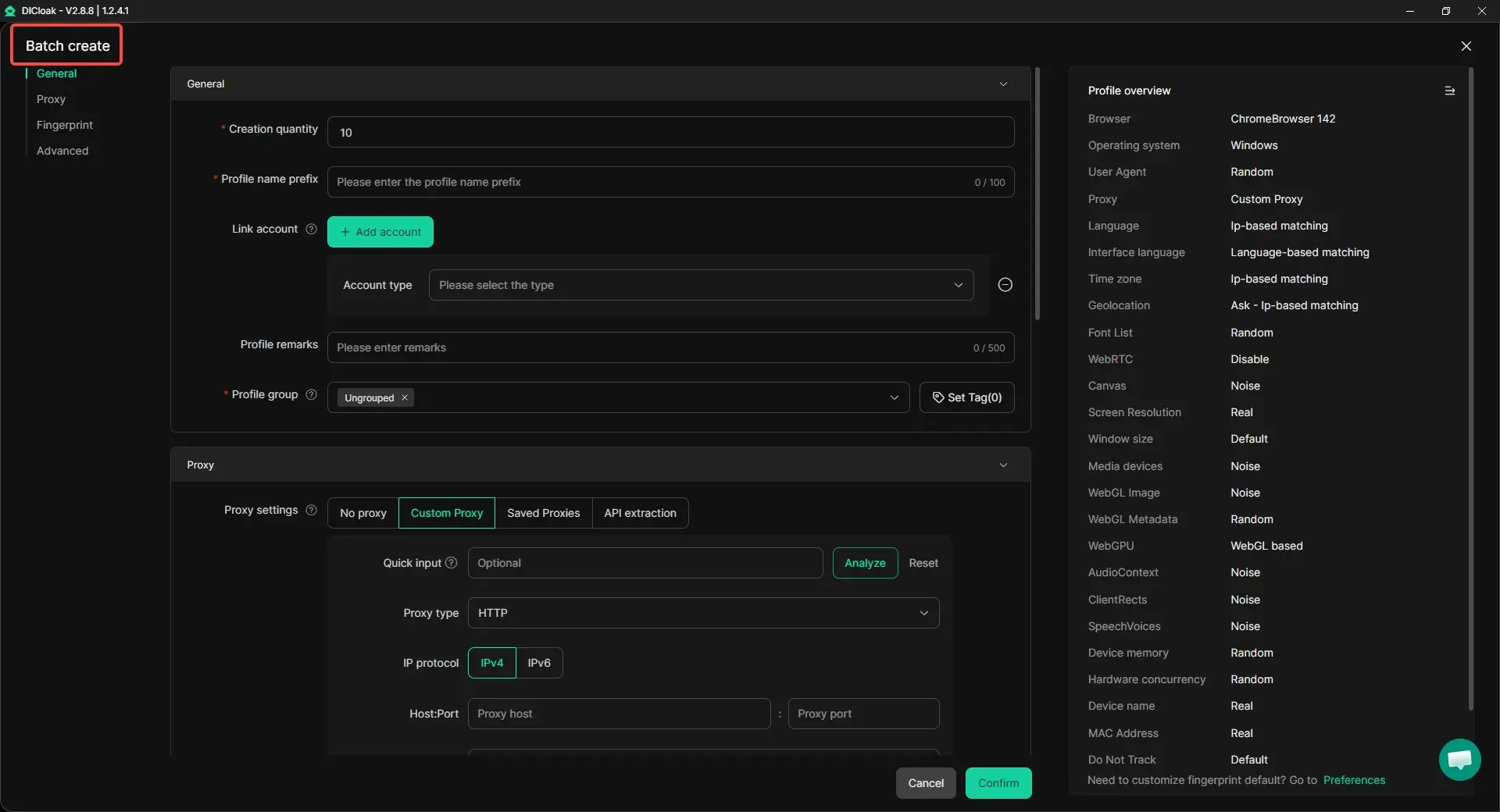
Transitioning from manual labor to automated workflows is essential for scaling. DICloak’s Robotic Process Automation (RPA) allows teams to automate repetitive tasks—such as warming up accounts or checking ad status—reducing human error and saving hundreds of man-hours per week.
Bulk Profile Operations for Rapid Scaling
The TrafficHunt strategy requires rapid testing across multiple GEOs, including France (FR), Spain (ES), the UK, and the USA. Bulk tools enable the creation and launch of 1,000+ profiles simultaneously. This allows a team to test different creatives and offers across diverse markets in a fraction of the time required for manual setups.
Synchronizer Technology for Team-Based Efficiency
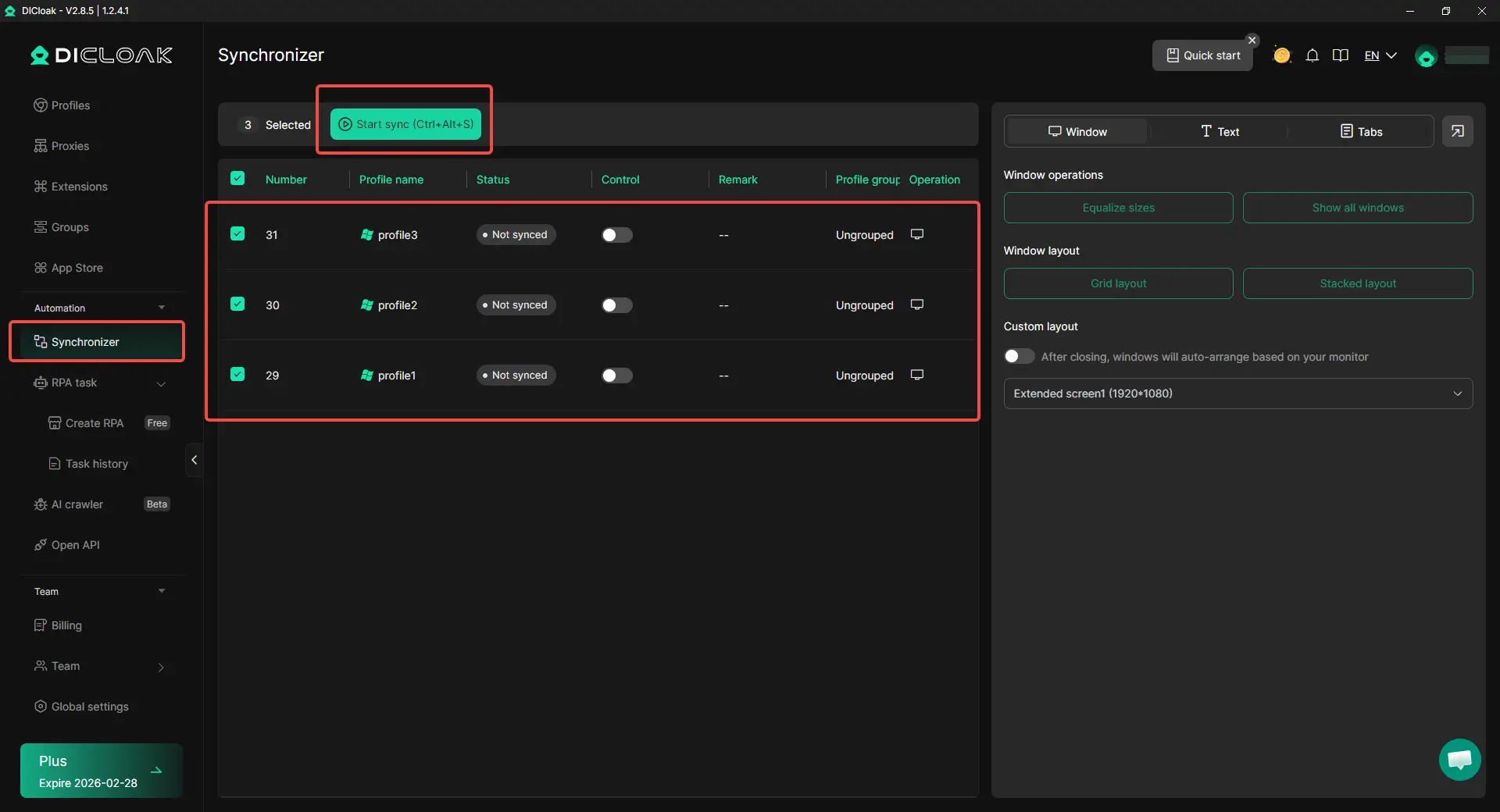
For large-scale workflows, DICloak’s Synchronizer mirrors actions across selected profiles to improve team efficiency. Combined with permission-based profile access and consistent custom proxy configuration, it can help reduce sudden environment-change signals that may trigger extra verification.
Risk Mitigation and Multi-Account Stability in TrafficHunt Geo-Targeting
The effectiveness of this infrastructure was validated in the TrafficHunt French (FR) campaign. Over a 7-day period, the team achieved a $1965 profit with an 80% ROI, totaling $4420 in revenue.
Performance Data Analysis
The campaign's success was driven by precise conversion metrics made possible by PWA stability:
- Reg2pay: $0.17 to $0.25
- Click2reg (FR): 24.29%
- Reg2sale (FR): 2.89%
By running two distinct flows—mainstream and 18+—the team mitigated the risk of total account loss. If the 18+ flow triggered a ban, the mainstream infrastructure remained operational, allowing the team to customize banners or reconstruct the PWA to restore traffic flow immediately.
Infrastructure Provider Analysis: DICloak
Pros:
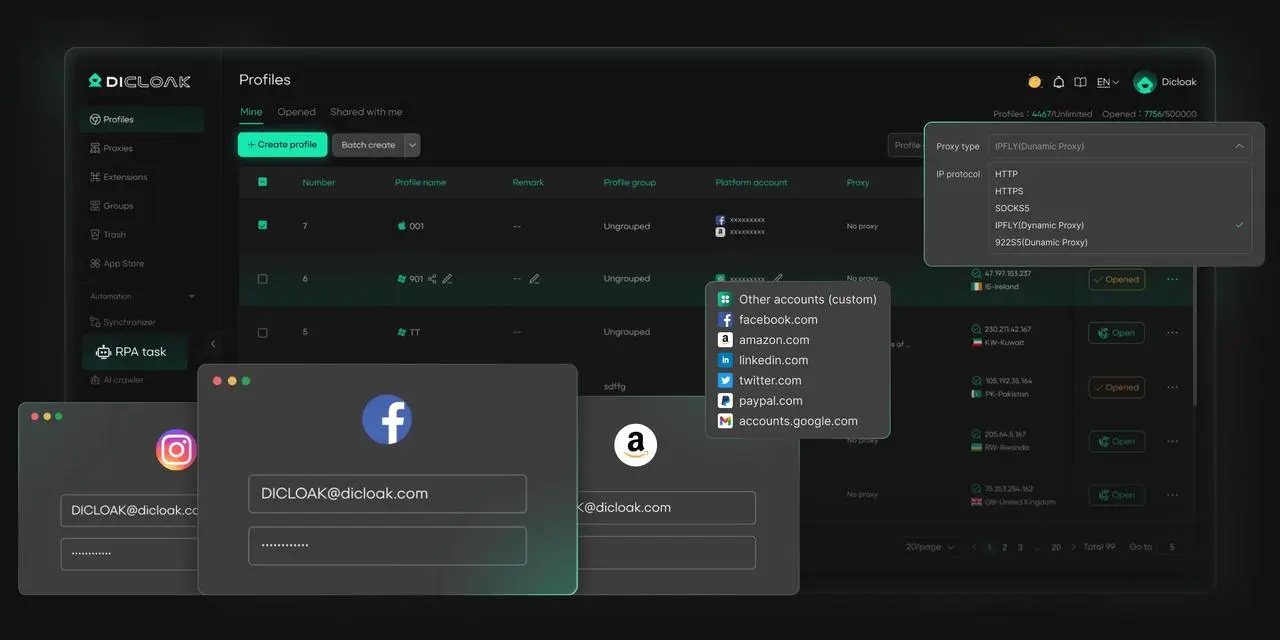
- Cost Efficiency: Manage 1,000+ accounts on a single physical device, eliminating the need for expensive hardware arrays.
- Advanced Fingerprinting: Secure isolation via sophisticated noise injection.
- Automated Scaling: RPA and bulk tools enable rapid expansion into new GEOs.
Cons:
- Limited Platform Support: Currently available only on Windows and macOS.
TrafficHunt FAQ: Scaling and Security Insights
Why is Android 9+ simulation preferred for mobile campaigns?
Android 9+ simulation is preferred because it aligns with the User-Agent strings and hardware profiles most commonly associated with modern PWA support and Facebook's mobile ad delivery algorithms. Matching this profile reduces the "oddity" score of the account during the initial ad launch.
How does the "Team" plan assist in large-scale operations?
The Team plan provides data isolation and comprehensive operation logs. It allows administrators to delegate tasks without sharing sensitive master credentials, ensuring that the integrity of the "King" accounts is maintained while team members handle high-volume testing.
What is the benefit of using "king" accounts alongside auto-reg accounts?
This layered approach creates a "trust buffer." The King accounts provide the foundational trust for the ad manager, while auto-reg accounts act as the disposable testing ground for high-risk creatives. This ensures that the primary infrastructure is not compromised by a single failed test.
How does DICloak protect against IP-based bans?
DICloak provides flexible proxy configuration that let user bind a unique IP to each browser profile. By ensuring that an IP ban on one account does not leak to others, it prevents the platform from identifying a shared network source, thereby neutralizing IP-based chain bans.
 Web Proxy Tools
 Free Tools
 Cookie Plugin
 UA Generator
 MAC Address Generator
 IP Generator
 IP Address List
 2FA Code Generator
 World Clock
 Anonymous Check
 WebRTC Leak Test
 UUID Generator
 Free Web Proxy Site
 Proxy Checker
 FB Ad Checker
 AI Web Scraping
 Free SMM Tools
 Twitter Shadowban Checker
 Instagram Name Checker
 UTM Generator
 Username Generator
 AI Hashtag Generator
 LinkedIn Headline Generator
 Social Media Image Resizer