Why you might need a MoreLogin alternative in 2026
While MoreLogin remains a functional tool for basic profile management, the landscape of business security and digital tracking changes fast. As you scale operations this year, you must weigh the trade-offs of sticking with your current software. Commercial users seeking better pricing, detection prevention, and automation features often look to replace MoreLogin for multi-accounting. Finding the best antidetect browsers 2026 requires looking at where older tools start to fail.
What usually goes wrong when managing multiple accounts?
Running a handful of social media or e-commerce stores is simple. However, friction occurs when operations grow. The primary issues usually fall into three categories: security flaws, software lag, and rising expenses. Evaluating these pain points helps determine if a switch is necessary.
Unexpected account links and login flags
Antidetect browsers work by altering your digital fingerprint. When masking fails, platforms link your accounts together and ban them. A common failure point is Canvas spoofing. Canvas is a web HTML element used to draw graphics on a page, but tracking scripts also use it to silently identify your graphics card and drivers. If a browser relies entirely on basic machine-learning substitution rather than authentic real-device data, strict platforms may flag the login attempt. Users experiencing sudden bans often need a MoreLogin alternative for Facebook ads or Amazon stealth setups to prevent these leaks.
Slow performance when scaling past 50 profiles
A major trade-off with heavily emulated environments is high computer resource usage. Managing 10 profiles might feel smooth, but scaling past 50 active sessions often leads to interface lag and delayed profile syncing. Emulating mobile app environments through cloud phones, a feature MoreLogin heavily utilizes, demands significant bandwidth. If your daily workflow involves rapid switching between dozens of tabs, this software lag slows down productivity.
Hidden costs in team seats and profile limits
Budget predictability is crucial for scaling businesses. The MoreLogin free tier limits users to just two profiles. Upgrading to a pro plan costs $35 a month for 100 profiles. While acceptable for solo users, costs multiply quickly when adding team members or requiring granular access permissions. Teams often search for a cheap antidetect browser 2026 or pay-as-you-go antidetect browsers to avoid being locked into rigid pricing tiers that punish growth.
How we picked the top alternatives to MoreLogin for this list
Transitioning away from rigid pricing tiers requires a systematic approach. To find a viable replacement, we tested dozens of software options over several weeks. Our commercial investigation for users seeking better pricing, detection prevention, and automation features compared to MoreLogin focused entirely on measurable data. We ignored marketing claims. Instead, we evaluated how these tools perform under real-world stress tests.
The checklist for a reliable multi-accounting browser
A software switch carries significant operational risk. You need a structured framework to evaluate the trade-offs of each option. We built a strict testing checklist to separate functional tools from those with underlying technical flaws.
How well it hides your digital identity
The core job of an antidetect browser is preventing bans. We analyzed how each platform masks hardware fingerprints. We specifically looked at Canvas spoofing, which alters how your browser renders graphics, and WebRTC leak protection. Tools that rely on authentic device data scored higher than those using basic algorithmic substitution.
Ease of proxy setup and management
Managing a few proxies is easy, but handling hundreds creates logistical nightmares. We evaluated the proxy managers in every tested tool. High marks went to software offering dynamic proxy integration and quick bulk imports. We penalized tools that require complex manual configurations for each new session.
The total cost as your profile list grows
Pricing models vary wildly across the industry. We calculated the true cost of scaling from 10 to 1,000 profiles. This included analyzing free multi-account browser limits and hidden fees for additional team seats. We prioritized options that offer predictable, budget-friendly growth paths.
Speed of customer support and updates
Platform algorithms change constantly. An outdated browser engine leads directly to blocked accounts. We measured how fast each development team releases core Chromium updates. We also tested customer support response times, noting whether teams provide actionable technical help or generic automated replies.
Detailed review of the best MoreLogin alternatives
If a platform fails basic stress tests, you should not trust it with your business accounts. After evaluating fingerprint spoofing, proxy management, and support speed, we narrowed the field down to five standout options. Below is a detailed review of the best MoreLogin alternatives. We conducted a commercial investigation for users seeking better pricing, detection prevention, and automation features compared to MoreLogin. First, let us look at a high-level comparison matrix.
| Platform |
Best For |
Starting Price |
Free Tier Available |
| DICloak |
Automation & E-commerce |
$8/mo |
Yes (5 profiles) |
| Incogniton |
Digital Marketing Teams |
$19.99/mo |
Yes (Limited time) |
| Octo Browser |
High-end Security & Crypto |
€10/mo |
No |
| Hidemium |
AI Automation Scripts |
$15/mo |
Yes (5 profiles) |
| Browser.lol |
Quick Disposable Sessions |
$9/mo |
Yes (Ad-supported) |
| MoreLogin |
Cloud Phone Emulation |
$9/mo |
Yes (2 profiles) |
DICloak: The best overall MoreLogin alternative for automation
Why it works for affiliate and e-commerce sellers
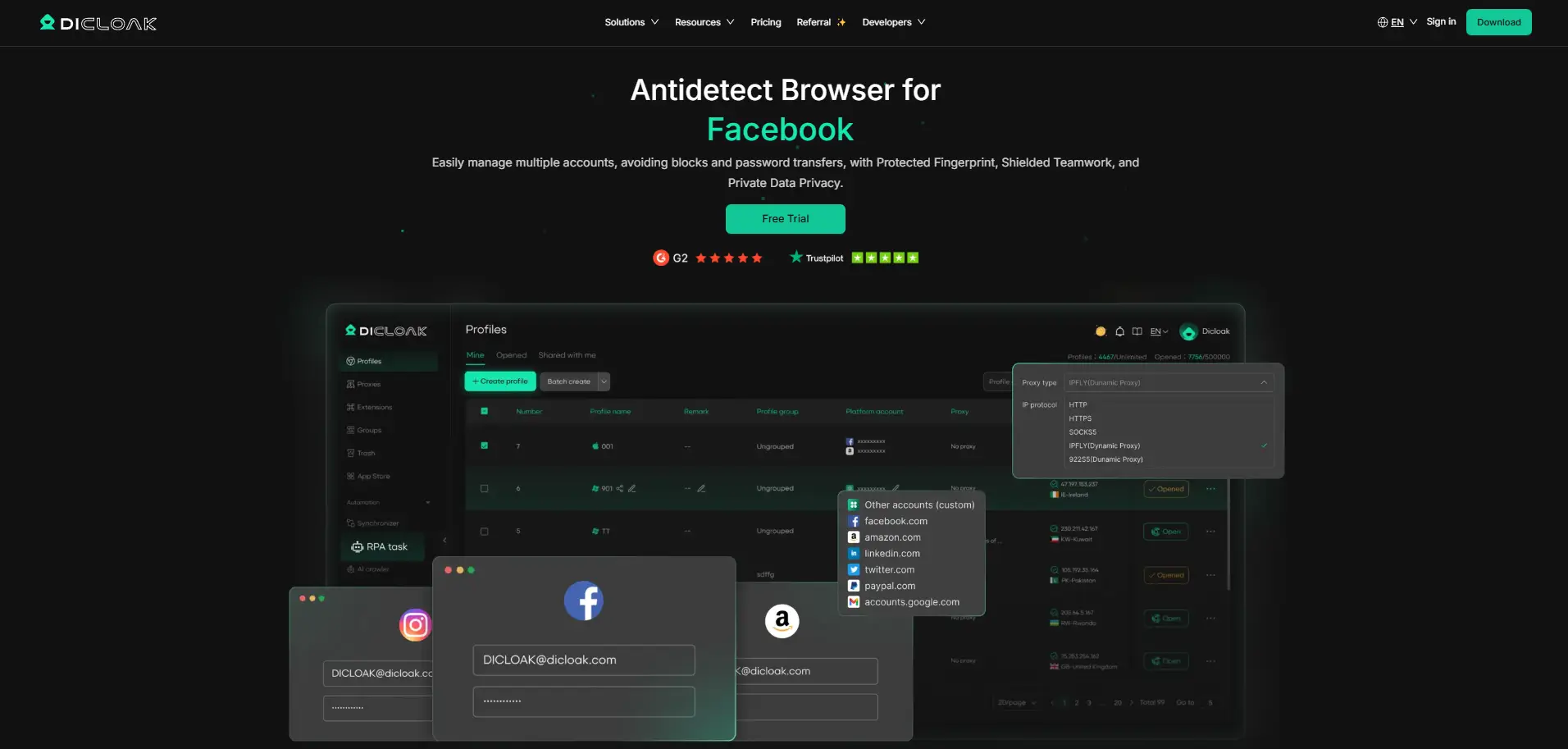
Affiliate marketers and store owners juggle dozens of storefronts daily. DICloak masks your hardware fingerprints to prevent tracking across these platforms. It allows you to create unlimited browser profiles on paid plans. This scale is vital for merchants running multiple advertising campaigns simultaneously.
Key strengths: Built-in RPA and no-code tools
This software features a built-in RPA tool. RPA, or Robotic Process Automation, lets you record clicks and keystrokes so the browser repeats them automatically. You do not need coding skills to use it. It also features a packet-sniffer detection system that constantly monitors your connection for hidden data leaks.
Key limits: Currently available on Windows and Mac only
DICloak currently supports Windows and Mac. Teams using other operating systems may need to check compatibility before use.
Pricing: Affordable plans starting from free to $8/mo
The free tier gives you five profiles permanently. Upgrading costs just $8 a month for 20 profiles. Custom plans handle massive scale.
Verdict: DICloak offers the best balance of advanced anti-tamper security, workflow automation, and low operational costs.
Incogniton: For teams needing human-like interaction
Why digital marketers choose Incogniton
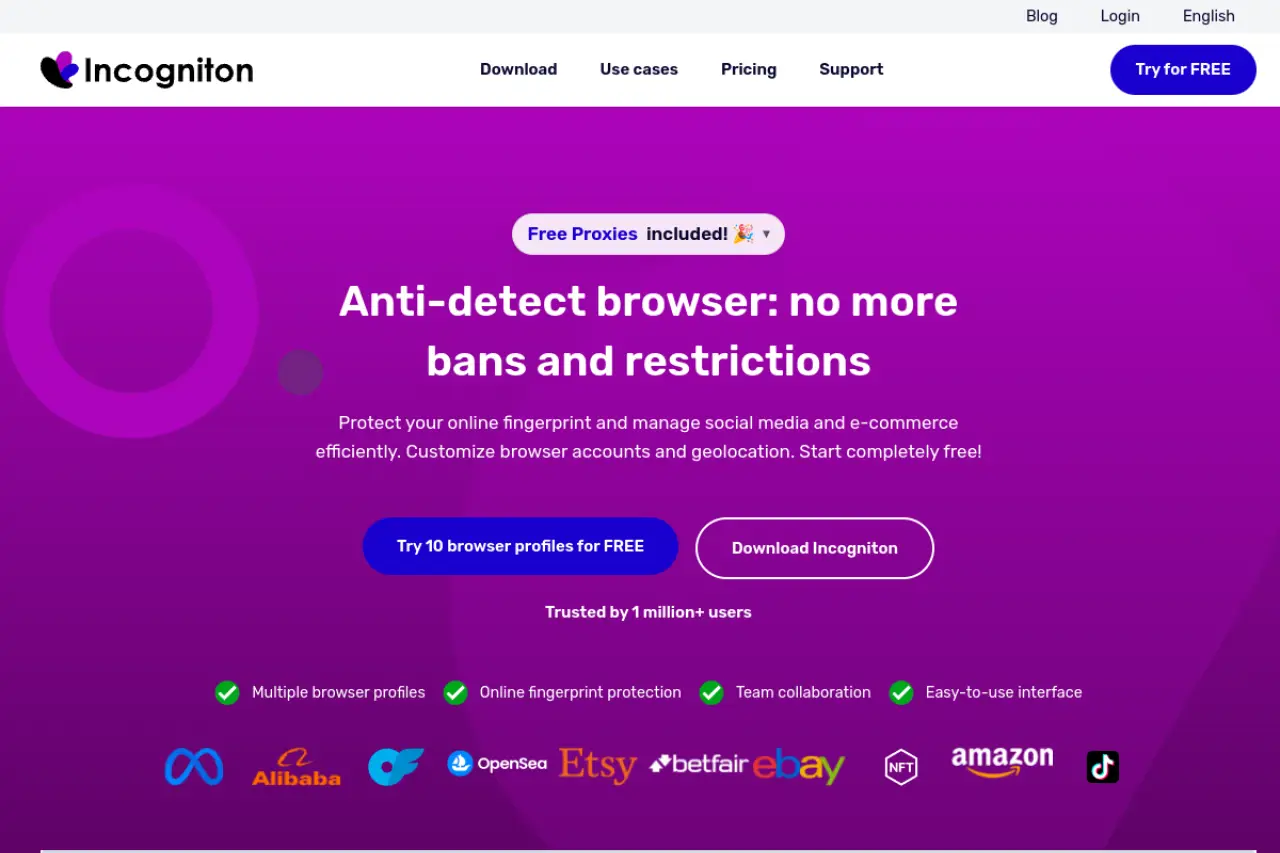
Digital marketing agencies often manage client accounts that require natural engagement. Incogniton creates isolated browser profiles with distinct digital fingerprints. It supports external REST API workflows, making it highly adaptable for existing agency server setups.
The platform offers a unique human typing feature. Instead of pasting text instantly, it types it out slowly to evade bot detection scripts. It also allows seamless importing and exporting of cookies per profile, which keeps active sessions alive longer.
Key limitations: Free tier is limited to short-term use
The Starter plan offers ten free profiles, but this allowance lasts for only two months. After that period, the free tier drops to just three profiles. This forces growing teams into paid plans relatively quickly.
Pricing: Competitive monthly packages for mid-sized teams
Paid packages begin at $19.99 a month for ten profiles. The Entrepreneur plan scales up to 50 profiles for $29.99 a month.
Verdict: A solid choice for established teams, but the strict trial limits mean higher starting costs once the trial expires.
Octo Browser: The MoreLogin alternative for high-end security
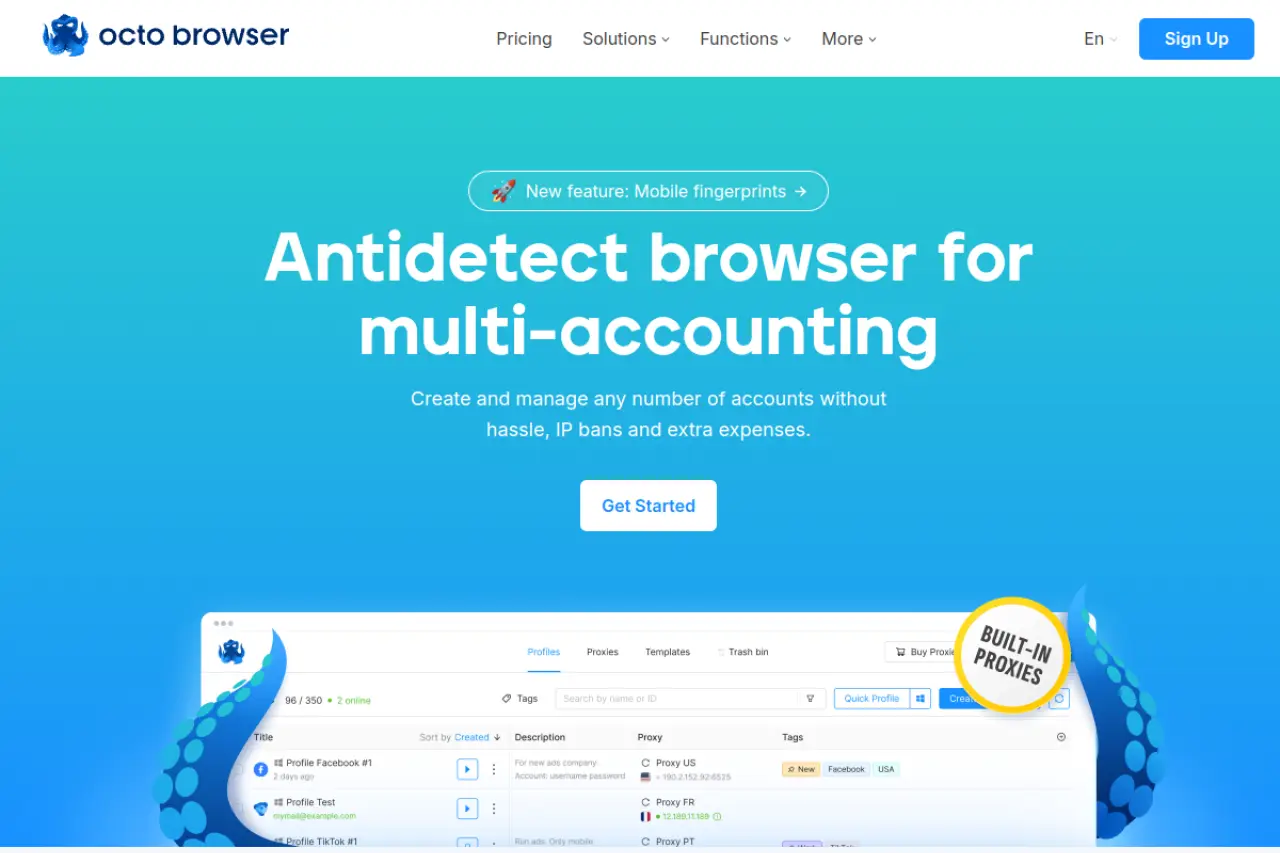
Why crypto hunters and scrapers prefer Octo Browser
Crypto bounty hunters execute high-stakes transactions that demand absolute privacy. Octo Browser utilizes real-device digital fingerprints instead of algorithmic guesses. This ensures your connection looks exactly like a normal user on a standard residential network.
Key strengths: Real-device data and fast Chromium engine
The software relies heavily on authentic device data for maximum stealth. It also features robust security with AES-256 encryption. This multi-component encryption ensures that even if cloud storage is breached, your profile data remains unreadable.
Key limitations: No free tier available for testing
The biggest drawback is the barrier to entry. There is no free tier available. You must purchase a subscription just to test if the platform suits your specific workflow.
Pricing: Premium pricing reflect higher security standards
The Lite tier costs €10 a month for three profiles. For 100 profiles, the Base plan jumps to €79 a month.
Verdict: It delivers unmatched security for high-risk operations, but you pay a premium for that peace of mind.
Hidemium: For no-code AI automation scripts
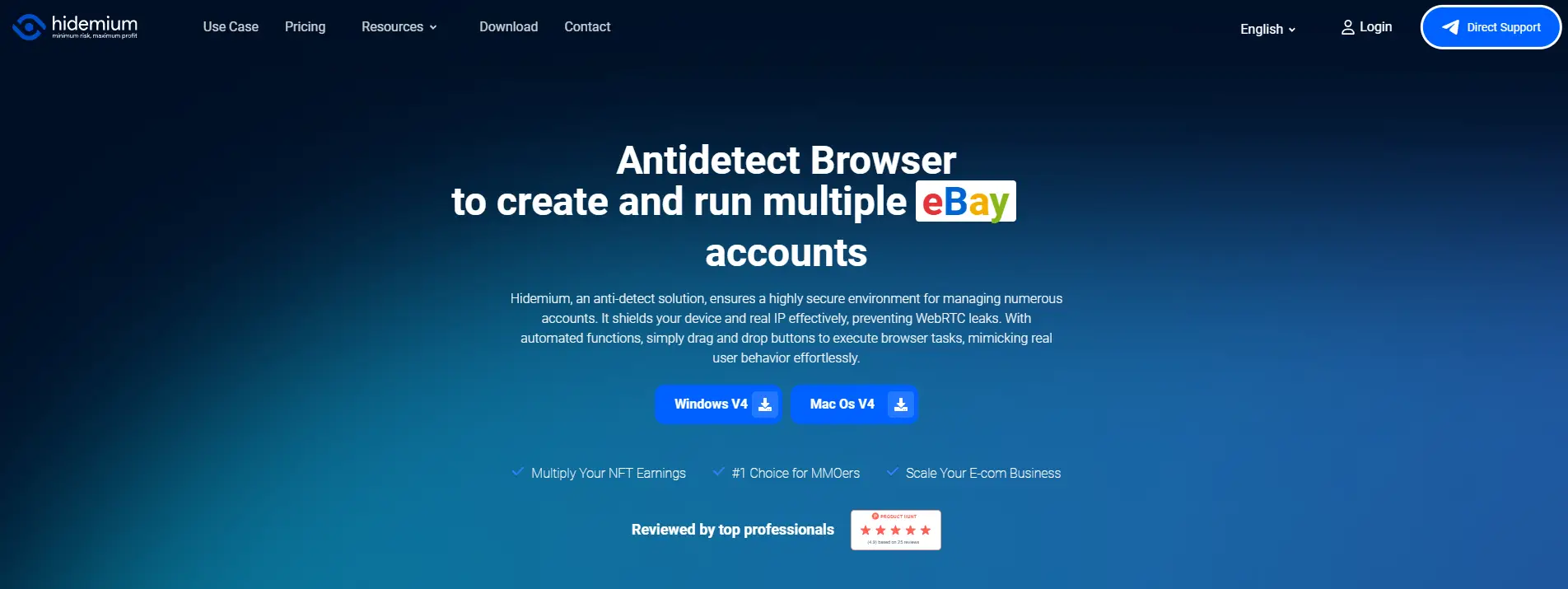
Why social media managers use Hidemium
Managing dozens of social media accounts requires constant repetitive actions. Hidemium enables team collaboration via cloud synchronization and profile folder sharing. This setup is ideal for remote marketing agencies sharing account access across different time zones.
Key strengths: Drag-and-drop automation and AI prompts
The software features Prompt Script AI. You can generate automation workflows simply by typing natural language commands. It also supports a visual drag-and-drop interface for building complex scripts manually without any coding background.
Key limitations: Interface can be overwhelming for beginners
Integrating flexible proxy setups and managing active AI scripts requires technical patience. The wealth of menu options means the dashboard can feel cluttered if you only need a basic browser profile.
Pricing: Flexible tiers for growing agencies
The platform starts with five free profiles. Paid tiers begin at $15 a month for 30 profiles, offering decent middle-ground value.
Verdict: A powerful tool for AI-driven workflows, though casual users might find the interface too complex.
Browser.lol: For quick and disposable cloud sessions
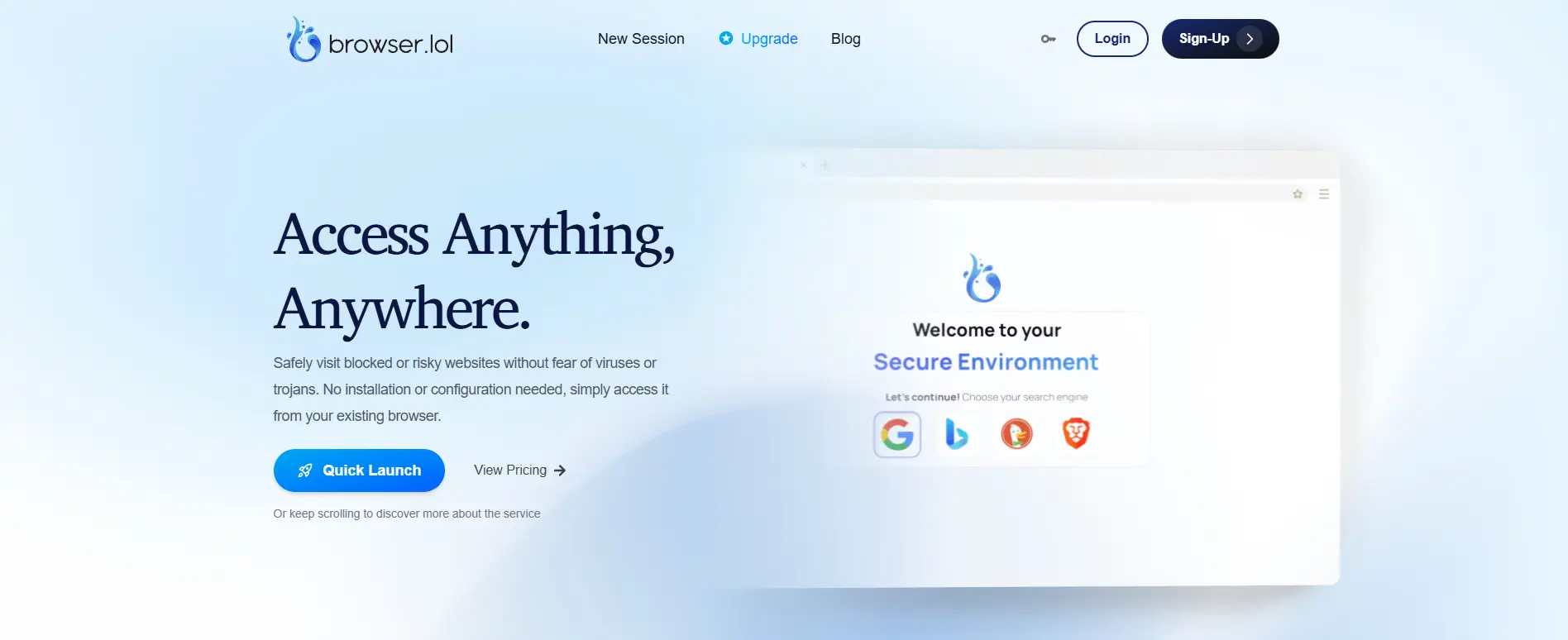
Why privacy-focused users pick Browser.lol
Sometimes you just need to check a suspicious link or run an isolated search. Browser.lol operates exclusively as a web-based virtual browser. It requires no local software installation. It protects your actual device hardware from malware and tracking pixels.
Key strengths: No installation required and instant access
You get instant, sandboxed cloud browsing sessions directly in your regular browser tab. The remote system automatically clears all cookies, cache, and history the exact moment you close the temporary session.
Key limitations: Not built for long-term account management
This software focuses purely on secure, disposable browsing. It lacks the persistent profile storage required to run long-term marketing campaigns or multiple e-commerce storefronts.
Pricing: Ad-supported free version and cheap premium
You can use it for free with ad support and limited session times. The Premium plan costs $9 a month for unrestricted access.
Verdict: Highly effective for immediate, disposable security tasks, but it cannot replace a full multi-accounting setup.
What usually goes wrong when switching MoreLogin alternatives
After finalizing your budget, the actual migration process begins. Moving your entire workflow to a new platform introduces its own set of risks. Let us examine what usually goes wrong when switching MoreLogin alternatives. A smooth transition requires planning, especially if you manage hundreds of active sessions.
Common mistakes when migrating your browser profiles
Many users expect a one-click migration when they replace MoreLogin for multi-accounting. In reality, moving between antidetect platforms requires manual adjustments. Different browsers use varying fingerprint engines and data structures. If you rush the process, you risk triggering account flags on your sensitive e-commerce or social media profiles. The core trade-off of upgrading your software is the temporary disruption to your daily operations. Here are the most frequent failure points.
Losing session data during the move
Cookie management and session isolation dictate how safely you can move an account. When migrating from MoreLogin, users often export raw cookies but fail to transfer local storage data. If your new tool cannot parse this data correctly, the platform will treat you as a brand-new login. This triggers suspicious login alerts. Before moving your most valuable accounts to a tool like DICloak, always run a test migration with a low-tier profile. Ensure that active sessions remain intact after restarting the browser.
Proxy mismatch issues between platforms
Proxy configurations do not always translate perfectly between tools. You might have a dynamic proxy management setup in MoreLogin that relies on specific formatting. When you paste those credentials into a new tool, syntax errors can cause connection failures. Worse, if the proxy fails and the browser defaults to your local IP address, your accounts will be instantly linked. Always verify your IP address and WebRTC leak prevention multi-accounting status on a checking site before opening any active store or ad account.
Team role permission setup errors
Switching platforms disrupts your established team hierarchy. MoreLogin handles team access differently than its competitors. When moving to a platform like DICloak, administrators often forget to recreate strict role boundaries. They might accidentally grant junior staff full delete permissions. This administrative oversight causes massive security risks. Take the time to map out your team permissions before inviting anyone to the new workspace. Review every user role to ensure they only access the exact profiles they need.
Frequently Asked Questions about MoreLogin Alternatives
When evaluating tools to replace MoreLogin for multi-accounting, you must weigh the trade-offs of pricing, safety, and migration difficulty. Switching platforms requires time and careful planning. Here are direct, factual answers to the most common questions users have when comparing new antidetect browsers for their business operations.
What is the best free alternative to MoreLogin for beginners?
DICloak is the strongest starting point because its free plan includes 5 profiles with full fingerprint masking. Unlike Incogniton, which restricts its free tier after two months, DICloak remains permanently free. This makes it a low-risk option for testing, though larger operations will need to upgrade eventually.
Is using a MoreLogin alternative safer for Facebook Ads?
It depends on the fingerprint engine and your proxy quality. Browsers like DICloak use real-device fingerprints, which bypass strict security checks better than older canvas masking methods. However, no browser guarantees absolute safety without the pairing of high-quality residential proxies.
How do I move my account data from MoreLogin to DICloak?
You must export your account cookies from MoreLogin and manually import them into a new DICloak profile. Ensure that you match the operating system and proxy settings of the original profile to avoid suspicious login alerts. Always run a small test migration first to verify data integrity.
Why are my accounts getting flagged on MoreLogin lately?
Account flags usually occur because of outdated browser fingerprints or minor data leaks that expose your real IP address. Platforms constantly update their detection systems to catch automated behavior. If your antidetect browser does not update its masking technology quickly, your linked accounts become vulnerable to bans.
 Web Proxy Tools
 Free Tools
 Cookie Plugin
 UA Generator
 MAC Address Generator
 IP Generator
 IP Address List
 2FA Code Generator
 World Clock
 Anonymous Check
 WebRTC Leak Test
 UUID Generator
 Free Web Proxy Site
 Proxy Checker
 FB Ad Checker
 AI Web Scraping
 Free SMM Tools
 Twitter Shadowban Checker
 Instagram Name Checker
 UTM Generator
 Username Generator
 AI Hashtag Generator
 LinkedIn Headline Generator
 Social Media Image Resizer