Sorting out how to join or claim a moonpay airdrop usually feels like a moving target, one day there’s a new eligibility rule, the next day wallets are flagged for duplicate activity. You’re probably here because you want a MoonPay airdrop tutorial that actually helps you avoid the usual traps: missed rewards, locked accounts, or wasted time on accounts that don’t qualify.
The risk isn’t just missing a claim window. Making the wrong move, like running too many accounts from a single device, or skipping over KYC checks, can get you banned from future airdrops or even lose access to your funds. Plenty of people rush in, copy a Reddit "MoonPay airdrop claim guide," and end up locked out for something as simple as reusing a browser profile.
So the real challenge isn’t just getting the basics right, but knowing how to set up, claim, and manage multiple eligible accounts safely. That means understanding which steps matter (and which don’t), plus how to avoid the kind of mistakes that make your accounts look suspicious. If you’re looking for a straight answer on MoonPay airdrop eligibility and how to actually claim on more than one account without tripping alarms, you’re in the right place.
Start by checking what actually makes an account eligible for the MoonPay airdrop.
What Makes the MoonPay Airdrop Worth Claiming in 2026?
If you’re looking for more than just hype, the real value in the MoonPay airdrop comes down to strict eligibility, a high payout ceiling, and rules that target genuine users, not just bots or mass claimers. The difference this year is who actually qualifies, how much they can get, and how the payout is structured.
How MoonPay Airdrops Work in 2026
The 2026 drop isn’t random or open to everyone. You’ll need to check all three points before you even think about claiming:
- Eligibility: You must complete identity verification (KYC) and show real trading activity on your MoonPay account during the snapshot period.
- Reward structure: Payouts scale with your account’s transaction volume, small traders get a fixed minimum, larger ones get more, but there’s a cap to prevent whales from taking all the rewards.
- Claim process: Claims must be submitted from the original device and IP used during trading. Any mismatch or reused device between multiple accounts triggers review or even instant disqualification.
What Sets MoonPay Airdrops Apart from Standard Crypto Airdrops
Most crypto airdrops either flood new users with tiny rewards or hand everything to early whales. MoonPay’s approach splits the difference. The system uses both KYC and behavioral checks to filter out fake accounts. For example, if you try to claim using a device or IP that’s already flagged for another user, the system locks both accounts for manual review. That means “airdrop farming”, creating dozens of fake users, usually gets you nothing, or worse, blacklists your real account.
On the upside, the main draw is a much higher average payout for real users. People who actually traded get a reward sized to their real activity, not just a flat token drop. But the downside is that the same rules that protect the pool also mean you can lose your eligibility with one careless step, like logging in from a new IP or skipping KYC. If you’ve tried standard project airdrops, you’ll notice how easy it is to get flagged here by reusing a browser profile or missing a claim step, the review process is strict and often final.
Knowing these rules is what keeps you from wasting time on an account that was never eligible to start with, or worse, getting all your claims blocked at once. The next section explains the most common ways people get tripped up.
Why Most MoonPay Airdrop Claims Fail: Common Risks and Mistakes
Most people lose their MoonPay airdrop claim for reasons that are easy to spot, if you know what to check. The main problems are account linking, mismatched identity signals, and falling for scams disguised as the real airdrop. If you want to avoid wasted effort, focus on these triggers before you start.
Frequent Disqualification Triggers
Even if your account looks eligible, small mistakes can get you flagged:
- Linking multiple accounts from the same device or browser profile, systems often spot repeated fingerprints and block all related claims.
- Using inconsistent information or switching between proxies, this creates signals that point to fake or duplicate identities.
- Skipping KYC or not matching personal details, MoonPay’s review process checks for mismatches and can reject your claim without notice.
Security Risks: Phishing, Fake Airdrops, and Data Leaks
The bigger trap isn’t technical failure, it’s getting caught by scams. Scammers build fake MoonPay airdrop claim pages that copy the official look and promise easy rewards. You click a link, enter your wallet or login details, and your data gets stolen. The risk jumps during high-profile drops, because guides shared on forums often mix real steps with links to “claim portals” that are actually data harvesters.
Here’s what happens if you don’t double-check: you follow a MoonPay airdrop tutorial from an unverified source, land on a site with a domain like “moonpay-airdrop.xyz,” and submit your wallet address. The next morning, funds are gone, or worse, your main account gets locked because you exposed credentials. The official MoonPay claim page always sits on their real domain (moonpay.com), and never asks for private keys. If a claim guide tells you to connect wallets through any site but the real one, skip it, most losses come from trusting the wrong link.
Before you dive into the claiming process, check your setup and sources. The next section will cover what you need to prepare so you don’t trip over these mistakes again.
What to Prepare Before Claiming the MoonPay Airdrop

Getting ready for the claim takes more than picking a wallet or logging in. The biggest mistake is skipping prep and triggering a rejection, whether for device conflicts, missing eligibility, or failing KYC. Here’s what to check before you start the process.
Account and Wallet Setup
Pick a wallet that supports the correct chain for MoonPay’s airdrop, and check your account meets the eligibility rules (age, activity, and not previously flagged). If you skip these checks, you risk wasting your claim or running into blocking errors right at submission.
- Use a fresh wallet with no history of flagged activity.
- Confirm your account hasn’t claimed the airdrop before.
- Secure all recovery phrases and backup codes before starting.
Device and Network Preparation
Rushing the device setup is where most multi-claim attempts fail. Browser fingerprints and IP overlap can trigger an instant ban.
- Set up a clean browser profile with no reused cookies or cache.
- Connect through a residential proxy matching your account region.
- Double-check your device hasn’t been used for other claims.
Verification and Compliance Checks
KYC (Know Your Customer) checks are strict, if you fail, you’re out. Regional rules block some users automatically.
- Prepare valid ID and proof-of-address for KYC.
- Review MoonPay’s list of restricted regions before claiming.
- Make sure your personal details match your wallet and account.
If you have all these lined up, you’re ready to move on to the actual claim process. The next section covers the exact steps so you don’t get tripped up mid-way.
Step-by-Step: How to Claim the MoonPay Airdrop in 2026
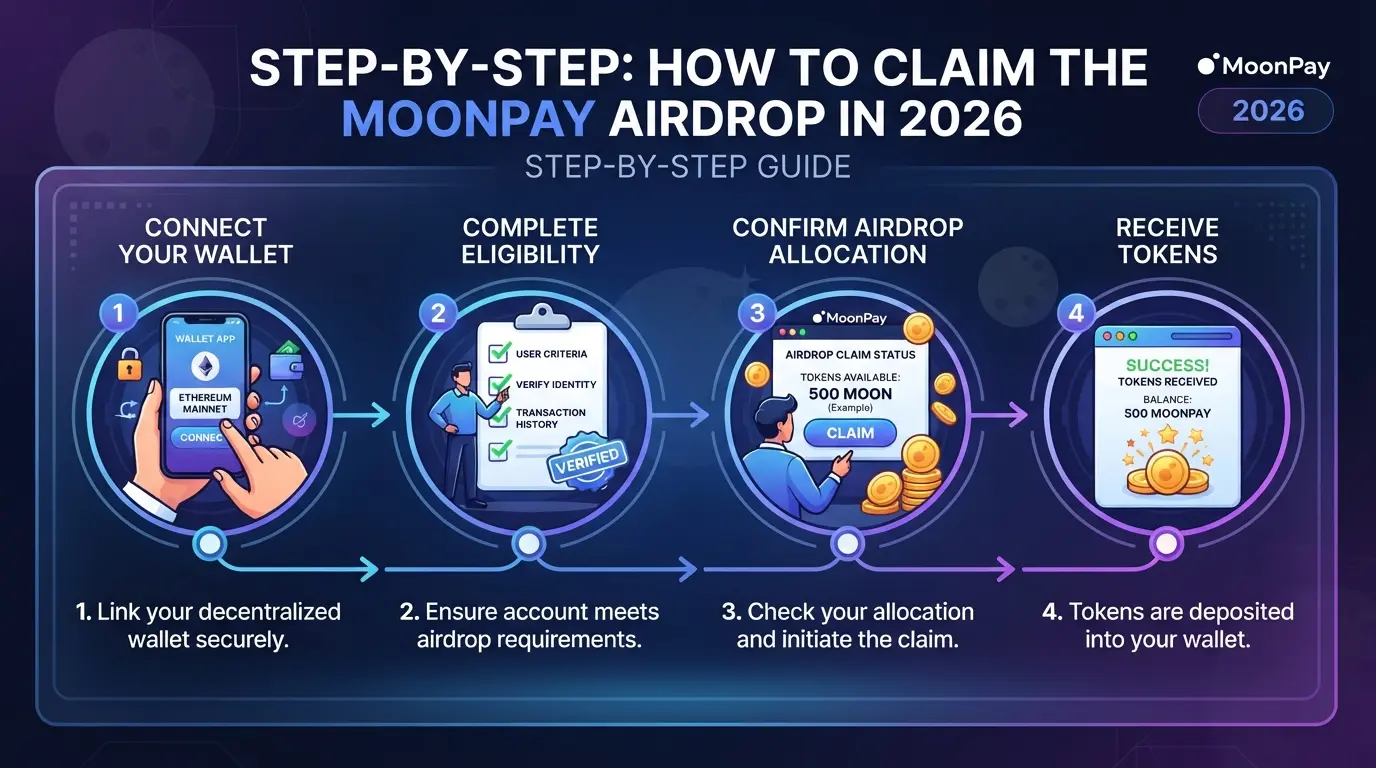
If you’ve already lined up your eligible accounts and wallet setups, claiming your MoonPay airdrop comes down to following the right steps in the right order. Missing one detail, like entering info on a fake site or skipping KYC, can lock you out. Here’s how to get through the process safely.
Accessing the Official MoonPay Airdrop Portal
- Search for the official MoonPay website or follow a trusted link from their verified X account.
- Check for the padlock icon in your browser bar and confirm the domain is moonpay.com before entering anything.
- Look for a “Claim Airdrop” button with clear security markers, if you see popups asking for private keys, close the page immediately.
- If the site loads slowly or redirects unexpectedly, wait five minutes and try again. Fake portals often use lag or forced redirects to trick users.
Completing Required Tasks and Verifications
- After logging in, review the task checklist, usually social follows, trading, or referrals.
- Complete each task and double-check for completion marks. Missed tasks mean you won’t get the reward.
- If prompted for identity verification, upload documents and wait for a confirmation screen. If your upload fails or you don’t get confirmation within 30 minutes, retry from a new browser session.
- Don’t use accounts with mismatched info; that’s the fastest way to get flagged and lose eligibility.
Receiving and Managing Your Airdrop Rewards
- When your claim is accepted, rewards show up in your linked wallet, usually within 24 hours.
- Track incoming tokens using your wallet’s transaction tab. If nothing appears after 48 hours, check your claim status for errors.
- Secure your tokens by moving them to a cold wallet if you plan to hold. Leaving assets in a hot wallet leaves them exposed to phishing or platform freezes.
Double-check every step, one mistake can block your airdrop and future rewards.
Ready for more advanced claiming? Next up: how multi-account pros handle risk.
How Advanced Users Manage Multiple MoonPay Airdrop Claims More Safely

Handling more than one claim isn’t just about repeating the steps from a MoonPay airdrop tutorial. The real issue is avoiding the patterns that platforms catch, like shared device fingerprints or recycled browser sessions. You need a setup that keeps each account isolated, so your claim doesn’t get flagged or banned.
Why Multi-Account Airdrop Farming Gets Risky
Platforms look for repeat signals: reused browser profiles, IP addresses from the same range, or identical device fingerprints. If you copy-paste your setup across accounts, even small overlaps, like using the same proxy or letting cookies bleed across sessions, can trigger bans. The biggest mistake is assuming a clean browser is enough when most platforms use much deeper detection.
Safer Workflow for Handling Multiple Claims
The key is to treat each account as a separate environment. That means running each claim in its own isolated browser profile with unique cookies, fresh device settings, and a proxy that doesn’t overlap with others. For example, if you handle five accounts, set up five browser profiles, one per claim, then assign each profile a proxy from a different region. If you use the same device for all, reset hardware fingerprints between profiles and never let sessions cross. Even a forgotten autofill entry can tie accounts together.
Skip shortcuts like running multiple claims in the same browser window or tab, platforms can spot shared JavaScript objects, local storage traces, and extensions across accounts. If you get flagged, the ban is rarely instant. Usually, you’ll see warning emails or failed claim attempts, then notice later that your accounts are excluded from future airdrops. Recovering from this is messy; most platforms will block all associated accounts, not just the one that got caught.
Compliance and Ethical Boundaries
- Check platform rules: Some airdrops ban multi-account claims outright; others only penalize if you use fake KYC.
- Don’t fake identity: Using real documents for multiple accounts can cross legal lines and leave you exposed.
- If you’re unsure, ask: Reach out to support before scaling, getting a written answer is safer than guessing.
If you’re careful about isolation and follow platform rules, you can scale your claims without tripping detection. But even a single missed detail, like a reused phone number, can ruin every account in your batch.
Managing Multiple Crypto Accounts and Airdrop Claims with DICloak: Practical Workflow for 2026
Advanced airdrop participants who need to claim across several accounts face a different challenge than solo claimers: keeping sessions, browser fingerprints, and network signals separated enough to avoid obvious overlap. If you or your team operate more than one eligible account, the main risk isn't failing a claim step, it's letting two sessions leak details that connect them together. Here’s a practical workflow using DICloak to handle this, with every step focused on real-world crypto farming needs.
Creating Isolated Browser Profiles and Configuring Fingerprints
Operators start by creating a separate browser profile for each platform account involved in airdrop claiming. Each DICloak profile saves its own browser storage, cookies, and fingerprint settings, so sessions don’t cross over. You can set the reported operating system, user agent, timezone, and other details per profile, giving each account workflow a distinct browser profile. For example, if you’re running three MoonPay airdrop claims at once, each gets its own DICloak profile with a different fingerprint configuration, reducing the telltale signs of copy-paste setups. The scope here covers only browser-level identity and storage; it doesn’t affect the MoonPay account or claim status itself.
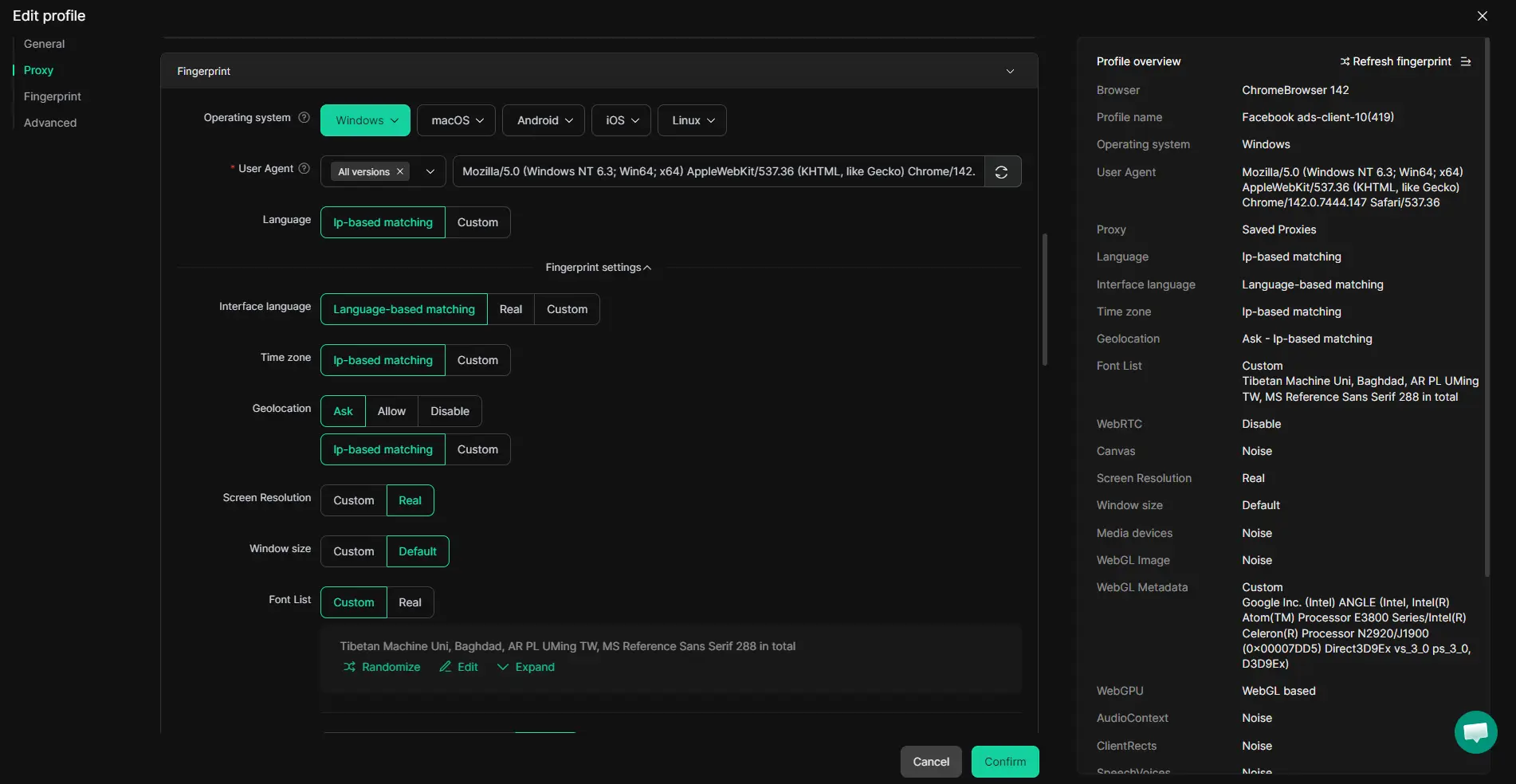
Assigning User-Owned Proxies to Each Profile
For many crypto airdrop operators, it’s not enough to separate browser profiles, you also need each session to appear from a different network path. In DICloak, you can assign your own proxy to each profile, whether it’s HTTP, HTTPS, or SOCKS5. Operators enter proxy credentials, test the connection, and check exit IP and region before launching a claim session. This setup is managed profile by profile; DICloak does not provide proxies, nor does it require every profile to use one. The result is that operators handle both browser and network separation, but success depends on the quality and uniqueness of the proxies you provide, not on the tool itself.
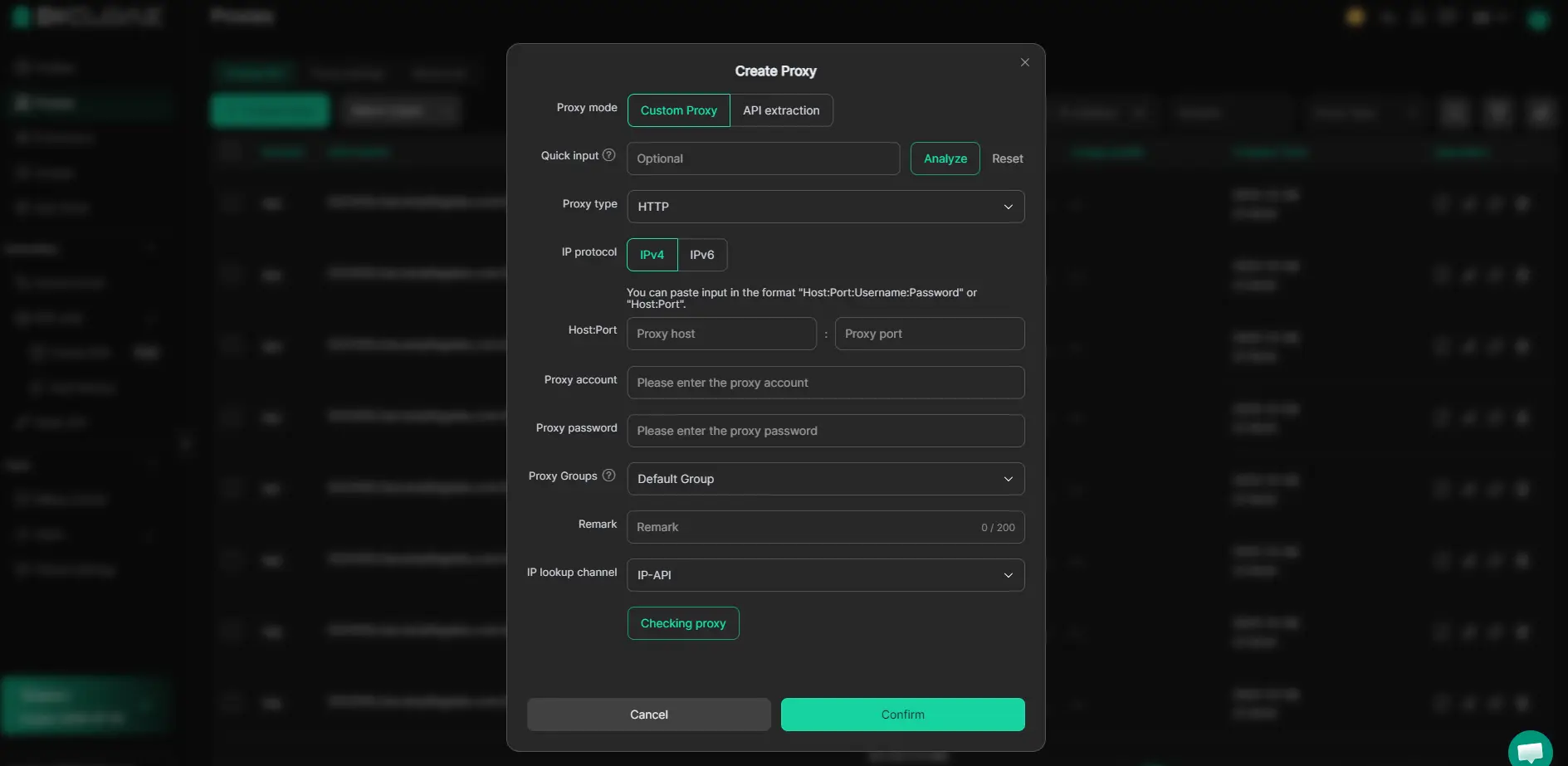
Synchronizing Actions Across Multiple Profiles for Efficient Claiming
Manually repeating every click and input across a dozen accounts is slow and prone to mistakes. DICloak’s Window Synchronizer gives operators a way to mirror supported actions, like clicks, keyboard input, and tab operations, from a master window to several open profiles at once. During a live airdrop claim, you watch your main browser and can see each profile follow the same steps, cutting manual errors and missed steps. This is not unattended automation: you supervise every action in real time and can stop or adjust the flow as needed. It doesn’t fake user diversity, it just speeds up supervised, multi-account work.
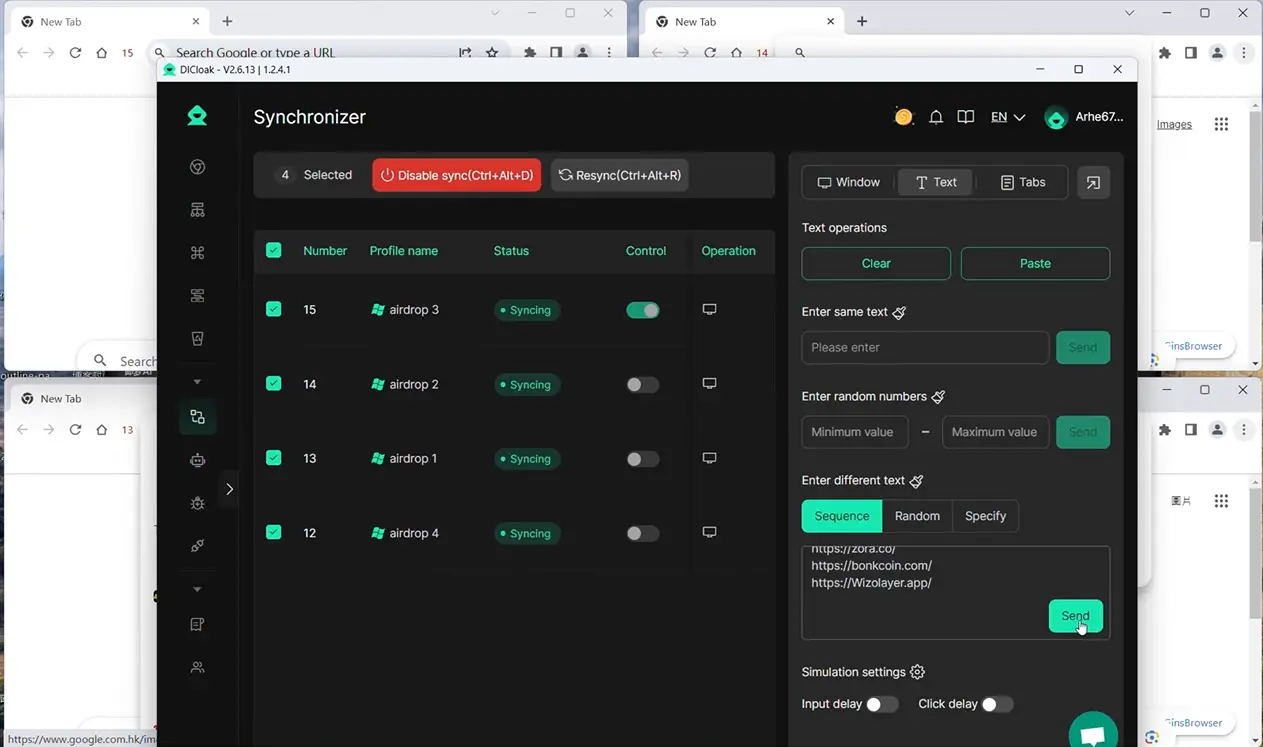
For operators managing more than one account, this workflow makes scaling claims practical, without losing track of which session belongs to which account. If you reach the point where even this setup can’t justify the extra effort or risk, the next section covers where to draw the line.
When Claiming MoonPay Airdrops Stops Making Sense: Red Flags and Better Alternatives
Red Flags That Signal It's Time to Quit
If you see much stricter rules, more advanced detection, or rewards dropping below your time and proxy costs, it’s usually time to walk away. Pushing after clear rule changes often means you’re risking loss for almost no gain.
Safer Alternatives to Airdrop Farming
When claim attempts start failing or rewards barely cover expenses, chasing airdrops can backfire fast, accounts get flagged, and you lose future access.
- Relying only on mass claims raises your risk of bans or wasted effort.
- Switch to real community engagement or try earning through staking, liquidity provision, or other crypto activities where your main asset is not disposable.
Frequently Asked Questions About moonpay airdrop
Is the MoonPay airdrop available globally in 2026?
Availability depends on your country. Some regions may have restrictions due to local laws or MoonPay policy. Before participating, check the official MoonPay website for airdrop eligibility lists and regional exclusions. If your country isn’t listed, you may not be able to claim the moonpay airdrop or access its rewards.
Can I claim the MoonPay airdrop with multiple accounts?
MoonPay’s terms usually forbid multi-account claims. They use device fingerprints, IP tracking, and account verification to detect duplicate entries. If you try to claim with more than one account, you risk losing rewards or getting banned. Always follow platform rules to avoid complications with your airdrop claim.
What should I do if my MoonPay airdrop claim is rejected?
First, review the eligibility requirements and make sure your details match them. Check your device and browser signals; sometimes suspicious setups cause rejection. Also, verify you’ve completed all compliance steps like KYC. Common mistakes include missing deadlines or providing inaccurate information. Double-check everything and contact MoonPay support if needed.
How do I verify if a MoonPay airdrop is legitimate?
Only trust information from official MoonPay channels such as their website, emails, or verified social media. Avoid third-party links or sites promising free rewards. Scammers often create fake airdrop pages to steal data. Never enter your wallet details or personal information unless you are sure the source is authentic.
Is it safe to use proxies for MoonPay airdrop claiming?
Using proxies can separate accounts and mask your IP, but it carries risks. MoonPay may flag proxy use as suspicious, which could result in claim rejection or account bans. If you choose to use proxies, make sure it’s ethical and does not violate MoonPay’s terms. Always prioritize security and compliance.
If you’re considering participating, review eligibility requirements and secure your wallet details to make the most of any potential rewards. Staying updated on the latest announcements will help you act quickly when new opportunities arise. Try DICloak For Free
 Web Proxy Tools
 Free Tools
 Cookie Plugin
 UA Generator
 MAC Address Generator
 IP Generator
 IP Address List
 2FA Code Generator
 World Clock
 Anonymous Check
 WebRTC Leak Test
 UUID Generator
 Free Web Proxy Site
 Proxy Checker
 FB Ad Checker
 AI Web Scraping
 Free SMM Tools
 Twitter Shadowban Checker
 Instagram Name Checker
 UTM Generator
 Username Generator
 AI Hashtag Generator
 LinkedIn Headline Generator
 Social Media Image Resizer