The promise of "free" entertainment is the ultimate bait in the digital economy. SolarMovie remains a primary target for users looking to bypass subscription fees, but in 2026, the cost of "free" is often paid in stolen data, hardware compromises, and aggressive tracking. As a link aggregator, SolarMovie doesn't host content; it serves as a gateway to third-party servers over which it has zero security oversight. Navigating this environment requires more than just a link, it requires a tactical approach to digital hygiene.
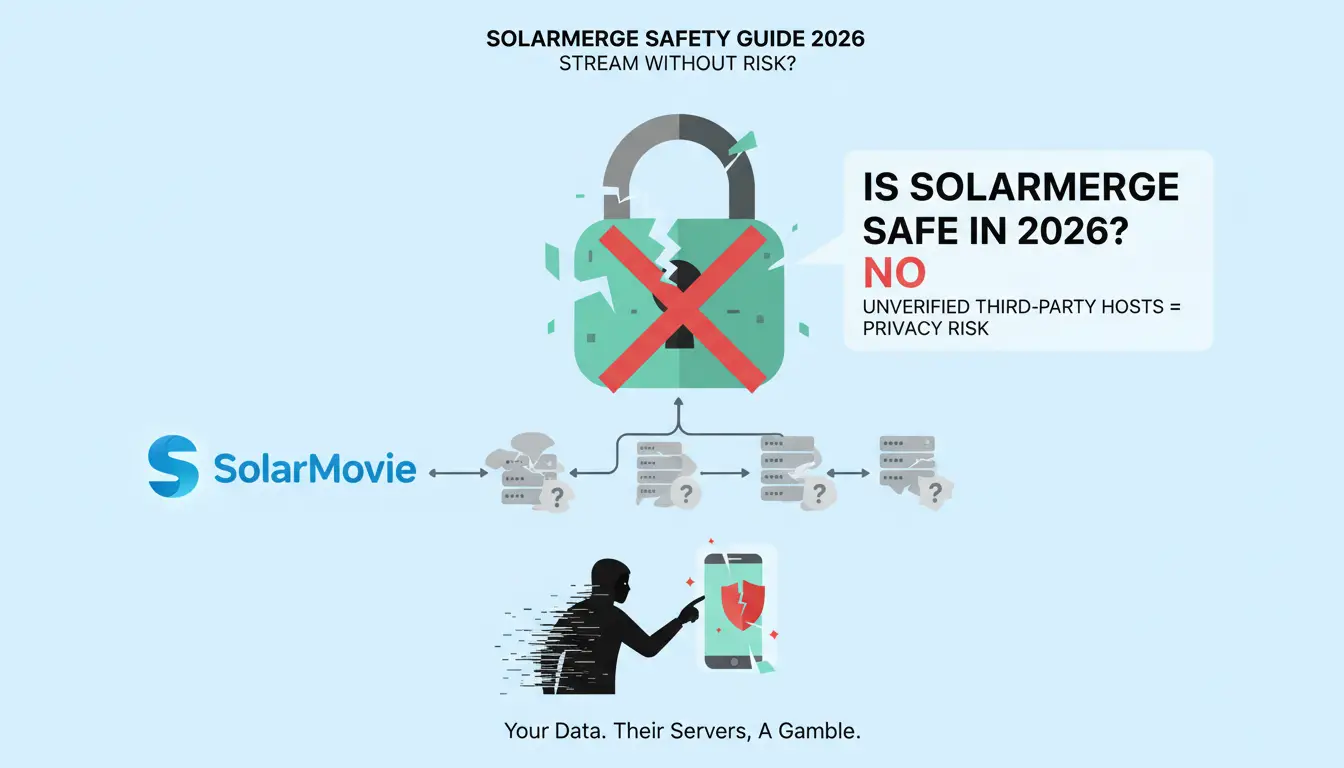
Is SolarMovie safe for streaming in 2026?
The short answer is no, not by default. When you use SolarMovie, you are stepping into a supply chain of unverified actors. Because the site relies on third-party hosts to provide the actual video files, you are effectively trusting the security standards of unknown servers that exist outside of any regulatory framework.
Understanding the threat of malicious redirects
The primary weapon on these sites is the invisible overlay. Using CSS techniques like Z-index manipulation, developers place a transparent layer over the entire player or even the whole page. When you think you are clicking "Play," you are actually triggering a script that opens a hidden window. These redirects often lead to "malvertising" hubs or sophisticated phishing sites designed to harvest your credentials through browser-based exploits.
The reality of data tracking and IP exposure
Privacy is non-existent on the raw SolarMovie platform. The site and its connected hosts log your IP address, browser fingerprint, and ISP data. This information is a commodity, often sold to aggressive advertising networks or used by malicious actors to map out vulnerable residential networks. Without a layer of abstraction between your device and the site, you are leaving a permanent breadcrumb trail of your viewing habits and physical location.
Where can I find the official SolarMovie site today?
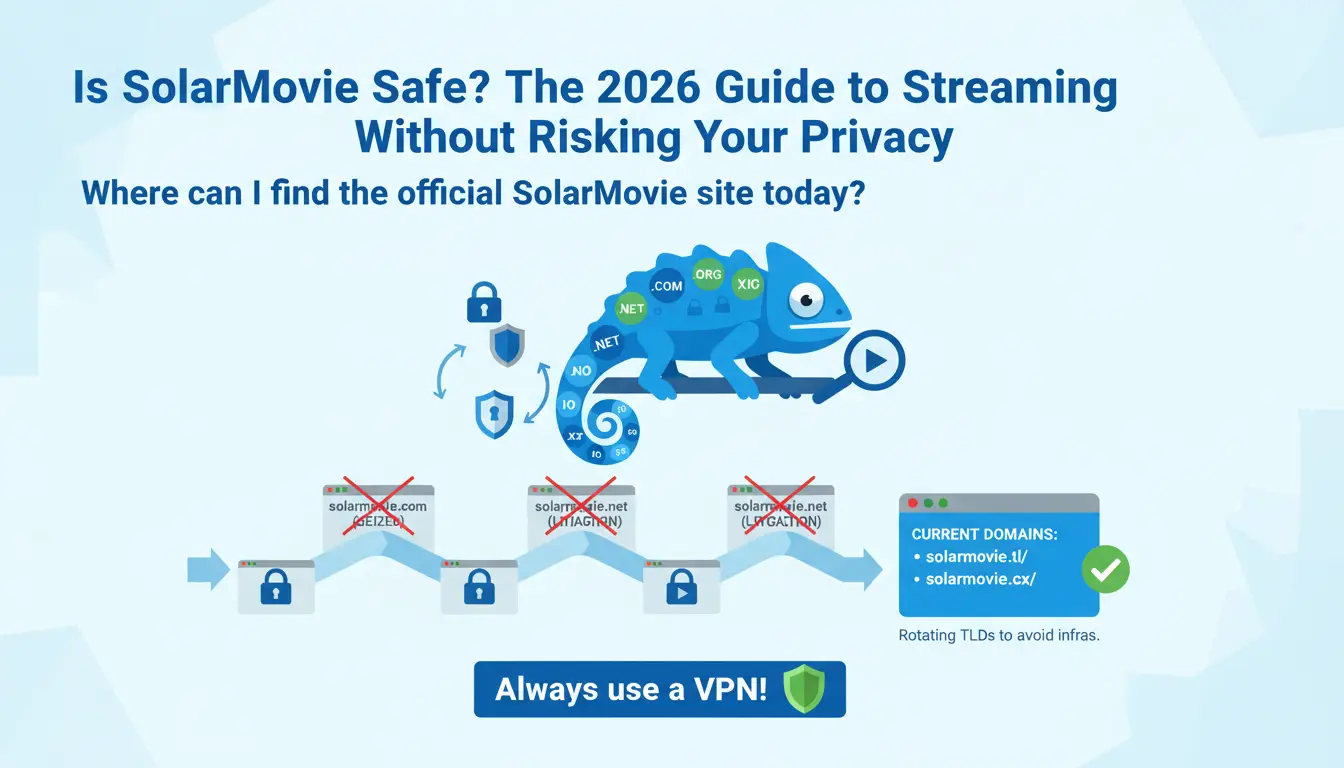
Finding SolarMovie is an exercise in tracking a moving target. Domain seizures and copyright litigation force the platform into a perpetual cycle of domain hopping.
Identifying current working domains
The platform currently utilizes a rotating list of Top-Level Domains (TLDs) to stay ahead of infrastructure blocks. Known extensions include .pe, .mn, .sc, and .bar. However, these are temporary. Any domain you find today could be a dead link or a malicious mirror by tomorrow. Treat every new URL with extreme suspicion.
How to verify a link before clicking
Searching for "SolarMovie" on a standard search engine is a recipe for disaster, as the top results are frequently malware-laden clones optimized for SEO. Instead, use specific search operators to find community-vetted links. Search for site:reddit.com "solarmovie" "working" or check dedicated communities like r/Piracy or r/Streaming. These hubs act as a crowdsourced early warning system for malicious mirrors.
How can I stop malicious pop-ups and redirects?
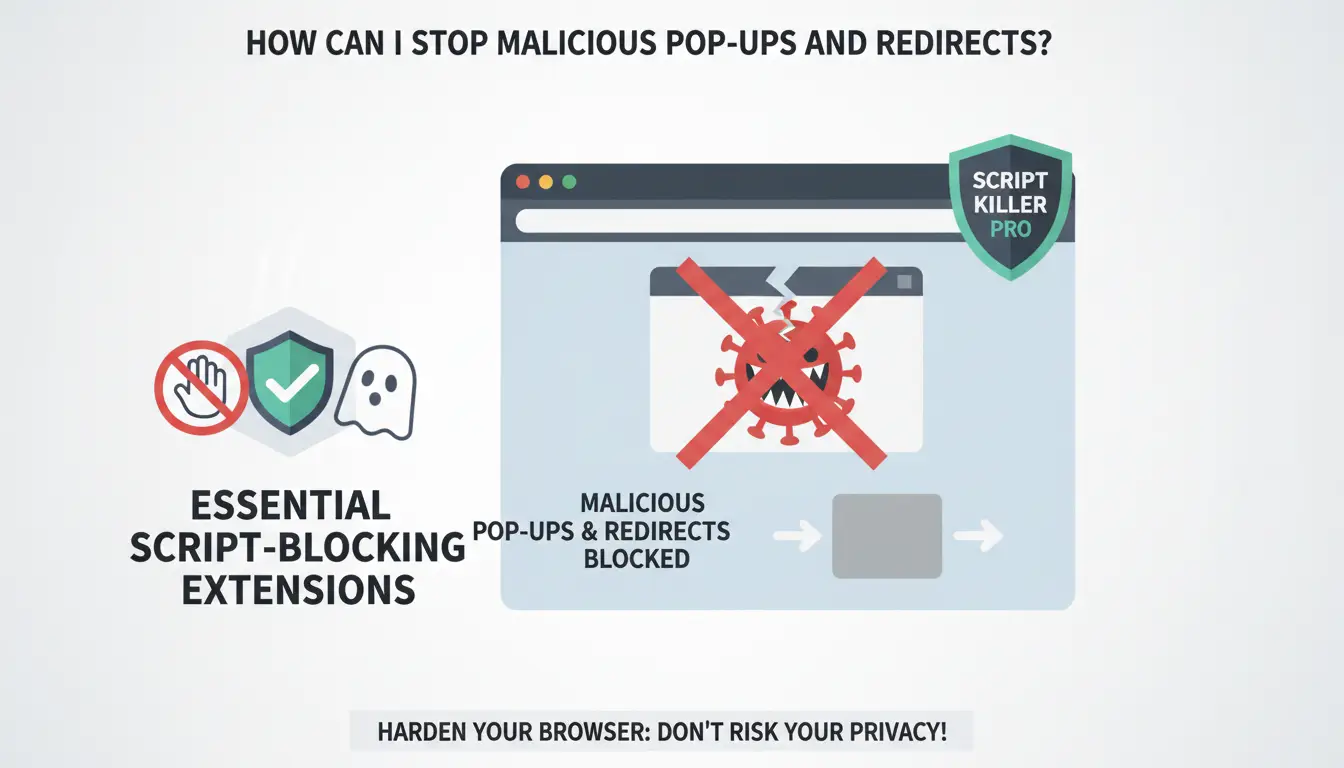
If you intend to visit these sites, your browser must be hardened. Standard "out-of-the-box" browser configurations are insufficient against the aggressive scripts encountered on SolarMovie.
Essential ad-blocking extensions
You need a tool that does more than hide ads; you need one that kills scripts. uBlock Origin is the gold standard because it allows for advanced element blocking and script filtering. AdGuard is a viable alternative, but the key is to ensure the "Filter lists" are regularly updated to catch the latest redirect patterns used by streaming hosts.
Why browser choice matters for streaming
Standard browsers like Chrome are built for data collection, not isolation. For high-risk streaming, specialized antidetect browsers are designed for enhanced privacy. DICloak, for instance, helps isolate browsing activity by creating unique digital fingerprints for each profile, which can reduce tracking risks often missed by extension-based blockers during complex redirect chains.
Why should I avoid the SolarMovie "Download" button?
The "Download" button on SolarMovie is a trap. In almost 100% of cases, any button labeled "HD Download," "Download Now," or "Play in HD" is an advertisement for a malicious executable.
Distinguishing between media links and fake buttons
Legitimate media players on these sites are usually minimalist. If you see a button that is flashing, uses high-contrast colors, or appears as a floating overlay near the "X" button, it is fake. A real stream will typically buffer within the player frame itself; it will never require you to "Update your player" or "Download a codec" to view the content.
The risk of Trojans and adware
Clicking these buttons usually initiates the download of a .exe or .zip file. These are not movies. They are delivery vehicles for Trojans, info-stealers, and adware. Once executed, these programs can log your keystrokes, hijack your webcam, or enroll your machine into a botnet.
What is the best way to hide my IP when streaming?
Your IP address is your digital home address. Accessing gray-market sites without masking it is a massive security oversight.
Using secure connections for privacy
Establishing a protected network environment helps secure your activity and mask your IP from streaming sites. While this can be a valuable security measure, certain network types can introduce latency. Some IP addresses, particularly those from data centers, might also be flagged and blocked by streaming hosts, potentially causing buffering issues.
Utilizing user-configured proxies for stealth
For a more resilient connection, integrating user-configured residential proxies can be beneficial. These types of proxies can reroute your traffic through real residential device IPs, which can make your connection appear indistinguishable from a standard home user. This approach may help in bypassing geo-blocks and reducing the likelihood of detection systems flagging your activity. It can be a critical layer in a defense strategy, helping to ensure your network identity is better protected from the host server.
How do I keep my main browser data separate from streaming sites?
Some free streaming sites may use aggressive ads, redirects, third-party scripts, or tracking tools. If you open these sites in your daily browser, your cookies, browsing history, saved login sessions, and extensions may stay in the same environment. This can create privacy and security risks, especially when the site is not trusted.
For a cleaner setup, you can use DICloak to create a separate browser profile for streaming-related browsing. This helps keep your main browser data and temporary browsing activity in different environments.
- Dedicated browser profiles: You can create a separate profile for streaming sites, so cookies, sessions, local storage, and browsing history are kept apart from your main browser profile. This may help reduce data mixing between personal accounts and unknown websites.
- Fingerprint settings management: Some websites may use signals such as Canvas, WebGL, User-Agent, screen resolution, language, and timezone to recognize browser profiles. In DICloak, you can adjust these fingerprint settings for each profile to keep the browsing environment more consistent and separate from your main browser.
- Custom proxy configuration: You can configure your own HTTP, HTTPS, or SOCKS5 proxy for each browser profile. This helps keep different profiles in separate network environments, but proxy use should follow website rules, local laws, and school or workplace policies.
Are there free and legal alternatives to SolarMovie?
If the technical overhead of securing SolarMovie feels like too much work, it's because it is. There are legitimate, ad-supported platforms that offer content without the risk of system-level infection.
Ad-supported legal platforms
- Tubi: A massive, legally licensed library that functions much like a premium service but is supported by traditional commercials.
- Crackle: Owned by Chicken Soup for the Soul Entertainment (formerly Sony), offering a solid rotation of classic films.
- Pluto TV: Excellent for "lean-back" viewing with hundreds of live channels and on-demand titles.
Mainstream free-tier services
- Plex: Offers a surprisingly deep library of movies and TV shows for free, accessible through almost any smart device.
- YouTube: Often overlooked, YouTube has a "Free to Watch" section containing thousands of full-length films, legally licensed and hosted.
What should I do if my antivirus blocks SolarMovie?
Treat every antivirus flag as a legitimate warning, not a false positive. If your software—such as Bitdefender or Malwarebytes—blocks a connection to SolarMovie, it is likely because it detected a known-malicious script or a connection to a blacklisted command-and-control (C2) server.
Interpreting security software alerts
These alerts often trigger during the "handshake" phase where the site attempts to load third-party ad scripts. If your software blocks a script, do not disable the protection to watch the movie. Instead, try a different server link or a different domain that doesn't trigger the alert.
Post-session cleanup
Digital hygiene doesn't end when you close the tab. After visiting any aggregator site:
1. Purge your cache: Clear your browser cache and cookies to remove any persistent tracking pixels or "zombie" cookies.
2. Secondary Scan: Run a manual scan with a dedicated malware removal tool (like Malwarebytes) to ensure no silent "droppers" were installed during the session.
FAQ
Is it illegal to watch movies on SolarMovie?
SolarMovie operates in a legal gray area. While the site itself doesn't host content, many of the links it provides point to copyrighted material. Depending on your jurisdiction, accessing this content can result in DMCA notices from your ISP or legal fines.
Why does SolarMovie require so many "Play" clicks?
Each click is a revenue event. The first few clicks don't start the movie; they trigger hidden Z-index overlays that fire off ad scripts and redirects. This is the "cost" of the free service.
Do I need to create an account to use SolarMovie?
Absolutely not. Any version of SolarMovie asking for a sign-up is likely a phishing site. Providing an email or password on these platforms is a massive security risk, as those credentials will likely be tested against your other accounts in "credential stuffing" attacks.
Why is the video buffering so much?
Free hosts are often overloaded or throttled. If you are using a protected network connection, the server might be congested. Switching to a user-configured residential proxy can often help resolve this by providing a cleaner, more stable path to the host.
Can I use SolarMovie on my mobile phone?
It is significantly riskier. Mobile browsers (especially on iOS) do not support robust extension-level blocking like uBlock Origin. This makes it nearly impossible to stop the aggressive redirect chains, leaving your mobile device highly vulnerable to browser-hijacking scripts.
In the high-stakes environment of 2026, streaming is an adversarial act. If you aren't using isolation and masking, you aren't just watching a movie—you're offering up your digital identity. Use a defense-in-depth approach: ad-blockers to stop the scripts, user-configured residential proxies to help mask your location, and browser isolation to protect your data. Stay skeptical, stay siloed, and stay safe.
 Web Proxy Tools
 Free Tools
 Cookie Plugin
 UA Generator
 MAC Address Generator
 IP Generator
 IP Address List
 2FA Code Generator
 World Clock
 Anonymous Check
 WebRTC Leak Test
 UUID Generator
 Free Web Proxy Site
 Proxy Checker
 FB Ad Checker
 AI Web Scraping
 Free SMM Tools
 Twitter Shadowban Checker
 Instagram Name Checker
 UTM Generator
 Username Generator
 AI Hashtag Generator
 LinkedIn Headline Generator
 Social Media Image Resizer