Once the undisputed king of peer-to-peer file sharing, Kickass Torrents (KAT) maintains a legendary status even years after its official shutdown. However, navigating the modern landscape of KAT mirrors and proxies in 2026 presents a minefield of challenges, from aggressive ISP blocks and government censorship to severe malware risks and sophisticated user tracking. This guide provides a comprehensive, expert-backed method to access Kickass Torrents safely, with your digital security as the absolute top priority. Our solution is built on a principle of 'two-factor anonymity'—a layered defense that neutralizes threats at both the network and browser level. This guide will walk you through combining specific, powerful tools with safe browsing practices to fully protect your identity and your devices from the inherent risks of the torrenting world.
What is Kickass Torrents and How Does it Work?
Understanding the history of Kickass Torrents and the underlying technology of file sharing is the first and most critical step toward using it safely and effectively. This knowledge provides the context for why certain security measures are not just recommended, but essential.
A Brief History of KAT
Launched in 2008, Kickass Torrents (KAT) rapidly grew into one of the internet's most comprehensive and popular torrent indexing platforms. At its peak, it surpassed even The Pirate Bay to become the world's most visited BitTorrent directory, serving millions of users daily. However, the official site was shut down in 2016 following a U.S. government seizure of its main domain and the arrest of its founder. In the years since, the KAT legacy has been carried on by a sprawling, unofficial network of mirror and proxy sites created by former community members and enthusiasts. It is this unregulated ecosystem that users must navigate today.
Understanding Torrent Technology
At its core, torrenting is a form of peer-to-peer (P2P) file sharing. This means that instead of downloading a file from a single, central server (like you would from a typical website), you are downloading bits and pieces of the file from a network of other users' computers. This decentralized model is what makes torrenting resilient and often very fast.
Here are the key concepts explained in simple terms:
- Torrent Index: Sites like Kickass Torrents do not actually host any files on their servers. They function as a directory or search engine, providing lists of
.torrent files and magnet links. These act as pointers that tell your software where to find the file you want on the P2P network.
- P2P Network: This is the network of all users connected to share a specific file. When you download a torrent, you are connecting to other peers on this network to get the file data, not to a central company server.
- Seeders & Leechers: A 'seeder' is a user who has a complete, 100% copy of the file and is actively uploading it for others to download. A 'leecher' is a user who is currently in the process of downloading the file. A torrent with a high number of seeders will almost always result in a faster and more reliable download.
- Magnet Links vs. .torrent Files: A
.torrent file is a small file you download first, which contains information about the content and the trackers that manage the P2P connection. A magnet link is a clickable URL that contains all of this information directly. Magnet links are often recommended because they are more direct and can reduce the risk of accidentally downloading a fake .torrent file.
Now that you understand how the technology works, it's crucial to understand why accessing these index sites has become so difficult.

Why Is It Difficult to Access Kickass Torrents in 2026?
Understanding the various layers of restrictions is key to grasping why a multi-faceted security approach is necessary. Access isn't blocked by a single entity but by a combination of legal, corporate, and technical barriers designed to disrupt P2P file sharing.
Here are the primary reasons you might be unable to access a Kickass Torrents mirror site:
- Copyright Protection Laws: In countries with strict copyright regulations, Internet Service Providers (ISPs) are legally required to block access to domains known for indexing copyrighted material. Copyright holders frequently obtain court orders that force ISPs to add KAT mirrors to their blocklists.
- ISP and Network Blocks: Beyond legal requirements, many ISPs, corporate networks, campus networks, and public Wi-Fi administrators choose to block or throttle P2P traffic. They do this to manage network bandwidth, as torrenting can be data-intensive, or to enforce internal acceptable use policies.
- Government Censorship: In some countries, torrent sites are blocked as part of broader internet censorship initiatives that restrict access to content deemed inappropriate, which can include political material, gambling, and P2P platforms.
- Malware and Security Concerns: Authorities and cybersecurity firms sometimes block access to domains that are known to be high-risk environments. Because many unofficial KAT mirrors are unmoderated, they are frequently flagged for distributing malware, hosting phishing scams, or containing other cyber threats, leading to their inclusion on security blocklists.
These blocks are the first line of defense you'll encounter, but the risks of accessing unprotected mirror sites go far deeper.
The Real Dangers: What Are the Risks of Unprotected Access?
While the original Kickass Torrents community had moderators and verified uploaders who helped maintain a baseline of safety, the current landscape of unofficial mirrors is a high-risk environment. These sites are often unmoderated and can be run by individuals with malicious intent. Accessing them without proper protection is one of the easiest ways to compromise your device and expose your identity online.
Here are the most common risks you will face:
- Malware and Virus Infection: This is the single biggest threat. Malicious actors disguise malware as popular movies, software, or games. These fake torrents can contain anything from ransomware that locks your files, crypto-mining scripts that hijack your computer's resources, or fake installers that bundle adware and spyware with the content you thought you were downloading.
- Phishing and Scams: Unofficial mirror sites are notorious for aggressive pop-ups, redirects, and fake download buttons. These are often designed as phishing scams to trick you into entering personal information like email addresses, passwords, or even financial details.
- IP Address and Activity Exposure: Without protection, your real IP address is visible to your ISP and every other peer in the torrent network. This directly links your online identity to your download history. In regions with strict copyright enforcement, this exposure can lead to warning notices from your ISP or potential legal action.
- Browser Fingerprinting and Identity Correlation: Beyond your IP, your browser itself creates a unique "digital fingerprint" that malicious sites use to track you. These scripts harvest dozens of data points—like your WebGL rendering, canvas hash, and font installations—to build a unique profile of your device. This allows them to correlate your torrenting activity with your real identity across the web, rendering a simple IP hide insufficient.
These threats create two primary risks: external exposure to your ISP and internal cross-contamination, where malicious scripts from a torrent site infect your main system or link your anonymous activity to your real identity. The following step-by-step solution is designed to neutralize both vectors of attack.
How to Safely Access Kickass Torrents: A Step-by-Step Guide
This section is the core of this guide—a practical, actionable plan for securely accessing KAT mirrors in 2026. Following these steps in the correct order is critical for minimizing your exposure to the risks outlined above.
Step 1: Secure Your Connection with a High-Quality Proxy
The first and most crucial step is to hide your real IP address. A proxy server acts as an intermediary, routing your internet traffic through a different IP address before it reaches the Kickass Torrents mirror site. This prevents your ISP from directly seeing which sites you are visiting and hides your true location from anyone on the P2P network.
For torrenting, it is highly recommended to use SOCKS5 or high-quality residential proxies. These proxy types offer better stability, performance, and compatibility with P2P traffic compared to standard HTTP proxies, reducing connection failures and ensuring a smoother experience.
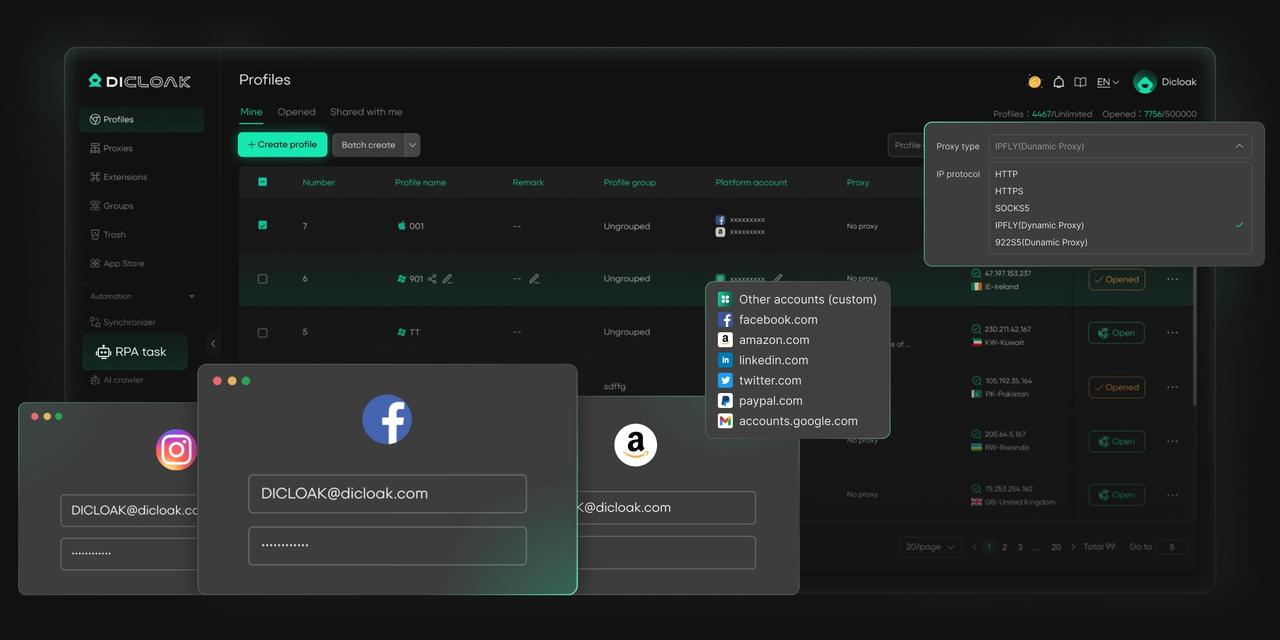
Hiding your IP address makes you invisible to your ISP, but it does nothing to hide you from the websites you visit. This is where most users fail. To counter sophisticated browser fingerprinting, you must create a disassociated digital identity. DICloak is a professional-grade tool built for this exact purpose. It is an antidetect browser designed to create completely separate and unique browsing profiles.
Here is how DICloak provides an essential layer of security for torrenting:
- Generate Unique, Native Browser Fingerprints: Each profile in DICloak generates a unique digital identity, spoofing dozens of parameters like WebGL, WebGPU, canvas hashes, geo-location, and client rectangles to appear as a distinct, native user. This helps reduce the risk of tracking scripts identifying the real device.
- Isolate Browsing Sessions: DICloak keeps your torrenting activity completely sandboxed and separate from your regular browsing. This means no cookies, cache, or tracking scripts from a high-risk torrent site can "cross-contaminate" your other online activities, like banking, email, or social media.
- Work Like a Private Browser: Despite its powerful security features, DICloak operates just like a regular Chrome-based browser. It's user-friendly and intuitive, automatically managing the complex fingerprinting parameters in the background while you browse.
By using DICloak, you create a clean, disposable, and anonymous profile specifically for high-risk activities like torrenting.
Step 3: Find and Verify a Kickass Torrents Mirror
With your connection secured and your browser profile isolated, you can now search for a working KAT mirror. Exercise caution, as many clones are malicious. Use the following tips to identify a more reliable site:
- Ensure the URL begins with HTTPS. The padlock icon in your address bar indicates an encrypted connection between you and the site.
- Look for a classic, familiar KAT layout. Legitimate mirrors often try to replicate the original site's interface. Be wary of sites that look significantly different or are poorly designed.
- Avoid sites that force you to download software or browser extensions before you can search. These are almost always malware.
- Be cautious of sites with an excessive number of misleading pop-ups or confusing download buttons.
- Once you find a working and seemingly reliable mirror, bookmark it for future use to avoid having to search again.
Step 4: Search and Download Files with Caution
Once you're on a mirror site, the final step is to identify and download files safely. Not all torrents are created equal. Follow these best practices to avoid malware:
- Check for Trust Indicators: Look for torrents with a high number of seeders. A healthy seeder-to-leecher ratio is a good sign. Also, look for verified uploader badges (if the mirror supports them) and read the comments section to see what other users are saying about the file.
- Avoid Red Flags: Be suspicious of unrealistic file sizes (e.g., a new HD movie that is only 10MB), files that require a password to open, or any torrents containing executable files (
.exe, .bat, .cmd). Software cracks and keygens are common carriers of malware.
- Use Magnet Links: When given the choice, always click the magnet link instead of downloading the
.torrent file. This is a safer and more direct method that reduces the risk of downloading a malicious file disguised as a torrent tracker.
- Scan All Downloaded Files: This is non-negotiable. Before opening or running any file you download, scan it with up-to-date antivirus and anti-malware software. This final check can catch malicious payloads that may have slipped through your other defenses.
By following this four-step process, you create a robust security shield that addresses the key threats associated with modern torrenting.
Why DICloak is Essential to Access Kickass Torrents Anonymously
While a proxy hides your IP, it does nothing to stop browser fingerprinting, which is how modern websites track and identify users. This is where DICloak becomes an indispensable part of your security toolkit. It is specifically designed to counter the advanced tracking and data-linking threats that are prevalent on unmoderated websites like KAT mirrors.
The following table breaks down the specific risks of torrenting and how DICloak's features provide a direct solution:
| Risk |
How DICloak Provides a Solution |
| Browser Fingerprint Tracking |
DICloak generates a unique digital identity for every profile, spoofing elements like WebGL, canvas, and geo-location to make you appear as a separate user and prevent tracking. |
| Malware Cross-Contamination |
Each DICloak profile runs in a completely isolated environment. Functionally, it's like running a separate virtual machine for your torrenting, but on a smarter technology that is, according to DICloak's own data, up to 12x cheaper and as fast as your native computer. This sandboxes all torrenting activity, ensuring that malicious scripts or tracking cookies can never cross-contaminate your primary system or other browsing sessions. |
| Activity Linking |
By creating separate, clean profiles for different activities, you prevent websites from linking your torrent browsing to your other online accounts, such as social media or e-commerce. |
| IP and WebRTC Leaks |
DICloak profiles provide a shielded environment that prevents WebRTC leaks, which can expose your real IP address even when using a proxy. By routing all traffic through the specified proxy within an isolated profile, it helps your true location and network details remain completely masked. |
DICloak elevates your security from basic IP masking to professional-grade digital identity management, providing the isolated environment needed to navigate high-risk online spaces safely.
How to Fix Common Issues When You Access Kickass Torrents
Even with the right tools and precautions, you may occasionally run into issues when trying to access KAT mirrors. Most of these problems are related to blocked sites, network settings, or torrent health. This table provides solutions to the most common problems.
| Issue |
Potential Cause(s) |
Recommended Solution(s) |
| "Site Not Loading" |
The mirror is down, or your proxy's IP is blocked. |
Try a different Kickass mirror from a trusted list. Switch to a different proxy server location. |
| "Magnet Link Not Working" |
Browser is blocking the link, or the torrent client is outdated. |
Update your torrent client to the latest version. Check your firewall settings to ensure your torrent client is not being blocked. Some browsers handle magnet links better; Firefox is often recommended for compatibility if other fixes fail. |
| "Torrent Stuck at 0%" |
The torrent has no active seeders. |
Choose a different torrent of the same file with a higher seeder count. |
| Slow Download Speeds |
Low seeder-to-leecher ratio, or proxy server congestion. |
Choose torrents with a high number of seeders. Connect to a less crowded proxy server. |
| "Access Denied" or CAPTCHA Loops |
The mirror site has flagged your proxy's IP due to overuse. |
Clear your browser cookies and cache within your DICloak profile. Connect to a different proxy server. |
If you consistently have trouble finding a working KAT mirror, it may be time to consider some of the well-established alternatives.
Top Kickass Torrent Alternatives in 2026
While Kickass Torrents holds a special place in torrenting history, several other reliable and actively maintained platforms offer vast libraries and strong communities. If you are struggling to find a stable KAT mirror, consider these top alternatives:
- The Pirate Bay: The largest and most resilient torrent archive with a massive database of files.
- 1337x: Known for its clean interface, strong moderation, and a focus on reliable torrent quality.
- YTS (YIFY): Focuses exclusively on high-quality HD movies with small, optimized file sizes ideal for those with limited bandwidth.
- RARBG: Features high-quality torrents with detailed information and a community of verified uploaders to ensure safe downloads.
An Important Legal and Security Disclaimer
This guide is provided for technical and educational purposes only. It is intended to explain how torrent technology works and how to protect your privacy and security from technical threats like malware and tracking. Be aware that downloading copyrighted material—such as movies, software, or music—without permission from the copyright holder is illegal in many countries and can lead to significant penalties. You are solely responsible for ensuring that your activities comply with all applicable local, state, and national laws. We advise you to use torrent technology responsibly and only for legal purposes, such as downloading open-source software, public-domain content, or other files you have the legal right to access.
Final Thoughts
Accessing Kickass Torrents in 2026 is still possible, but it demands a strict, security-first mindset. The days of casual, unprotected browsing on torrent sites are long over. To stay safe, you must move beyond basic precautions and adopt a professional-grade security posture. This guide has shown that the pillars of this approach are threefold: using a high-quality proxy to mask your IP, isolating your browsing with a powerful antidetect browser like DICloak to defeat tracking, and practicing vigilant, cautious downloading habits. By combining these strategies, you can explore the P2P world while keeping your digital identity and devices secure.
Stop leaving your digital identity exposed. To defeat the dual threats of network monitoring and browser fingerprinting, you need a professional-grade solution. Try DICloak to experience the security of a truly isolated, sandboxed browsing environment.
Frequently Asked Questions (FAQ)
What is the safest way to access Kickass Torrents?
The safest method combines three essential elements: a high-quality SOCKS5 or residential proxy to hide your IP address, an antidetect browser like DICloak to prevent browser fingerprinting and isolate your session, and practicing caution by only downloading verified torrents with high seeder counts.
Is it illegal to access Kickass Torrents?
Accessing a Kickass Torrents mirror site itself is generally not illegal. However, using the site to download copyrighted content without permission is against the law in most countries. Users are solely responsible for adhering to their local copyright laws and should only download content they are legally entitled to access.
Why can't I just use a regular browser to access Kickass Torrents?
Regular browsers like Chrome or Firefox have a unique and easily trackable digital fingerprint. Malicious mirror sites can use this fingerprint to monitor your activity, link it to your real identity, and track you across the web. An antidetect browser like DICloak prevents this by creating a completely separate, isolated, and masked browsing environment for high-risk activities.
What is the biggest risk of using a public Kickass Torrents mirror site?
The biggest risk is malware infection. Many unofficial mirror sites are unmoderated and serve as distribution points for torrents bundled with viruses, ransomware, crypto-mining scripts, and phishing attacks.
How do I know if a torrent file is safe to download?
To verify a torrent's safety, use this checklist: look for torrents from verified uploaders, ensure there is a high number of seeders, read the comments section for feedback from other users, and avoid suspicious file types like .exe or any files that require a password. Most importantly, always scan every downloaded file with up-to-date antivirus software before opening it.
 Web Proxy Tools
 Free Tools
 Cookie Plugin
 UA Generator
 MAC Address Generator
 IP Generator
 IP Address List
 2FA Code Generator
 World Clock
 Anonymous Check
 WebRTC Leak Test
 UUID Generator
 Free Web Proxy Site
 Proxy Checker
 FB Ad Checker
 AI Web Scraping
 Free SMM Tools
 Twitter Shadowban Checker
 Instagram Name Checker
 UTM Generator
 Username Generator
 AI Hashtag Generator
 LinkedIn Headline Generator
 Social Media Image Resizer