As of 2026, Amazon's policy allows sellers to open multiple accounts without needing prior approval. This change presents a significant opportunity to grow your business, diversify risk, and segment your brands. However, this flexibility comes with a critical challenge: Amazon links all accounts associated with you, and if one is suspended, the others are at high risk of being deactivated too.
This article provides a clear, safe, and step-by-step method to Run Multiple Amazon Seller Accounts without getting banned, using a powerful tool designed for this exact purpose.
Understanding Amazon’s Policy on Multiple Seller Accounts
Overview of Amazon’s Rules and Regulations
If you plan to Run Multiple Amazon Seller Accounts in 2026, you must first understand Amazon’s core rule: One seller account per region is the default.
Amazon designed this rule to keep the marketplace fair. It prevents sellers from abusing rankings, reviews, or sales limits. Many sellers believe opening more accounts will help them grow faster. In reality, this is one of the fastest ways to get banned.
Amazon clearly states that you cannot open a second account just to sell more products or avoid problems on your first account. Each account must exist for real business reasons.
For example, imagine a seller who sells phone cases. Sales slow down, so they open a second account to list the same products again. Amazon can detect this pattern. Once linked, both accounts may be suspended. This happens more often than most sellers expect.
To safely run multiple Amazon Seller Accounts, every account must stand on its own and serve a clear purpose.
Conditions for Legitimacy and Approval
Amazon does allow multiple seller accounts, but only under specific conditions. You must show a legitimate business need.
Common approved situations include:
- Owning separate brands that target different markets
- Operating different legal companies with different ownership or structure
- Managing accounts for a manufacturer, partner, or joint venture
- Being invited into a special Amazon program that requires a new account
Let’s look at a real-world example.
A seller owns one brand that sells kitchen tools. Later, they launch a premium outdoor gear brand with a different logo, audience, and pricing strategy. Instead of mixing everything in one account, they prepare separate business documents, separate banking details, and separate brand assets. They then request approval from Amazon before opening another account.
This is how sellers responsibly Run Multiple Amazon Seller Accounts. The key point is separation. Each account must look and operate like a different business, not a copy.
Amazon also expects:
- Separate email addresses
- Separate bank accounts
- Separate tax and business records
If these details overlap, Amazon may assume the accounts exist only to bypass rules.
Consequences of Policy Violations
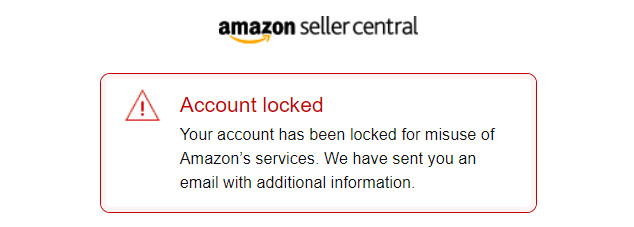
Ignoring Amazon’s policy can lead to serious damage. When sellers try to Run Multiple Amazon Seller Accounts without permission, Amazon often takes strong action.
The most common outcomes include:
- Immediate account suspension
- Permanent account deactivation
- Funds being held for months
- All linked accounts being shut down at once
Here is a common case seen in seller communities.
A seller manages two accounts and logs into both from the same laptop. They also reuse the same email recovery phone number. At first, everything looks fine. Weeks later, Amazon flags both accounts as “related.” One account receives a policy warning. Within days, both accounts are suspended.
This happens because Amazon tracks many signals, not just login names. Once Amazon believes accounts are connected without approval, it treats them as a violation.
That is why understanding the policy is not optional. If your goal is to safely Run Multiple Amazon Seller Accounts, compliance must come first. A single mistake can erase years of work overnight.
Benefits of Running Multiple Amazon Seller Accounts
In the previous section, we explained Amazon’s rules and the risks of breaking them. Once you understand those limits, the next question is simple: why do some sellers still choose to Run Multiple Amazon Seller Accounts?
When done legally and with clear business reasons, running more than one account can create real advantages. It allows sellers to grow in a controlled and professional way, instead of forcing everything into one store.
Expanding Your Business into New Markets
One major benefit of choosing to Run Multiple Amazon Seller Accounts is easier expansion into new markets.
Different markets often need different strategies. Prices, shipping times, customer habits, and even product demand can change by country or region. When sellers use one account for everything, these differences can become hard to manage.
For example, a seller may start by selling home products in the U.S. After building steady sales, they see strong demand in Canada and Europe. Instead of mixing all regions in one account, they open a separate account for the new market. This allows them to adjust pricing, promotions, and fulfillment options based on local needs.
With separate accounts, sellers can also handle taxes and compliance more clearly. Each account reflects one market focus. This structure reduces confusion and lowers the risk of mistakes as the business grows.
Many experienced sellers find that market-specific accounts help them stay organized and react faster to changes. This is one reason serious businesses choose to Run Multiple Amazon Seller Accounts instead of scaling blindly.
Managing Different Brands and Product Lines
Another strong reason to Run Multiple Amazon Seller Accounts is brand control.
Many sellers own more than one brand. Each brand may target a different type of customer. Mixing all brands under one account can weaken brand identity and confuse buyers.
Imagine a seller who runs a luxury skincare brand. The brand focuses on clean design, high prices, and premium messaging. Later, the same seller launches a budget fitness accessory brand. If both brands sit in one account, the store loses focus. Customers may not understand what the brand stands for.
By using separate seller accounts, each brand gets its own space. Listings, images, ads, and customer tone stay consistent. This often leads to better trust and higher conversion rates.
Separate accounts also make business decisions clearer. Sellers can see which brand performs better, which needs more ads, and which products should be improved or removed. This clarity helps sellers grow faster and avoid emotional guesses.
When managed correctly, multiple accounts allow sellers to build stronger brands, cleaner data, and better long-term strategies. That is why, after understanding the rules, many professionals still choose to Run Multiple Amazon Seller Accounts as part of a serious growth plan.
Risks and Challenges of Managing Multiple Accounts
In the last section, we talked about the benefits of choosing to Run Multiple Amazon Seller Accounts when you have clear business goals. Now we must talk about the other side. Managing more than one account can give you advantages, but it also brings real risks and challenges. Some of these problems can hurt your business fast if you are not ready.
Common Causes of Account Suspension
One of the biggest risks when you Run Multiple Amazon Seller Accounts is account suspension. Amazon watches seller accounts closely. If something about your accounts looks linked or unsafe, Amazon may stop them from selling.
Many sellers get suspended because Amazon sees similarities between two accounts. For example, using the same IP address, phone number, or credit card for two accounts can make Amazon think the accounts are connected in the wrong way. Even if you did not mean to break the rules, this can still trigger a suspension.
Imagine a seller named Mark who runs two accounts from home. He uses the same Wi‑Fi to manage both. One day Amazon flags the accounts as linked because they log in from the same IP address. Amazon then suspends both accounts until Mark proves they are separate. This kind of situation shows how easy it is to trigger a suspension if you do not separate your operations carefully.
Understanding Amazon’s Detection Methods
Amazon does not look at just one sign when it checks your accounts. The system uses many data points to detect links between accounts. This can include:
- Shared email addresses or phone numbers
- Same business name or tax details
- Same bank account or credit card
- Logging in from the same device or network
- Similar product listings or descriptions
When Amazon’s system finds more than one connection, it may conclude the accounts are related. Then it may take action to protect the marketplace and customers. This kind of detection is automatic and very strict. Once Amazon flags your accounts, resolution can take many days or even weeks.
For example, a seller might think using the same computer to update two accounts is harmless. But Amazon’s detection tools can link those accounts together. Even if the business details are different, the shared login history can raise a red flag. This affects your ability to sell and can lead to long appeals and lost sales.
Operational Complexities and Management Issues
Beyond suspension risks, there are many operational challenges when you choose to Run Multiple Amazon Seller Accounts.
First, you must keep every detail separate. This means separate bank accounts, separate emails, and separate devices or networks. Managing multiple accounts doubles or triples your workload. Each account needs its own listings, shipping plans, taxes, customer messages, performance monitoring, and more. Without good systems, mistakes happen easily.
Second, managing more accounts means more time and cost. You might need extra staff or tools just to keep track of each account’s performance and compliance. This takes planning and money. Many small sellers find it hard to keep pace with these demands, especially when balancing quality and growth.
A real example is a seller who opened a second account to handle a new product line. At first, they used the same phone number and customer support email for both accounts. Within a month, Amazon flagged them. The seller had to update all contact details, train a new support team, and slow down sales to fix the issue. What seemed like a small shortcut turned into weeks of extra work.
The Safest Method to Run Multiple Amazon Seller Accounts Without Bans
To prevent Amazon from linking your accounts, you must ensure each one has a completely separate digital identity. While some methods offer partial protection, only one provides a comprehensive solution.
Why Proxies Aren't Enough
A proxy server can hide your IP address and location, which used to help when you Run Multiple Amazon Seller Accounts. Today, Amazon relies on advanced browser fingerprinting that tracks device details like screen resolution, fonts, and hardware. Since a proxy does not mask this fingerprint, your seller accounts can still be linked and put at risk.
The Power of an Antidetect Browser
The most secure and effective solution is an antidetect browser. A tool like DICloak allows you to create and manage hundreds of separate browser profiles from a single computer. Each profile has a completely unique and unrelated digital fingerprint. To Amazon, each profile appears as a new, authentic user operating from a different device, effectively eliminating the risk of your accounts being linked.
It's important to note the legality of these tools. As stated in the source: The ethical use of antidetect browsers is legal. Such tools don’t violate US/EU laws. In fact, quite the opposite: they protect your business data and save time and money.
Why Choose DICloak Antidetect Browsers for Your Business?
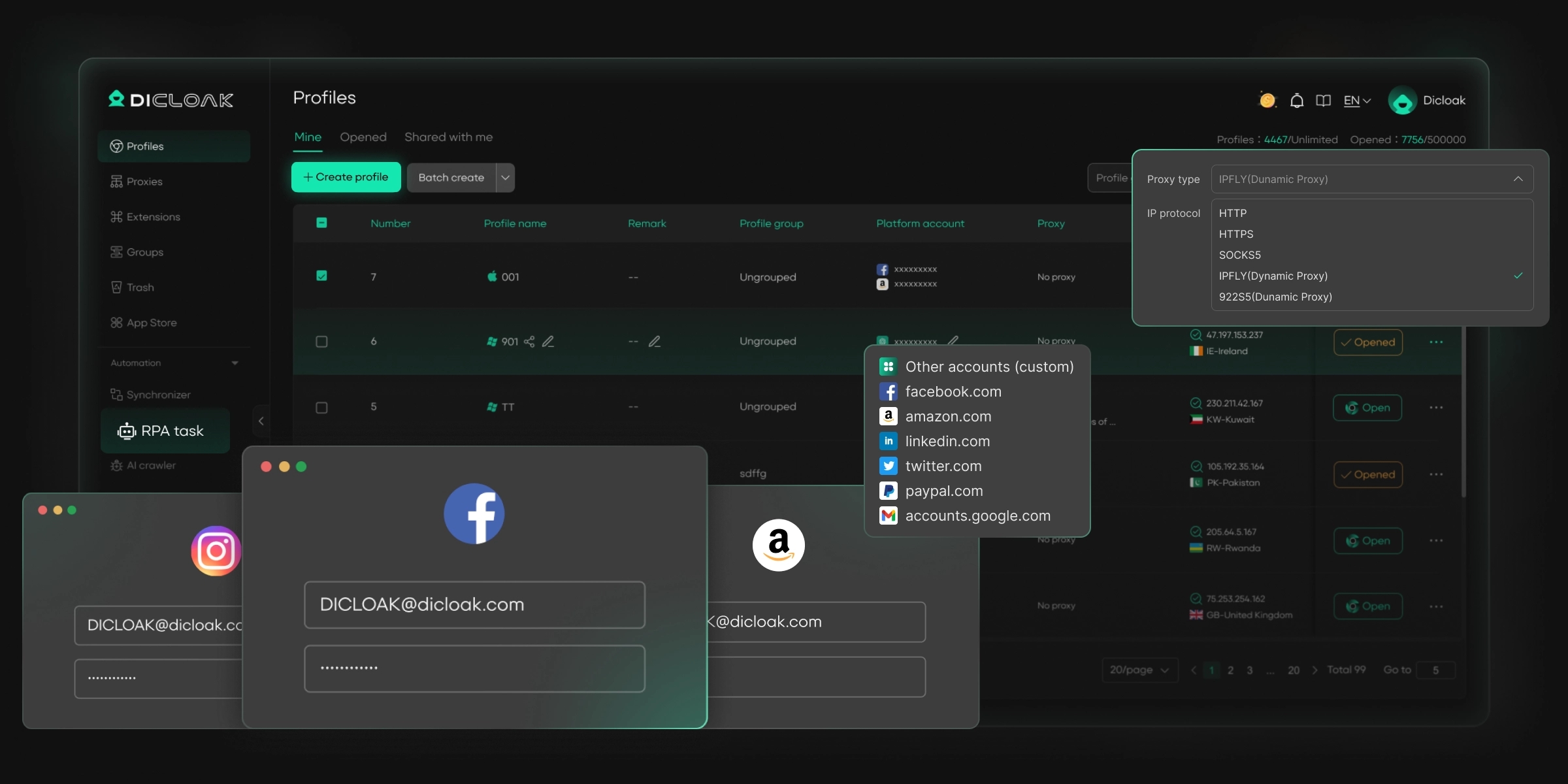
⚡The DICloak Antidetect Browser has become a global favorite for its unparalleled ability to efficiently and securely manage multiple accounts. Designed for professionals in social media management, and more, DICloak offers powerful features like RPA automation, bulk operations, and a synchronizer. Additionally, it allows you to customize fingerprints and integrate proxies for each profile, ensuring top-level security and operational efficiency. It’s the ultimate tool for seamless, secure, and scalable operations.
What Makes DICloak Stand Out?
✅ Manage 1,000+ Accounts on One Device: Stop wasting money on extra hardware! DICloak allows you to manage multiple accounts on a single device, cutting costs and boosting efficiency.
✅ Guaranteed Account Safety, No Ban Risks: Every account gets its own isolated browser profile with custom fingerprints and IPs, drastically reducing the risk of bans. Your accounts, your control!
✅ Flexible Proxy Configuration for Maximum Performance: Seamlessly integrate with all major proxy protocols (HTTP/HTTPS, SOCKS5) and manage your proxy pool with bulk operations. No more struggling with IP management—DICloak has you covered.
✅ Streamlined Team Collaboration for Better Results: Easily manage your team with advanced tools like profile sharing, permission settings, data isolation, and operation logs. Your team works smarter, not harder.
✅ Automate the Grind with RPA: DICloak's built-in RPA saves you hours of manual work. Automate repetitive tasks, streamline workflows, and focus on what really matters—growing your business.
✅ Powerful Bulk Tools to Scale Your Operations: Create, import, and launch multiple browser profiles in one click. DICloak makes scaling your business as easy as it gets.
✅ Compatible with All Major Operating Systems: Based on the Chrome core, DICloak supports simulating Windows, Mac, iOS, Android, and Linux operating systems. No matter what platform you need, DICloak has you covered.
🔗 Ready to Get Started?
Visit the DICloak website to explore more details and choose the plan that’s right for you. Start for free today and experience the power of secure, efficient, and scalable multi-account management!
Conclusion
Run Multiple Amazon Seller Accounts can be a powerful way to scale your business, but it also brings a high risk of suspension if Amazon links your accounts. Traditional methods like using only proxies are no longer effective against Amazon’s advanced tracking systems.
With a multi-accounting browser such as DICloak, you can create a secure, isolated, and unique digital identity for each seller account. This makes it the most reliable and scalable way to Run Multiple Amazon Seller Accounts while reducing the risk of bans.
To protect your Amazon business, visit the DICloak website and try the free version today.
FAQs About Running Multiple Amazon Seller Accounts
1.Can you have multiple Amazon seller accounts?
Yes, Amazon allows this if you have a legitimate business need for each account. However, since all accounts can be linked, it is critical to keep their digital identities separate to avoid having them all suspended if one has an issue.
2.How does Amazon know if you have multiple accounts?
Amazon uses many data points to link accounts, including your IP address, device information, browser cookies, payment methods, business address, and unique browser fingerprint.
3.What is the best way to manage multiple Amazon seller accounts safely?
The safest method is to use a multi-accounting browser like DICloak. This tool creates a separate and isolated browser profile for each account, giving each one a unique digital fingerprint so Amazon sees them as different users.
4.Can I create two Amazon accounts with the same phone number?
No. Each Amazon account requires a unique phone number for verification and security purposes. Attempting to use the same number on multiple accounts is a direct link that can get them flagged.
 Web Proxy Tools
 Free Tools
 Cookie Plugin
 UA Generator
 MAC Address Generator
 IP Generator
 IP Address List
 2FA Code Generator
 World Clock
 Anonymous Check
 WebRTC Leak Test
 UUID Generator
 Free Web Proxy Site
 Proxy Checker
 FB Ad Checker
 AI Web Scraping
 Free SMM Tools
 Twitter Shadowban Checker
 Instagram Name Checker
 UTM Generator
 Username Generator
 AI Hashtag Generator
 LinkedIn Headline Generator
 Social Media Image Resizer