Teachers trying to get free access to Claude AI often hit a wall, the official Anthropic site doesn’t list a public “Claude free for educators” program, and most sign-up pages ask for payment or a school email at minimum. Even if you search for anthropic claude free for teachers, you’ll find scattered forum posts and old guides, but hardly any step-by-step instructions that actually work for 2026. The confusion leaves several teachers wondering if they’re missing a hidden link, or if Anthropic has quietly closed all free options.
The risk is wasting time on outdated forms, demo links that have expired, or generic “request access” pages that don’t confirm eligibility. Some educators report the school email trick works, but others get stuck waiting for approval that never arrives. Trying to navigate this maze, you face a choice—keep chasing free access, or pay for a standard Claude AI account and hope for an education discount later.
What matters most isn’t just finding a working sign-up page. The real challenge is knowing which access paths are valid for teachers right now, and what to expect if you try to use Anthropic Claude for lesson planning, course support, or student guidance. If you skip the eligibility details, you can end up locked out or paying more than needed.
Here’s what teachers need to review before starting the Anthropic Claude free account process.
Who Is Eligible for Anthropic Claude Educational Access in 2026?
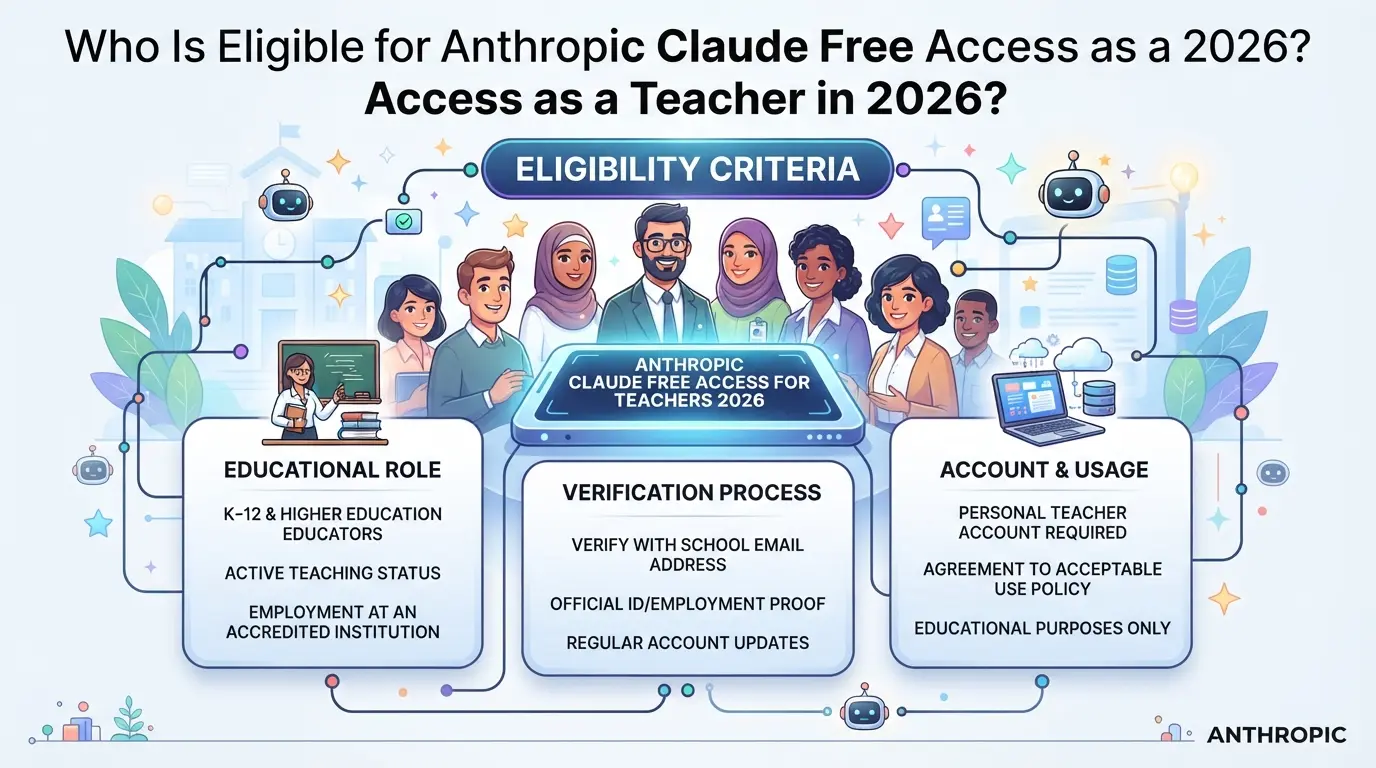
Teachers get access to Claude's free account only if they work for a recognized school or university and can prove it with current documents. Missing this step means you may wait weeks for nothing or get blocked at sign-up.
Recognized teacher roles and institutions
Claude's free education access applies to full-time K-12 and college teachers at both public and private schools. If your school is officially registered and issues staff emails, you can usually apply. Substitute teachers and part-time tutors often get rejected unless listed on the school’s staff roster.
Verification documents and process
You’ll need to upload proof that you are an active educator. The most common accepted documents are a recent pay stub (from the last 60 days), a school-issued ID card, or an official letter of employment on school letterhead. Anthropic may also require you to verify your school email address during sign-up. The review process usually takes 3-7 business days, but can stretch longer if your documents are blurry, outdated, or the school isn’t in their database. One common failure case: teachers submit a personal Gmail address or an expired contract, this triggers an instant denial or a stuck review. If your school uses a nonstandard domain, reply to the verification email explaining your position, or your application may be ignored. Anthropic rarely makes exceptions for missing documents, so gather everything before you apply.
Who is not eligible and common mistakes
- Freelance educators and private tutors not linked to a registered school are not eligible.
- Expired contracts, pay stubs older than 60 days, or unclear ID cards often lead to instant rejection.
- Using a student email, a parent/guardian role, or any role not listed as faculty usually fails review.
If you’re not sure your status counts, check with your school’s HR before applying. Next, you’ll need to know how to actually complete the application and set up your Claude teacher account.
How to Apply and Set Up Your Free Claude AI Account for Teachers?
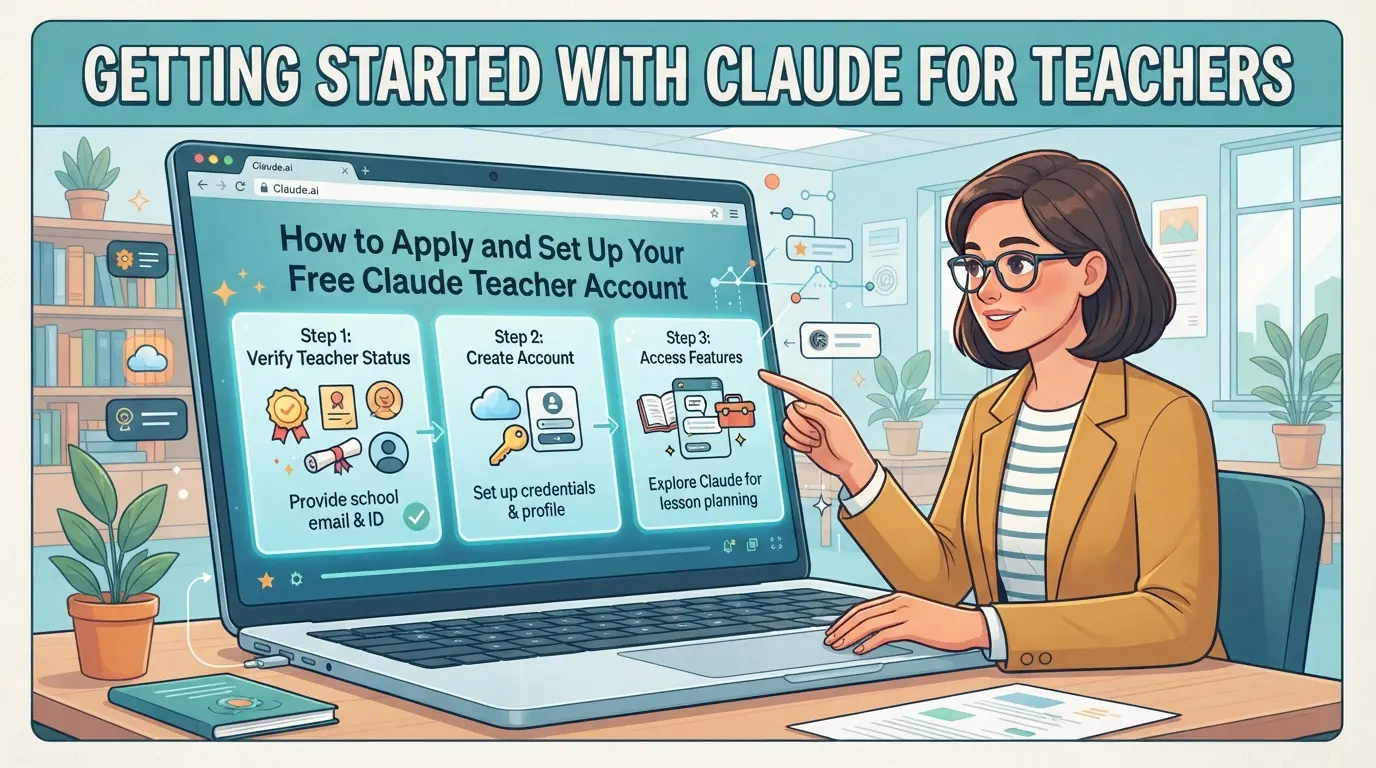
If you qualify for Claude’s free teacher access, you can get set up in under 10 minutes, if you know which steps to follow and what to watch for. Here’s the exact process to apply, activate, and handle common problems, so you avoid the “stuck in review” trap that catches numerous educators.
Step-by-step application process
- Go to the officialAnthropic Claude education access page. Do not use third-party links or old announcements, outdated pages can lead to dead ends.
- Use your school-issued email (not Gmail, personal Outlook, etc.) when filling out the teacher application form. If your district uses a custom domain, enter it as shown in your staff directory. This is the most common point of failure.
- Upload any required proof, such as a faculty ID or employment letter. Check that your file is clear and under the size limit, or the form may not submit.
- Review your details before you click submit. A typo in the email or a mismatched name can delay approval for days.
Account activation and initial login
- Watch your inbox (including spam) for a confirmation email from Anthropic. Most teachers receive a reply within 5–30 minutes, but some school domains filter these as “bulk” mail.
- Click the activation link in the email. If you wait more than 24 hours to activate, the link usually expires, request a new one if this happens.
- Set your password and security questions during initial login. If you use a shared device, log out after setup to avoid account mix-ups.
- If you are redirected to a standard Claude AI login page with no “teacher” label, your application likely went to the wrong queue, go back and check your application email for mistakes.
Troubleshooting common setup issues
- If you never get the activation email, search your spam, promotions, and quarantine folders. Some school filters drop these messages completely, contact your IT support for a release if nothing arrives after an hour.
- For “pending verification” after 24 hours, resubmit your paperwork. Low-resolution images or missing documents are a frequent cause of silent rejection.
- If you get a “duplicate account” error, you may have applied before with another email. Only one account per teacher is allowed, try logging in with past emails before contacting support.
- Most delays in Anthropic Claude free for teachers setup come from mismatched or unverified school domains, triple-check your details before resubmitting.
Next, you’ll see what teachers can actually do with a free Claude account in an active teaching environment.
What Can Teachers Do with Claude's Free Account in the Class Setting?
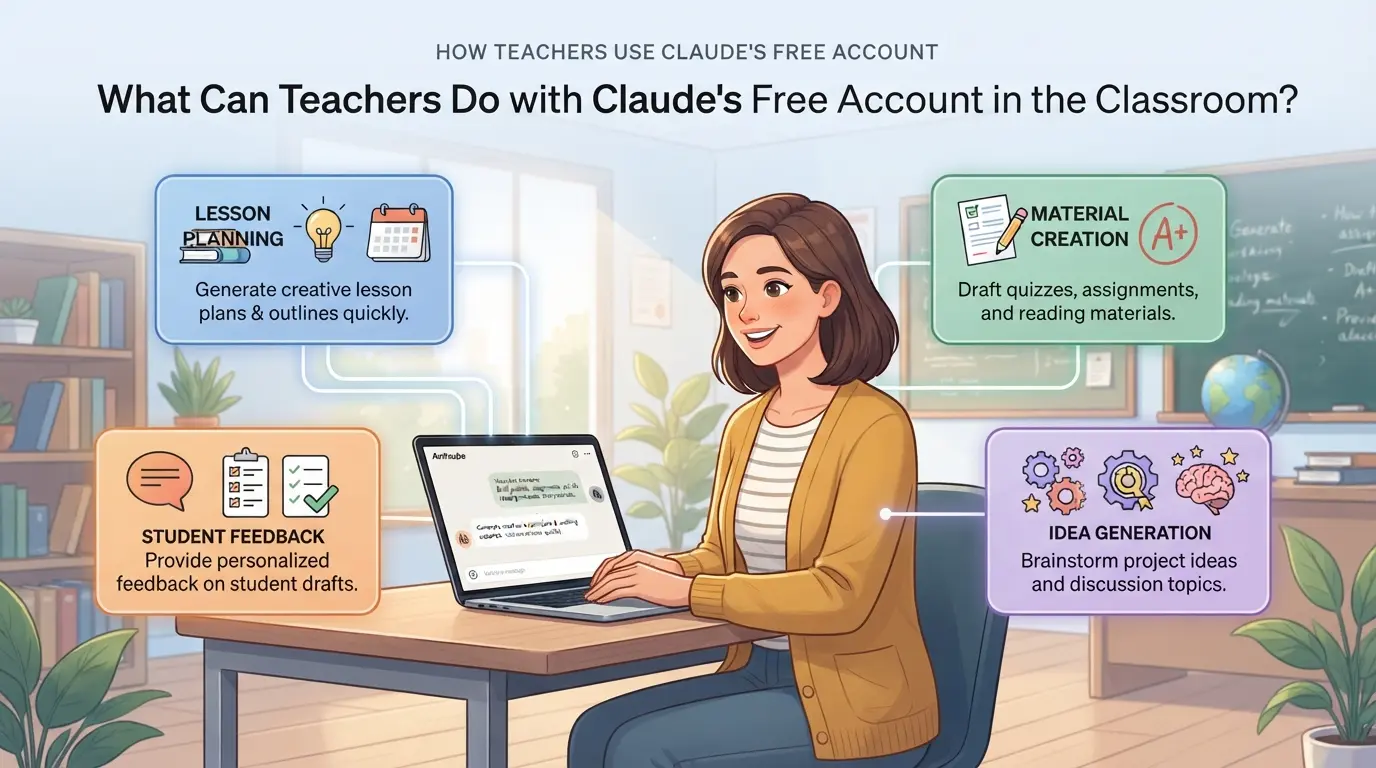
Teachers who secure a Claude AI free teacher account can use it for lesson planning, student support, and quick curriculum edits. The main catch: free accounts come with daily caps and privacy limits, so you’ll need to plan around those restrictions.
Lesson planning and curriculum support
Claude can draft worksheets, suggest quiz questions, and adapt a reading assignment for different grade levels in moments. You paste a topic, set grade targets, and Claude outputs materials you can edit for your class.
Student assistance and feedback
Picture a high school teacher running a course website: students submit essays, and the teacher uses Claude to generate feedback. After uploading student drafts (with names removed), the teacher prompts Claude for strengths and areas to improve. Claude writes concise feedback, making it faster for teachers to spot common mistakes or highlight strong points. Some teachers also let students ask Claude for homework help, but the teacher checks answers for accuracy before sharing them. This workflow saves time on repetitive grading and gives students a chance to see suggestions before the teacher’s final review. The tradeoff, you don’t want to rely on Claude for every student question, since the free account can hit usage limits before the end of a busy day.
Account limits: usage, features, and privacy
Free accounts hit daily message caps, so group projects and big classes can burn through quota quickly. Claude doesn’t store student data between sessions, teachers must clear sensitive info and avoid sharing personal details in prompts. If you skip these limits, you risk locked-out sessions or privacy headaches later.
Risks and Limitations of Using Claude Free for Teachers
Teachers using Claude’s free account face real limits, data privacy, strict policy rules, and technical gaps can all cause trouble if skipped. Below is what to check before relying on the “anthropic claude free for teachers” offer in your teaching.
Privacy and student data concerns
Anthropic stores all chats for service improvement, so never enter real student names, grades, or personal records. Only use generic or anonymized info when asking Claude for lesson support. Sharing live student conversations or assessment data can risk a privacy incident with your school or district.
Account misuse and policy violations
- Only the approved teacher should use the account, no sharing with students or others.
- Stick to educational work; no personal or side projects.
- Watch for usage warnings or access blocks if non-teaching use is detected.
Technical limits and support gaps
You get fewer prompts and slower response times than paid users. If something breaks or you hit a cap, help options are limited.
- Check if file uploads or advanced features are disabled.
- Track daily prompt limits to avoid mid-day lockouts.
- Use the official Anthropic help page, school IT usually can’t resolve Claude account issues.
How to Share Claude Free Teacher Accounts Securely with Your Teaching Team
Sharing a Claude teacher account can speed up lesson planning, but careless sharing risks account loss or a permanent ban. Here’s how school teams can stay policy-compliant and avoid common traps.
- Check Anthropic’s terms before sharing, most education access is meant for one teacher, not full teams. If your district or school has a special agreement, get it in writing.
- Never use generic logins for everyone. Anthropic can flag accounts with logins from different locations or devices. This often leads to forced password resets or blocks.
- If team access is required, request group access approval from Anthropic support via your school’s IT lead. Skipping this step means your shared use may be flagged as abuse.
Practical workflow for multi-user access
- Assign one account “owner” who controls the main login and password changes. This avoids confusion about who is responsible for security.
- Use a password manager with shared vaults to give access only to trusted teaching staff. Remove ex-team members right away to avoid leaks.
- Track active sessions: after each planning block, log out unused sessions on all devices. This keeps the account from hitting session limits or triggering security warnings.
- Rotate which teacher logs in for group tasks, but never log in at the same time on multiple devices. Overlapping sessions from different IPs often trigger a review.
Common mistakes and how to avoid them
- Sharing the password by email or chat, leaks happen, and one careless forward can expose the account.
- Using “remember me” on public or shared devices, another teacher might find themselves locked out, or you might get a warning about suspicious logins.
- Ignoring logout procedures, leftover sessions often block new logins, leading to lockouts that require IT intervention.
- Failing to update the owner on access changes, if someone leaves the team but keeps the password, they can access student or lesson data even after departure.
The biggest risk is treating a single Claude account as a team asset without clear ownership or session control, most bans and lockouts happen when this line gets crossed.
Ready teams can now look at purpose-built tools for multi-user browser management to handle these shared workflows more safely.
Secure Team Account Workflows: DICloak in Shared Claude Access
Teaching teams handling platform accounts like Anthropic Claude free for teachers often face a practical gap: sharing access without exposing passwords, browser data, or losing track of who did what. If your workflow goes beyond one teacher and involves multiple logins, browser profiles, or team handoffs, DICloak brings a structured way to handle these risks. The scope here is browser-profile access, credential protection, and team controls—DICloak does not manage Claude’s own settings or data.
Account Security for Shared Tool Accounts
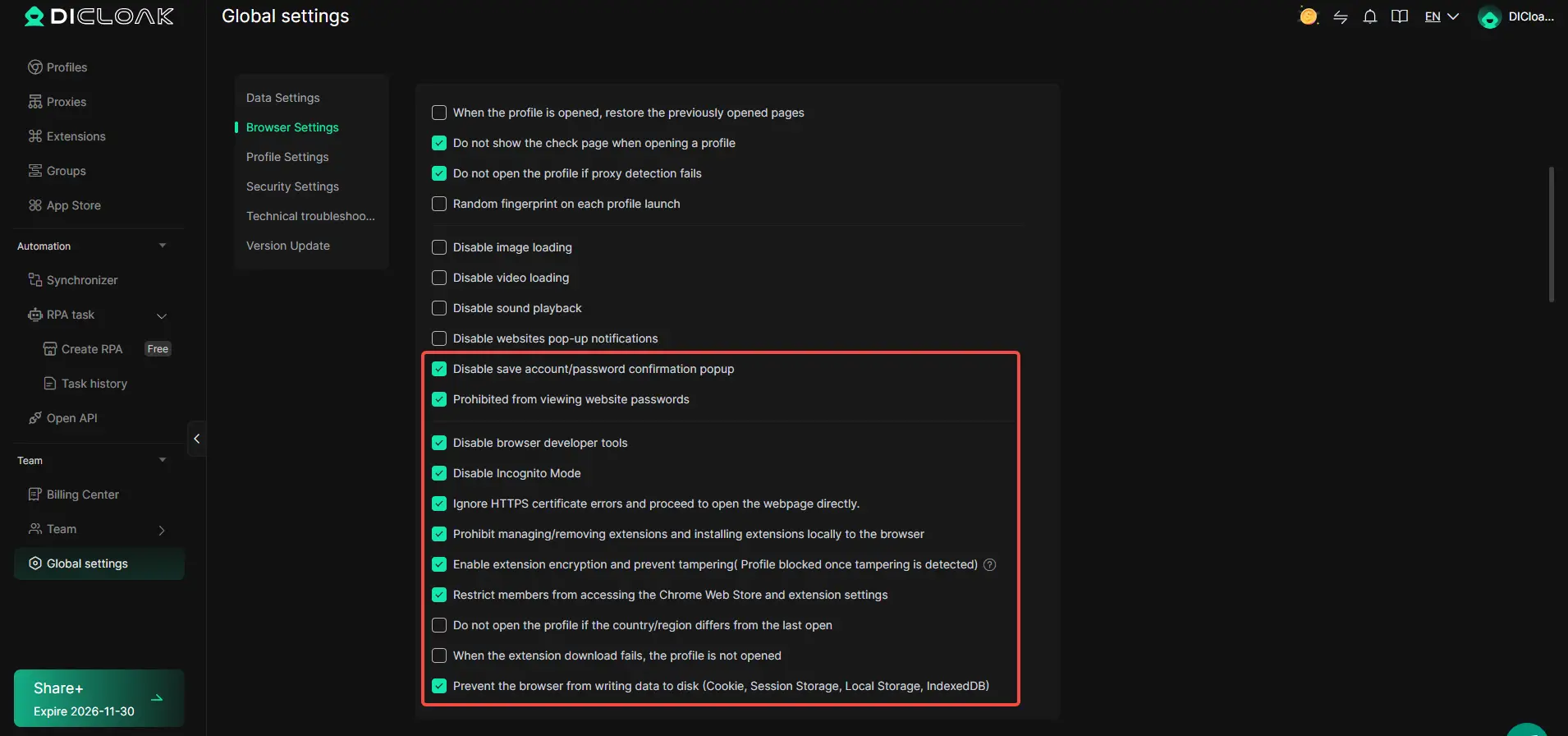
A common weak spot is letting team members access a logged-in Claude profile without limits on what they can see or copy. Admins can set DICloak security controls so passwords, cookies, and certain sensitive pages inside a browser profile stay hidden or blocked. For example, you can turn off “save password” prompts, block access to saved password lists, and use cookie encryption (available on Share+) to limit exposure during handoffs. If a member tries to use developer tools or open restricted account pages, those actions can be blocked where configured. This only covers browser-profile content, not the connected platform’s own security.
Team Collaboration and Permissions
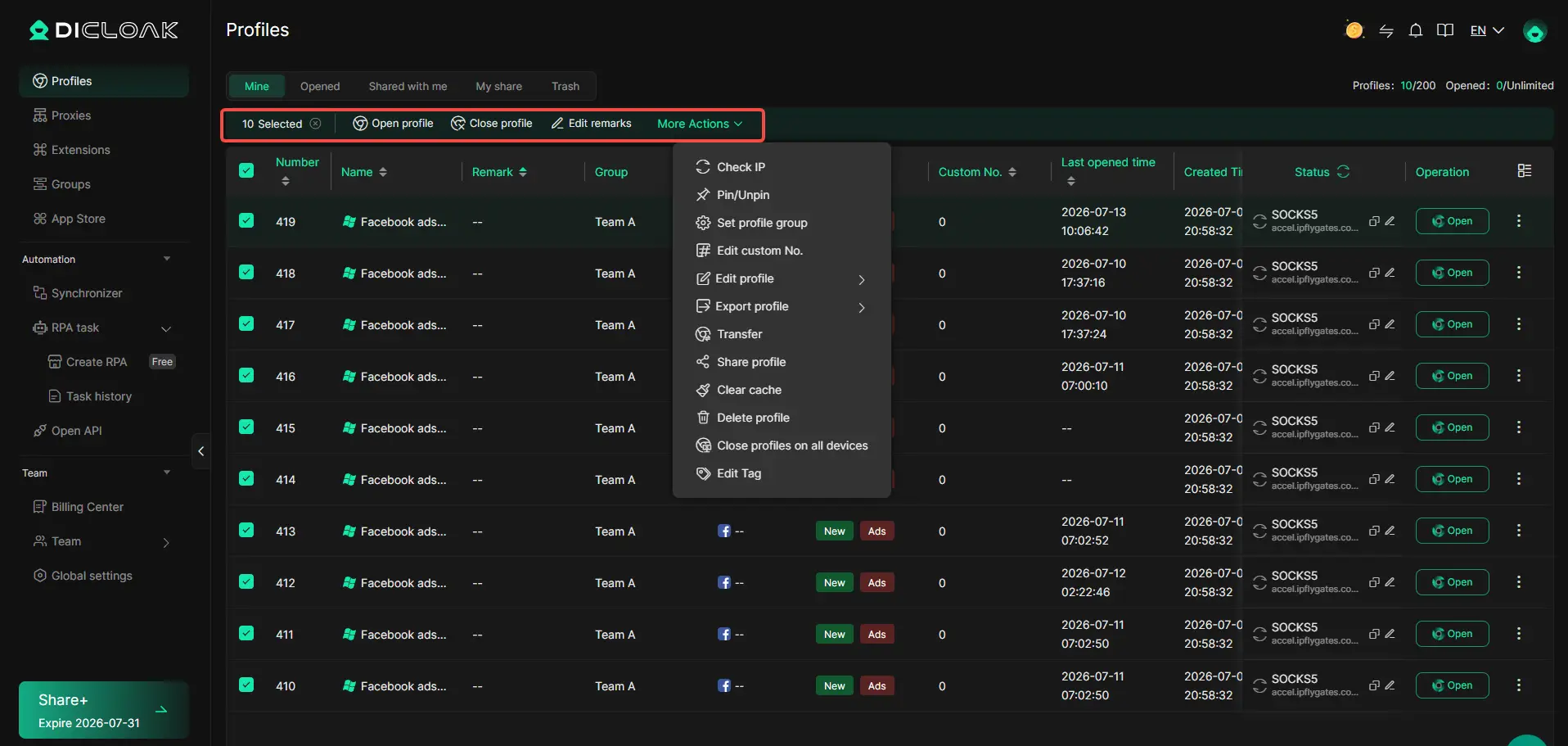
Once profiles are prepared, keeping team roles clear is just as important. Admins can create member groups in DICloak, set exactly which browser profiles each group can access, and control which fields show up in the profile list. For example, a teaching assistant group might only see the “Classroom Claude” profile and nothing else, while IT or senior teachers get wider access. These controls keep daily actions consistent and limit accidental exposure, but they don’t change permissions inside the Claude platform itself.
Team Operation Logs
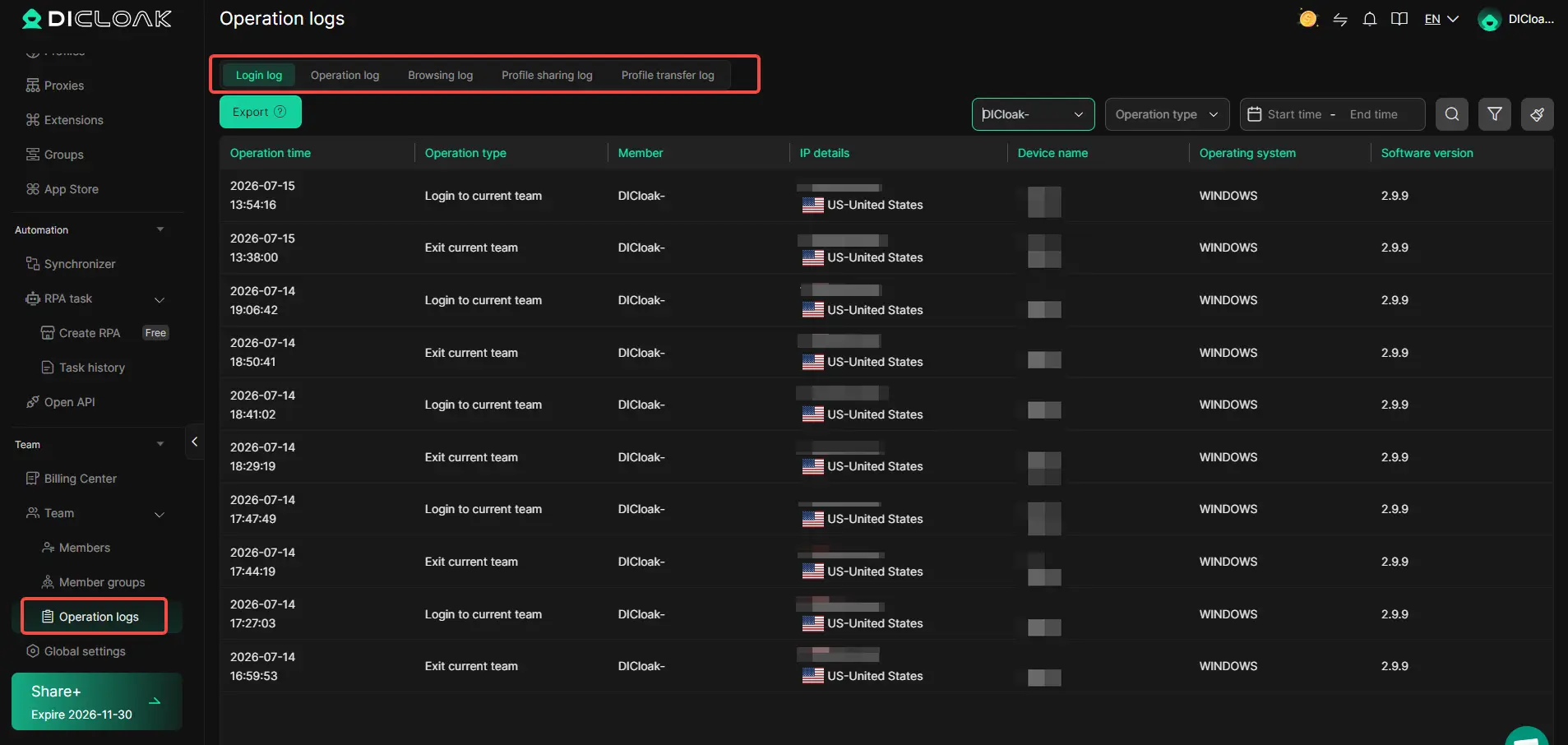
Tracking what actually happens matters most when multiple people hand off the same account. Admins can filter DICloak operation logs to review which member opened, edited, or shared a browser profile, plus who logged in and when. If a mistake, lockout, or data question comes up, these logs give a timeline to check. Logs cover supported DICloak actions—not every click or action inside the Claude website.
When teams reach the point where these controls are not enough, upgrading beyond the free Claude account may solve more complex needs.
When Should Teachers Consider Upgrading from Claude's Free Account?
Teachers should think about upgrading when free Claude accounts slow down their class, block advanced lesson plans, or limit the number of AI chats they need. Hitting usage caps or missing key features means it’s time to look at paid options.
Usage scenarios that exceed free limits
| Scenario |
Free Account Limit |
Paid Account Benefit |
| Large class (30+ users) |
Message cap reached |
Higher daily limits |
| Advanced AI features |
Basic only |
Access to premium tools |
| Priority support |
Not included |
Dedicated help channel |
Teachers with growing classes or who need more powerful tools will run into these limits fast.
Comparison table: Free vs paid teacher accounts
Paid accounts unlock higher usage, premium features, and direct support. Free accounts fit small groups and basic needs, but larger classes need more.
How to upgrade and what to expect
Upgrading is simple, pick a paid plan through the Anthropic dashboard. Expect higher limits right away, but check the school’s budget before committing.
Best Practices for Teachers Using Claude Free Accounts in 2026
Account security and privacy tips
Change your password every semester. Do not enter student grades, personal IDs, or parent contact info, Claude is not designed for storing sensitive education data.
Efficient classroom workflows
- Save prompt templates for common lesson types.
- Use shared docs to plan lessons with co-teachers, not the Claude chat itself.
- Copy Claude responses to your LMS, not directly to email.
Avoiding common mistakes
Sharing logins or missing usage limits often causes lockouts. Make sure to:
- Assign one account per teacher, never share passwords.
- Check daily usage caps before class.
- Log out on shared computers after use.
Frequently Asked Questions About anthropic claude free for teachers
Is Anthropic Claude really free for teachers in 2026?
Yes, Anthropic Claude free for teachers is expected to continue in 2026. Eligible K-12 and higher education teachers at accredited schools can access Claude’s free teacher program. You must use your official school email and verify your employment status. Free access covers classroom use but not commercial or district-wide needs.
What documents do I need to verify my teacher status for Claude?
You’ll usually need a valid school-issued email address and sometimes a recent pay stub, teaching certificate, or school ID. Having these ready speeds up approval. Make sure your documents clearly show your name and school. If your school isn’t listed, contact support with proof of employment.
Can I share my Claude free teacher account with other staff?
Sharing your Claude AI free teacher account with others is not allowed. Each teacher must apply and verify their own access. Sharing your login can risk your account being suspended and may violate privacy guidelines. For shared access, ask your school’s IT team about group or administrator accounts if available.
What are the main privacy risks with Claude's free teacher account?
Privacy risks include accidentally sharing student names, grades, or other personal data with Claude. Never upload sensitive student information into the AI. Review your school’s privacy policies before using Claude with class materials. Only use anonymized or generic content in prompts to protect student privacy.
How do I upgrade from Claude's free teacher account if my needs grow?
If you need more features than the free teacher account offers, visit the upgrade page in your Claude dashboard. Choose a suitable paid plan for more usage, collaboration tools, or school-wide access. Your account data and settings will stay the same after upgrading, but you’ll get extra support and resources.
Educators interested in integrating advanced AI tools into their teaching can now take advantage of user-friendly platforms designed specifically for classroom needs. By exploring free solutions that prioritize privacy and efficiency, teachers can improve lesson planning, student engagement, and workflow. Try DICloak For Free
 Web Proxy Tools
 Free Tools
 Cookie Plugin
 UA Generator
 MAC Address Generator
 IP Generator
 IP Address List
 2FA Code Generator
 World Clock
 Anonymous Check
 WebRTC Leak Test
 UUID Generator
 Free Web Proxy Site
 Proxy Checker
 FB Ad Checker
 AI Web Scraping
 Free SMM Tools
 Twitter Shadowban Checker
 Instagram Name Checker
 UTM Generator
 Username Generator
 AI Hashtag Generator
 LinkedIn Headline Generator
 Social Media Image Resizer