The Strategic Value of Using an Amazon Review Scraper for Market Intelligence
In the contemporary e-commerce landscape, customer feedback is not merely qualitative commentary; it is the primary raw material for high-fidelity data ingestion pipelines. For a Senior Architect, the mechanism of review extraction involves transforming unstructured text into structured market intelligence. Through Natural Language Processing (NLP), this feedback acts as a raw data source for sentiment analysis, where scraping engines facilitate the parsing of text into structured polarity scores and noun-phrase (NP) clusters. This allows for the quantification of "customer pain points" at scale.
A critical operational scenario involves a brand deploying a scraping fleet against a competitor's high-volume listing to identify engineering or quality control failures. By isolating negative sentiment clusters related to specific hardware components or service features, an organization can reverse-engineer a competitor's product roadmap. This systematic data collection is an industry-standard practice utilized to mitigate market entry risks, ensuring that infrastructure investments are backed by validated consumer demand patterns rather than anecdotal evidence.
Navigating the Legal Landscape and Terms of Service
Architecting a scraping solution requires a sophisticated understanding of the friction between public data accessibility and platform-specific Terms of Service (ToS). While public data extraction is generally viewed as lower risk, Amazon’s defensive layers are designed to enforce ToS through aggressive IP blacklisting and account restriction.
To maintain industry-standard compliance and operational longevity, engineers must implement the "Kill Switch" protocol. This is a hard-coded operational boundary: if detection rates—measured by a spike in 403 Forbidden or 429 Too Many Requests errors—exceed a specific threshold (e.g., 5%), the scraper must automatically terminate and revert to official Amazon APIs. This "Kill Switch" acts as a primary risk-mitigation strategy, keeping that the scraping infrastructure does not trigger a permanent flag on the organization’s network range or associated seller accounts.

How Amazon Review Scraper Detection Mechanisms Identify Automated Activity
Successful scraping is a battle of entropy. Platforms utilize complex machine learning algorithms to identify non-human patterns in request headers and browser behavior.
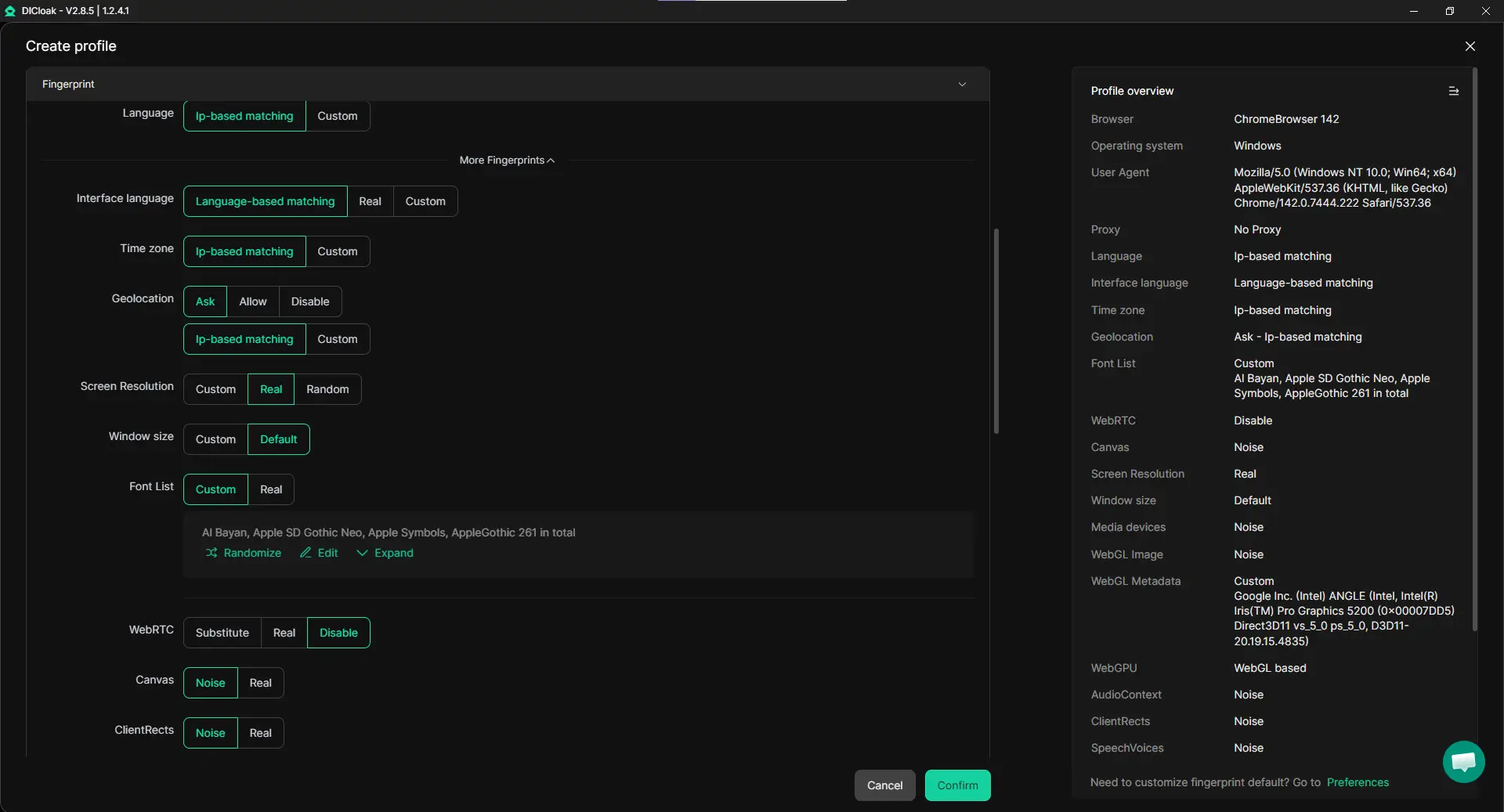
Beyond simple cookies, platforms utilize Canvas, WebGL, and AudioContext fingerprinting to identify visitors. The mechanism involves the browser rendering a hidden image or audio snippet; due to variations in GPU drivers, OS versions, and hardware clock speeds, the resulting hash is unique. Standard scrapers often fail because they present "Frankenstein" fingerprints—inconsistent hardware signals that do not exist in the wild. High-performance setups must ensure a perfect TLS handshake and consistent browser entropy to remain undetected.
The Role of IP Reputation and Network Isolation
IP reputation remains the most volatile variable in the scraping stack. Data center proxies are easily identified via ASN (Autonomous System Number) lookups. "Network Isolation" is essential to prevent a single flagged IP from causing a cascading failure across the entire fleet. By isolating each scraper profile within its own network environment, architects ensure that a "403 spike" in one segment does not compromise the global data ingestion pipeline.
Pro Tip: Avoid data center proxies for high-frequency ingestion. Residential proxy management, specifically those supporting SOCKS5 and HTTP/HTTPS protocols, provides the legitimate residential IP signatures required to bypass advanced heuristic filters.
Evaluation of Leading Amazon Review Scraper Tools
No-Code Solutions for Rapid Deployment
Tools like Octoparse and WebHarvy offer point-and-click mechanisms for rapid data harvesting. These are ideal for non-technical teams conducting small-scale analysis. They excel at identifying patterns in HTML structures and automating the pagination required to reach deep-indexed reviews.
Browser-Based Extensions and Developer-Centric Platforms
DataMiner provides a browser-level interface for localized scraping, while Apify offers a programmatic, API-driven platform. An architect typically selects an API-driven platform over a browser extension when high-volume concurrency and integration into a CI/CD pipeline are required. For Amazon-specific sellers, Helium 10 remains a staple, offering an integrated suite that combines review scraping with broader seller-centric analytics.
Profile Isolation and Antidetect Technology
For professional-grade operations, tools like DICloak is a powerful tool. The platform functions by creating isolated browser profiles with unique, authentic fingerprints. This methodology is used specifically to reduce the risk of IP blacklisting and to manage "account farming" operations safely by mimicking human-like browsing profiles across diverse hardware configurations.
Advanced Safety Protocols for Your Amazon Review Scraper Workflow
Isolating Browser Profiles to Prevent Association
Using technologies like DICloak, which is built on a Chrome-core foundation, architects can create 1,000+ isolated profiles on a single device. Each profile functions as a distinct hardware entity, simulating various operating systems including Windows, Mac, iOS, Android, and Linux. This isolation prevents platforms from using "cross-profile association" to link scraping sessions, ensuring that a failure in one profile remains contained.
Automating Large-Scale Extraction with RPA and Synchronizer
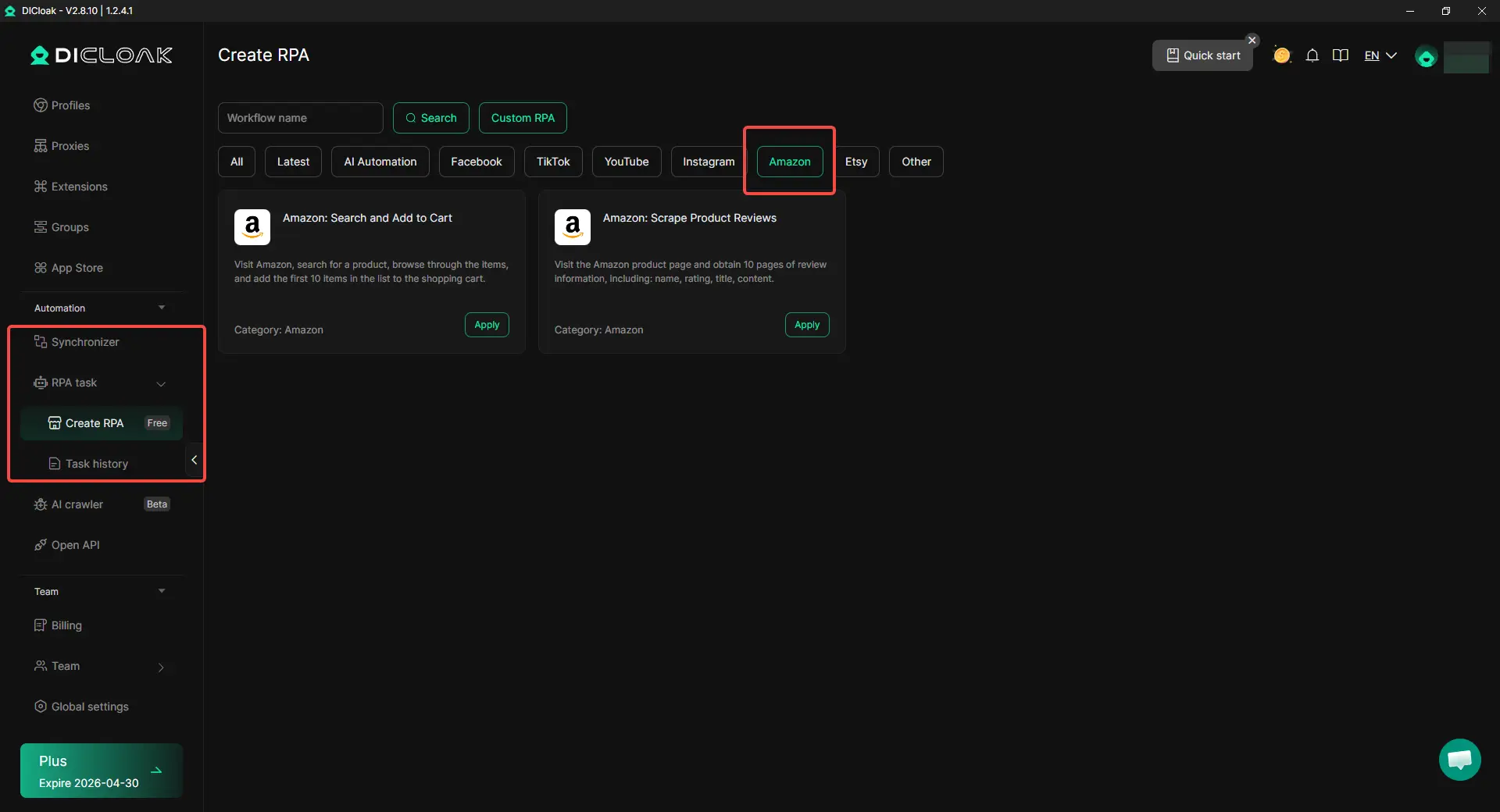
Robotic Process Automation (RPA) mimics human interaction—such as non-linear scrolling and variable click-rates—to bypass behavioral bot detection. The "Synchronizer" mechanism allows a lead operator to replicate a single manual action across hundreds of profiles simultaneously. This allows for bulk operations, such as creating and launching profiles in one click, which is essential for scaling a data ingestion pipeline to handle millions of data points.
Pro Tip: When scaling to 1,000+ accounts, meticulously audit "Operation Logs." Look for 403 Forbidden spikes or fingerprint inconsistencies to identify potential detection before it leads to a total fleet lockout.
Technical Comparison: Standard Methods vs. High-Isolation Scraping
| Feature |
Standard Web Scrapers |
DICloak Integrated Profiles |
| Hardware Requirements |
Multiple physical devices/servers |
1,000+ accounts on one device |
| Fingerprint Customization |
Static or limited signals |
Fully customizable (WebGL, Canvas, Audio) |
| Automation Level |
Basic Scripting |
Built-in RPA / Bulk Operations |
| Team Collaboration |
Manual credential sharing |
Permission-based data isolation & logs |
| OS Simulation |
Host machine only |
Windows, Mac, iOS, Android, Linux |
| Proxy Support |
Limited |
HTTP/HTTPS, SOCKS5 (Bulk config) |
Professional Pros and Cons of Automated Review Extraction
Advantages of Systematic Extraction
- Scalable Data Ingestion: Vital for high-volume models like Traffic Arbitrage and Affiliate Marketing, where identifying high-converting products via review trends is the primary revenue driver.
- Market Resilience: Rapidly identifies shifts in consumer sentiment, allowing for agile inventory adjustments.
Operational Challenges and Constraints
- Infrastructure Maintenance: Constant UI volatility on Amazon requires scrapers to be updated frequently to handle changes in HTML DOM structures.
- Detection Entropy: Machine learning-based detection requires constant tuning of "human-like" delays and proxy rotation to avoid account restrictions.
Operational Scenarios for Team-Based Data Collection
In a professional infrastructure, managing a large-scale project requires strict "Permission Settings" and "Data Isolation." Using Source B's methodology, a project lead can delegate specific profiles to team members without exposing the entire dataset. This ensures that internal data leaks are mitigated and that each operator works within a sandboxed environment. Comprehensive "Operation Logs" provide a technical audit trail, allowing architects to monitor fleet health and operator efficiency in real-time.
Frequently Asked Questions About Amazon Review Scraper Implementation
Can you scrape Amazon for prices?
Yes, but be advised that Amazon uses dynamic pricing and price skimming. Beyond ToS risks, price scraping is technically challenging due to high HTML structure volatility; a scraper requires significantly more maintenance than an API-based price feed.
Does Amazon detect automated behavior?
Yes. Amazon utilizes advanced machine learning to identify "headless browser" signatures and unnatural request cadences. Without fingerprint isolation and residential proxies, automated behavior is flagged within minutes.
How do I export data safely?
Data should be normalized and exported into CSV or Excel formats for downstream analysis. To ensure the safety of the ingestion process, use SOCKS5 proxy rotation and implement "human-mimicry" delays.
What is the benefit of simulating different Operating Systems?
Simulating mobile OS environments like iOS or Android (via Phone Farming or Cloud Android Emulators) often allows scrapers to bypass the more aggressive bot-detection layers present on desktop sites. Mobile-agent traffic often faces different heuristic thresholds, which can improve success rates for high-frequency extraction.
Concluding Guidance on Scalable Data Infrastructure
Building a resilient Amazon review scraper is an exercise in systems engineering. Success depends on the synergy between robust isolation (using tools like DICloak) and a sophisticated proxy management strategy. While the scraper logic handles data ingestion, the infrastructure—defined by fingerprint customization and RPA automation—ensures the operation’s longevity. Focus on building an efficient, human-centric workflow that prioritizes profile health and network isolation to drive sustainable, data-driven growth.
 Web Proxy Tools
 Free Tools
 Cookie Plugin
 UA Generator
 MAC Address Generator
 IP Generator
 IP Address List
 2FA Code Generator
 World Clock
 Anonymous Check
 WebRTC Leak Test
 UUID Generator
 Free Web Proxy Site
 Proxy Checker
 FB Ad Checker
 AI Web Scraping
 Free SMM Tools
 Twitter Shadowban Checker
 Instagram Name Checker
 UTM Generator
 Username Generator
 AI Hashtag Generator
 LinkedIn Headline Generator
 Social Media Image Resizer





