The Evolution of Web Surfing in 2026
By 2026, the Chromium engine has become the undisputed backbone of the digital world. It now powers over 70% of the web. Chromium is open-source. This means any developer can take the engine and build a better browser for specific business needs. This has led to a massive boom in specialized tools designed for high-stakes privacy, affiliate marketing, and e-commerce.
The purpose of this guide is to help you choose the right tool for your specific goals. We will compare familiar household names with powerful, specialized software that can give your business a competitive edge. Before we look at the rankings, you must understand what is happening under the hood of a modern browser.
Understanding the Power of Chromium-Based Browsers
Chromium is the foundation for almost all modern web standards. Because it is an open-source "blueprint," developers don't have to build a browser from scratch. Instead, they can focus on adding unique layers of security or specialized business features.
What is the Chromium Engine?
The Chromium project uses the Blink rendering engine. It is designed to be fast, secure, and incredibly stable.
The "So What?" Factor: For a business professional, choosing a Chromium-based browser means guaranteed compatibility. If a web app or extension exists, it will work on Chromium. This "future-proofs" your workflow, as non-Chromium browsers often struggle to keep up with the latest web app updates.
Key Benefits of Choosing Chromium
- Fast Page Loads: The Blink engine is built for speed and smooth animations.
- Frequent Security Updates: Chromium is patched constantly to stop new hackers.
- Massive Ecosystem: You get full access to every tool in the Chrome Web Store.
- Universal Standards: It ensures that your business sites look and act exactly how they were intended.
While the core engine provides the speed, how different developers build on top of it determines the browser's final value.

Best Chromium-Based Browsers in 2026
Chromium-based browsers continue to dominate the web in 2026 thanks to their speed, compatibility, and broad extension support. As users' needs evolve—ranging from everyday browsing to privacy, productivity, and multi-account management—different Chromium-based browsers offer distinct strengths. This section highlights the best Chromium-based browsers in 2026, focusing on performance and security.
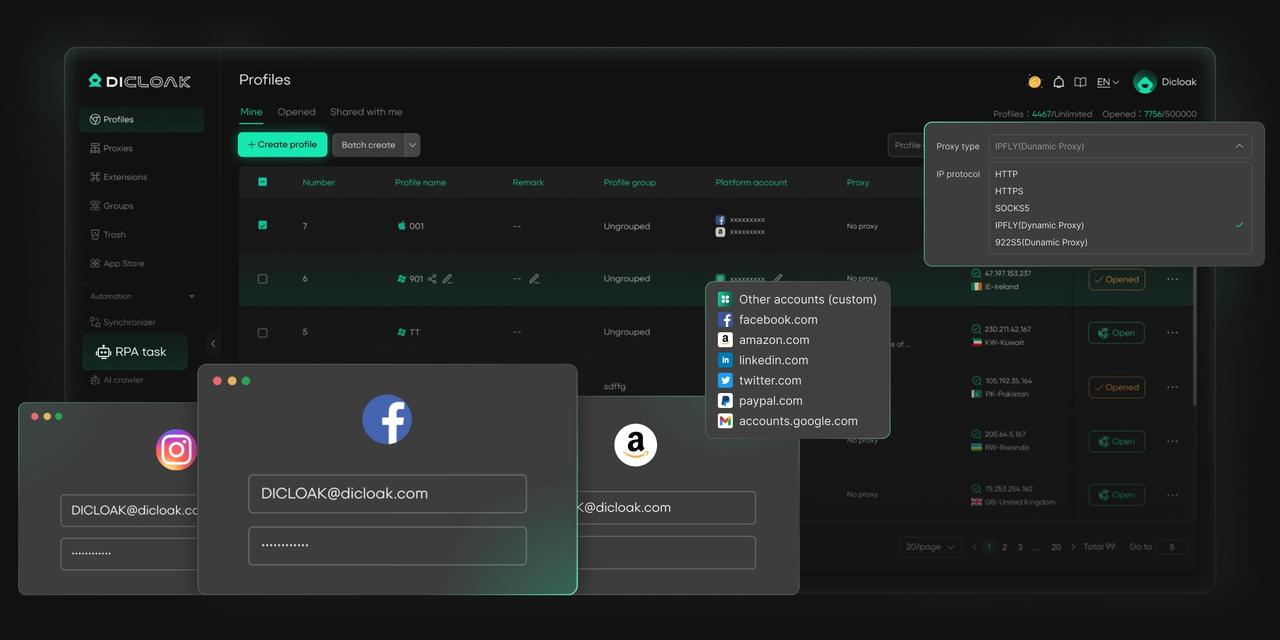
In 2026, standard browsers are not enough for professional work. Websites have become experts at "account linking." If they see you running two accounts on one device, they will ban both. DICloak is the strategic solution to this problem.
Unrivaled Security and Fingerprint Protection
DICloak allows you to manage over 1,000 accounts on a single device by spoofing your digital identity. It masks deep technical parameters like WebGPU, Canvas, WebGL, and Geolocation. It even spoofs your User Agent (UA) and IP address so that every account looks like it belongs to a completely different person.
Real-Life Example: Imagine a Social Media Marketer or e-commerce seller managing separate stores on Amazon, eBay, and Shopee. Normally, logging into these from one computer would get them banned for "suspicious activity." With DICloak, each store lives in its own isolated profile. You can scale your business safely without ever being flagged.
Automation and Team Collaboration Tools
DICloak offers a Synchronizer and Robotic Process Automation (RPA). These tools allow you to do a task once and have it repeat across hundreds of profiles automatically. For teams, DICloak offers tiered pricing—Base, Plus, and Share+—to fit small groups or massive agencies.
Google Chrome is the undisputed market leader, holding over 65% of the global market share. It is the gold standard for speed and simplicity.
Seamless Integration with the Google Ecosystem
Chrome's biggest win is how it connects to your Google account. Your passwords, bookmarks, and history sync perfectly across your phone, tablet, and laptop. It is the easiest "set it and forget it" option for daily use.
Privacy Trade-offs and Performance
There is a catch: Google collects a massive amount of your data to sell ads. Because of this, Chrome is often rated as having "poor privacy" compared to the other browsers on this list. It is fast, but you are paying for that speed with your personal data.
If you want Chrome's speed but work in a Windows-heavy environment, Microsoft has a better option.
Since moving to the Chromium engine, Microsoft Edge has captured about 5% of the market and is growing. It is deeply integrated with Windows 10 and 11.
Enterprise Features and Memory Management
Edge is built for office work. It includes "Collections" for research and "Vertical Tabs" to keep your screen clean. Its best feature is Performance Mode. Edge uses significantly less RAM (memory) than Chrome. If you are an office worker with 50 tabs open, Edge keeps your computer from slowing down or lagging.
Security and Copilot AI Integration
Edge includes Microsoft Defender SmartScreen for protection against malware. It also has Copilot AI built into the sidebar, which can summarize long articles or write emails for you while you browse.
For those who want to escape tracking from both Google and Microsoft, the next step is privacy-first browsing.
Brave: The Privacy-First Frontier for Chromium-Based Browsers
Brave is the top choice for people who hate ads. It is designed to be "private by default" without making you change any settings.
Ad-Blocking and the BAT Rewards System
Brave makes the web faster by blocking ads and trackers before they load. This saves data and battery life. You can also join the Basic Attention Token (BAT) system, where you earn small amounts of crypto just for seeing privacy-friendly ads.
Security Without the Technical Hassle
Brave offers advanced tools like "Private Browsing with Tor" and built-in fingerprint protection. It gives you the privacy of a tech expert without needing to be one.
Vivaldi: Ultimate Customization in Chromium-Based Browsers
Vivaldi is the "Swiss Army Knife" of browsers. It is built for "power users" who want to change every single part of their screen.
Advanced Tab Management and Sidebars
Vivaldi allows for Tab Stacking (putting tabs inside other tabs) and Split-Screen viewing. For a business professional, the "So What?" factor is the built-in email client and RSS reader. You can manage your inbox and news feeds without ever leaving the browser.
Performance Costs of High Customization
Because it has so many built-in features, Vivaldi can be heavy on your system resources. It is incredibly powerful, but it might feel overwhelming for a casual user.
Opera and Specialist Chromium-Based Browsers for Niche Needs
Beyond the big players, several browsers cater to "all-in-one" convenience or "privacy purists."
Opera’s Messengers
Opera is famous for its sidebar. You can have WhatsApp and Instagram running right next to your web pages. It is a great "everything in one place" tool.
Stripped-Down Privacy: Ungoogled Chromium and Epic
- Ungoogled Chromium: This is for the person who wants zero Google code. It is the fastest, cleanest version of the engine, but it requires manual updates.
- Epic Privacy Browser: This browser operates in a permanent "private mode." It blocks over 600 tracking attempts in a single session and deletes your history the moment you close the app.
Comparison Summary: Which Chromium-Based Browsers Should You Choose?
Choosing a browser is a strategic decision. You must match the tool to the task. Use a general browser for your personal life, but use a specialized tool for your professional growth.
Chromium Browser Comparison Table 2026
| Browser Name |
Best For |
Key Strength |
Privacy Level |
| DICloak |
Business Multi-Accounting |
WebGPU/Canvas Spoofing |
Highest |
| Chrome |
Everyday Personal Use |
Google Ecosystem Sync |
Low |
| Edge |
Office & Enterprise |
Low RAM & Windows Integration |
Moderate |
| Brave |
Ad-Free Browsing |
Default Ad/Tracker Blocking |
High |
| Vivaldi |
Power Users |
Built-in Email & RSS Reader |
Moderate |
| Opera |
All-in-One Convenience |
Integrated Messengers |
Moderate |
| Ungoogled |
Privacy Purists |
Zero Google Code |
High |
| Epic |
Simple Privacy |
Permanent Private Mode |
High |
Frequently Asked Questions About Chromium-Based Browsers
What is the difference between Chrome and Chromium?
Chromium is the open-source engine (the "blueprints"). Chrome is Google’s final product, which adds Google tracking and sync features on top of that engine.
Are Chromium-based browsers safer than others?
Yes. Because they use a massive open-source core, they are updated constantly. They use "sandboxing," which means a virus on one website cannot easily jump to the rest of your computer.
Why should I use DICloak instead of a regular browser for business?
Regular browsers show your real "digital fingerprint" to every site. If you manage multiple accounts, sites will link them and ban you. DICloak creates unique fingerprints for every account to keep you safe.
Which Chromium browser uses the least RAM in 2026?
Microsoft Edge and Brave are the current leaders. Edge uses "Performance Mode" to sleep tabs you aren't using, while Brave saves memory by blocking heavy ads.
Can I use Chrome extensions on all Chromium-based browsers?
Almost always, yes. When you use DICloak, you will have full access to the Chrome Web Store.
Final Thoughts: Securing Your Digital Footprint in 2026
The browser market in 2026 is no longer "one size fits all." While Chrome and Edge are perfect for watching YouTube or doing basic office work, they lack the protection needed for professional multi-accounting.
For anyone in e-commerce, traffic arbitrage, or social media marketing, specialized tools like DICloak are mandatory. They provide the stealth, automation, and team tools needed to scale without the fear of being banned.
Ready to protect your accounts? Try DICloak’s free plan today and discover why over 6,800 teams trust it for secure, professional browsing.
 Web Proxy Tools
 Free Tools
 Cookie Plugin
 UA Generator
 MAC Address Generator
 IP Generator
 IP Address List
 2FA Code Generator
 World Clock
 Anonymous Check
 WebRTC Leak Test
 UUID Generator
 Free Web Proxy Site
 Proxy Checker
 FB Ad Checker
 AI Web Scraping
 Free SMM Tools
 Twitter Shadowban Checker
 Instagram Name Checker
 UTM Generator
 Username Generator
 AI Hashtag Generator
 LinkedIn Headline Generator
 Social Media Image Resizer